
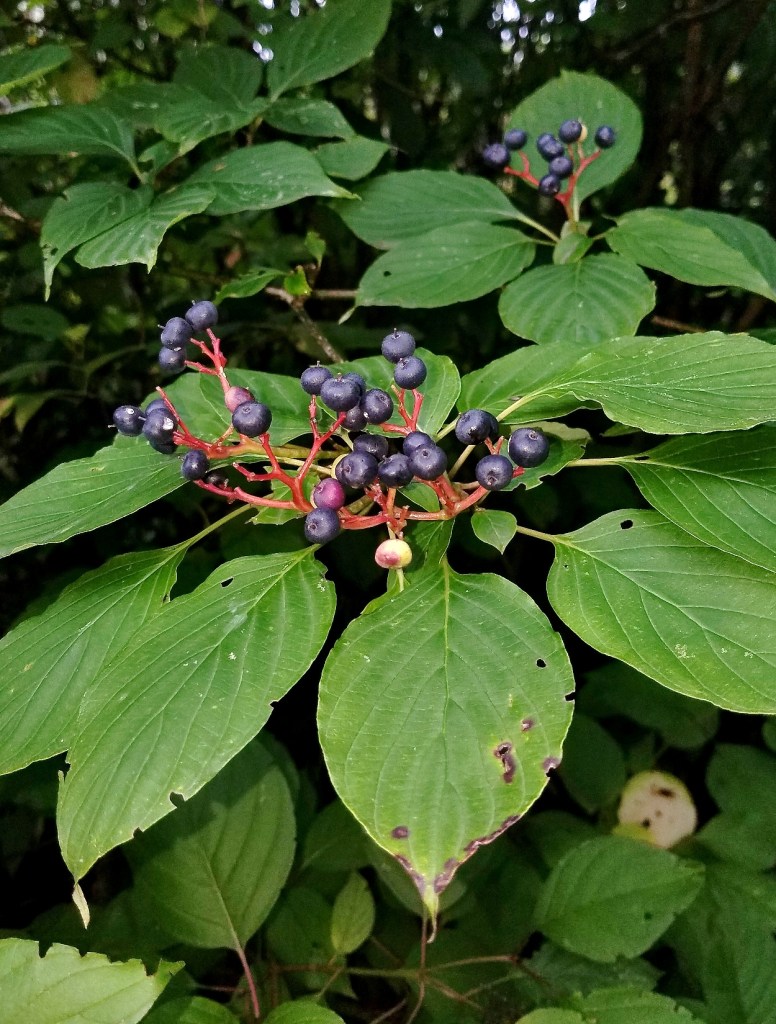
The birds are preparing for their annual fall migration. With the long journey ahead of them they will need plenty of food resources high in calories and protein. Bird feeding stations with plenty of sunflower seeds are one source of high energy/high protein foods but there are other sources and they literally grow on trees.
By late August where I live most of the soft and juicy fruits like raspberry (Rubus strigosus), blackberry (R. allegheniensis), and blueberry (Vaccinium myrtilloides and V. angustifolium) are done although there are still some dewberries (R. pubescens) and creeping blackberries (R. setosus) in the woods. At this time arrow-woods (Viburnum dentatum and V. rafinesquianum), Canada elderberry (Sambucus canadensis), bunchberry (Cornus canadensis), and pagoda dogwood (Cornus alternifolia) are coming into fruit.
Many fruits are sweet with sugars but some are rich in fats or lipids. Avocados and olives are familiar examples. Studies on dark fruited viburnums have found that they are rich in lipids. By dry weight southern arrow-wood (Viburnum dentatum) is 41.3% fats (that’s a lot of energy) and 2.6% protein. These numbers are similar in some but not all dark-fruited viburnums. Lipid content is correlated with seed shape and pigmentation. Blue fruits with round seeds have higher lipid content. Black fruits with flat seeds have lower lipid contents. Red fruits with flat seeds are low in lipids while red fruits with round seeds have a bit more. The lipids produce the blue iridescence in the fruit which is attractive to birds and are a nice benefit for hungry birds.
Southern arrow-wood does well in moderately fertile soils that do not dry out too rapidly. Mine receive full sun for about eight hours a day.


Does the dark-colored fruit of pagoda dogwood (Cornus alternifolia, shown at the top of the page) have a high lipid content? So far I have not found any information on the fruits themselves although some species of dogwood have lipid-rich seeds. I’ve observed evening grosbeaks eating the seeds. Pagoda dogwood is a small tree-like species common in the understory of hardwood forests with rich soil and small enough for a garden.
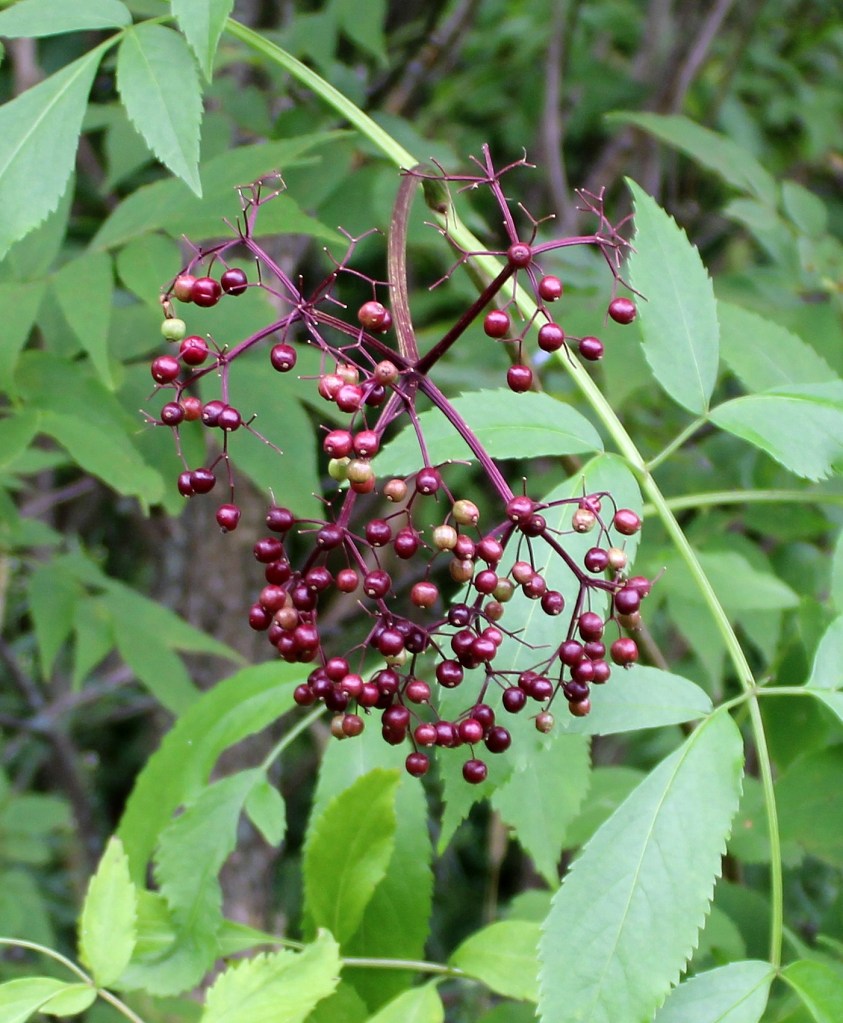
Canadian elderberry (Sambucus canadensis) bushes growing near my house are beginning to mature fruit. I’ve never been able to eat more than a few elderberries in all the years it has been here as the birds eat the fruit as soon as it ripens. Its red-fruited relative called red elderberry (S. pubens) blooms earlier in April and matures thick clusters of soft red berries that are eaten by robins and catbirds. Both elderberry species thrive in rich most soil near the edges of forested areas.
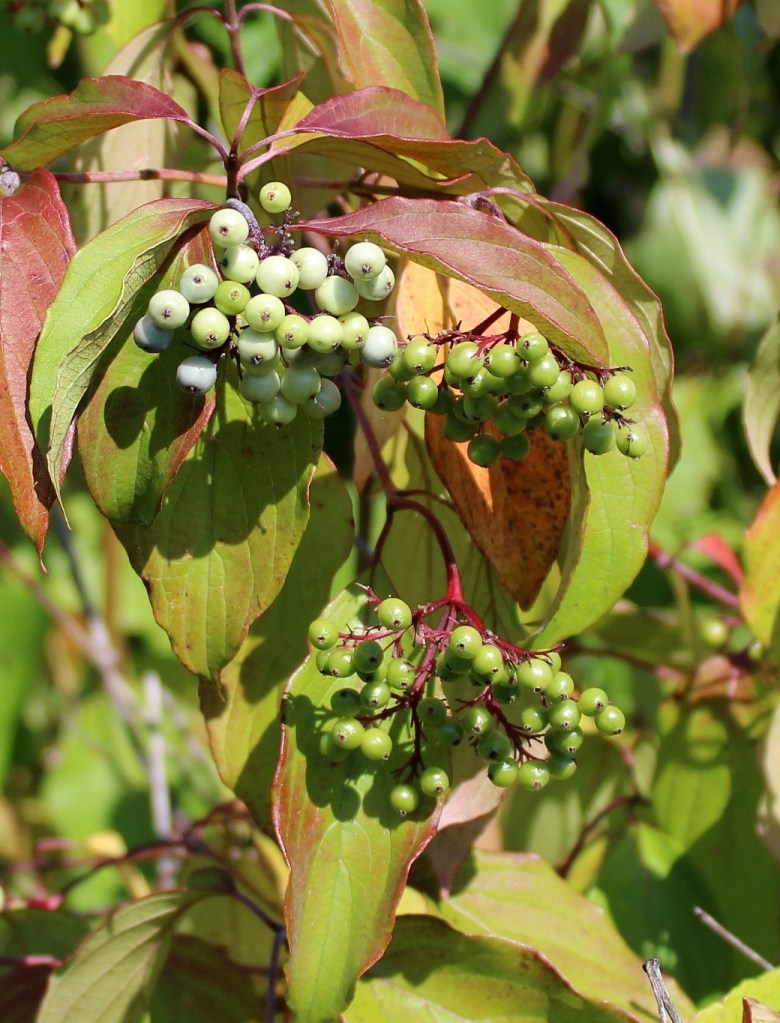
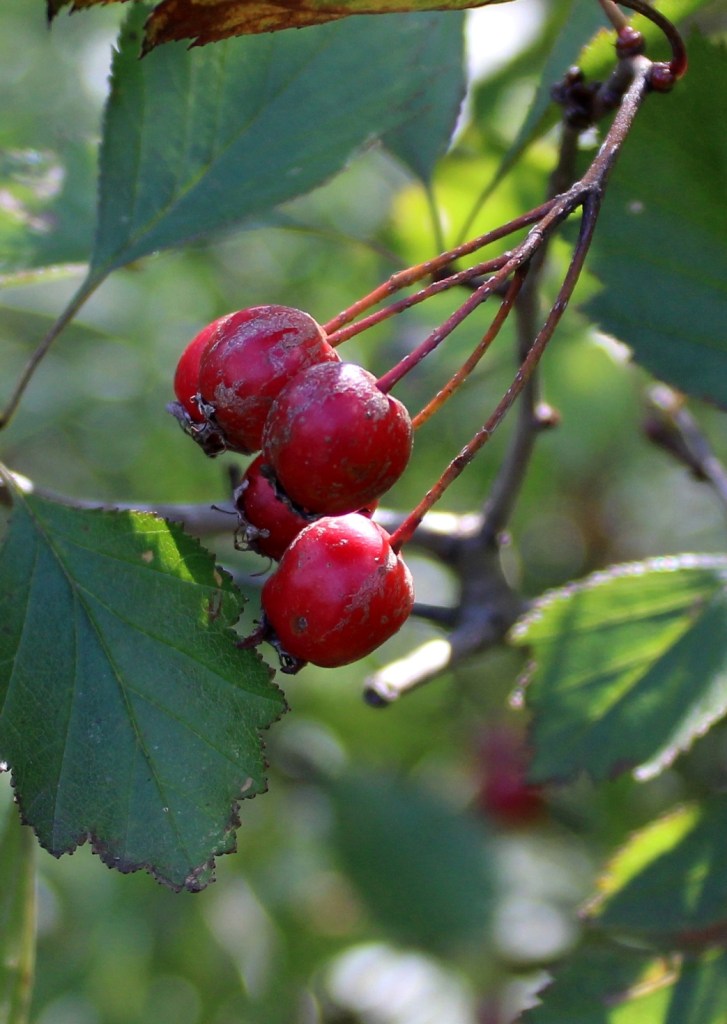
The arrow-wood, pagoda dogwood, and elderberry fruits will soon be gone usually by September 10th. But some other fruiting trees and shrubs will be ripe around that time. These include gray dogwood (Cornus racemosa), nannyberry (Viburnum lentago), hawthorns (Crataegus spp.), and mountain ash (Sorbus spp,). These shrubs will do well in any rich moist soil in full sun to partial shade.
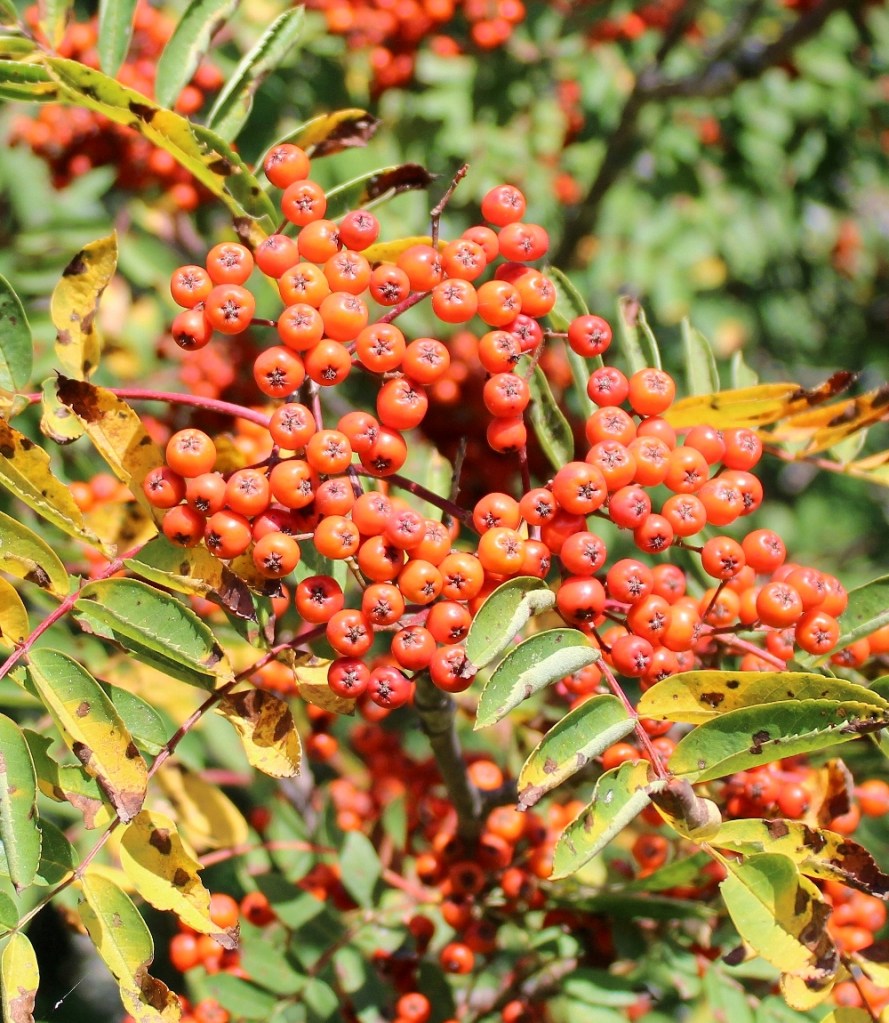
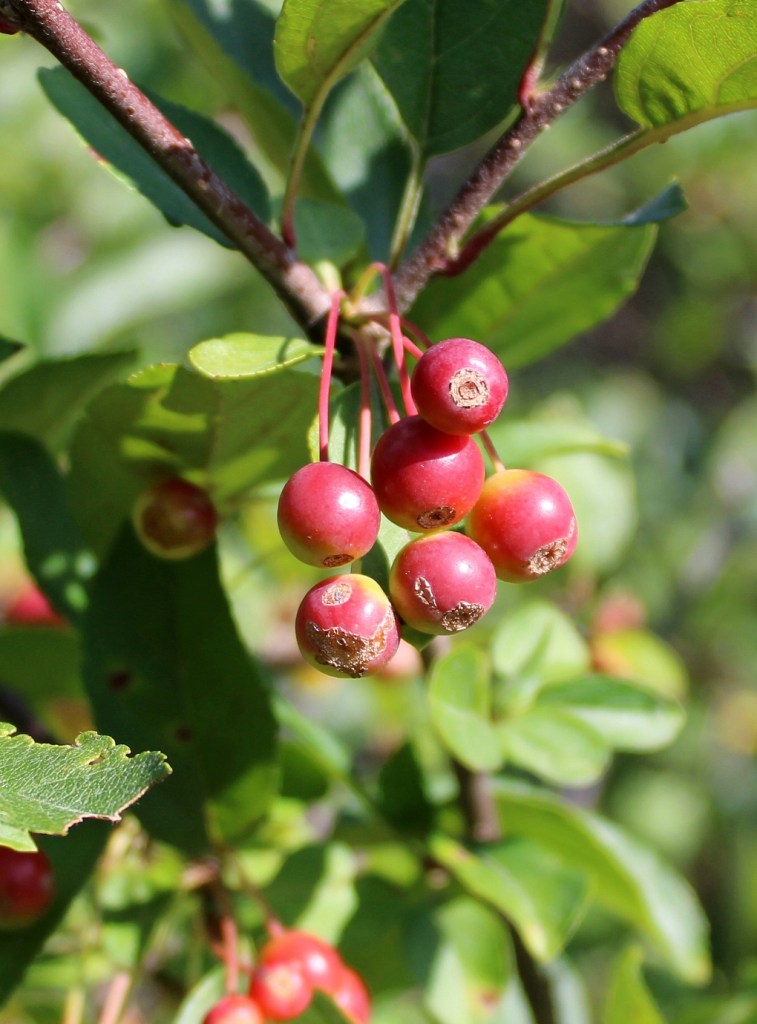
To help out birds that remain in the winter I have planted small-fruited crabapple trees in different places. Robins, ruffed grouse, and sometimes pileated woodpeckers will eat the smaller fruited crab apples like Malus sargentii while blue jays and other birds go after the larger fruited varieties like Dolgo Crab or any feral apple for that matter. The fruits become softer after a few freezes and in years of heavy fruit set some apples will remain on the trees as late as March.
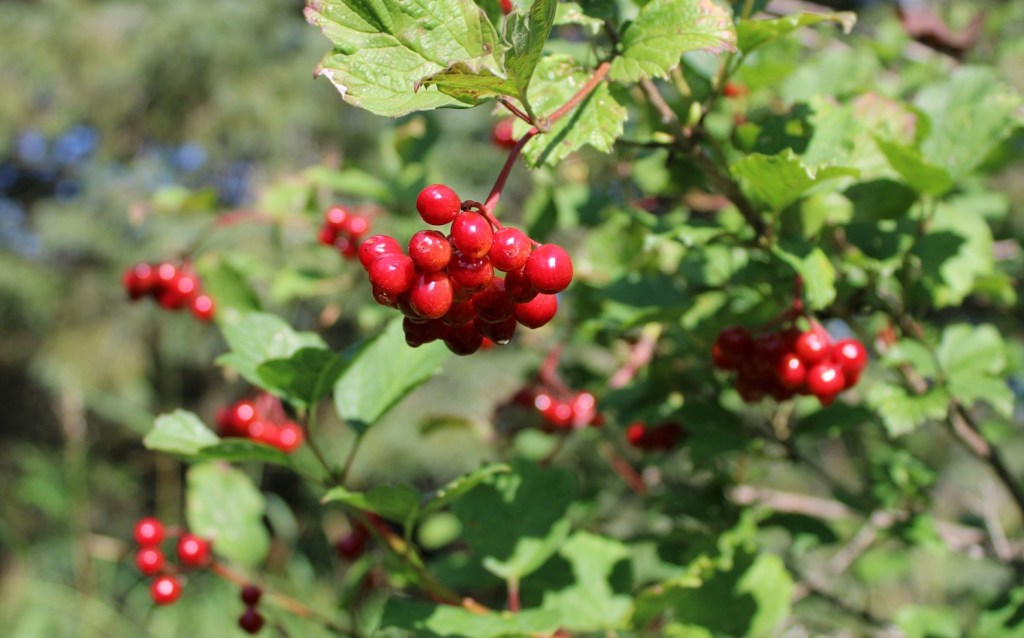
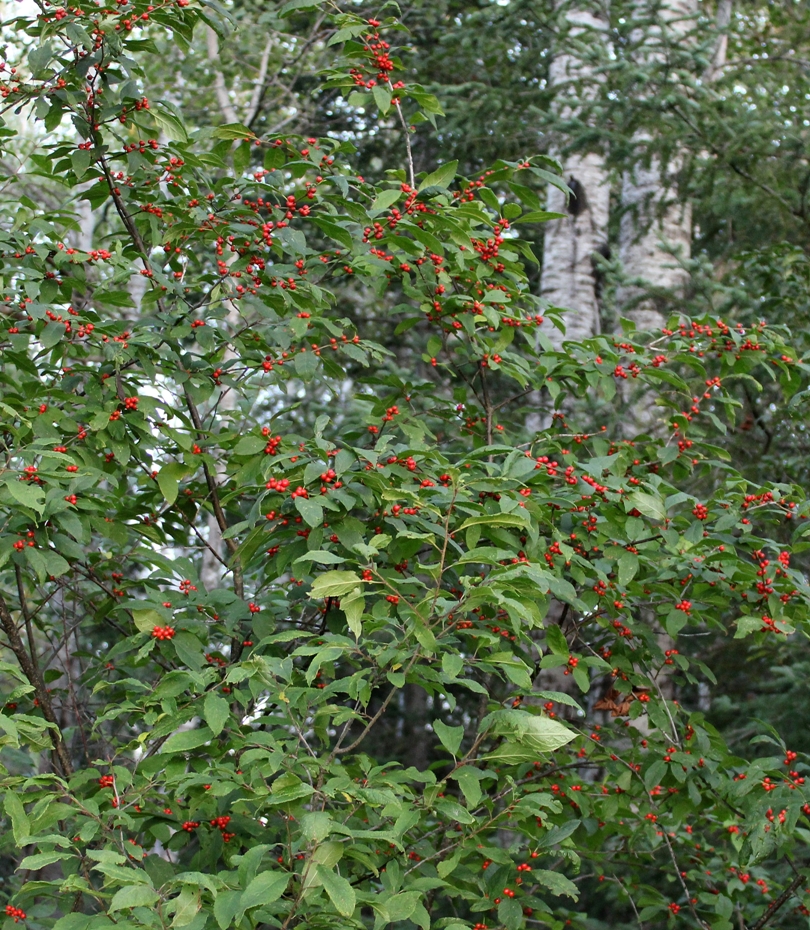
Other fruit-bearing shrubs with winter persistent fruit are highbush cranberry (Viburnum opulus var. americanum) and winterberry (Ilex verticillata). When first ripe the fruits on these bushes are not eaten by birds but after freezing and thawing some birds will eat them. Highbush cranberry and winterberry prefer rich moist soils and can be found naturally in wetlands. They will do well, though, in any good garden soil in full sun to part shade.
Wild sunflowers and weeds like pigweed are also food sources for migrating birds and I’ll be covering these in a future post.
SOURCES
Fruit Quality and Consumption by Songbirds During Autumnal Migration (Susan B. Smith, Kathleen H. McPherson, Jeffrey M. Backer, Barbara J. Pierce, David W. Podlesak, and Scott R. McWilliams). The Wilson Journal of Ornithology 119(3):419–428, 2007.
Viburnum tinus Fruits Use Lipids to Produce Metallic Blue Structural Color (Rox Middleton, Miranda Sinnott-Armstrong, Yu Ogawa,Gianni Jacucci, Edwige Moyroud, Paula J.Rudall, Chrissie Prychid, Maria Conejero, Beverley J.Glover, Michael J.Donoghue, Silvia Vignolini). Current Biology. Volume 30, Issue 19, 5 October 2020, Pages 3804-3810.e2
Fruit Coloration: Attractive, Fatty Blue Colours? (Bodo D. Wilt). Current Biology. Volume 30, Issue 19, PR1078-R1080, October 05, 2020.
Fatty Acid Composition of Cornelian Cherry (Cornus mas L.) (Agata Antoniewska, Jan Brindza, Svitlana Klymenko, Olga Shelepova). 5th International Scientific Conference Agrobiodiversity for Improving the Nutrition, Health, Quality of Life and Spiritual Human Development, Nitra, Slovakia. November 2021.
 Not Very Far Away
Very interesting and informative. Thanks for sharing.
LikeLike