
Genus overview
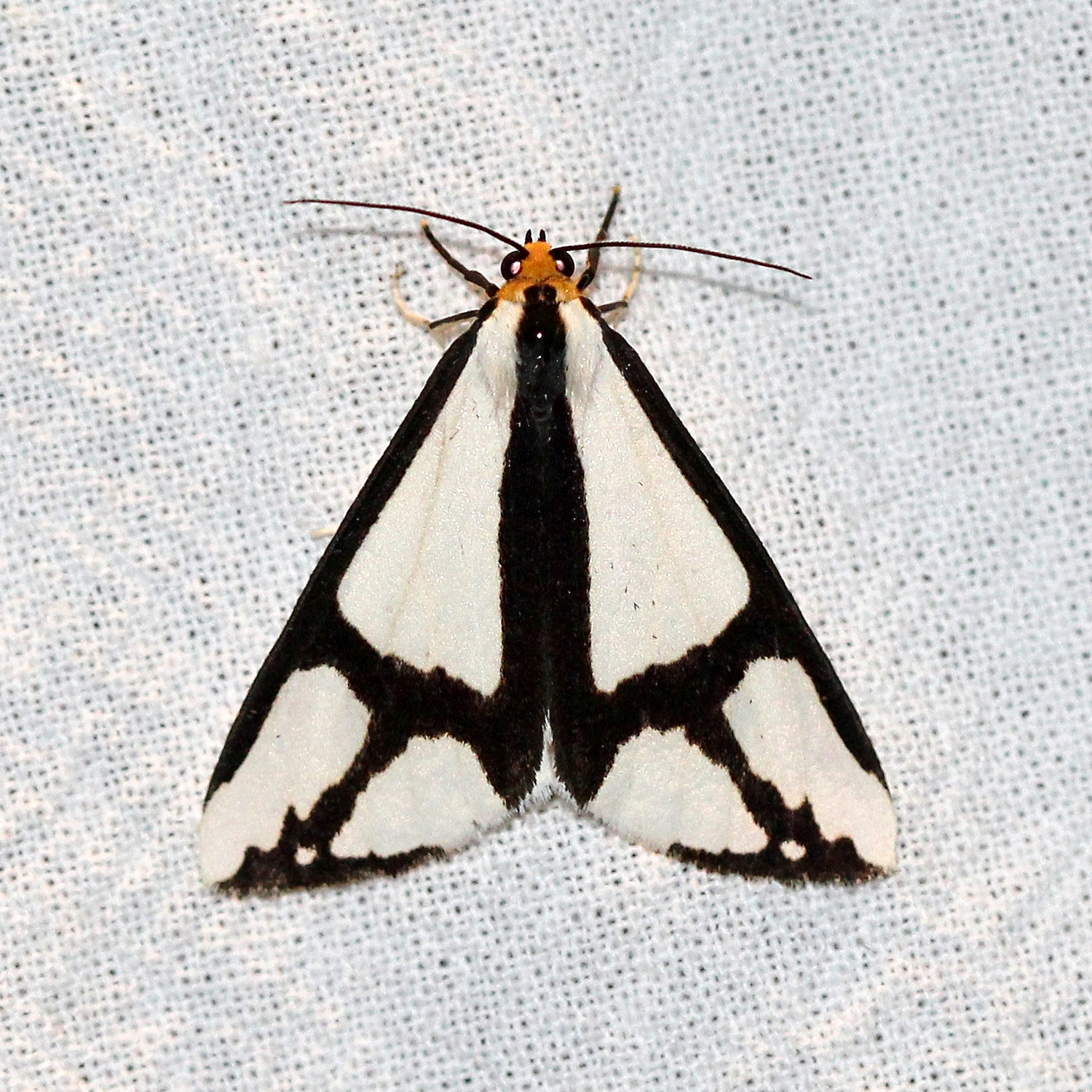
Haploa is a genus of moths in the superfamily Noctuoidea, family Erebidae, subfamily Arctiinae (Tiger and Lichen Moths). The genus comprises six species in North America north of Mexico and is not known from anywhere else. Four species are known from Minnesota: Haploa contigua, Haploa lecontei, Haploa reversa, and Haploa confusa.
So that’s the easy part. When I look over my photos of Haploa species, I am struck by the way Haploa lecontei, Haploa reversa, and Haploa confusa seem to grade into one another. Why? Maybe because I am misidentifying them. Or maybe because these are just photos of one species and its range of variation. Which species? I’m not sure anymore, but it might be Haploa confusa. The one I am sure of is Haploa contigua.
Haploa contigua
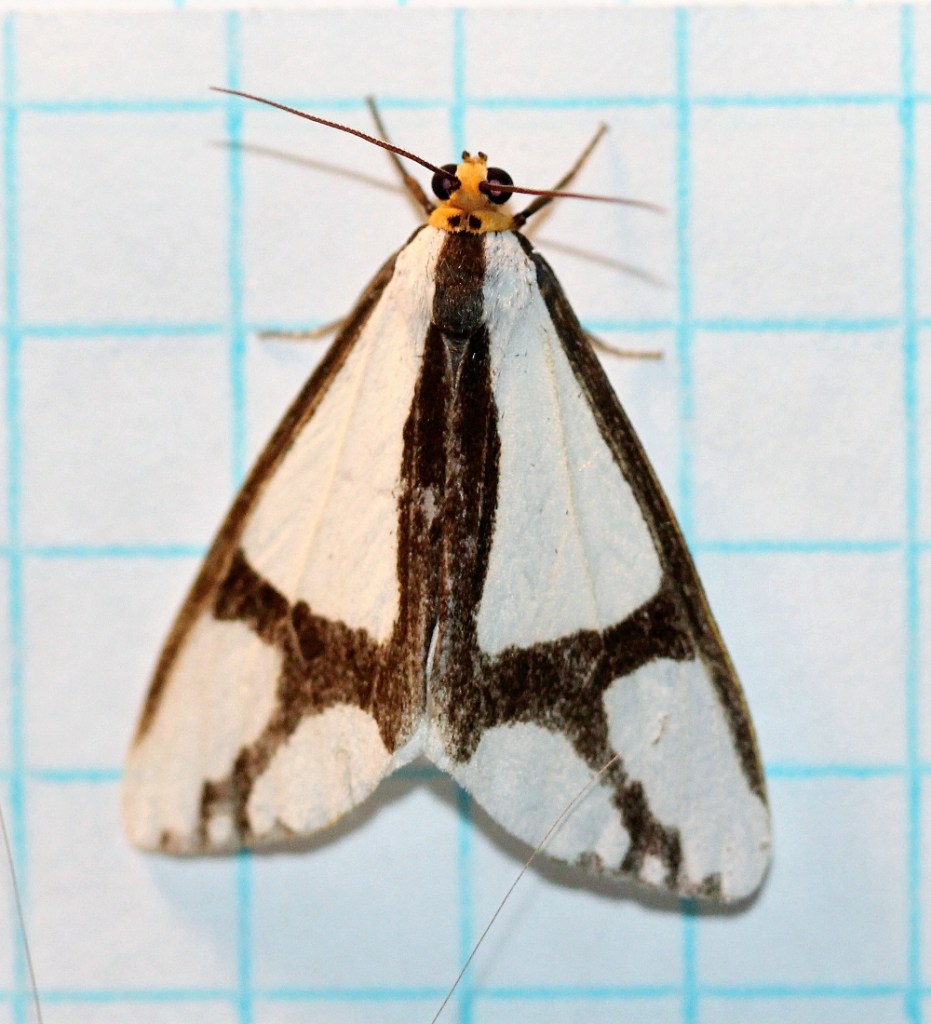
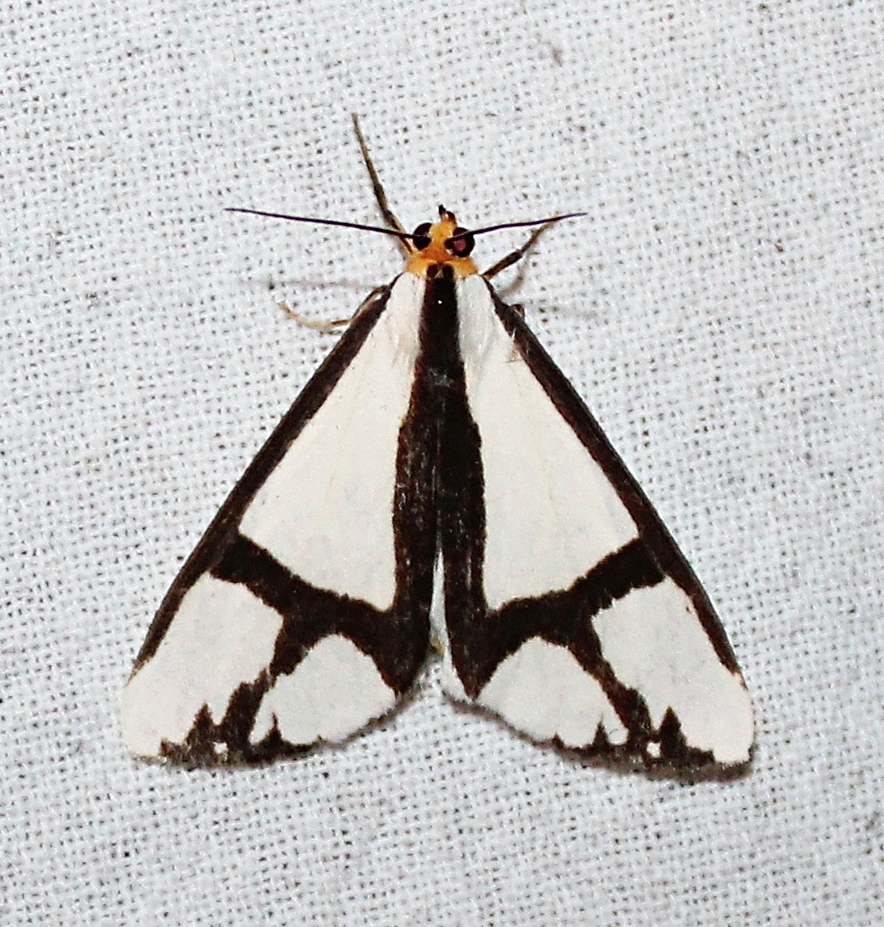
Haploa contigua is one of four species of Haploa with all white hindwings. The base color of the forewings is cream-colored to white. The costa and inner margins are bordered in dark brown. A diagonal dark brown line extends from the costa beyond the midpoint to the inner margin above the anal angle. Joining this is another line running from the outer margin. Haploa contigua lacks any lines or spurs in the antemedial portion of the forewing. All-white individuals are indistinguishable from other Haploa species with all-white forms.
Haploa contigua inhabits mesic woodlands to riparian woodlands. The larvae feed on the leaves of many species of woody and herbaceous plants.
The genus name “Haploa” is from the Greek word for “simplicity, singleness”, and the species epithet “contigua” is from the Latin word for “bordering” and so the neighbor moth.
 Not Very Far Away
Beautiful species.
LikeLike