
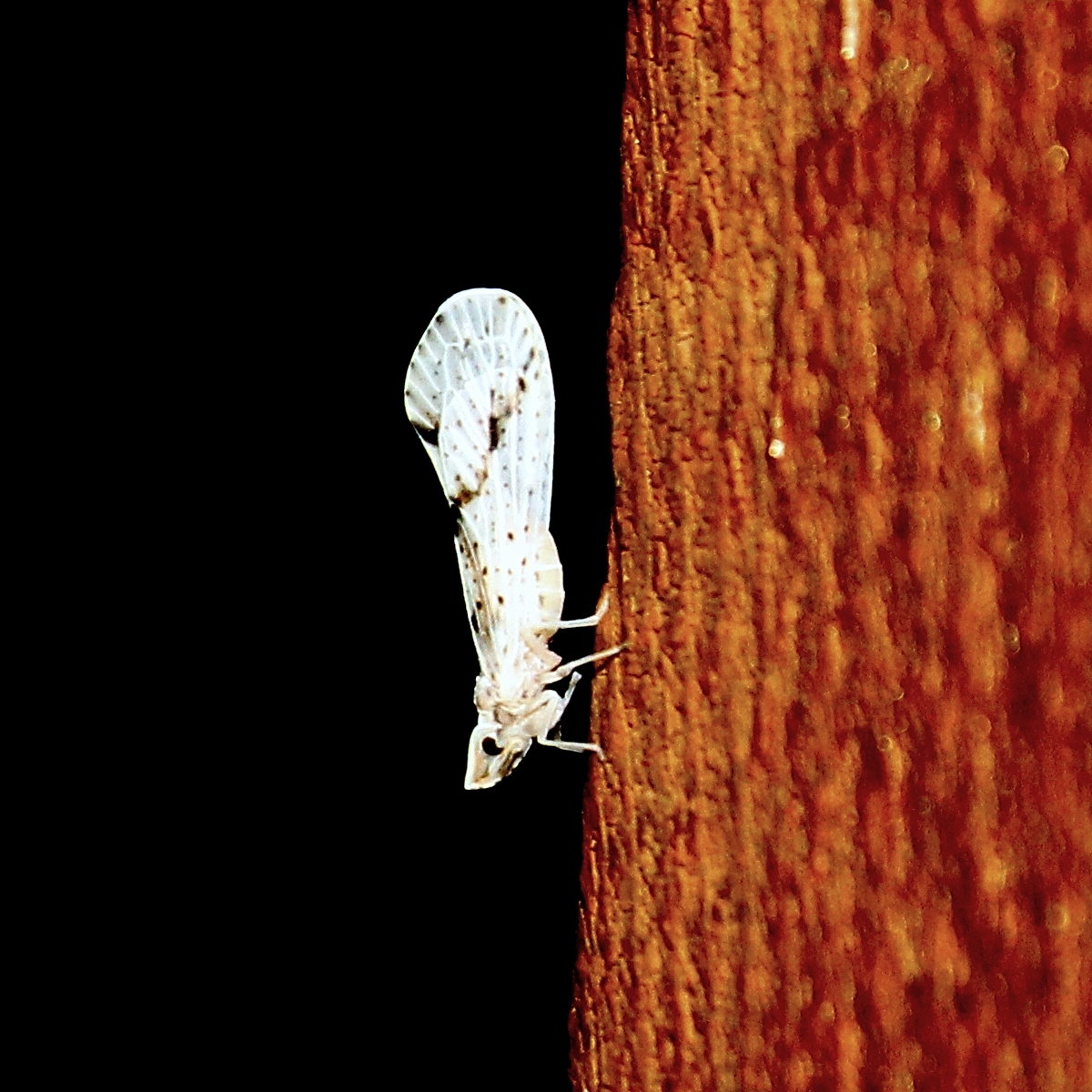
This pale insect is Otiocerus francilloni, a planthopper in the family Derbidae, also known as “derbids”. I have only seen it once, and that was in 2018, when it landed on the corner of my house one night.
Taxonomy
- Class Insecta (Insects)
- Order Hemiptera (True Bugs, Cicadas, Hoppers, Aphids and Allies)
- Suborder Auchenorrhyncha (True Hoppers)
- Infraorder Fulgoromorpha (Planthoppers)
- Superfamily Fulgoroidea
- Family Derbidae (Derbid Planthoppers)
- Subfamily Otiocerinae
- Tribe Otiocerini
- Genus Otiocerus
- Species francilloni (Otiocerus francilloni)
Source: BugGuide
Unusual food choices
The immature stages of Otiocerus francilloni, and those of all derbid planthoppers, feed on fungal hyphae growing in rotting wood rather than plant sap. Adult food sources of North American Otiocerus species are not known, but they have been found in association with oak, beech, and maple. The significance of these tree associations, if any, is uncertain.
Description
The wings of Otiocerus francilloni are pale with many dark spots between the veins. There is a dark, narrow, broken band on the wings and a black smudge mark on the sides of the head. The body is pale with spots on the abdomen.
A huge northern range extension
Otiocerus francilloni is reported from the following states: Delaware, Florida, Georgia, Illinois, Mississippi, New Jersey, New York, and Ohio. Finding it in Minnesota extends the known range by about 400 miles from the next nearest location in Illinois.
It seems unlikely that this species does not occur between Illinois and where I live in northern Minnesota. I hope someone is out there looking.
 Not Very Far Away