Greetings from two tiger moths

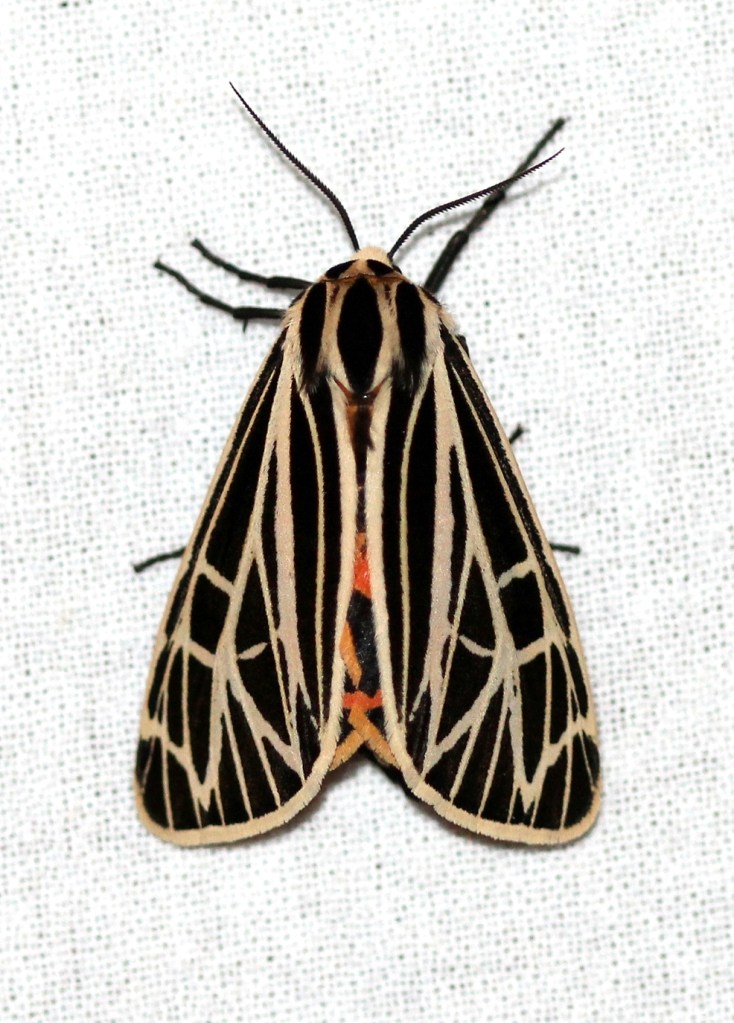
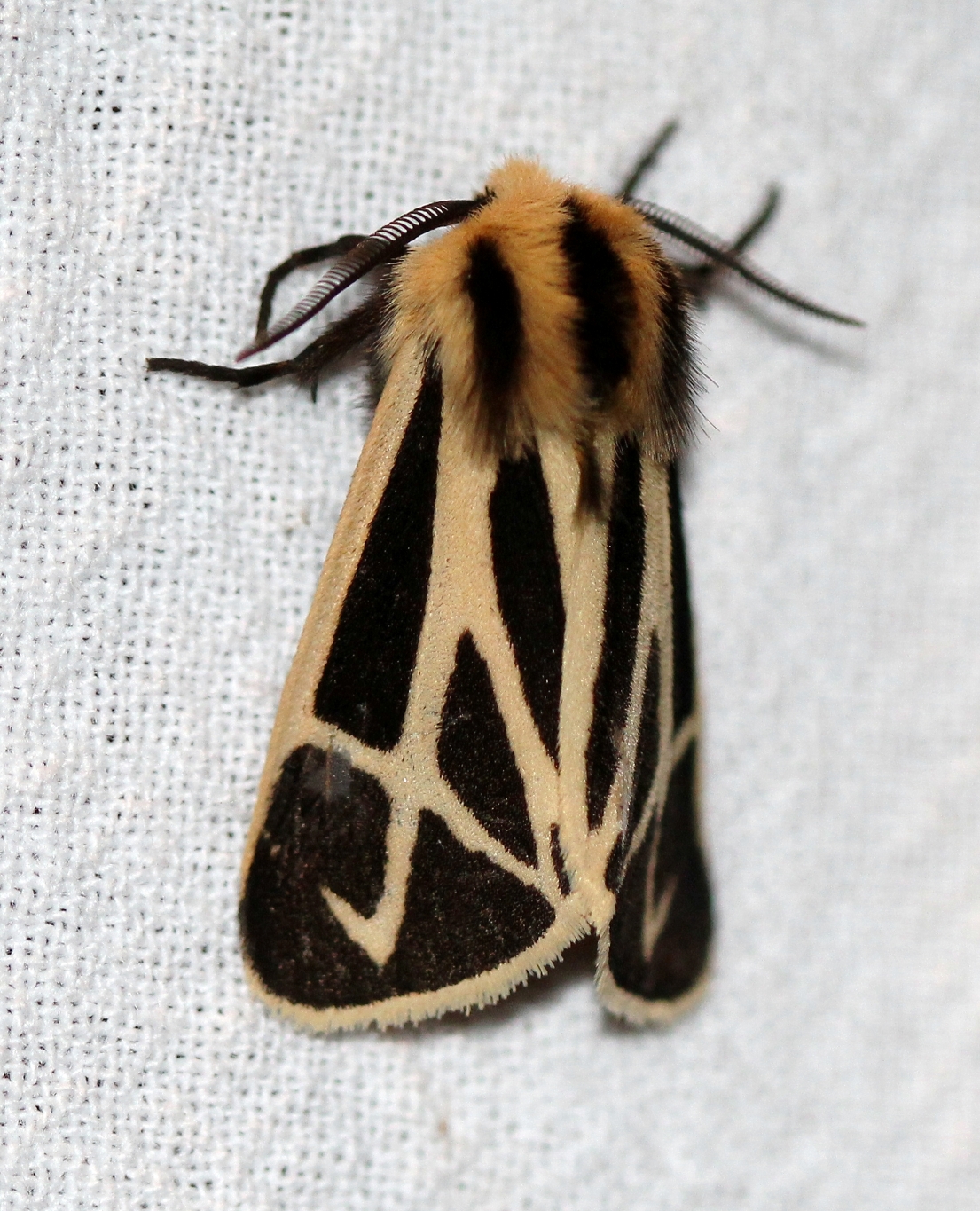
Apantesis phalerata (Harnessed Tiger Moth). The pectinate antennae indicate this is a male. Photographed on June 25, 2022.

In an earlier post, I wrote about Williams’ tiger moth (Apantesis williamsii). In this one, I present two more Apantesis species: Apantesis phalerata (Harnessed Tiger Moth) and Apantesis virgo (Virgin Tiger Moth).

Most Apantesis moths are characterized by dark forewings and numerous, often parallel, crisscrossing white or off-white lines. The patterns are usually distinctive enough to determine species, but not always.

What’s in a name?

The genus name Apantesis is from the Greek word “apantēsis”, translated as “meeting, an encounter/reply” and “to meet face to face“. It describes a custom of meeting visiting dignitaries where citizens would gather to welcome and escort the dignitary or hero in a procession. I’m not sure why this word was used to name the genus.

Harnessed Tiger Moth (Apantesis phalerata)

Harnessed Tiger Moth (Apantesis phalerata) is part of a group of similar species that includes Apantesis nais, Apantesis carlotta, and Apantesis vittata. Characteristics of the forewing pattern overlap in all four species, making accurate determination difficult, if not impossible, from a photograph. Had this moth spread its wings, exposing the underwings, then the choice might have been between Apantesis phalerata and Apantesis carlotta. Or maybe not.

Genital dissection is considered to be the only reliable way to determine these Apantesis species accurately, but I’m not willing to chop up a moth that rarely gets this far north. I’m just going to call my moth Apantesis phalerata because it looks more like identified specimens than it does the other three species. Additionally, the orange thorax appears to be another characteristic in photos of moths identified as Apantesis phalerata, distinct from the other three. Of course, I could be completely wrong.
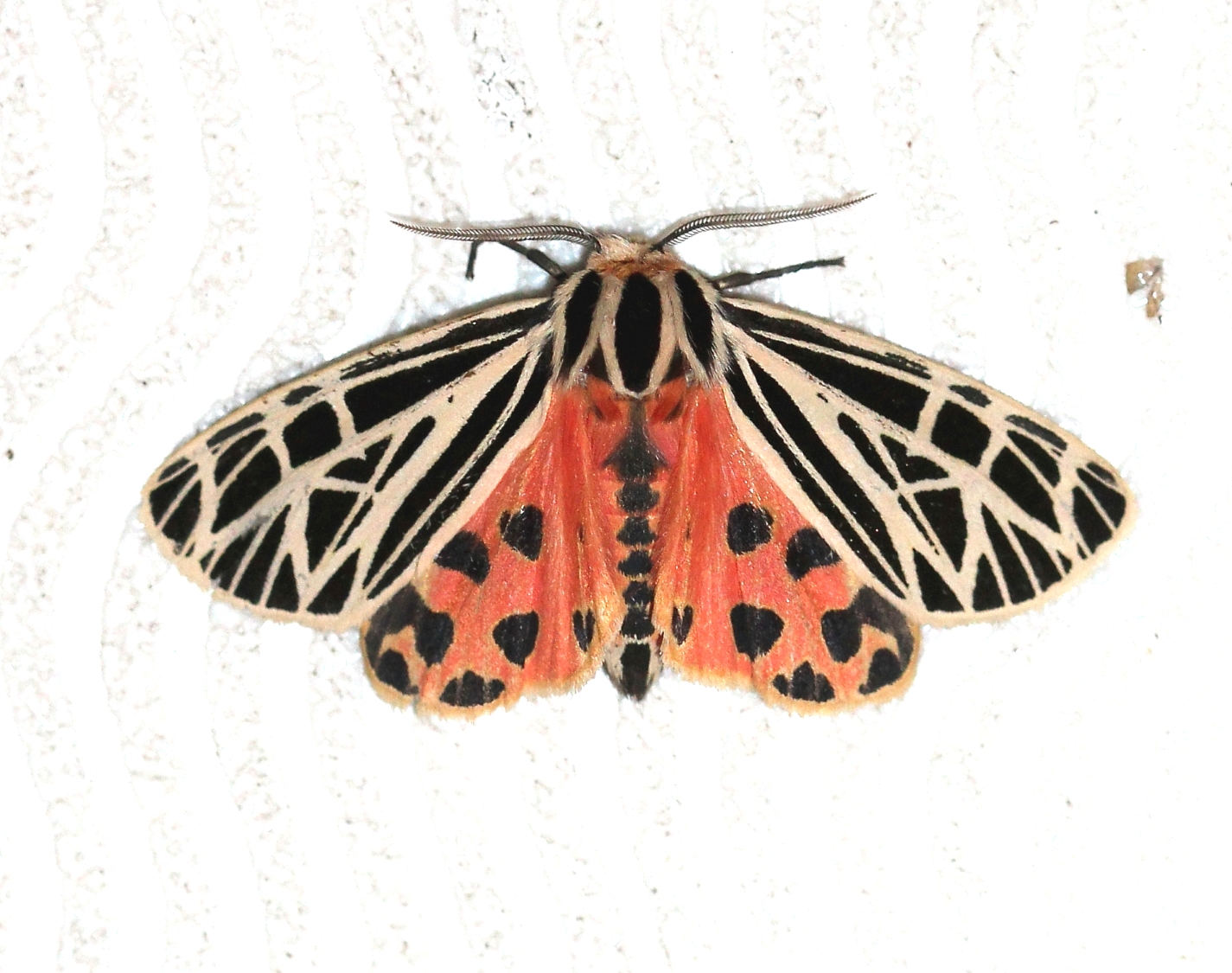
Apantesis virgo (Virgin Tiger Moth) showing the underwings. The pectinate antennae indicate this is a male. Photographed on July 22, 2019.

Virgin Tiger Moth (Apantesis virgo)

Identifying Virgin Tiger Moth (Apantesis virgo) is not as fraught as it is with Apantesis phalerata. Apantesis virgo is a large white, black, and red moth, 20 to 27 mm long. Black in color, the forewing has distinct off-white veins and transverse lines in the postmedial and subterminal areas. The hindwing may be bright pink, red, orange, or occasionally yellow, with an antemedian and outer margin lined with a row of black spots. There is also a patchy marginal band.

Larvae and host plants

Larvae of Apantesis moths are similar in appearance. Black and bristly, Apantesis virgo larvae have orange-brown spiracles; the setae beneath the spiracles may be orange. Brown to black bristles cover the black larvae of the Apantesis phalerata, which frequently have a pale dorsal line. Larvae of both species feed on low-growing herbaceous plants.

Range and distribution

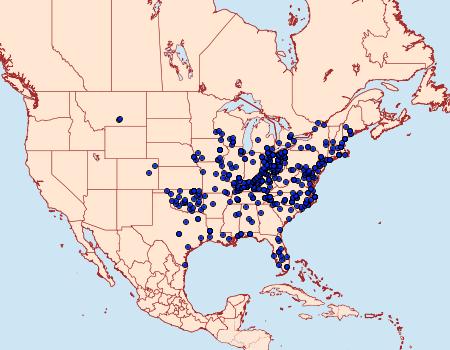
The following two maps from the Moth Photographers Group show the range and distribution of Apantesis virgo and Apantesis phalerata.

Pins and needles

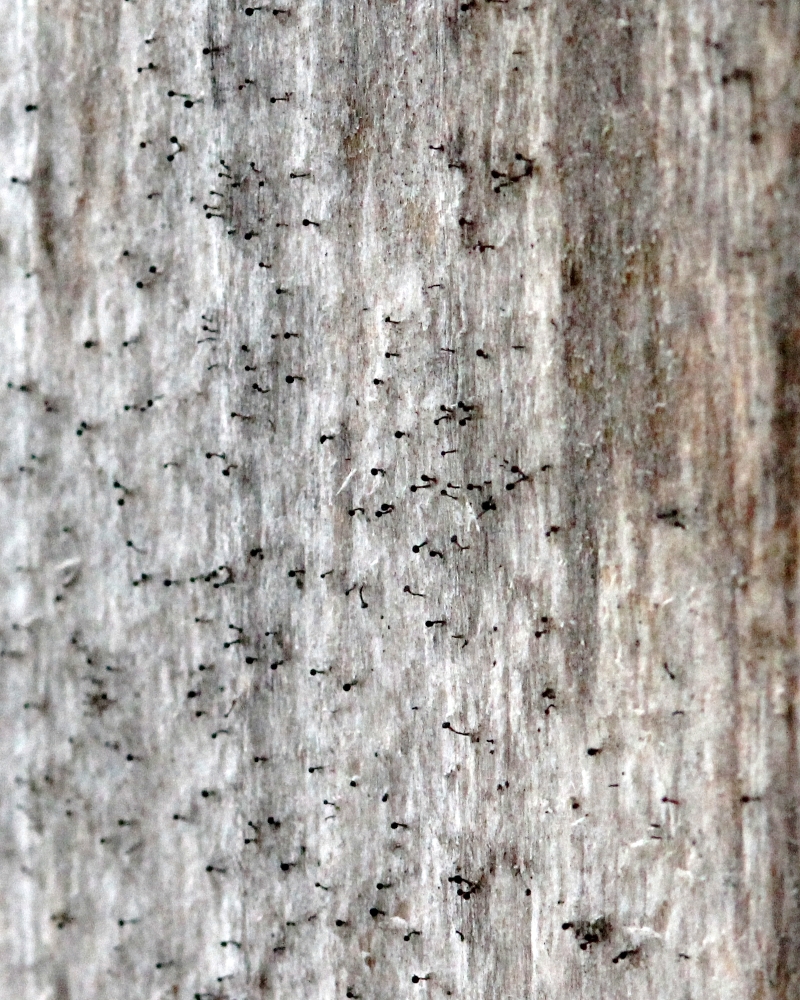
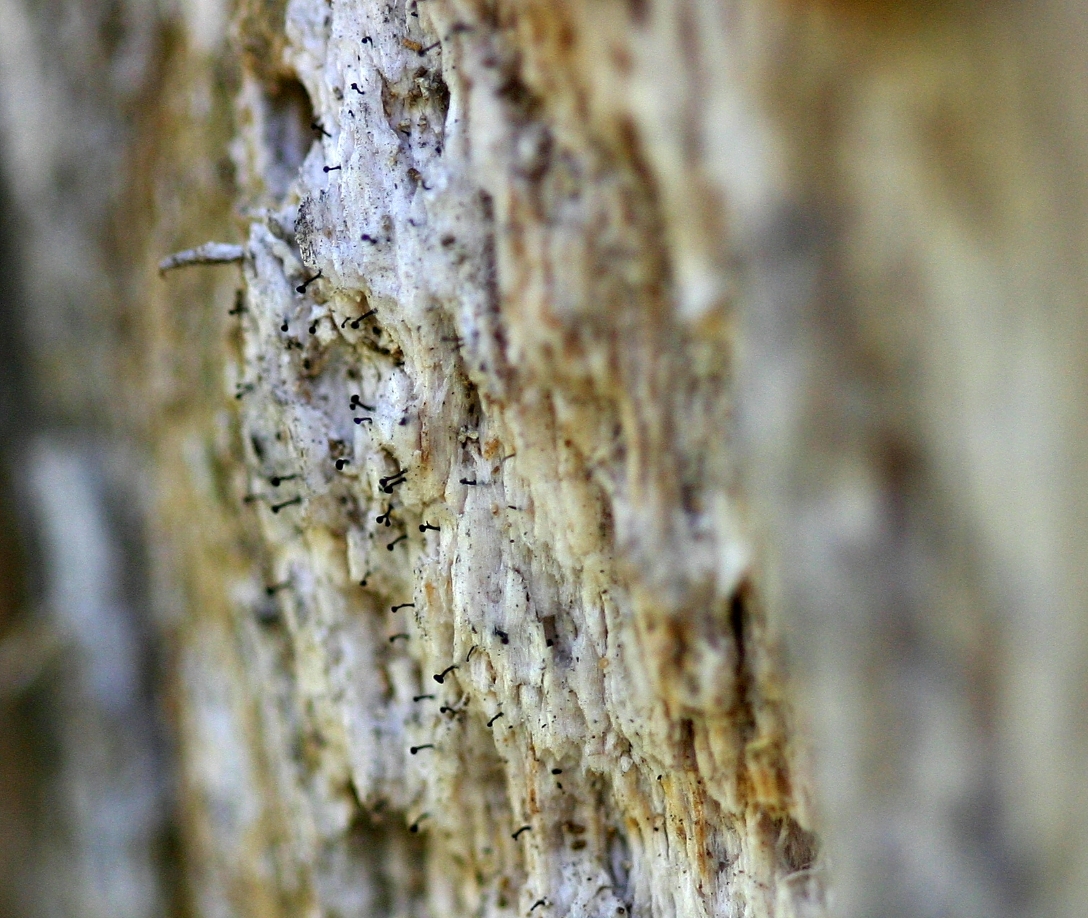
This may be a Calicium species. It has an immersed thallus. It is growing on weathered white cedar wood at the edge of a forest, and shaded most of the day.

The black stubble in the top photo are the fruiting bodies of a lichen. I found them growing on a piece of weathered cedar of an old birdhouse. I had set up that birdhouse about twenty-five years ago at the edge of a field and forest. Over the years, as the forest grew around the birdhouse, these tiny lichens began growing on the wood.

Lichens are a varied lot. Depending on the species, they can look like dust, little shrubs, gossamer, leaves, or overlapping shingles. Some lichens, like the one in the top photo, resemble whisker stubble or tiny straight pins. They are, fittingly, called whisker lichens and pin lichens.

Whisker lichens are minute, measuring just 1 to 2 millimeters in size. Most only grow on old wood or the bark of old trees. Many species are considered indicators of stable forest environments with long-term ecological continuity.

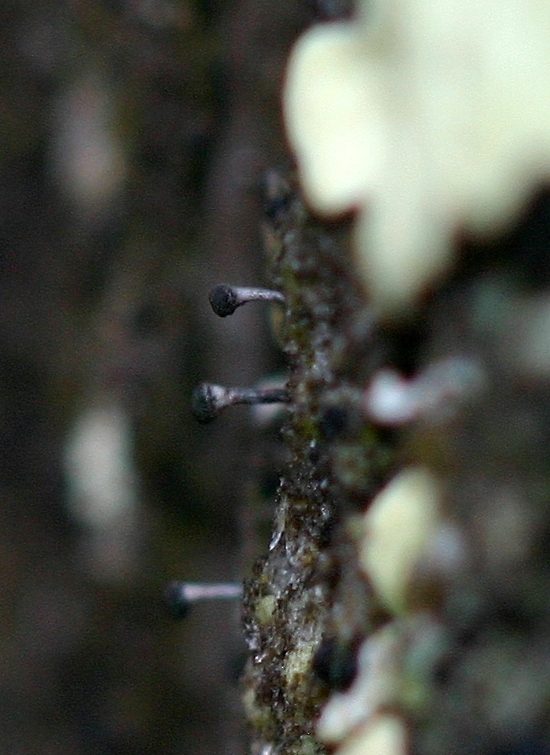
Whisker lichen apothecia. This species has an immersed thallus. Growing on a weathered balsam fir stump near the edge of a small wetland in a forest.

Taxonomy

The fungal partner (mycobiont) in whisker lichens are members of the Ascomycota, a group of fungi known as cup fungi or sac fungi. Familiar Ascomycota include morels, penicillium molds, and yeasts that are used to ferment bread and beer.

The algal partner (photobiont) is a green alga, usually a species of Trebouxia, a genus of unicellular algae that exists in almost all habitats. They can be free-living, but many species form symbiotic relationships with fungi to form lichens.

Description and terminology

The thallus (body) of whisker lichens may be minutely rough-surfaced (verruculose-granular) or immersed. If immersed, the fungal hyphae and the algae photobiont grow just below the surface of the substrate.

Whatever the thallus form, the apothecia (fruiting bodies) are borne on a long or short stalk, or rarely, sessile. They may be gray, blackish-brown, or greenish-black. At the top of the apothecia is a globose to lenticular capitulum (“little head”), a cup-shaped structure that produces spores.

A species of whisker lichen on an old white pine stump. Possibly a Calicium species.

Determining species

Species determination in whisker lichens is complicated. Morphological characters can only go so far. At best, you might get to genus. For positive identification, microscopic examination of the capitulum and spores is necessary.

Finding whisker lichens

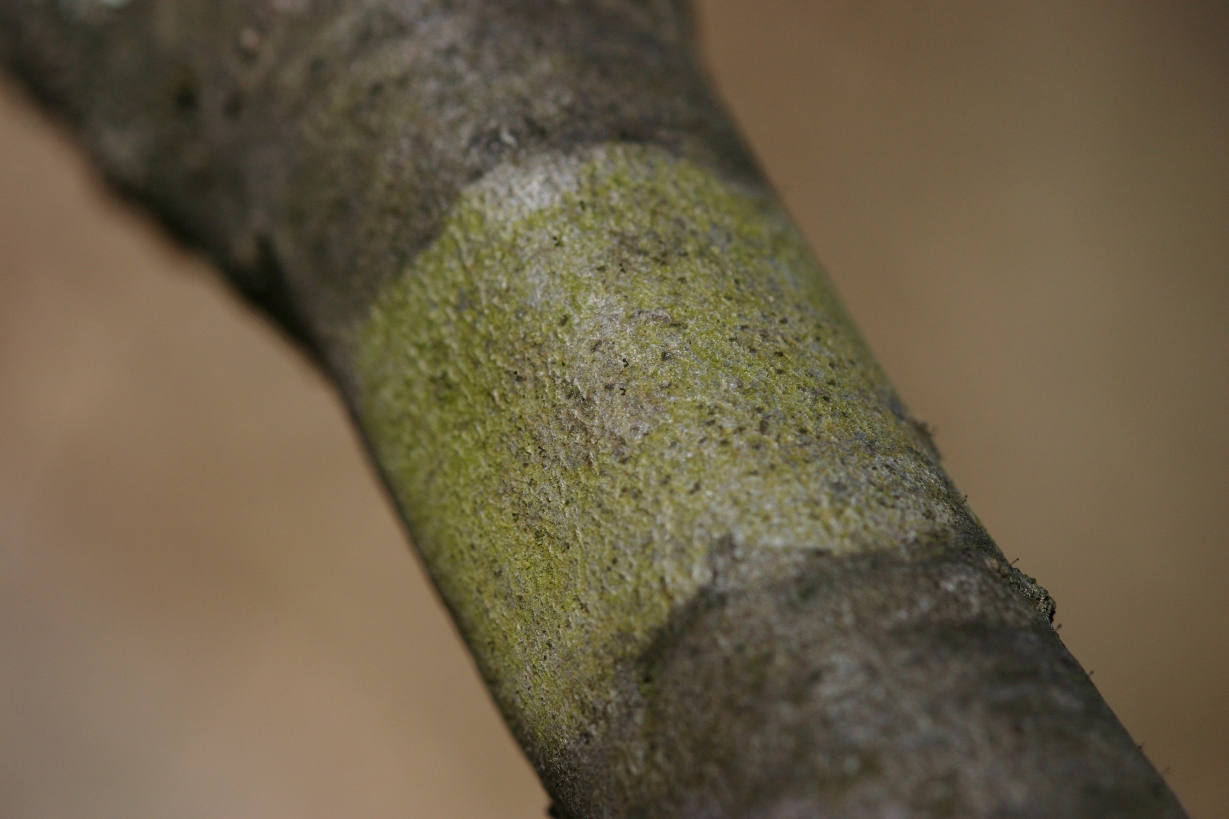
Tiny whisker lichens are growing on or from this green crustose lichen on an alder branch.

I have found whisker lichens growing on weathered jack pine twigs while photographing other lichens. Most of the ones I have seen seem to prefer old, weathered wood, but I did find one on green crustose lichen that was growing on an alder branch. It may have been a lichen parasite. These are interesting fungi that you can find with a hand lens, or in my case, a macro lens, scanning up and down the trunks and branches of trees, weathered wood, and other lichens.

Further reading