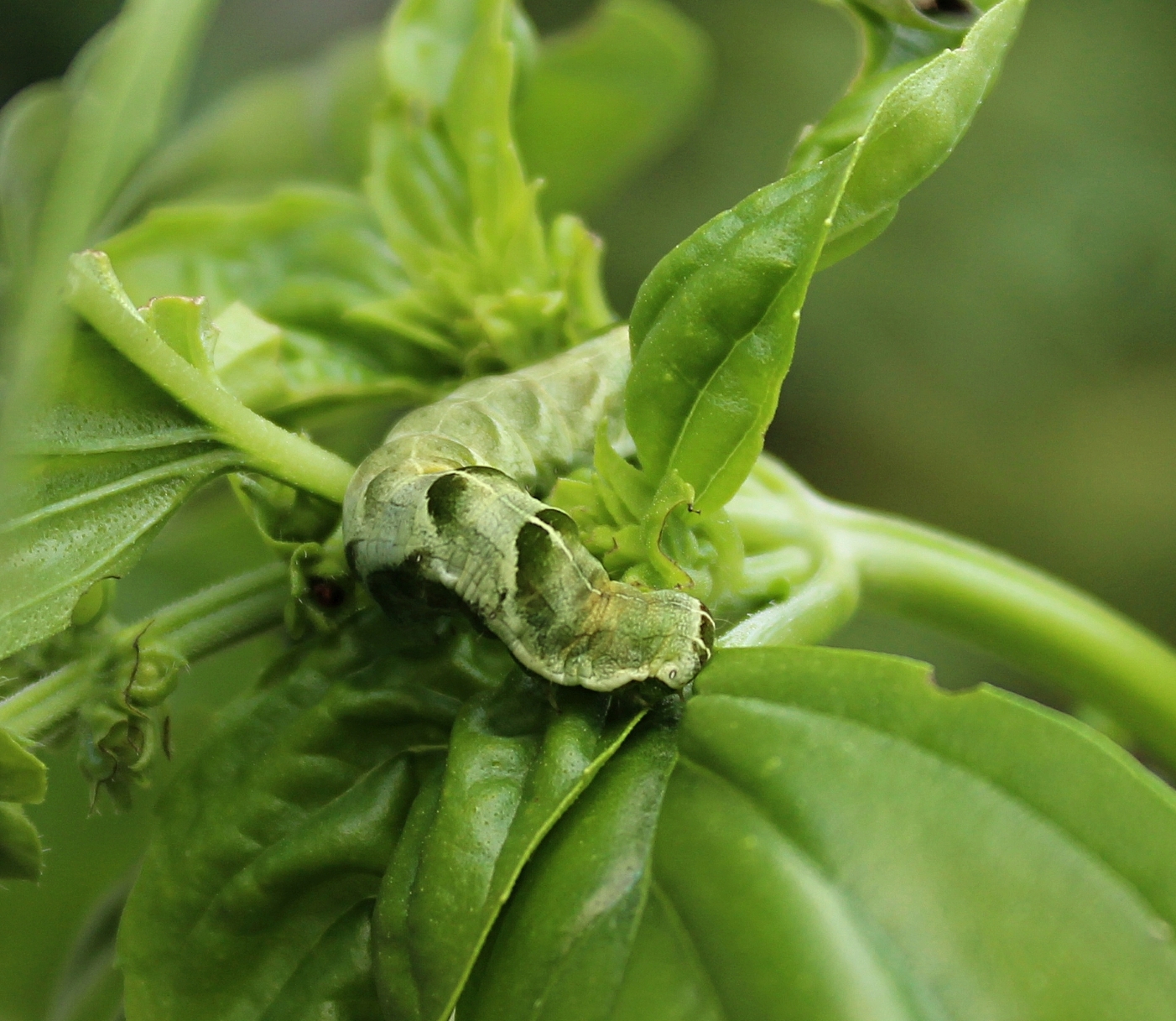
A caterpillar with a taste for basil

Melanchra adjuncta

I have two pots of basil on my porch for fresh basil leaves. Everything was going well with big plants with big leaves full of flavor and fragrance. One afternoon, I went to get a few large basil leaves. I was going to make an omelet with Gruyère cheese, onions, crushed garlic, cherry tomatoes, peppers, potatoes, and mushrooms. And fresh basil.

When I looked into one of the pots, there on the largest plant was this strikingly patterned green caterpillar. I’d never seen anything like it before. It reminded me of a sphinx moth caterpillar. But there was no horn or even a bump on the last segment. The head seemed to have the wrong shape, too. Maybe it was a cutworm caterpillar (Noctuidae: Noctuinae), not a sphinx (Sphingidae)?
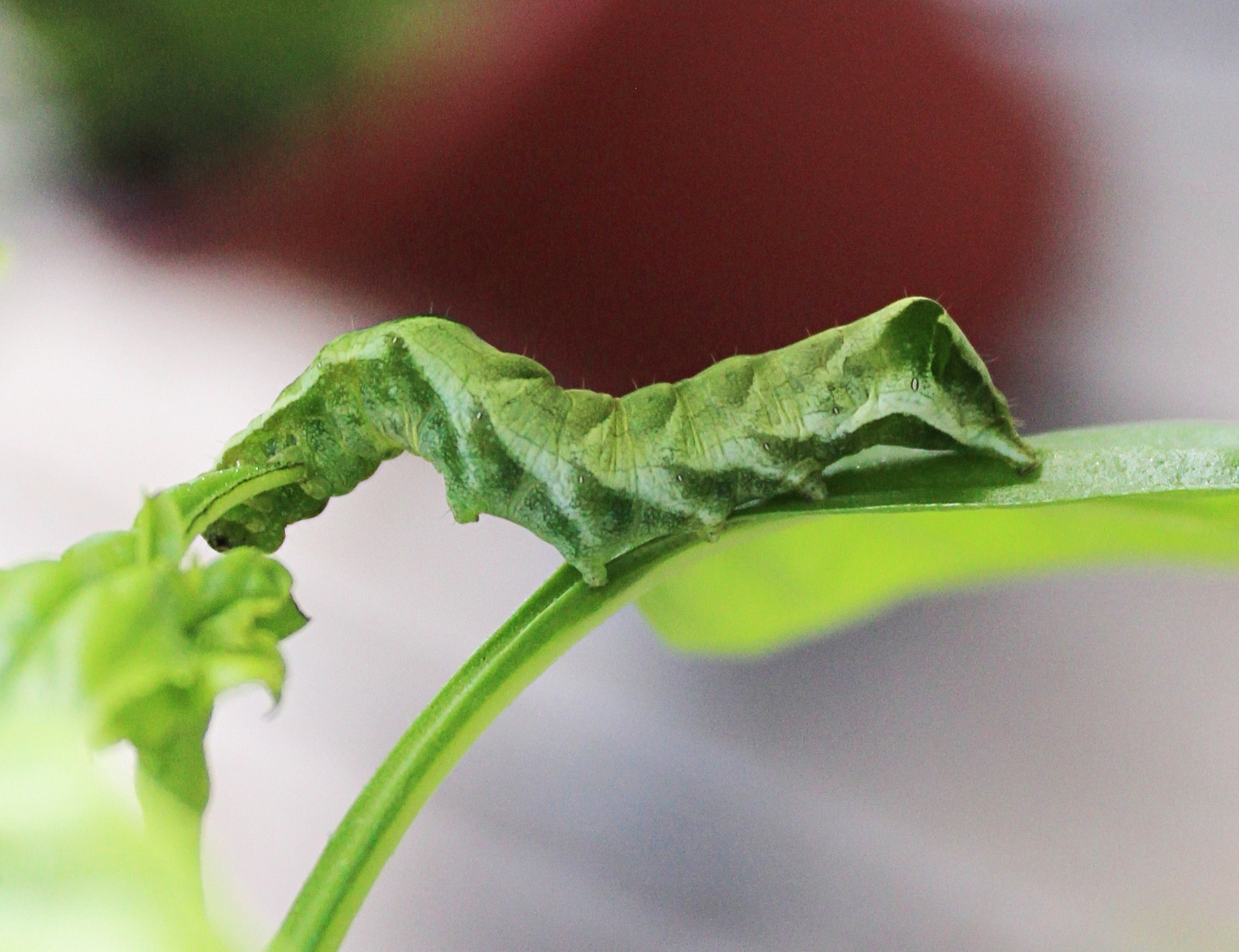
Melanchra adjuncta

A search of Noctuidae in Caterpillars of Eastern North America (David L. Wagner, © 2005) didn’t yield anything similar. My next step was to go through photos at BugGuide of caterpillars in the Subfamily Noctuinae, focusing on the tribes Orthosiini, Tholerini, Hadenini, and Leucaniini. I chose these tribes because species in them are frequent visitors to my moth light, so it seemed worth a shot.

After many pages at BugGuide, I was at the genus Melanchra. The first species to show up was Melanchra adjuncta (hitched arches), and my caterpillar looked just like it. To be sure, I continued on a little more but found nothing similar.

Basil isn’t the only plant Melanchra adjuncta eats. Their palate is open to a wide variety of herbaceous plants and even leaves of some woody plants. After eating for a few hours, the caterpillar left, perhaps to enjoy other plants on my porch.
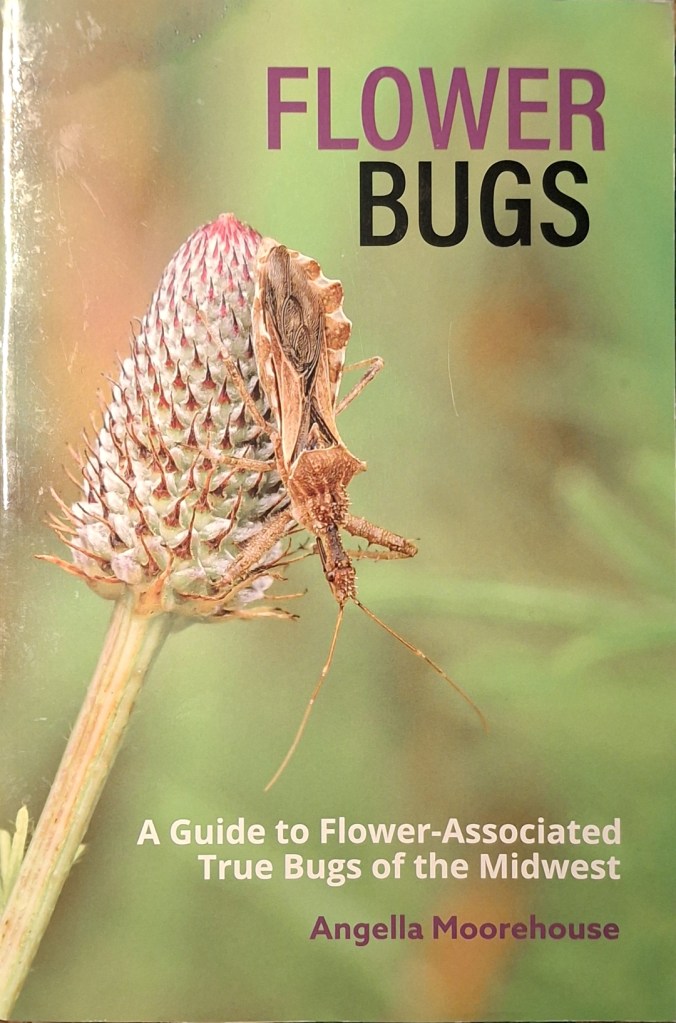
Essential Guide to Midwest True Bugs by Angella Moorehouse

This just arrived today, and I know it will be so very useful as I venture further into the world of insects. Flower Bugs: A Field Guide to Flower-Associated True Bugs of the Midwest by Angella Moorehouse (2023) is published by Pollination Press LLC, Minnetonka, MN. The Pollination Press web address is www.pollinationpress.com.

This book has 360 pages, lavishly illustrated with beautiful full-color photographs of 160 species of terrestrial true bugs from 25 families and 52 genera. The area covered includes the states of Minnesota, Iowa, Missouri, Wisconsin, Illinois, Indiana, Ohio, and Michigan in the US and Southern Ontario in Canada.

The book includes taxonomic charts that will guide you to family and then to genus, detailed illustrations of bug morphology, their ecology, and a glossary of terms to help you learn and identify true bugs.

Species descriptions are not overly technical, thus making this book more accessible to non-specialists with some background in insect identification. Maps show the range of each species. There are notes on key identifying features, life history, ecology, feeding, and habitat. Descriptions of herbivorous species include lists of plants they consume. Carnivorous species are similarly treated. Not all species receive the same description treatments. Some are represented with photographs.

There seems to be a problem with the index, where some entries do not match the page numbers in the book. Not sure why.

I am loving this book already and will put it to good use identifying the many bug species I have photographed. My first project will be to go through the unidentified species in my files and to re-check previous identifications. After that, I’ll spend many an evening just browsing and waiting for spring and the bugs to return.

Banasa dimidiata, a stinkbug