Greetings from two tiger moths

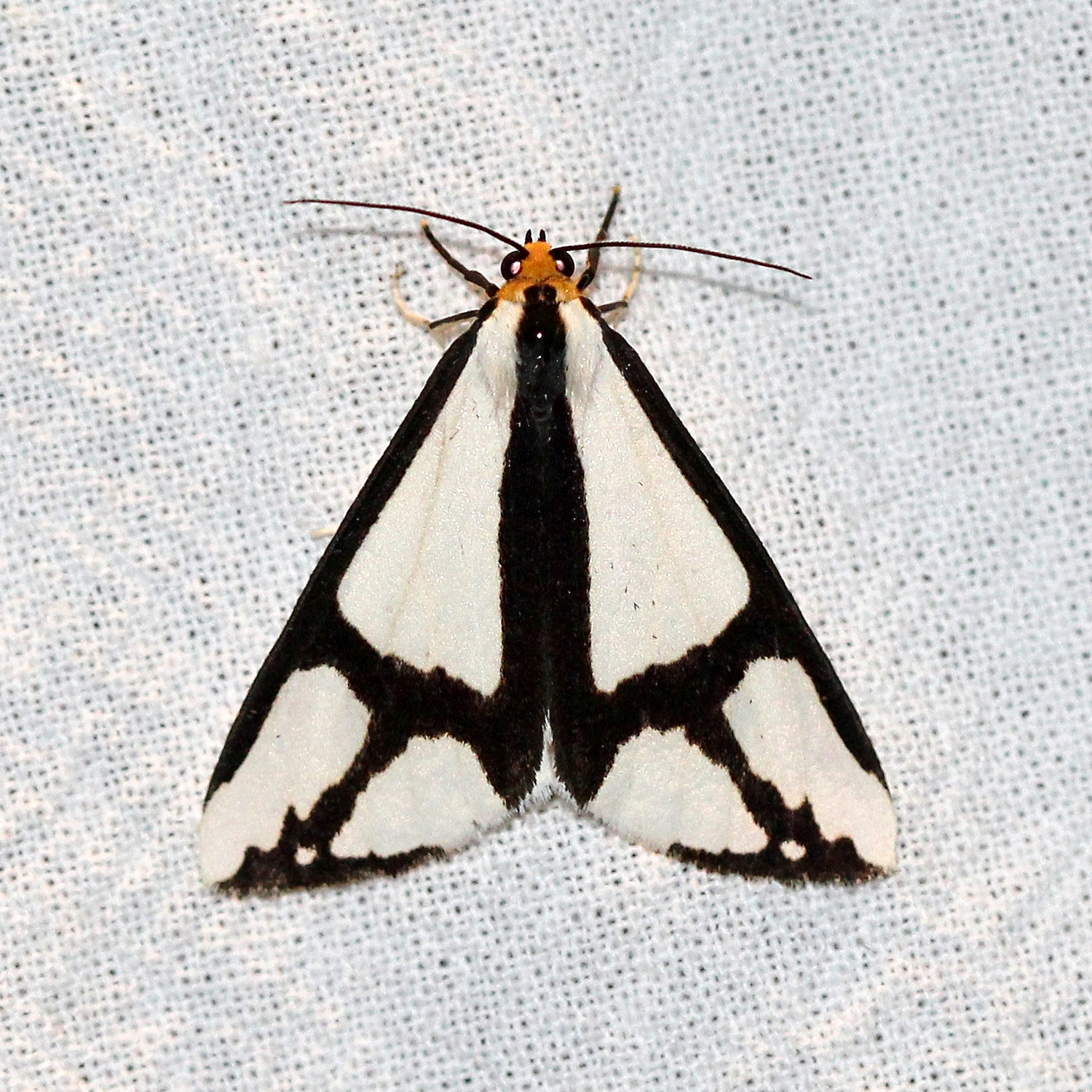
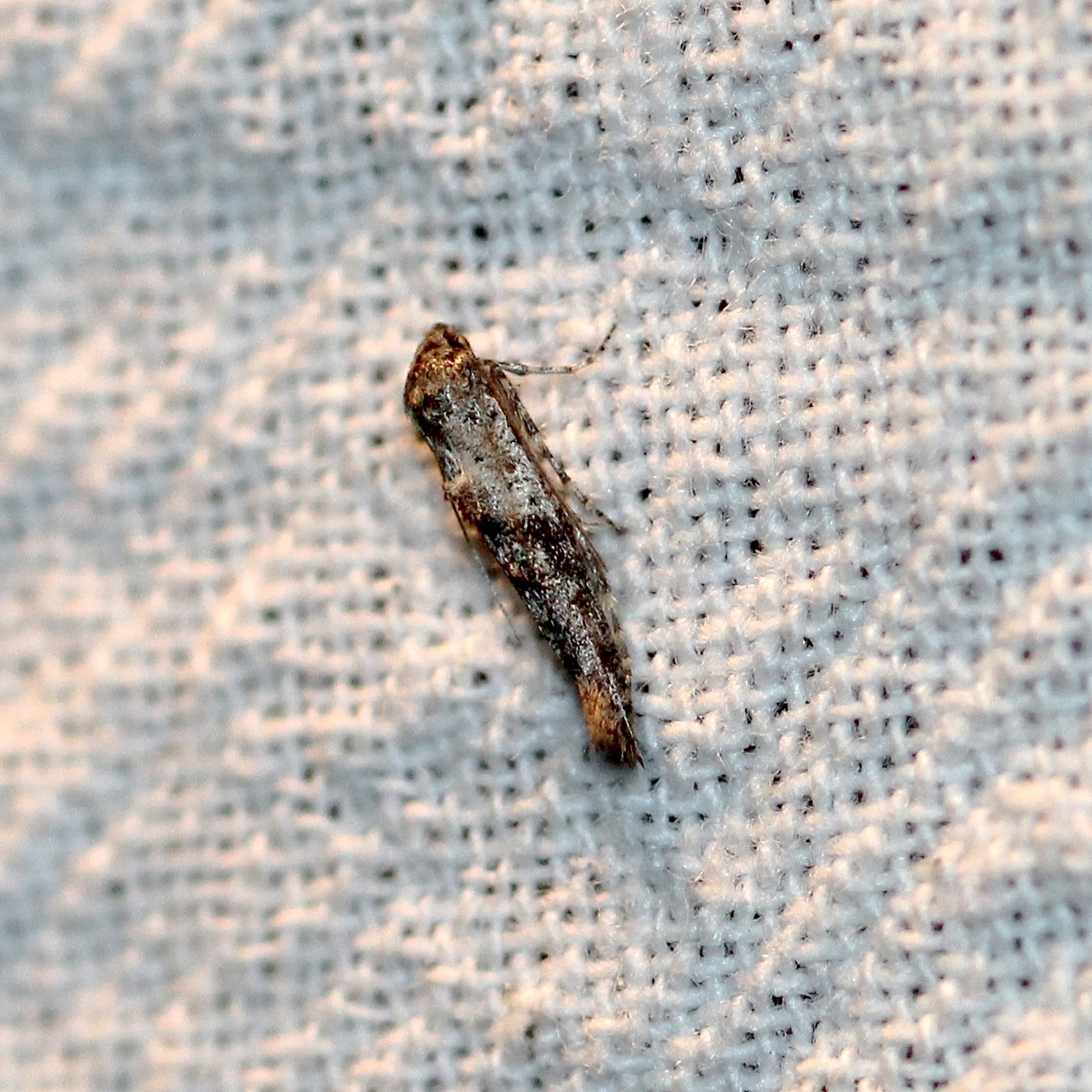
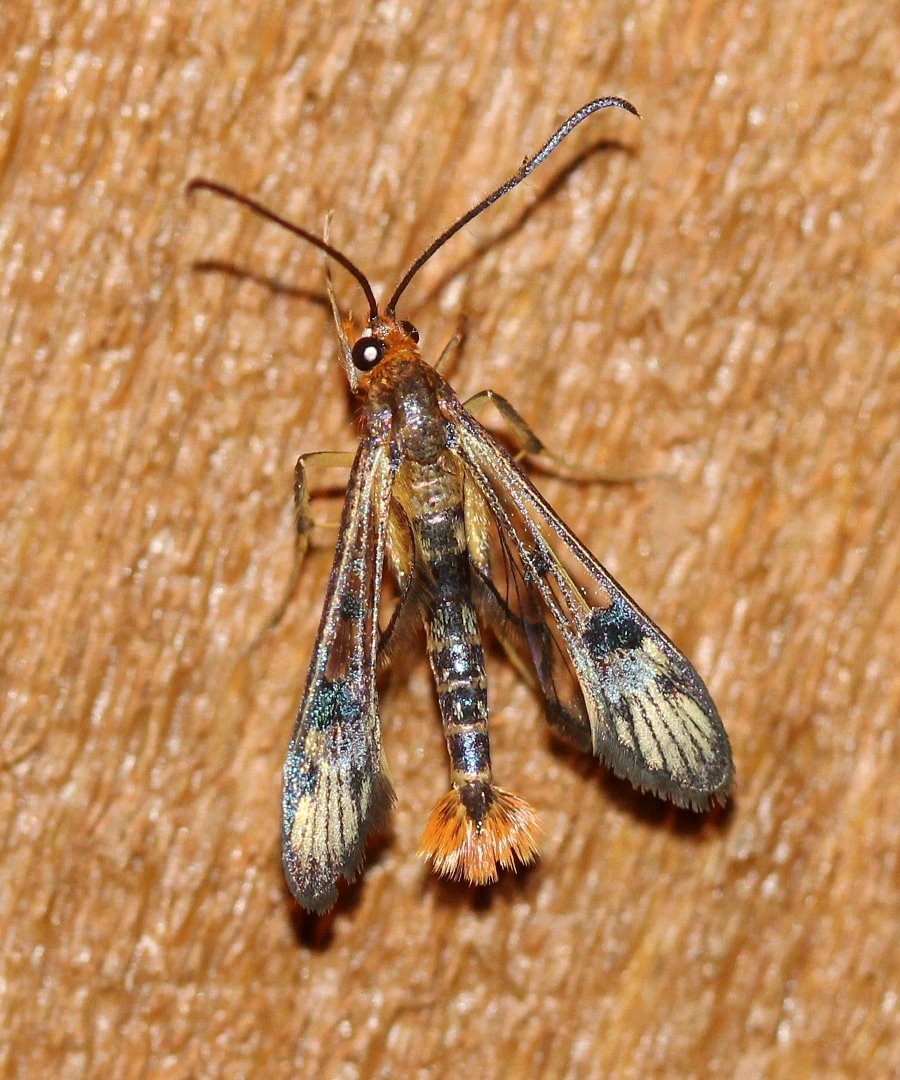
Apantesis phalerata (Harnessed Tiger Moth). The pectinate antennae indicate this is a male. Photographed on June 25, 2022.

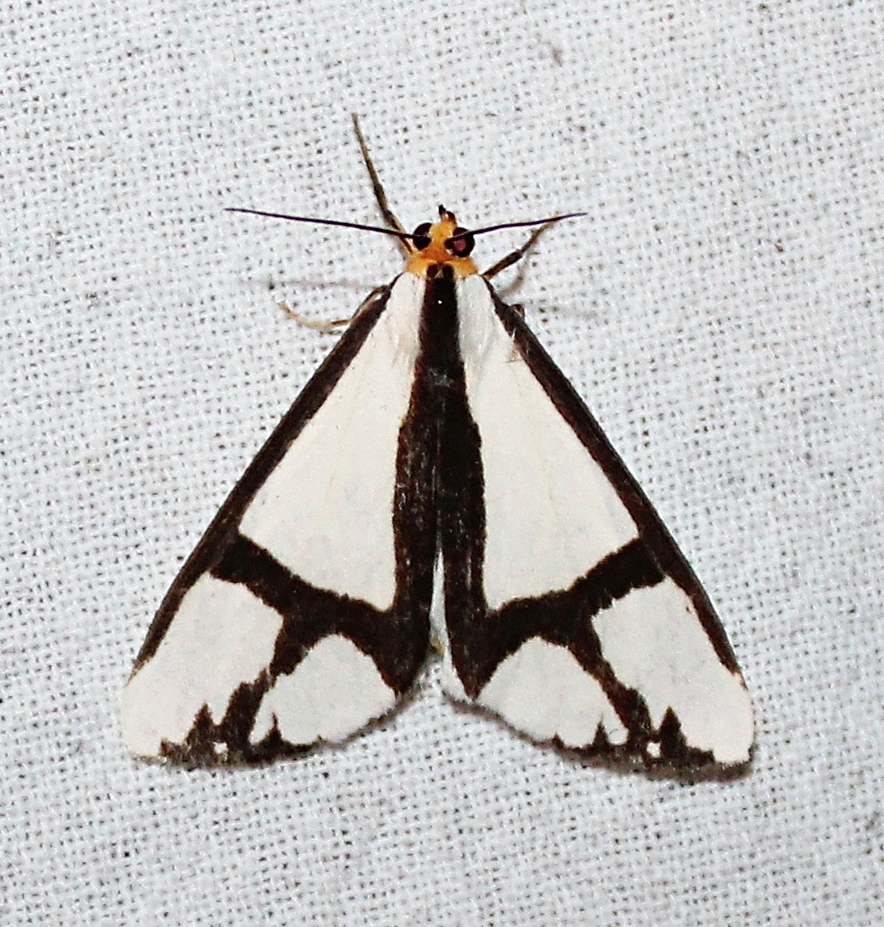
In an earlier post, I wrote about Williams’ tiger moth (Apantesis williamsii). In this one, I present two more Apantesis species: Apantesis phalerata (Harnessed Tiger Moth) and Apantesis virgo (Virgin Tiger Moth).

Most Apantesis moths are characterized by dark forewings and numerous, often parallel, crisscrossing white or off-white lines. The patterns are usually distinctive enough to determine species, but not always.

What’s in a name?

The genus name Apantesis is from the Greek word “apantēsis”, translated as “meeting, an encounter/reply” and “to meet face to face“. It describes a custom of meeting visiting dignitaries where citizens would gather to welcome and escort the dignitary or hero in a procession. I’m not sure why this word was used to name the genus.

Harnessed Tiger Moth (Apantesis phalerata)

Harnessed Tiger Moth (Apantesis phalerata) is part of a group of similar species that includes Apantesis nais, Apantesis carlotta, and Apantesis vittata. Characteristics of the forewing pattern overlap in all four species, making accurate determination difficult, if not impossible, from a photograph. Had this moth spread its wings, exposing the underwings, then the choice might have been between Apantesis phalerata and Apantesis carlotta. Or maybe not.

Genital dissection is considered to be the only reliable way to determine these Apantesis species accurately, but I’m not willing to chop up a moth that rarely gets this far north. I’m just going to call my moth Apantesis phalerata because it looks more like identified specimens than it does the other three species. Additionally, the orange thorax appears to be another characteristic in photos of moths identified as Apantesis phalerata, distinct from the other three. Of course, I could be completely wrong.

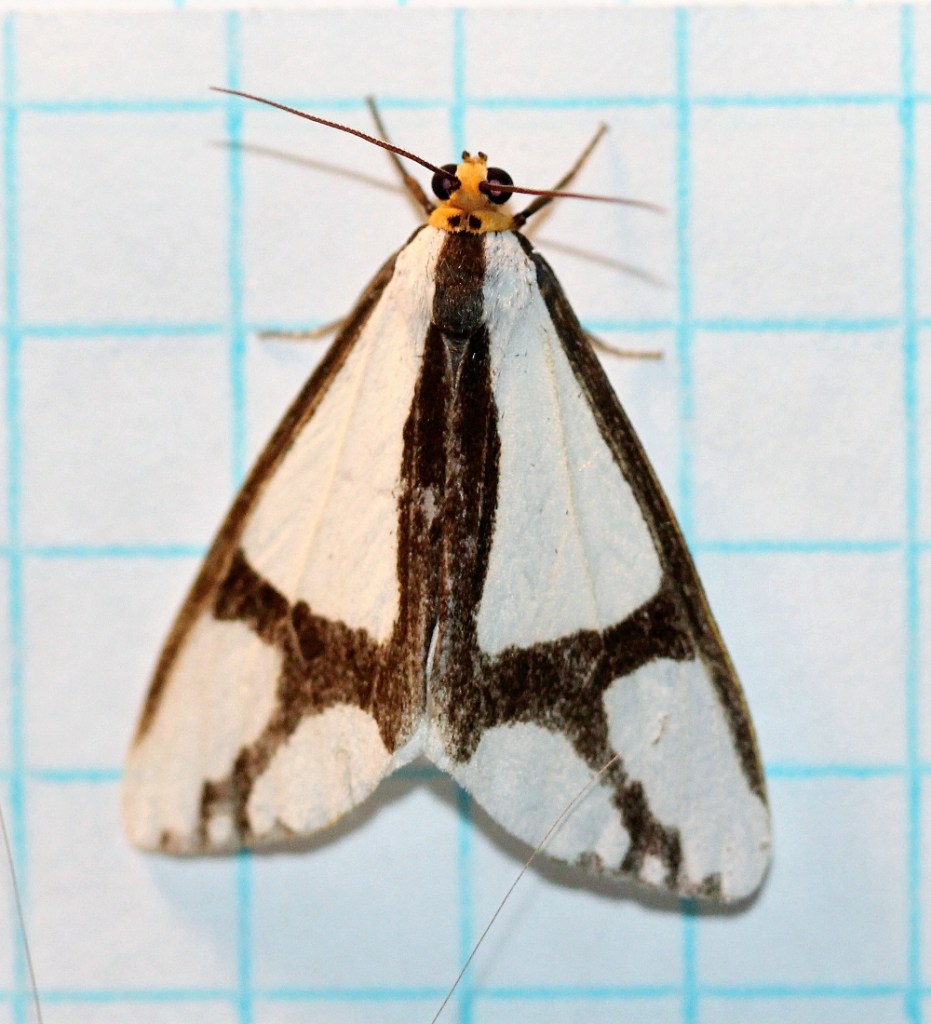
Apantesis virgo (Virgin Tiger Moth) showing the underwings. The pectinate antennae indicate this is a male. Photographed on July 22, 2019.

Virgin Tiger Moth (Apantesis virgo)

Identifying Virgin Tiger Moth (Apantesis virgo) is not as fraught as it is with Apantesis phalerata. Apantesis virgo is a large white, black, and red moth, 20 to 27 mm long. Black in color, the forewing has distinct off-white veins and transverse lines in the postmedial and subterminal areas. The hindwing may be bright pink, red, orange, or occasionally yellow, with an antemedian and outer margin lined with a row of black spots. There is also a patchy marginal band.

Larvae and host plants

Larvae of Apantesis moths are similar in appearance. Black and bristly, Apantesis virgo larvae have orange-brown spiracles; the setae beneath the spiracles may be orange. Brown to black bristles cover the black larvae of the Apantesis phalerata, which frequently have a pale dorsal line. Larvae of both species feed on low-growing herbaceous plants.

Range and distribution

The following two maps from the Moth Photographers Group show the range and distribution of Apantesis virgo and Apantesis phalerata.

Going in circles

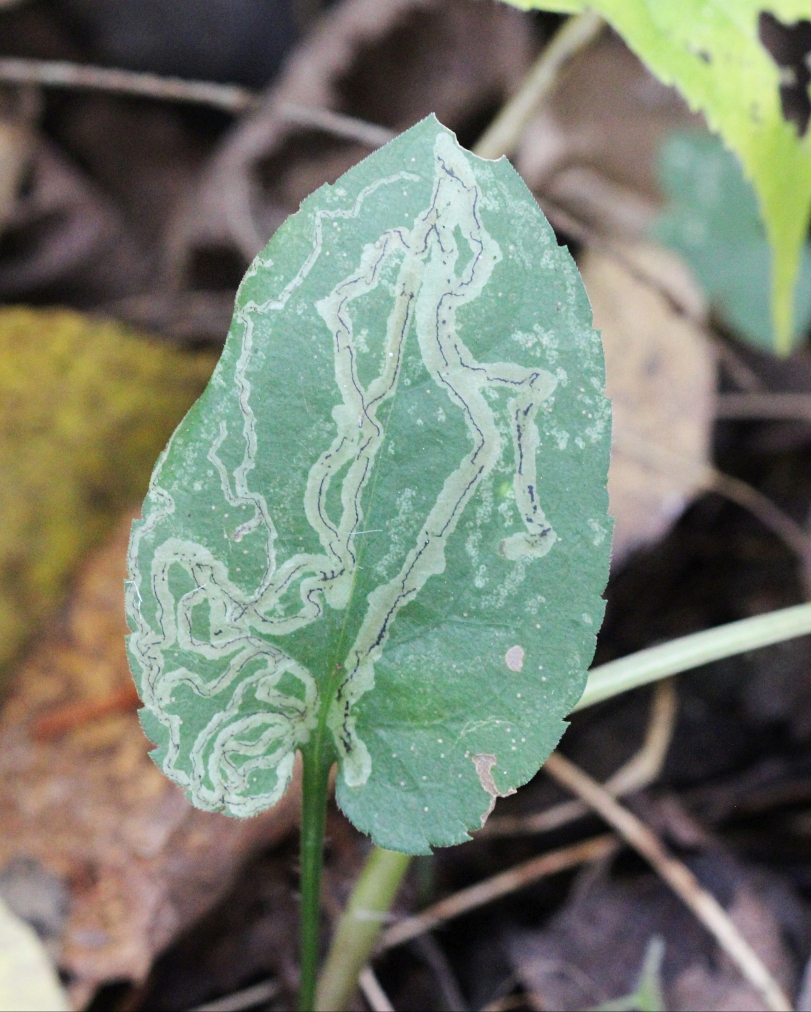
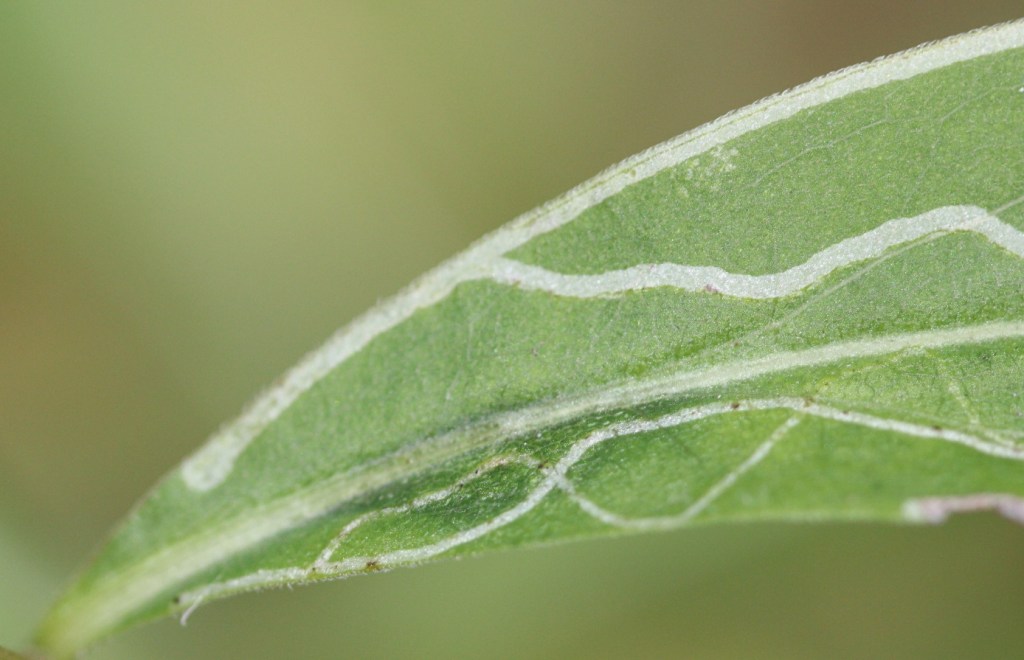
A Stigmella moth leaf mine in a bristly blackberry leaf.

While out one afternoon in my tamarack swamp hunting for dwarf mistletoe, the subject of a future post, I found this leaf mine in the leaf of a bristly blackberry. The blackberry is possibly Rubus flagellaris, but I’m still working out the identity of the species.

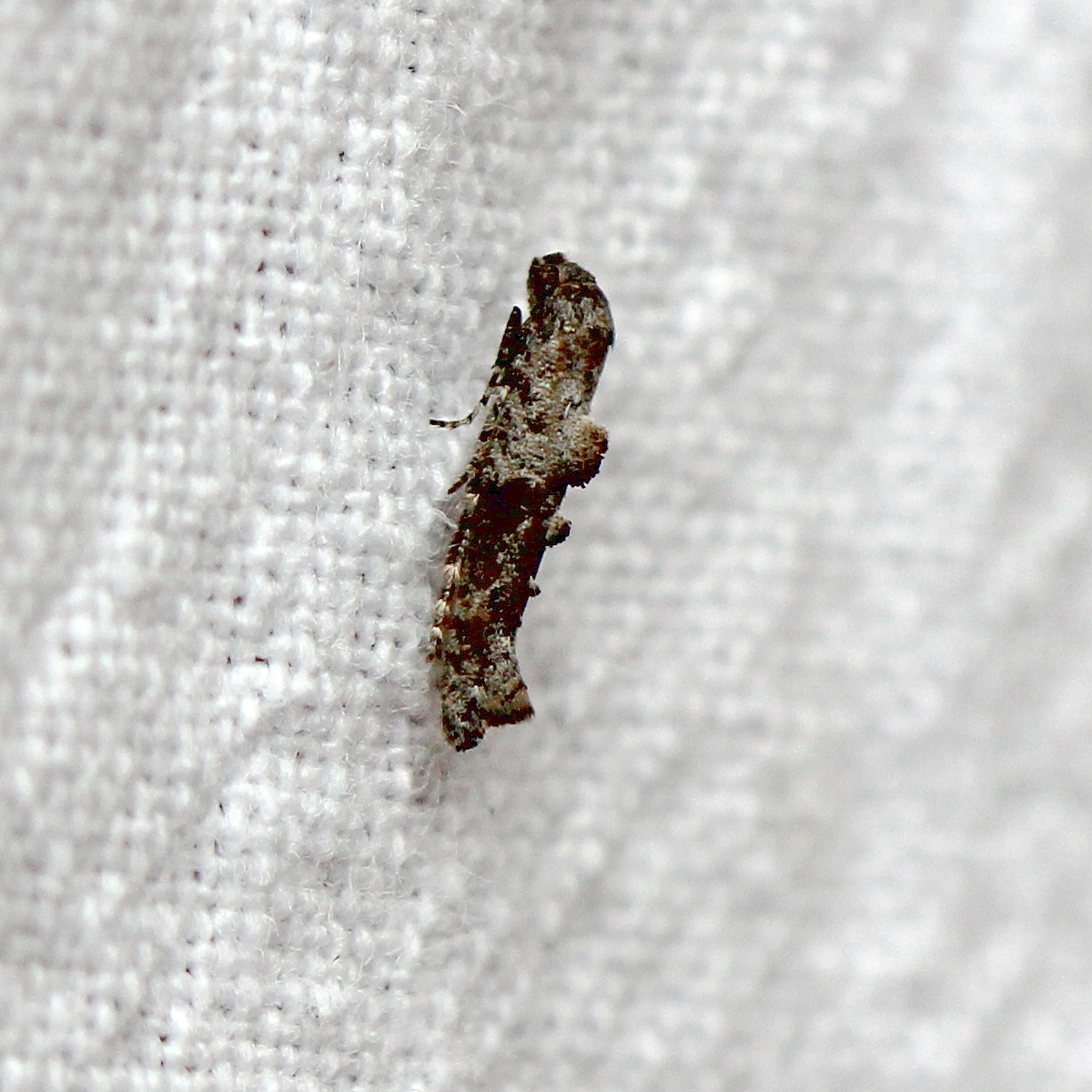
The leaf mine bears a strong resemblance to the leaf mines made by the larvae of the moth Stigmella villosella (Family Nepticulidae). Stigmella villosella is a specialist on Rubus species. The adult moths are minute with a wingspan of only 3 mm.

I doubt I’ll see this moth at my lights, but maybe next year, if I find an active leaf mine, I could raise the larva to maturity. I’m going to give it try anyway.

Another Rubus leaf, but without leaf mines, just a few holes all near the midvein made by some unknown insect.

Another insect added to the checklist: a gall-forming fly

Chirosia betuleti gall

It might be getting colder outdoors, but there are still insects to be found. While out walking a few days ago, I came across this odd growth on a Dryopteris cristata (crested wood fern) frond.

This tightly coiled knot on the frond is caused by a galling insect that specializes in ferns. The species responsible for the gall is a fly (Diptera, Anthomyiidae) named Chirosia betuleti.

The fly’s larvae form galls on several fern species: Athyrium filixfemina (lady’s fern), Dryopteris carthusiana (spinulose wood fern), Dryopteris cristata (crested wood fern), Dryopteris filixmas (male fern), Matteuccia struthiopteris (ostrich fern), and Pteridium aquilinum (bracken fern).

Another fern with a gall

A search for other galls the next day located one empty gall on the frond of a Dryopteris carthusiana plant in a tamarack swamp. I looked for Athyrium filixfemina and Matteuccia struthiopteris, but their fronds had already withered away now that it is fall. I’m sure I’ve seen these odd growths on them before. None of the Pteridium aquilinum plants had galls, and I don’t recall ever seeing them on the fronds before. There’s always next year.

Dryopteris carthusiana with gall

Gall formation

The larvae of Chirosia betuleti feed on the trichomes (hair-like growths) along the midrib of the newly emerging frond, and then mine along the midrib, causing it to coil into a mophead shape. The related Chirosia grossicauda forms galls on bracken fern. Another insect to watch for next year.

The Anthomyiidae

Chirosia betuleti is a fly in the family Anthomyiidae (root maggot flies). Most species in this family feed on plants as larvae, feeding on roots, seeds, or mining leaves.

Some feed on dung, decaying plant matter, or mushrooms. Other species are endoparasitoids of grasshoppers, and some are kleptoparasites of Hymenoptera.

Adults feed on nectar and pollen and may be pollinators. Most species resemble small houseflies.

Range

Chirosia betuleti is reported on iNaturalist from the western coast of North America from Alaska to California, and inland to Saskatchewan, Canada, and Idaho, and Montana, around the Great Lakes and New England, then east to the Maritime Provinces of Canada. The range then follows the Appalachian Mountains south to the Great Smoky Mountains. There are two isolated occurrences in South Carolina and Florida.

Parasites of Chirosia betuleti

Larvae of Chirosia betuleti are parasitized by wasps in the genus Aphaereta (Braconidae) and the wasp genera Dimmockia and Elachertus (Eulophidae).

Three insects added to my checklist this morning

Big-leaf aster (Eurybia macrophylla) in bloom out in the woods.

It is the first day of October, but it doesn’t feel like it. Our temperatures are in the high 70s, and the warm weather will continue at least until Sunday. So I decided to look for any flowers that might still be blooming on this unseasonably warm autumn day. Although there is not a profusion of flowers this far into autumn, some still can be found.

Two that are still in full bloom are showy goldenrod (Solidago speciosa) and trumpet weed (Eupatorium fistulosa). These two plants are always pollinator magnets, and today they were loaded with bumblebees, syrphid flies, and wasps.

While taking photos, I saw three insects that I had not recorded from here before: Pararchytas decisus (a tachinid fly), Sericomyia militaris (a syrphid fly), and Eumenes crucifera (a potter wasp).

Warm autumn days like this one never fail to surprise. I wonder what I will find later today and tomorrow?