Attracting Moths and Their Unexpected Predators

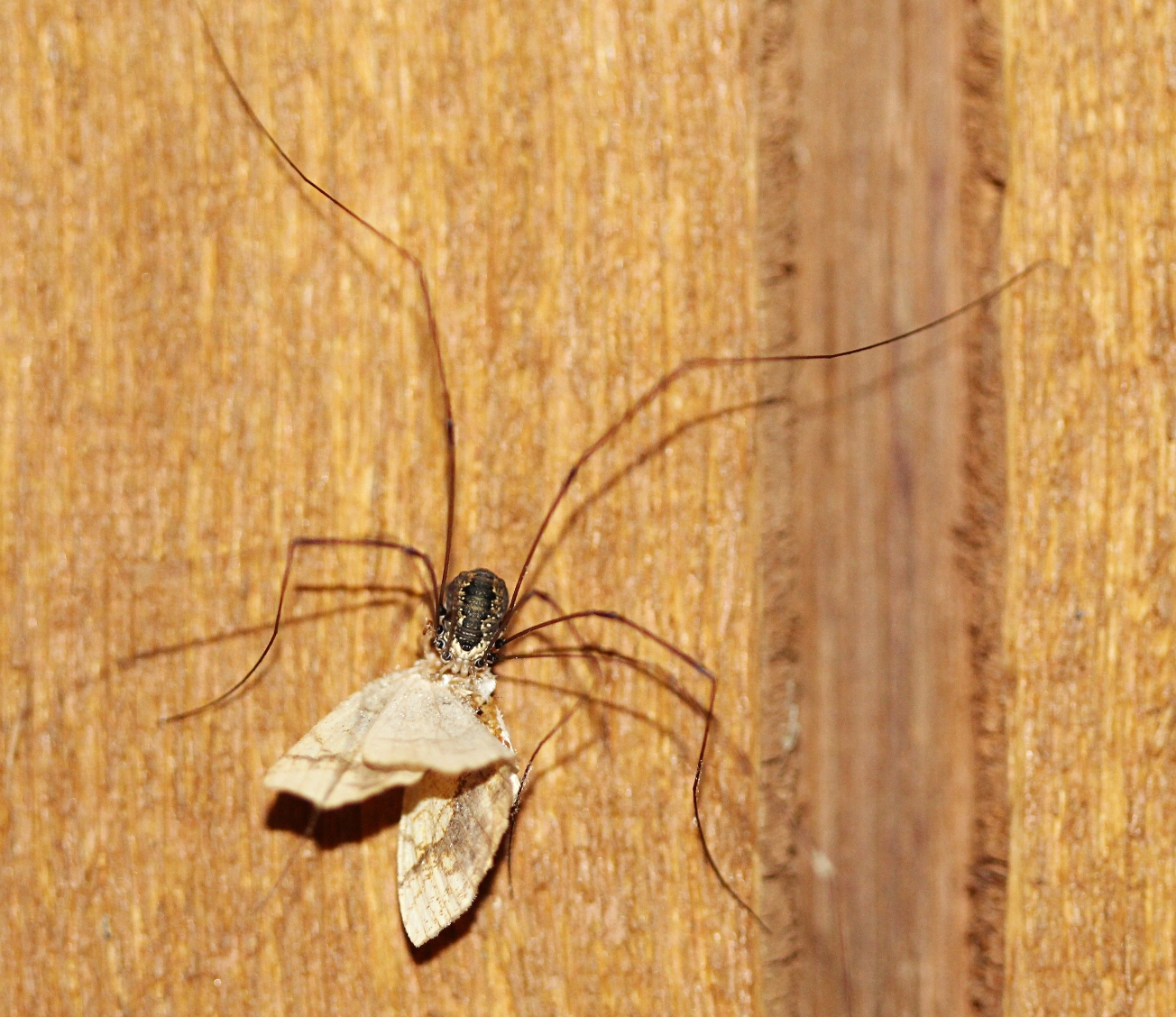
A harvestman (Leiobunum sp.), an arachnid, has captured and killed a horned spanworm moth (Nematocampa resistaria).

Attracting moths at night using lights has yielded an amazing number of species that I never even dreamed existed. My last count was at 865 moth species with 34 new species added to the checklist this year alone.

Many other insects, besides moths, come out at night to my lights. These include beetles, flies, Hymenoptera, and typical bugs. There are also leafhoppers, mayflies, caddisflies, Neuroptera, arachnids, myriapods, and Collembola. During the warmer, humid months of summer, there can be a lot of insect activity at the moth light.

People who put out bird feeders are often horrified when a shrike or hawk comes swooping in and takes away a chickadee. Those birds must eat, but that is not why we put out feeders. At night, attracting moths can pose similar problems with spiders, ants, and frogs drawn in by all the insect activity. Snakes then follow, hunting the frogs.

Here I present some photos of various predators that have come to my moth light. They include harvestmen, spiders, lacewings, ants, and frogs observed preying upon moths and other insects attracted to my moth light. The worst instance of predation, from my perspective, involved a fishing spider (Dolomedes tenebrosus). It captured and ate a twin-spotted sphinx (Smerinthus jamaicensis). I was upset, but it was too late for the moth. The spider’s venom acts quickly, and there was no saving it.

Arachnids: spiders and harvestmen

In the top photo is a harvestman (Leiobunum sp.), an arachnid, that has captured and killed a horned spanworm moth (Nematocampa resistaria). I have no idea how it accomplished this. They have no venom glands. They also lack sticky silk threads to snare prey like their spider relatives. Harvestmen are ambush hunters, but this is a large moth compared to the harvestman. Did it poison the moth using secretions from its scent glands (ozopores)? Does it use those secretions to secure prey, not just to deter enemies? All sources I have checked say no, but maybe this is something waiting to be discovered.

I should add that not all the harvestmen who come to the mothing light eat insects. One evening, I left out peels from very ripe bananas. I hoped the aldehydes and other volatiles would attract certain kinds of moths. That didn’t work, but I did see a harvestman consuming some of the pulp left on the skin. I wonder if it got its five servings a day of fruit?
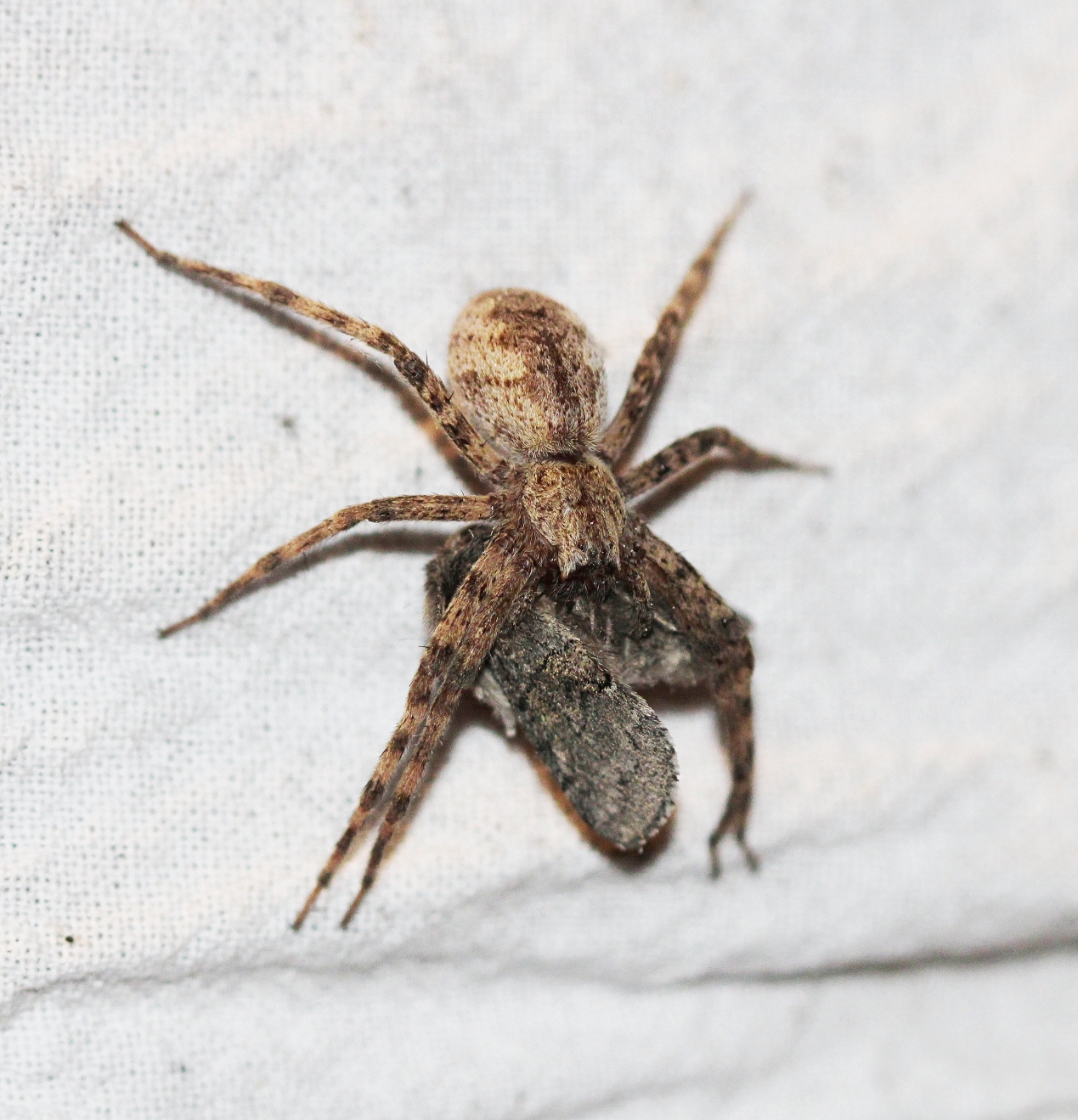
A fishing spider (Dolomedes tenebrosus) that has captured and is eating a northern gluphisia moth (Gluphisia septentrionis)

Above is a fishing spider (Dolomedes tenebrosus) that has captured and is eating a northern gluphisia moth (Gluphisia septentrionis). The same spider appeared the next evening and captured another northern gluphisia.
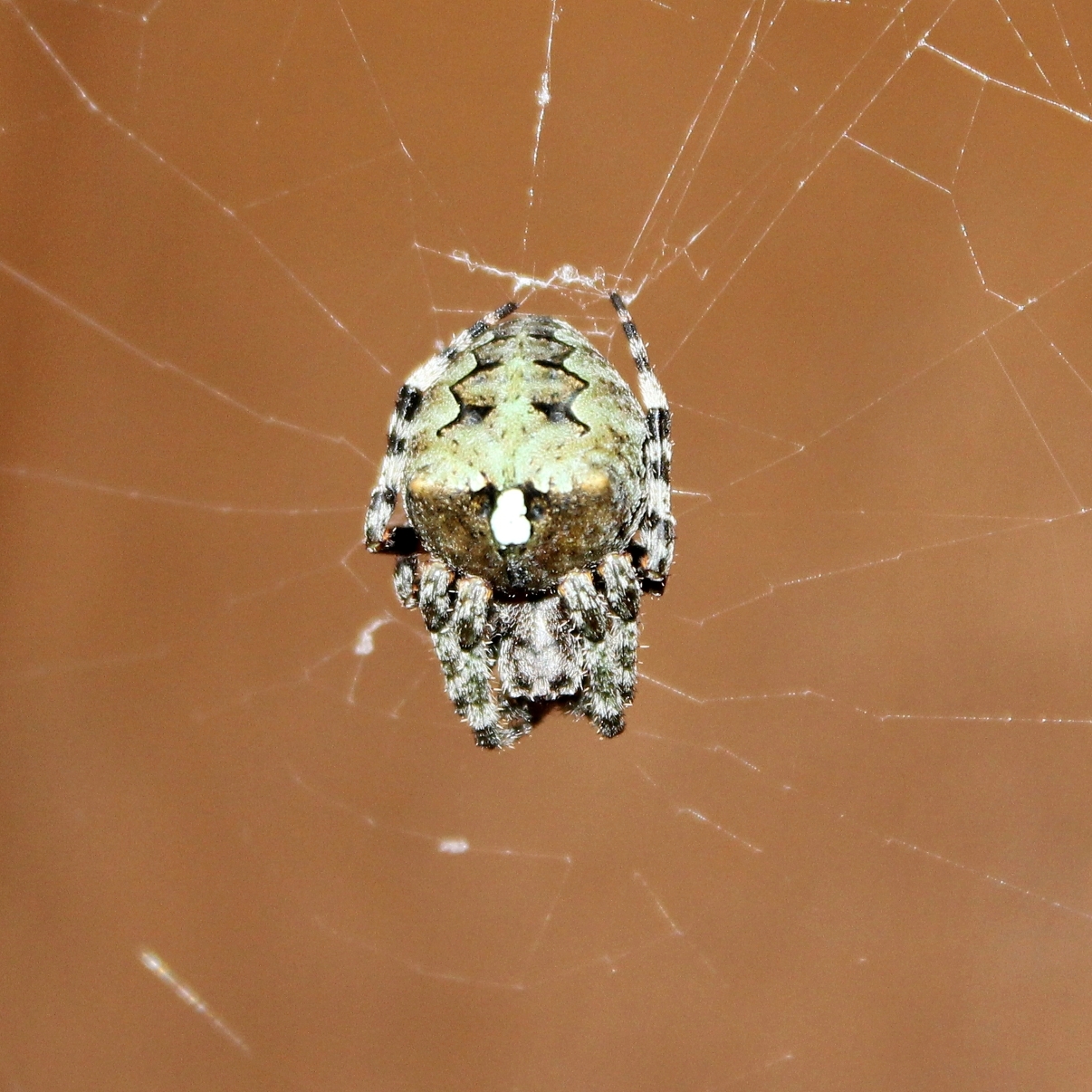
A female Araneus bicentenarius (lichen orb weaver spider) in the center of her web near the moth light.

Some spiders, like this lichen orbweaver (Araneus bicentenarius) above, build webs near the moth light. They do this probably because the corner of the porch wall offers a convenient trapping location. My moth light unintentionally lures moths and other insects near the orb web, where they can be trapped.

This spider didn’t stay long for some reason, and no insects were trapped. It may have been because a pair of eastern phoebes (Sayornis phoebe) were nesting in a little nook overhead. They may have created too much disturbance, or even eaten the spider. In any event, the spider was gone after one day. Phoebes do eat moths and I have seen them capturing moths that remained on the porch wall after sunrise.

Hymenoptera: ants
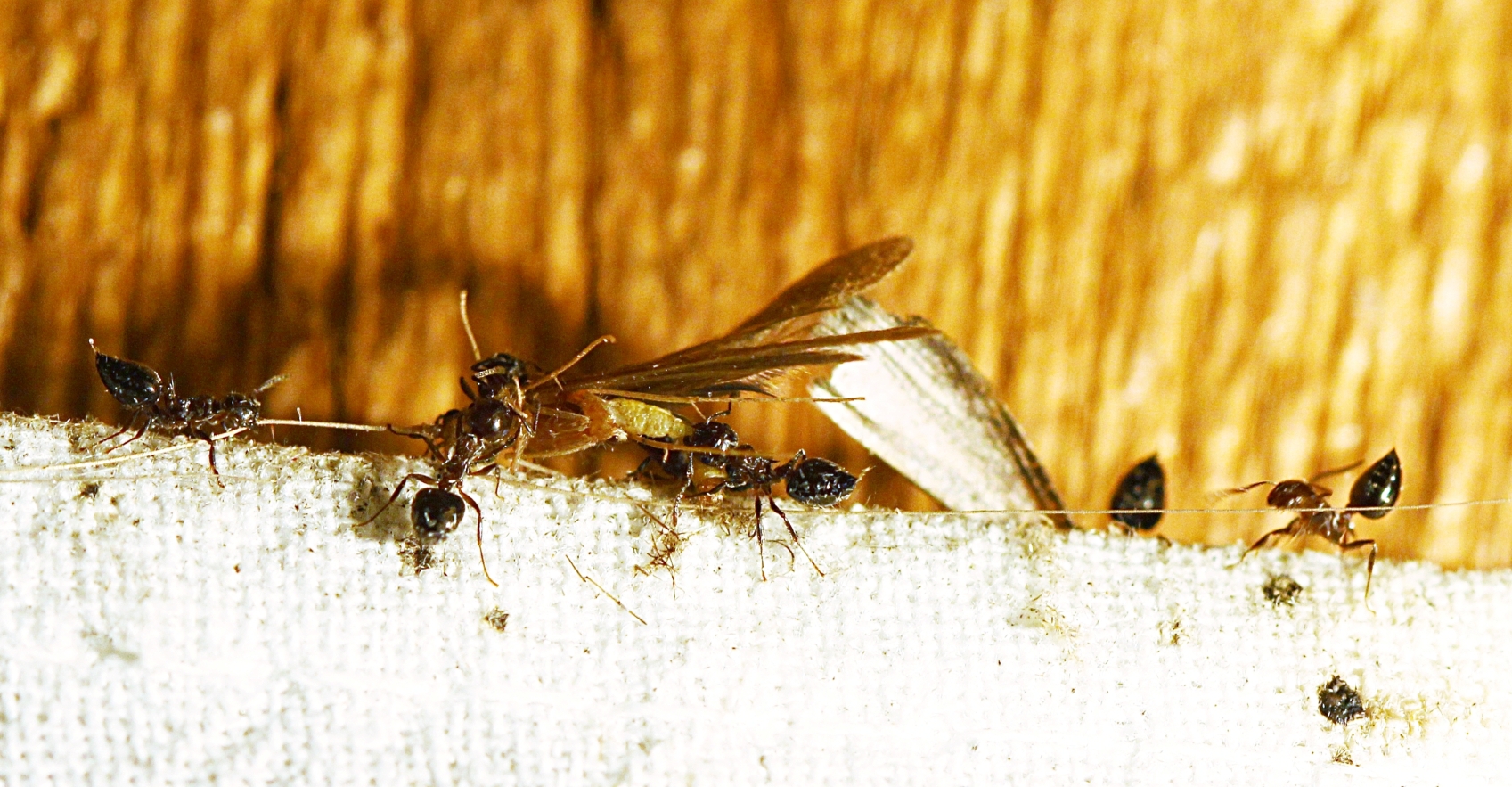
Crematogaster sp. (acrobat ants) have captured a small caddisfly.

Ants are active during the day and also at night. This is not surprising as they spend a good part of their lives in dark tunnels, finding their way using scent trails laid down by other ants. Above, a swarm of Crematogaster sp. (acrobat ants) has captured and is dismantling a tiny caddisfly that got tangled in spider web fragments.

Neuroptera: lacewings
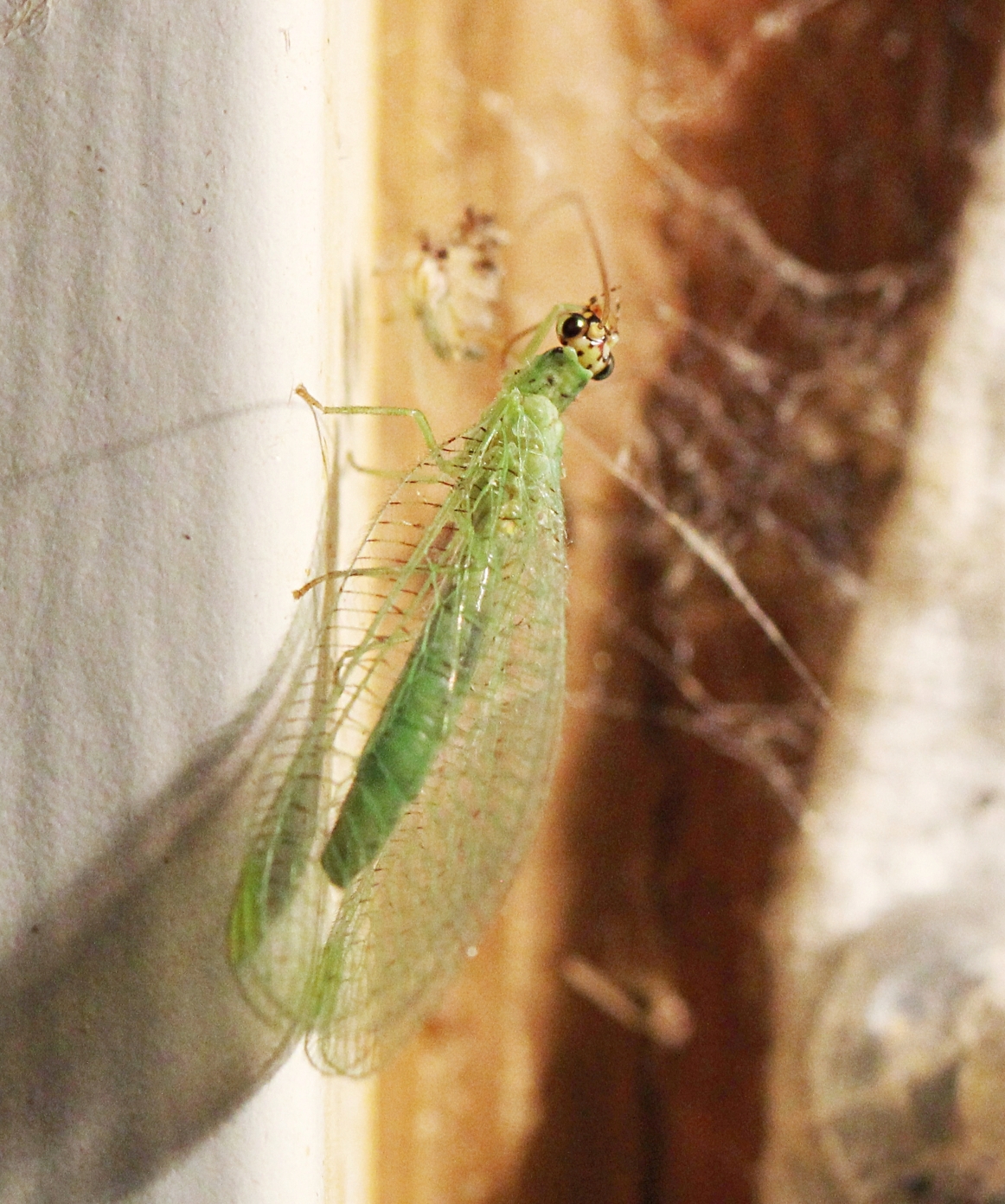
A green lacewing (Chrysoperla sp.) is searching in the debris of spider web fragments for prey.

Lacewings eat aphids and other small soft-bodied arthropod prey, including insect eggs. This lacewing (Chrysoperla sp.) was searching in spider web fragments where small leaf hoppers, like Chlorotettix spp. and psyllids, became entangled. When the lacewing found one, it ate it.

Amphibians: frogs
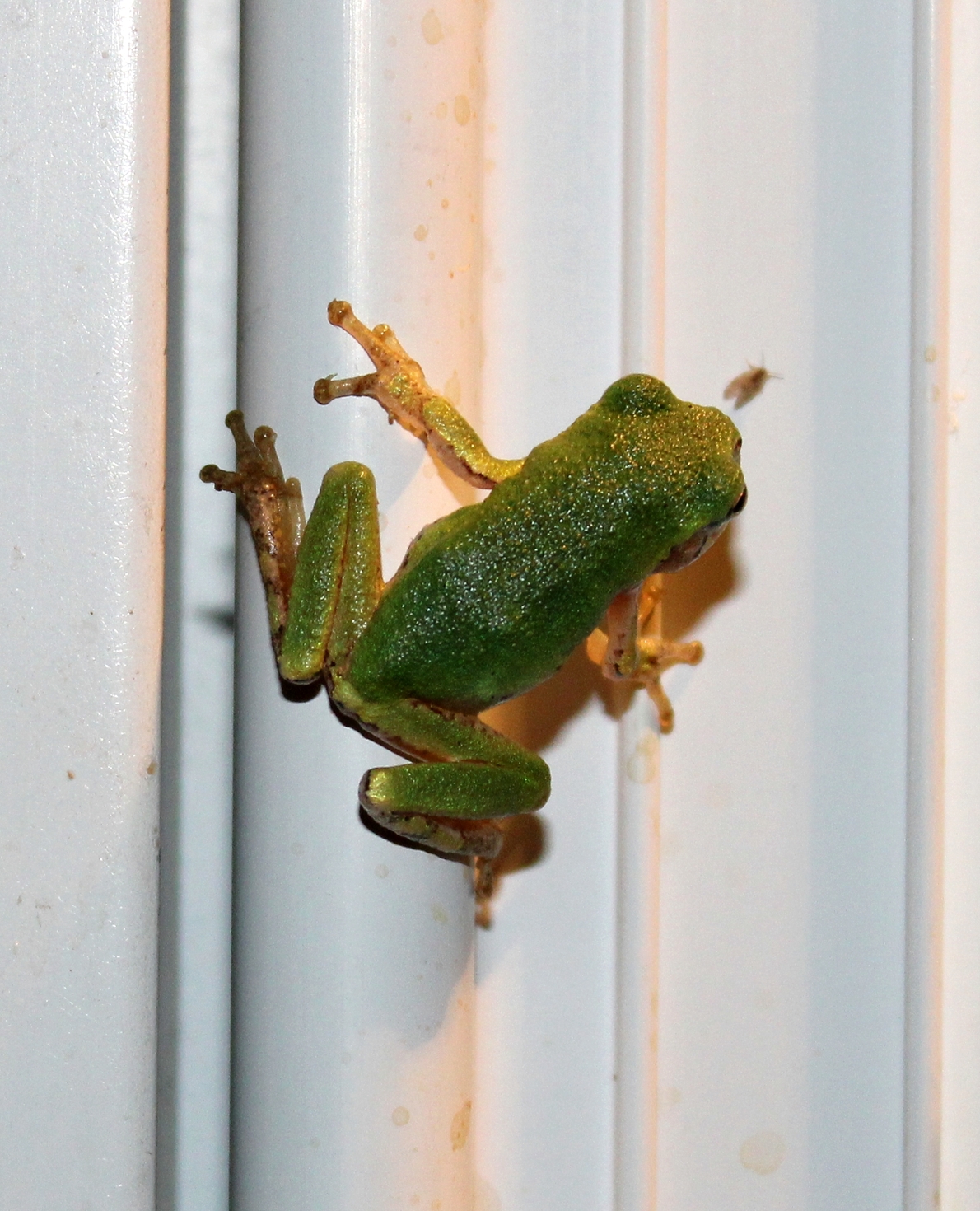
A gray tree frog (Hyla versicolor) is getting ready to strike at a psyllid, an aphid-like insect.

Finally, a gray (okay, this one is green) tree frog (Hyla versicolor) on the hunt, searching for minute insects like this psyllid drawn to the moth light. Gray tree frogs are frequent visitors to the moth light, searching for food. With their sticky foot pads, they can climb up the walls to hunt for prey. Most of the gray tree frogs are small young-of-the-year individuals, but sometimes larger adults show up.

Spring peepers (Pseudacris crucifer) are common visitors. Like the gray tree frogs, many are young-of-the-year.
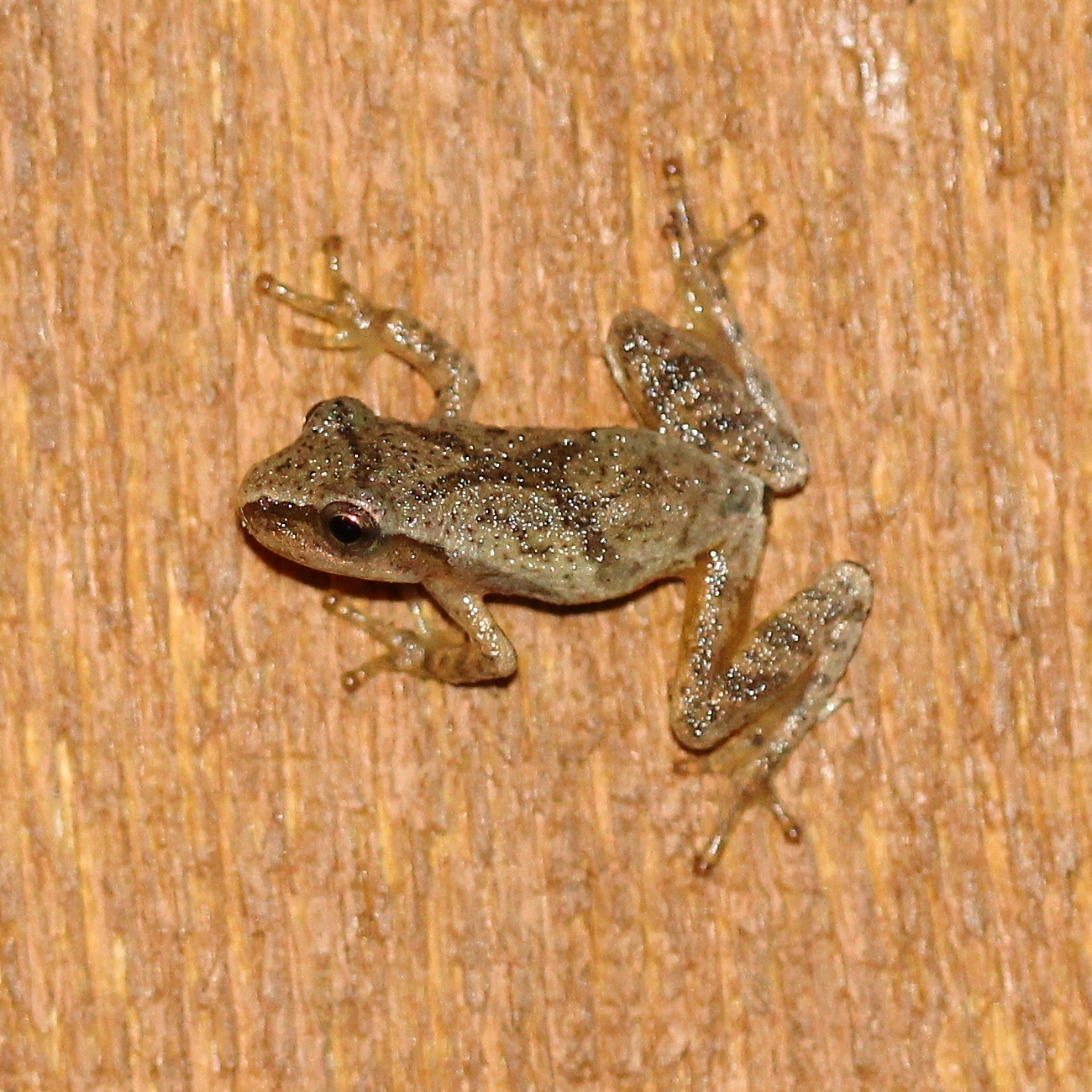
Pseudacris crucifer (Spring Peeper) froglet on the wall by my moth light, looking for small insects.

Down below on the ground, American toads (Anaxyrus americanus) search for fallen insects. Green frogs (Lithobates clamitans), mink frogs (Lithobates septentrionalis), and wood frogs (Lithobates sylvaticus) also look for insects that may be on the ground or under the porch. Some green frogs and mink frogs took up residence on the porch, living in pans where I was growing duckweed and other floating aquatics. Garter snakes (Thamnophis sirtalis) occasionally come by, too, and prey upon the terrestrial amphibians.
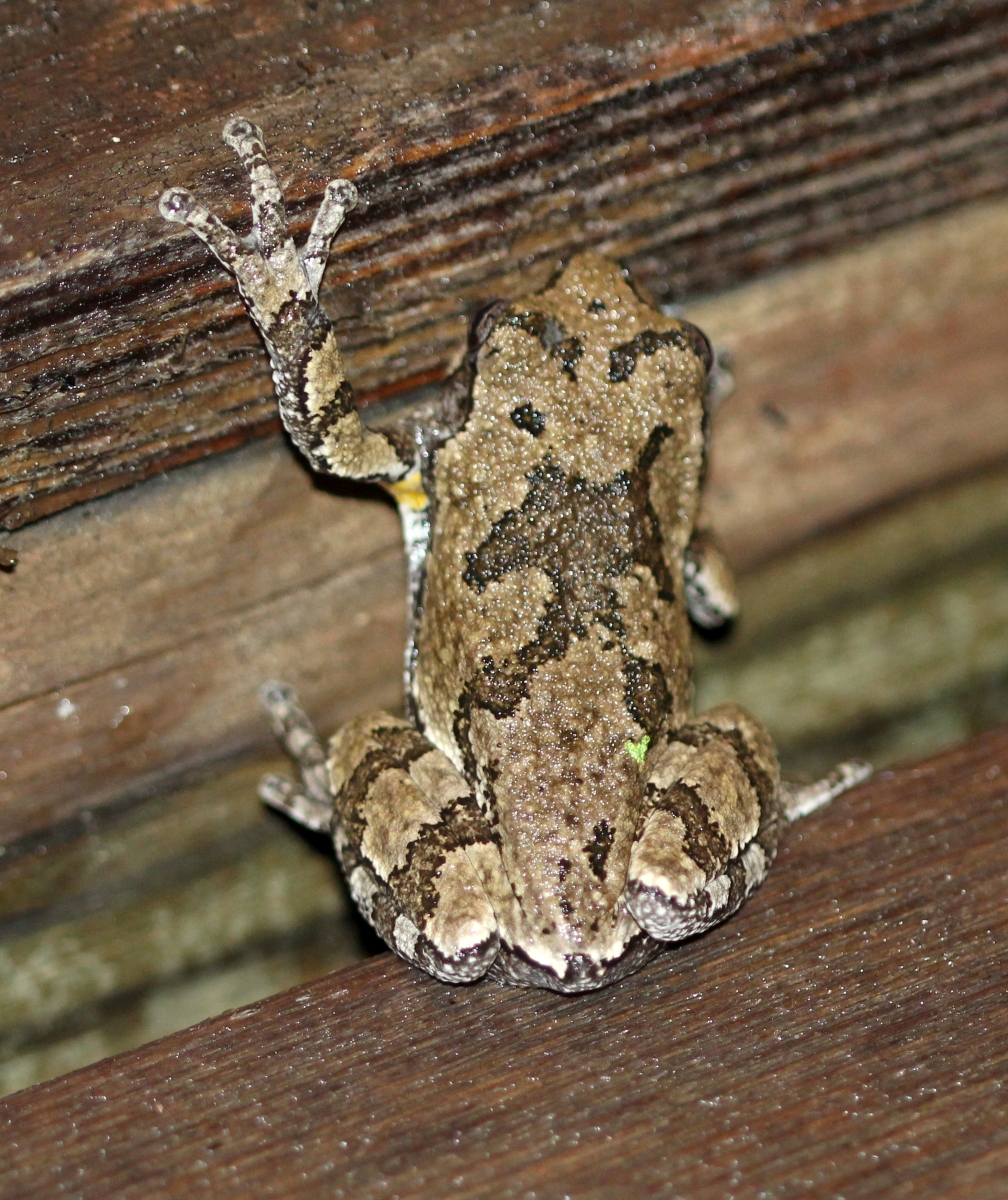
Another gray tree frog, this one boldly patterned, is preparing to climb up the wall in search of insects. This same frog would also climb up the glass of my office window at night to eat insects attracted to the light shining through the glass.

Some final thoughts

So, do you do mothing? And if you do, have you seen spiders or other predators coming by in search of food? What did you think about that? Should these predators be chased away?
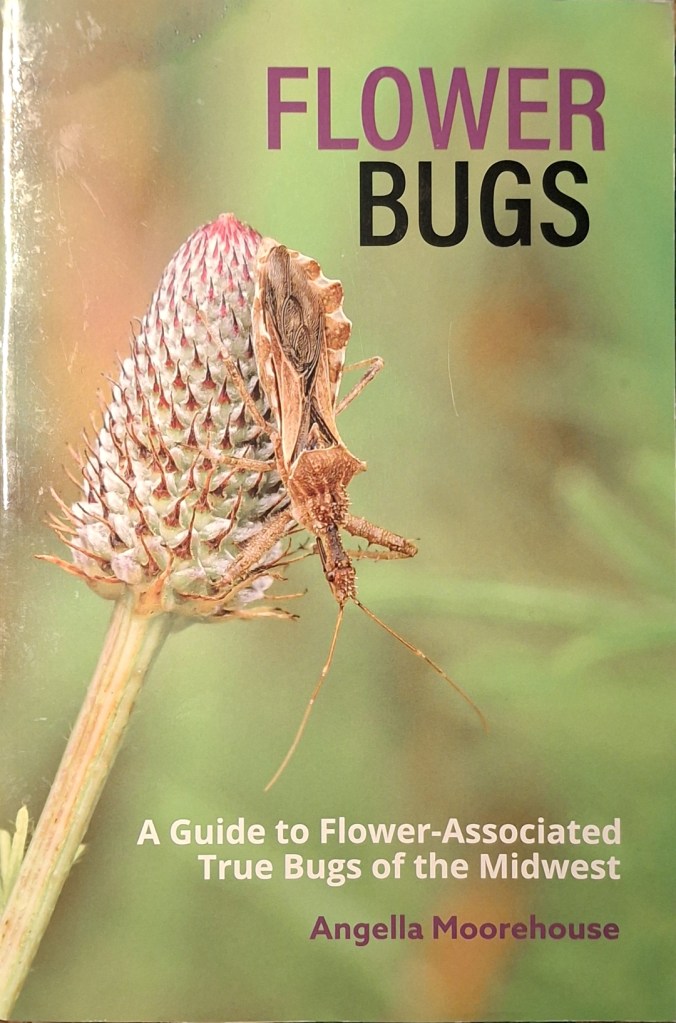
Essential Guide to Midwest True Bugs by Angella Moorehouse

This just arrived today, and I know it will be so very useful as I venture further into the world of insects. Flower Bugs: A Field Guide to Flower-Associated True Bugs of the Midwest by Angella Moorehouse (2023) is published by Pollination Press LLC, Minnetonka, MN. The Pollination Press web address is www.pollinationpress.com.

This book has 360 pages, lavishly illustrated with beautiful full-color photographs of 160 species of terrestrial true bugs from 25 families and 52 genera. The area covered includes the states of Minnesota, Iowa, Missouri, Wisconsin, Illinois, Indiana, Ohio, and Michigan in the US and Southern Ontario in Canada.

The book includes taxonomic charts that will guide you to family and then to genus, detailed illustrations of bug morphology, their ecology, and a glossary of terms to help you learn and identify true bugs.

Species descriptions are not overly technical, thus making this book more accessible to non-specialists with some background in insect identification. Maps show the range of each species. There are notes on key identifying features, life history, ecology, feeding, and habitat. Descriptions of herbivorous species include lists of plants they consume. Carnivorous species are similarly treated. Not all species receive the same description treatments. Some are represented with photographs.

There seems to be a problem with the index, where some entries do not match the page numbers in the book. Not sure why.

I am loving this book already and will put it to good use identifying the many bug species I have photographed. My first project will be to go through the unidentified species in my files and to re-check previous identifications. After that, I’ll spend many an evening just browsing and waiting for spring and the bugs to return.

Banasa dimidiata, a stinkbug

Discovering the Red-streaked Mompha, a beautiful tiny moth

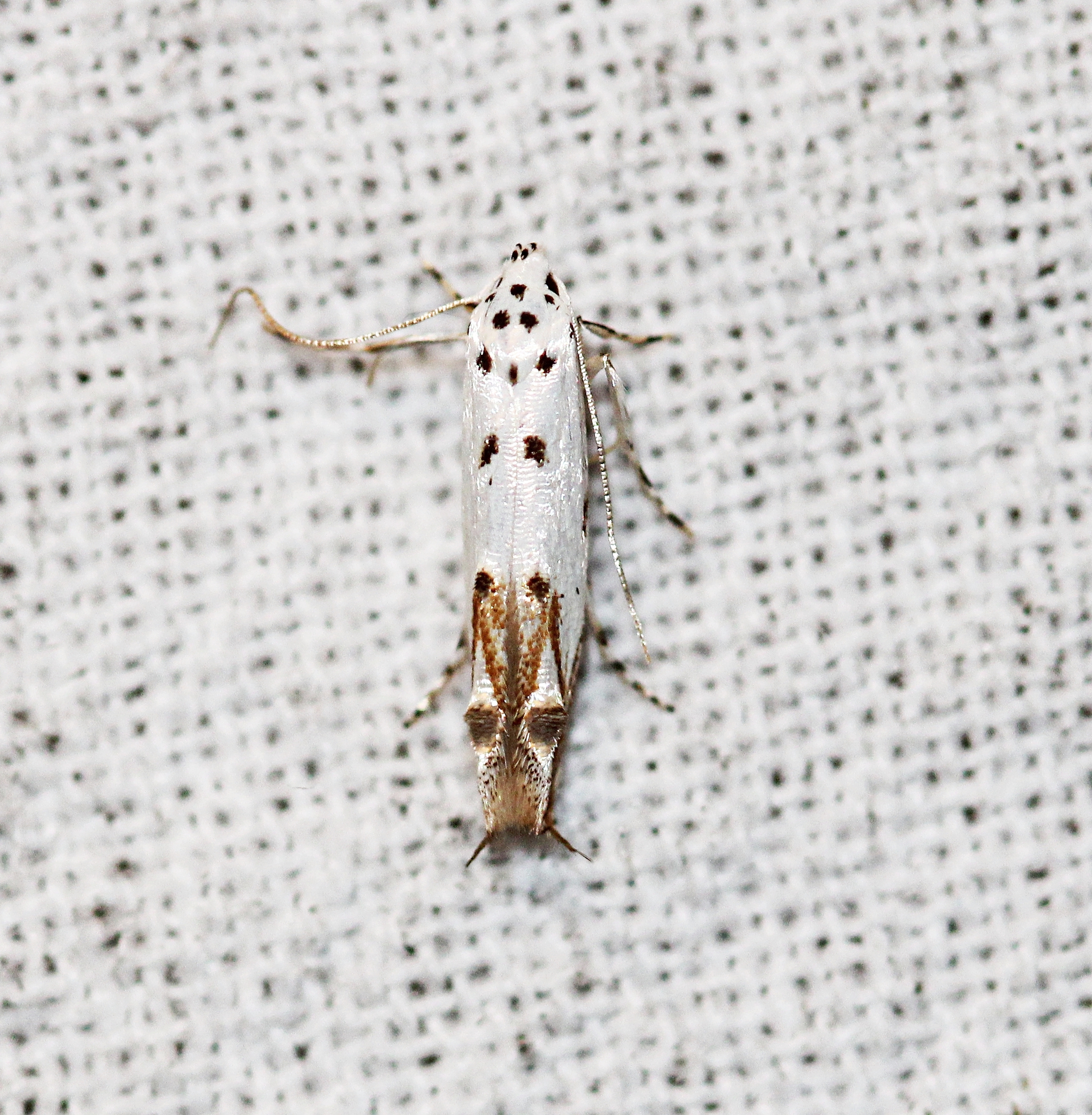
Mompha eloisella was probably attracted to the many Oenothera biennis plants nearby.

This is Mompha eloisella (Red-streaked Mompha), a tiny moth with beautiful satiny white wings speckled with symmetrically placed dark brown spots on the head, thorax, and wings, and red diagonal lines on the wing tips. The patterning of the wing tips resembles a face, but who or what will notice something that small and possibly be deterred by it? Or maybe that’s what the markings are for at all.

Mompha eloisella is in the family Momphidae, which worldwide contains at least 115 species. In North America, there are 45 species just in the genus Mompha and probably many more yet to be discovered and described. All are tiny and have unique patterns, often colorful, on their wings. The larvae of most Mompha species feed on plants in the Onagraceae (evening primrose family) as stem, flower, or fruit borers or as leaf miners. Mompha eloisella larvae are stem borers in evening primrose (Oenothera spp.). This one may have been attracted to the small stand of Oenothera biennis growing in my garden.

Mompha eloisella is widespread in the US, but available range maps show it as not present in Minnesota. Now we know it does occur in Minnesota, with this first sighting more than 120 miles north of a previous sighting in Wisconsin.

This isn’t the first Mompha moth I’ve seen here. There are four other species, all very tiny and beautifully patterned. The small size of these moths makes them easy to miss and difficult to photograph, but with a little effort and patience, they can be found and sometimes photographed clearly. Of course, not all of my Mompha photos are clear, but clear enough. They seem skittish, which also makes photographing them a challenge.

To attract more Mompha moths, I have planted Oenothera biennis, Epilobium angustifolium (fireweed), and let the weedy annual Epilobium coloratum (willow-herb) have a place in my flower garden. Not only are these plants food for Mompha moth larvae, but their flowers, sweet with nectar, are food sources for bees, small and large, and even hummingbirds. After blooming, the plants continue to benefit wildlife. A few days ago, I saw an eastern goldfinch in my flower garden feeding on the small seeds of evening primrose.

References and sources:

Genus Mompha https://bugguide.net/node/view/41654

Species Mompha eloisella – Red-streaked Mompha – Hodges#1443 https://bugguide.net/node/view/67246

Mompha eloisella (Clemens, 1860) http://mothphotographersgroup.msstate.edu/species.php?hodges=1443

A more technical description of this Mompha species, and several others, can be found at the Moths of North Carolina website.

Pug Moths – Eupithecia

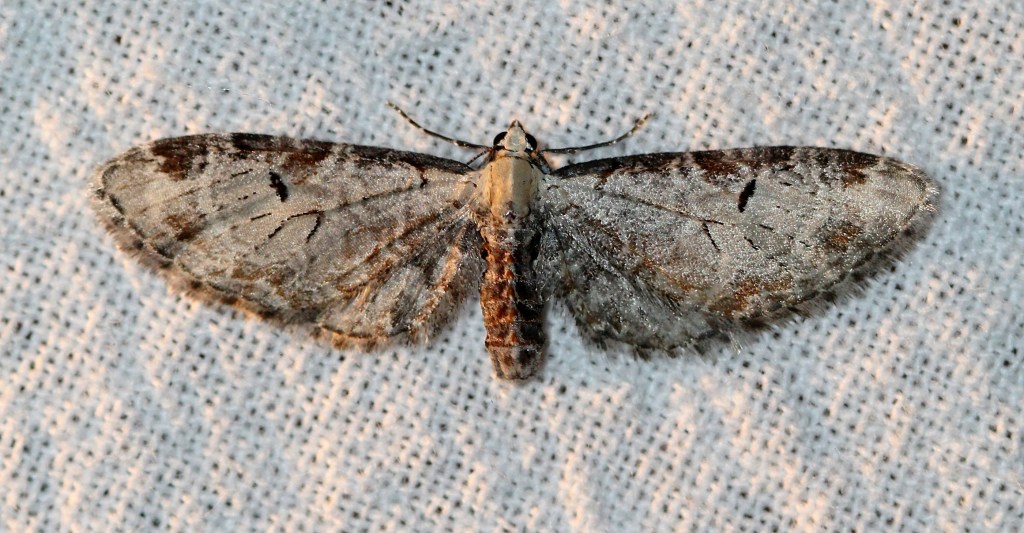
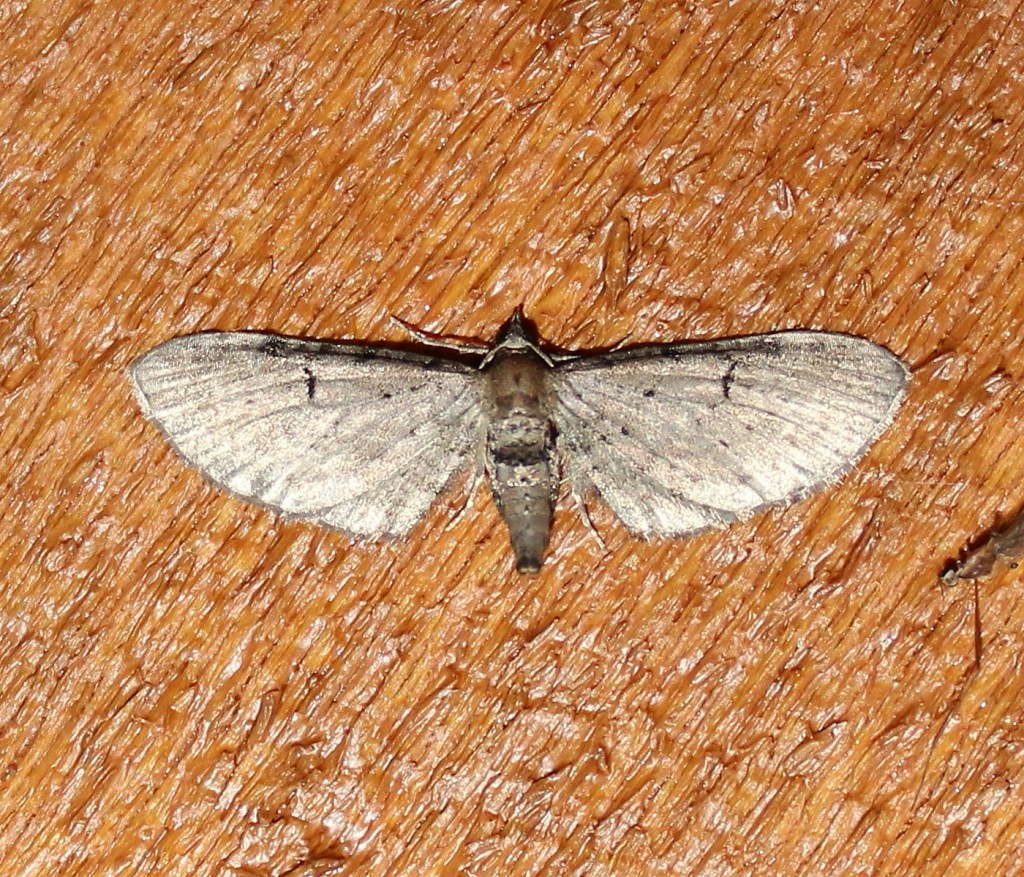
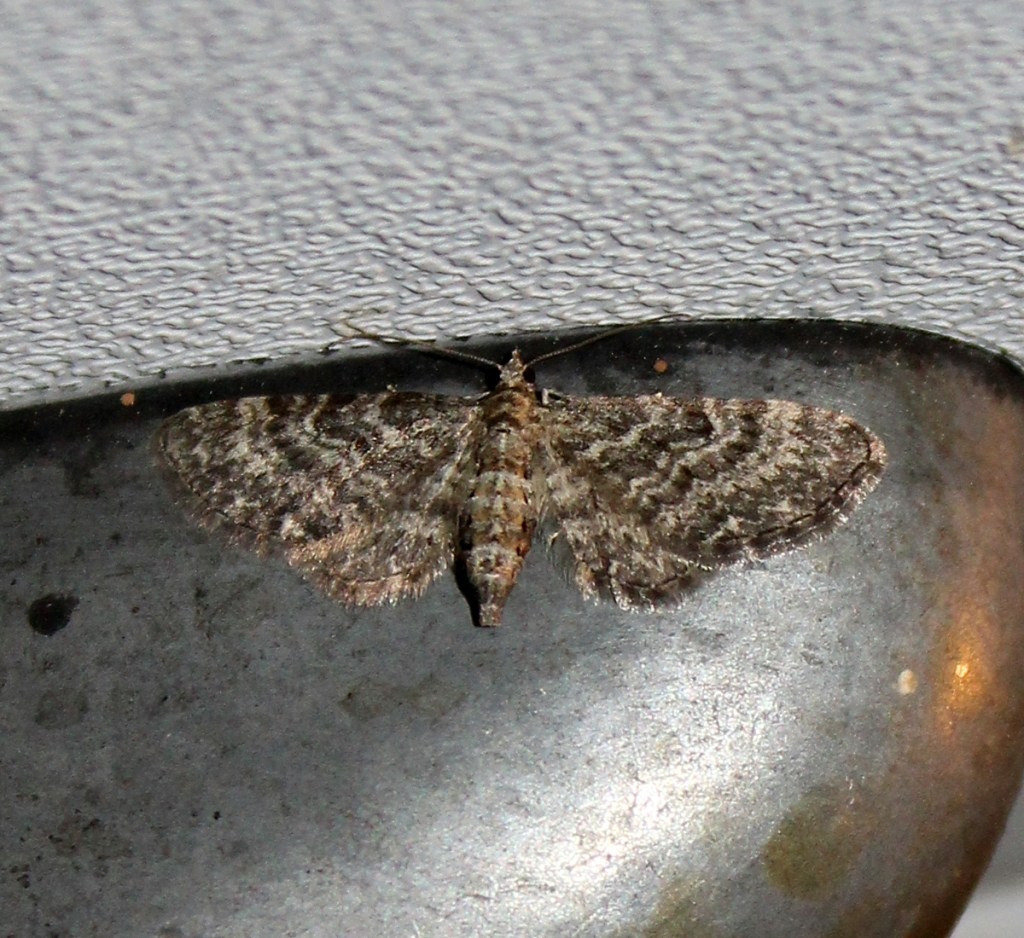
Pug moths (Eupithecia) are a large genus (about 1,400 species) of tiny moths in the Family Geometridae (geometer moths or inchworms). There are hundreds of described species from all continents except Antarctica. Some even live on Pacific islands like the islands of Hawai’i with species whose larvae are carnivorous and catch and eat other insects. North America north of Mexico hosts at least 160 species. There are probably many more species yet to be described.

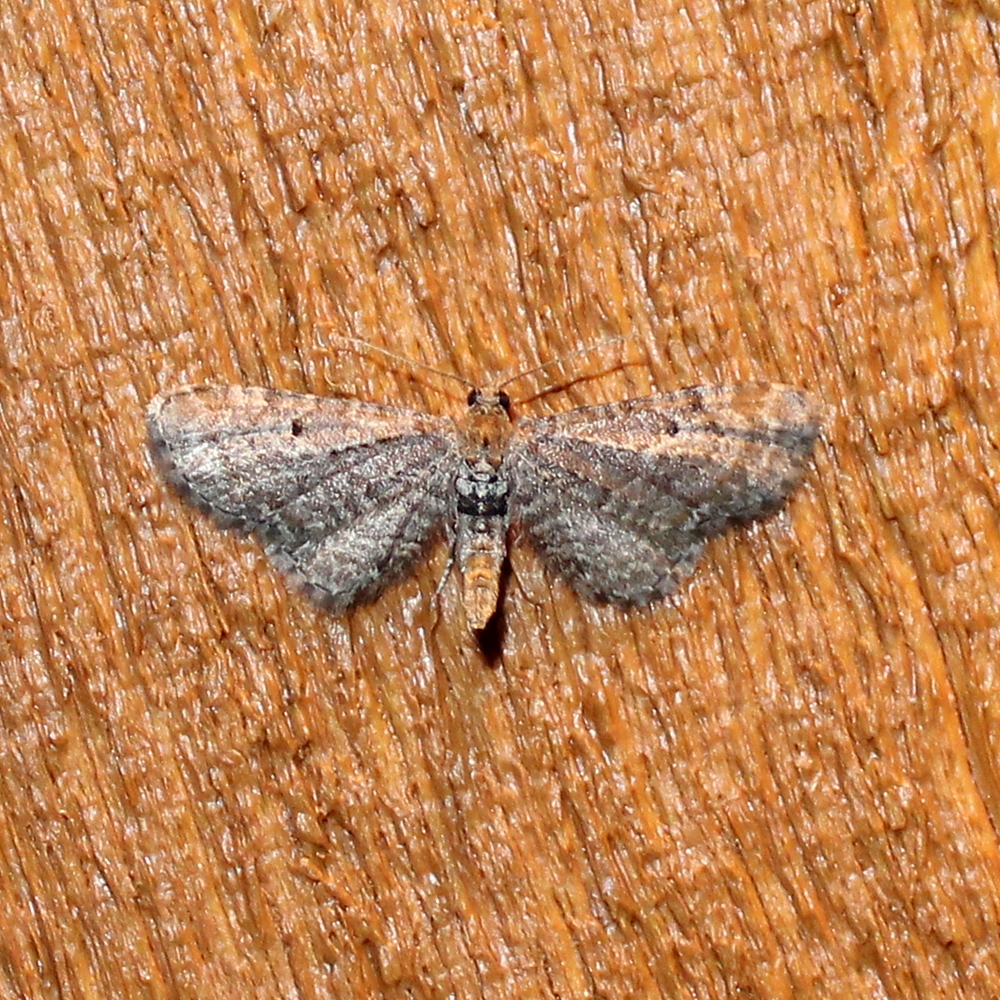
Eighteen Eupithecia species have been recorded from Minnesota. Some are known from five or fewer sightings in the state. I haven’t found all eighteen yet but have gotten to one-third of that number and that includes some of the rarities. The most common one is Eupithecia miserulata, a small grayish species with a dark dot on each of its forewings, faint scalloped lines on the wings, and often two or three dark dots along the costa. This moth can be variable and it is easy to confuse it with other species. I often find the yellowish larvae in July and August feeding on the anthers of black-eyed susan (Rudbeckia hirta) flowers, cut-leaf coneflower (R. laciniata), and sunflower (Helianthus grosseserratus). The larvae of E. miserulata are also reported to feed on oak, willow, and juniper.

Larval host preferences are not known for the other Eupithecia I’ve found except for E. strattonata (alder and spiraea), E. absinthiata (mugwort, wormwood, yarrow), and E. ravocostaliata (willow, cherry, birch and other woody plants).

Below are the six species I’ve found and been able to identify.

CLASSIFICATION
Kingdom Animalia (Animals)
Phylum Arthropoda (Arthropods)
Subphylum Hexapoda (Hexapods)
Class Insecta (Insects)
Order Lepidoptera (Butterflies and Moths)
Superfamily Geometroidea (Geometrid and Swallowtail Moths)
Family Geometridae (Geometrid Moths)
Subfamily Larentiinae
Tribe Eupitheciini
Genus Eupithecia

SOURCES

Bug Guide

Moth Photographers Group

Wikipedia

Hawaiian Carnivorous Caterpillar — Eupithecia