
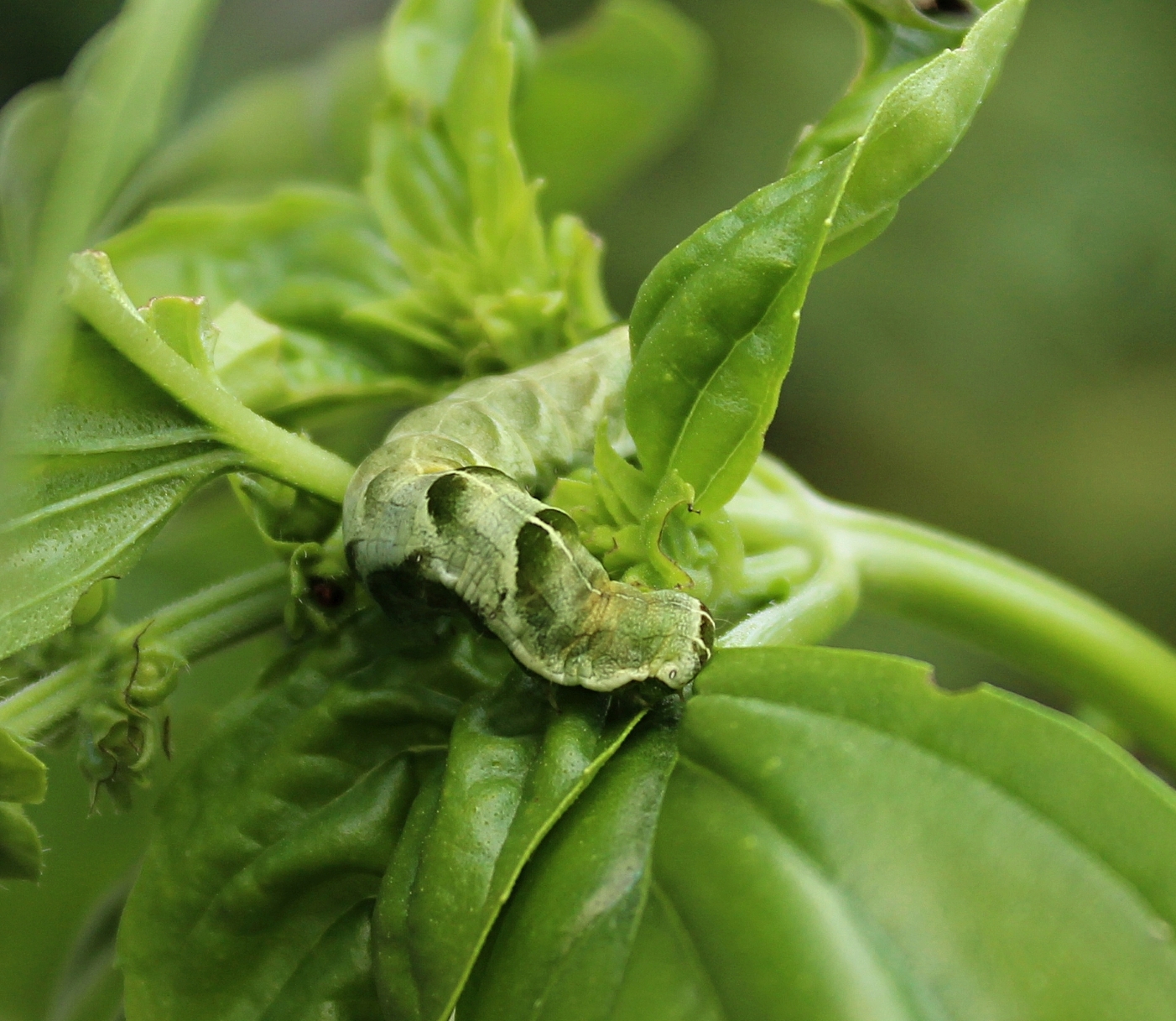
I have two pots of basil on my porch for fresh basil leaves. Everything was going well with big plants with big leaves full of flavor and fragrance. One afternoon, I went to get a few large basil leaves. I was going to make an omelet with Gruyère cheese, onions, crushed garlic, cherry tomatoes, peppers, potatoes, and mushrooms. And fresh basil.
When I looked into one of the pots, there on the largest plant was this strikingly patterned green caterpillar. I’d never seen anything like it before. It reminded me of a sphinx moth caterpillar. But there was no horn or even a bump on the last segment. The head seemed to have the wrong shape, too. Maybe it was a cutworm caterpillar (Noctuidae: Noctuinae), not a sphinx (Sphingidae)?
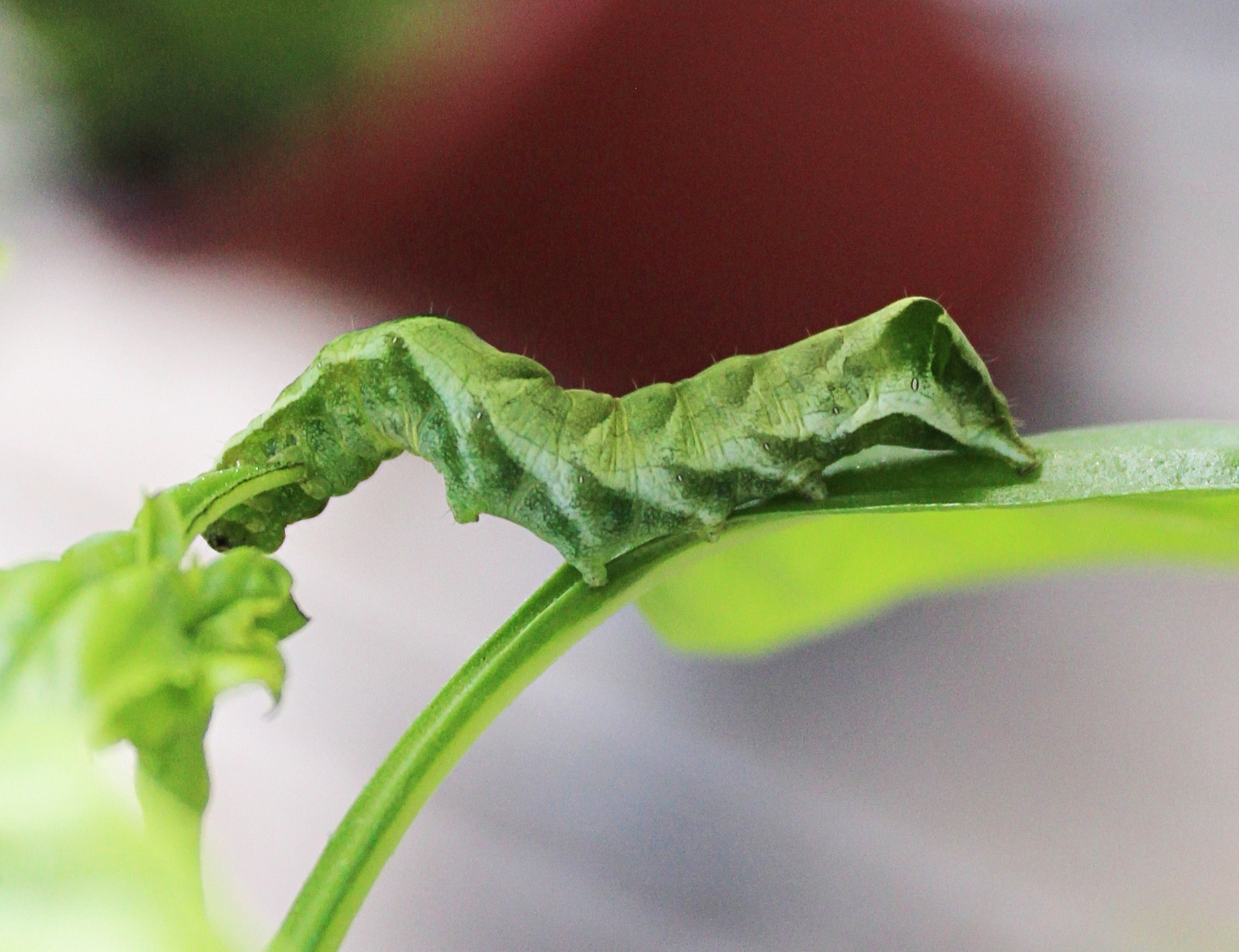
A search of Noctuidae in Caterpillars of Eastern North America (David L. Wagner, © 2005) didn’t yield anything similar. My next step was to go through photos at BugGuide of caterpillars in the Subfamily Noctuinae, focusing on the tribes Orthosiini, Tholerini, Hadenini, and Leucaniini. I chose these tribes because species in them are frequent visitors to my moth light, so it seemed worth a shot.
After many pages at BugGuide, I was at the genus Melanchra. The first species to show up was Melanchra adjuncta (hitched arches), and my caterpillar looked just like it. To be sure, I continued on a little more but found nothing similar.
Basil isn’t the only plant Melanchra adjuncta eats. Their palate is open to a wide variety of herbaceous plants and even leaves of some woody plants. After eating for a few hours, the caterpillar left, perhaps to enjoy other plants on my porch.




 Not Very Far Away