Epermenia albapunctella: The Tiny Moth You Might Overlook

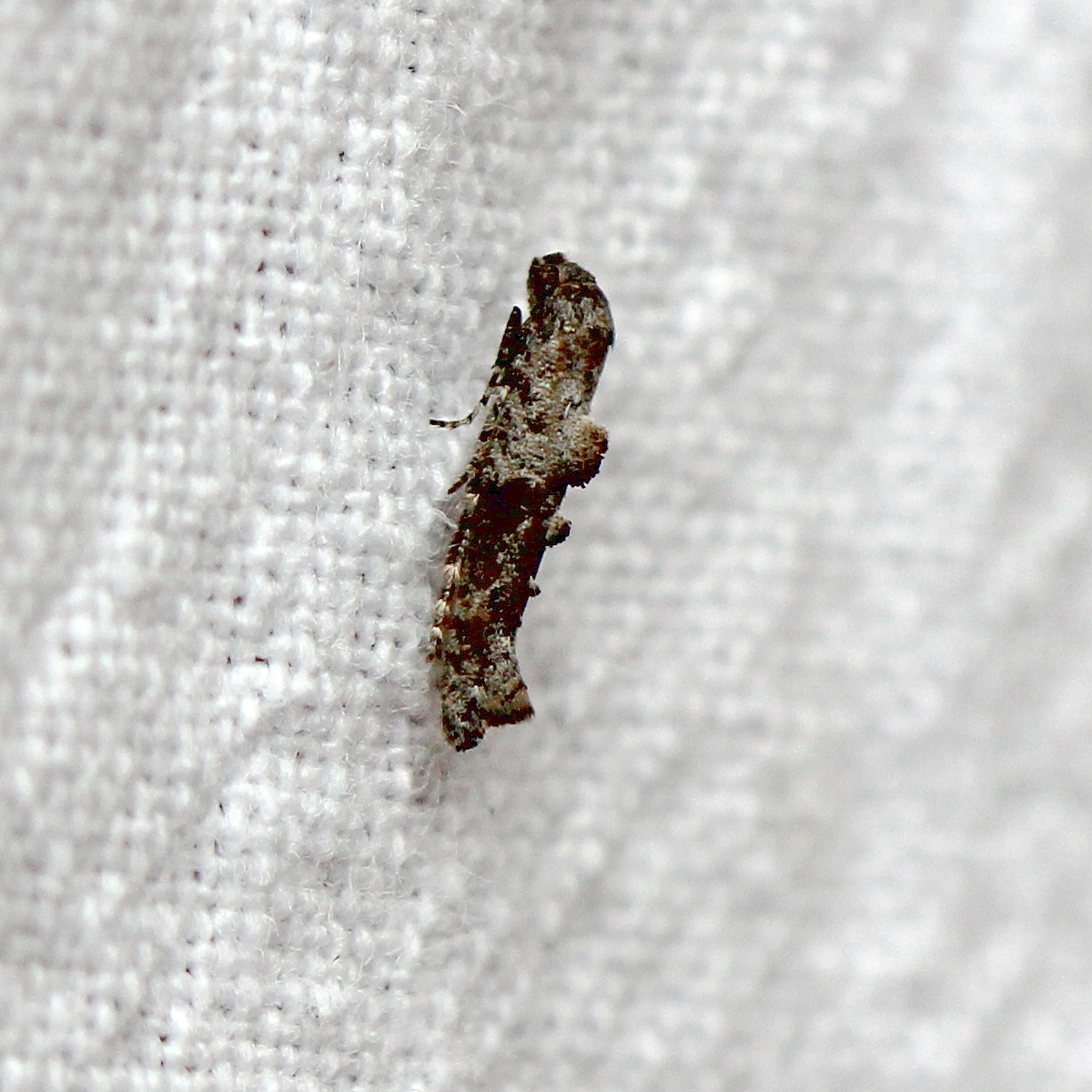
Epermenia albapunctella seen on July 21, 2020.

A speck of dust?

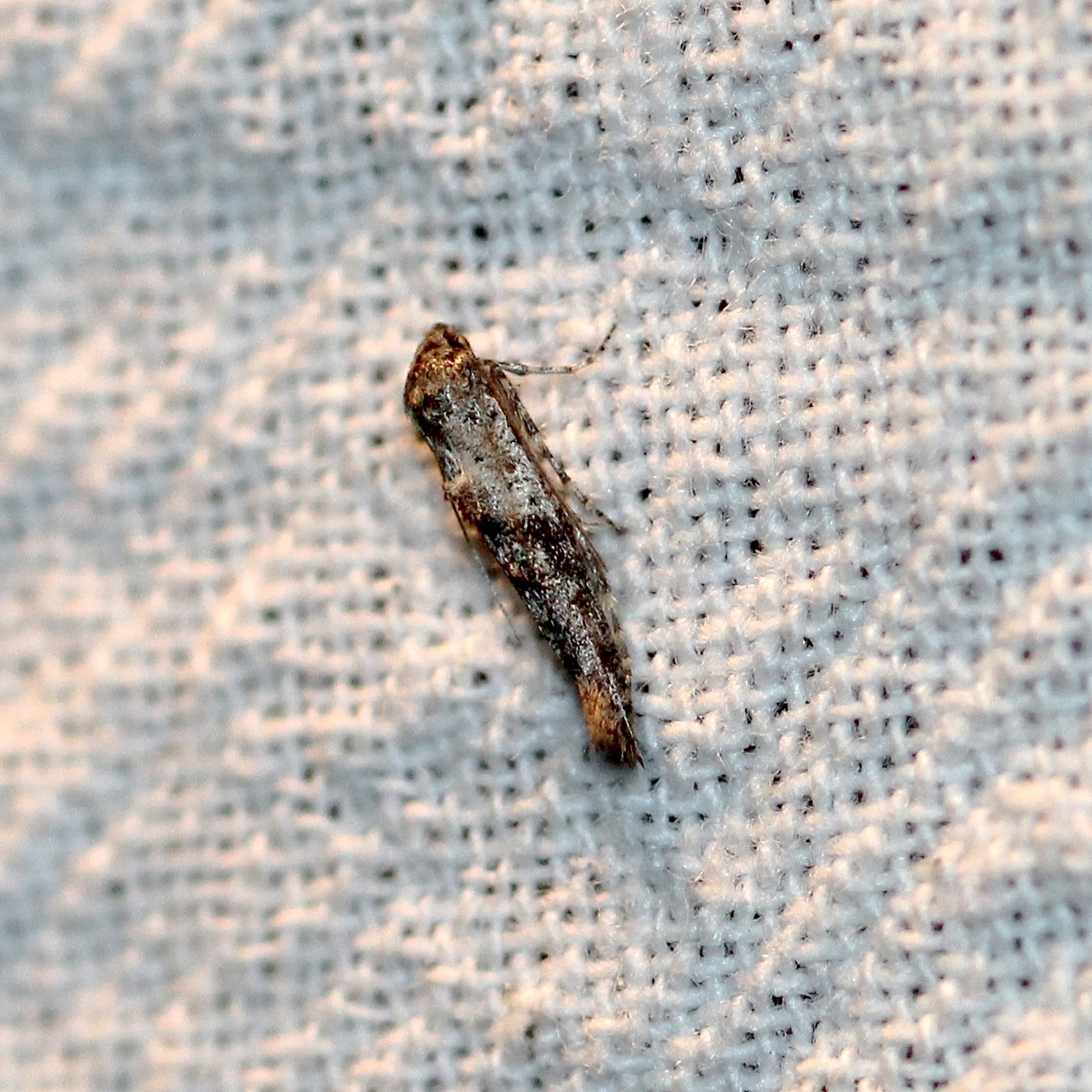
This strange looking gray insect is a moth, and it is very tiny, with a wingspan measuring 13 mm and a body length of around 7 mm (~0.27 inches). It belongs to the genus Epermenia. It may be Epermenia albapunctella, a moth in the Superfamily Epermenioidea (Fringe-tufted Moths), family Epermeniidae.

The first time I saw the moth was in July 2020. I almost passed it by, thinking it was a speck of dust. I’m glad I focused my camera on it because it was not dust but a living moth.

I saw this species two more times after that. Once on September 09, 2018, and again on August 01, 2023.

My third sighting of Epermenia albapunctella on August 01, 2023.

Species determination

While the species identity I have determined is provisional, it is a species of Epermenia. Identifying many tiny moths to species (and even some larger ones) is not always possible from a photo alone or even from visual examination of wing patterns and colors. Very often, genital dissection and DNA sampling are required. These techniques help resolve species identification where one or more related species look very much alike. They can also help to discover cryptic species.

There are numerous sightings of Epermenia albapunctella (MPG and iNaturalist), indicating it is a widespread and somewhat common species.

Epermenia larval host plants

The chief larval host plants of Epermenia are in the Apiaceae (carrot family). They feed by mining the leaves, but later feed outside the leaf in silk webs. However, I could not find information on the feeding habits for all Epermenia species.

Several wild plants in the carrot family grow locally: Cicuta spp. (poison hemlock), Heracleum maximum (cow parsnip), Sanicula spp. (snakeroot), Sium suave (water parsnip), and Osmorhiza spp. (sweet cicely). Feral plants of wild carrot (Daucus carota), parsnip (Pastinaca sativa), and caraway (Carum carvi) are found locally, too. And there are, of course, vegetable gardens with cultivated carrots. They are also Daucus carota, but tastier than the wild form, especially in carrot pie.

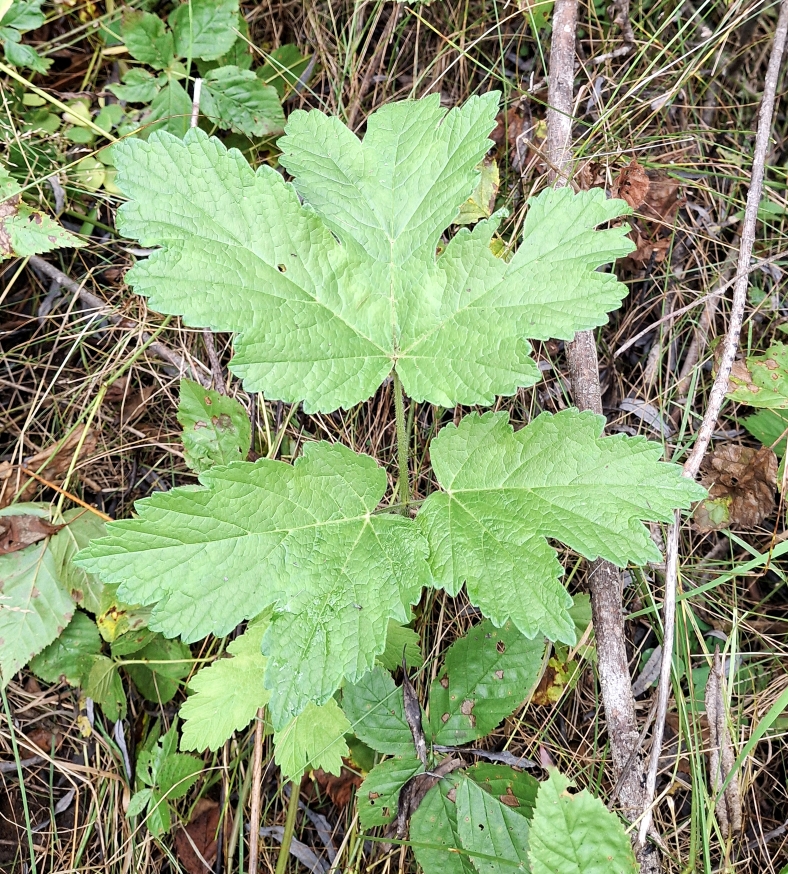
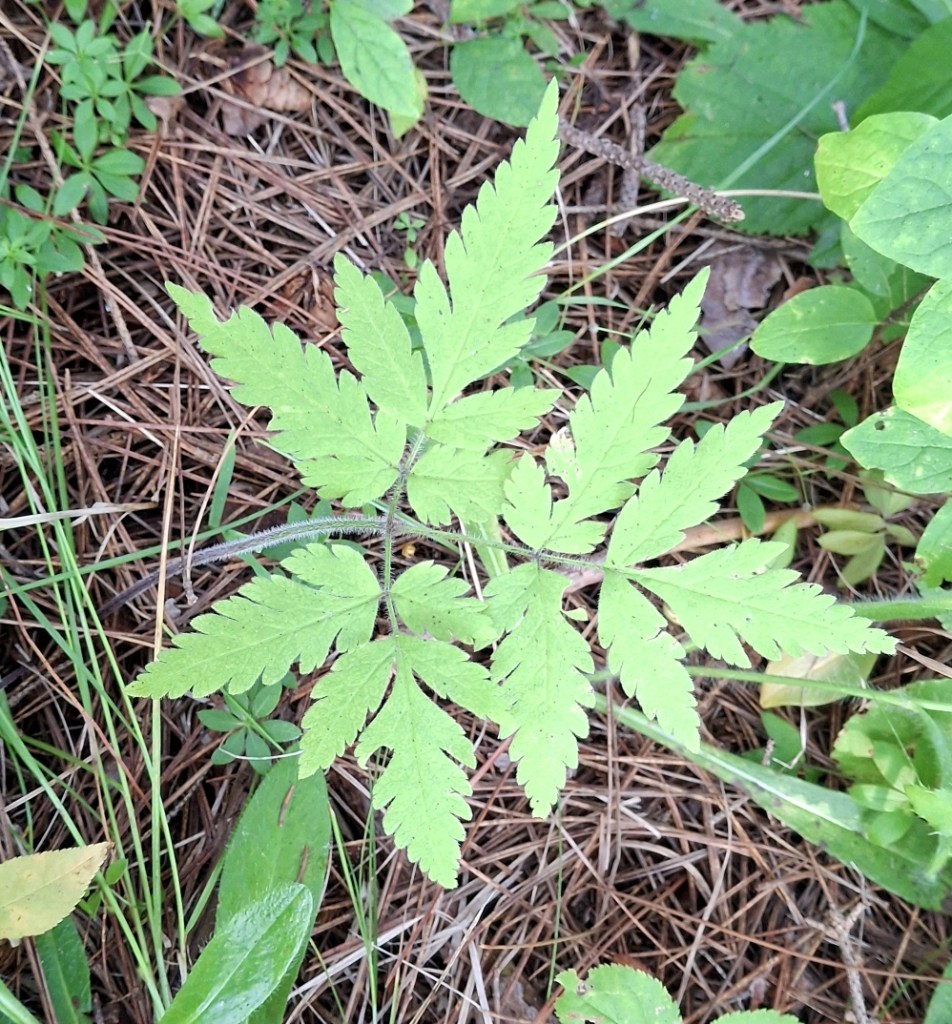
The local abundance of wildflowers in Apiaceae makes locating additional Epermenia moths and larvae more likely. Three species growing here in abundance and with the potential to host Epermenia are sweet cicely, spotted hemlock, and cow parsnip.

Future investigations

Next year, after winter has passed, I’ll be examining any plants in the Apiaceae for Epermenia larvae. I might even plant a carrot patch just for Epermenia. Why else would I plant anything if not for the insects that eat them?

Venerable Trees

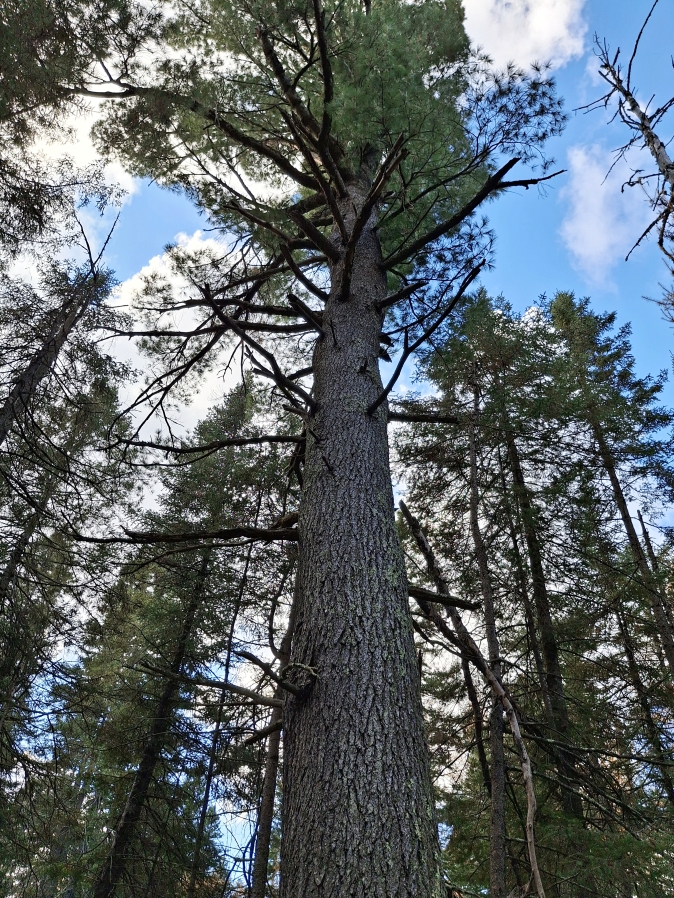
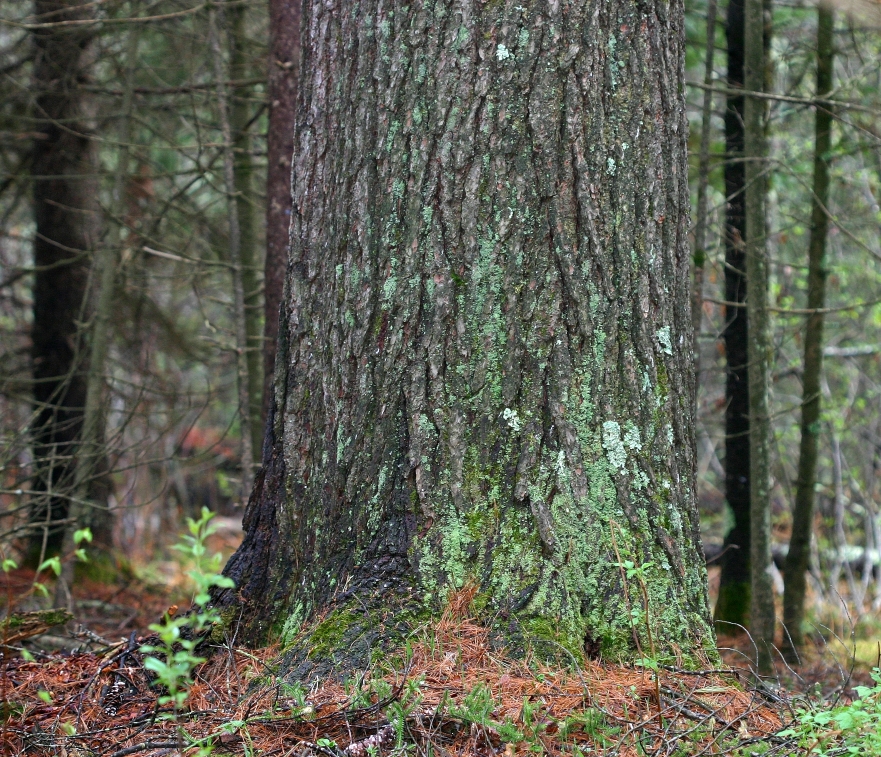
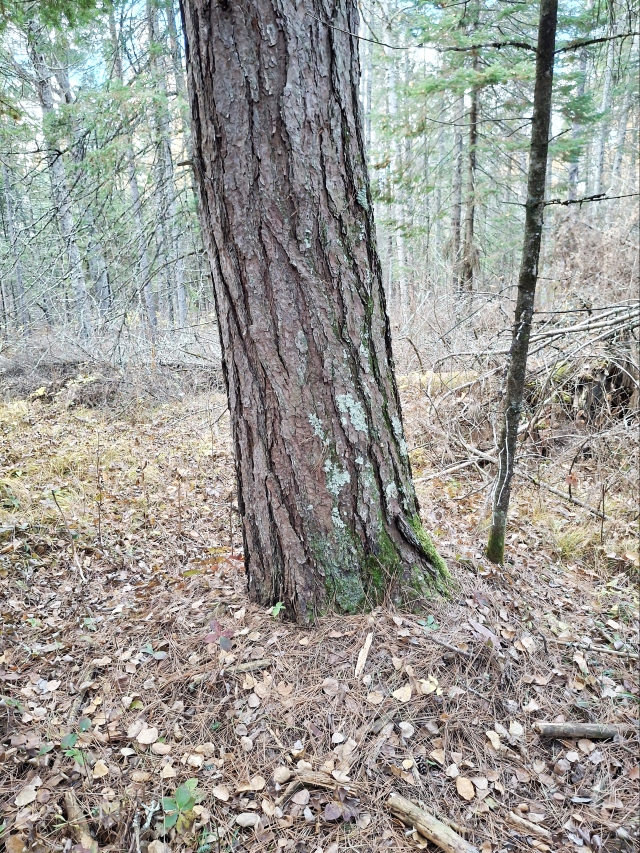
This white pine is the largest and possibly the oldest tree on my property. It has a DBH (diameter at breast height or 1.3 meters) of 92 cm, and I estimate its age at about 180 years old.

The white pine probably began growing sometime around 1845. This was at the beginning of the white pine logging era in Minnesota. By 1900, it would have been large enough to cut for timber, but it was missed. The 1918 fires that swept through the area also missed it by just two short miles.

All through the 20th century, it continued to grow undisturbed. Over time, a forest of paper birch, aspen, balsam fir, and spruce grew under the pine. Beneath the trees, clubmosses, poverty oats, rough rice grass, purple melic grass, twinflower, and hairy goldenrod covered the ground. The forest had come back.

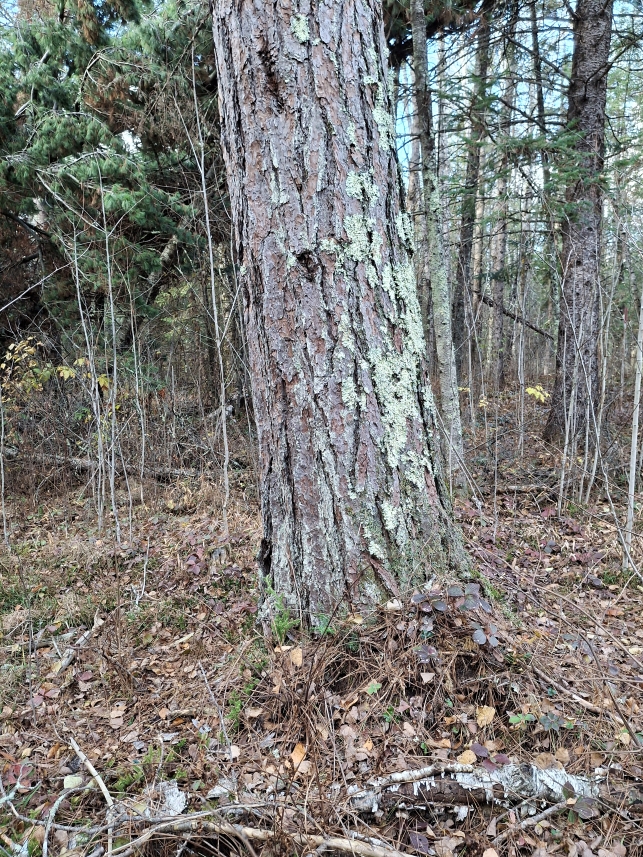
The big white pine as seen from ground level.

When other white pines on this 40-acre section were cut down for lumber in 1960, this huge white pine was not cut down. So were four other large white pines and five large red pines. I don’t know how or why this happened, but I am glad they were overlooked. What would this forest be without them?

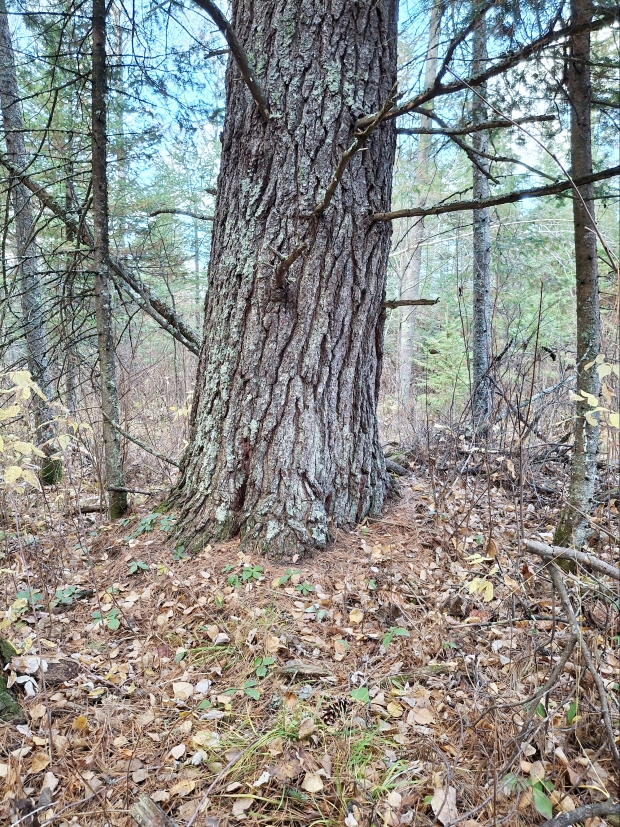
One of the big white pine’s neighbors. This white pine tree had a DBH of 82 cm in 2015. I estimate its age at 170 years.

Logging of Minnesota’s white pine forests began in the 1830s, but it wasn’t until the 1870s, with the advent of railroads and new settlements, that it really took off. By 1900, Minnesota had produced almost 1.2 billion board feet of white pine timber. This was not to last, and by 1929, nearly all of Minnesota’s white pine forests were depleted, bringing white pine logging to an end. While not remnant trees from old-growth forests, these white and red pine trees are survivors from that time.

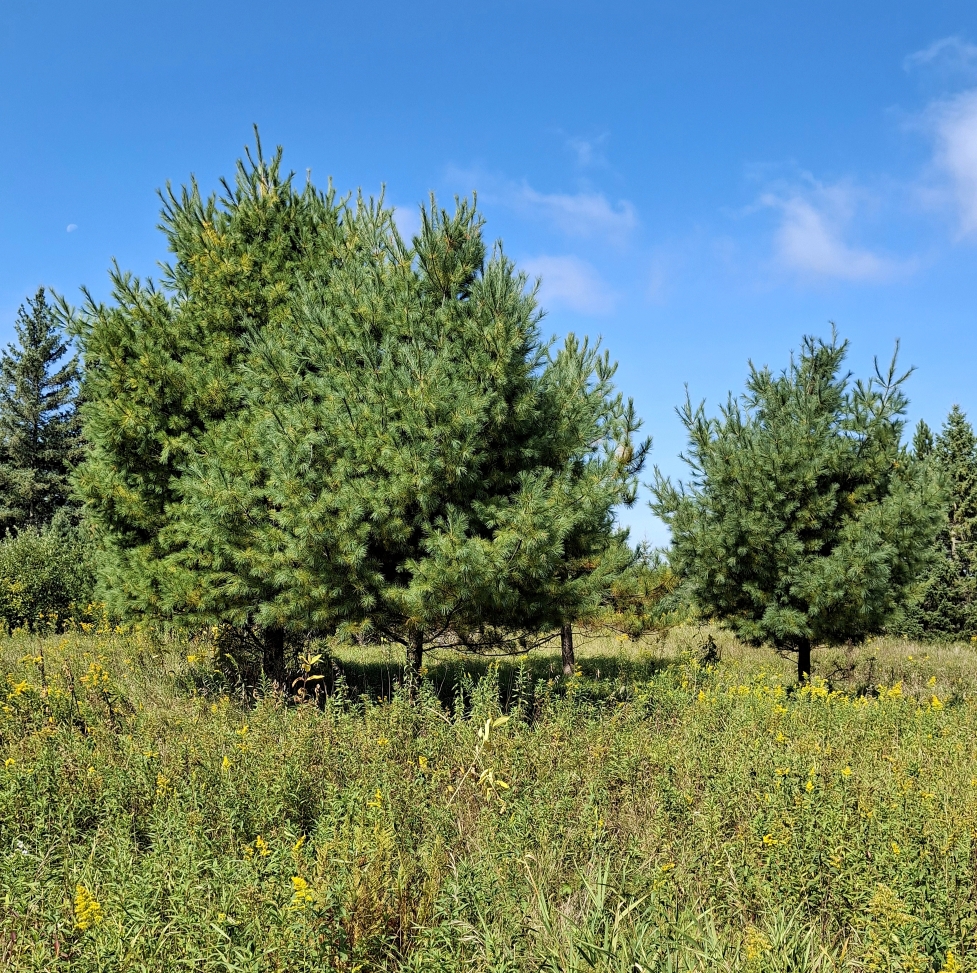
White pines I planted in the early 2000s. These trees were grown from seeds produced by another old and enormous white pine on my land. They are part of my project to re-wild a former hayfield and pasture.

I found some more leaf mines

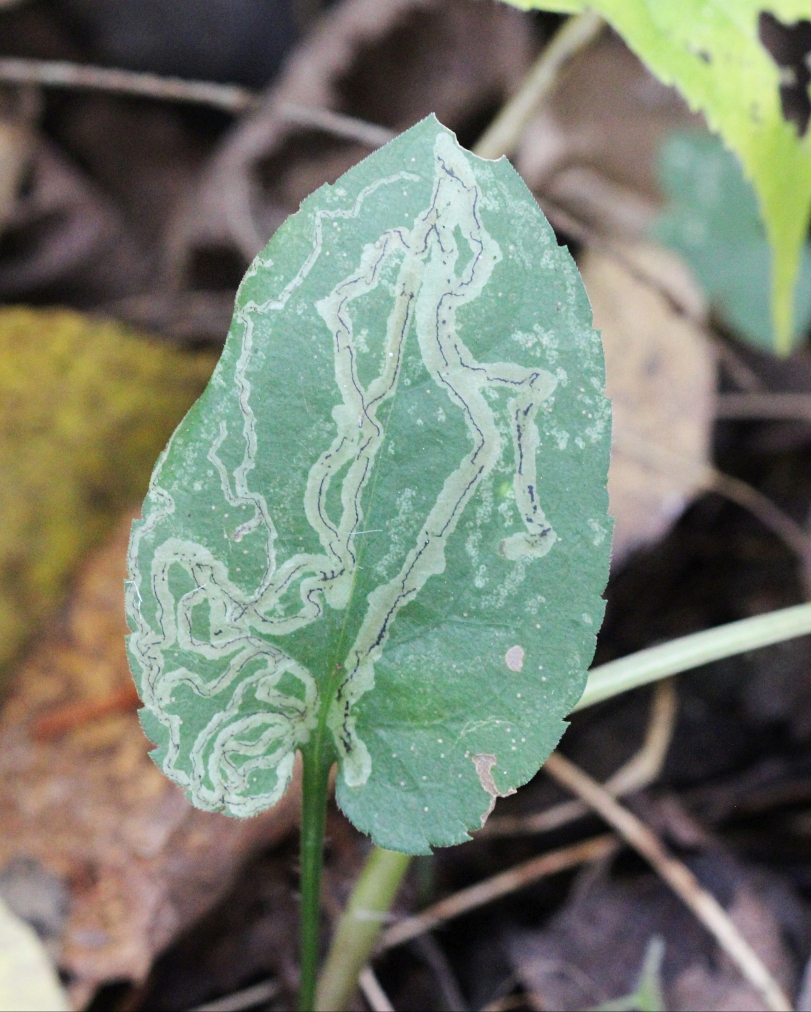
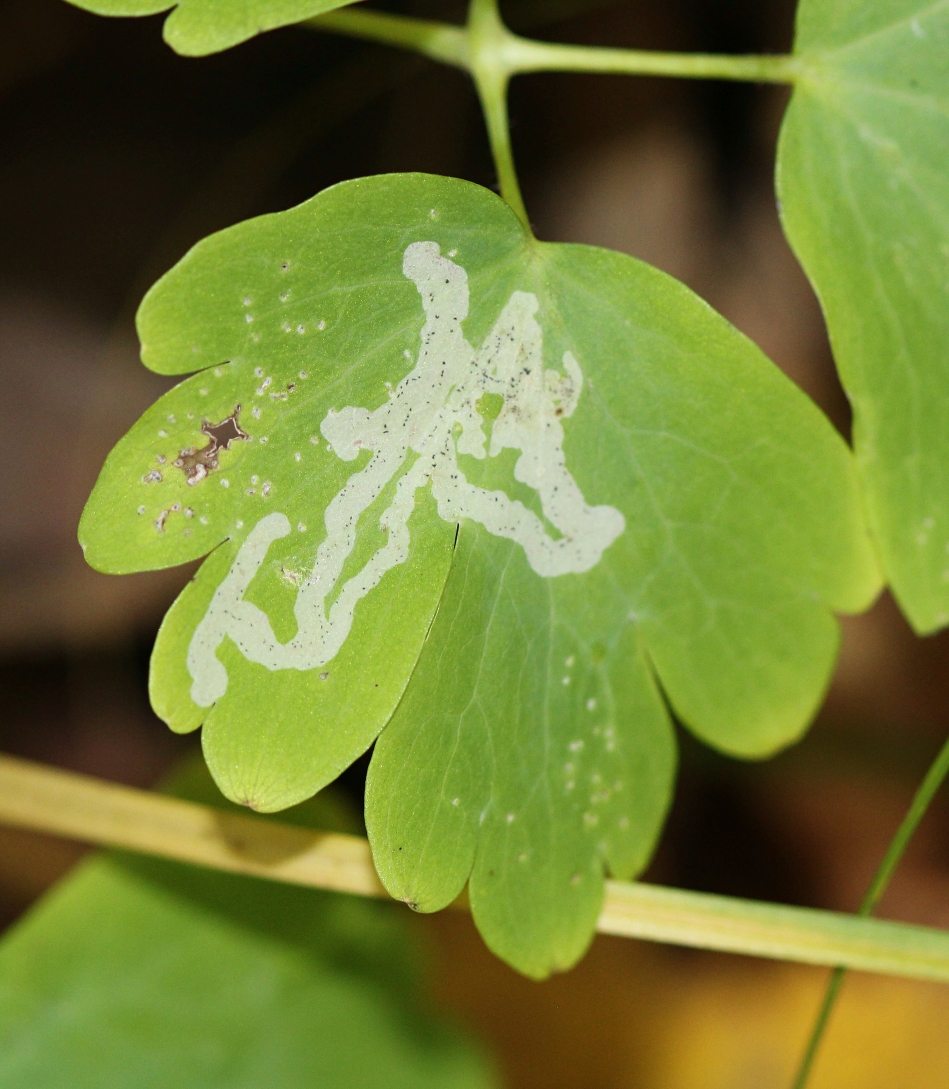
A leaf mine in a big-leaf aster leaf that was probably made by the larva of an Ophiomyia sp., a genus of leaf-mining flies.

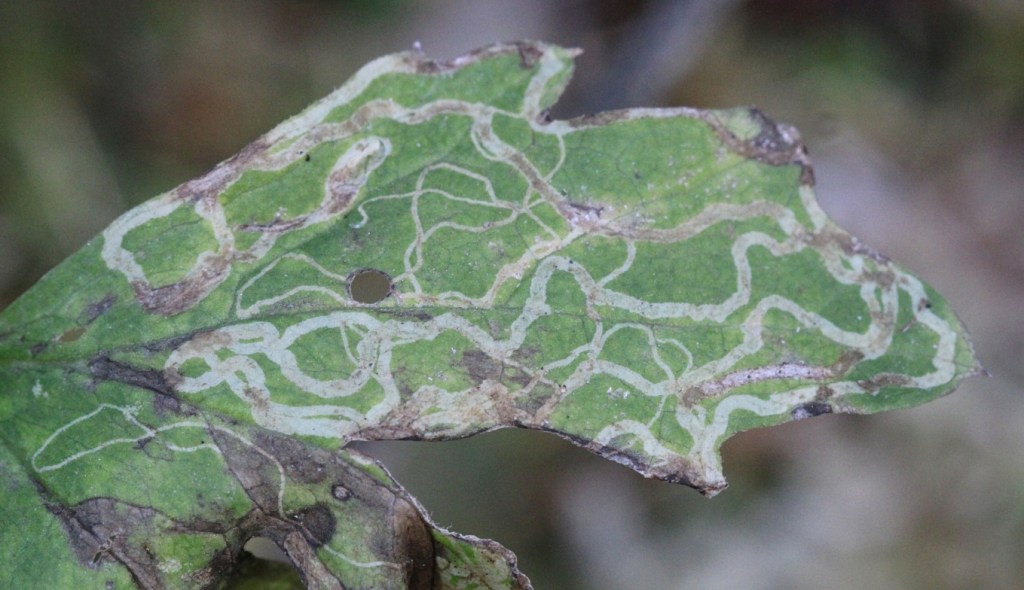
Recently, I’ve become more interested in leaf mining insects after finding what might be the serpentine leaf mine of a Stigmella moth in a blackberry leaf. This wasn’t the first moth leaf mine I have found. In 2017, I identified another leaf mining moth, Phyllocnistis populiella, recognizing it from its leaf mine in a balsam poplar leaf.

Later, in 2019, I found the adult of another poplar leaf mining species, Phyllonorycter nipigon. Beyond that, my findings of leaf miners have been sporadic and by chance when photographing micro-moths at my moth lights.

Changing weather, changing focus

With the colder fall weather, it is more difficult to find insects and other arthropods. So, now I am turning my attention to the signs of them.

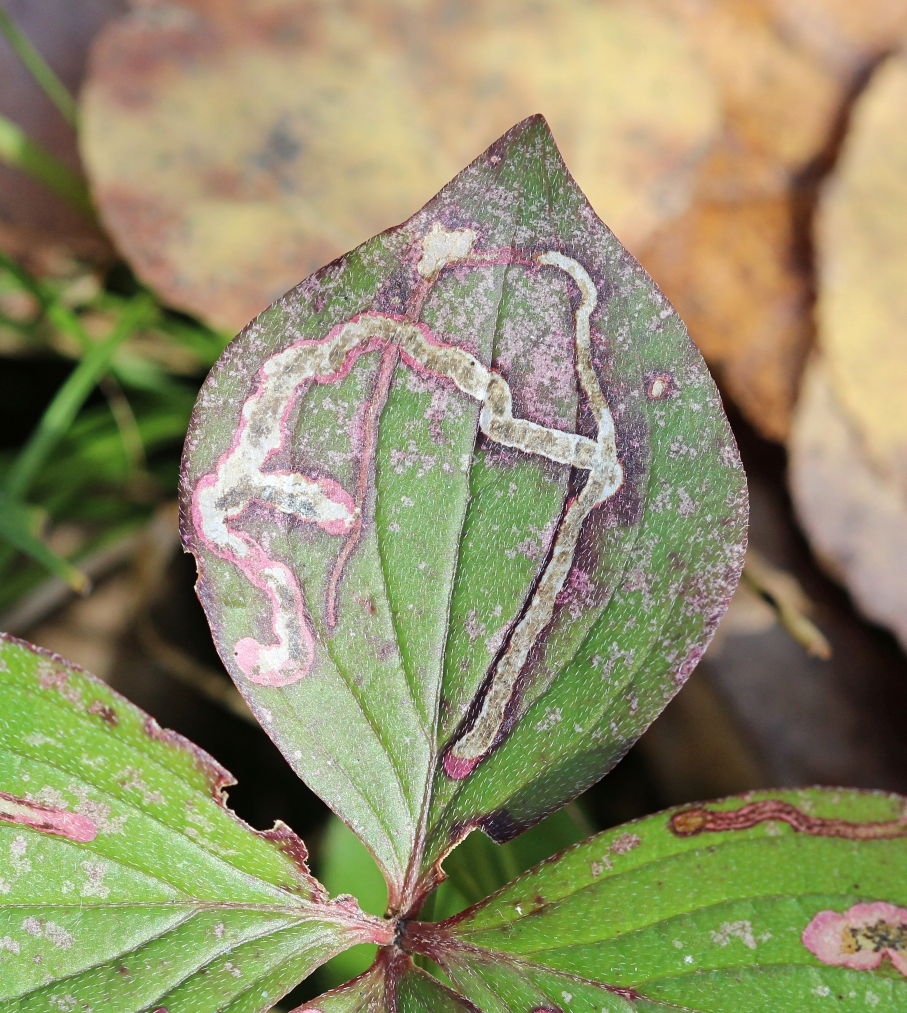
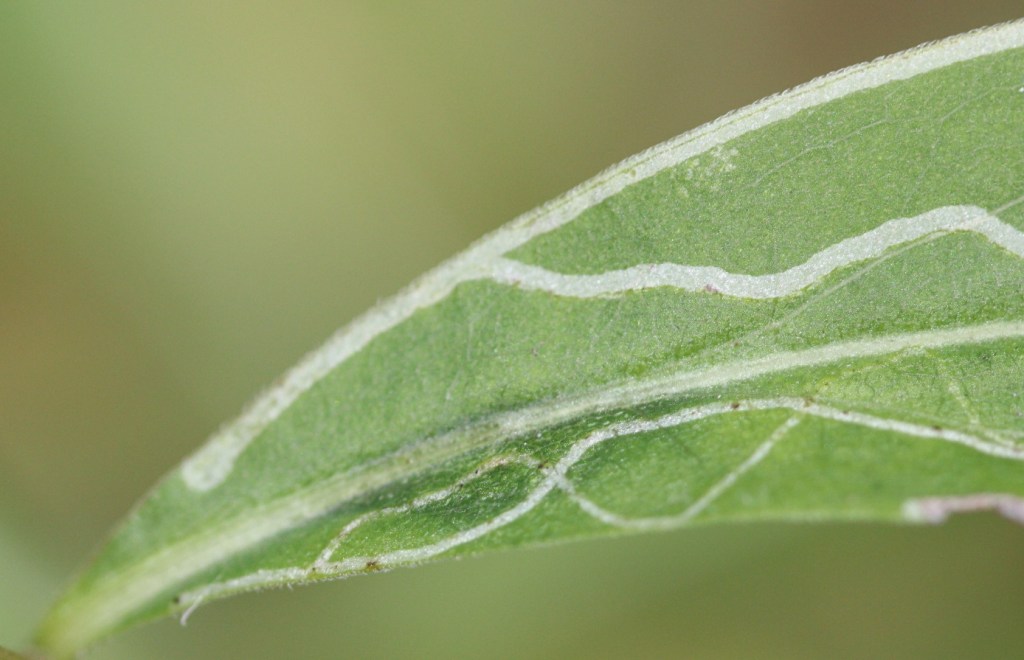
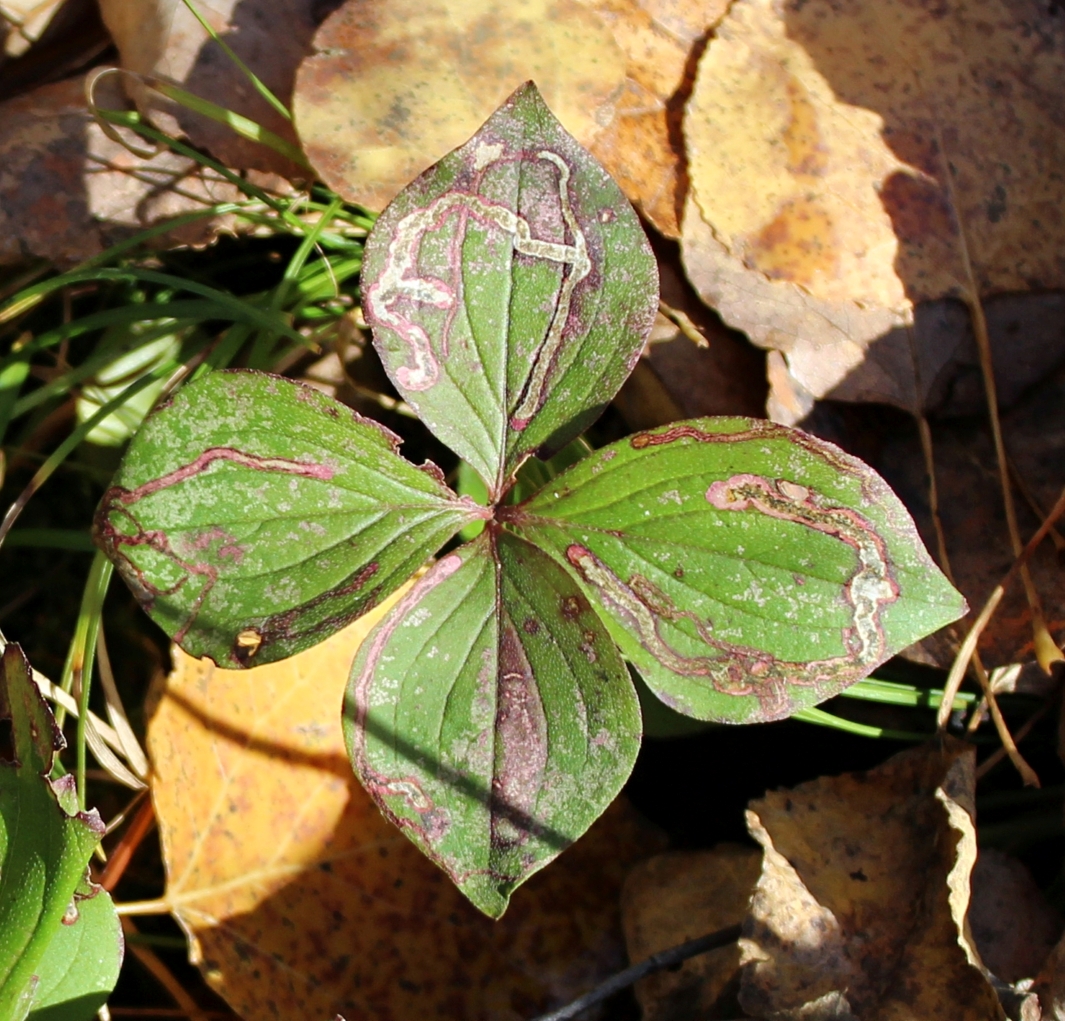
Out on my walks in the woods late last month, I came across five more serpentine leaf mines. The first was in a big-leaf aster (Eurybia macrophylla), which is shown in the photo at the top of the page. The other four were in wild red columbine (Aquilegia canadensis), coltsfoot (Petasites palmatus), goldenrod (Solidago gigantea), and bunchberry (Cornus canadensis). I couldn’t find larvae in any of them, but I think I have a good idea of what made them.

This leaf mine in a columbine leaf was probably made by a larva of Phytomyza aquilegivora.

Possible identifications

The leaf mine in the aster leaf was probably made by the larva of a species of fly in the genus Ophiomyia, leaf mining flies in the family Agromyzidae.

While I’m not absolutely certain, the leaf mines in the other four plants were probably made by the larvae of leaf mining flies in the genus Phytomyza, also in the family Agromyzidae.

I’ve probably seen the adult Phytomyza flies, but didn’t give them a second thought, assuming they were just some more pesky flies buzzing around my head looking for blood or sweat. Next year, I’ll be paying more attention.

Leaf mining flies are species-rich

There are at least 600 named species of Phytomyza, making it the largest genus of leaf mining flies in the world. Ophiomyia has over 200 species. Species of Phytomyza and Ophiomyia are host-specific, which accounts for much of the diversity in their genera.

Cerodontha is another species-rich leaf mining fly genus in the Agromyzidae, with 285 species worldwide. Cerodontha is a monocot specialist mining the leaves of sedges (Cyperaceae), soft rushes (Juncaceae), irises (Iridaceae), and grasses (Poaceae). Some Cerodontha species have been found in Minnesota and neighboring Wisconsin.

A quick search of species of Phytomyza and Ophiomyia that might occur in northern Minnesota shows at least twenty species and five species, respectively. The number of Cerodontha species in Minnesota is unknown. I think next summer is going to be an interesting one.

Further Reading

Every leaf of this bunchberry has a leaf mine.

Sarea difformis: A fungus that lives on conifer resin

Black spruce resin with Sarea difformis.

Conifer resin oozing from a tree is an inhospitable place. The terpenoid chemicals in resin are toxic to many forms of life, but not all. Even though conifer resins are full of anti-fungal and anti-bacterial compounds, some organisms have found a way around that. One of these is a fungus called Sarea, a genus of fungi that grows on the resins of pines, spruces, firs, and cedars. Organisms that live on resins are called resinicolous (resin plus “colous” meaning “inhabitant”).

From lichen to fungus

At one time, Sarea was thought to be a lichen, but because it lacks a photobiont (symbiotic photosynthetic organism), it has been “demoted” to a fungus. The tiny (barely 1 mm across) fungus bodies pictured above and below growing on the resin of a black spruce are, to the best of my knowledge, the apothecia (reproductive structures) of Sarea difformis. Cross-sections of the fruiting body examined under a microscope would make identification more certain, but that’s a bit out of my reach right now.

A few small fruiting disks (marked by red arrows) of the fungus Sarea difformis are growing on the darker portions (are those part of the fungal body?) of the resin. Can you find more?

I have looked for research papers on how Sarea can live on conifer resin, but the results have not yielded much information. Does it actually break down the resin components into simple carbohydrates? If so, then does it do this on its own, or is there a symbiotic relationship with bacteria or another fungus? Are the fungal hyphae growing in the resin or merely on top? How does it disperse? A lot of questions, and I’m sure there are answers somewhere.

Taxonomy

Sarea is a genus in the phylum Ascomycota (cup fungi, sac fungi), which includes familiar mushrooms like morels and the blue mold in Roquefort cheese. The taxonomy of the genus Sarea is not entirely settled, so some species may be moved to other genera, and species from other genera may be moved to Sarea. Also, new species are being discovered.

A similar resinicolous species that might be encountered in northern coniferous forests is Sarea (Zythia) resinae. It can be distinguished morphologically by the color of its apothecia. Sarea difformis has black apothecia, and Sarea resinae has orange apothecia.

Rare?

Sarea is not a rare fungus, but because of its small size and peculiar habitat, it is just rarely seen. It occurs throughout the cooler regions of the northern hemisphere.

Sources and additional reading