Pug Moths – Eupithecia

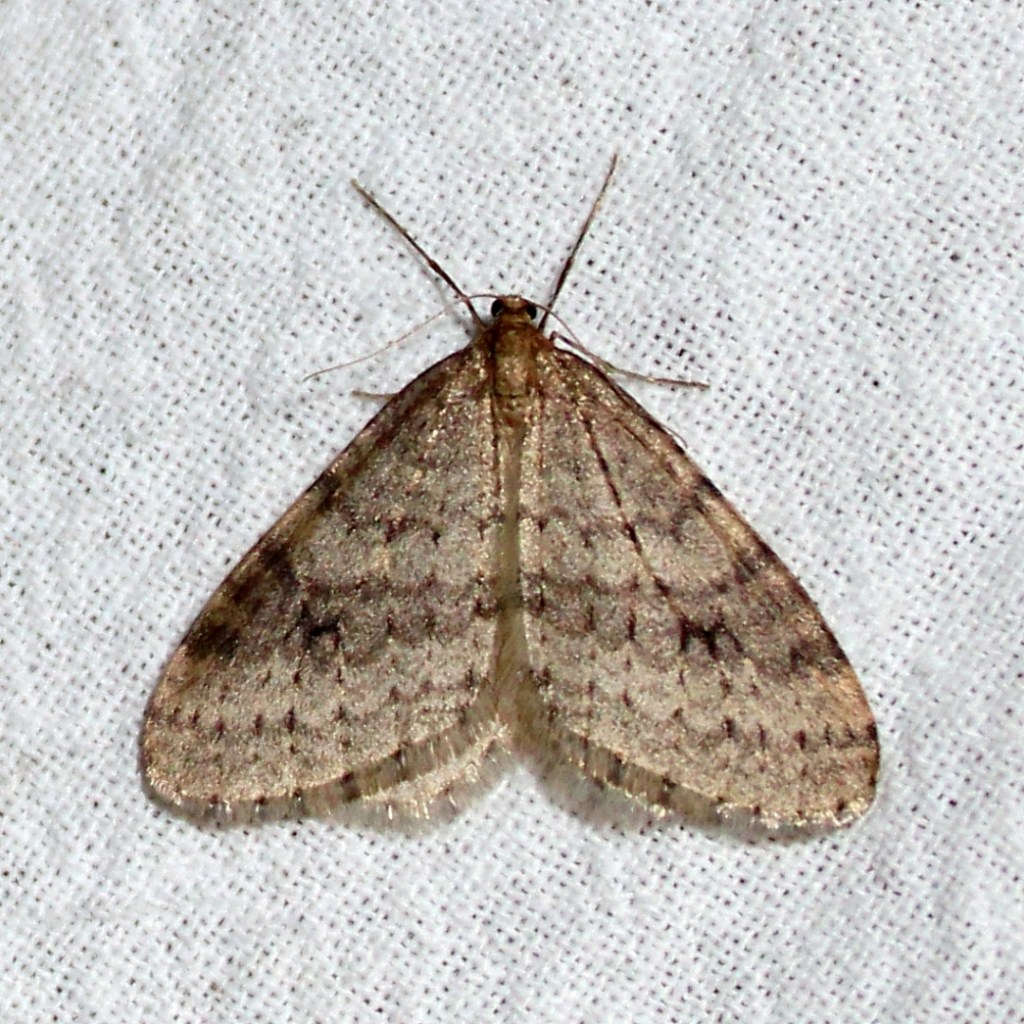
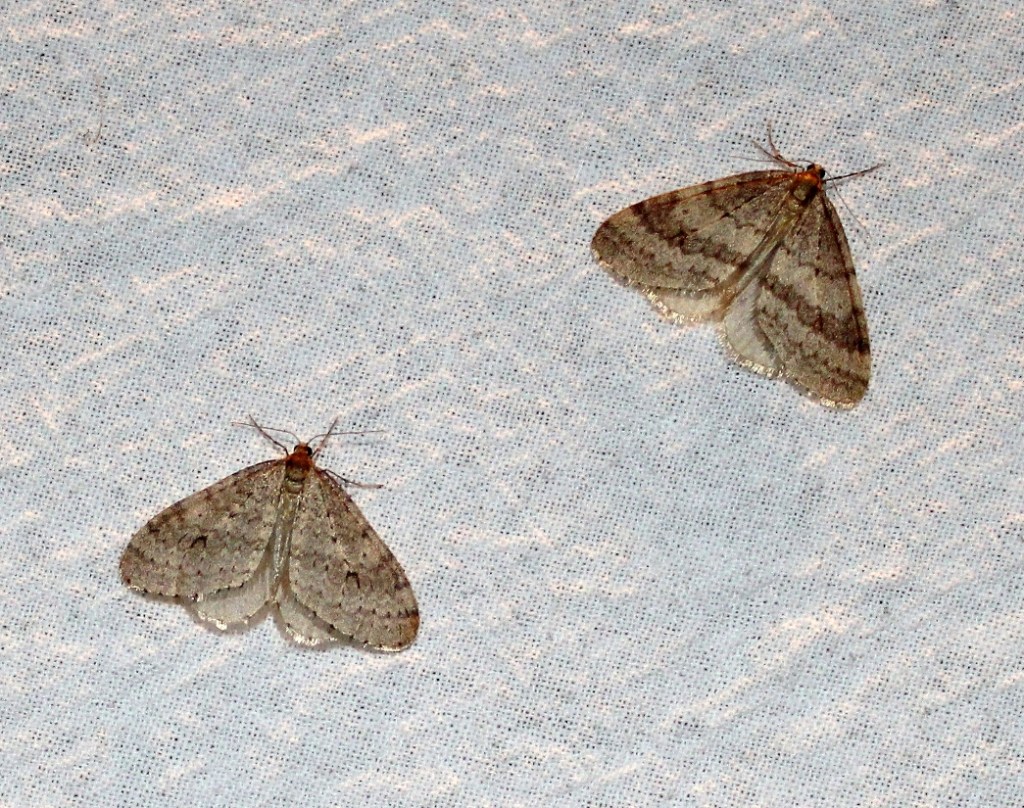
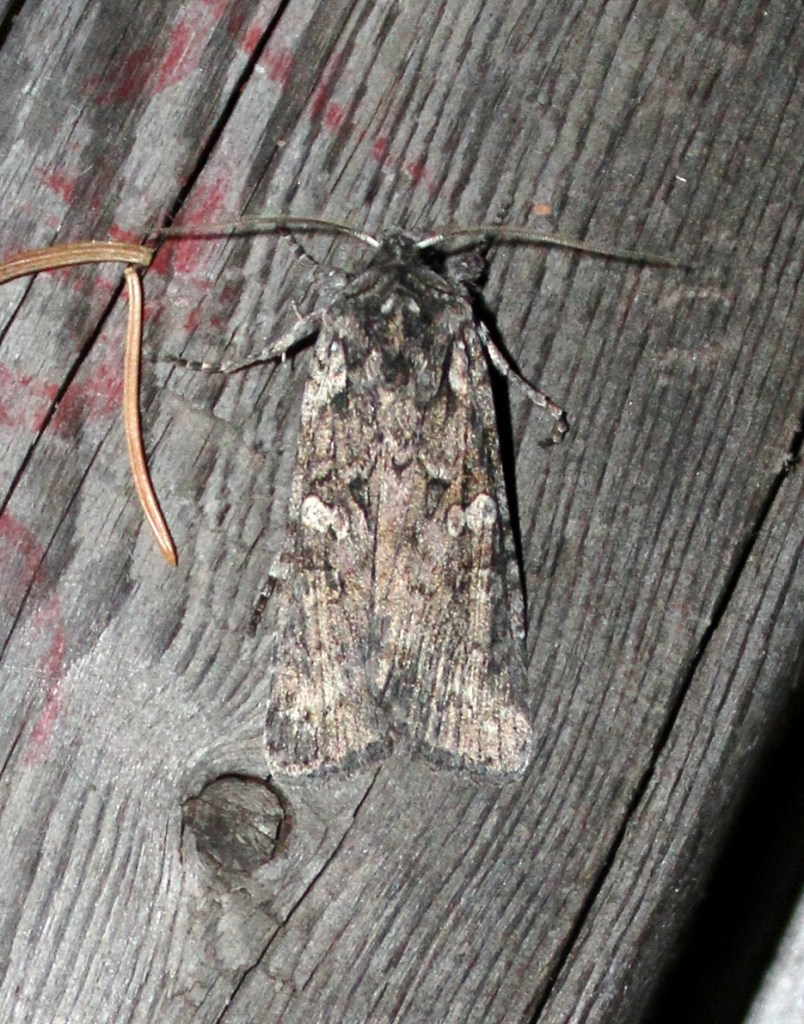
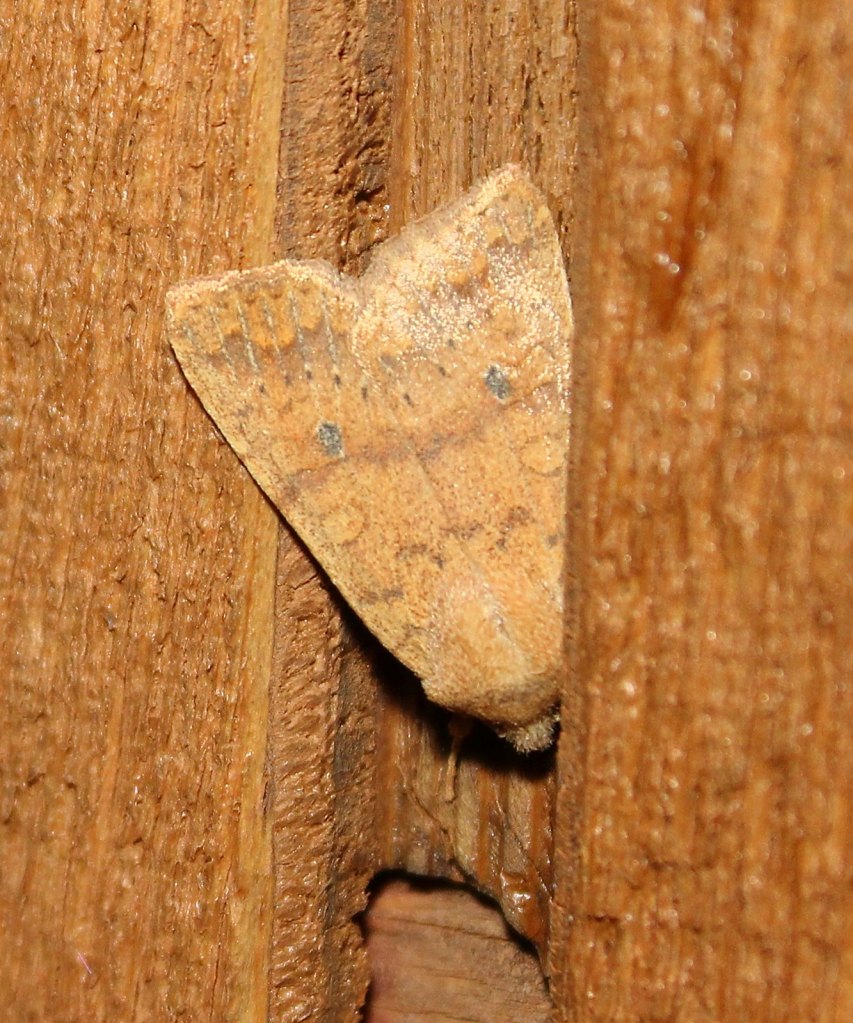
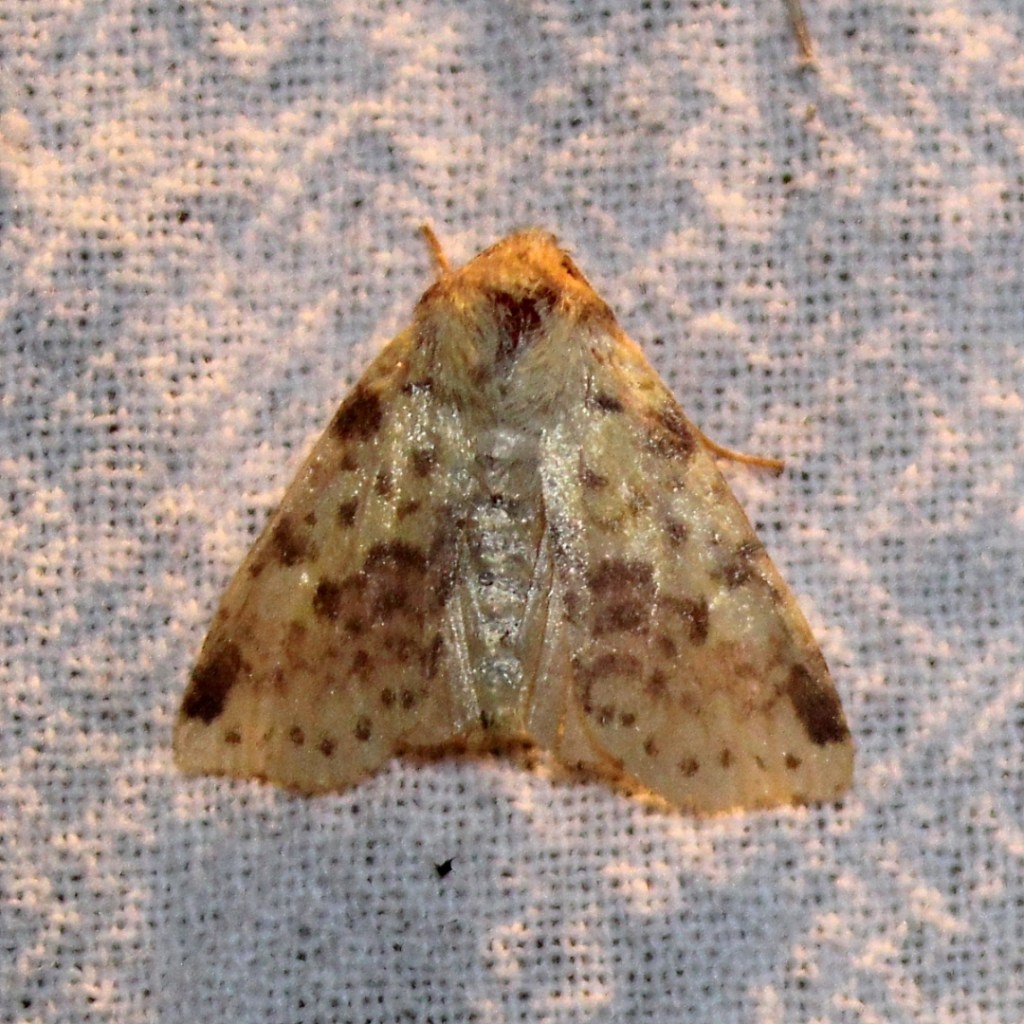
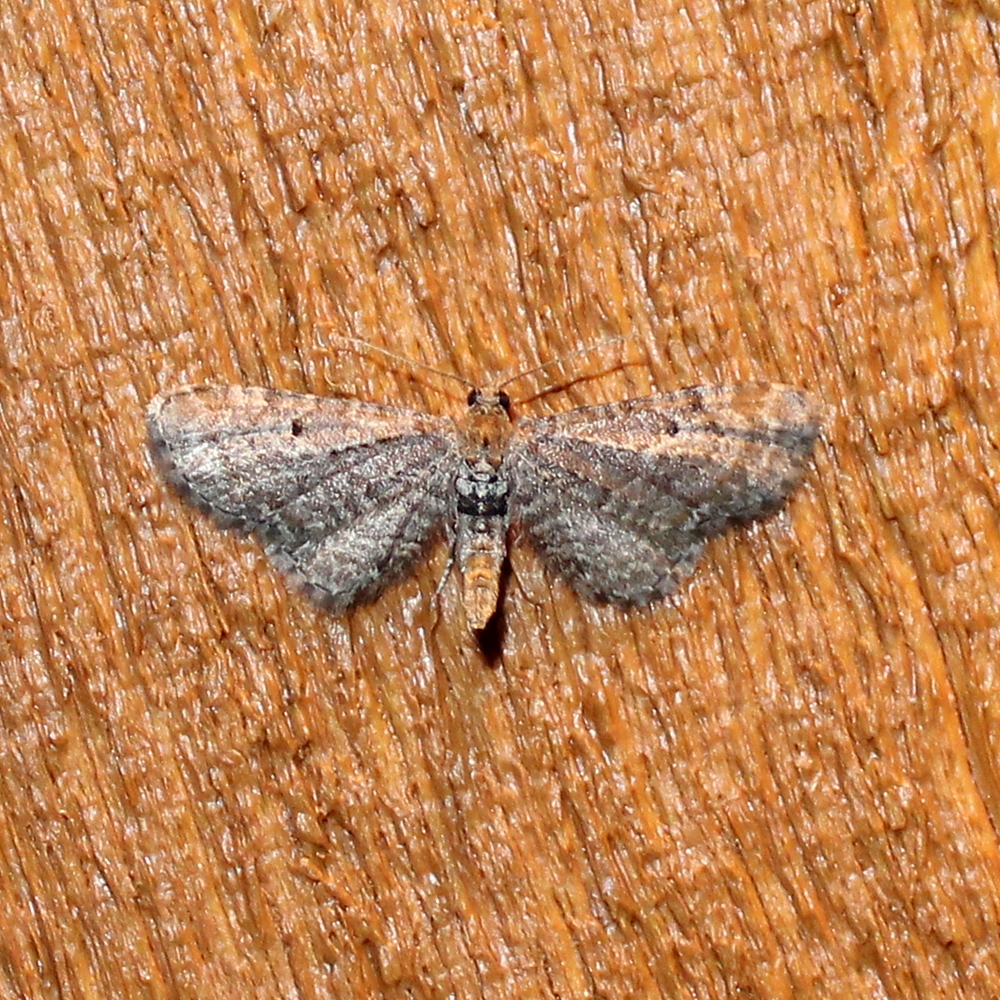
Pug moths (Eupithecia) are a large genus (about 1,400 species) of tiny moths in the Family Geometridae (geometer moths or inchworms). There are hundreds of described species from all continents except Antarctica. Some even live on Pacific islands like the islands of Hawai’i with species whose larvae are carnivorous and catch and eat other insects. North America north of Mexico hosts at least 160 species. There are probably many more species yet to be described.

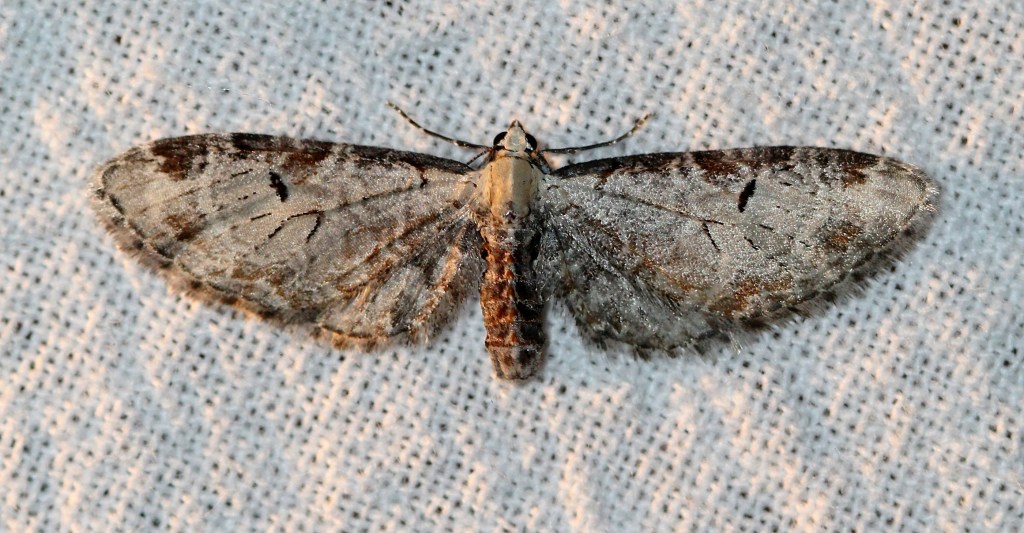
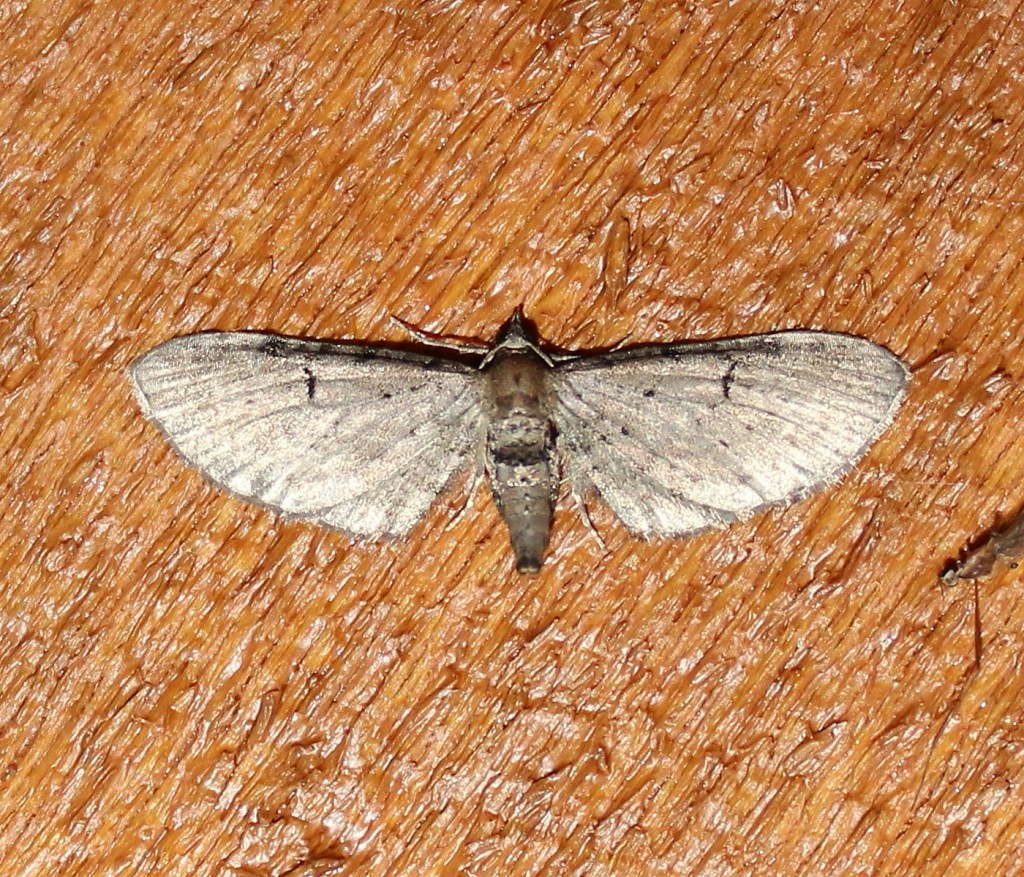
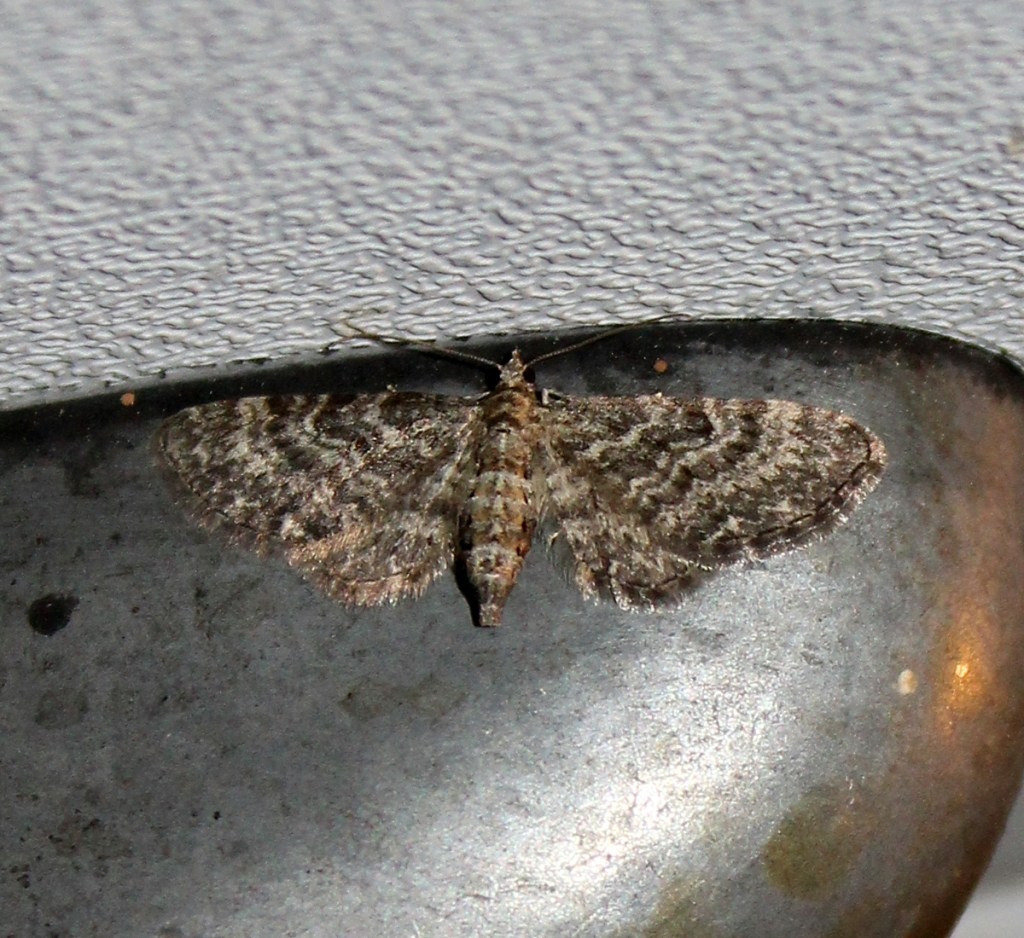
Eighteen Eupithecia species have been recorded from Minnesota. Some are known from five or fewer sightings in the state. I haven’t found all eighteen yet but have gotten to one-third of that number and that includes some of the rarities. The most common one is Eupithecia miserulata, a small grayish species with a dark dot on each of its forewings, faint scalloped lines on the wings, and often two or three dark dots along the costa. This moth can be variable and it is easy to confuse it with other species. I often find the yellowish larvae in July and August feeding on the anthers of black-eyed susan (Rudbeckia hirta) flowers, cut-leaf coneflower (R. laciniata), and sunflower (Helianthus grosseserratus). The larvae of E. miserulata are also reported to feed on oak, willow, and juniper.

Larval host preferences are not known for the other Eupithecia I’ve found except for E. strattonata (alder and spiraea), E. absinthiata (mugwort, wormwood, yarrow), and E. ravocostaliata (willow, cherry, birch and other woody plants).

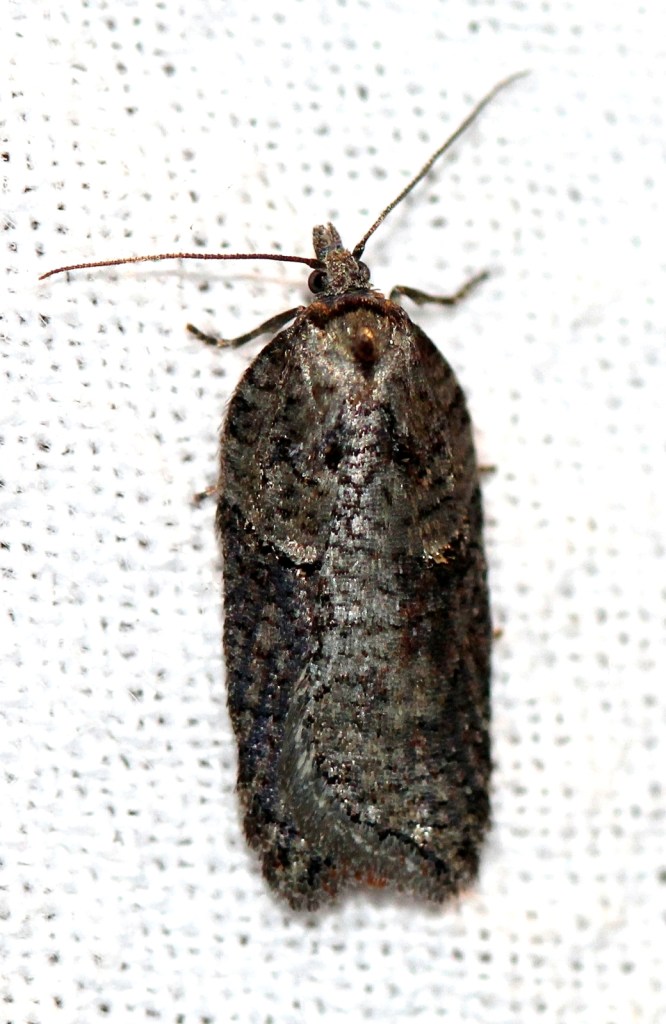
Below are the six species I’ve found and been able to identify.

CLASSIFICATION
Kingdom Animalia (Animals)
Phylum Arthropoda (Arthropods)
Subphylum Hexapoda (Hexapods)
Class Insecta (Insects)
Order Lepidoptera (Butterflies and Moths)
Superfamily Geometroidea (Geometrid and Swallowtail Moths)
Family Geometridae (Geometrid Moths)
Subfamily Larentiinae
Tribe Eupitheciini
Genus Eupithecia

SOURCES

Bug Guide

Moth Photographers Group

Wikipedia

Hawaiian Carnivorous Caterpillar — Eupithecia

Another fungus eating moth

Metalectra quadrisignata (four-spotted fungus moth) from Carlton County, Minnesota

But not in Tineidae. This moth, Metalectra quadrisignata (four-spotted fungus moth), in the Family Erebidae, Subfamily Boletobiinae is yet another addition to the species checklist. The first syllables in the name Boletobiinae are “bolet” from “bolete” which is a name given to a vast group of species of mushrooms with large caps free from the stems and producing spores from pores, not gills. So, Metalectra quadrisignata is in the Subfamily Mushroom-iinae. Presumably, the larva of many or most of the members in this subfamily are fungivores but full life histories for species is incomplete. Larvae of Metalectra quadrisignata feed on bracket fungi preferring living or actively growing fruiting bodies. What species or even order is not specified. Some photos at Bug Guide show larva on a gilled mushroom and a slime mold which is not a fungus. It is unclear if they larvae were consuming these. I’ll need to start looking more carefully at these types of fungus.

Metalectra quadrisignata (four-spotted fungus moth) found near Cadotte Lake in St. Louis County, Minnesota.

Matalectra quadrisignata is widespread in eastern North America from New Brunswick south to Florida and west to Manitoba and Texas.

Classification

Kingdom Animalia (Animals)

Phylum Arthropoda (Arthropods)

Subphylum Hexapoda (Hexapods)

Class Insecta (Insects)

Order Lepidoptera (Butterflies and Moths)

Superfamily Noctuoidea (Owlet Moths and kin)

Family Erebidae

Subfamily Boletobiinae

Tribe Boletobiini

Genus Metalectra

Species quadrisignata (Four-spotted Fungus Moth – Hodges#8500)

SOURCES

Bug Guide

Fungus Moths (Subfamily Boletobiinae)

Moth Photographers Group

A new moth – Amydria effrentella

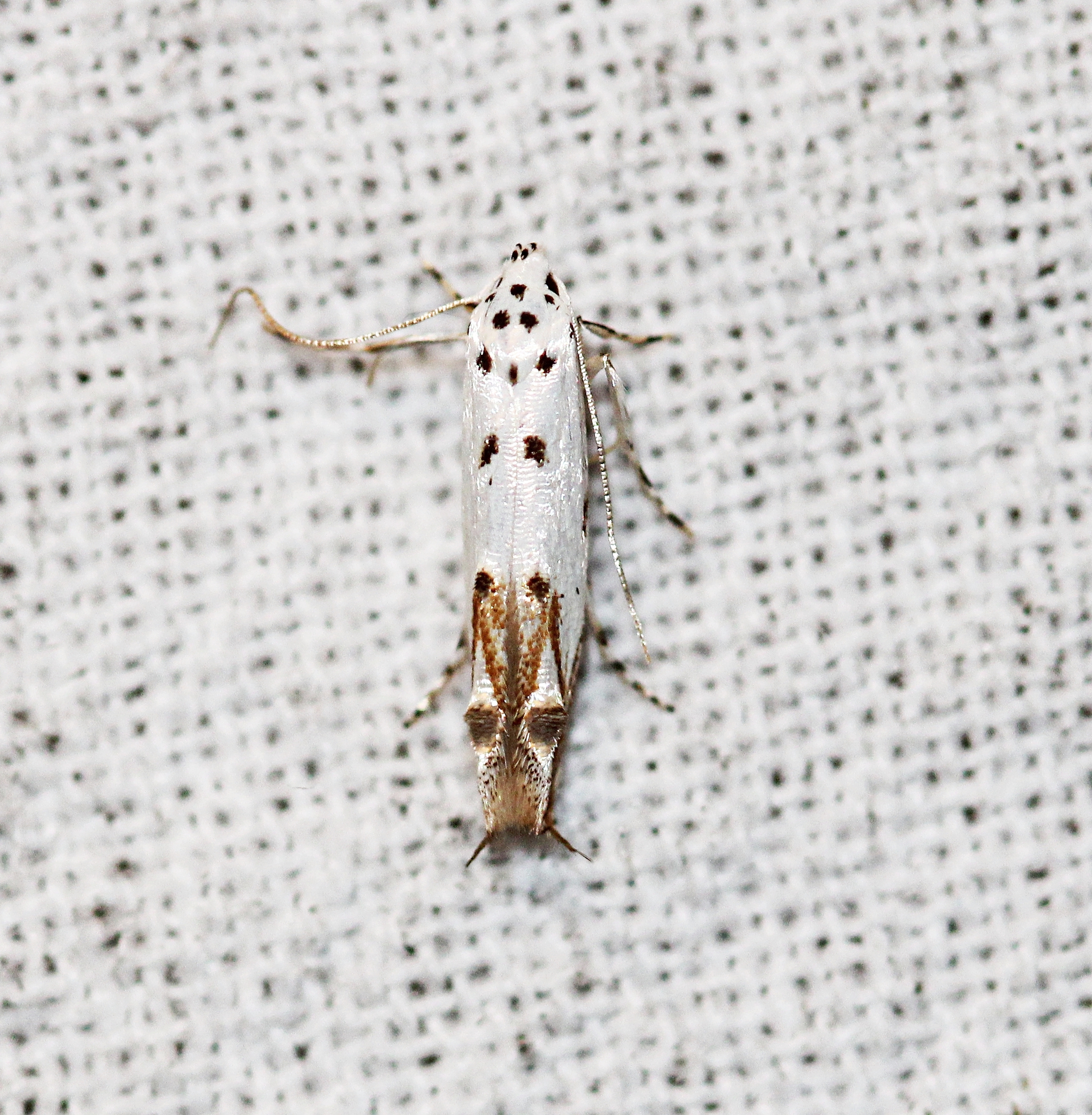
A new moth species for the checklist: Amydria effrentella. I photographed this one on July 23, 2022 during National Moth Week. My first thoughts were that this moth was some member of Family Tortricidae maybe in Olethreutini or Eucosmini two tribes in that family with long narrow-bodied moths. But that was far off the mark as repeated searches on the Moth Photographers Group bore out. All I could tell after that was this moth wasn’t like anything I’d seen yet.

One night I decided to use an image search. Of course, most of the results were wrong, but one tiny thumbnail linked to Bug Guide seemed close. So I clicked it and there was a photo of a moth that looked similar to mine. Amydria effrentella, is a moth in the Family Tineidae (Clothes Moths), Subfamily Acrolophinae (Burrowing Webworm Moths). The Moth Photographers Group provides a range map for Amydria effrentella showing it to be widespread.

Tineidae contains at least nine subfamilies north of Mexico with 190 species in 54 genera. For those genera and species whose life histories are known the larvae feed on things such as fur, feathers, skin, scales, bird and small mammal dung, fungi, lichens, and detritus (detritivores) the dead particulate organic material such as is found in leaf litter. Only a few species are known to feed on living plants.

What little information there is on Amydria effrentella indicates that its larvae typically construct “long silken tubes underground or on/in plant detritus and feeding primarily on plant debris as well as living plants, rarely coprophagous or mycetophagous.” Other reports have found it feeding on dried nest material in the burrows of mountain beavers. Pupation takes place in a coarse cocoon or in the larval tube.

Taxonomy

Kingdom Animalia (Animals)

Phylum Arthropoda (Arthropods)

Subphylum Hexapoda (Hexapods)

Class Insecta (Insects)

Order Lepidoptera (Butterflies and Moths)

Superfamily Tineoidea (Tubeworm, Bagworm, and Clothes Moths)

Family Tineidae (Clothes Moths)

Subfamily Acrolophinae (Burrowing Webworm Moths)

Genus Amydria

Species effrentella (Amydria effrentella – Hodges#0334)

Sources Cited

Bug Guide

Moth Photographers Group

Neotropical Tineidae. II: Biological Notes and Descriptions of Two New Moths Phoretic on Spiny Pocket Mice in Costa Rica. (Lepidoptera Tineoidea). Donald R. Davis, Dale H. Clayton, Daniel H. Janzen and Anne P. Brooke. Proceedings of the Entomological Society of Washington. 88(1). 1986. pp. 98-109.

The Tineoidea and Gracillarioidea. (Donald R. Davis & Gaden S. Robinson, 1998) from “Handbook of Zoology / Handbuch der Zoologie

Flower flies

Syrphid fly on flower
Helophilus fasciatus on Lindley’s aster (Symphyotrichum ciliolatum) looking for pollen and nectar.

On a warm late summer day if you walk into a field of flowers particularly yellow flowers like goldenrods you might think you have stepped into a swarm of bees or wasps. There is intense buzzing and many small yellow and black insects on the flowers and flying all around you. But despite all appearances these are not bees or wasps at all. They are flies. Syrphid flies, also known as flower flies and hover flies, to be more exact, and there are many species that mimic bees and wasps, a good strategy if you are trying to fend off predators.

Syrphid flies are true flies in the Order Diptera (“two wings”) and Family Syrphidae. Adult syrphid flies feed on nectar, pollen, and sugary secretions from aphids. You can use their love of sweets to attract them with mixture of sugar or honey and water sprayed on surfaces like tree trunks in open areas. When moving about on flowers syrphid flies assist in the pollination of many plant species including crops we grow.

The larvae have more varied diets depending on the species. Some syrphid fly larvae feed on decaying plant matter, damp wood (perhaps for the bacteria and fungus which are more nutritious?), and subterranean parts of plants. Others prey upon aphids, scale insects, thrips, and similar sap-sucking insects and can be beneficial in crop fields and gardens. Some species lurk in ant nests where they disguise themselves with chemical secretions and eat ant larvae.

Syrphid larvae in the tribes Eristalini and Sericomyiin live in muddy stagnant water, even cesspools, where they feed on detritus. A long breathing tube from the anal segment pokes above the water to access the air. This long breathing tube has earned them the name “rat-tailed maggots”.

I recently bought “Field Guide to the Flower Flies of Eastern North America” and have found it very helpful in figuring out species of syrphids that live in my area. The book is well illustrated and includes descriptions and range maps. In the descriptions, the authors have included flowers that species typically visit if known. I have been able with this book to identify three syrphids (Eupeodes americanus, Sericomyia chrysotoxooides, Toxomerus marginatus) that had been in my “unknown” files for several years. And I’ve identified three others I photographed last week (Eristalis dimidiata, Eristalis transversa, Sphaerophoria philanthus).

Below is a small gallery of some of the syrphid flies I’ve seen here over the years.

SOURCES

Field Guide to the Flower Flies of Eastern North America. Jeffrey H. Skevington and Michelle M. Locke. Copyright 2019 Princeton University Press.