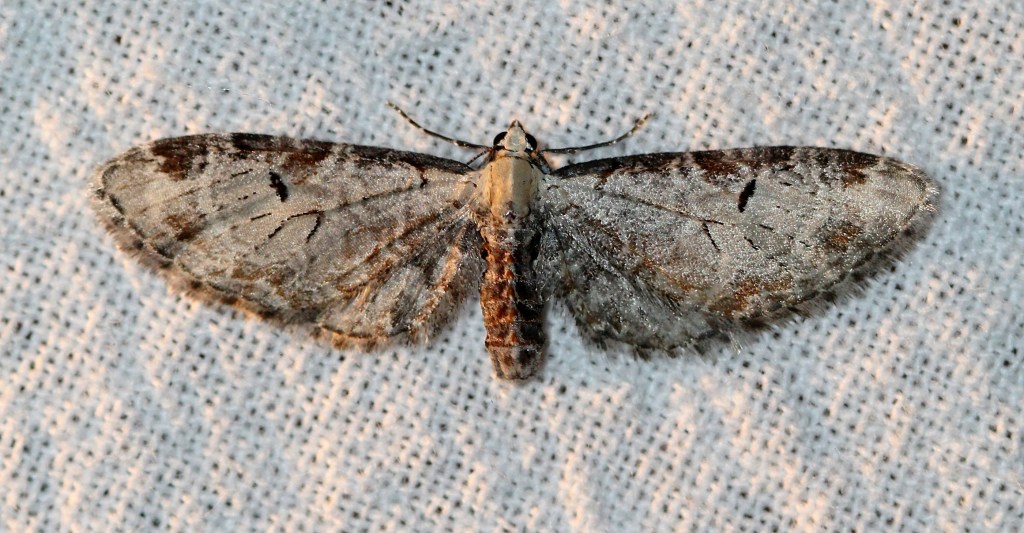
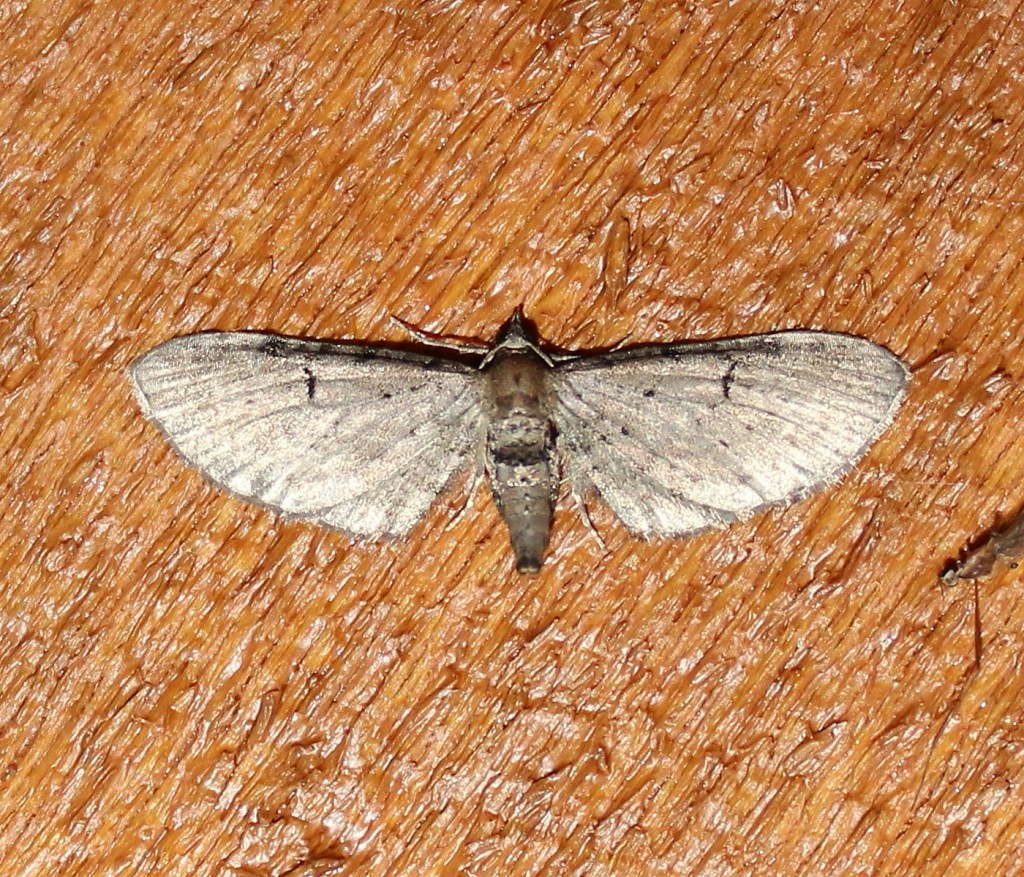
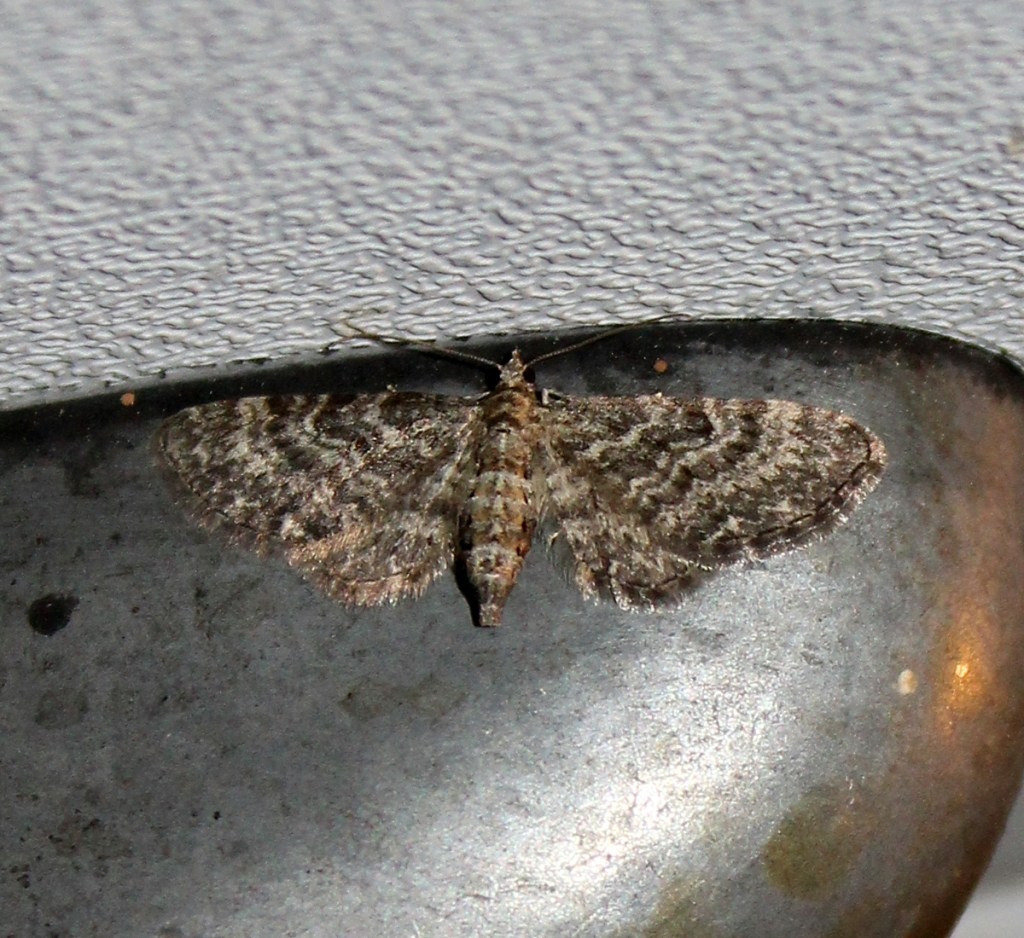
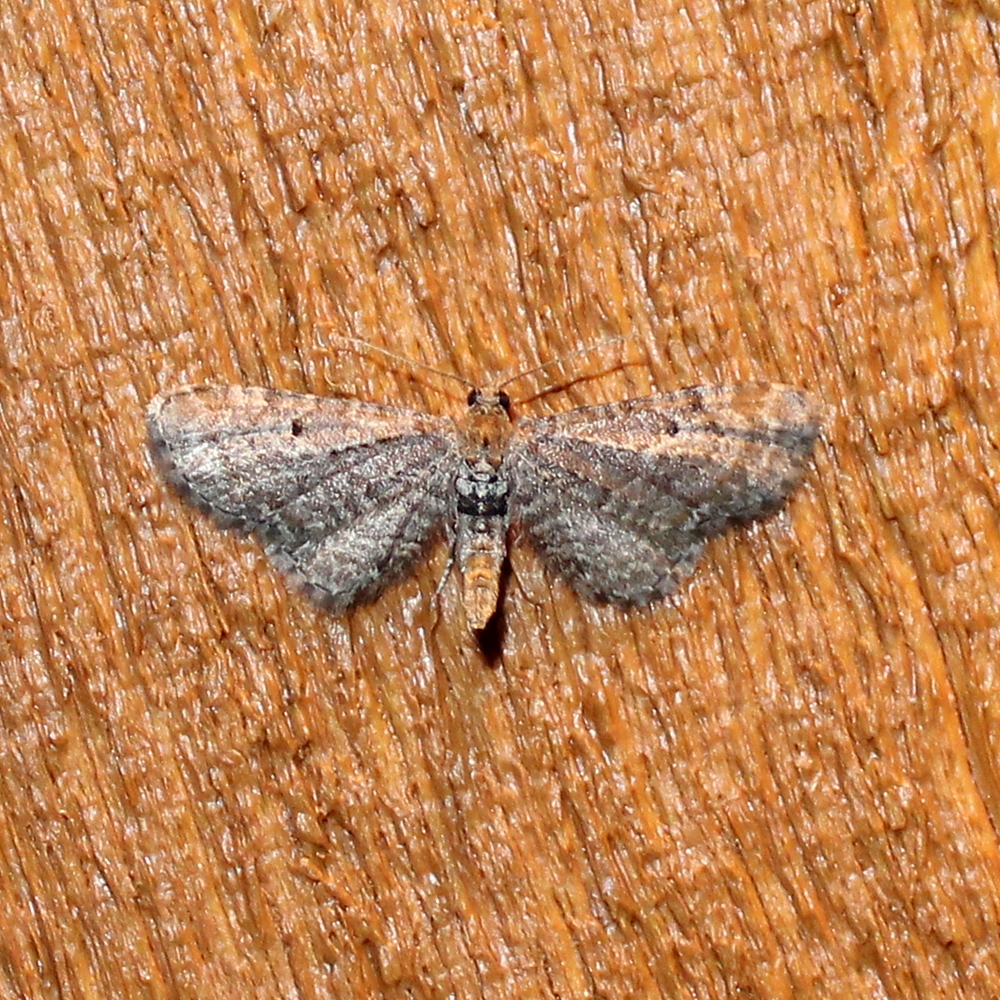
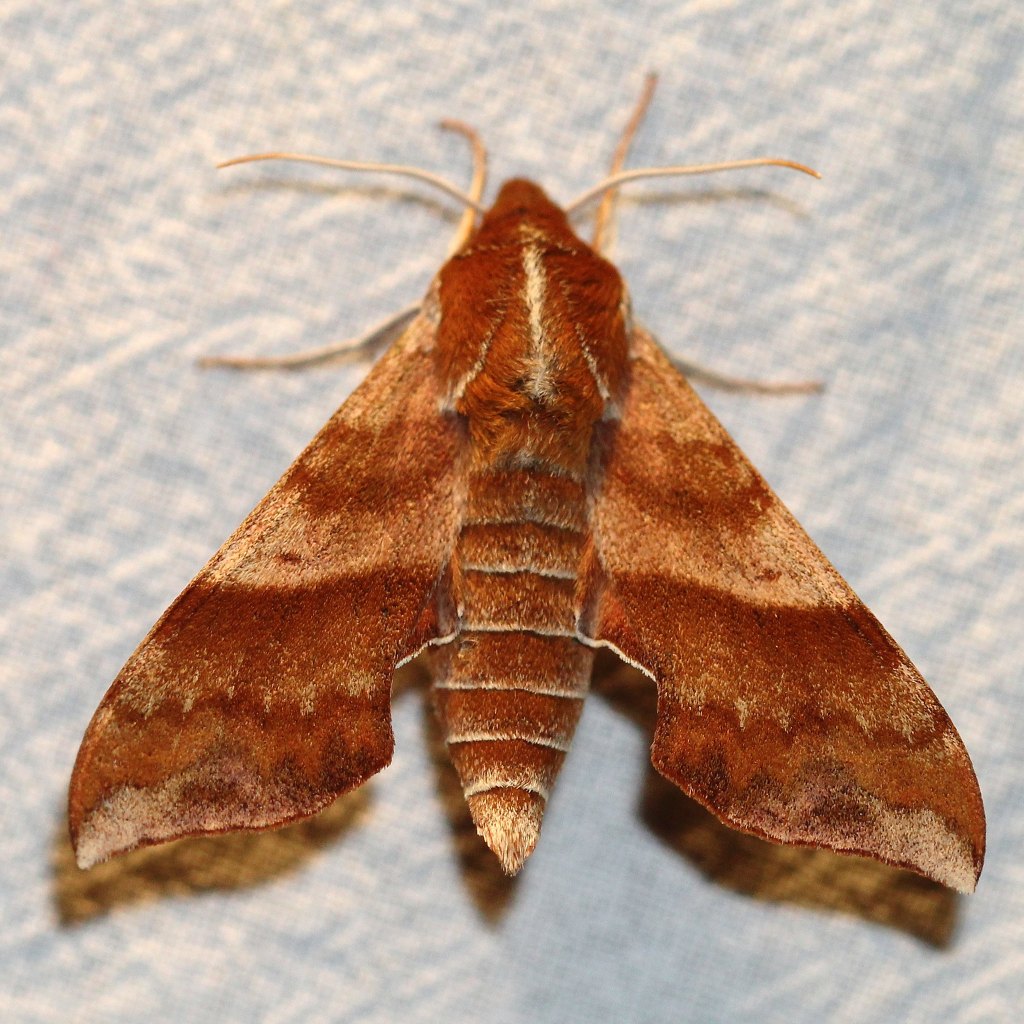
Another fungus eating moth

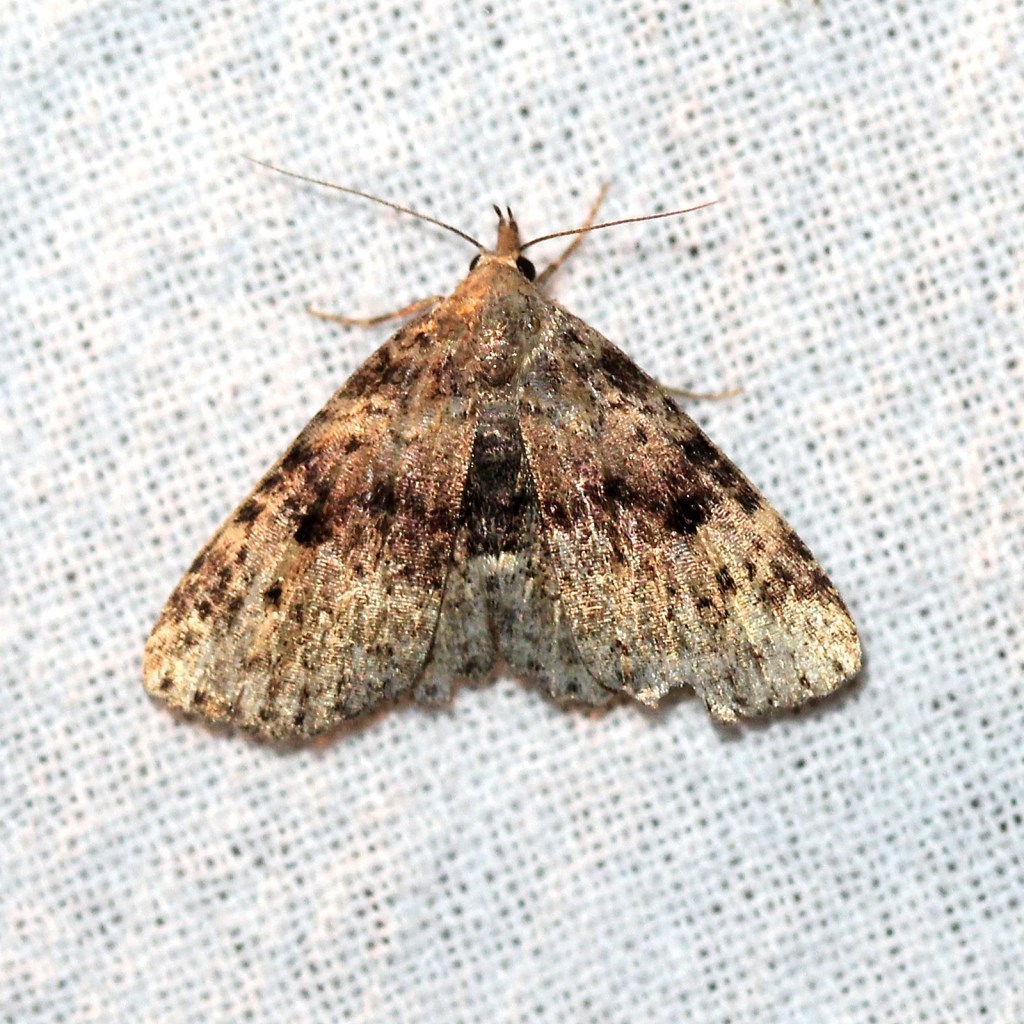
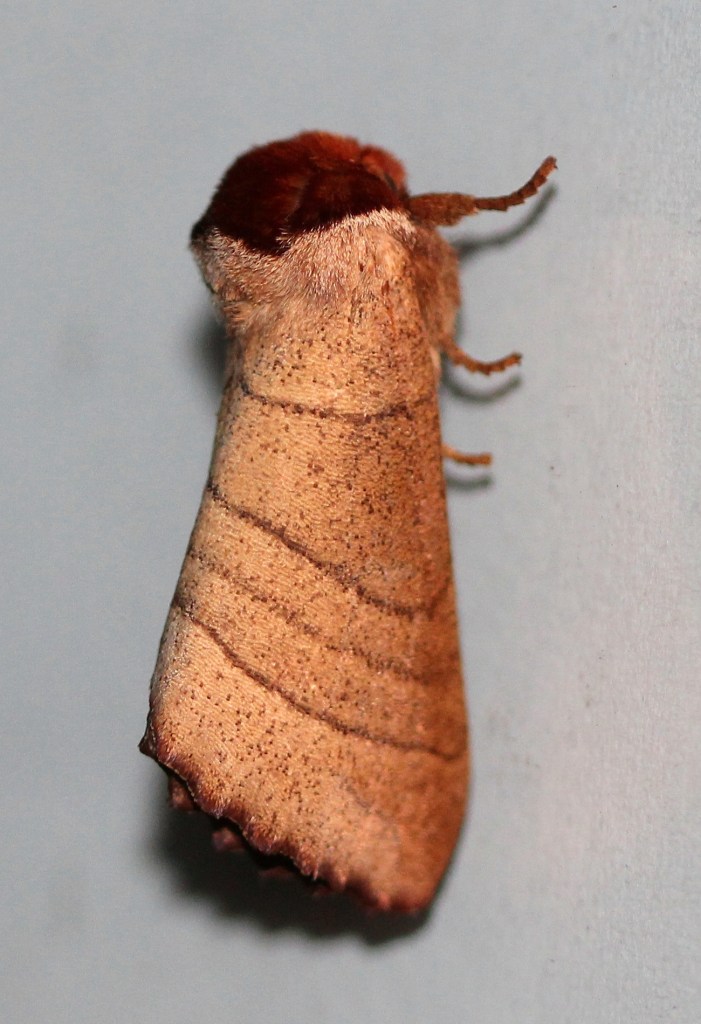
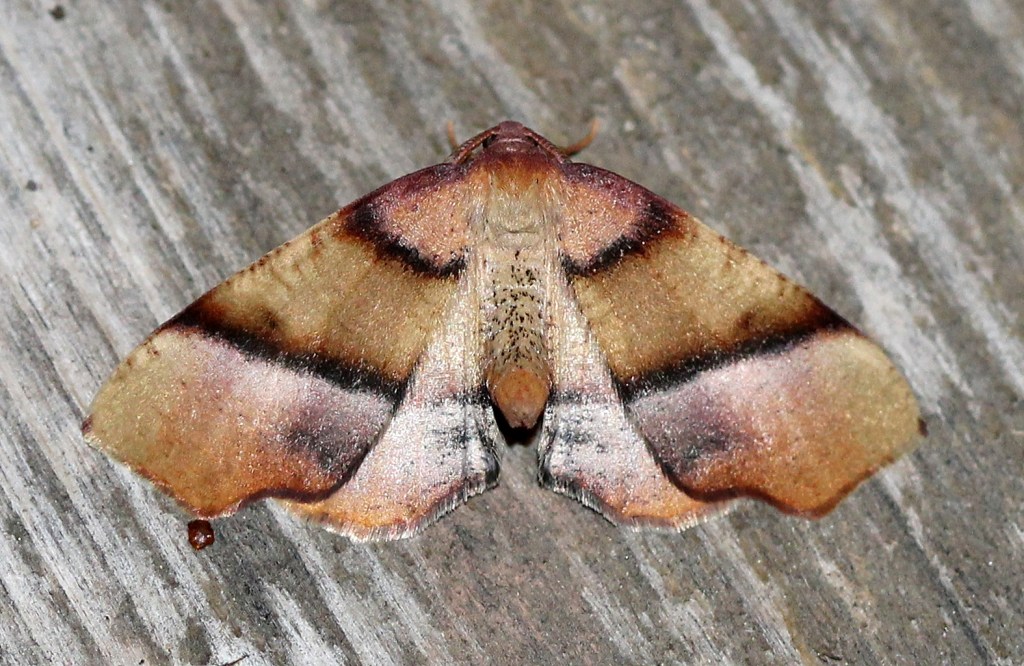
Metalectra quadrisignata (four-spotted fungus moth) from Carlton County, Minnesota

But not in Tineidae. This moth, Metalectra quadrisignata (four-spotted fungus moth), in the Family Erebidae, Subfamily Boletobiinae is yet another addition to the species checklist. The first syllables in the name Boletobiinae are “bolet” from “bolete” which is a name given to a vast group of species of mushrooms with large caps free from the stems and producing spores from pores, not gills. So, Metalectra quadrisignata is in the Subfamily Mushroom-iinae. Presumably, the larva of many or most of the members in this subfamily are fungivores but full life histories for species is incomplete. Larvae of Metalectra quadrisignata feed on bracket fungi preferring living or actively growing fruiting bodies. What species or even order is not specified. Some photos at Bug Guide show larva on a gilled mushroom and a slime mold which is not a fungus. It is unclear if they larvae were consuming these. I’ll need to start looking more carefully at these types of fungus.

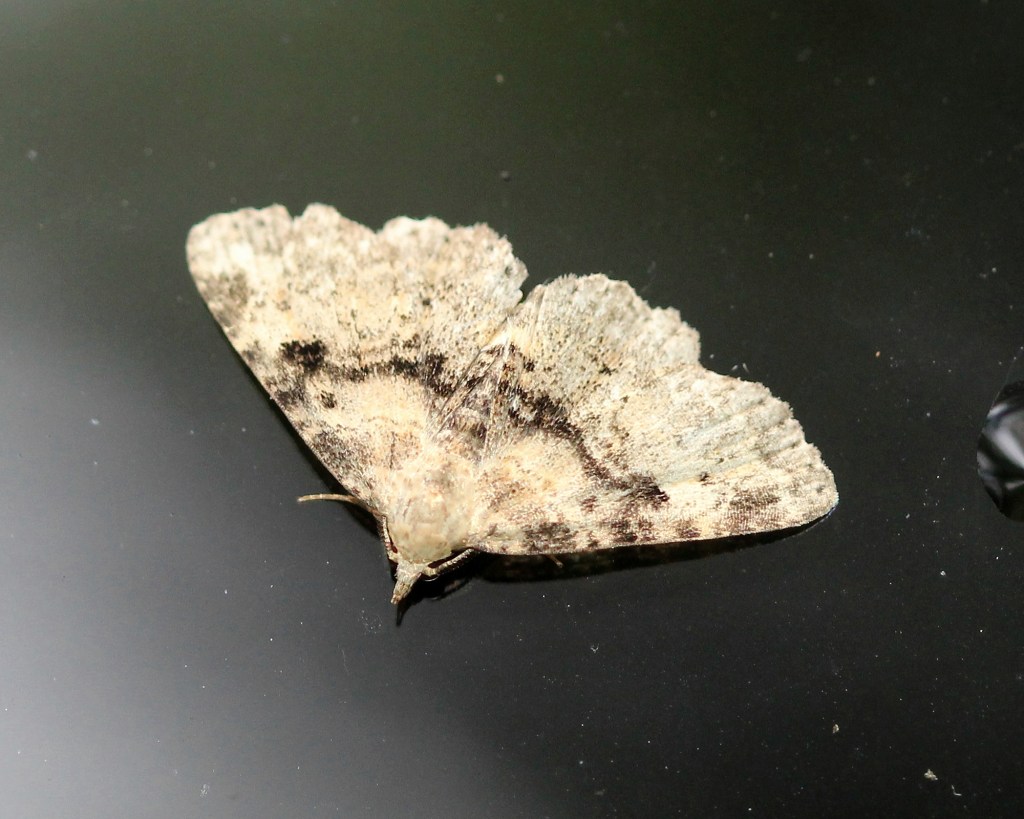
Metalectra quadrisignata (four-spotted fungus moth) found near Cadotte Lake in St. Louis County, Minnesota.

Matalectra quadrisignata is widespread in eastern North America from New Brunswick south to Florida and west to Manitoba and Texas.

Classification

Kingdom Animalia (Animals)

Phylum Arthropoda (Arthropods)

Subphylum Hexapoda (Hexapods)

Class Insecta (Insects)

Order Lepidoptera (Butterflies and Moths)

Superfamily Noctuoidea (Owlet Moths and kin)

Family Erebidae

Subfamily Boletobiinae

Tribe Boletobiini

Genus Metalectra

Species quadrisignata (Four-spotted Fungus Moth – Hodges#8500)

SOURCES

Bug Guide

Fungus Moths (Subfamily Boletobiinae)

Moth Photographers Group

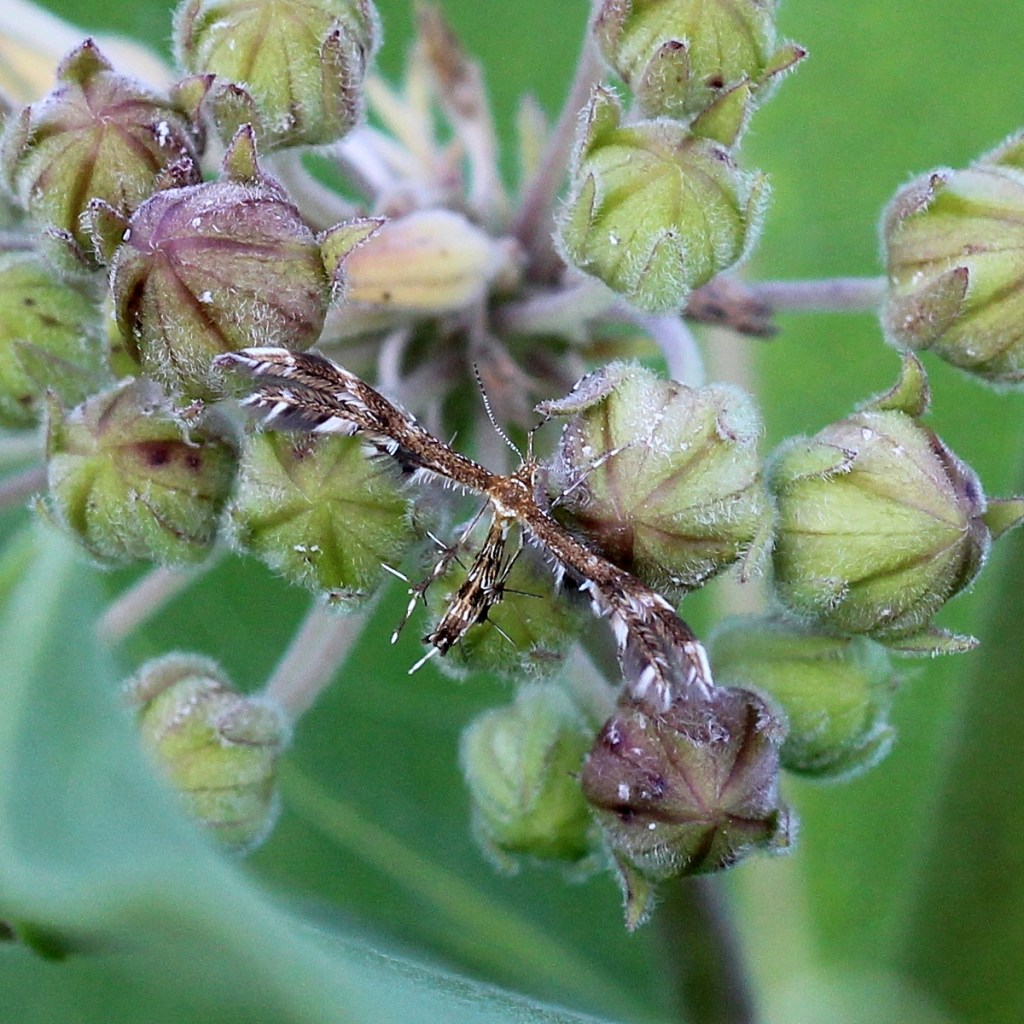
A new moth – Amydria effrentella

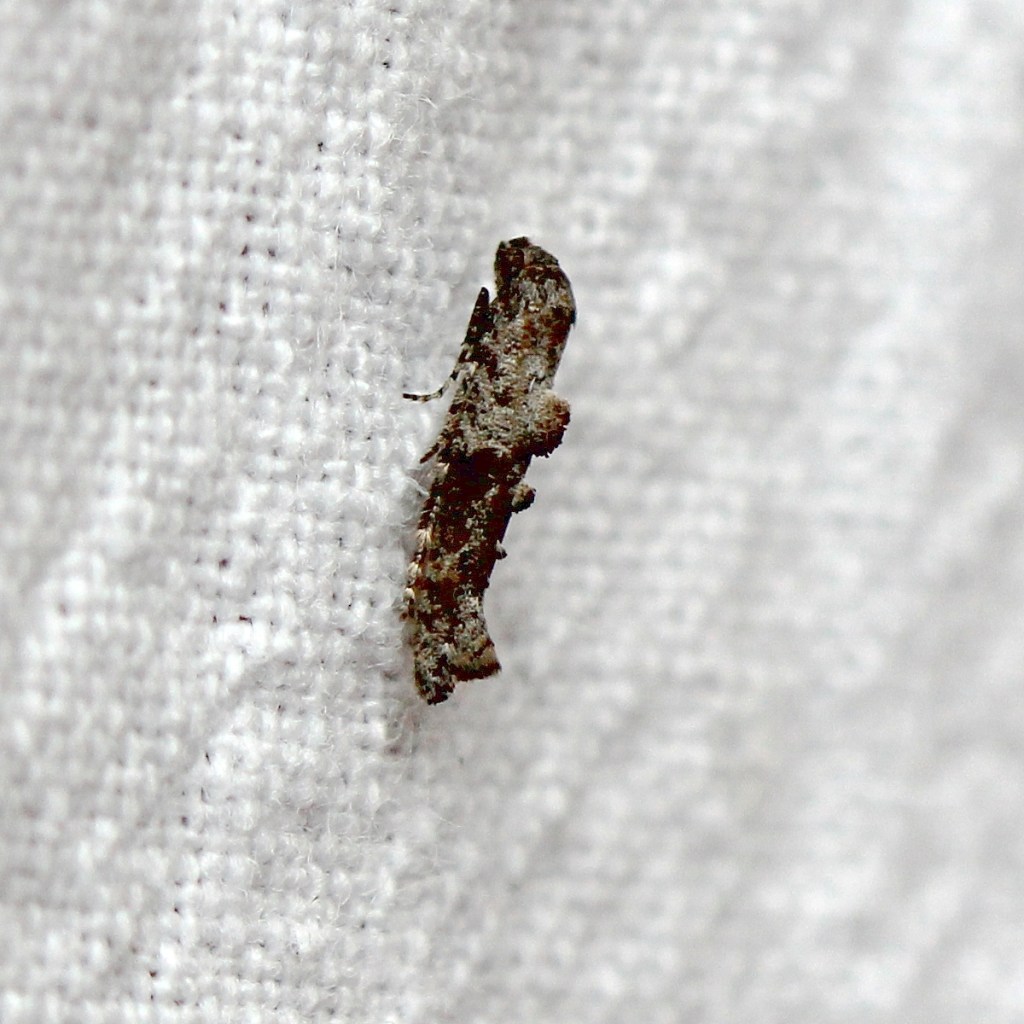
A new moth species for the checklist: Amydria effrentella. I photographed this one on July 23, 2022 during National Moth Week. My first thoughts were that this moth was some member of Family Tortricidae maybe in Olethreutini or Eucosmini two tribes in that family with long narrow-bodied moths. But that was far off the mark as repeated searches on the Moth Photographers Group bore out. All I could tell after that was this moth wasn’t like anything I’d seen yet.

One night I decided to use an image search. Of course, most of the results were wrong, but one tiny thumbnail linked to Bug Guide seemed close. So I clicked it and there was a photo of a moth that looked similar to mine. Amydria effrentella, is a moth in the Family Tineidae (Clothes Moths), Subfamily Acrolophinae (Burrowing Webworm Moths). The Moth Photographers Group provides a range map for Amydria effrentella showing it to be widespread.

Tineidae contains at least nine subfamilies north of Mexico with 190 species in 54 genera. For those genera and species whose life histories are known the larvae feed on things such as fur, feathers, skin, scales, bird and small mammal dung, fungi, lichens, and detritus (detritivores) the dead particulate organic material such as is found in leaf litter. Only a few species are known to feed on living plants.

What little information there is on Amydria effrentella indicates that its larvae typically construct “long silken tubes underground or on/in plant detritus and feeding primarily on plant debris as well as living plants, rarely coprophagous or mycetophagous.” Other reports have found it feeding on dried nest material in the burrows of mountain beavers. Pupation takes place in a coarse cocoon or in the larval tube.

Taxonomy

Kingdom Animalia (Animals)

Phylum Arthropoda (Arthropods)

Subphylum Hexapoda (Hexapods)

Class Insecta (Insects)

Order Lepidoptera (Butterflies and Moths)

Superfamily Tineoidea (Tubeworm, Bagworm, and Clothes Moths)

Family Tineidae (Clothes Moths)

Subfamily Acrolophinae (Burrowing Webworm Moths)

Genus Amydria

Species effrentella (Amydria effrentella – Hodges#0334)

Sources Cited

Bug Guide

Moth Photographers Group

Neotropical Tineidae. II: Biological Notes and Descriptions of Two New Moths Phoretic on Spiny Pocket Mice in Costa Rica. (Lepidoptera Tineoidea). Donald R. Davis, Dale H. Clayton, Daniel H. Janzen and Anne P. Brooke. Proceedings of the Entomological Society of Washington. 88(1). 1986. pp. 98-109.

The Tineoidea and Gracillarioidea. (Donald R. Davis & Gaden S. Robinson, 1998) from “Handbook of Zoology / Handbuch der Zoologie

A tremendous increase

Digrammia mellistrigata
One of the latest additions to the checklist is Digrammia mellistrigata (yellow-lined angle) a moth in the Geometridae (inchworms).

Since I last posted on the moth species diversity (a very long time ago) the list has gone from 270 to 761 species and will very likely continue to grow until winter puts a stop to insect activity outdoors. Some species were to be expected as they are common and widespread but there have been nights and a few days with interesting surprises. Eventually, the number of new additions will level off and then fall as the actual number of species is approached. But for the next year or two, about 50 new species will probably be added each season. Just in 2022 I’ve added 50 more species with July being the best month with 21 species. I’m not going to go through the whole list of new additions but below is a small sample of my favorites from the last few years. In some future posts I’ll be covering some unusual species occurrences while others will cover groups such as new Geometridae or new Crambidae I have found.

2018

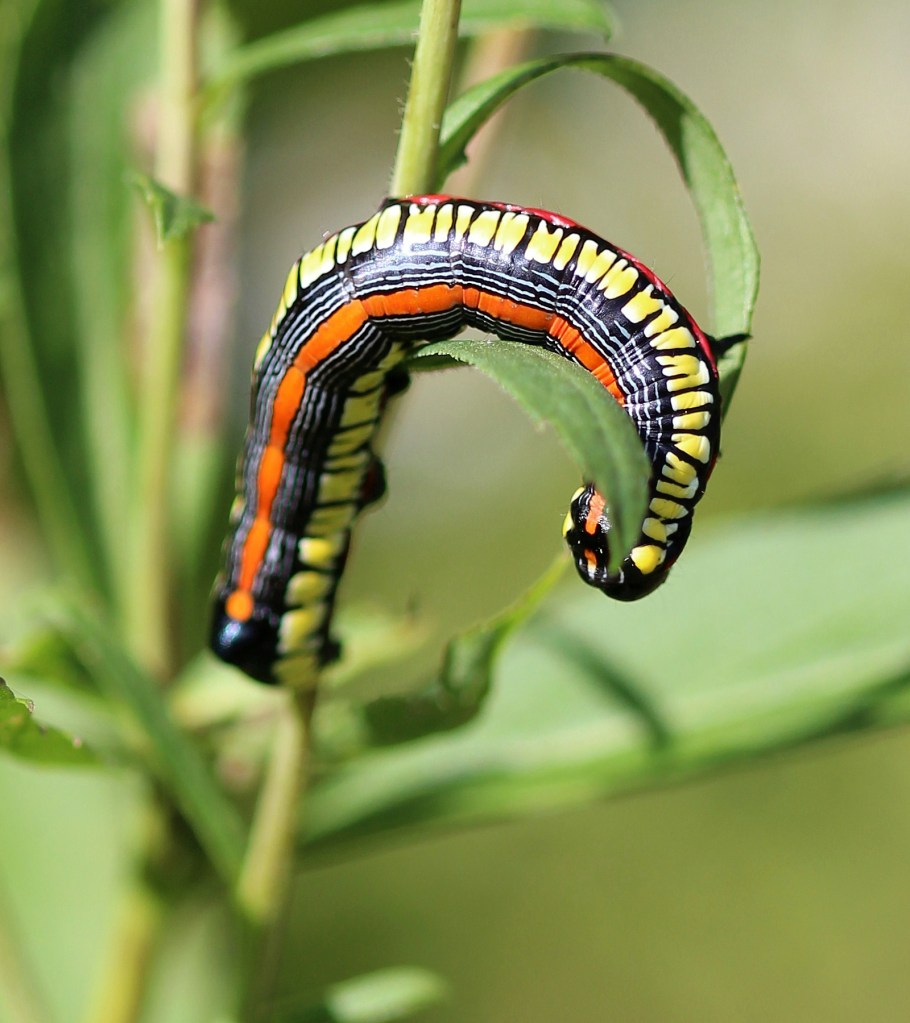
Cucullia convexipennis larva
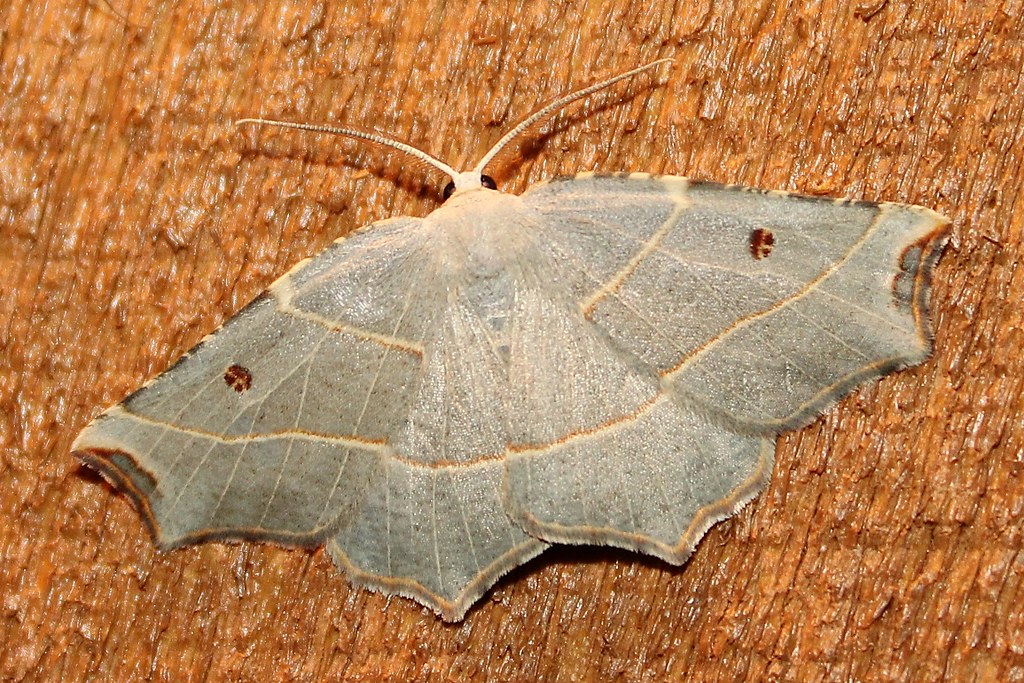
Metanema inatomaria

2019

Dejongia lobidactylus
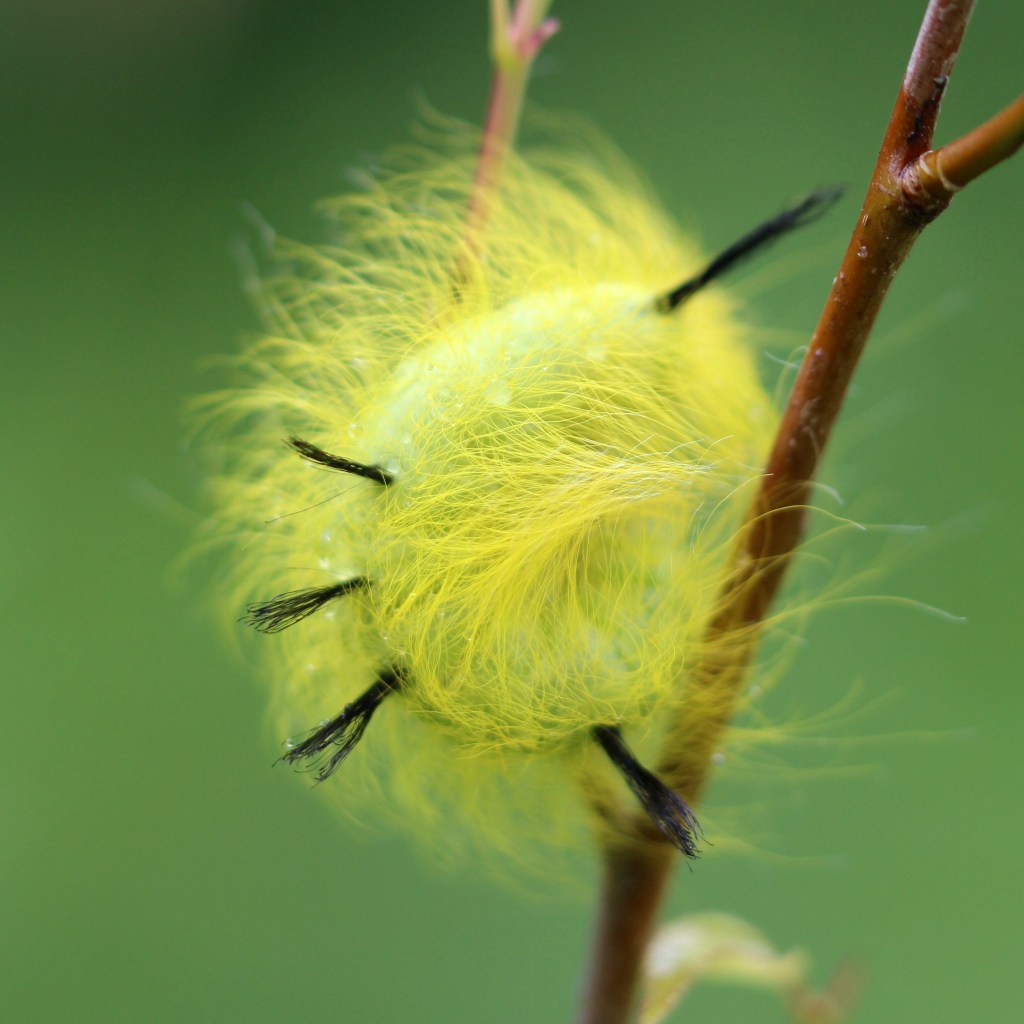
Datana ministra

2020

Epermenia albapunctella
Acronicta lepusculina larva

2021

Schinia septentrionalis larva
Darapsa choerilus ( Azalea Sphinx Moth)

2022

Elophila ekthlipsis
Plagodis phlogosaria

I went up a hill

A view of a mountain from the mountain on a section of the Superior Hiking Trail located north of Little Marias, Minnesota. I’d really like to get to that other mountain sometime. It looks interesting.

Or maybe a mountain. Hard to say but there was at least one point where the elevation above the surrounding terrain was just a little bit above 1,000 feet or 1,613 feet above sea level and so 1,010 feet above Lake Superior if Google Earth is to be believed. I don’t even know if this hill or mountain is named. I’m sure that somewhere it is on a map with a name. This mountain is on a part of the Superior Hiking Trail, a 310-mile long trail that stretches from the Minnesota-Wisconsin border southwest of Duluth to the US-Canada border in northern Minnesota. This trail section is known as Section 13.

I’d been planning this day hike for several weeks intending to get to that other mountain in the above photo. Google Earth showed a spur from the main trail going to it. So early one morning in July I parked my vehicle in the trailhead lot and began my ascent. I got as far as the top of the mountain that day but turned back since my plans were only to do a little reconnaissance and get a feel for what this place was like. The next day I came back and continued past my first stop.

This is where I made my first stop. It’s a long way down. The rocks are almost entirely anorthosite which is a very hard plagioclase feldspar. The hardness of this rock resisted glacial scouring better than the relatively softer rocks overlaying it resulting in a series of peaks known as the Sawtooth Mountains because of their sharp profiles.

The climb is very steep in most places but doable in ordinary hiking boots. I got to where I made my first stop the day before and took a short break for some lunch and water. Then I continued on towards Camp 13 and then beyond it to where the trail descended into a deep gorge. According to the map near the bottom of the trail in the gorge is a spur that loops around the other mountain. Well, I looked for it as I hiked along the trail but never saw it. Maybe the map is wrong? I think so. The rest of the trail followed pretty much where the map said it would. When it opened up onto an expansive marsh crossed by a rickety footbridge I figured it was time to turn back. Besides, I had homemade pizza and some cold IPA back at the national forest campsite where I was staying and felt I could really use those. And there was that sci-fi book I was working my way through, too.

So, I didn’t get to the other mountain that day. I’ll give it try next year. In any event, I had an interesting and pleasant two days time trekking up and down the hill (or is it a mountain?), saw fantastic scenery, and found some interesting insect and plant life, too.

Above are few examples of plants and insects found in a small marshy woodland vernal pool just off the trail. The clustered bur-reed (Sparganium glomeratum) is an odd bur-reed that often grows in woodland vernal pools rather than lakeshores and rivers.

In the gorge I found several caves that had formed when huge fallen boulders had crashed upon each other. Some were almost big enough to stand in.

And I found insects, too. All of these were on one big-leaf aster flower. There are two moths (Scythris? and Landryia?), a bug (Plagiognathus obscurus), and a bee (Family Halictidae).

And, finally this plant, Actaea rubra (red baneberry) but with white instead of the usual red berries. It was common along the trail.