Discovering the Yellow-Spotted Tussock Moth Caterpillar

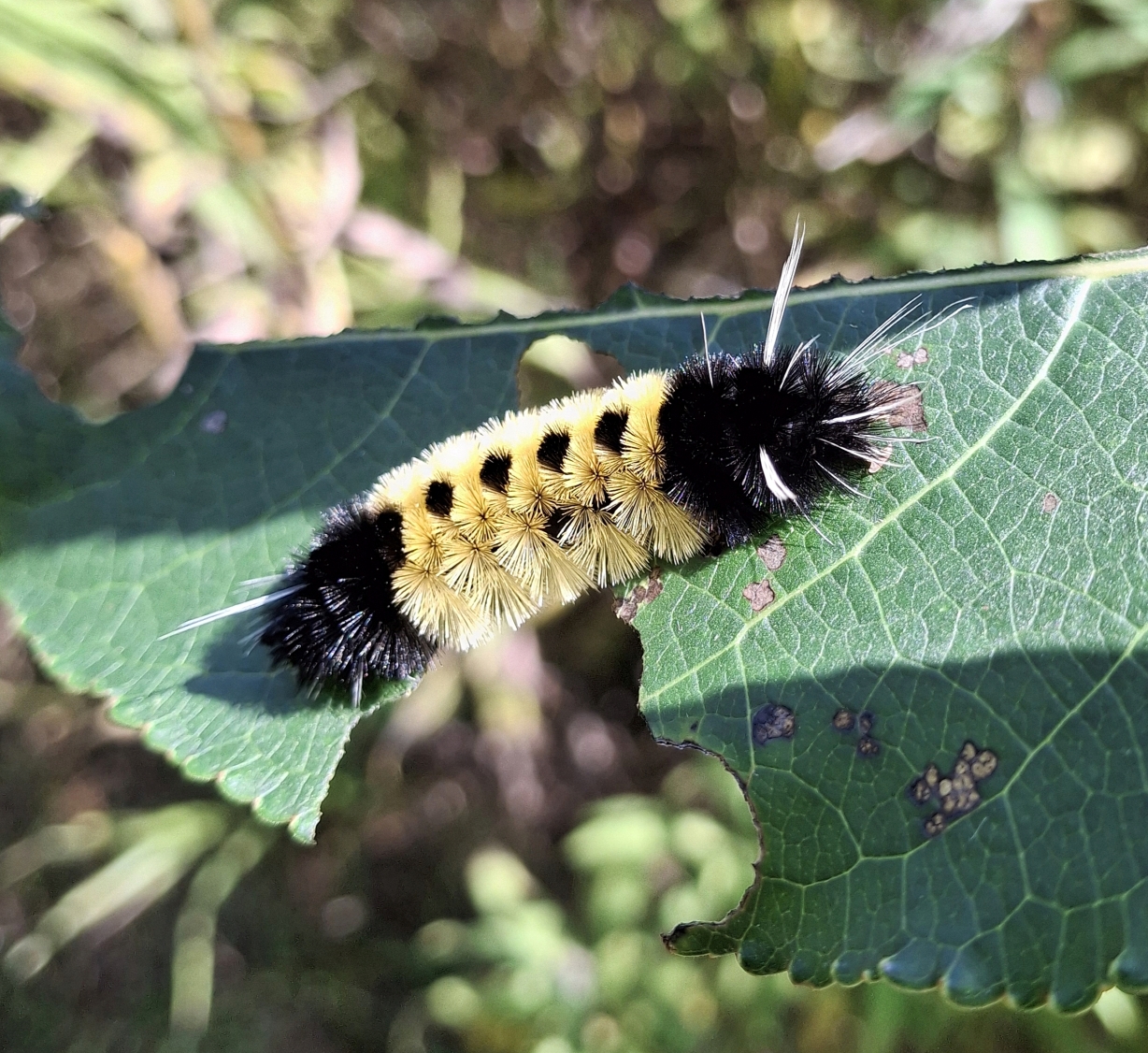
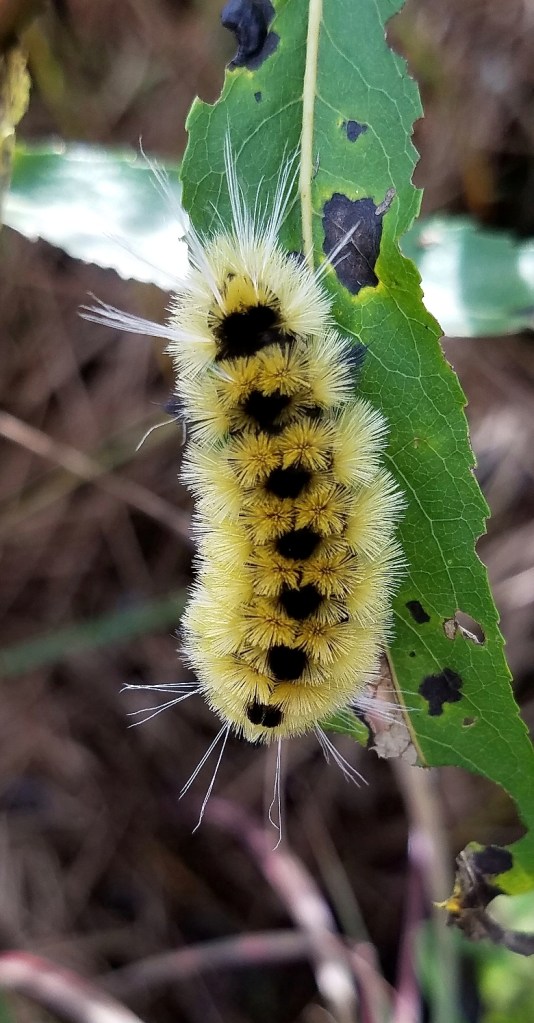
A Lophocampa maculata caterpillar that has been feeding on a balsam poplar leaf on a sunny afternoon in September.

When fall is coming, many fuzzy caterpillars start to show up in the grass and on low trees. A familiar one is the woolly bear caterpillar, which is alleged to foretell the severity of the coming winter. Longer black bands are said to mean a colder winter, while longer orange bands mean a milder winter.

The yellow-spotted tussock moth (Lophocampa maculata) is another fuzzy caterpillar often seen in the fall. It is also a relative of the woolly bear in the Family Erebidae, Subfamily Arctiinae (tiger moths and lichen moths). No word on its meteorological abilities.

Caterpillar decription

The younger Lophocampa maculata caterpillars are orange and without the black ends. When fully grown, it develops a yellow to orange central band, capped by shorter back bands at each end. Some will also have black dots in the yellow band. All the hairs of this fuzzy caterpillar are in clusters called fascicles. The shorter ones that cover most of the body remind me of splayed paint brushes. Tufts of stiff white hairs (“lashes”) poke out from the shorter, denser body hairs of the head and posterior black bands.

Caterpillar variations

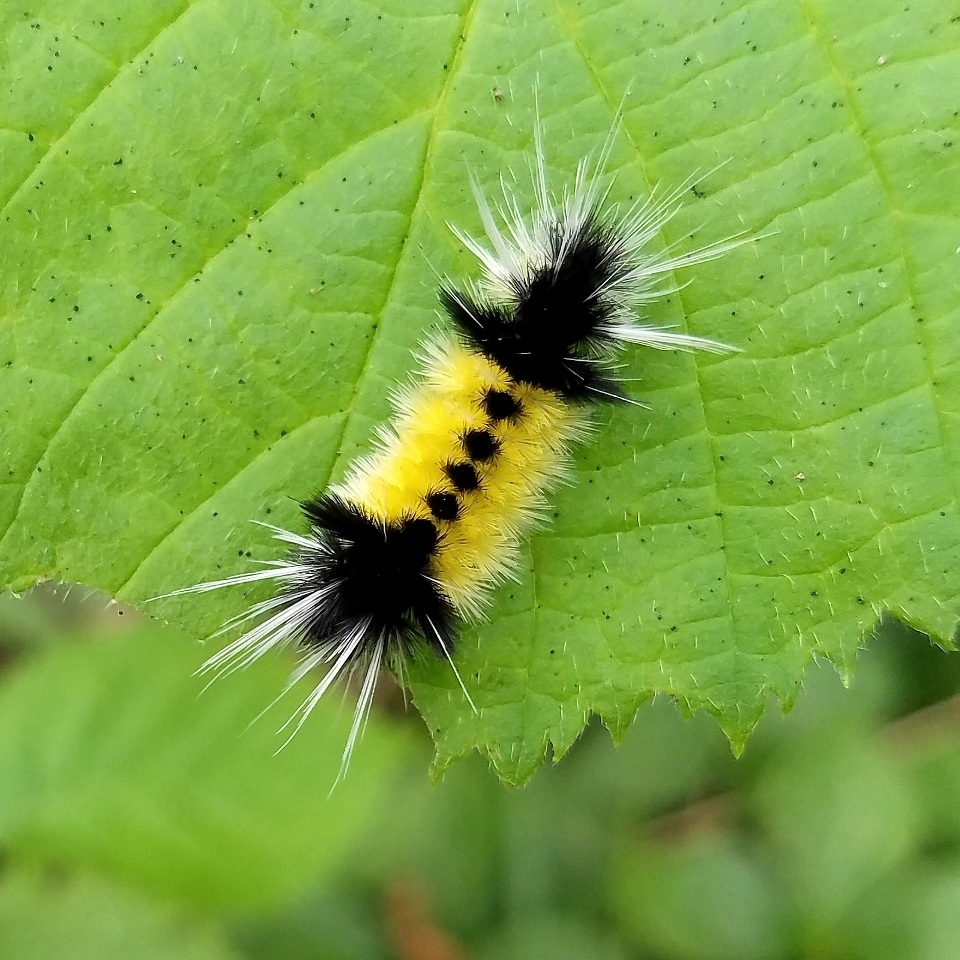
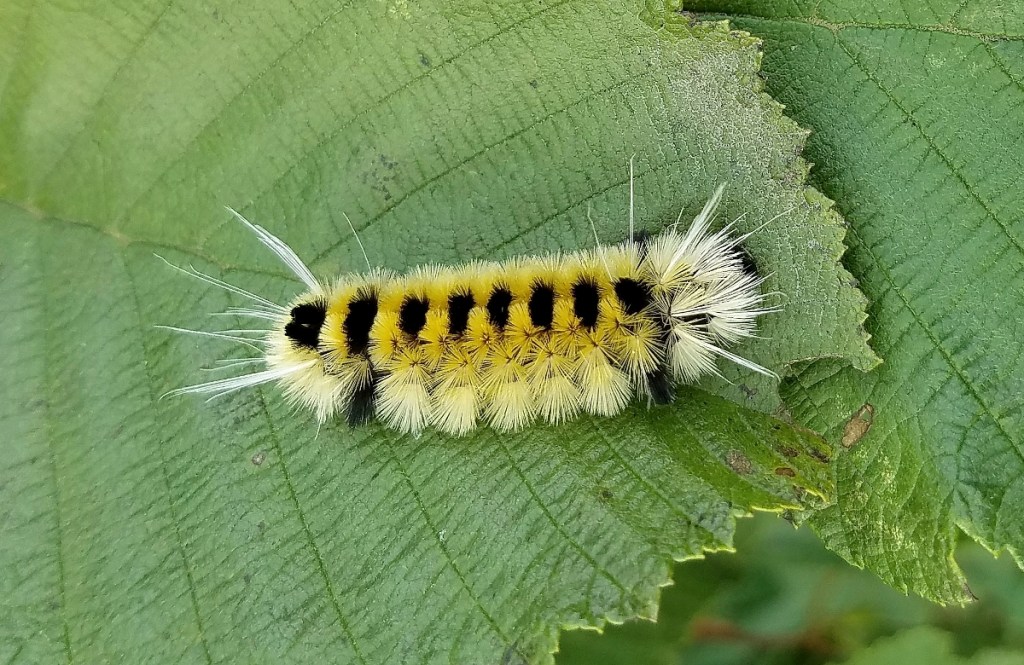
Below are some variations of the caterpillar’s coloring on larvae I found just a few miles away from my home. All have spots down the back, and two do not have black anteriors or posteriors. The one on the left is feeding on beaked hazel, the middle one is on tag alder, and the one on the right is feeding on shining willow.

Adult moth description

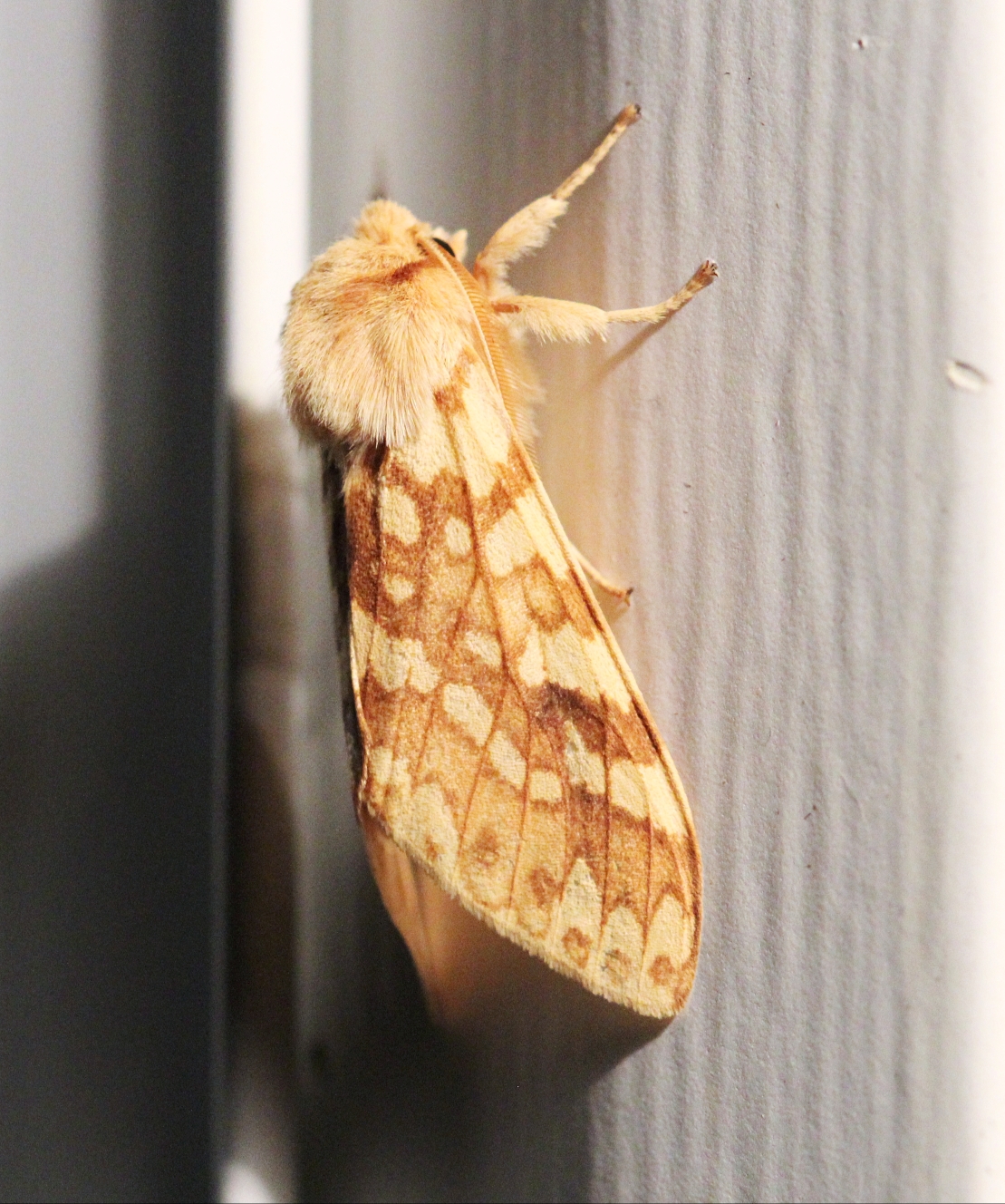
Adult Lophocampa maculata moths are distinguished by a contrasting pattern of alternating bands of warm, muted golden-orange and darker brown markings with a reddish-orange tinge

Life cycle

After hatching from eggs laid in summer, the Lophocampa maculata caterpillar feeds and grows. Preferred food plants are deciduous tree leaves such as aspen, willow, birch, oak, maple, and apple.

When cold weather seems inevitable, the caterpillar goes into pupation to wait out the winter. The pupa is enclosed in a silken cocoon attached to plant leaves. In my area, between late June and early July, the moths will hatch from their cocoons to fly in search of a mate, beginning the process again.

Adult Lophocampa maculata moth
This yellow-spotted tussock moth (Lophocampa maculata) came to my light this summer on June 29th.

Similar species

Lophocampa caryae adults are similar to Lophocampa maculata, but the forewing is yellow with brown shading and lacks the yellow band on the terminal ends of the forewing. Their larvae are white with black markings and long hairs. It is found mainly in the northeast. Like Lophocampa maculata, the larvae are polyphagous and feed on leaves of hickory, ash, oak, maple, elm, and other woody plants and vines.

Macrochilo Bivittata: A Rare Wetland Moth

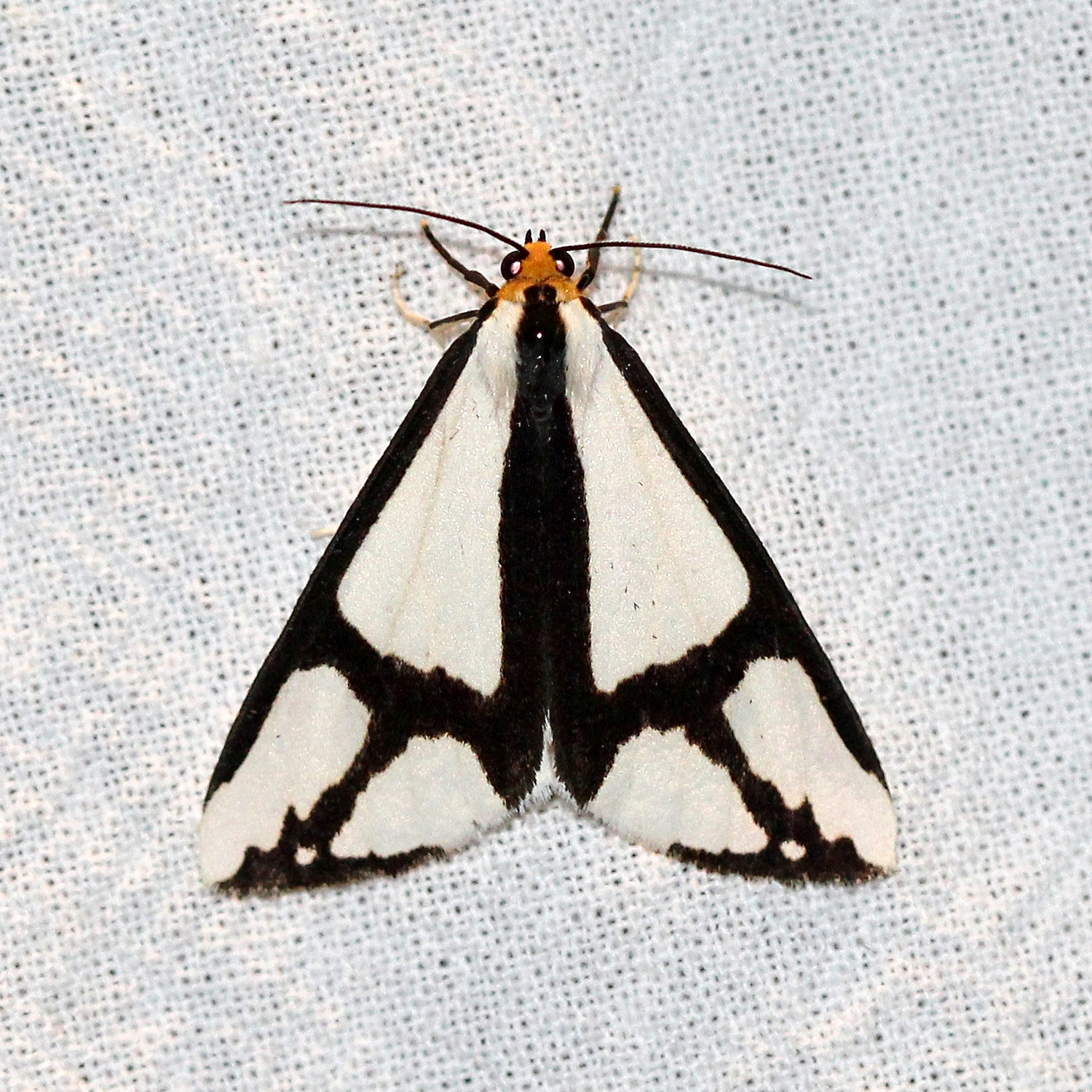
Macrochilo bivittata

Macrochilo bivittata is one of those moths I look forward to seeing every year. It isn’t a showy species, just a small triangular-shaped moth with four dark stripes against a buff to brown background, some prominent wing venation, and two pairs of dots. It is in the Herminiinae or litter moths, named because the larvae of many species feed on fallen or dead leaves and fallen fruit.

The reason I get excited about seeing it again is that where I live is one of the few known places in North America where it occurs. Across its range, Macrochilo bivittata is uncommon to rare. Minnesota and Wisconsin appear to have the largest number of observations. The rarity of Macrochilo bivittata may be a lack of verified observations and not rarity based on specialized habits or food requirements, loss of habitat, or replacement by a non-native species. More searches in appropriate habitat could help to resolve this.

A few Macrochilo bivittata moths come to my moth light every year in July. But it is in a nearby old marsh grass hayfield, now reverting to sedge meadow-shrub carr wetland, where I see many more. As I walk through the tall grasses, sedges, and willow shrubs, dozens of these little moths fly ahead of me to escape the disturbance.

The sedge meadow-shrub carr wetland where Macrochilo bivittata lives. Except for a few patches of canary grass, most of the plant species here are native.

The food preferences of Macrochilo bivittata are not known. It is thought their larvae feed on leaf litter like other members of the Herminiinae. There is certainly an abundance of leaf litter out there under the grasses and willows in the old hayfield. Macrochilo bivittata seems to be doing very well with that.

Posts I’m working on

I’ve got several posts in the works. One is on mayflies, insects that spend much of their lives in clean freshwater ecosystems. Fascinating insects with a lineage that pre-dates the dinosaurs.

Hedya salicella

Another post is about some moths in the Tortricidae that have recently entered North America. Hedya salicella is one of those moths, but there are others. They have appeared in various places in the US and Canada, mostly in the east.

It looks like my computer is fried, but the hard drive might be salvaged. Even the screen and keyboard are destroyed. Fortunately, most of the files are backed up. (UPDATE: my computer came back to life!)

A caterpillar with a taste for basil

Melanchra adjuncta

I have two pots of basil on my porch for fresh basil leaves. Everything was going well with big plants with big leaves full of flavor and fragrance. One afternoon, I went to get a few large basil leaves. I was going to make an omelet with Gruyère cheese, onions, crushed garlic, cherry tomatoes, peppers, potatoes, and mushrooms. And fresh basil.

When I looked into one of the pots, there on the largest plant was this strikingly patterned green caterpillar. I’d never seen anything like it before. It reminded me of a sphinx moth caterpillar. But there was no horn or even a bump on the last segment. The head seemed to have the wrong shape, too. Maybe it was a cutworm caterpillar (Noctuidae: Noctuinae), not a sphinx (Sphingidae)?

Melanchra adjuncta

A search of Noctuidae in Caterpillars of Eastern North America (David L. Wagner, © 2005) didn’t yield anything similar. My next step was to go through photos at BugGuide of caterpillars in the Subfamily Noctuinae, focusing on the tribes Orthosiini, Tholerini, Hadenini, and Leucaniini. I chose these tribes because species in them are frequent visitors to my moth light, so it seemed worth a shot.

After many pages at BugGuide, I was at the genus Melanchra. The first species to show up was Melanchra adjuncta (hitched arches), and my caterpillar looked just like it. To be sure, I continued on a little more but found nothing similar.

Basil isn’t the only plant Melanchra adjuncta eats. Their palate is open to a wide variety of herbaceous plants and even leaves of some woody plants. After eating for a few hours, the caterpillar left, perhaps to enjoy other plants on my porch.