A detour

On one of the days during my vacation last July I headed for Finland, Minnesota to follow the Heffelfinger Road. This would connect me with Cloquet Lake Road and from there to a little lake named Drake Lake. But as I left Finland there was a sign that said the road was closed ahead due to bridge reconstruction. I continued on a bit and saw the bridge was definitely not there anymore.

The day was still young so, I turned around and headed to Highway 11 where I knew of another way to get to Drake Lake albeit more difficult. This was the Beaver River Road and by following it north I would be able to connect to Heffelfinger Road and avoid construction. After a few miles, a sign appeared saying “road closed ahead”. Apparently another bridge was being repaired. But there was still one more way to get to Drake Lake.

This alternate route was Forest Road 102 which would connect me with Camp 26 Road where Drake lake was located. Forest Road 102 was a rough ride with many deep puddles straddling the road, ruts, and large rocks. I think my average speed was about 5 mph.

Finally, I got to Camp 26 Road. Nothing looked familiar. So much had changed since I was last there in 1995 including Forest Road 102 which was more like a two-rut road back then. Much of the forest had been cut down in the intervening years and there are now many gated driveways to hunting cabins. I never did find Drake Lake that day although I probably drove right by it. You can’t see it from the road as it is hidden by about 500 feet of dense forest.

Drake Lake is one of many small lakes in northern Minnesota gradually turning into a peatland, a centuries-long process. The water is dark brown like strong coffee from tannic acids leaching from deposits of peat. Surrounding Drake Lake is a floating fen thick with sphagnum and stunted leatherleaf shrubs. On the north side of the lake is a white cedar forest.

Patches of pogonia, clubspur, and dragonhead orchids, beaked rushes, yellow-eyed grass, and bladderwort plants grow on the floating peat mat. When in bloom these decorate the floating mat with masses of pink, white, yellow, and rusty brown flowers. I’ll be back there next year and hopefully, the bridges will be repaired by then. If not I’ll take Forest Road 102 again.

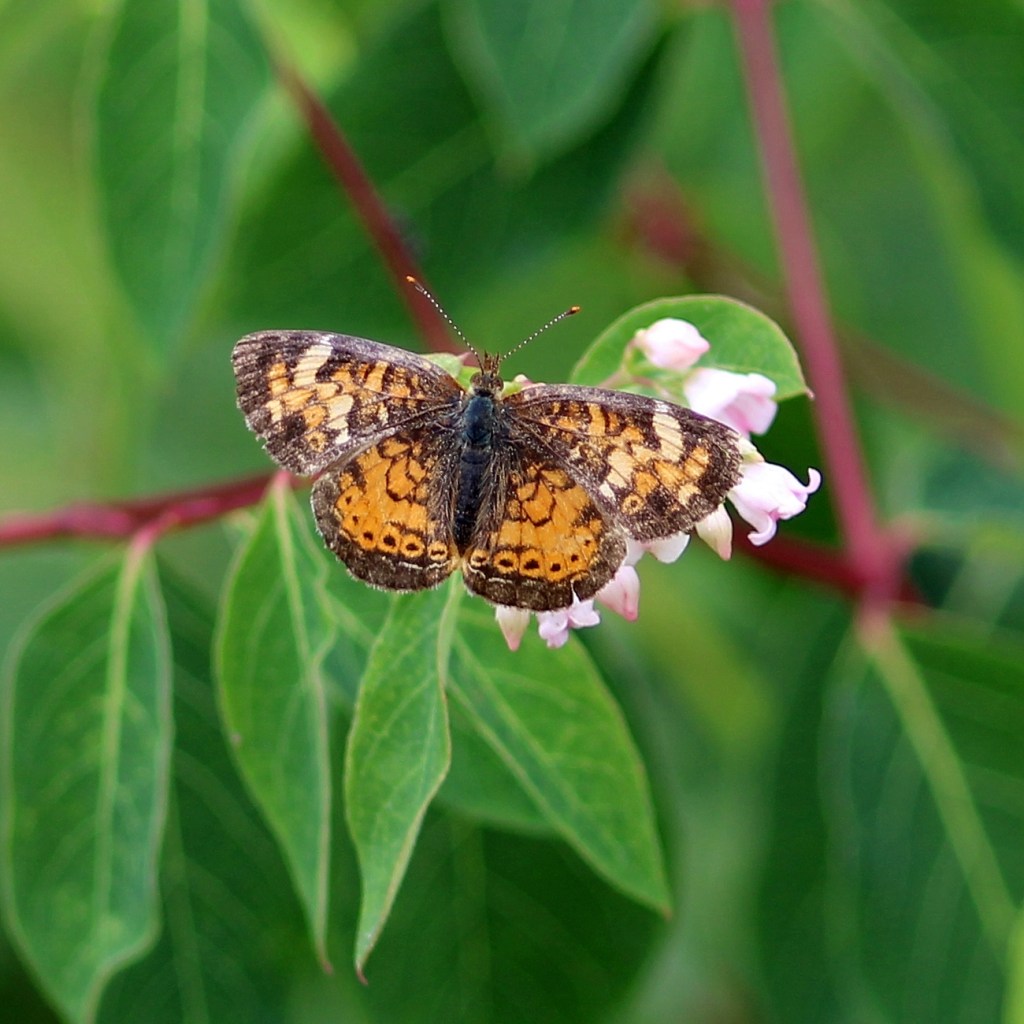
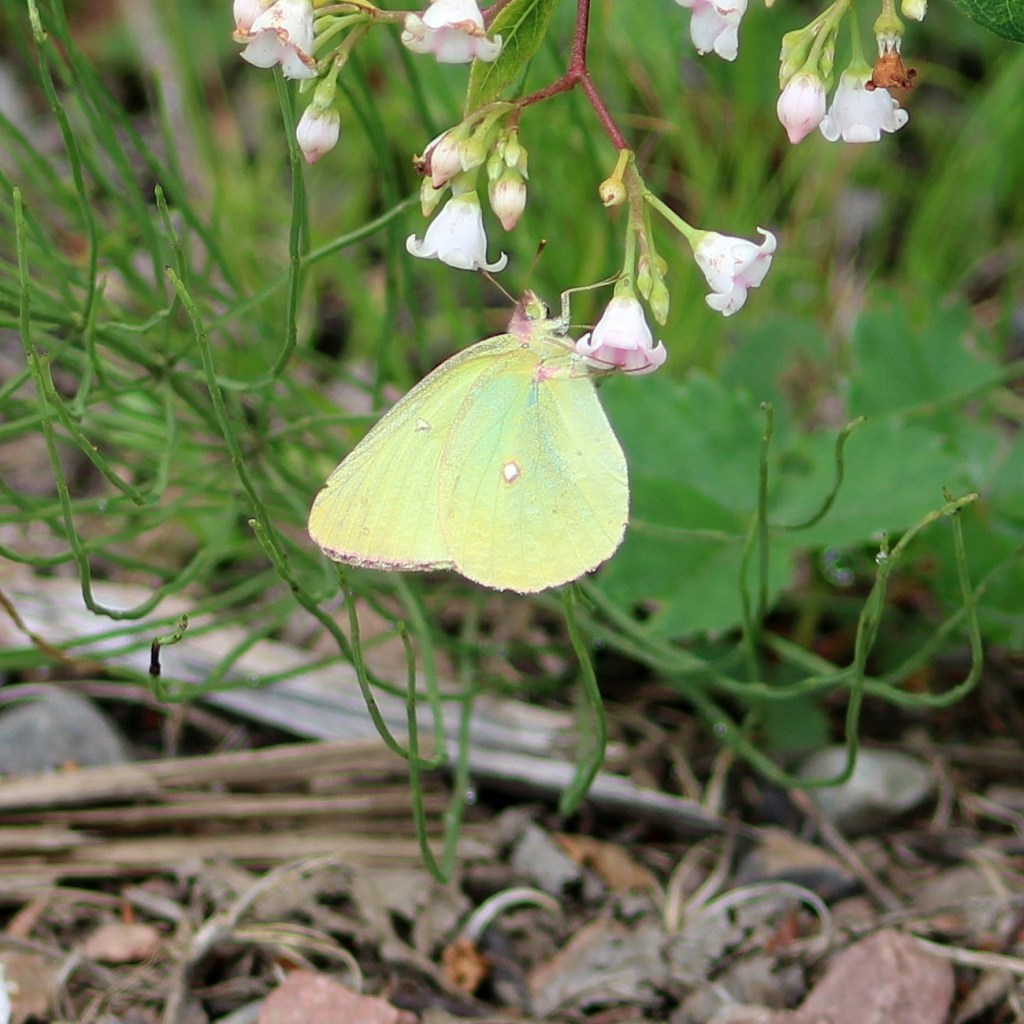
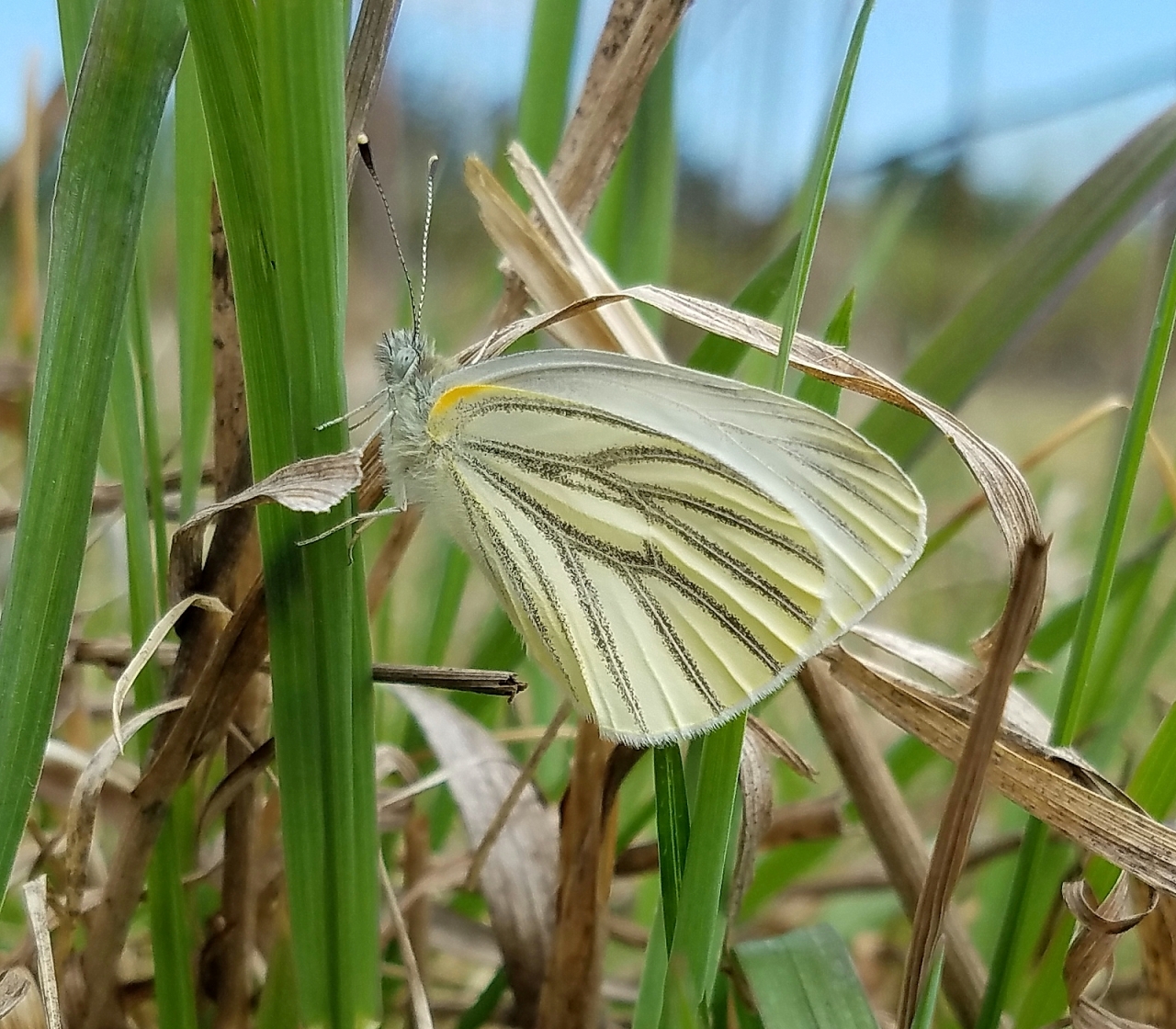
I did find other interesting spots along the road. One of these was a long patch of spreading dogbane with dozens of butterflies nectaring on the sweet flowers. So I spent some time there trying out a new camera lens. Above and below are a few of the species I was able to identify.
A butterfly

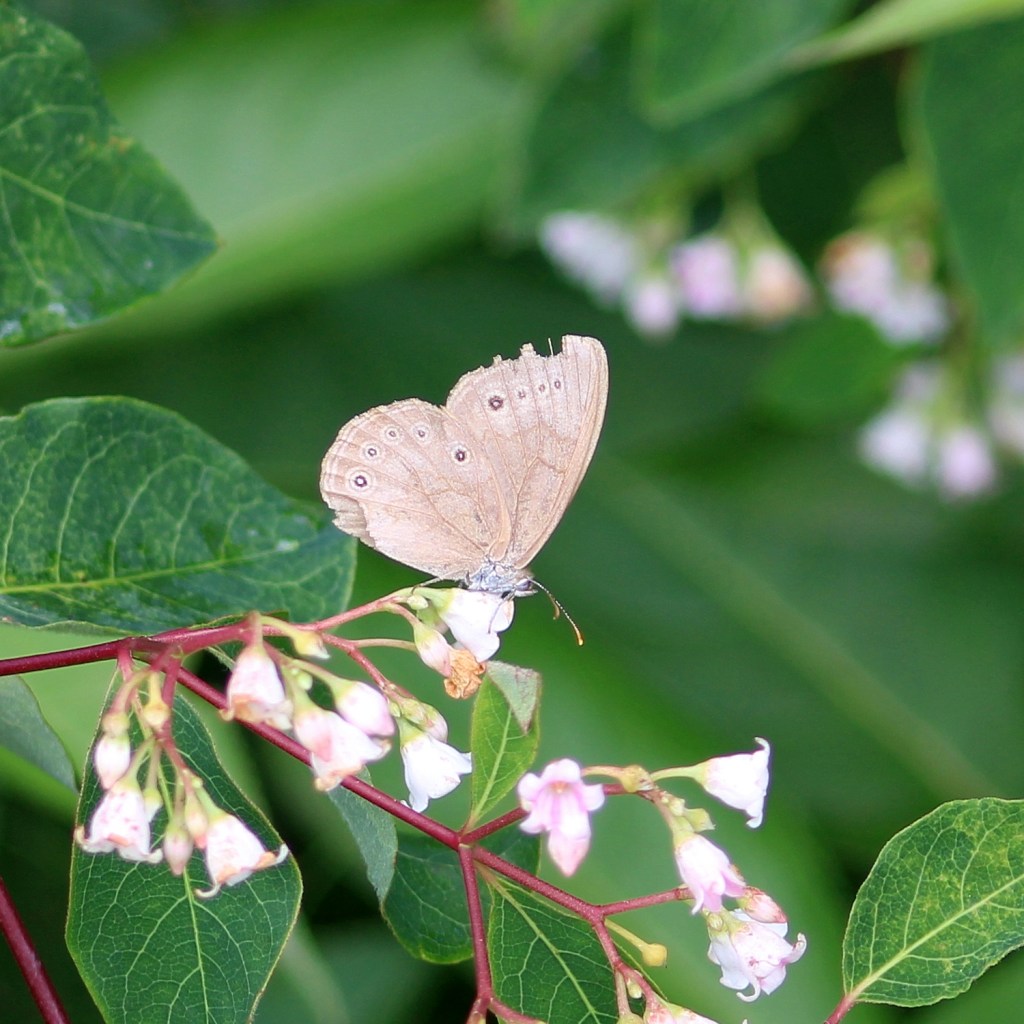
Mustard White Butterfly (Pieris oleracea)


I saw this butterfly yesterday while working in my garden spreading old hay around rhubarb and currant bushes. It had probably just emerged from its chrysalis earlier in the morning and was finishing up drying its wings. The butterfly is the Mustard White Butterfly (Pieris oleracea) a species native to North America and occurs in Canada from the Northwest Territories south to Alberta and then east to the Atlantic seaboard. In the US it can be found from North Dakota to Maine.

The green larva with a single white or pale yellow lateral line and small black spots feed on members of the mustard family (Brassicaceae), such as rock cress (Arabis spp., Boechera spp., and Draba spp.), cuckoo flower and bittercress (Cardamine spp.), and toothwort (Dentaria spp.). There are usually two or three generations a summer with the last generation overwintering as a chrysalis.

Adult Mustard White Butterflies come in a spring and summer forms. The one in the photo is the spring form. Summer forms have less dark shading on the wing upper surfaces and the lower surface veins are also less dark. Adults feed on nectar usually from mustard family plants.

Previously Mustard White Butterfly was considered to be in the species Pieris napi, a European species commonly called the Green-veined White. They are regarded as distinct enough to be classed as separate species although some authorities consider the North American P. oleracae to be a subspecies of P. napi (synonym Artogeia napi) calling it Pieris napi subsp. oleraceaP. oleracae differs from P. napi by having chalky white upper wings while P. napi has dark spots and dark margins on the upper wings. Another difference is the tolerance of P. napi for garlic mustard (Alliaria petiolata) which is toxic to the larvae of P. oleraceae and thus a serious concern for the species survival where this plant occurs in North America to which it is not native.

Taxonomy

Insecta (Insects)
Order Lepidoptera (Butterflies and Moths)
Superfamily Papilionoidea (Butterflies and Skippers)
Family Pieridae (Whites, Sulphurs, Yellows)
Subfamily Pierinae (Whites)
Tribe Pierini (Cabbage Whites, Checkered Whites, Albatrosses)
Genus/species: Pieris oleracea

SOURCES

Bowden, S. R. (1979). Subspecific Variation in Butterflies: Adaptation and Dissected Polymorphism in Pieris (Artogeia) (Pieridae). Journal of the Lepidopterists’ Society
33(2):77-111.

Heinen R., Gols R., and Harvey J. A. (2016). Black and Garlic Mustard Plants Are Highly Suitable for the Development of Two Native Pierid Butterflies. Environmental Entomology, Vol. 45 (3):671–676.

 Mustard White (Pieris oleracea) (Harris, 1829) at the Canadian Biodiversity Information Facility website.

Pieris oleracea at the Wikipedia website.

Species Pieris oleracea – Mustard White – Hodges#4195.1 at the Bug Guide website.