Leathery Grape Fern

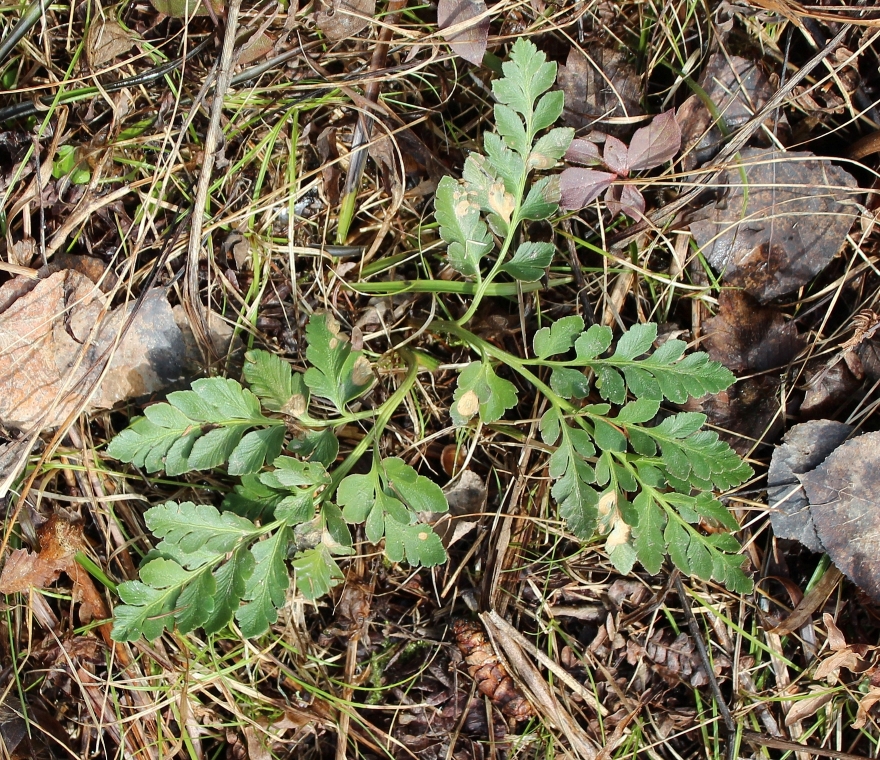
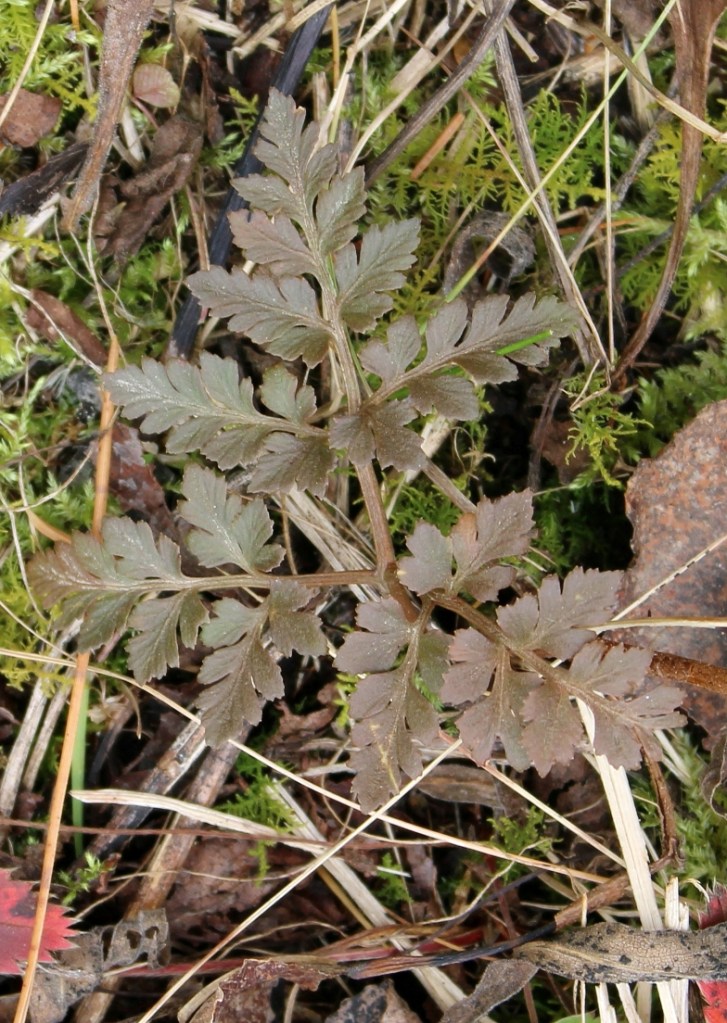
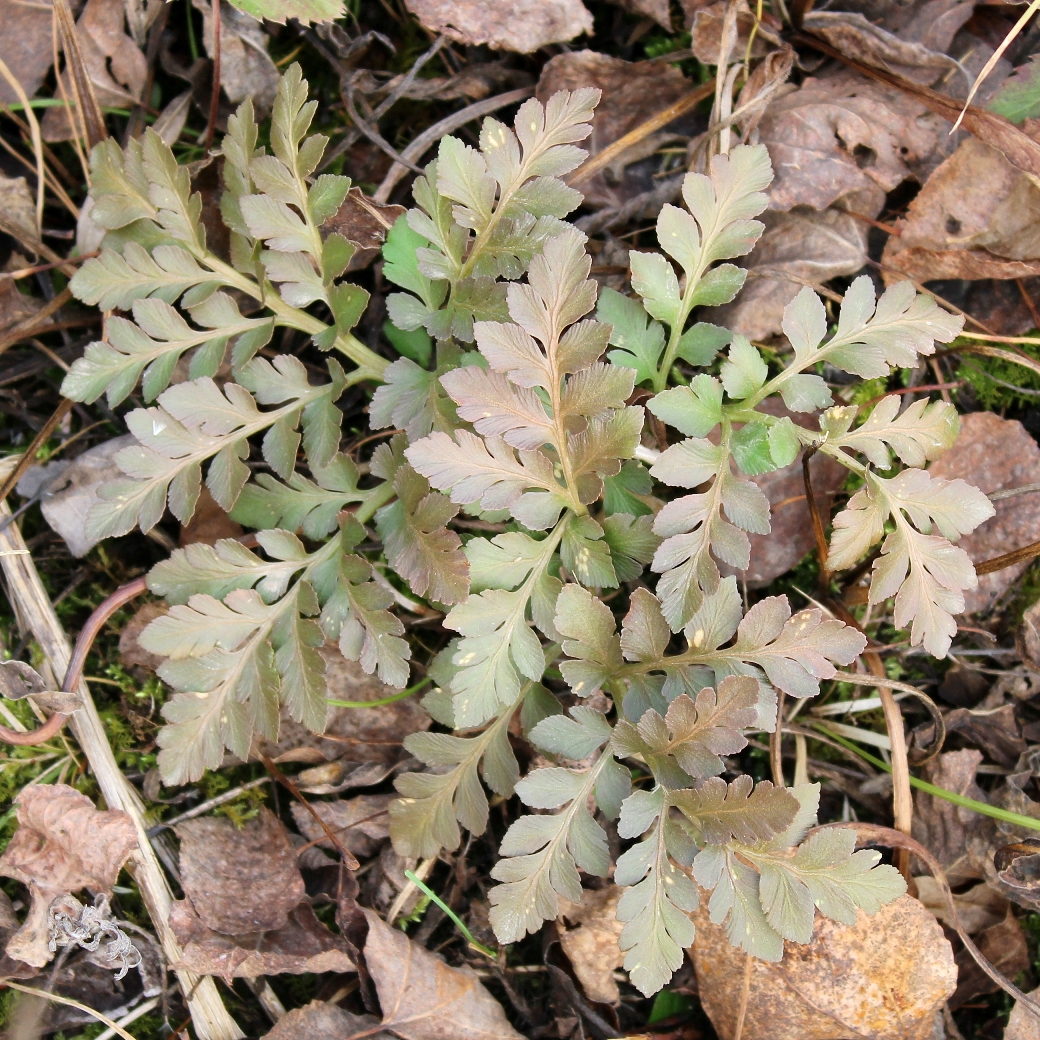
Sceptridium multifidum takes on a purplish tint in the cool autumn weather. Descriptions of the species state its fronds remain green overwinter, but obviously, they do not.

Sceptridium multifidum, the leathery grape fern, is similar to Sceptridium rugulosum (St. Lawrence grape fern), which was covered in an earlier post. At one time, Sceptridium rugulosum was considered a variation of Sceptridium multifidum and was named Botrychium multifidum forma dentatum.
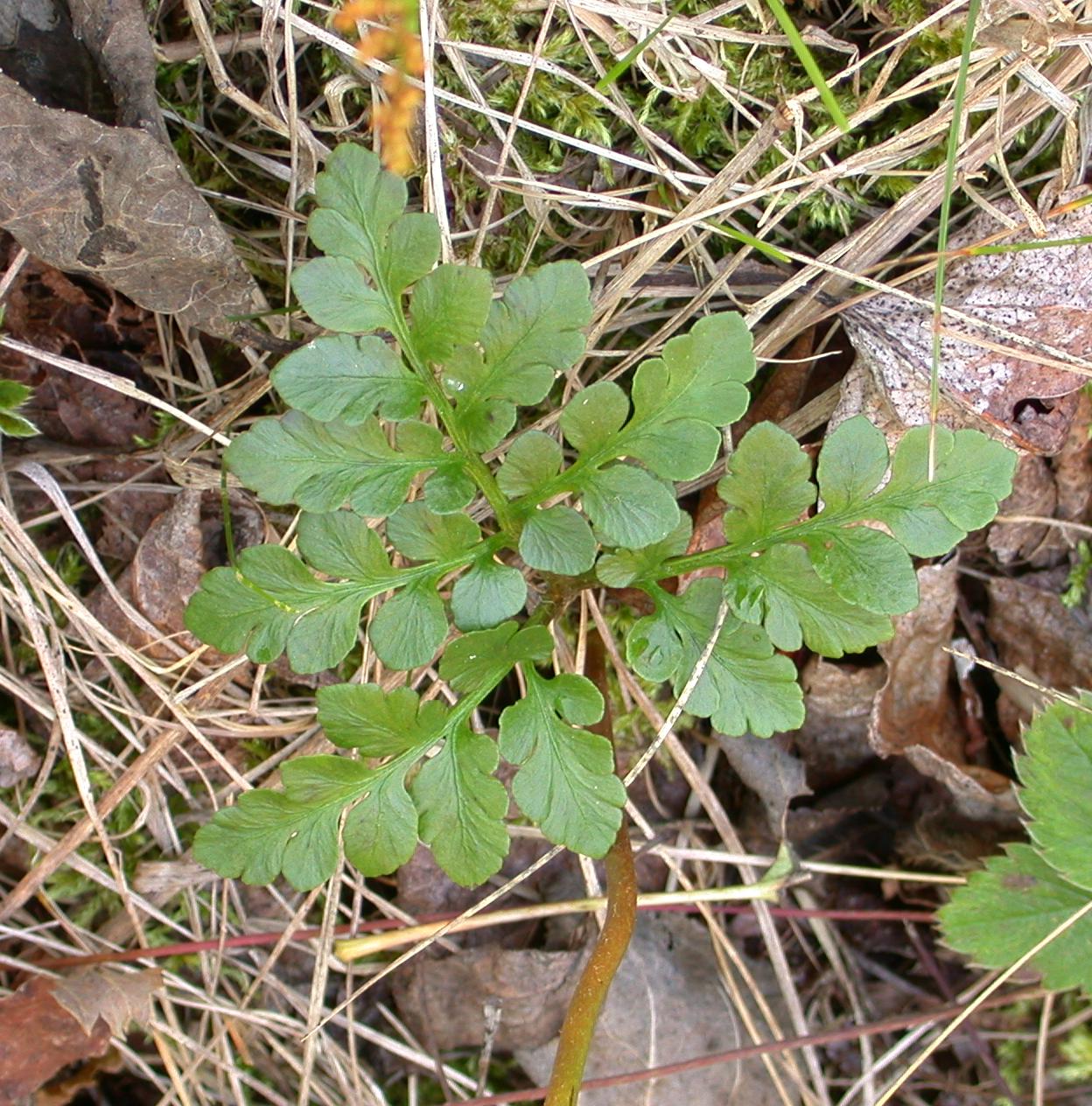
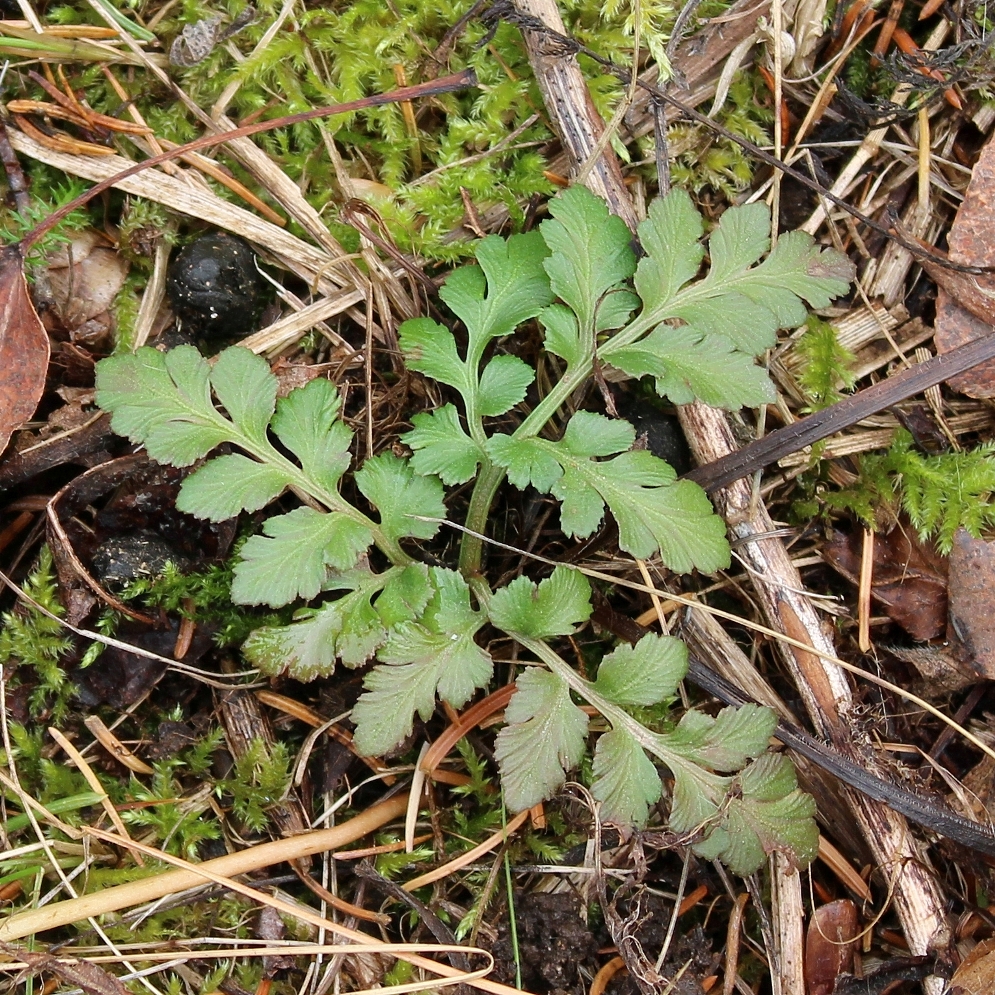
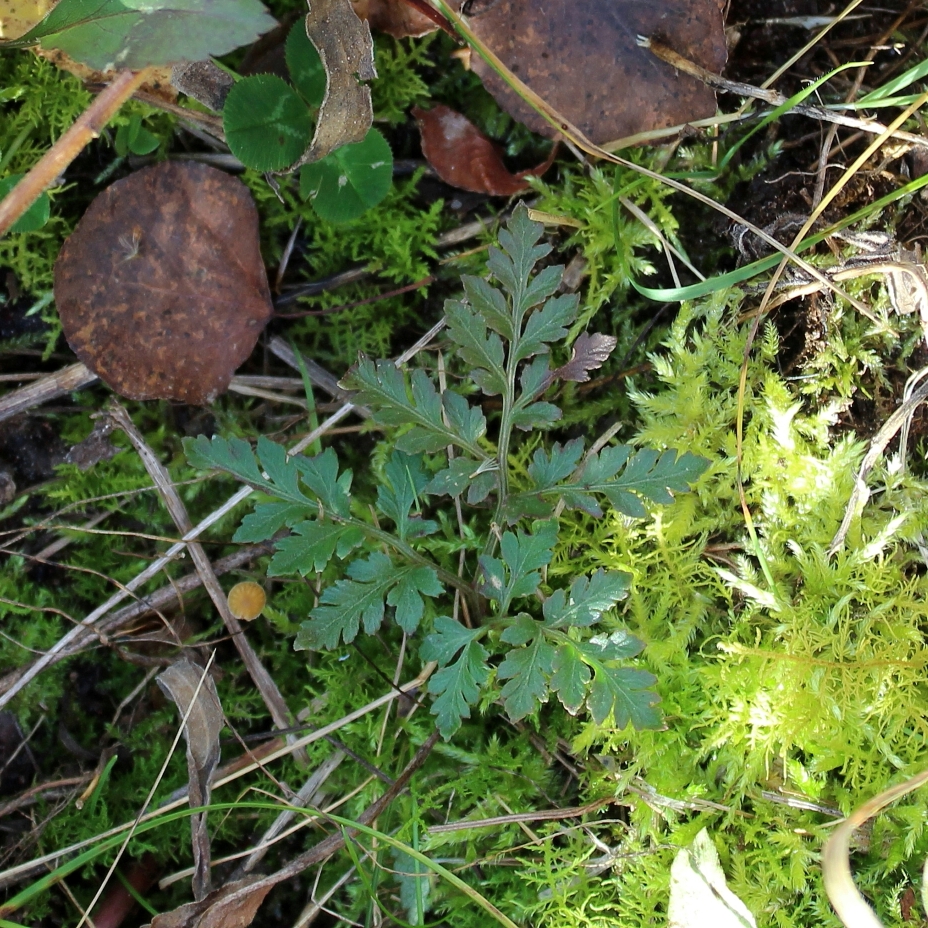
Frond of a young Sceptridium mulitifidum plant.

Description

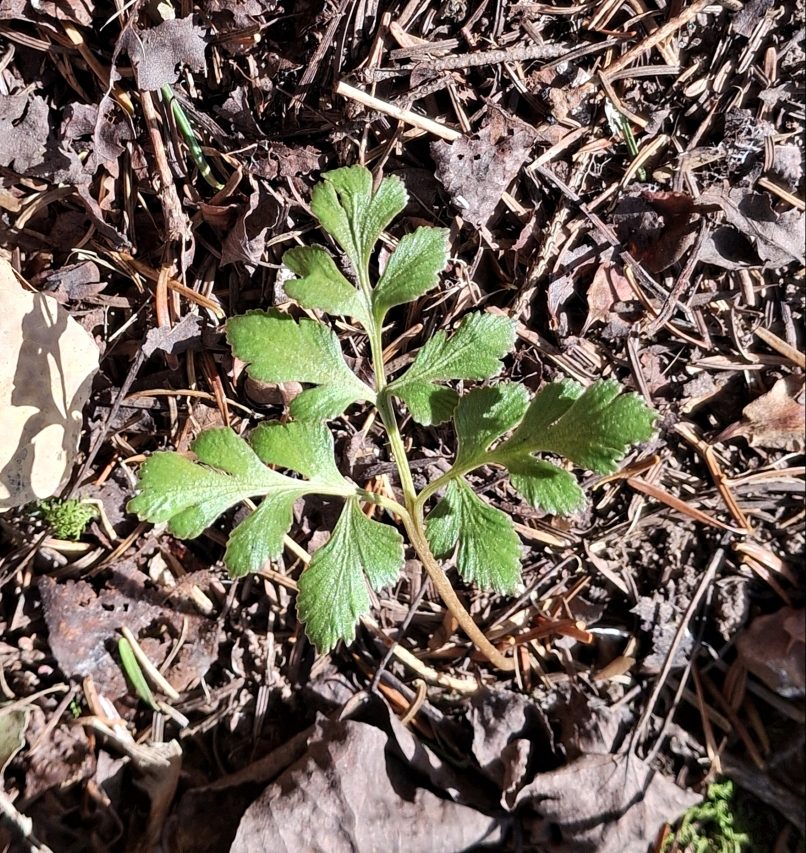
Segment blades of Sceptridium multifidum are flat, rounded, with entire to shallowly denticulate margins and blunt tips. The texture is leathery. The fronds can be large, measuring  25 by 35 cm.
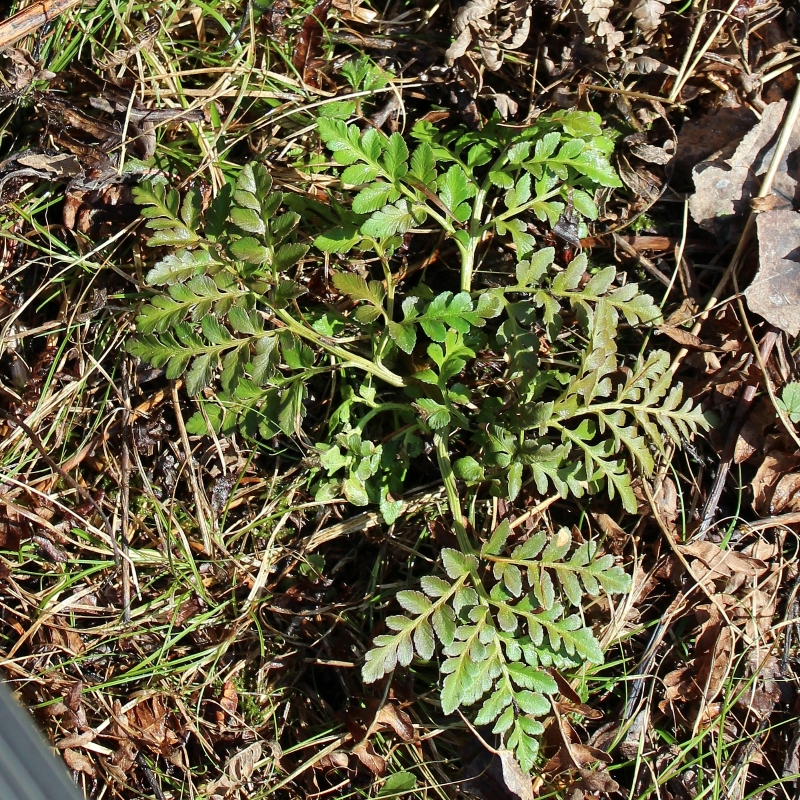
A large (almost 25 cm across) Sceptridium multifidum frond.
Sceptridium multifidum plant with two photosynthetic fronds, an unusual occurrence.

Habitat

Sceptridium multifidum grows in old fields, the edges of woodlands, and in open forests. Often, there will be dozens of plants growing at a single location. Sceptridium rugulosum and Sceptridium dissectum may also be present.

They live a long time

Like Sceptridium rugulosum, Sceptridium multifidum can live for many decades (Stevenson 1975). The ferns in the photos with the larger fronds were first seen by me around 1994. Even then, the fronds were large. I excavated two medium-sized plants in 1995 and counted the leaf scars on the stems. They had about 25 leaf scars each. If Sceptridium produces one frond per year, then those two plants were 25 years old. So, it is possible that the other larger ferns were also 25 years old or older, making these in the photos at least 55 years old.

Range
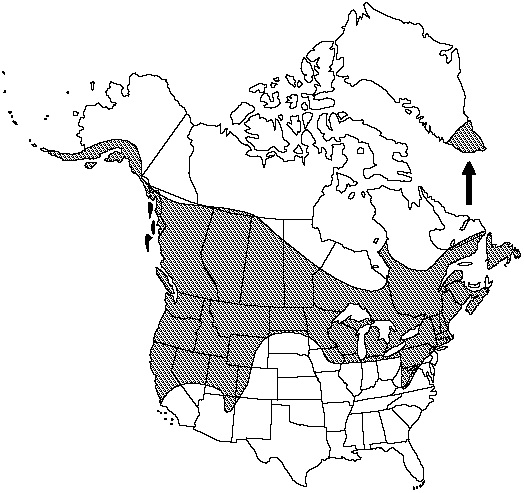
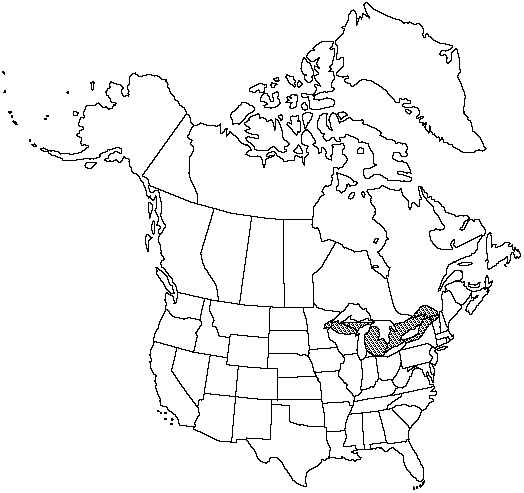
Sceptridium multifidum range map

Sources

St. Lawrence Grape Fern

Sceptridium rugulosum (St. Lawrence Grape Fern) in November and turning slightly purple in the colder weather. Unless protected from the cold by leaf litter, the fronds turn a bronzy purple. In the spring, they turn green again.

Grape ferns (Sceptridium) and their relatives, the moonworts (Botrychium), are an odd bunch. They grow from stubby subterranean stems with a few thick roots. The stems produce one leaf, rarely two, a year. That leaf is succulent, divided into two parts, one of which is photosynthetic (trophophore), the other reproductive (sporophore). They have a series of buds, one above the other on the subterranean stem, for the next five or so years of leaves.

The photosynthetic part of the Sceptridium leaf is semi-evergreen, meaning it will survive the winter more or less intact. Then, in the spring, it withers away. For a few months, there is no leaf, and then in early summer, a new leaf slowly uncoils, a process that may take more than two weeks.

Grape ferns get their name from the clusters of globular sporangia on the sporophore that look like little bunches of grapes. Grape ferns and their relatives the moonworts were previously placed together in the genus Botrychium. The genus name Botrychium is from the Greek “botrychos” for “bunch of grapes” and Latin “ium” for “small”. The genus name Sceptridium is from the Greek “skēptron,” meaning “scepter” in reference to the upright sporophore.

Sceptridium rugulosum

Sceptridium rugulosum is a grape fern, one of four species known from Minnesota, and it is one of the two rare ones, the other being Sceptridium oneidense.

Description

Sceptridium rugulosum has a green, 2 to 4 pinnate, 15 by 26 cm trophophore blade with up to nine pinnae pairs. The surface is rugulose (finely wrinkled) and concave. The angular pinnules (secondary segments) have denticulate margins and pointed tips.

Sceptridium rugulosum can live for many years. The one in the photo below was first seen eighteen years ago.

This Sceptridium rugulosum is more than eighteen years old.

Habitat

Look for Sceptridium rugulosum in brushy fields, open forests, and meadows.

Range

Sceptridium rugulosum range map

Sceptridium rugulosum is endemic to the Great Lakes and St. Lawrence Seaway regions. The range map above from the FNA is a bit outdated, and Sceptridium rugulosum is now known to occur more widely in Minnesota. There is also a report from Connecticut.

Taxonomy changes

At one time, Sceptridium rugulosum was considered to be a variety or form of Sceptridium (Botrychium) multifidum under the name Botrychium multifidum forma dentatum. It was also included under the name Botyrchium ternatum, which is as an eastern Asian species distinct from Sceptridium rugulosum. Also, the name Botrychium ternatum is listed as auct. non (“of authors, not”), meaning the name was applied by multiple authors to different species.

Sources

I don’t remember planting this

Velvetleaf (Abutilon theophrasti)

At the end of my drive, I have a small planter partially embedded in the ground. In it, I plant sunflowers and heavenly blue morning glories. This year, I added red-leaved cannas. I also planted scarlet runner beans and thunbergia. Rabbits devoured those even with the fence. But the sunflowers, morning glories, and cannas survived.

To supplement the soil in the planter, I added some purchased compost. Usually, that’s a safe thing to do. Sometimes, though, I have gotten bonus plants like Ranunculus sceleratus (blistering buttercup) and Oxybasis glauca (oak-leaf pigweed). Not that I minded.

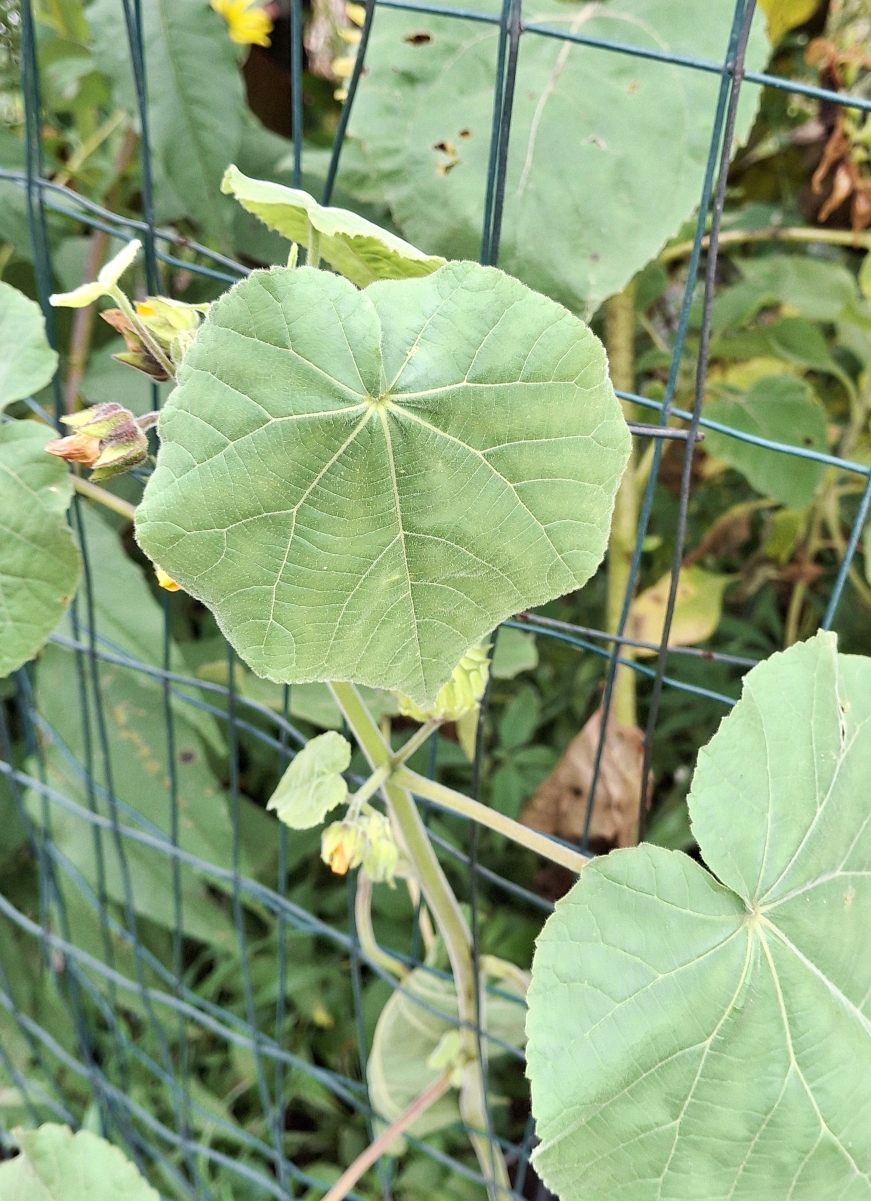
Velvetleaf (Abutilon theophrasti)

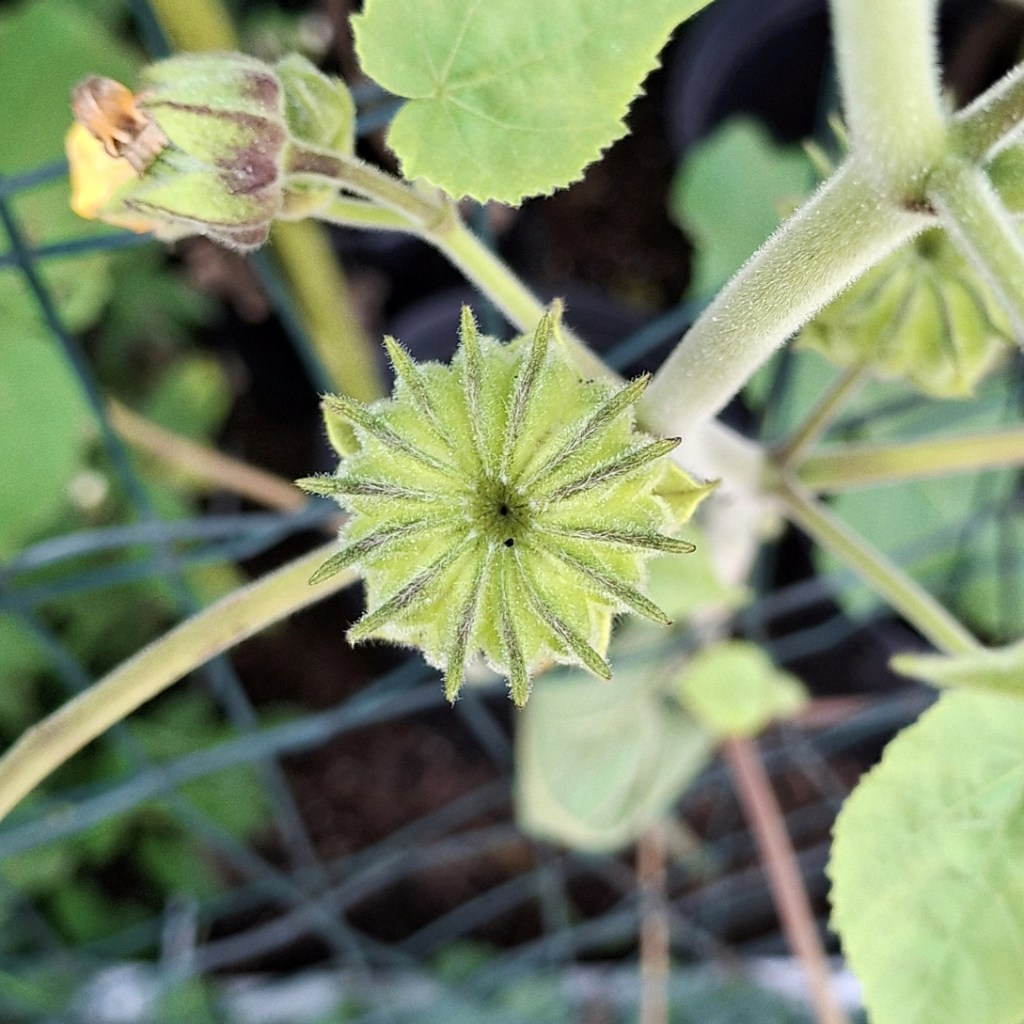
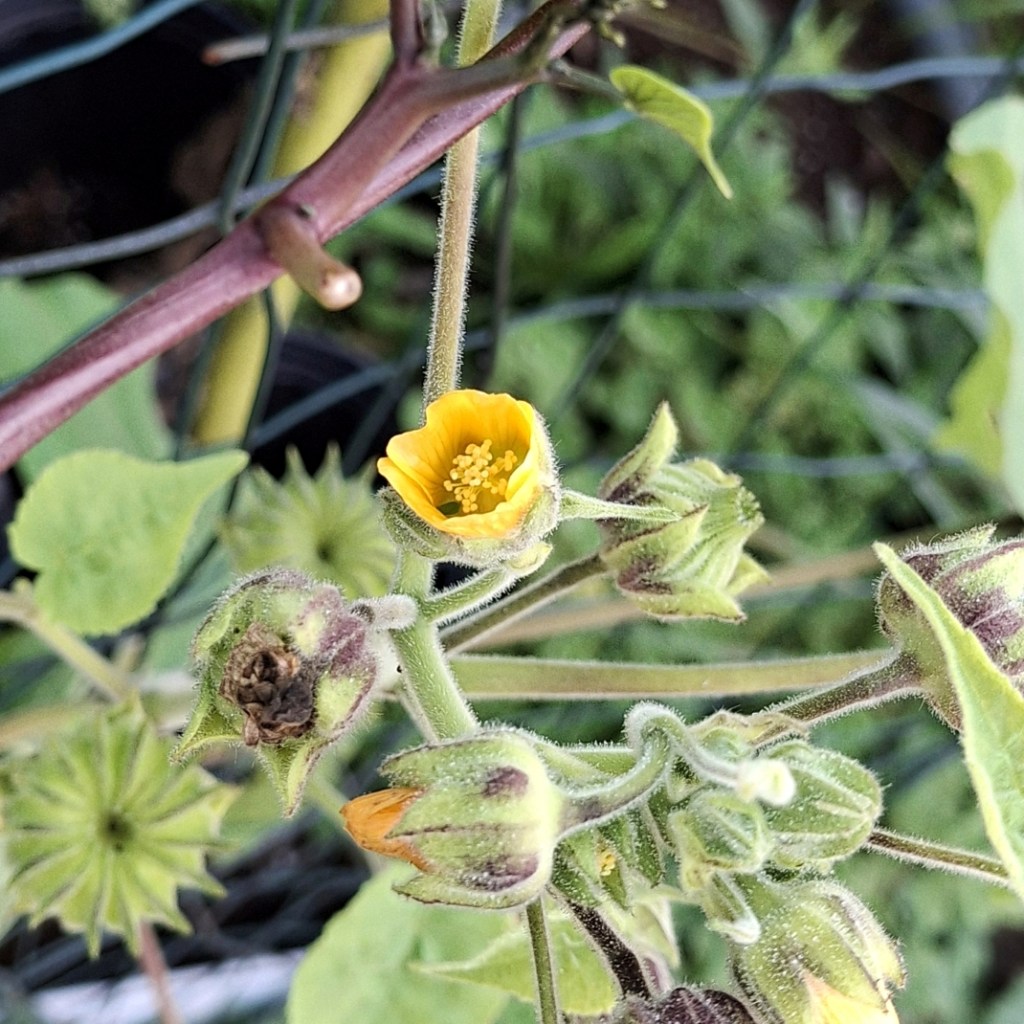
This year, Abutilon theophrasti (velvetleaf) came with the compost. Not that it bothers me. I have always found this tropical annual fascinating. Other people, like corn and soy farmers, would probably differ.

But I live far from big ag country. So this velvetleaf plant does not need to fear the sting of herbicides. Abutilon theophrasti, with its soft velvety, roundish leaves, their primary veins radiating from a central point, all connected by fine, parallel secondary veins, and branches tipped by tiny five-petaled orange flowers followed by enormous seed capsules, is welcome here if it behaves.

Discovering the Red-streaked Mompha, a beautiful tiny moth

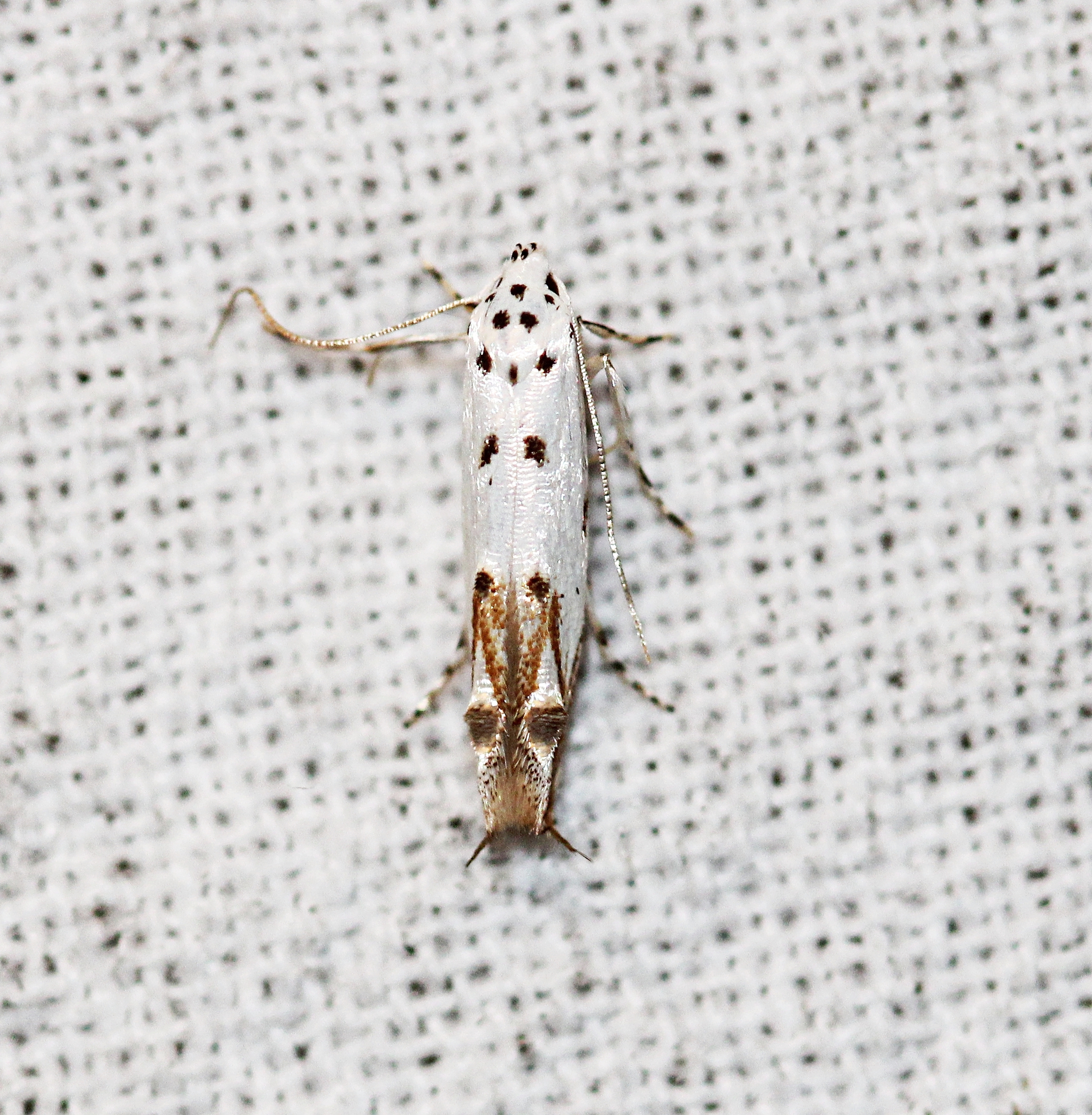
Mompha eloisella was probably attracted to the many Oenothera biennis plants nearby.

This is Mompha eloisella (Red-streaked Mompha), a tiny moth with beautiful satiny white wings speckled with symmetrically placed dark brown spots on the head, thorax, and wings, and red diagonal lines on the wing tips. The patterning of the wing tips resembles a face, but who or what will notice something that small and possibly be deterred by it? Or maybe that’s what the markings are for at all.

Mompha eloisella is in the family Momphidae, which worldwide contains at least 115 species. In North America, there are 45 species just in the genus Mompha and probably many more yet to be discovered and described. All are tiny and have unique patterns, often colorful, on their wings. The larvae of most Mompha species feed on plants in the Onagraceae (evening primrose family) as stem, flower, or fruit borers or as leaf miners. Mompha eloisella larvae are stem borers in evening primrose (Oenothera spp.). This one may have been attracted to the small stand of Oenothera biennis growing in my garden.

Mompha eloisella is widespread in the US, but available range maps show it as not present in Minnesota. Now we know it does occur in Minnesota, with this first sighting more than 120 miles north of a previous sighting in Wisconsin.

This isn’t the first Mompha moth I’ve seen here. There are four other species, all very tiny and beautifully patterned. The small size of these moths makes them easy to miss and difficult to photograph, but with a little effort and patience, they can be found and sometimes photographed clearly. Of course, not all of my Mompha photos are clear, but clear enough. They seem skittish, which also makes photographing them a challenge.

To attract more Mompha moths, I have planted Oenothera biennis, Epilobium angustifolium (fireweed), and let the weedy annual Epilobium coloratum (willow-herb) have a place in my flower garden. Not only are these plants food for Mompha moth larvae, but their flowers, sweet with nectar, are food sources for bees, small and large, and even hummingbirds. After blooming, the plants continue to benefit wildlife. A few days ago, I saw an eastern goldfinch in my flower garden feeding on the small seeds of evening primrose.

References and sources:

Genus Mompha https://bugguide.net/node/view/41654

Species Mompha eloisella – Red-streaked Mompha – Hodges#1443 https://bugguide.net/node/view/67246

Mompha eloisella (Clemens, 1860) http://mothphotographersgroup.msstate.edu/species.php?hodges=1443

A more technical description of this Mompha species, and several others, can be found at the Moths of North Carolina website.