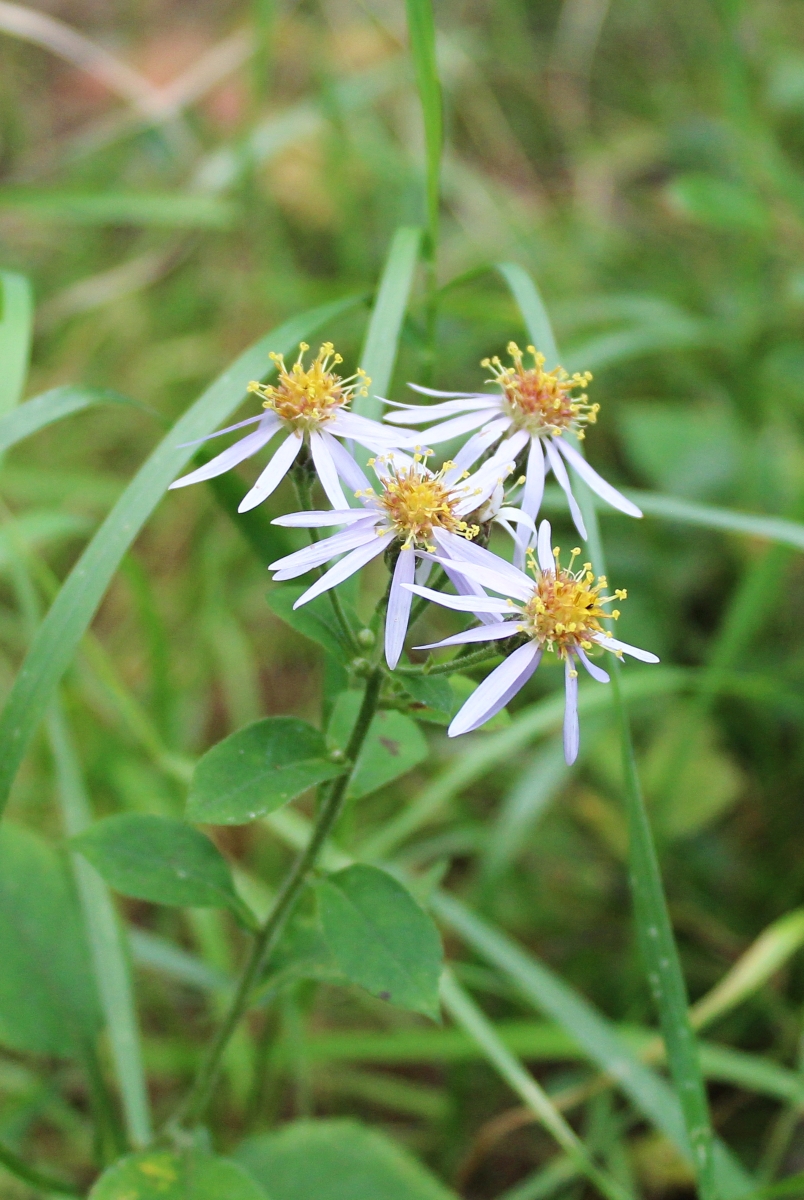
Big-leaf aster (Eurybia macrophylla) in bloom out in the woods.
It is the first day of October, but it doesn’t feel like it. Our temperatures are in the high 70s, and the warm weather will continue at least until Sunday. So I decided to look for any flowers that might still be blooming on this unseasonably warm autumn day. Although there is not a profusion of flowers this far into autumn, some still can be found.
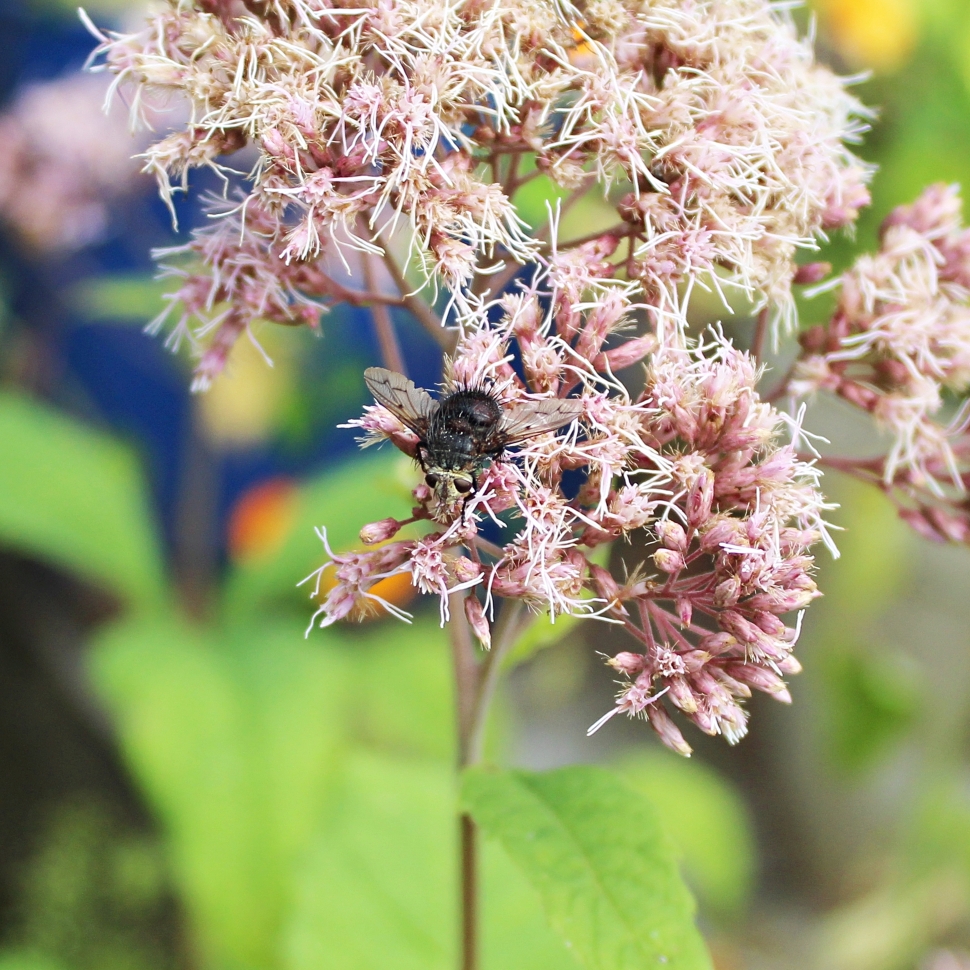
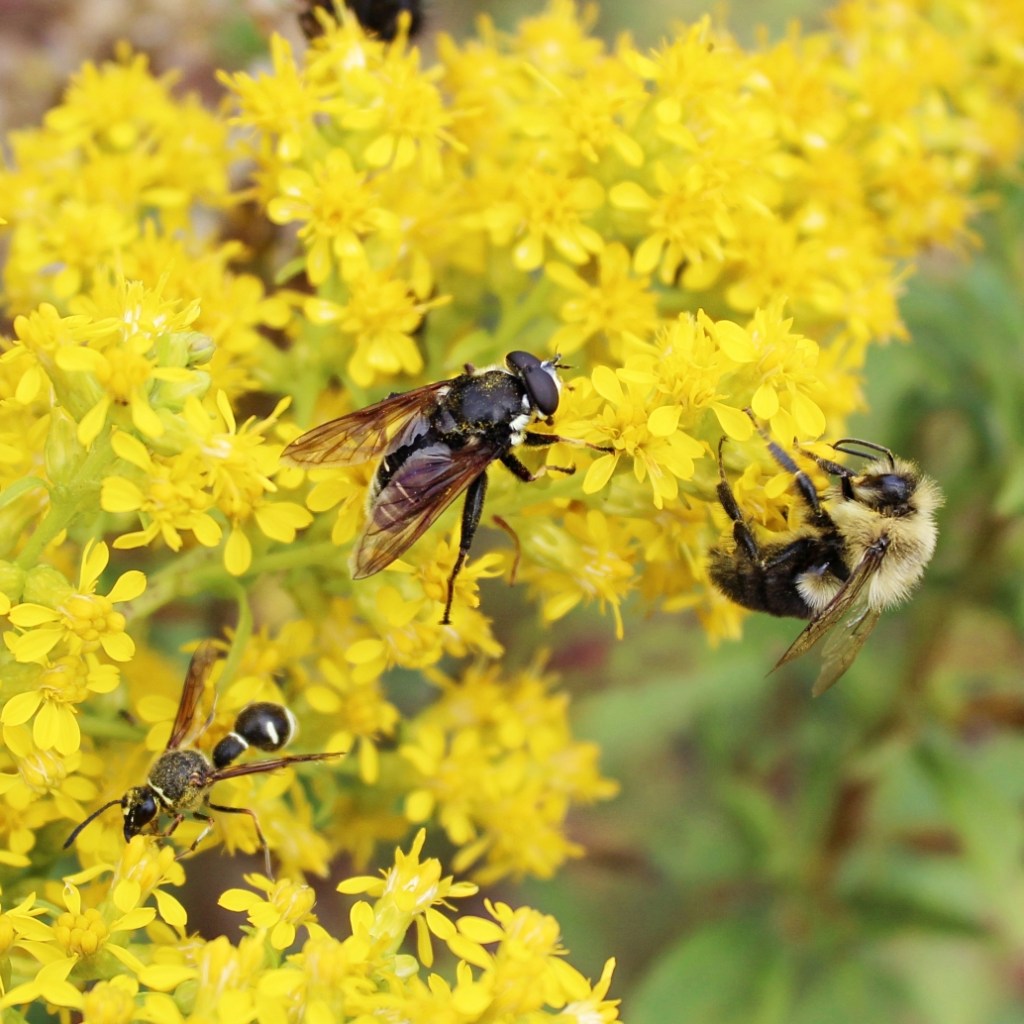
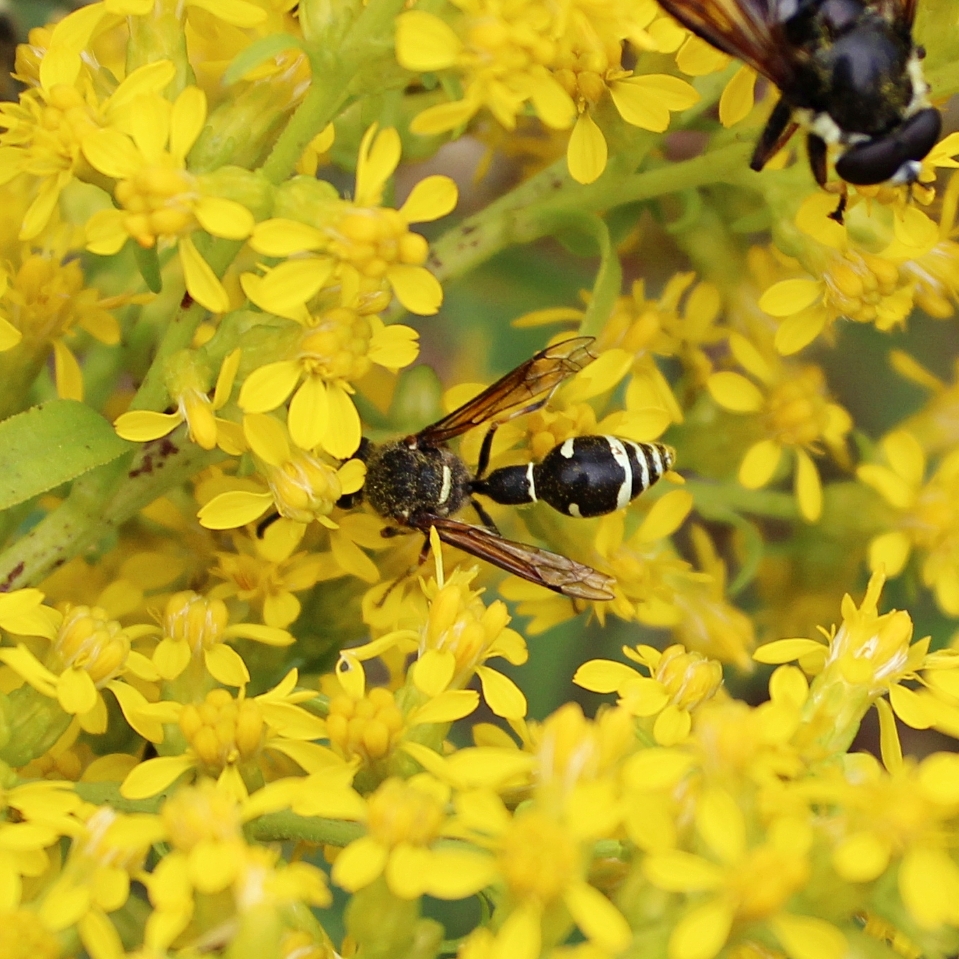
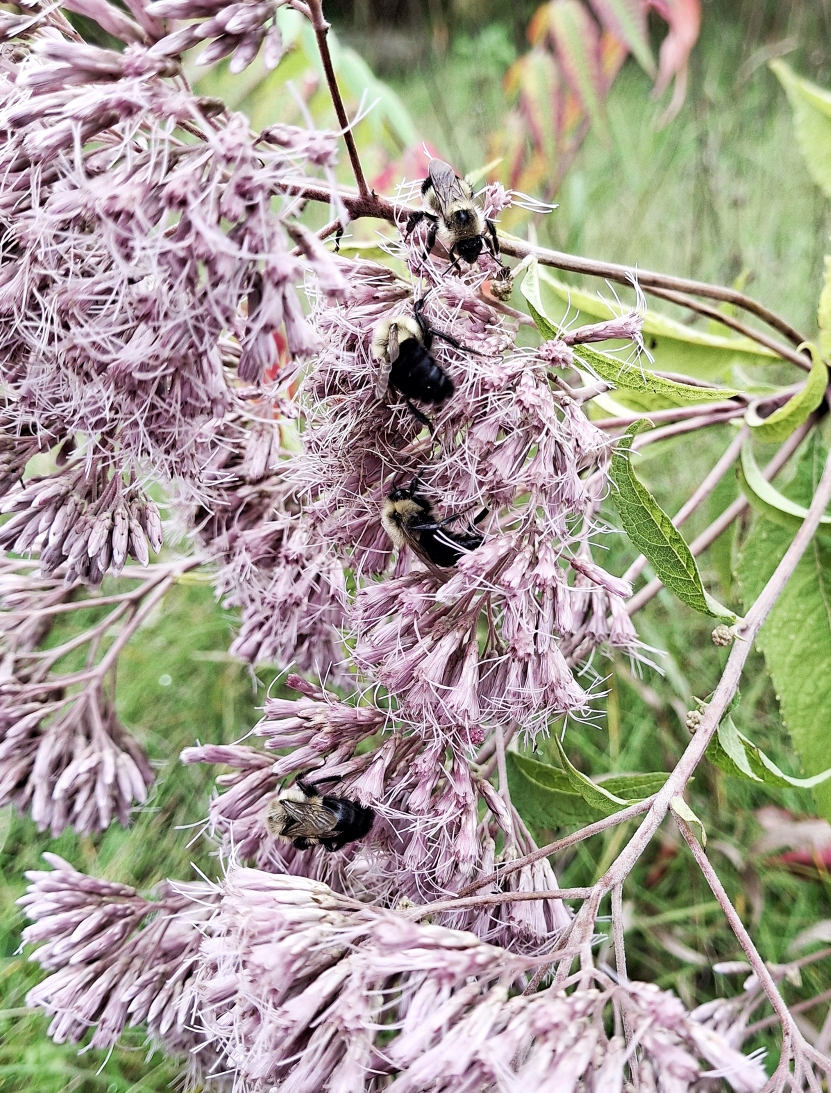
Two that are still in full bloom are showy goldenrod (Solidago speciosa) and trumpet weed (Eupatorium fistulosa). These two plants are always pollinator magnets, and today they were loaded with bumblebees, syrphid flies, and wasps.
In an earlier post, I wrote about Lophocampa maculata, a moth in the Arctiinae, distinguished by its fuzzy black and yellow larvae. These larvae later metamorphose into beautiful adult moths with a contrasting pattern of alternating bands of warm, muted golden-orange and darker brown markings with a reddish-orange tinge. In this post, I write about Halysidota tessellaris, the banded tussock moth, another moth in the Arctiinae.
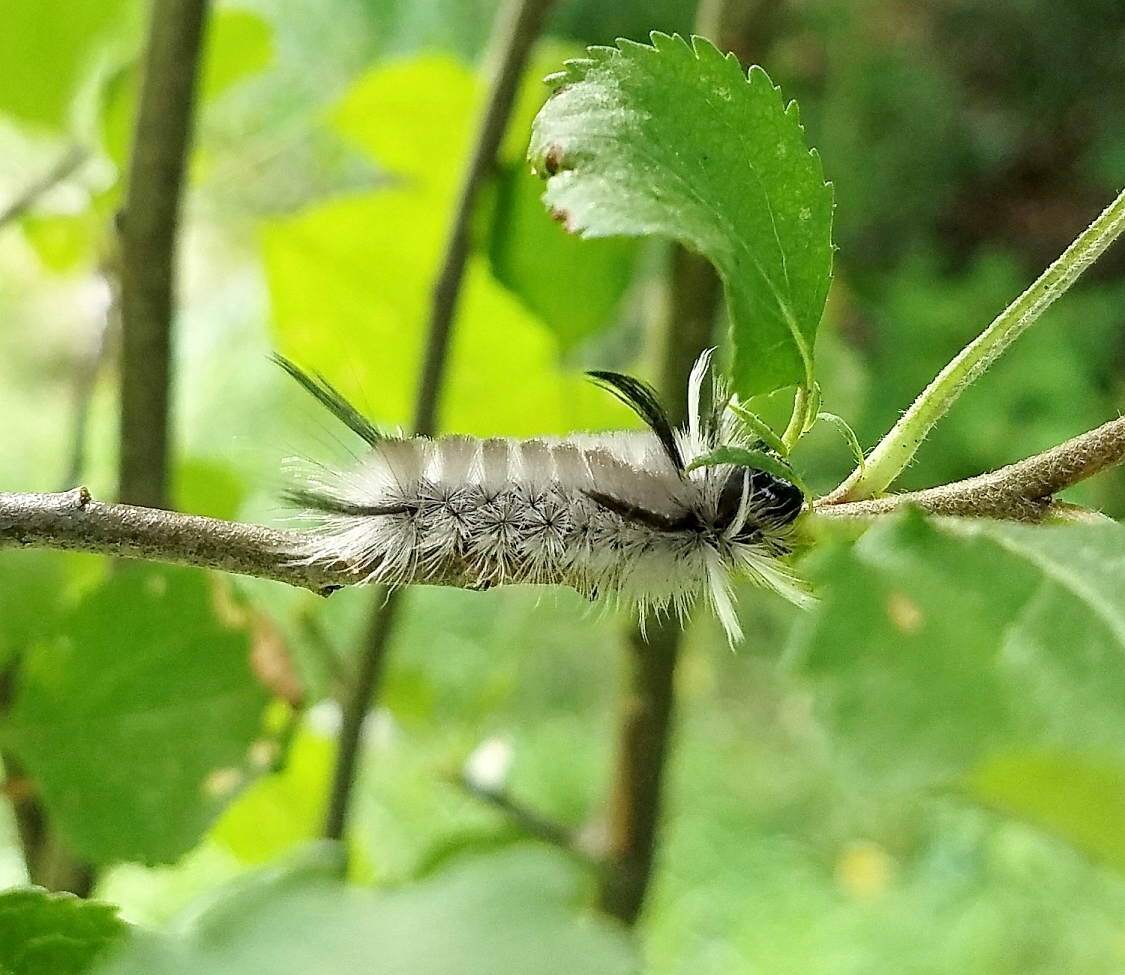
Halysidota tessellaris caterpillar feeding on a crabapple leaf in late summer.
Identification
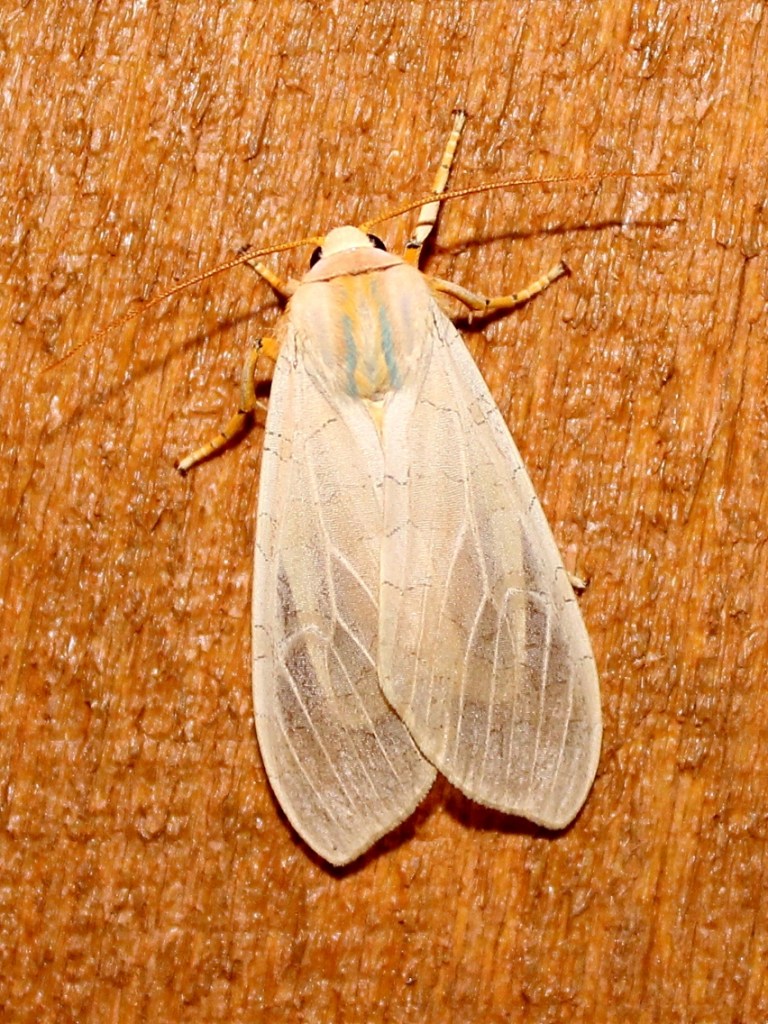
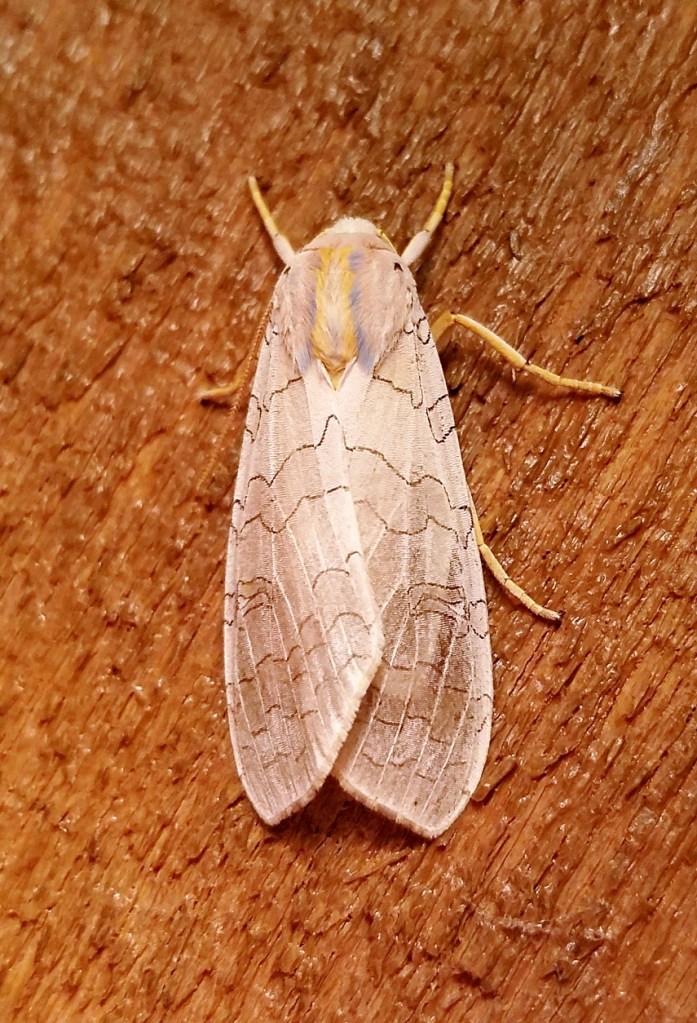
Like Lophocampa maculata, the larvae of Halysidota tessellaris are also fuzzy, but they are usually gray to dingy brown with long white and long black tassels. The adult moth, while similar in size to Lophocampa maculata, has translucent yellow forewings marked with slightly darker bands and irregularly shaped block-like cells that form a tessellated pattern. Also, there are two parallel blue stripes on the fuzzy thorax.
Life cycle
Across its range, larvae of Halysidota tessellaris feed on many species of hardwood tree leaves. Among these are box elder (Acer negundo), sweet birch (Betula lenta), ash (Fraxinus spp.), oaks (Quercus spp.), and many others. Adult moths take nectar and are pollinators of milkweeds (Frost, S. W. (1965) Insects and Pollinia. Ecology, 46. 556-558, paywall).
Halysidota tessellaris, a worn specimen, but the blue lines are prominent.Halysidota tessellaris showing the tessellated pattern of the forewings.
Similar species
Adults of the related Halysidota harrisii (sycamore tussock moth) are similar in appearance to Halysidota tessellaris. Where the ranges of Halysidota tessellaris and Halysidota harrisii overlap, genital dissection is necessary to determine the species. Halysidota harrisii larvae, which may be solid white, yellow, orange, or gray, feed exclusively on sycamore (Platanus occidentalis) leaves. The ranges of sycamore and the moth coincide closely.
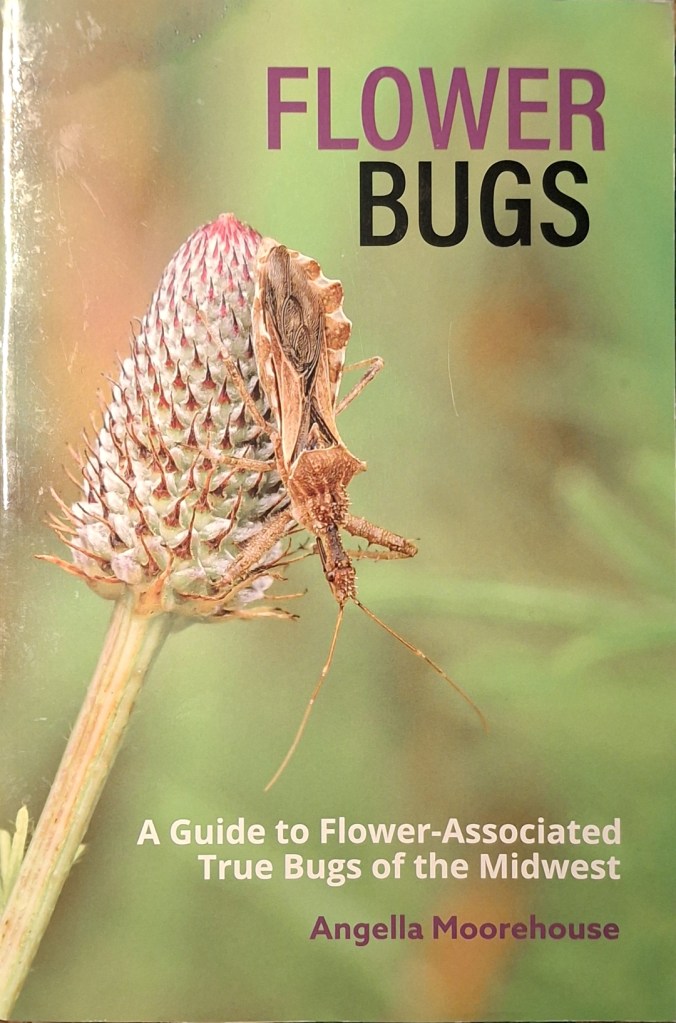
This just arrived today, and I know it will be so very useful as I venture further into the world of insects. Flower Bugs: A Field Guide to Flower-Associated True Bugs of the Midwest by Angella Moorehouse (2023) is published by Pollination Press LLC, Minnetonka, MN. The Pollination Press web address is www.pollinationpress.com.
This book has 360 pages, lavishly illustrated with beautiful full-color photographs of 160 species of terrestrial true bugs from 25 families and 52 genera. The area covered includes the states of Minnesota, Iowa, Missouri, Wisconsin, Illinois, Indiana, Ohio, and Michigan in the US and Southern Ontario in Canada.
The book includes taxonomic charts that will guide you to family and then to genus, detailed illustrations of bug morphology, their ecology, and a glossary of terms to help you learn and identify true bugs.
Species descriptions are not overly technical, thus making this book more accessible to non-specialists with some background in insect identification. Maps show the range of each species. There are notes on key identifying features, life history, ecology, feeding, and habitat. Descriptions of herbivorous species include lists of plants they consume. Carnivorous species are similarly treated. Not all species receive the same description treatments. Some are represented with photographs.
There seems to be a problem with the index, where some entries do not match the page numbers in the book. Not sure why.
I am loving this book already and will put it to good use identifying the many bug species I have photographed. My first project will be to go through the unidentified species in my files and to re-check previous identifications. After that, I’ll spend many an evening just browsing and waiting for spring and the bugs to return.


 Not Very Far Away