Summer is over

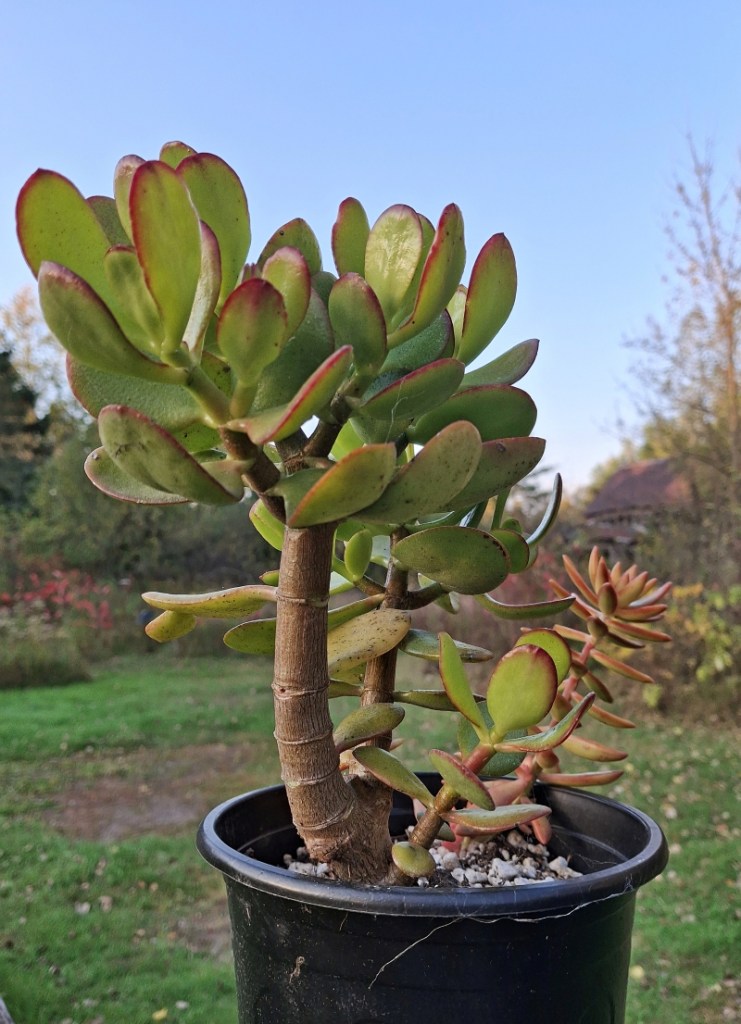
A jade plant I started from a cutting two years ago. In the winter, it lives under grow lights, but in the summer, it enjoys the fresh air and the rays of the sun. Tomorrow, it will have to come back indoors along with the Echevarria, Sansevieria, Tradescantia, and the epiphytic Zygocactus, Hatiora, and Rhipsalidopsis cactus.

We’ve had exceptionally warm weather for the last week, and even before that, the temperatures were just plain nice. But Sunday is the last day of temperatures in the 70s and 80’s. Yesterday it was 90 degrees in the shade. Tomorrow it will cool down to the 60s, and there is a chance of frost for three nights in a row.

After Monday, I will probably have to cut them down and store the tubers for the winter. The same is true for the tuberous begonias and the gladiolus. And all the houseplants I set out for their summer vacation will need to be brought back in.

A stalled high-pressure system is bringing the warm weather. Winds are from the south and gusting to 30 mph. The warm weather, while enjoyable and welcome so late in the year, is bringing problems to the already dry forests and fields. Even the wetlands are dry. Very dry.

I don’t remember planting this

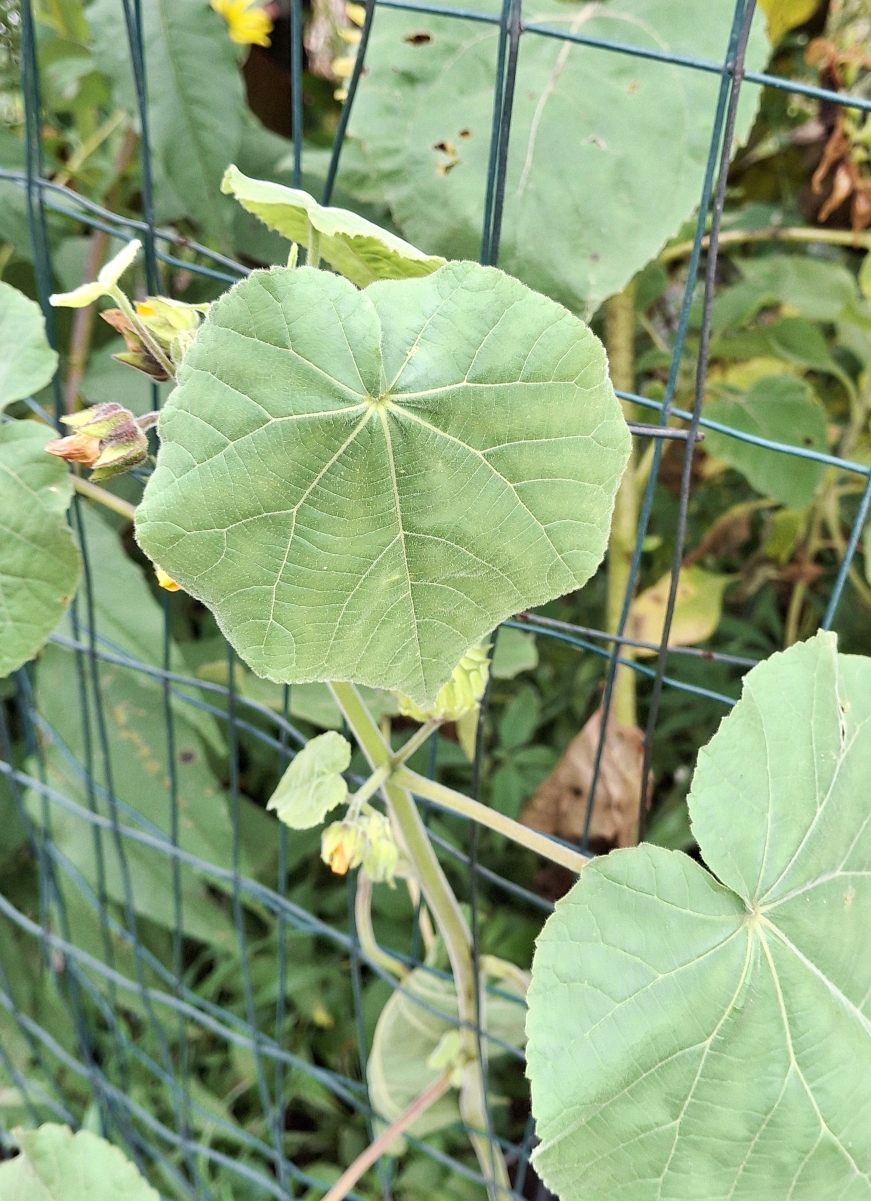
Velvetleaf (Abutilon theophrasti)

At the end of my drive, I have a small planter partially embedded in the ground. In it, I plant sunflowers and heavenly blue morning glories. This year, I added red-leaved cannas. I also planted scarlet runner beans and thunbergia. Rabbits devoured those even with the fence. But the sunflowers, morning glories, and cannas survived.

To supplement the soil in the planter, I added some purchased compost. Usually, that’s a safe thing to do. Sometimes, though, I have gotten bonus plants like Ranunculus sceleratus (blistering buttercup) and Oxybasis glauca (oak-leaf pigweed). Not that I minded.

Velvetleaf (Abutilon theophrasti)

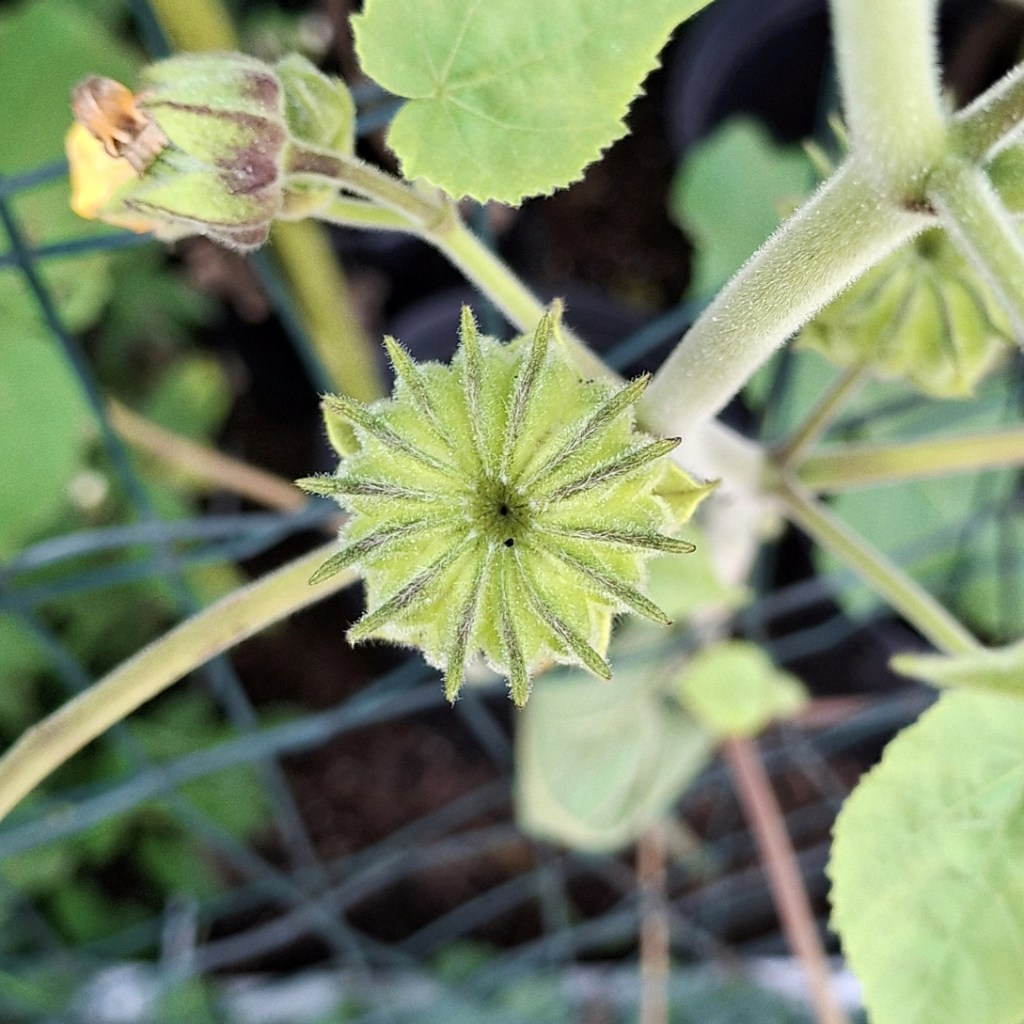
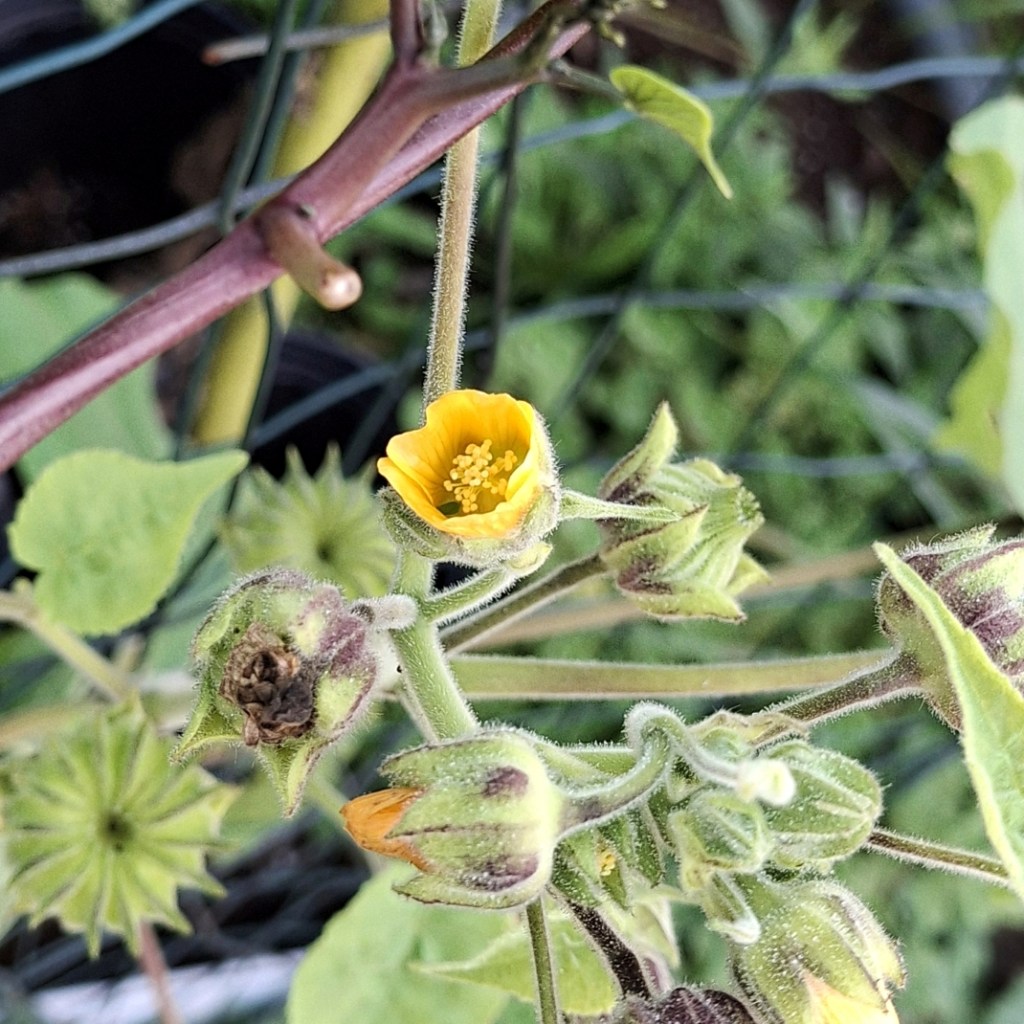
This year, Abutilon theophrasti (velvetleaf) came with the compost. Not that it bothers me. I have always found this tropical annual fascinating. Other people, like corn and soy farmers, would probably differ.

But I live far from big ag country. So this velvetleaf plant does not need to fear the sting of herbicides. Abutilon theophrasti, with its soft velvety, roundish leaves, their primary veins radiating from a central point, all connected by fine, parallel secondary veins, and branches tipped by tiny five-petaled orange flowers followed by enormous seed capsules, is welcome here if it behaves.