Macrochilo bivittata is one of those moths I look forward to seeing every year. It isn’t a showy species, just a small triangular-shaped moth with four dark stripes against a buff to brown background, some prominent wing venation, and two pairs of dots. It is in the Herminiinae or litter moths, named because the larvae of many species feed on fallen or dead leaves and fallen fruit.
The reason I get excited about seeing it again is that where I live is one of the few known places in North America where it occurs.Across its range, Macrochilo bivittata is uncommon to rare. Minnesota and Wisconsin appear to have the largest number of observations. The rarity of Macrochilo bivittata may be a lack of verified observations and not rarity based on specialized habits or food requirements, loss of habitat, or replacement by a non-native species. More searches in appropriate habitat could help to resolve this.
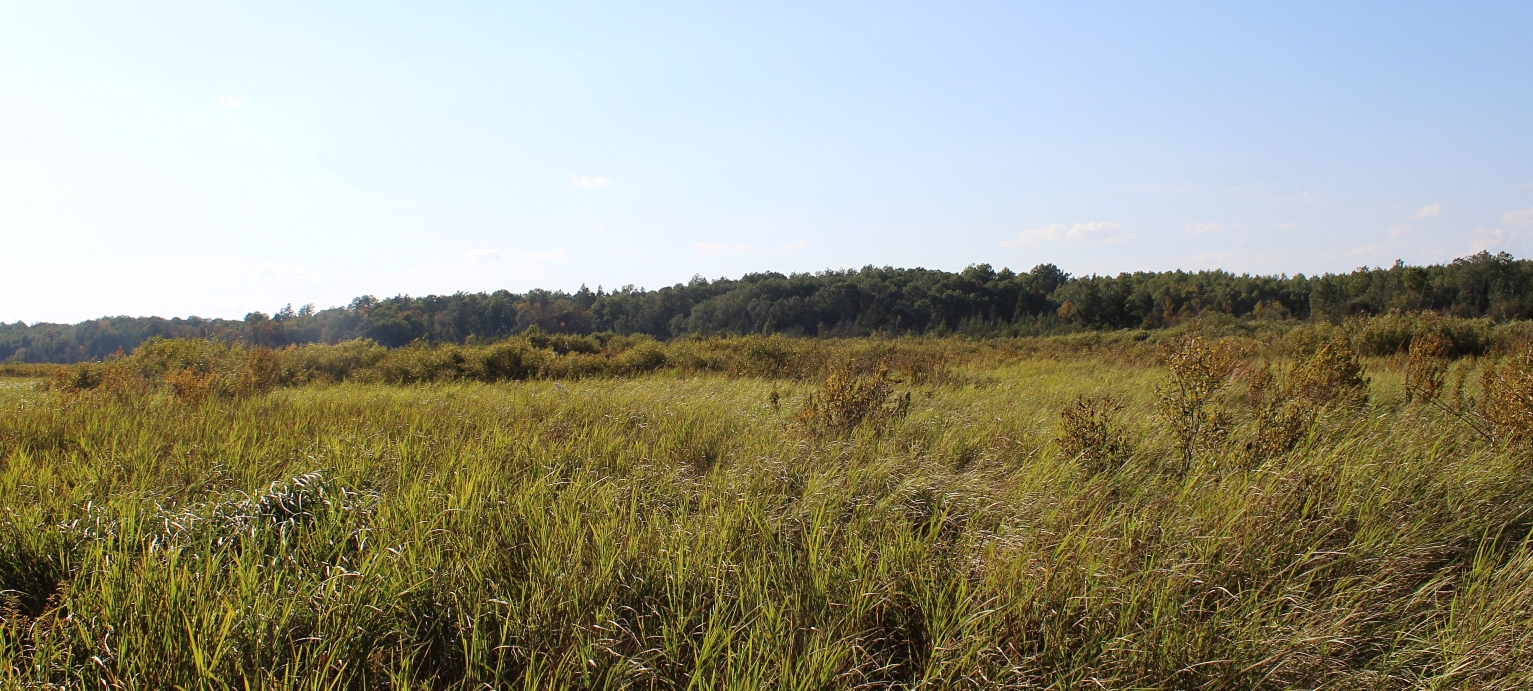
A few Macrochilo bivittata moths come to my moth light every year in July. But it is in a nearby old marsh grass hayfield, now reverting to sedge meadow-shrub carr wetland, where I see many more. As I walk through the tall grasses, sedges, and willow shrubs, dozens of these little moths fly ahead of me to escape the disturbance.
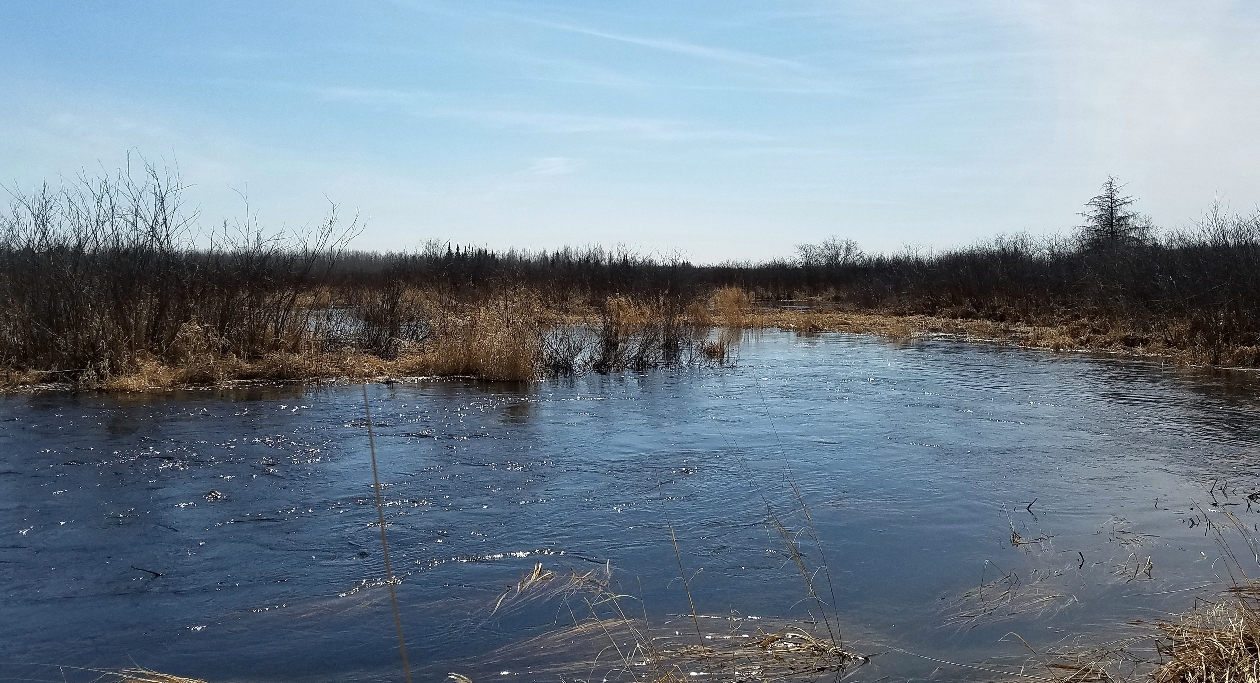
The sedge meadow-shrub carr wetland where Macrochilo bivittata lives. Except for a few patches of canary grass, most of the plant species here are native.
The food preferences of Macrochilo bivittata are not known. It is thought their larvae feed on leaf litter like other members of the Herminiinae. There is certainly an abundance of leaf litter out there under the grasses and willows in the old hayfield. Macrochilo bivittata seems to be doing very well with that.
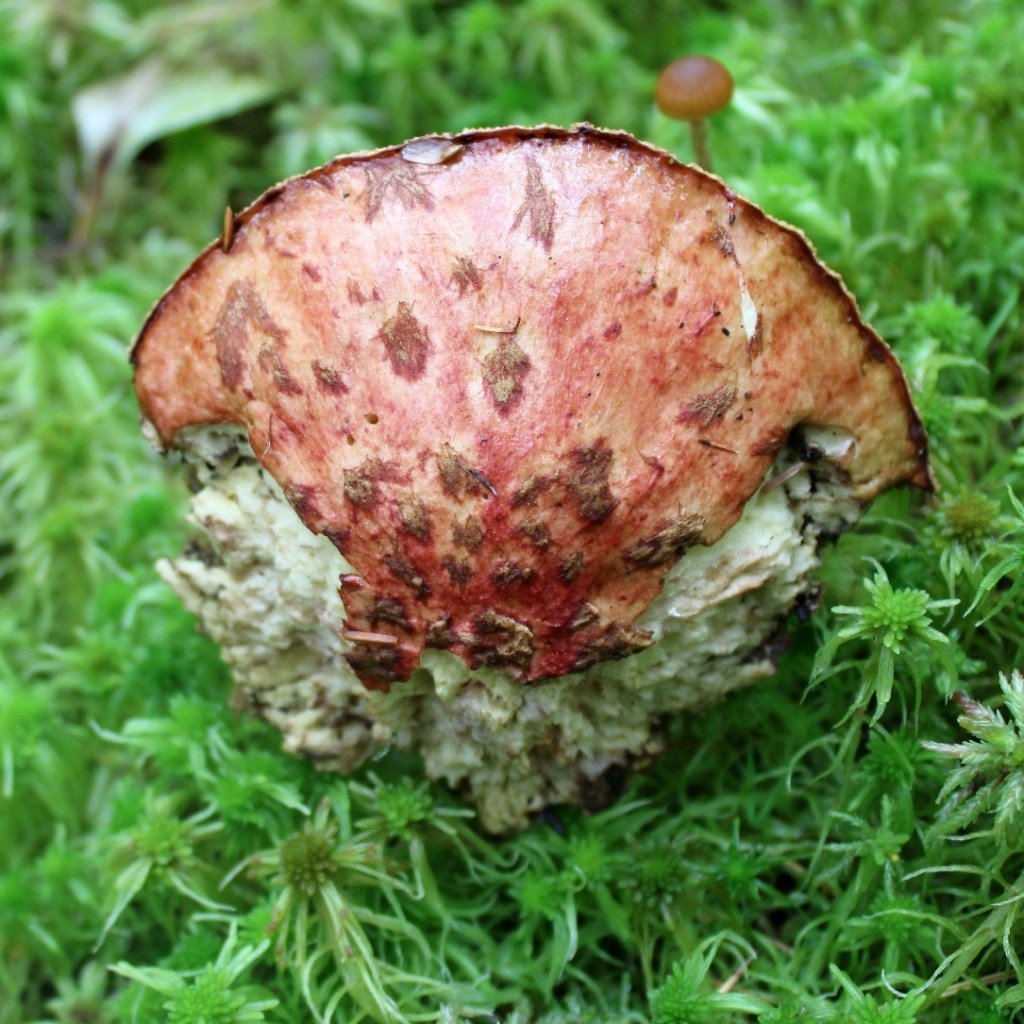
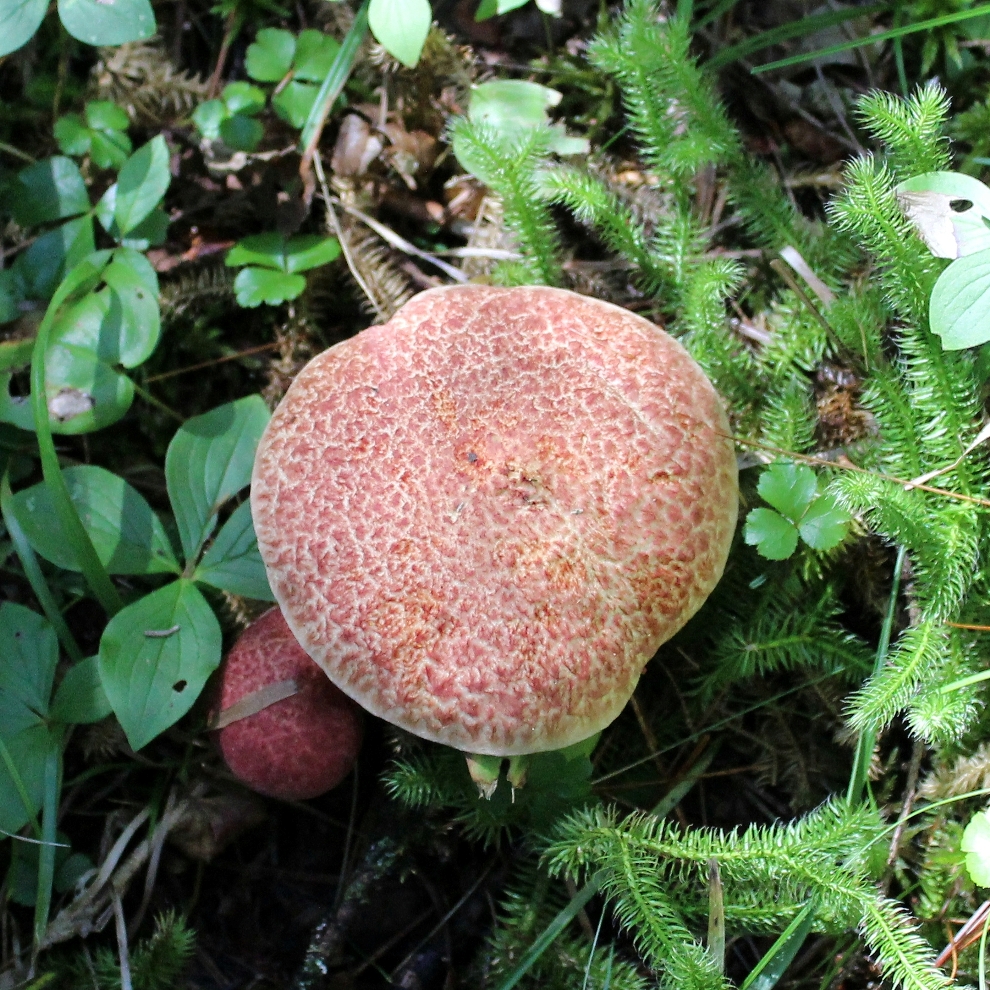
Suillus spectabilis (larch bolete)and a bit worn from hungry mice.
It’s fully autumn now and despite frosty nights and sometimes cooler days, this is a good time to hunt for mushrooms. At this time of the year, there are many interesting species popping up from the duff, through the moss, the sides of rotting logs, and even from fallen pine needles.
Boletes, a broad term for genera of pore fungi, have been sprouting in the woods these last few weeks. One afternoon in early October I came upon Suillus spectabilis, the larch bolete. It wasn’t a very handsome specimen, as some animal, perhaps a mouse or red squirrel, had taken some big chunks out of the cap. This reddish mushroom grows in conifer swamps where tamarack or larch (coniferous trees in the genus Larix) occur forming an ectomycorrhizal association. Two other Suillus (Suillus cavipes, Suillus grevillei) that also form ectomycorrhizal associations with Larix were noted in the area.
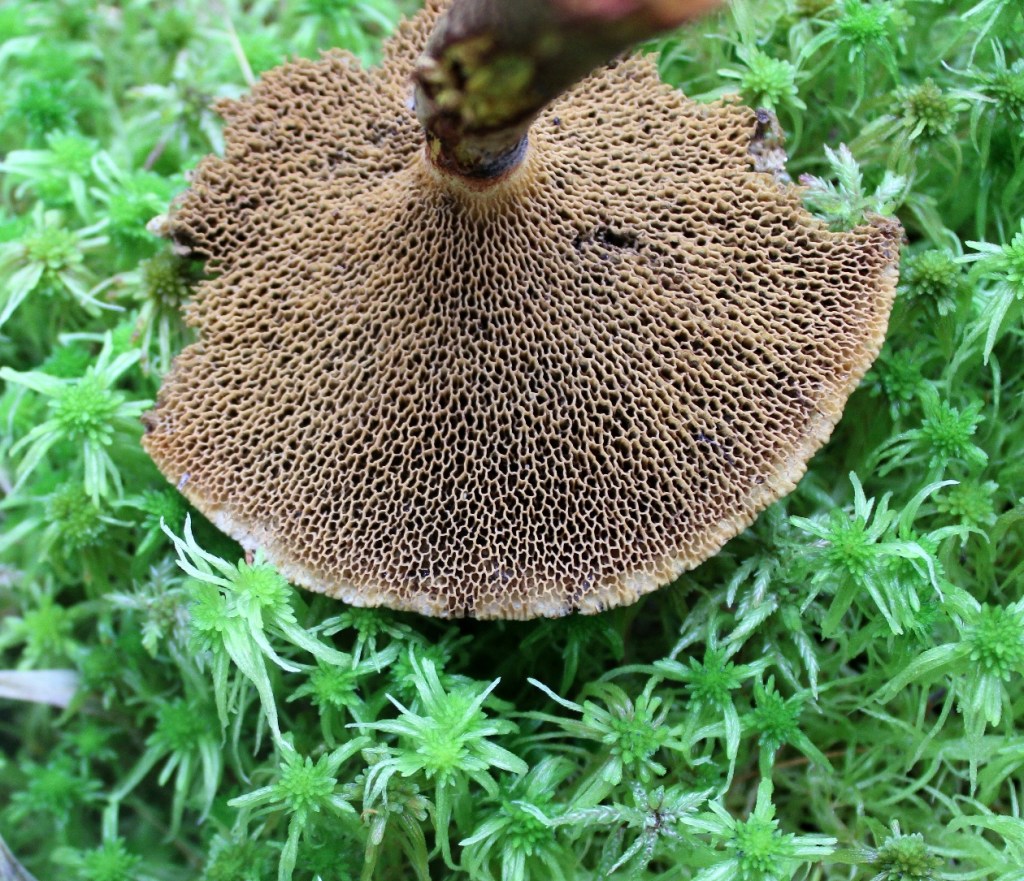
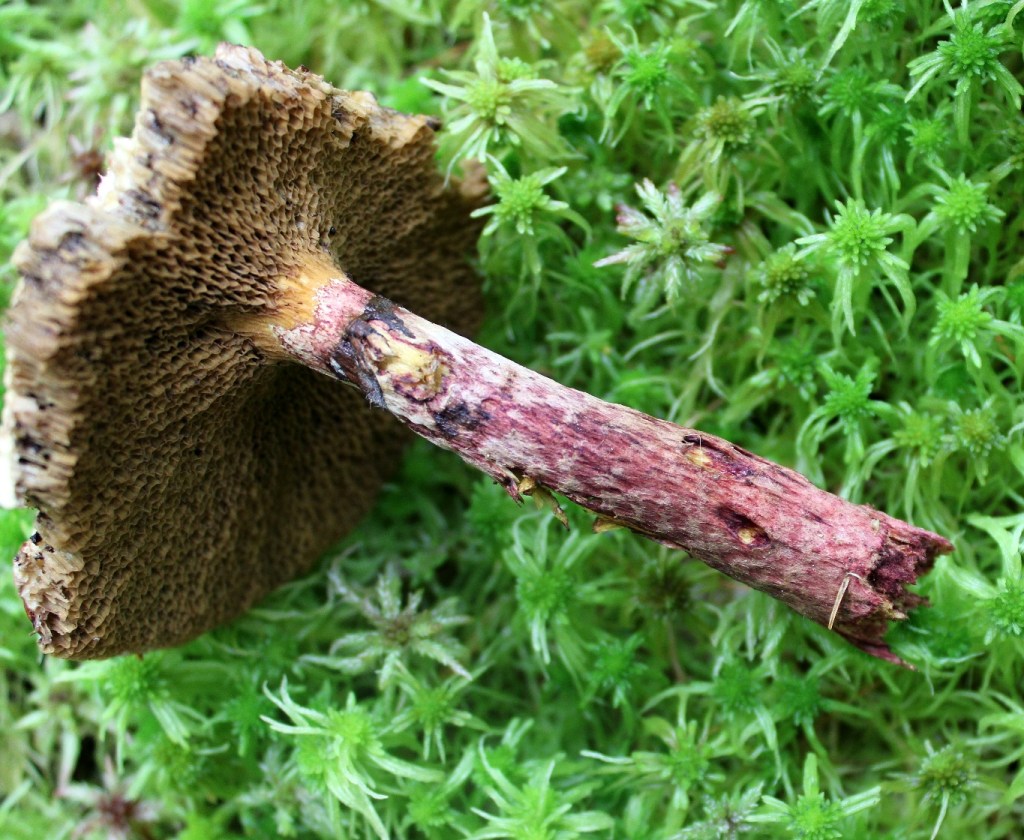
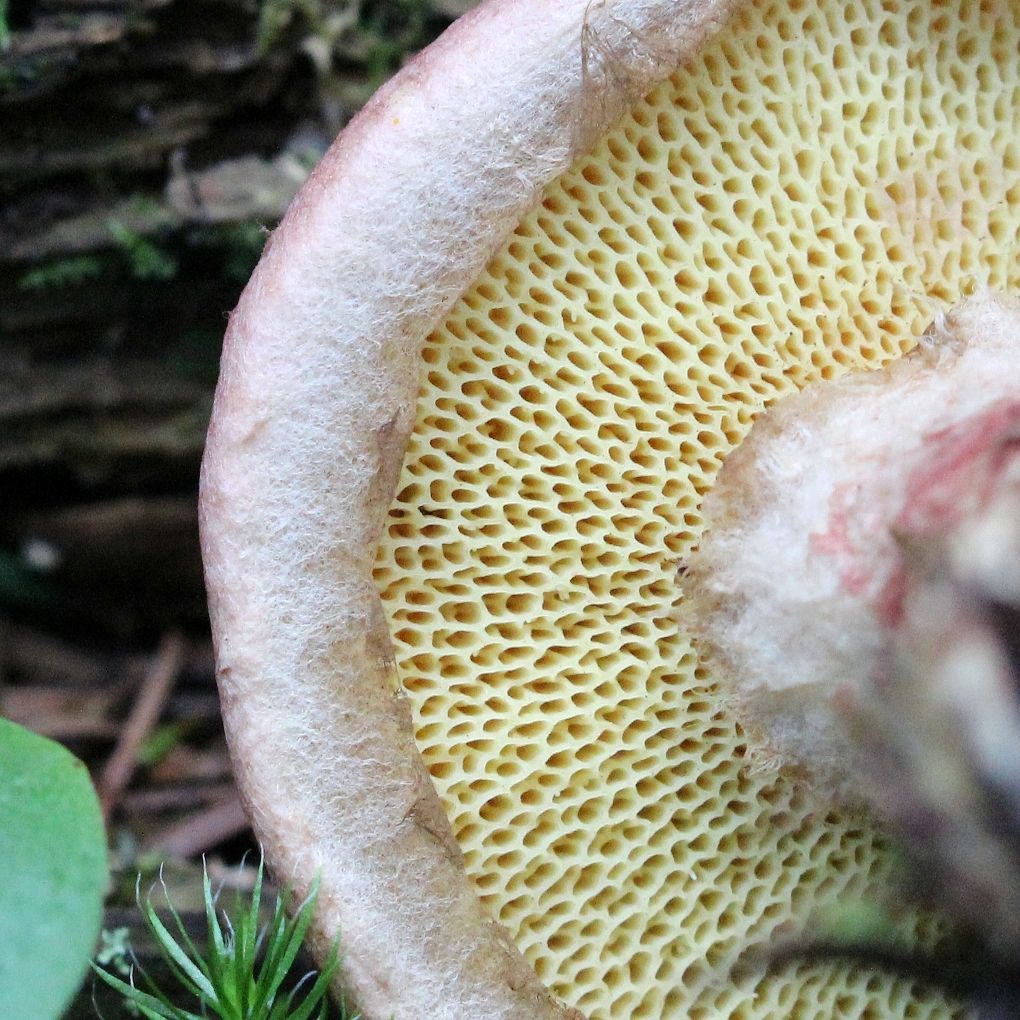
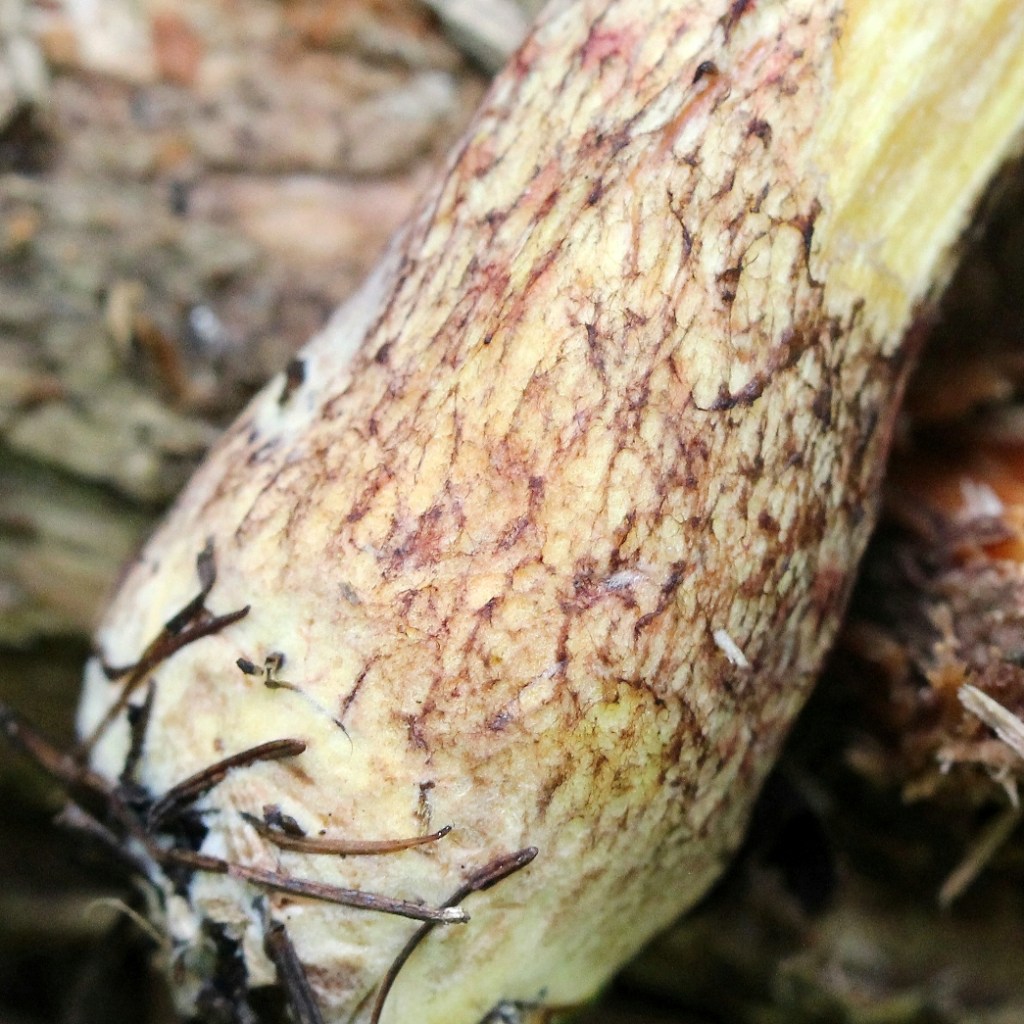
Suillus spectabilis poresSuillus spectabilis stem showing patchy red pigmentation.
Finding Suillus spectabilis helped to solve another Suillus identification problem. This other Suillus species was growing on some high ground near the edge of the tamarack swamp but also just a few yards away from a white pine the ectomycorrhizal associate another bolete: Suillus spraguei (syn. Suillus pictus). Given the close proximity to two possible symbionts, I wasn’t sure whether this mushroom was growing in association with pine roots or tamarack roots. Now that I had a new red Suillus for comparison, the differences were immediately obvious. I could now add the pine bolete or Suillus spraguei to the fungi checklist.
Suillus spraguei capSuillus spraguei poresSuillus spraguei base of stem
The differences between the two species, aside from the conifers they associate with, are seen in the cap, pores, and stem. For Suillus spectabilis (see here, here, and here), the cap is reddish with large pink scales; the pore surface is at first yellow, later turning brown; the margin of the cap’s underside is thin and the edge is not inrolled, and the stem is more or less equal in width from top to bottom, fibrillous and reddish.
Suillus spraguei (see here, here, and here) has a cap covered in red-brown scales; the underside is yellowish, later fading to brown; the cap margin is inrolled when young, and the stem may be a little wider at the base than at the top.
Boletes such as Suillus have undergone taxonomic revisions in recent decades clarifying genus and species delineations using molecular phylogeny. The genus is divided into three subgroups: Granulatus, Tomentosus, and Spectabilis. Subgroup Spectabilis includes Suillus spectabilis while subgroup Granulatus includes Suillus spraguei. Members of subgroup Spectabilis form ectomycorrhizal associations with Larix (larch, tamarack) and Pseudotusga (Douglas fir). Those in subgroup Granulatus form ectomycorrhizal associations with Pinus (pines) and one species is ectomycorrhizal with pines and Quercus (oaks). Ectomycorrhizal associations with Pinus in the subgroup Granulatus are further partitioned between two-needle and five-needle pines.
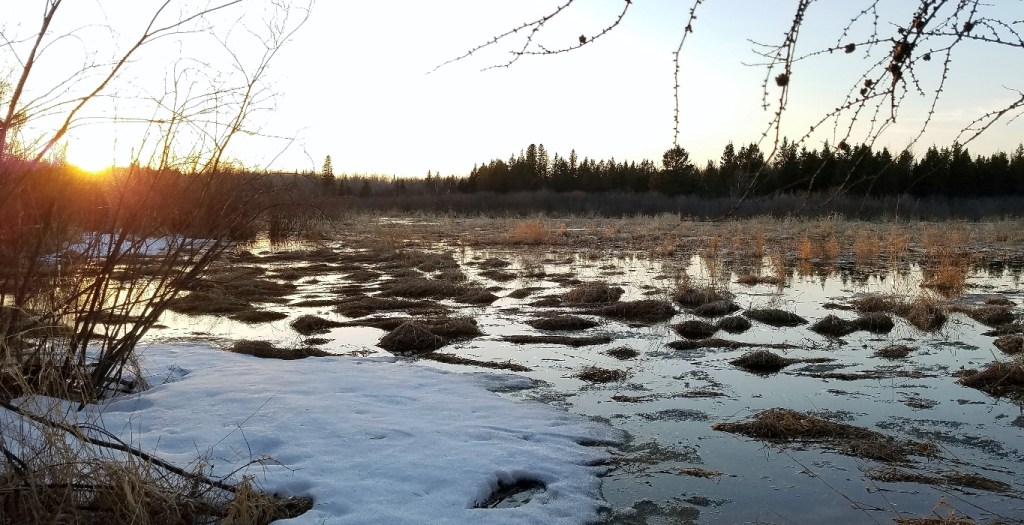
Temperatures rose rapidly over the weekend melting three feet of snow in our watershed. The result is a huge flood and the little stream (West Fork of the Moose Horn River) that flows through my property has gone from 16 feet wide to almost 1,600 feet wide. Water depths have increased from 3 feet to about 6 or 7 feet depending on where you measure. And the speed of the stream’s flow has also increased although I have no measurements for that other than sore muscles from trying to paddle upstream so as not become part of the flotsam.
The rising and spreading waters clean out the stream and refresh it. They also flatten out the grasses and sedges in the shrub carr/sedge meadow making them less prone to fire. And for me they make it easier to visit the western sections of my property as I can canoe within 100 feet of the uplands. When the stream is at normal levels the walk is 1,300 feet through willow thickets and sedge tussocks.
The edge of the flood comes up to my backyard and is just three hundred feet from the stream and deep enough for the canoe.
The flood waters are stirring up many small aquatic animals which can be collected in simple traps like minnow traps. It is encouraging to find larvae of damselflies and caddisflies in the traps as most species from these insect orders require oxygen-rich waters to survive. Their presence and abundance indicates a good level of stream health. But not everything in my traps is an indicator of oxygen-rich water. Mudminnows (Umbra limi), Brook Sticklebacks (Culaea inconstans), and isopods (most seem to be Caecidotea) are tolerant of oxygen-poor water. When rainfall is abundant and regular the stream is full and the water fresh. But if rainfall is scarce or sporadic the stream’s water levels drop and the flow slows down. During drought years the stream will nearly dry up. This can be especially problematic in the winter when what little water there is freezes solidly to the stream bed. These conditions put a lot of stress on aquatic life and species that can tolerate that stress have a better chance of surviving. In recent years rainfall has been more consistent. The arrival of beavers, which had been gone for two decades, is also helping to keep water levels higher and creating new aquatic habitats where other animals and plants can live.
Caddisfly larvae (Ptilostomis in the tubular case) and a smaller unidentified species.
An isopod (Caecidotea)
An isopod (Caecidotea)
Brook Stickleback (Culaea inconstans)
While the water is high many migratory waterfowl have arrived. Trumpeter Swans (Cygnus buccinator) and Hooded Mergansers (Lophodytes cucullatus) are two species that arrived this week. They will rest here for a short while and continue northward to their preferred nesting habitats. A pair of Canada Geese (Branta canadensis) and Sandhill Cranes (Antigone canadensis) have come back as have several pairs of Mallard Ducks (Anas platyrhynchos). These birds will stay here all summer tending their young. Redwing Blackbirds are back, too, fussing at intruders into their territory like me. Other songbirds, mainly warblers and sparrows, will being showing up soon to build nests in the willows and sedge. The flood will continue for several more days and eventually the shrub carr/sedge meadow will drain a little. Then the willows, grasses and sedges will start leafing out transforming the scene from one of bare twigs and brown thatch to green dotted with patches of aster and goldenrod flowers.
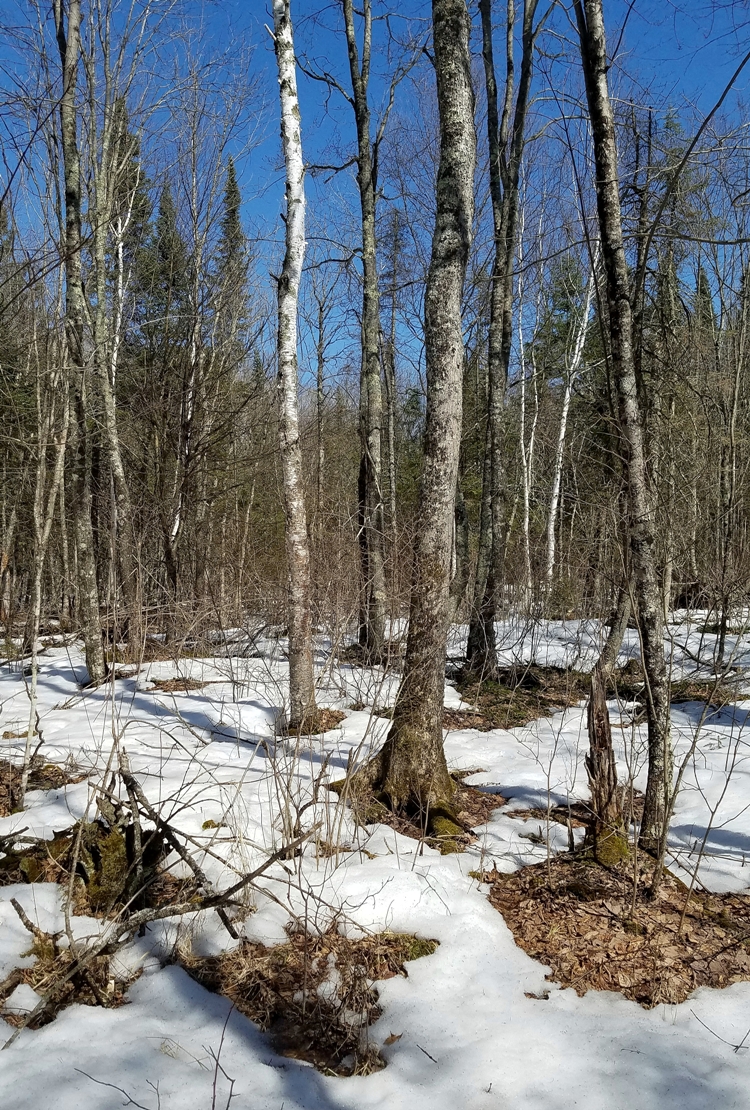
On Saturday I took a canoe trip down the little stream with the big name (West Fork of the Moose Horn River) that passes through my property to visit the western section. This area is approximately 56 acres and forested. Most of it is upland aspen and spruce forest but there is a large hardwood swamp near the southern property line.
Another part of the swamp (finally) thawing out. Soon this will be a flowing stream.
The ground was still snow covered but it was melting fast in the warm sun. I spent most of my time in a portion of a hardwood swamp looking at tree trunks for lichens and fungi. I found several lichen species previously documented from here and possibly one new species for the list. There are also a number of unknown lichen specimens to figure out.
Shadow Lichen (Phaeophyscia orbicularis?) on a sapling black ash tree.
Shadow Lichen (Phaeophyscia sp.) with an unknown gray foliose species on a small but old red maple.
Shadow Lichen (Phaeophyscia sp.) on a sapling black ash tree.
Lung Lichen (Lobaria pulmonaria) on a small but old red maple
Appalachian Punctelia (Punctelia appalachensis) on a black ash tree.
Appalachian Punctelia (Punctelia appalachensis) on a black ash tree.
Powdered Fringe Lichen (Heterodermia speciosa) on a black ash tree.
Frost Lichen (Physconia sp.) on a black ash tree
Frost Lichen (Physconia sp.) on a black ash tree
Saucer Lichen (Ochrolechia trochophora) on a black ash tree.
Four lichens: Script Lichen (Graphis scripta in upper right) and three unknowns.
There were two fungi that interested me. One is Phellinus igniarius, a polypore bracket fungus, that was growing on the trunk of an old quaking aspen. This fungus decays the lignin in the wood leaving behind the lighter colored cellulose and is one of the causes of white-rot in hardwood trees. The other fungus looks like P. igniarius and like it causes decay in living hardwoods. This one seems to only grow on black ash trees. It is a polypore but the pore surface looks shaggy rather than smooth. So far no luck in figuring it out.
Phellinus igniarius on quaking aspen.
Phellinus igniarius on quaking aspen.
Unknown bracket fungus on black ash.
Unknown bracket fungus on black ash.
Most of the trees in the hardwood swamp are black ash (Fraxinus nigra) with some green ash (F. pensylvanica), yellow birch (Betula allegheniensis), paper birch (B. papyrifera), American elm (Ulmus americana), quaking aspen (Populus tremuloides), and red maple (Acer rubrum). A year ago I measured the trees in the lower two-thirds of the swamp to get a population count by species and to calculate basal area. Some of the black ash trees are huge (for this part of Minnesota anyway). Of the 64 black ash measured 14 were between 28 cm and 44 cm in diameter. There were also 12 yellow birch in this size range. Black ash and yellow birch are slow growing trees even on good sites like this one so it is possible that the largest trees are at the century mark.






 Not Very Far Away