
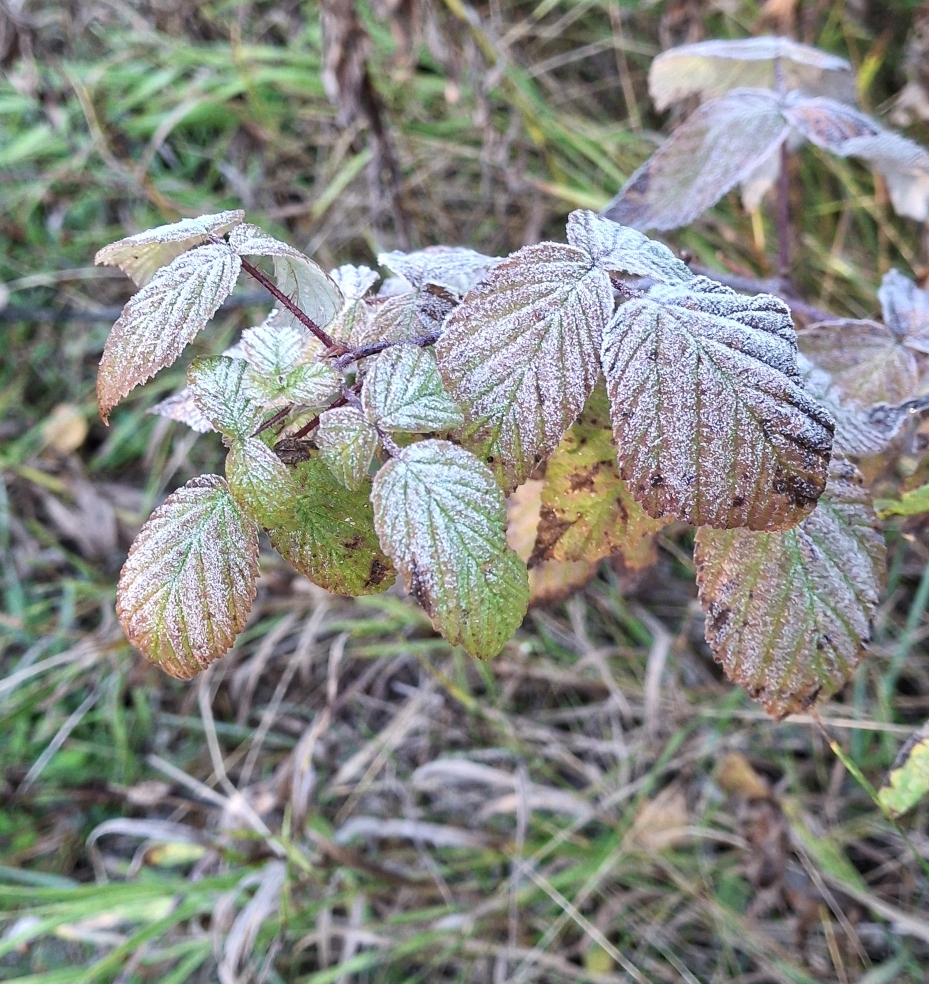
It got cold last night

A few days ago, I was out on one of my meandering walks. Eventually, I made my way down to the little river that flows through my property. My first stop was at an old beaver lodge to see what might be growing on it.
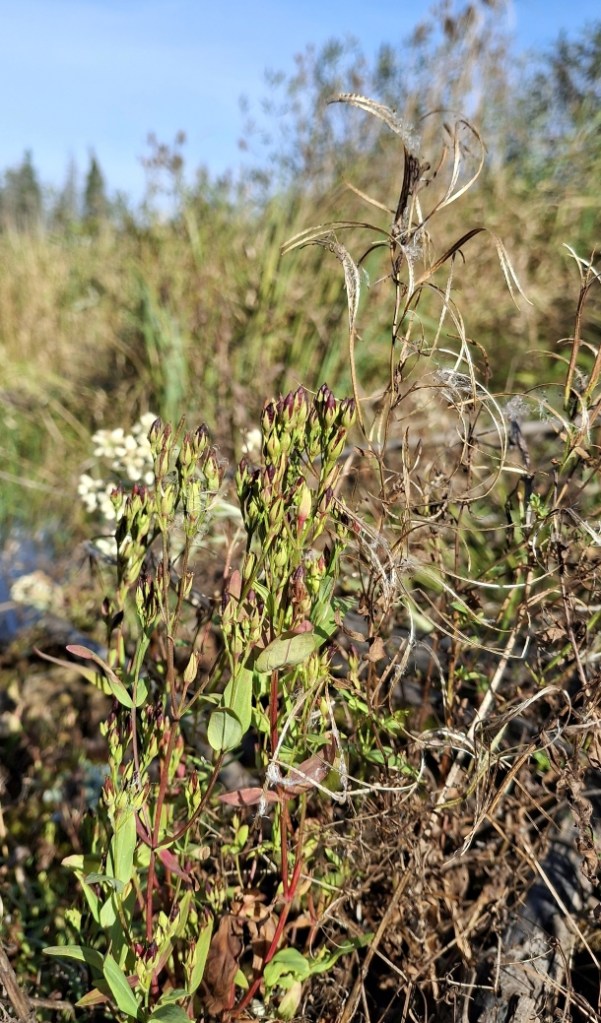
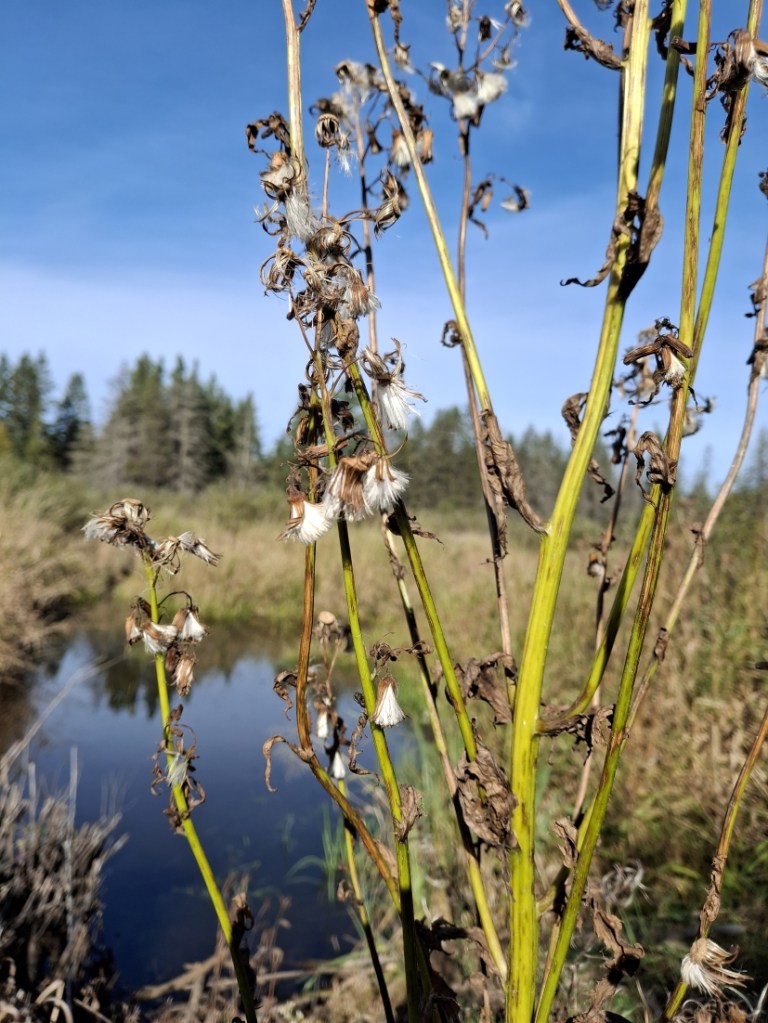
On the beaver lodge, I found some weedy species: Erechtites hieraciifolius, Hypericum majus, Epilobium leptophyllum, and Pseudognaphalium obtusifolium. Erechtites hieraciifolius is an annual and Hypericum majus, Epilobium leptophyllum, and Pseudognaphalium obtusifolium are short-lived perennials that would never survive in the thick marsh grasses. I’ve never seen them anywhere near the river except on other old beaver lodges and dams. How many years (decades?) had their seeds lain dormant in the muck before the beavers brought them to the surface?
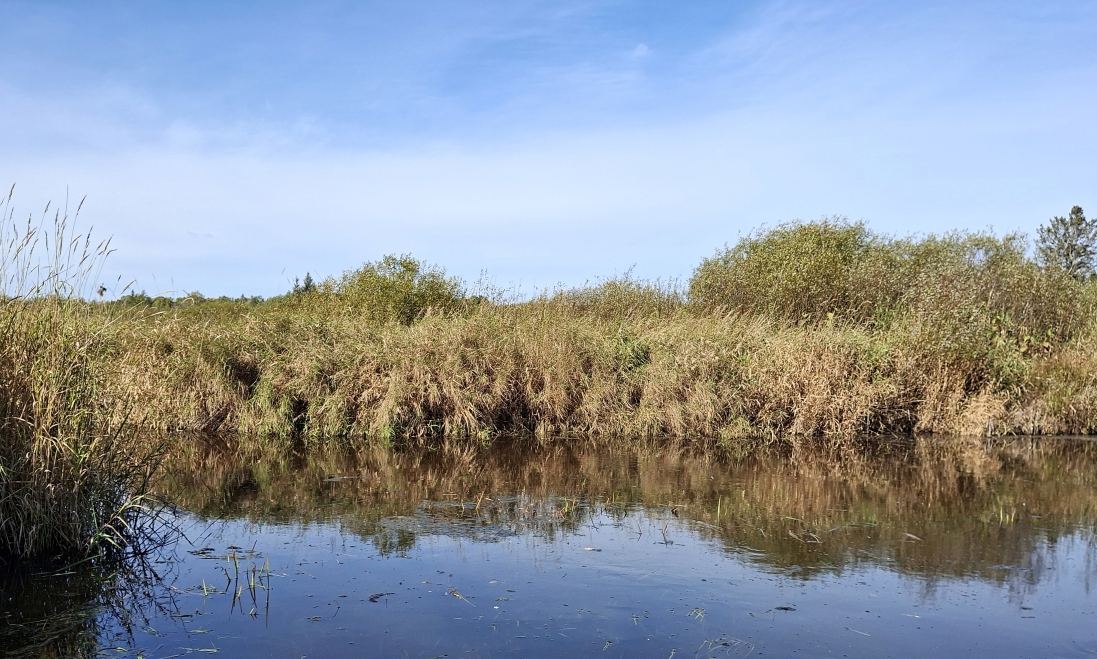
I kept walking along the riverbank, fighting my way through the tall and densely tangled grass. When I got to the place where I keep my canoe in the summer, I noticed the water had risen.
We haven’t had any substantial rain all season. When it does rain, the water soaks right into the ground and doesn’t change the river’s water level at all. So what could have happened to raise the water level in just a few days? I suspected the beavers had returned.
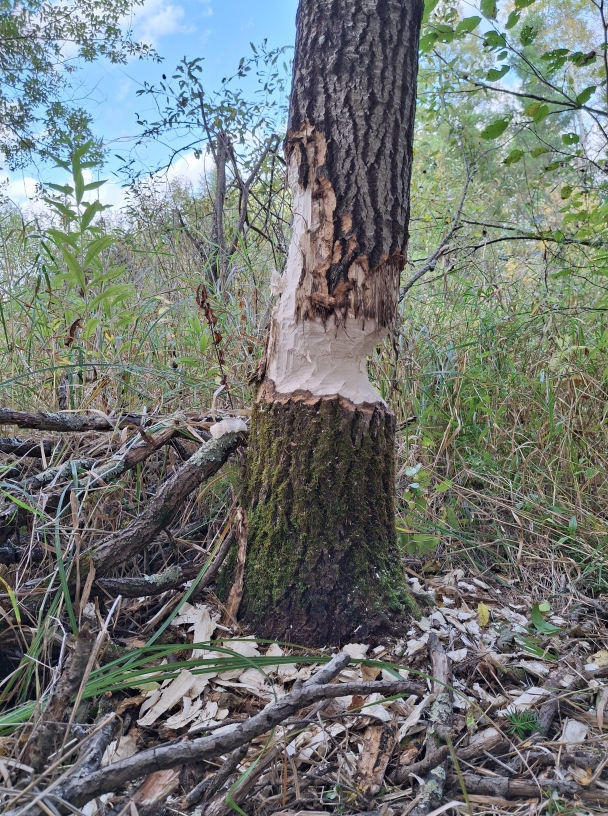
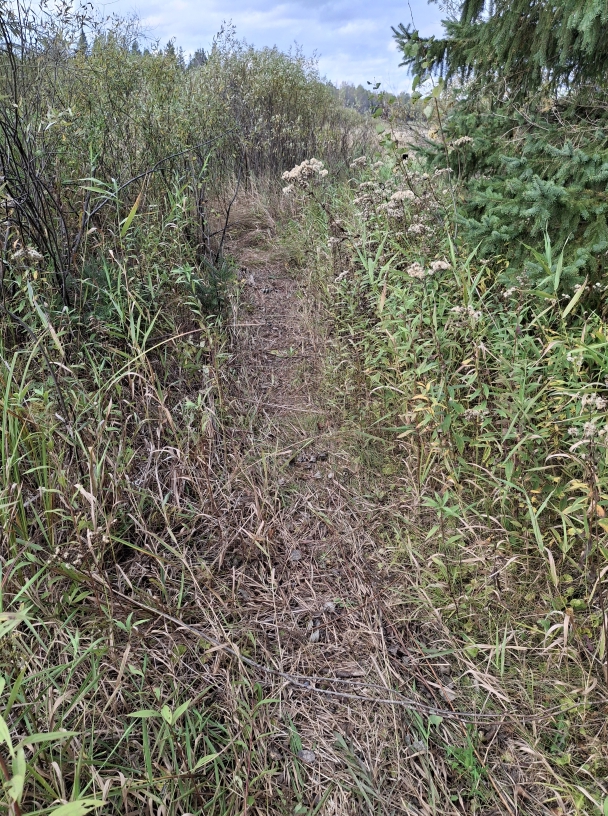
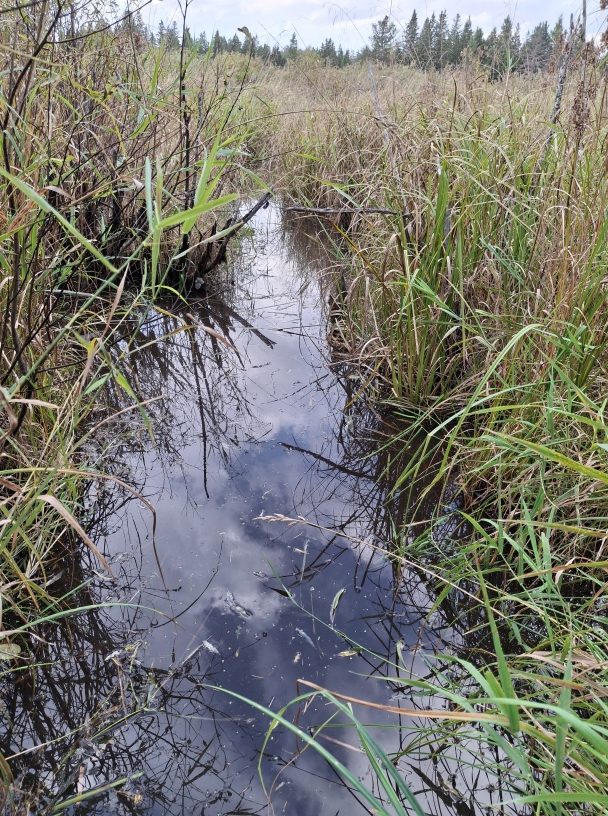
I continued walking until I came to a small, partially forested island in the marsh. Here I saw chewed tree stumps and drag marks through the grass. Beavers had been working here, pulling aspen branches and logs to an old canal connected to the river. This had all happened over a period of three days because the last time I was here was on October 2nd, and there was only a little beaver activity noted then.
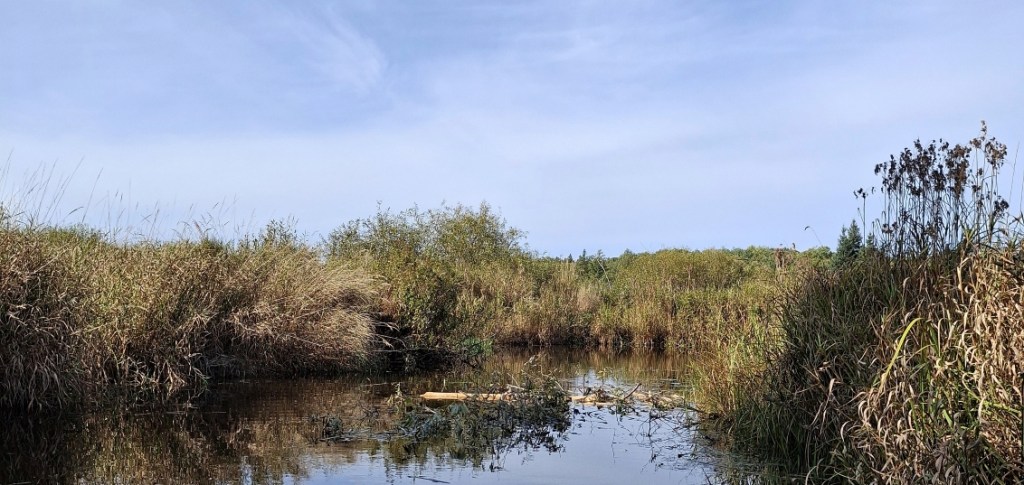

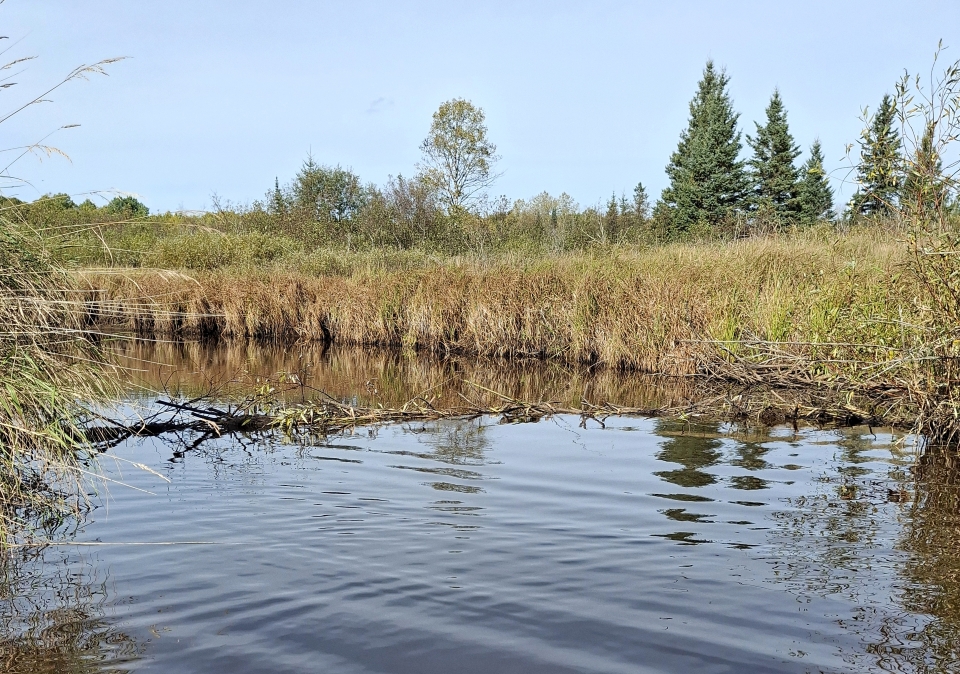
About two years ago, the river had worked its way around an old beaver dam built in 2005 but abandoned by 2009. The new river course reopened a channel cut off in the 1960s. But this isn’t where the beavers were working. The new dam was further downstream, about 300 feet as the crow flies, and it was being built on the remains of an older dam (called Dam 3 on my maps) from 2010. I was impressed by how quickly they had built this new dam and how far it had backed up the water behind it.
By building dams and excavating canals into the surrounding marsh, the beavers maintain the river’s hydrology. Their dams hold back water that is slowly released downstream through the leaky dams, keeping the stream flowing all year. Water flowing over the dams mixes with air and becomes oxygenated, thus preventing anoxic stagnant conditions.
The impounded water also recharges and raises the water table, further maintaining the stream’s flow. The ponds and the higher water help keep the surrounding marsh wet.
Because the river channel is meandering, and the terrain is flat and wide, the dams the beavers build do not need to be high or long. The dams are just high enough to hold back the water, which then backs up and spills into old river channels, oxbows, and beaver canals, creating a huge network of interconnected waterways.
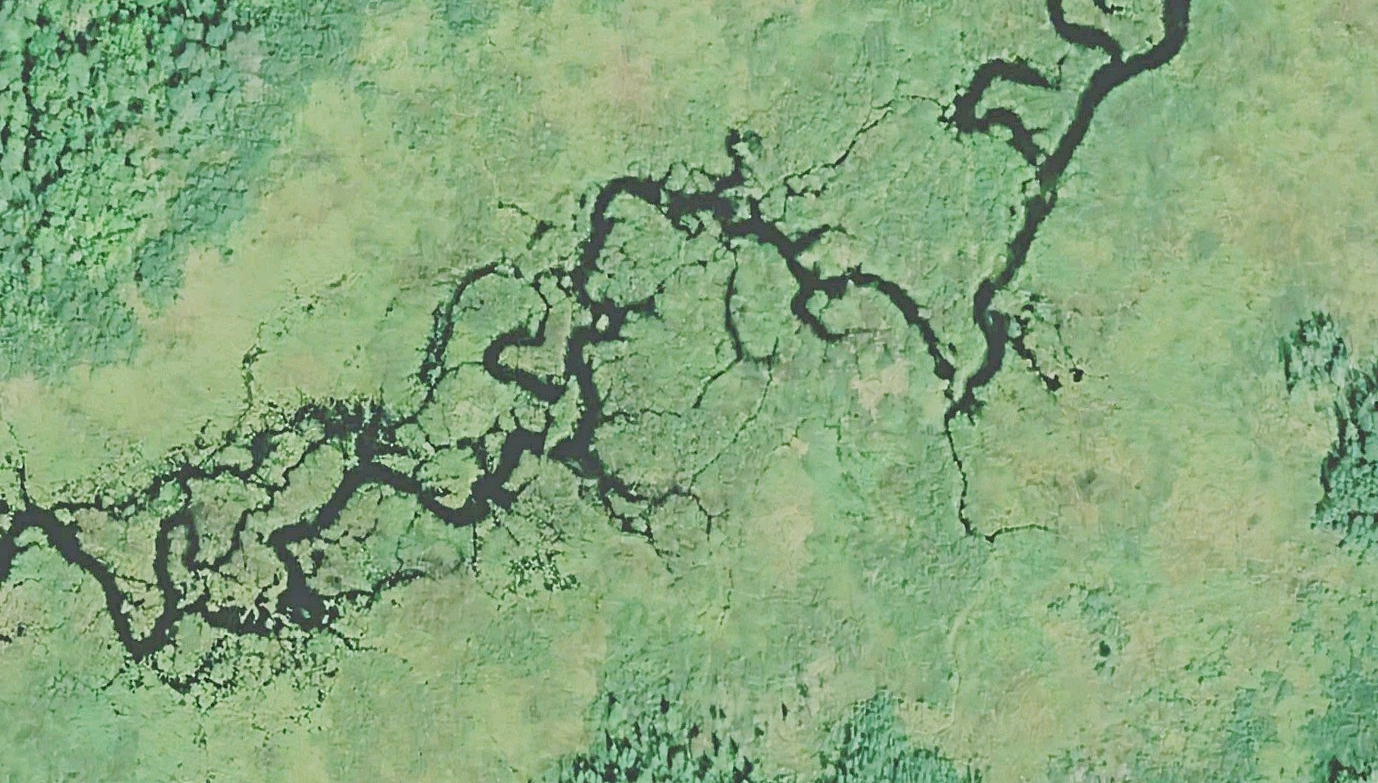
This satellite image (above) of the river shows its main channel and the complex system of interconnected smaller streams, backwaters, oxbows, and canals created by centuries of beaver activity.
The area in the image is 30 acres (about 12 hectares). Most of the land in the image is a sedge meadow/shrub carr wetland. There is also a large alder thicket, and a conifer/hardwood swamp is reclaiming its former territory.
If you look closely, you can see tiny finger-like projections extending from the riverbank into the channel. Aerial photos from the 1940s also show these stubs as well as most of the smaller streams and backwaters.
The stubs are the remains of old dams, possibly more than a hundred years old. Trapping eliminated beavers from Minnesota by the 1890s, but they were reintroduced in the 1900s. Those dam fragments may date to that time or a little later.
The straight part of the channel was caused by something, but I have not been able to learn who or what did it. If it was ditched (but why?), there are no traces of ditch spoils to confirm it. Anyway, it’s a good fishing spot.
Four active dams are visible in the image, but only one (lower left) has a rounded pond behind it. The other three ponds are more linear in shape. The oxbow in the upper right has a small dam blocking it, but that dam keeps water from the main channel from entering it. A thin stream channel flows from the oxbow through the marsh and shrubs and back into the main channel.
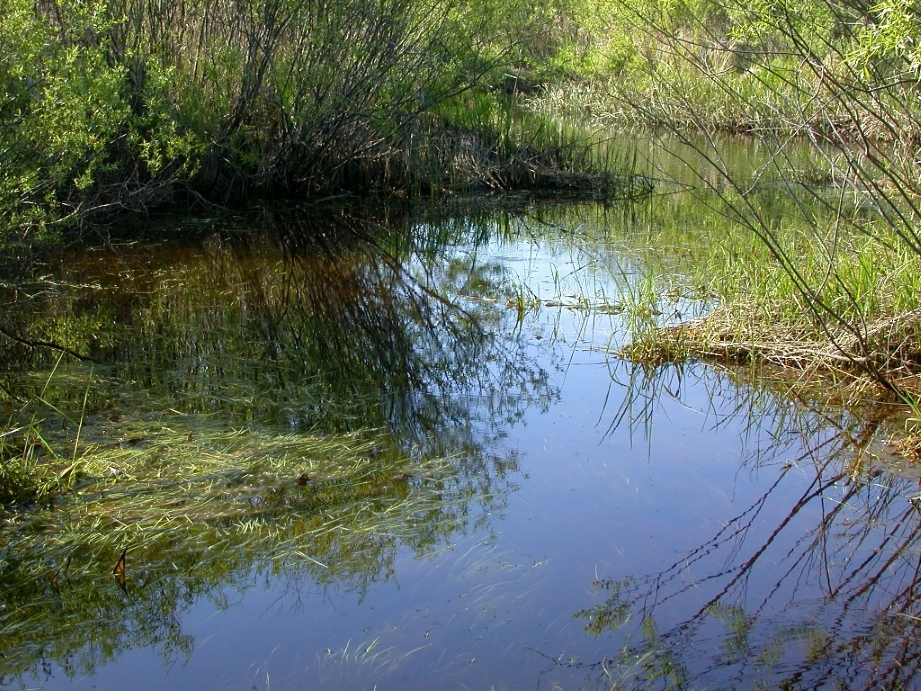
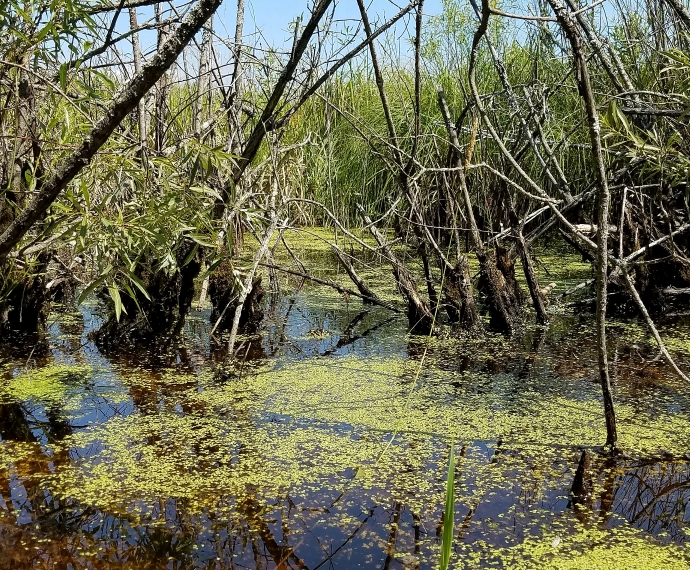
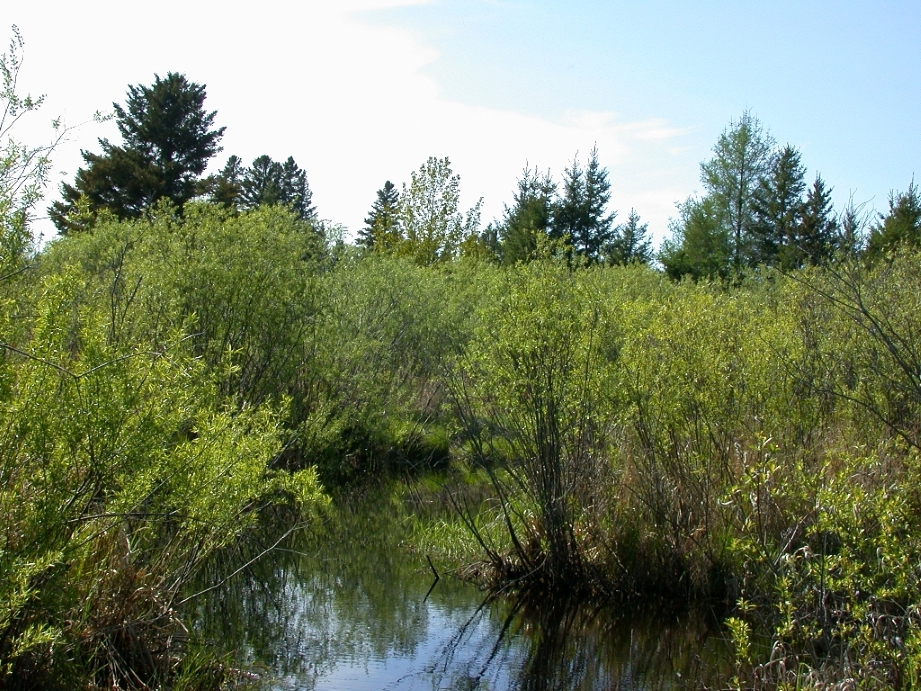
The water behind the dams and in the older abandoned channels hosts a larger variety of wildlife and plant life than the river would without them. These areas of shallow water, from 1 to 6 feet deep, support submerged, floating, and emergent plants.
These weedy waters are an ideal habitat for many species of small fish, crustaceans, amphibians, aquatic insects, and mollusks. They also provide habitat and food for waterfowl such as mallards, blue herons, night herons, geese, sandhill cranes, bitterns, and kingfishers, and mammals like water shrews and star-nosed moles.
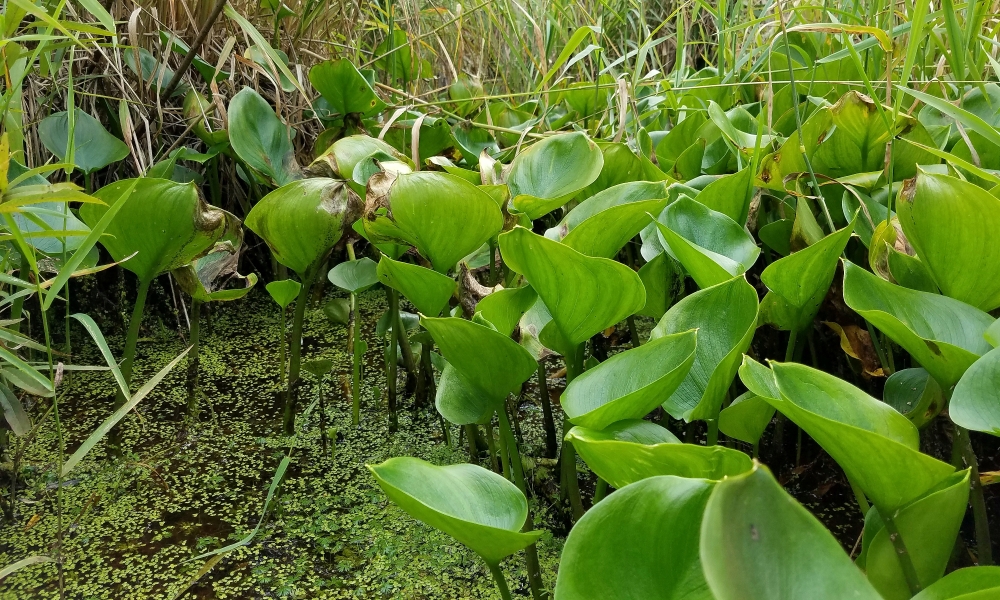
In future posts, I will be writing more about this wetland complex, exploring its connections to conifer swamps, hardwood swamps, and the adjacent upland hardwood/conifer forests.
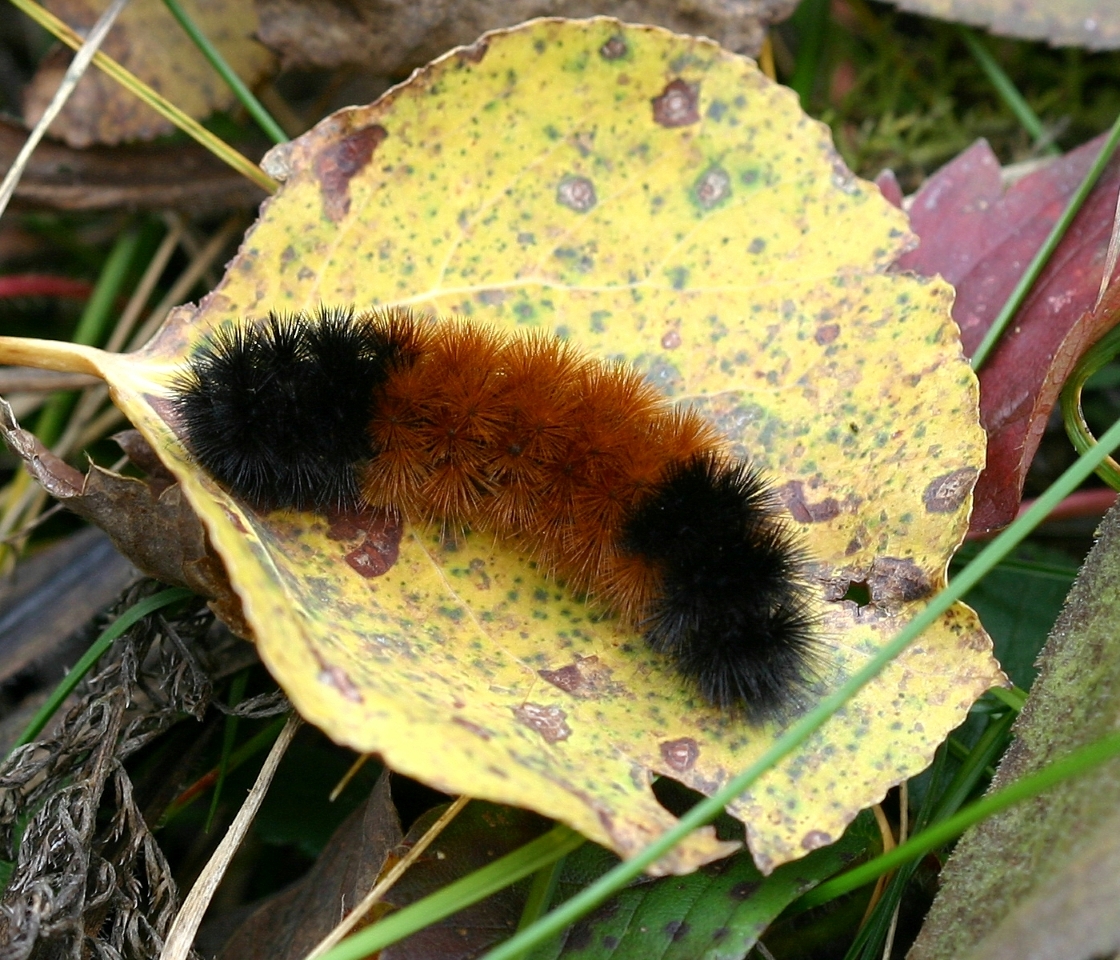
If you could think of the top 10 most recognized caterpillars in North America, would the woolly bear be on that list? Probably. Many of us have seen the woolly bear , since childhood, watching them scurry across roads and paths on warm autumn days.
How many of us have seen the moth that the woolly bear transforms into? Not many unless you, like me, are a moth nerd. While not as dramatically colored as their caterpillar stage, the moths are nonetheless beautiful.
The genus name Pyrrharctia is from two Greek words: “pyrrh“, meaning “fire, flame colored, red” from the red-orange color, and “arktos“, meaning “bear” after the bear-like appearance of the fuzzy black bands. Fire bears.
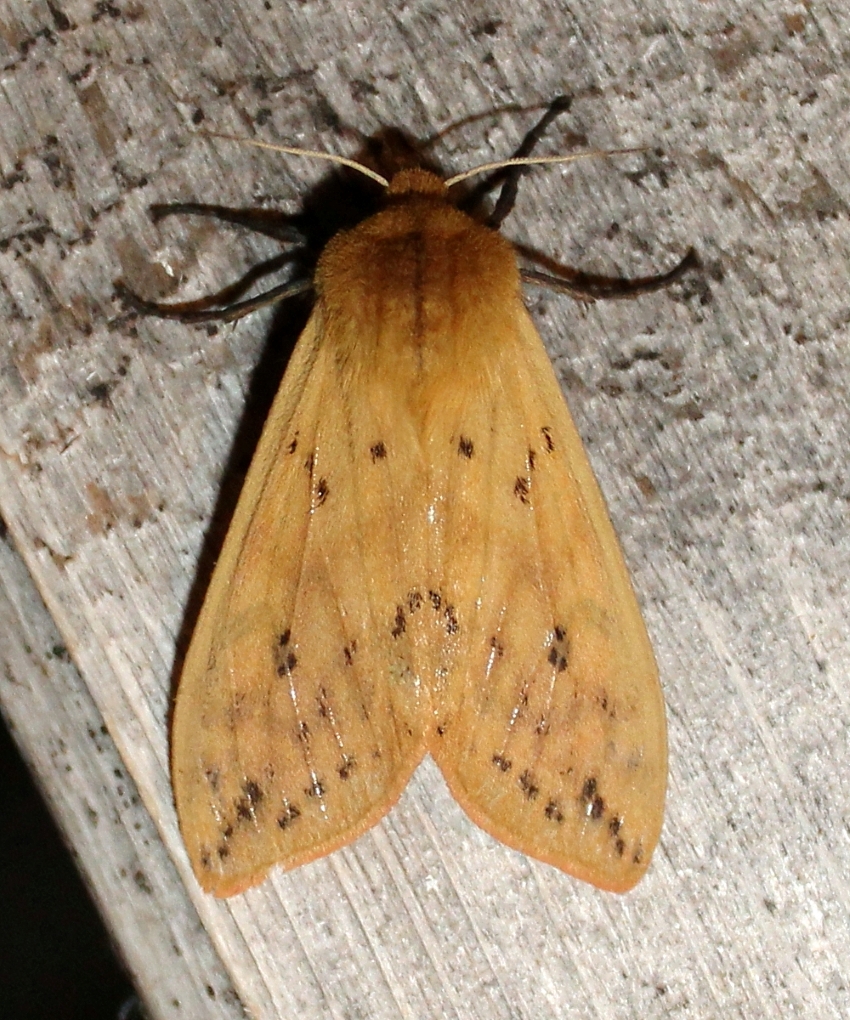
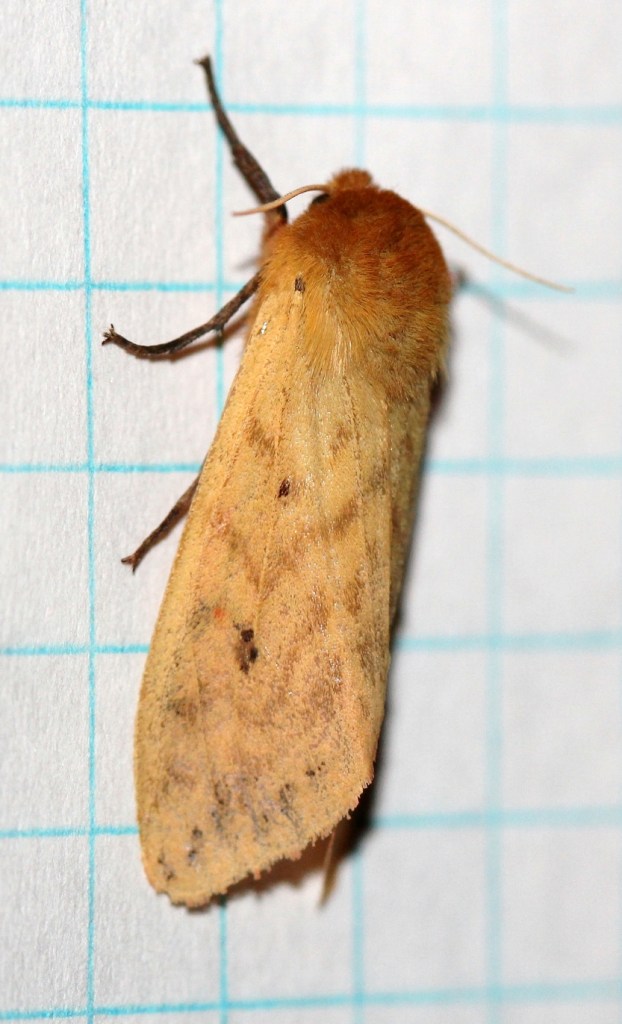
The woolly bear is the larval stage of the Isabella tiger moth (Pyrrharctia isabella), a apricot-yellow to buff-brown moth in the Arctiinae (Tiger and Lichen Moths). The forewings of the Isabella tiger moth are marked by darker veins and dark spots. The first dark spots, in a row about a quarter of the way from the apex, form a “W” shape (“angulate”) when viewed from above. The second set of dark spots is about three-fourths of the way from the apex. These form an irregular circle.
Along the wing tips are two rows of dark spots. The underwings are pale white in males and salmon-tinted in females. These also have black spots.
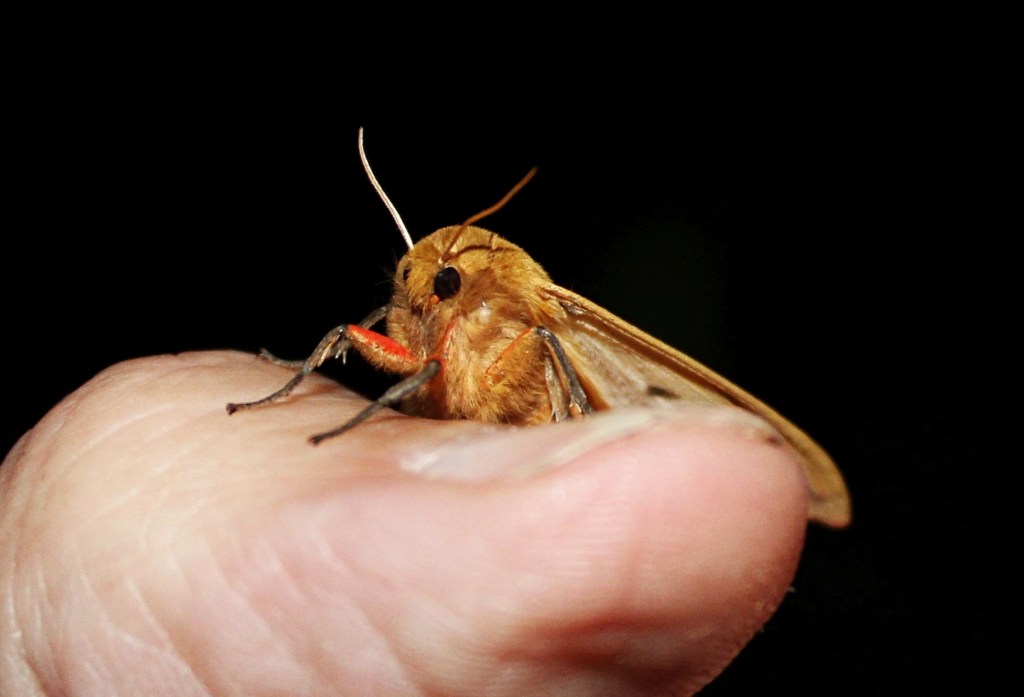
The top of the yellow to buff-brown abdomen is marked by a row of 5 or 6 roughly diamond-shaped black dots. The legs are black, but the first segment (tibia) of the forelegs is bright orange.
Woolly bear caterpillars feed on low-growing herbaceous plants like plantain, dandelion, dock, clover, and grasses and sometimes tree leaves. Weedy, mowed lawns, like mine, are perfect for them and other moth larvae, too. I’ve also seen woolly bear caterpillars eating swamp aster (Symphyotrichum puniceum) flowers and unripe meadowsweet (Spiraea alba) fruit in native wetlands.

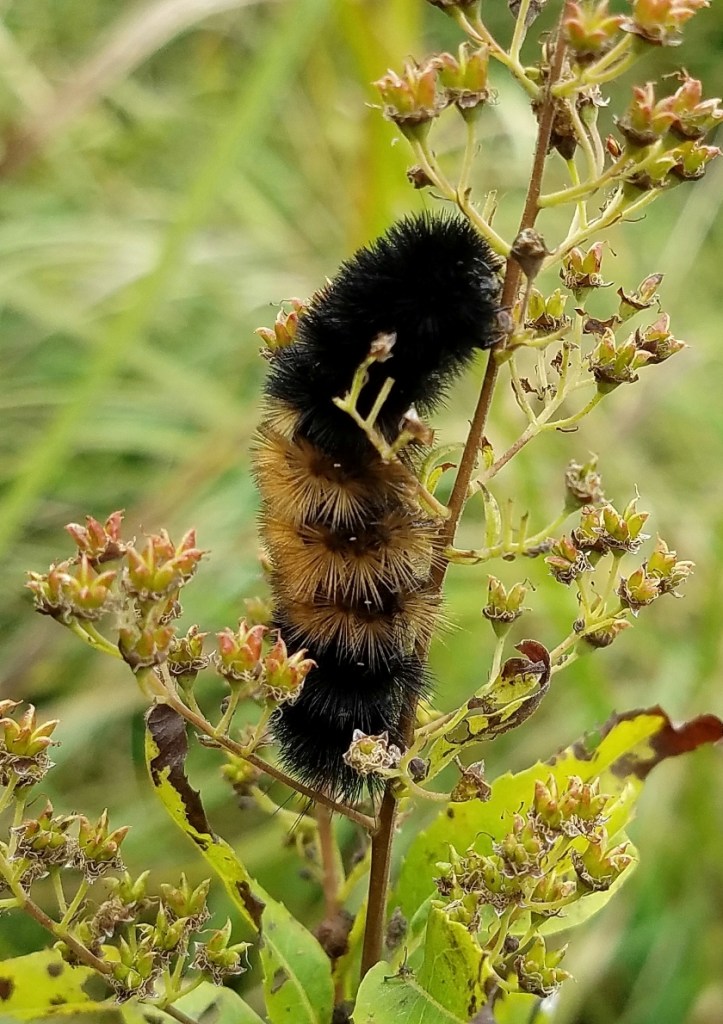
The life cycle of woolly bear caterpillars begins when they hatch from eggs laid in early summer. They feed for the rest of the summer and go through four to six molts. In the fall, before cold weather sets in, they prepare to hibernate and wait out the winter under leaf litter. In the spring, they emerge from hibernation to feed a little while longer before going into pupation, after which new adult moths emerge. In my area, this happens during July.
In warmer climates, there may be two generations per summer, with the second generation going into winter hibernation.
Woolly bears’ bodies contain a lot of water, and if that water freezes, it will produce sharp crystals that can destroy cells. How do they get around that, especially in places where the average winter temperature is 15-20°F (-9 to -6°C) with lows sometimes reaching -60°F (-51.1°C)? That would be where I live.
Antifreeze, of course, which lowers the caterpillar’s freezing point. They also export water out of their cells, so if they do freeze, there will be fewer ice crystals that could burst the cells. They essentially dehydrate themselves and pump their bodies full of glycerol.
There are plenty of stories about the woolly bear caterpillar and how the proportion of dark to orange on the bodies can predict how severe the coming winter will be. Unfortunately, those are just stories. Coloration is affected by age, how well the caterpillars fed during the summer, genetics, and the weather while the caterpillar was growing.
Many people love woolly bears and even devote festivals in their honor in places like New York, Ohio, and North Carolina.
How can you help woolly bears thrive? Less frequent mowing and allowing some weeds to grow are two ways. Also, leaving leaf litter in places such as hedgerows and near the edges of yards provides a safe haven where they, along with other insects, can hibernate and pupate. In this way, you ensure that woolly bears will continue for years to come.
We’ve had exceptionally warm weather for the last week, and even before that, the temperatures were just plain nice. But Sunday is the last day of temperatures in the 70s and 80’s. Yesterday it was 90 degrees in the shade. Tomorrow it will cool down to the 60s, and there is a chance of frost for three nights in a row.
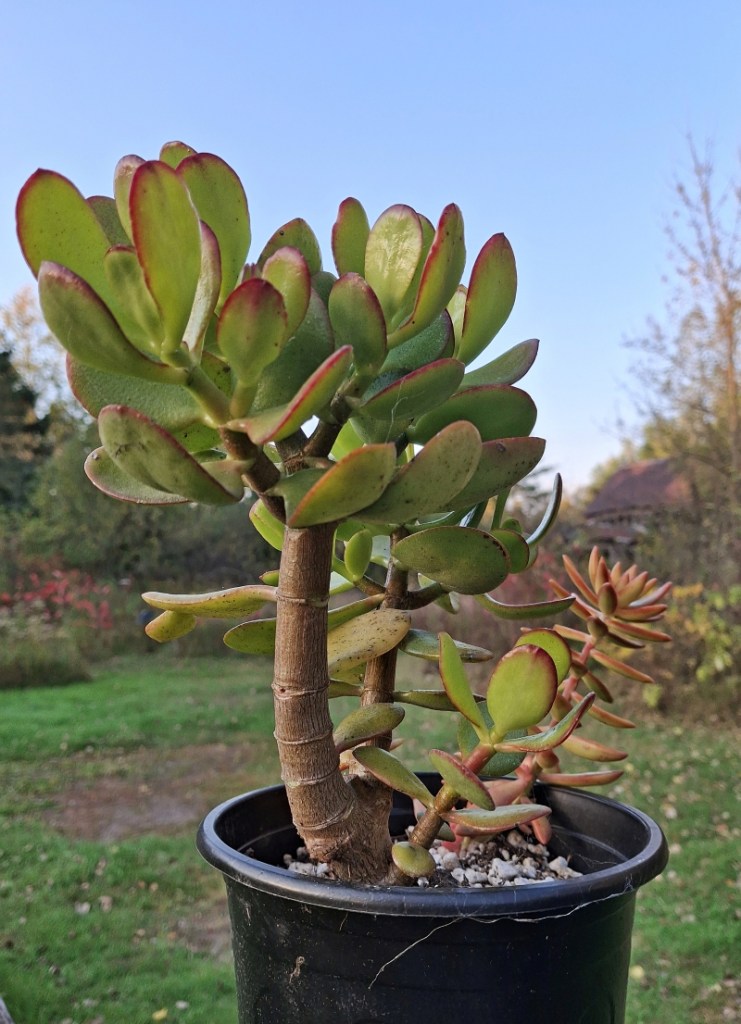
After Monday, I will probably have to cut them down and store the tubers for the winter. The same is true for the tuberous begonias and the gladiolus. And all the houseplants I set out for their summer vacation will need to be brought back in.
A stalled high-pressure system is bringing the warm weather. Winds are from the south and gusting to 30 mph. The warm weather, while enjoyable and welcome so late in the year, is bringing problems to the already dry forests and fields. Even the wetlands are dry. Very dry.
 Not Very Far Away