
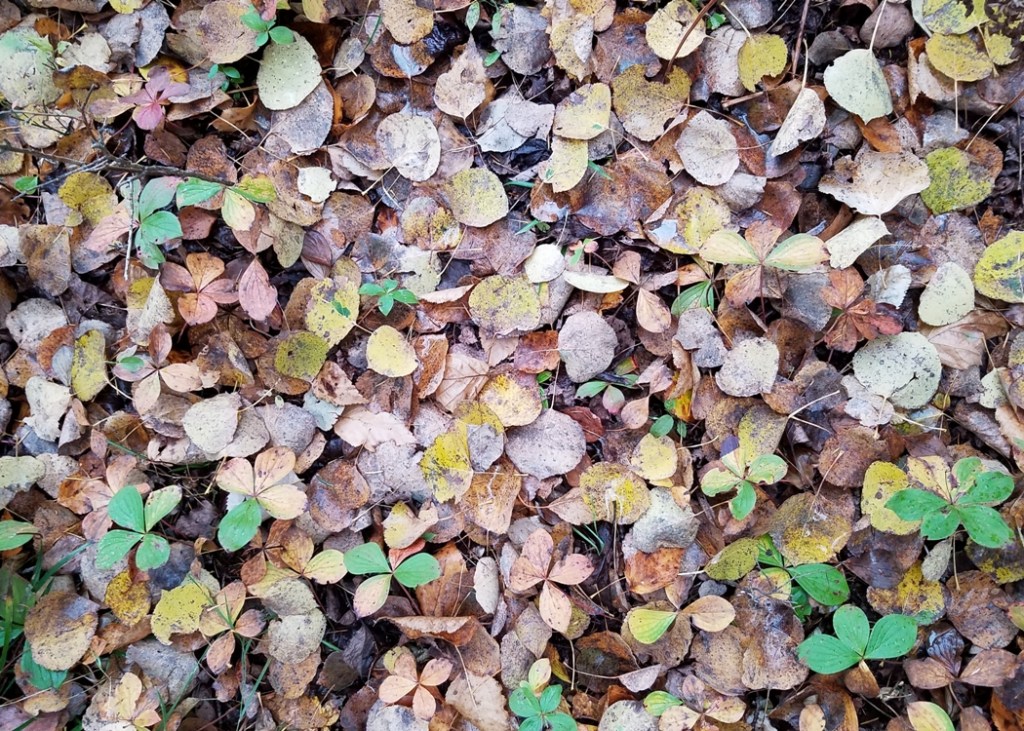
Wordless Wednesday

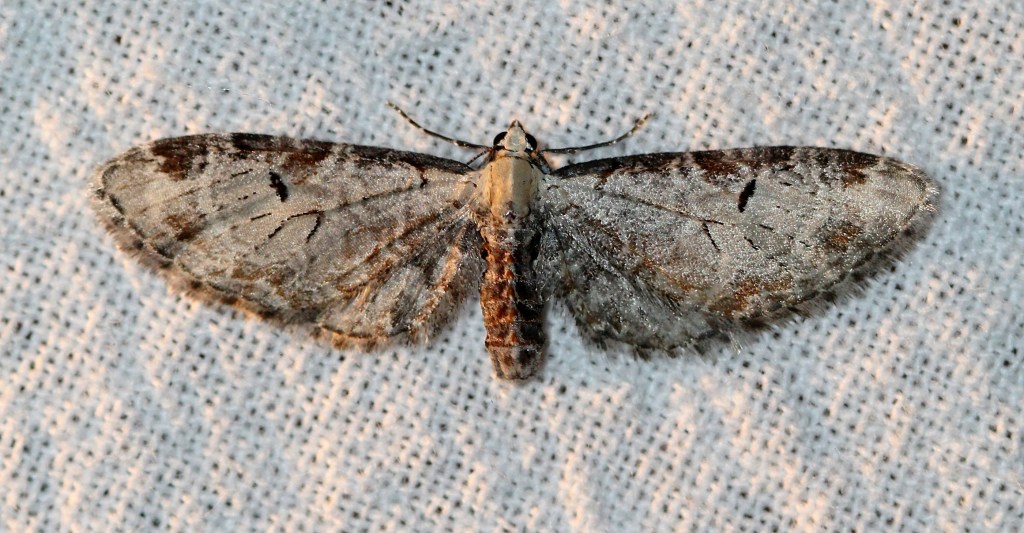
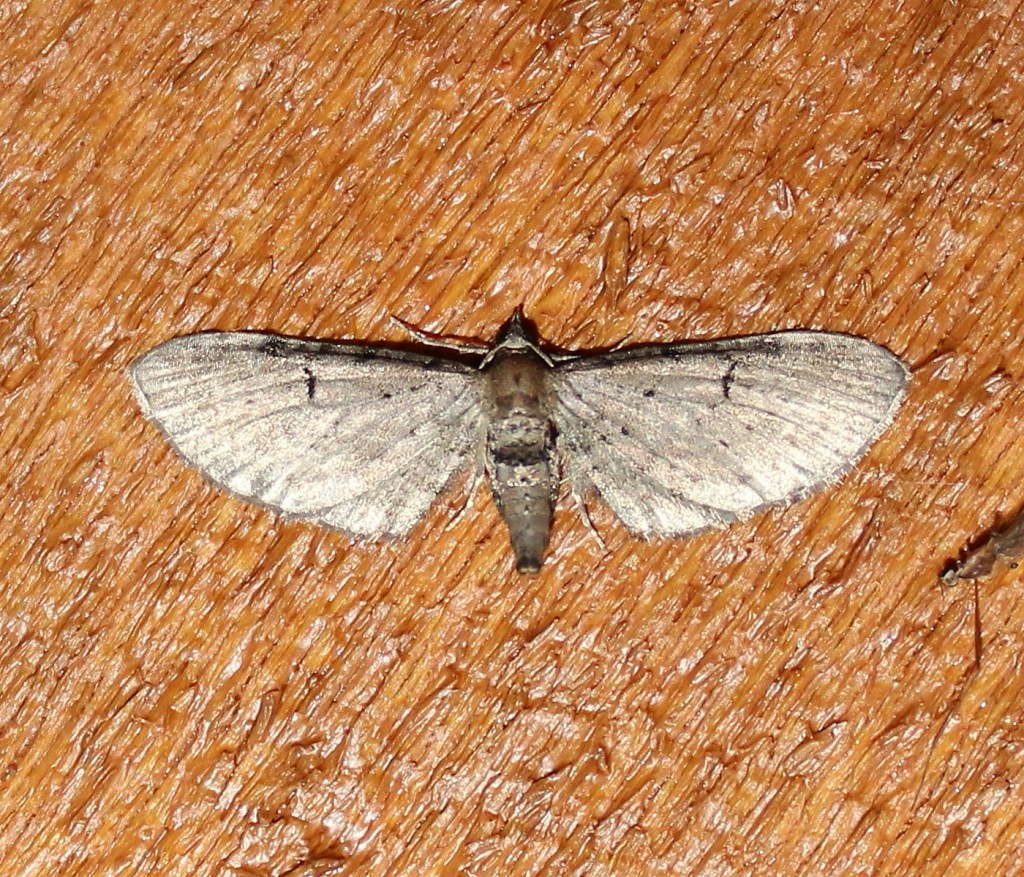
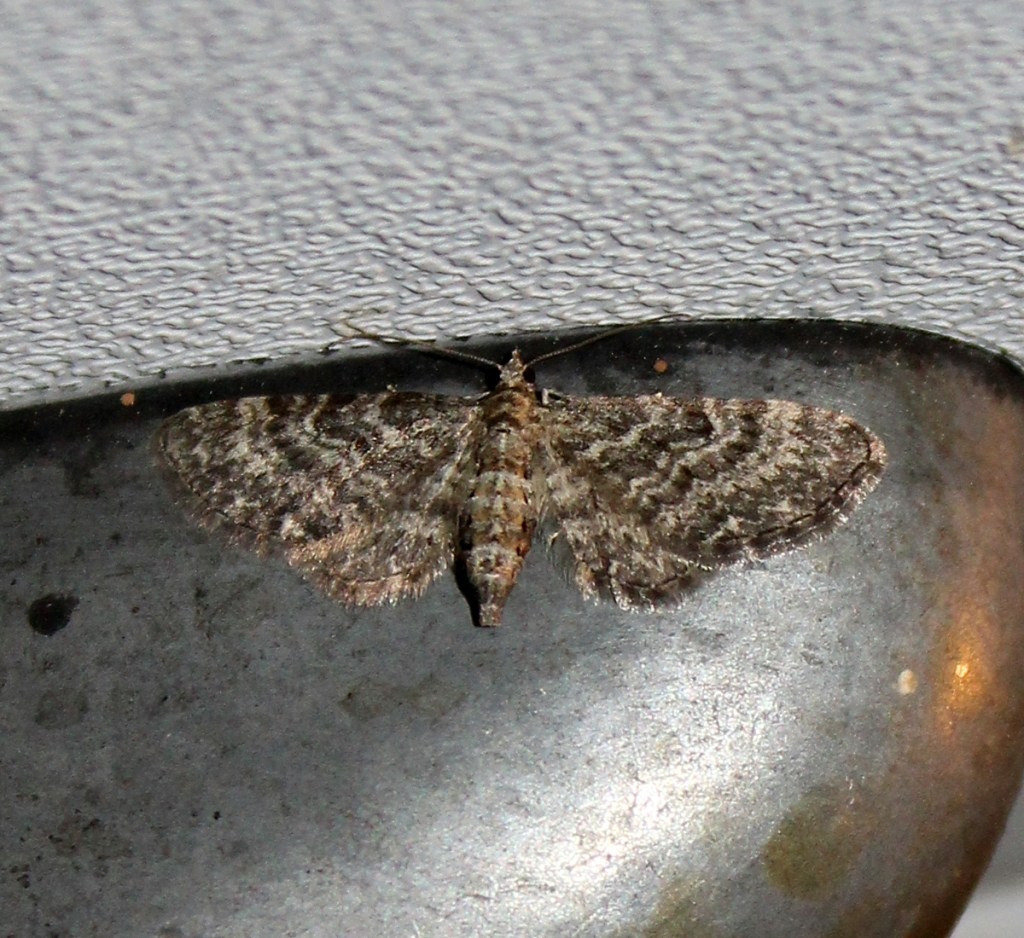
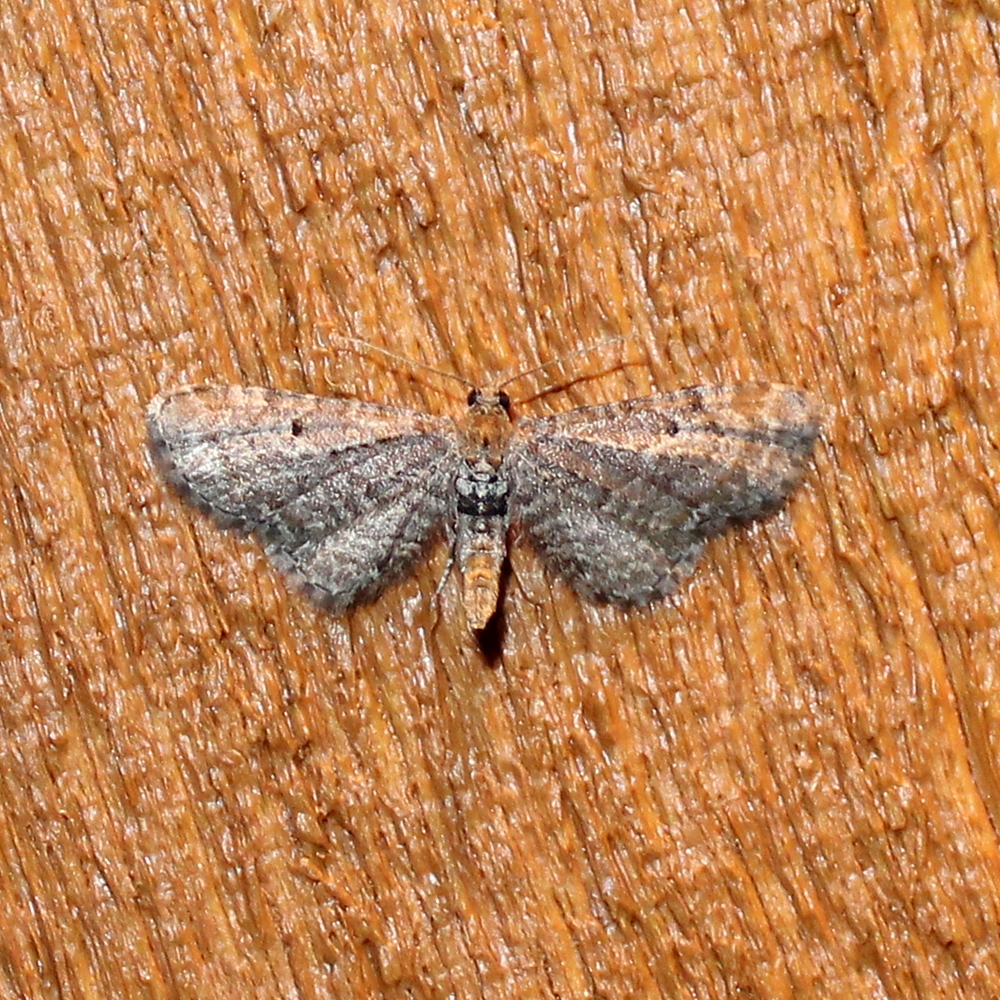
Pug moths (Eupithecia) are a large genus (about 1,400 species) of tiny moths in the Family Geometridae (geometer moths or inchworms). There are hundreds of described species from all continents except Antarctica. Some even live on Pacific islands like the islands of Hawai’i with species whose larvae are carnivorous and catch and eat other insects. North America north of Mexico hosts at least 160 species. There are probably many more species yet to be described.
Eighteen Eupithecia species have been recorded from Minnesota. Some are known from five or fewer sightings in the state. I haven’t found all eighteen yet but have gotten to one-third of that number and that includes some of the rarities. The most common one is Eupithecia miserulata, a small grayish species with a dark dot on each of its forewings, faint scalloped lines on the wings, and often two or three dark dots along the costa. This moth can be variable and it is easy to confuse it with other species. I often find the yellowish larvae in July and August feeding on the anthers of black-eyed susan (Rudbeckia hirta) flowers, cut-leaf coneflower (R. laciniata), and sunflower (Helianthus grosseserratus). The larvae of E. miserulata are also reported to feed on oak, willow, and juniper.
Larval host preferences are not known for the other Eupithecia I’ve found except for E. strattonata (alder and spiraea), E. absinthiata (mugwort, wormwood, yarrow), and E. ravocostaliata (willow, cherry, birch and other woody plants).
Below are the six species I’ve found and been able to identify.


CLASSIFICATION
Kingdom Animalia (Animals)
Phylum Arthropoda (Arthropods)
Subphylum Hexapoda (Hexapods)
Class Insecta (Insects)
Order Lepidoptera (Butterflies and Moths)
Superfamily Geometroidea (Geometrid and Swallowtail Moths)
Family Geometridae (Geometrid Moths)
Subfamily Larentiinae
Tribe Eupitheciini
Genus Eupithecia
SOURCES
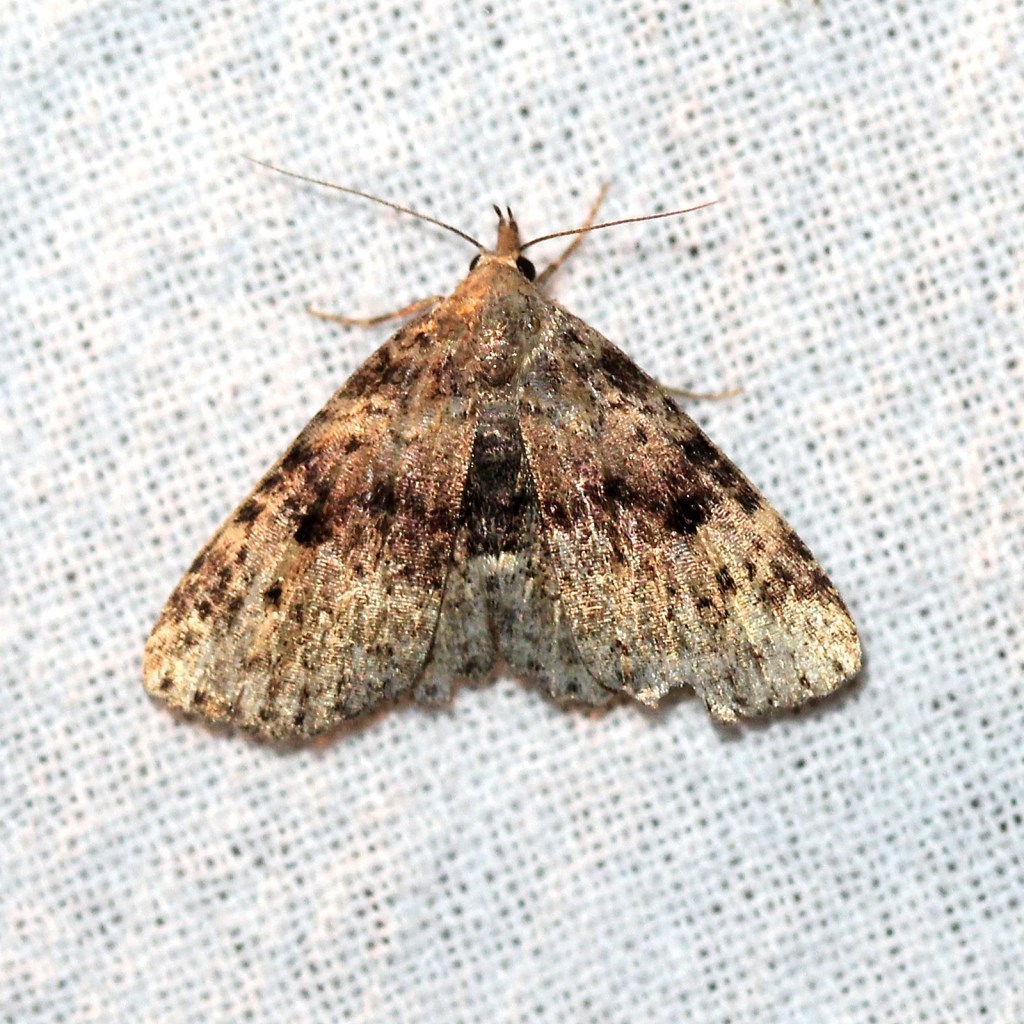
But not in Tineidae. This moth, Metalectra quadrisignata (four-spotted fungus moth), in the Family Erebidae, Subfamily Boletobiinae is yet another addition to the species checklist. The first syllables in the name Boletobiinae are “bolet” from “bolete” which is a name given to a vast group of species of mushrooms with large caps free from the stems and producing spores from pores, not gills. So, Metalectra quadrisignata is in the Subfamily Mushroom-iinae. Presumably, the larva of many or most of the members in this subfamily are fungivores but full life histories for species is incomplete. Larvae of Metalectra quadrisignata feed on bracket fungi preferring living or actively growing fruiting bodies. What species or even order is not specified. Some photos at Bug Guide show larva on a gilled mushroom and a slime mold which is not a fungus. It is unclear if they larvae were consuming these. I’ll need to start looking more carefully at these types of fungus.
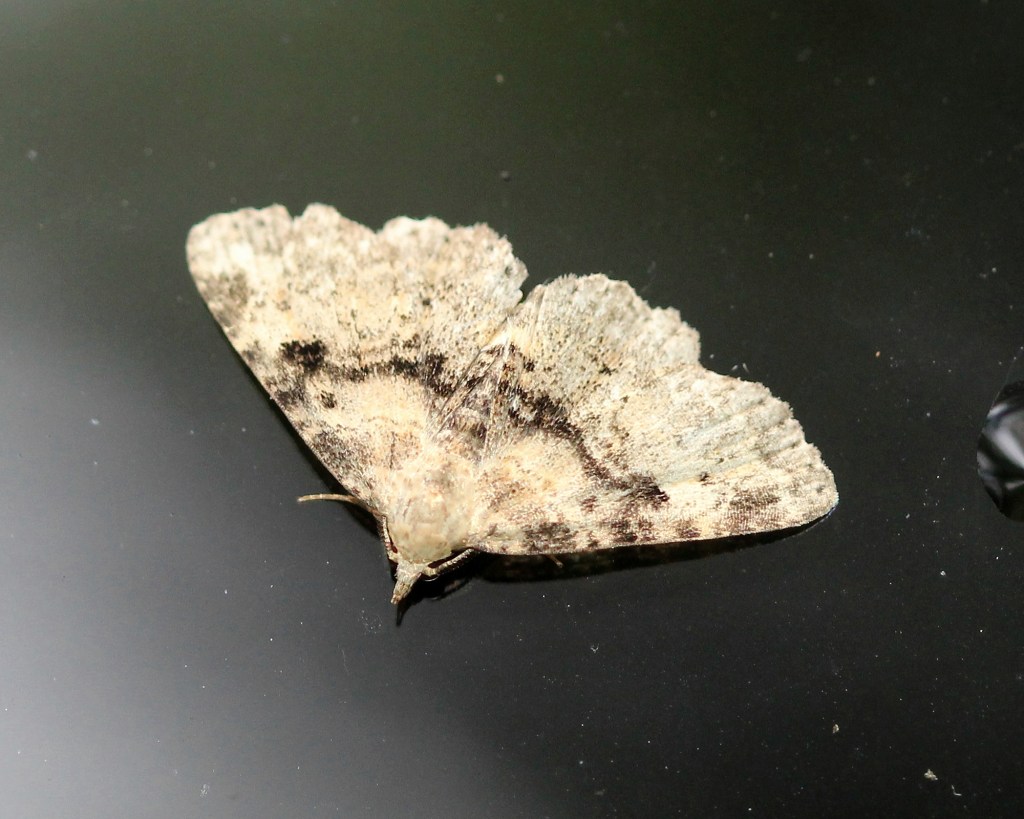
Matalectra quadrisignata is widespread in eastern North America from New Brunswick south to Florida and west to Manitoba and Texas.
Classification
Kingdom Animalia (Animals)
Phylum Arthropoda (Arthropods)
Subphylum Hexapoda (Hexapods)
Class Insecta (Insects)
Order Lepidoptera (Butterflies and Moths)
Superfamily Noctuoidea (Owlet Moths and kin)
Family Erebidae
Subfamily Boletobiinae
Tribe Boletobiini
Genus Metalectra
Species quadrisignata (Four-spotted Fungus Moth – Hodges#8500)
SOURCES
 Not Very Far Away