
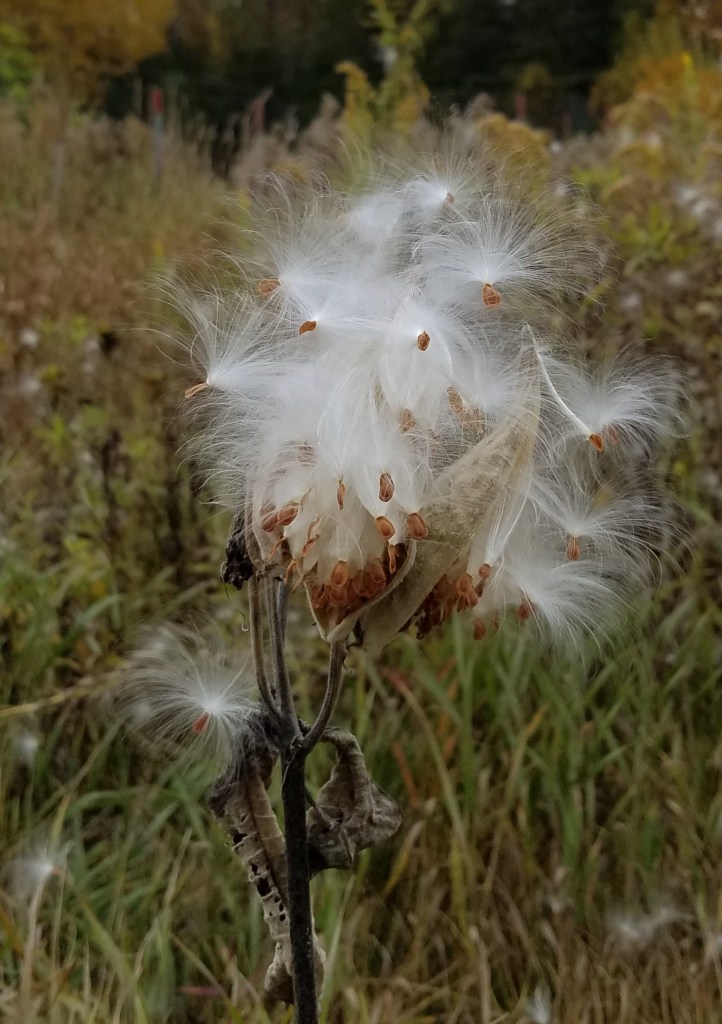
Wordless Wednesday

On one of the days during my vacation last July I headed for Finland, Minnesota to follow the Heffelfinger Road. This would connect me with Cloquet Lake Road and from there to a little lake named Drake Lake. But as I left Finland there was a sign that said the road was closed ahead due to bridge reconstruction. I continued on a bit and saw the bridge was definitely not there anymore.
The day was still young so, I turned around and headed to Highway 11 where I knew of another way to get to Drake Lake albeit more difficult. This was the Beaver River Road and by following it north I would be able to connect to Heffelfinger Road and avoid construction. After a few miles, a sign appeared saying “road closed ahead”. Apparently another bridge was being repaired. But there was still one more way to get to Drake Lake.
This alternate route was Forest Road 102 which would connect me with Camp 26 Road where Drake lake was located. Forest Road 102 was a rough ride with many deep puddles straddling the road, ruts, and large rocks. I think my average speed was about 5 mph.
Finally, I got to Camp 26 Road. Nothing looked familiar. So much had changed since I was last there in 1995 including Forest Road 102 which was more like a two-rut road back then. Much of the forest had been cut down in the intervening years and there are now many gated driveways to hunting cabins. I never did find Drake Lake that day although I probably drove right by it. You can’t see it from the road as it is hidden by about 500 feet of dense forest.
Drake Lake is one of many small lakes in northern Minnesota gradually turning into a peatland, a centuries-long process. The water is dark brown like strong coffee from tannic acids leaching from deposits of peat. Surrounding Drake Lake is a floating fen thick with sphagnum and stunted leatherleaf shrubs. On the north side of the lake is a white cedar forest.
Patches of pogonia, clubspur, and dragonhead orchids, beaked rushes, yellow-eyed grass, and bladderwort plants grow on the floating peat mat. When in bloom these decorate the floating mat with masses of pink, white, yellow, and rusty brown flowers. I’ll be back there next year and hopefully, the bridges will be repaired by then. If not I’ll take Forest Road 102 again.
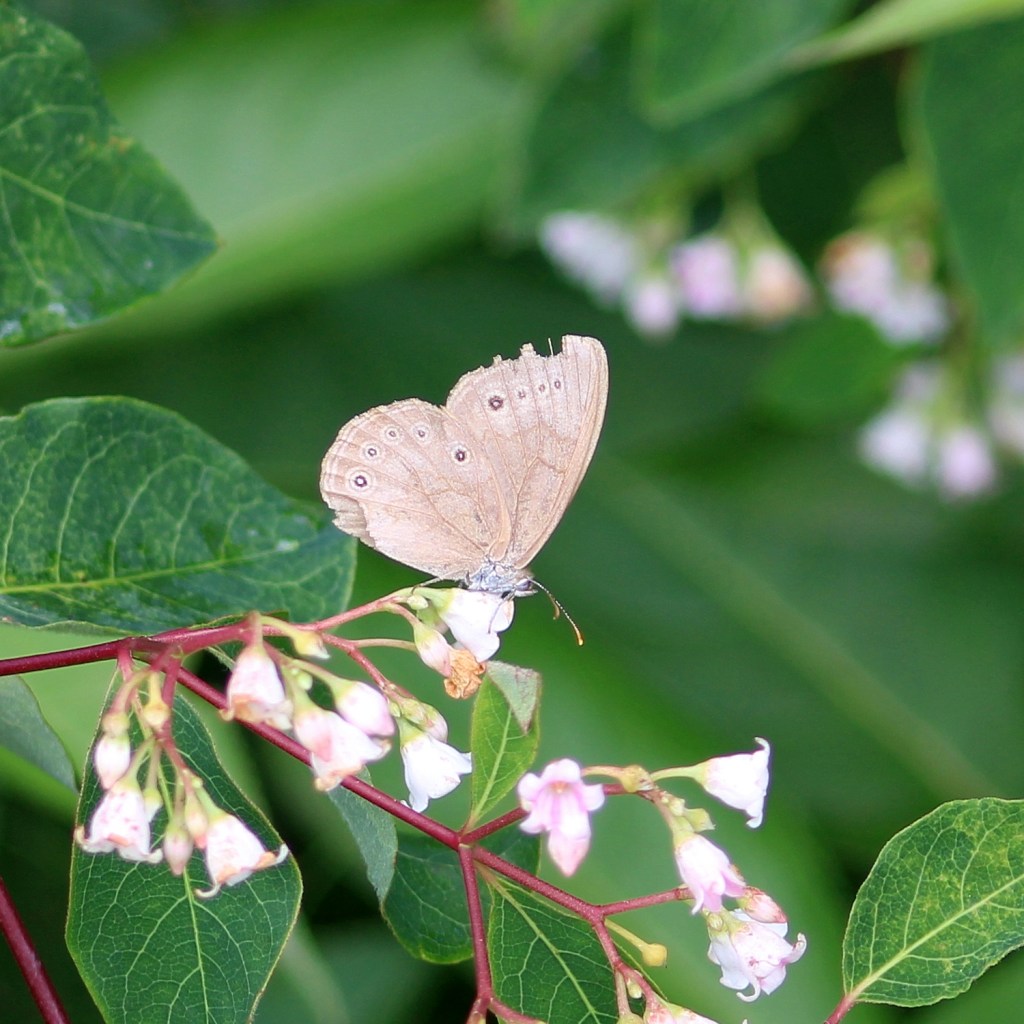
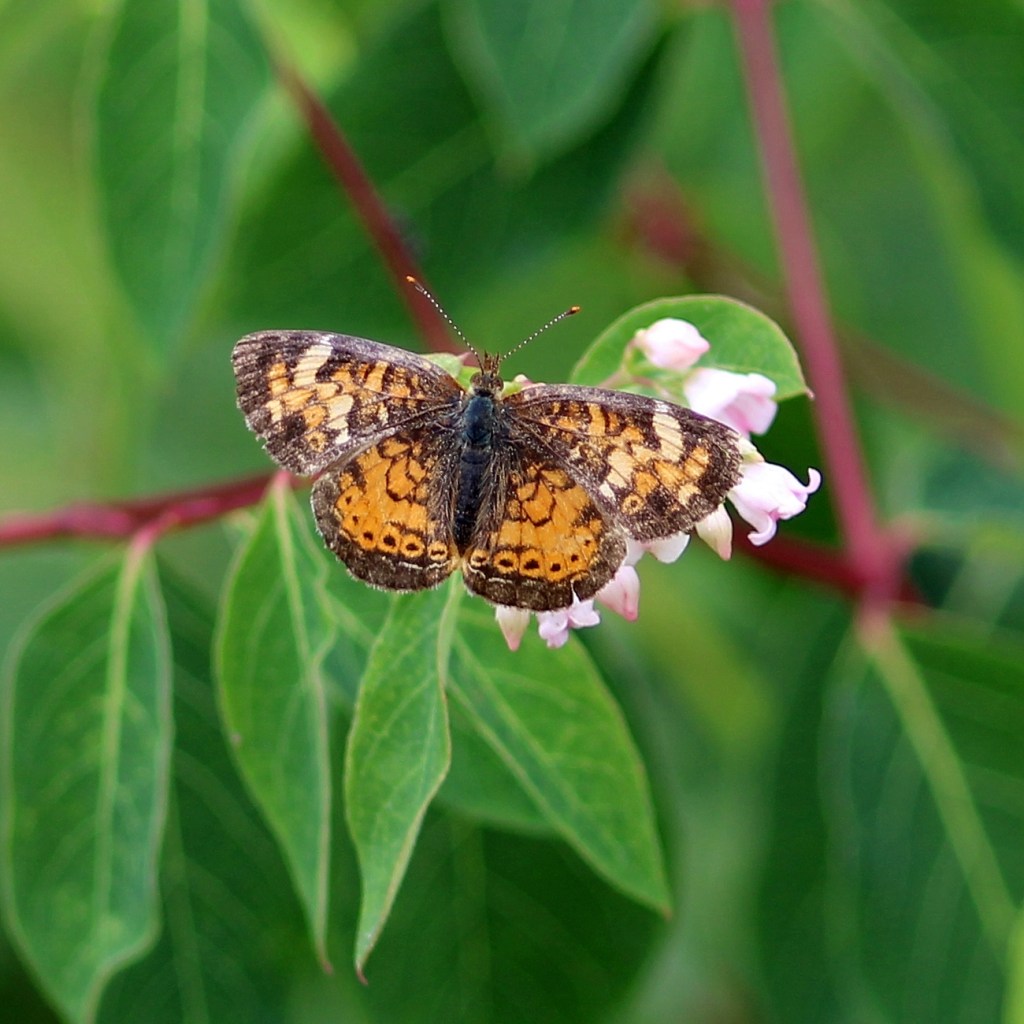
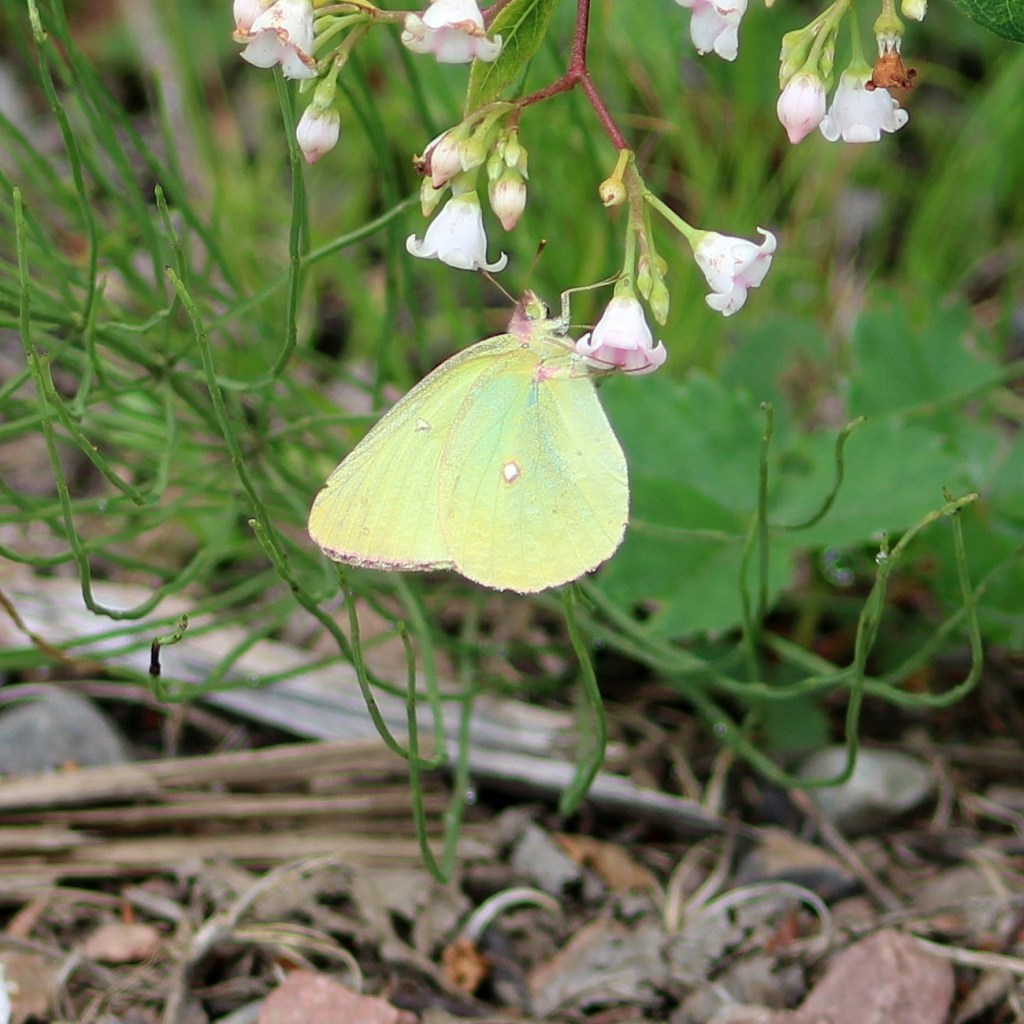
I did find other interesting spots along the road. One of these was a long patch of spreading dogbane with dozens of butterflies nectaring on the sweet flowers. So I spent some time there trying out a new camera lens. Above and below are a few of the species I was able to identify.




A new moth species for the checklist: Amydria effrentella. I photographed this one on July 23, 2022 during National Moth Week. My first thoughts were that this moth was some member of Family Tortricidae maybe in Olethreutini or Eucosmini two tribes in that family with long narrow-bodied moths. But that was far off the mark as repeated searches on the Moth Photographers Group bore out. All I could tell after that was this moth wasn’t like anything I’d seen yet.
One night I decided to use an image search. Of course, most of the results were wrong, but one tiny thumbnail linked to Bug Guide seemed close. So I clicked it and there was a photo of a moth that looked similar to mine. Amydria effrentella, is a moth in the Family Tineidae (Clothes Moths), Subfamily Acrolophinae (Burrowing Webworm Moths). The Moth Photographers Group provides a range map for Amydria effrentella showing it to be widespread.
Tineidae contains at least nine subfamilies north of Mexico with 190 species in 54 genera. For those genera and species whose life histories are known the larvae feed on things such as fur, feathers, skin, scales, bird and small mammal dung, fungi, lichens, and detritus (detritivores) the dead particulate organic material such as is found in leaf litter. Only a few species are known to feed on living plants.
What little information there is on Amydria effrentella indicates that its larvae typically construct “long silken tubes underground or on/in plant detritus and feeding primarily on plant debris as well as living plants, rarely coprophagous or mycetophagous.” Other reports have found it feeding on dried nest material in the burrows of mountain beavers. Pupation takes place in a coarse cocoon or in the larval tube.
Taxonomy
Kingdom Animalia (Animals)
Phylum Arthropoda (Arthropods)
Subphylum Hexapoda (Hexapods)
Class Insecta (Insects)
Order Lepidoptera (Butterflies and Moths)
Superfamily Tineoidea (Tubeworm, Bagworm, and Clothes Moths)
Family Tineidae (Clothes Moths)
Subfamily Acrolophinae (Burrowing Webworm Moths)
Genus Amydria
Species effrentella (Amydria effrentella – Hodges#0334)
Sources Cited
Neotropical Tineidae. II: Biological Notes and Descriptions of Two New Moths Phoretic on Spiny Pocket Mice in Costa Rica. (Lepidoptera Tineoidea). Donald R. Davis, Dale H. Clayton, Daniel H. Janzen and Anne P. Brooke. Proceedings of the Entomological Society of Washington. 88(1). 1986. pp. 98-109.
The Tineoidea and Gracillarioidea. (Donald R. Davis & Gaden S. Robinson, 1998) from “Handbook of Zoology / Handbuch der Zoologie“
 Not Very Far Away