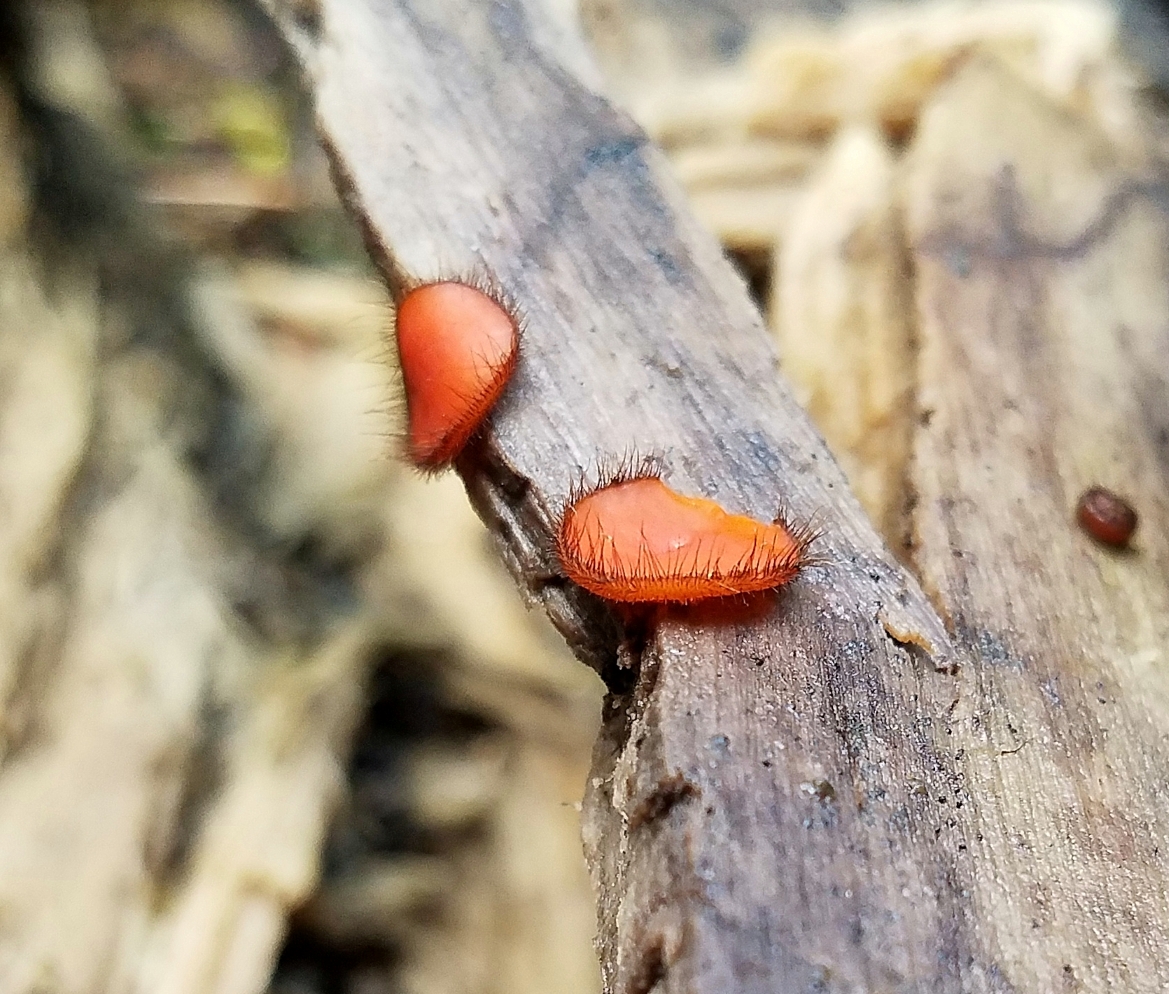
Scutellinia scutellata (Eyelash Cup Fungus) on a piece of an aspen log lying in a wet forest. September 02, 2016, St. Louis County, Minnesota, near Astrid Lake.
This pretty orange fungus with the fringe of fine black hairs is Scutellinia scutellata (Eyelash Cup Fungus). It is an Ascomycota, like the resinicolous Sarea difformis and the old wood-dwelling whisker lichens (Calicium species).
Scutellinia scutellata is a saprophytic fungus that decomposes decorticated damp wood in forests. I often find it on spongy wet logs and fallen branches. Sometimes it grows by itself, but other times it may grow with small, leafy liverworts and mosses.
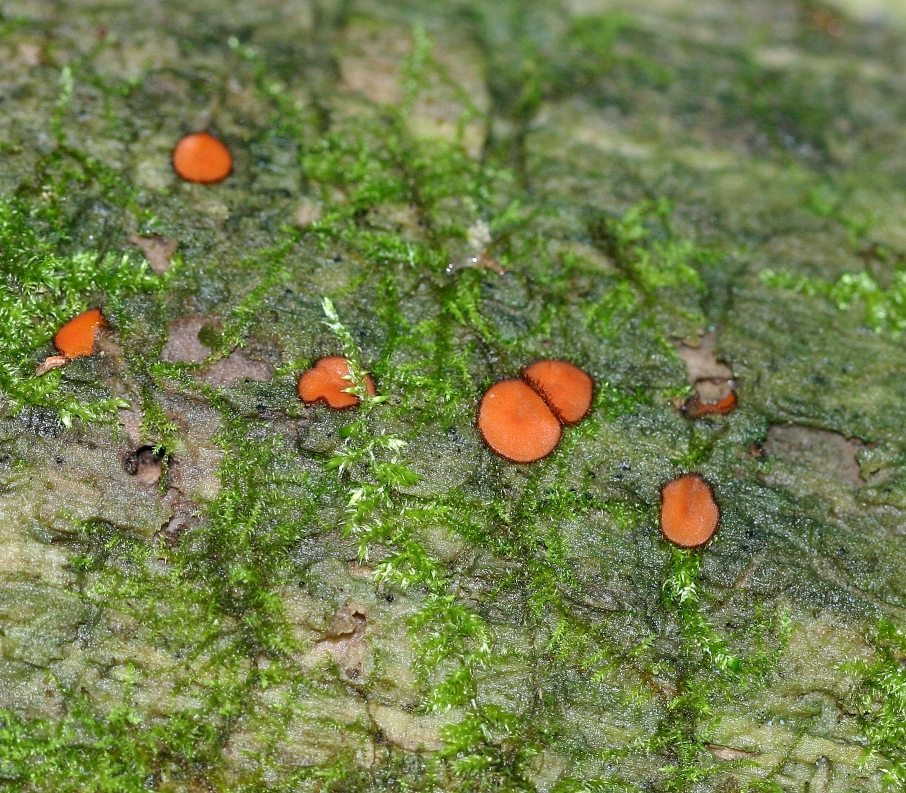
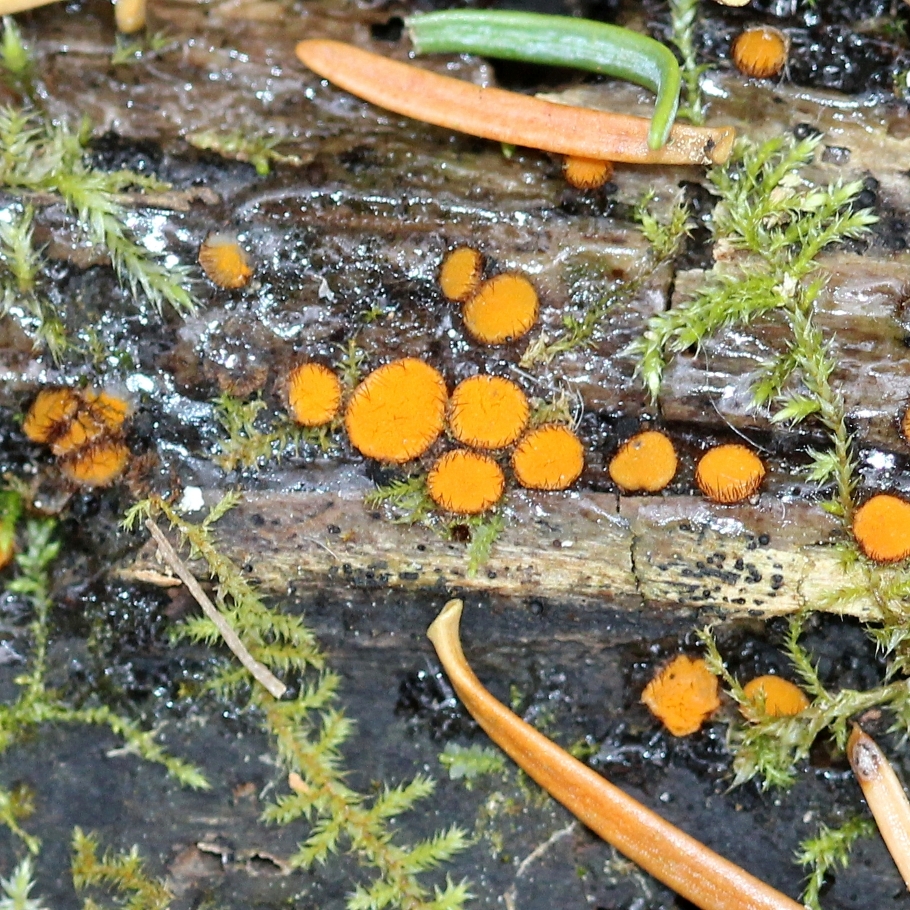
Scutellinia scutellata with mosses and Ceratiomyxa fruticulosa, a slime mold on a decomposed aspen log. July 03, 2015, Carlton County, Minnesota.Scutellinia scutellata with mosses on a decomposing aspen log. July 07, 2015, Carlton County, Minnesota.
I’ve noticed that many Ascomycota species exhibit seasonal fruiting. For example, hairy ebony cups (Pseudoplectania sp.) fruit in April,morel mushrooms (Morchella angusticeps) fruit in May, and the false morel (Gyromitra infula) fruits in October. Scutellinia scutellata fruits from late June into October, especially if rainfall is abundant.
The fruiting body of Scutellinia scutellata is a disk-shaped scarlet-red to bright orange cup up to 1.5 mm across and fringed by black hairs. The lower surface is brownish and covered with small hairs.
Scutellinia scutellata with mosses on a damp decomposing aspen log. October 28, 2019, Carlton County, Minnesota.
Diversity of species
There are at least 100 species in the genus, and identification hinges on microscopic features of the spores and hairs. I’m fairly confident that this one is Scutellinia scutellata.However, reliable identification can be hampered if there is extreme variability and overlapping of morphological characters.
Symbiosis with bacteria
Scutellinia scutellata grows in association with extracellular bacteria. This association is crucial to its survival and growth. “All attempts to culture hyphae in the absence of bacteria failed. To our knowledge, this represents the first report of these versatile Acidovorax-like bacteria having established symbiotic relationships with members of both Fungal and Animal Kingdoms.” (Giordano et al, 2013)
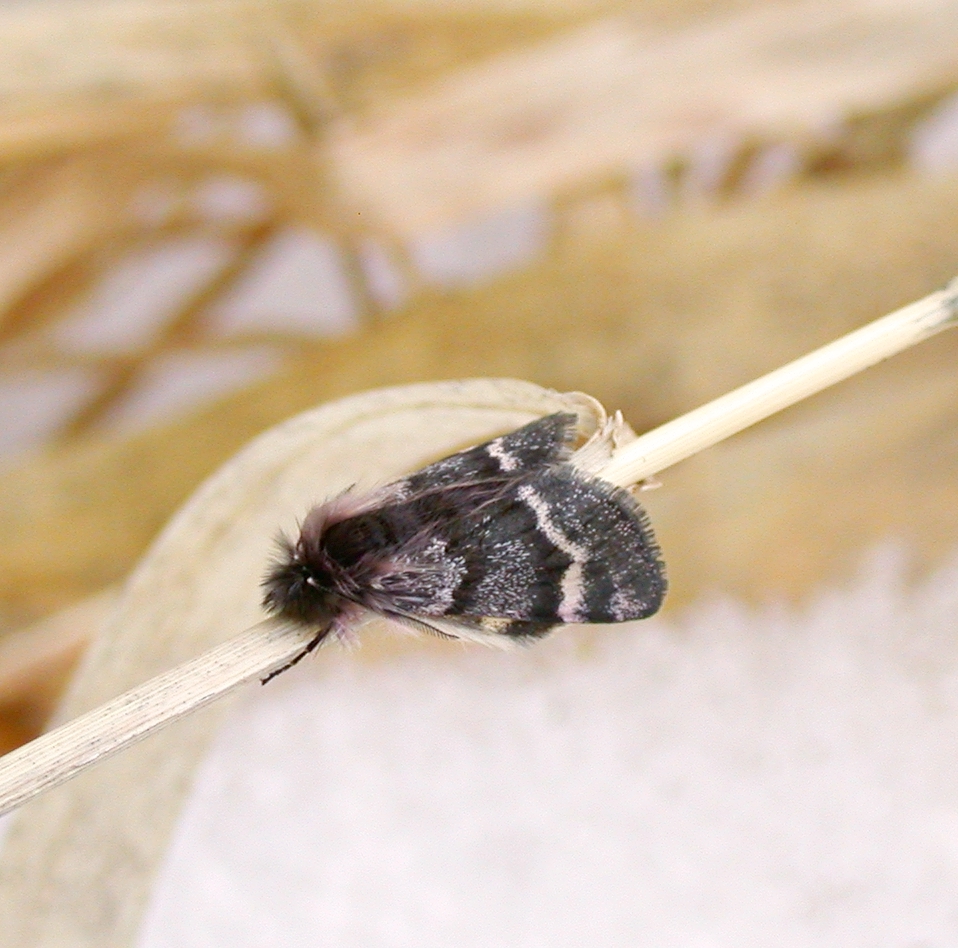
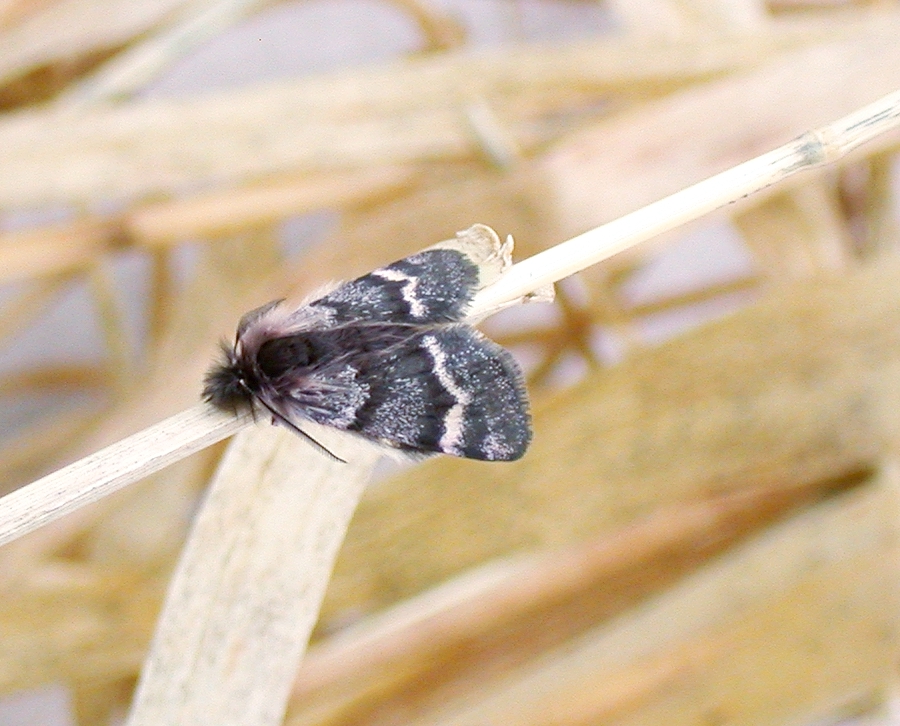
I saw this Leucobrephos brephoides on March 30, 2006. Even though I look for it each spring, I have never seen it again. When I found it, the marsh it was in was beginning to flood, snow and ice were still on the ground, and the air temperature that day was in the mid-30s to low-40s F. This is a hardy moth.
Leucobrephos brephoides is a rare moth species in the family Geometridae, subfamily Archiearinae. I have seen it only once, back in March 2006. Even though I look for it every year in late March and early April, I have not found it again.
The one and only time I have seen it, there was still snow on the ground, although it was melting. In the marsh where it was resting on some grass, a flood was beginning. And it was chilly, in the mid-30s to low-40s F. For Leucobrephos brephoides, this was a normal day.
I was excited to find this little moth. It was cold and there was still snow on the ground. I’d never really thought of insects being active so early. Since then, I have found that many insect species, beetles, moths, wasps, and midges, are active this early. Even spiders are out. Some insects are feeding on nectar and pollen from early-flowering willows. Others are seeking mates. A few, along with the spiders, are hunting other insects.
Description
The forewing of Leucobrephos brephoides is black and dusted with grey. The postmedial line is black with a white border. The antemedial line is also black but lacks a white border. The hindwing is white with an even black margin and basal black scaling.
Males have pectinate (feathery) antennae, the females have filiform (thread-like) antennae.
Leucobrephos brephoides on March 30, 2006
Life history
In the spring, female Leucobrephos brephoides lays 1 to 3 eggs on a leaf scar near the tips of aspen branches. They may lay their eggs thirty or more feet from the ground or just a few feet from the ground. After about 15 days, the eggs hatch. The larvae go through five instars before burrowing into the soil and pupating.
In the spring, the adults emerge from their pupa. Adult Leucobrephos brephoides are day fliers and active even while temperatures are still cold and snow is still on the ground.
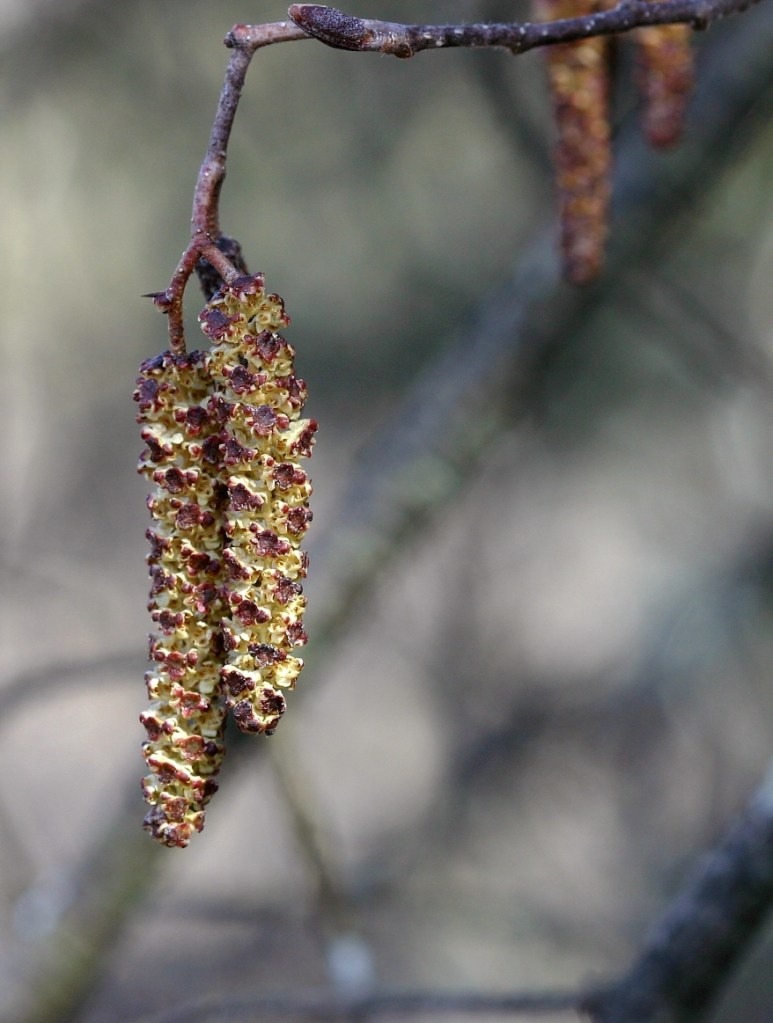
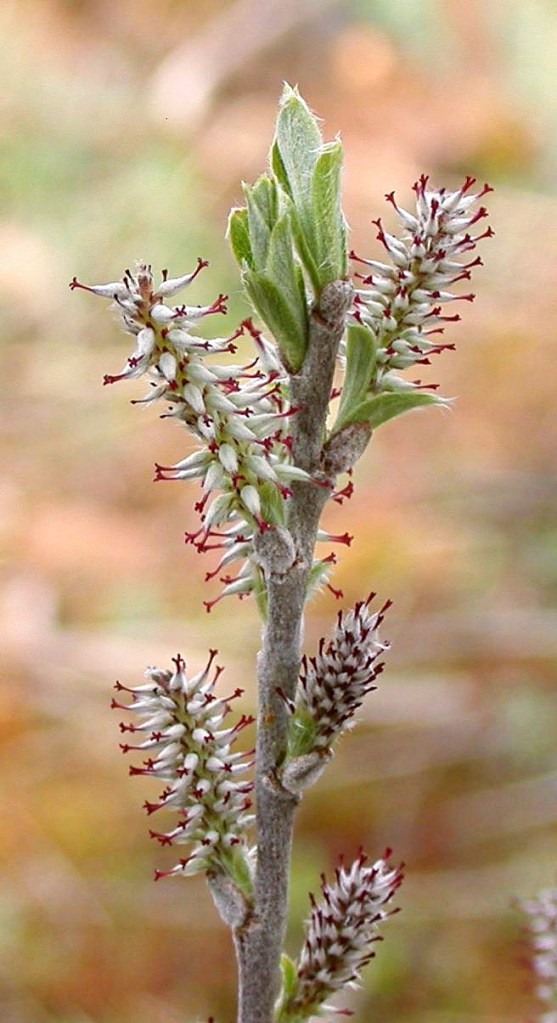
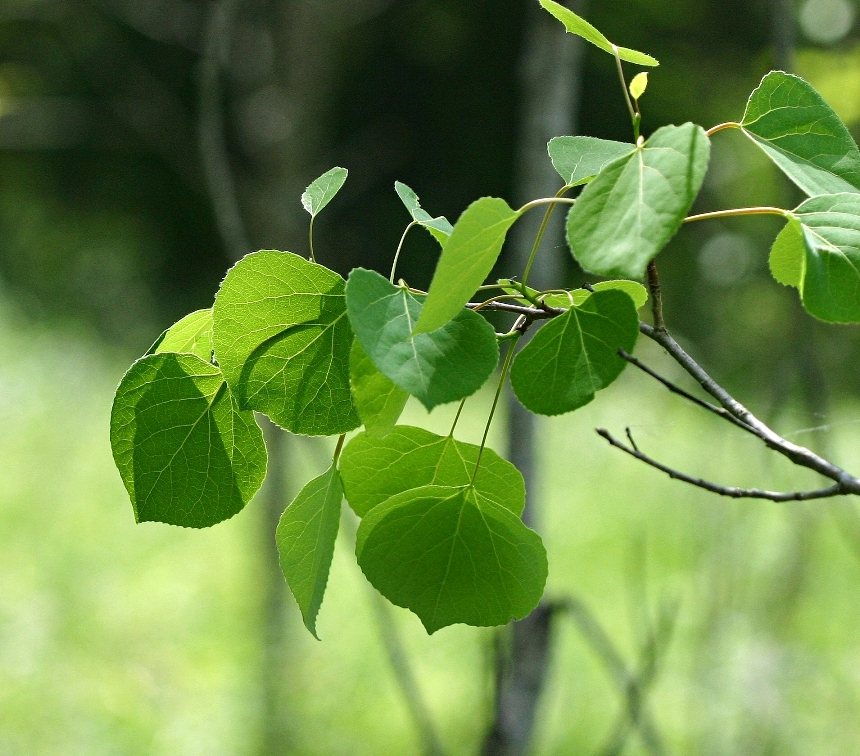
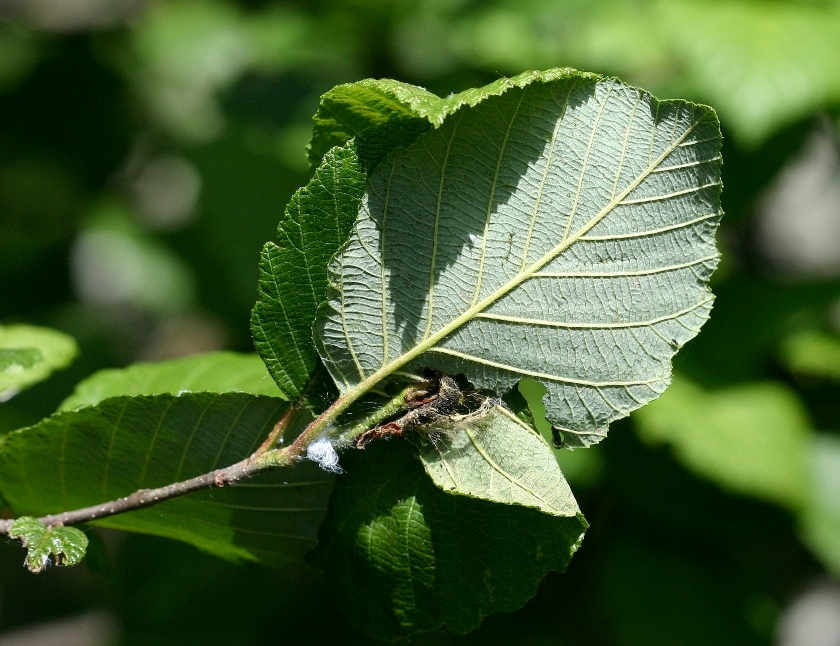
Leucobrephos brephoides inhabits open mixed broadleaf and coniferous forests. Its primary host plant is quaking aspen (Populus tremuloides), but it also feeds on paper birch (Betula papyrifera) and alder (Alnus incana). Larvae have also been found feeding on willow (Salix spp.) and balsam poplar (Populus balsamifera). All of these species produce catkins in the early spring before their leaves emerge. Catkins may be an important food source Leucobrephos brephoides larvae, which hatch from their eggs before leaf emergence.
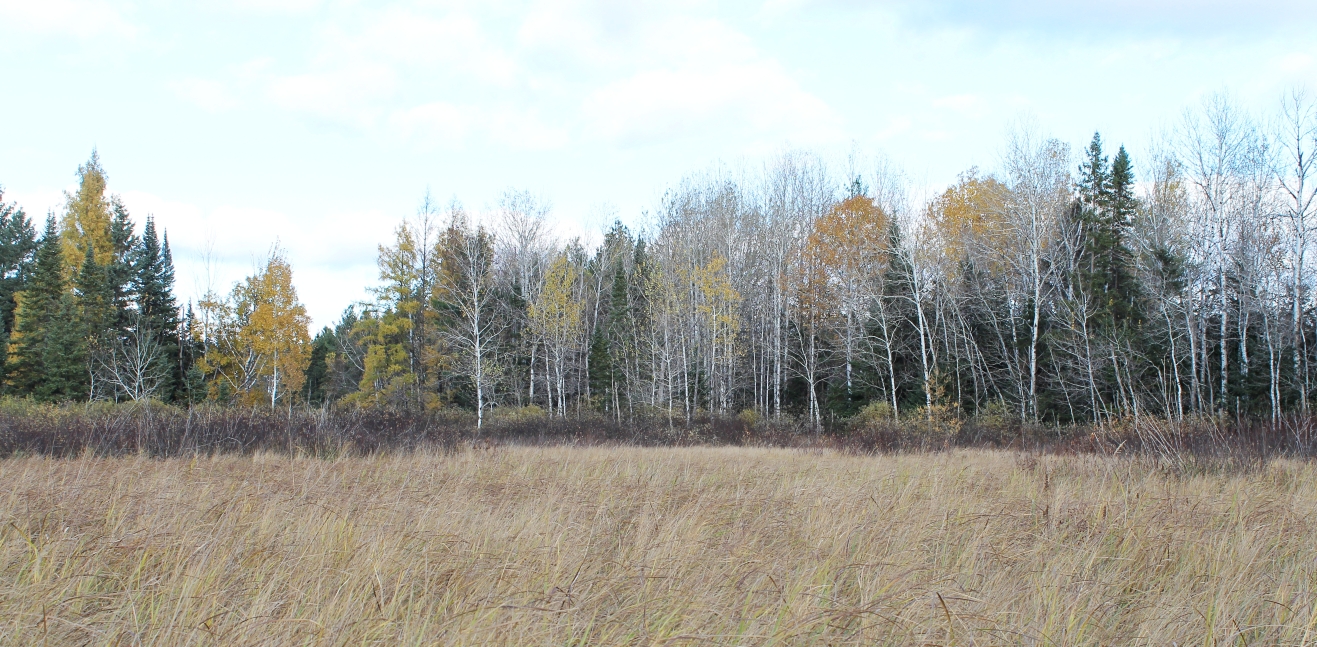
Leucobrephos brephoides is found in cool northern forests where its primary host plant, quaking aspen, grows.
What do the adult moths eat?
Gibson and Criddle (1916) made some interesting observations about the food preferences of the adult Leucobrephos brephoides. They found that sugar baits did not interest the moths. Instead, they noted that rotten meat was attractive. The moths also sought moisture and could be found on muddy roadways near aspen woods.
Similar species
A similar species, also active when Leucobrephos brephoides is in flight, is Archiearis infans. Archiearis infans is more common and widespread than Leucobrephos brephoides. It has bright orange underwings. I’ve seen this species one time also, and that was in the spring (April 2021) during the day at a mud puddle. It lays its eggs in the spring, and the larvae feed on the same plants as Leucobrephos brephoides.
Other Leucobrephos species
Leucobrephos is a Holarctic genus with two species: Leucobrephos brephoides in the Nearctic and Leucobrephos middendorfii in the Palearctic. Leucobrephos middendorfii occurs in Siberia, Mongolia, and the Ural Mountains. The species Leucobrephos mongolicum is considered a synonym of Leucobrephos middendorfii, as is Leucobrephos middendorfii ussuriensis. The subspecies Leucobrephos middendorfii nivea is considered valid. Host plants of Leucobrephos middendorfii are from the same genera as those of Leucobrephos brephoides.
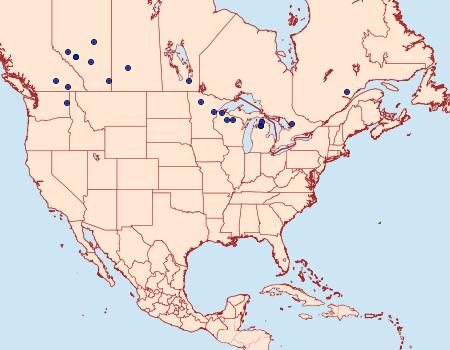
Range of Leucobrephos brephoides
The Leucobrephos brephoides range map shows a wide range but few records.
Next year
Next March and April, I’ll be out looking for Leucobrephos brephoides again. I’ll check the edges of the woods and marsh for moths, as I have in previous years. I’ll also check the aspen and willows for eggs and larvae. I’m also going to set out bait stations, some with sugar to mimic sap and others with spoiled meat. Maybe after twenty years, I will finally see this scarce moth again. Or maybe not. It is possible that since 2006, the climate here has gotten too warm for this cold-loving species.
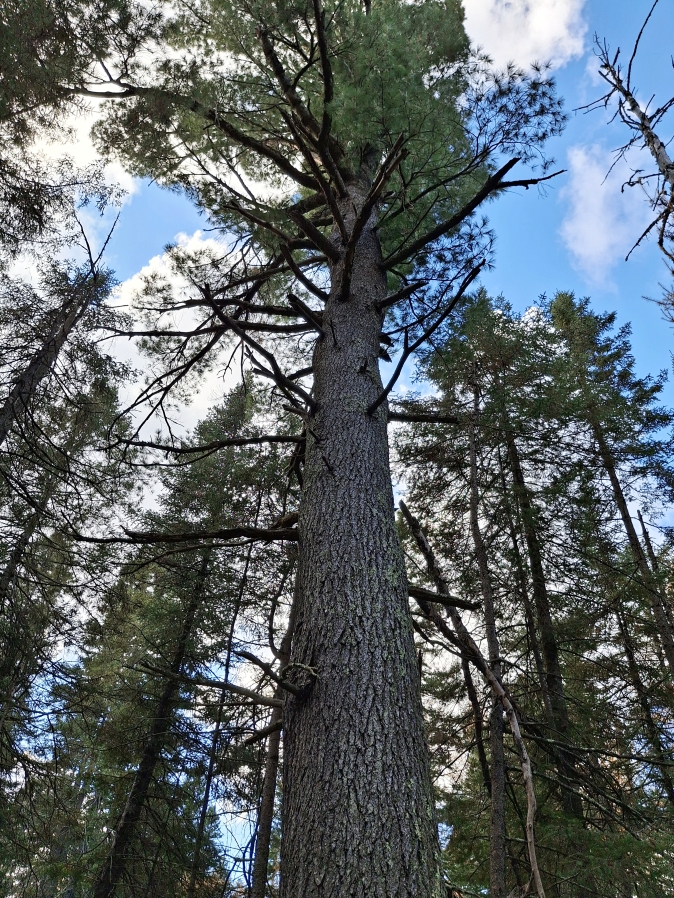
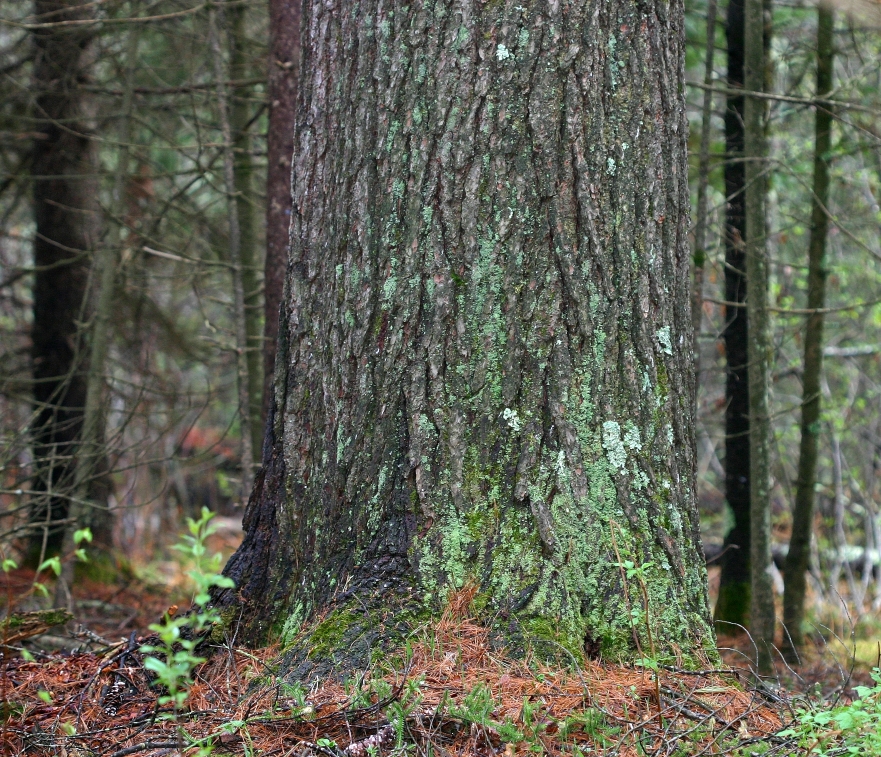
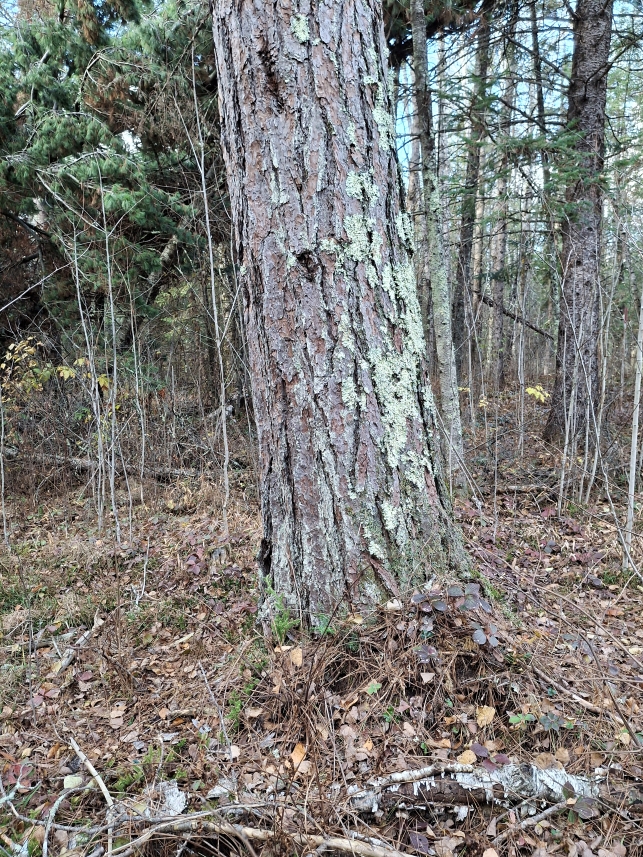
This white pine is the largest and possibly the oldest tree on my property. It has a DBH (diameter at breast height or 1.3 meters) of 92 cm, and I estimate its age at about 180 years old.
The white pine probably began growing sometime around 1845. This was at the beginning of the white pine logging era in Minnesota. By 1900, it would have been large enough to cut for timber, but it was missed. The 1918 fires that swept through the area also missed it by just two short miles.
All through the 20th century, it continued to grow undisturbed. Over time, a forest of paper birch, aspen, balsam fir, and spruce grew under the pine. Beneath the trees, clubmosses, poverty oats, rough rice grass, purple melic grass, twinflower, and hairy goldenrod covered the ground. The forest had come back.
The big white pine as seen from ground level.
When other white pines on this 40-acre section were cut down for lumber in 1960, this huge white pine was not cut down. So were four other large white pines and five large red pines. I don’t know how or why this happened, but I am glad they were overlooked. What would this forest be without them?
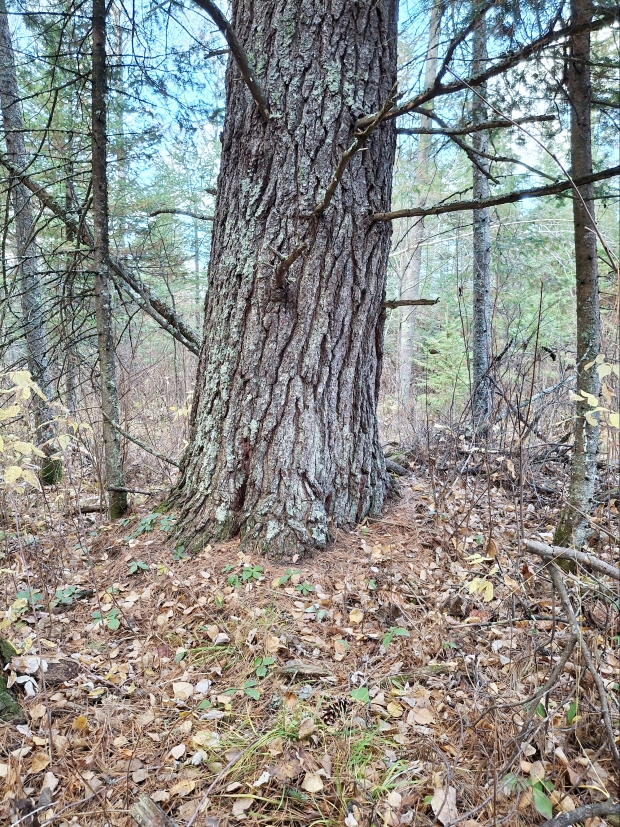
One of the big white pine’s neighbors. This white pinetree had a DBH of 82 cm in 2015. I estimate its age at 170 years.
Logging of Minnesota’s white pine forests began in the 1830s, but it wasn’t until the 1870s, with the advent of railroads and new settlements, that it really took off. By 1900, Minnesota had produced almost 1.2 billion board feet of white pine timber. This was not to last, and by 1929, nearly all of Minnesota’s white pine forests were depleted, bringing white pine logging to an end. While not remnant trees from old-growth forests, these white and red pine trees are survivors from that time.
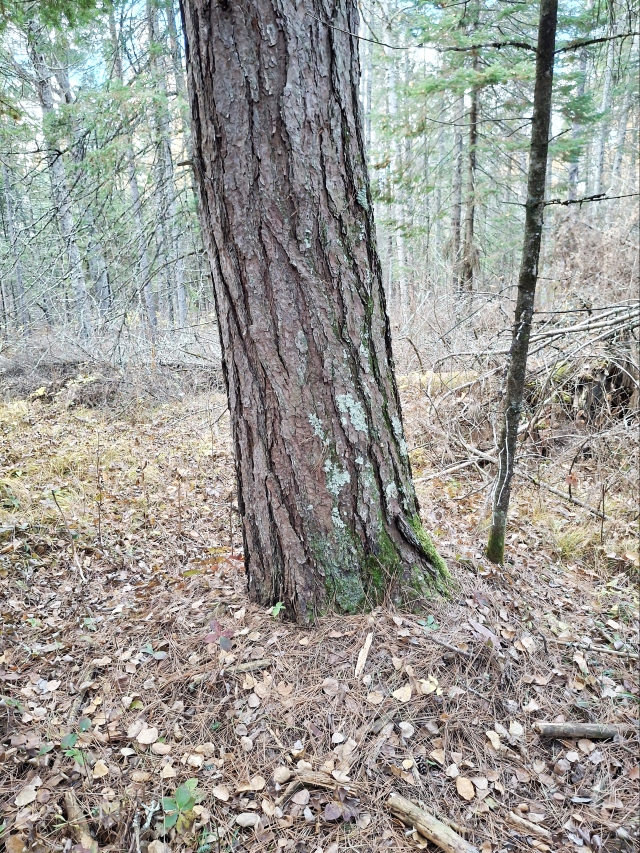
One of the old red pines, DBH 56 cm, age estimate 121 years.Another of the old red pines, DBH 70 cm, age estimate 148 years.
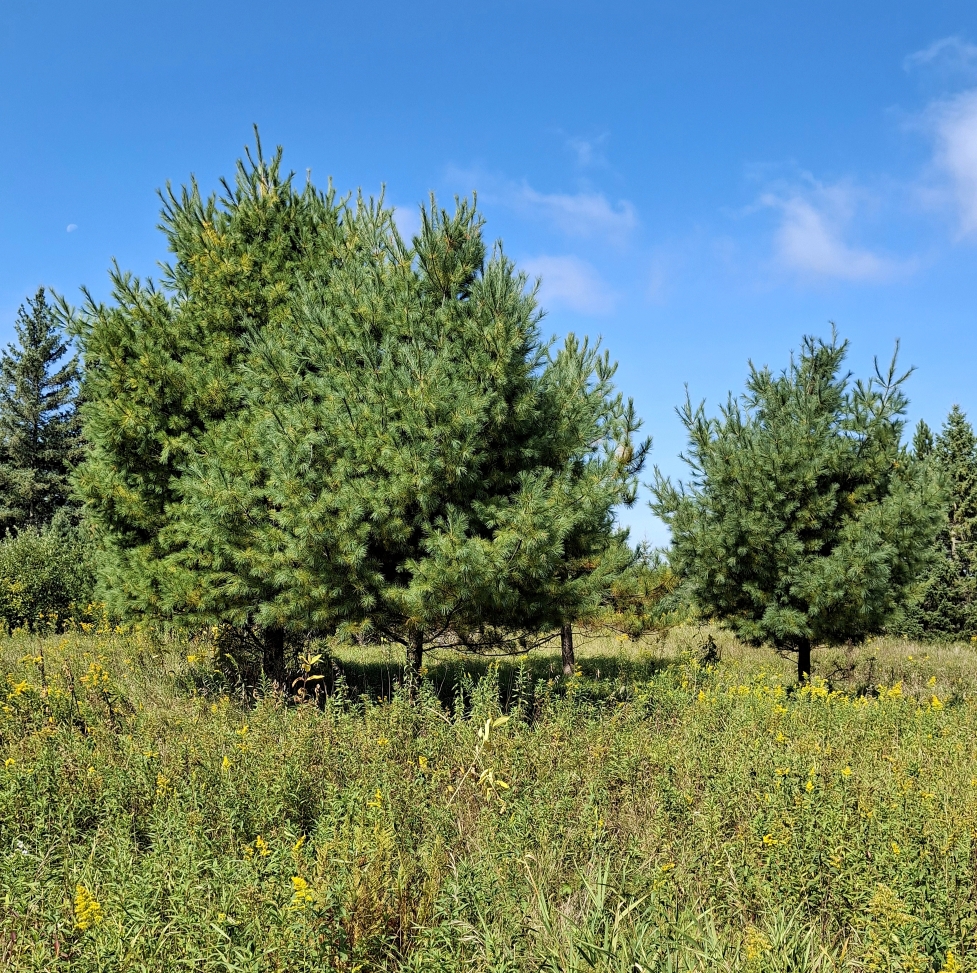
White pines I planted in the early 2000s. These trees were grown from seeds produced by another old and enormous white pine on my land. They are part of my project to re-wild a former hayfield and pasture.



 Not Very Far Away