Essential Guide to Midwest True Bugs by Angella Moorehouse

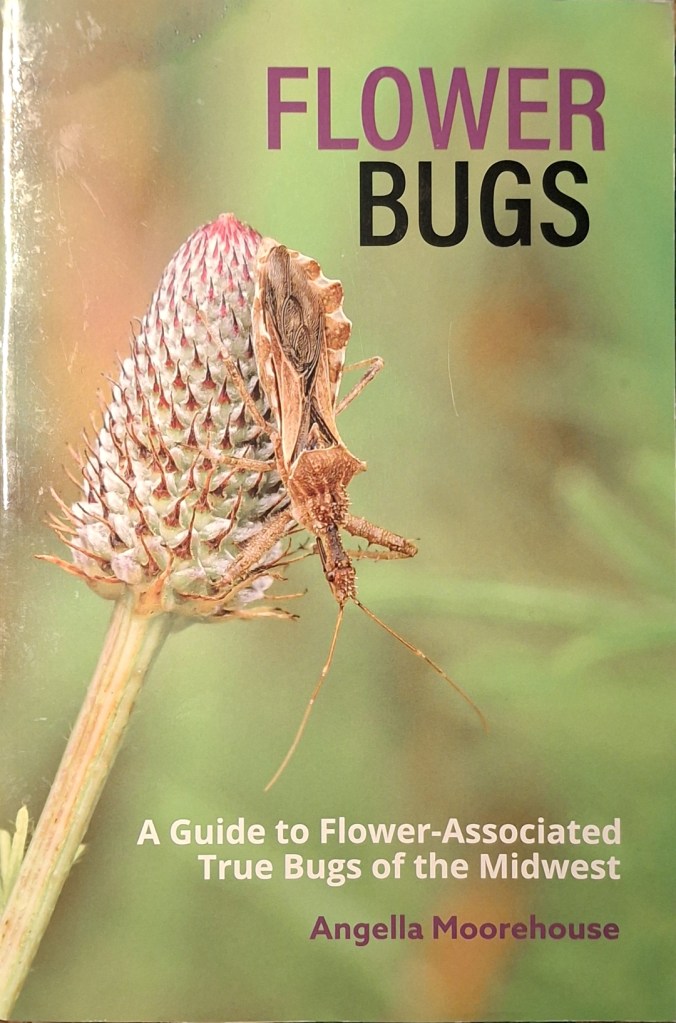
This just arrived today, and I know it will be so very useful as I venture further into the world of insects. Flower Bugs: A Field Guide to Flower-Associated True Bugs of the Midwest by Angella Moorehouse (2023) is published by Pollination Press LLC, Minnetonka, MN. The Pollination Press web address is www.pollinationpress.com.

This book has 360 pages, lavishly illustrated with beautiful full-color photographs of 160 species of terrestrial true bugs from 25 families and 52 genera. The area covered includes the states of Minnesota, Iowa, Missouri, Wisconsin, Illinois, Indiana, Ohio, and Michigan in the US and Southern Ontario in Canada.

The book includes taxonomic charts that will guide you to family and then to genus, detailed illustrations of bug morphology, their ecology, and a glossary of terms to help you learn and identify true bugs.

Species descriptions are not overly technical, thus making this book more accessible to non-specialists with some background in insect identification. Maps show the range of each species. There are notes on key identifying features, life history, ecology, feeding, and habitat. Descriptions of herbivorous species include lists of plants they consume. Carnivorous species are similarly treated. Not all species receive the same description treatments. Some are represented with photographs.

There seems to be a problem with the index, where some entries do not match the page numbers in the book. Not sure why.

I am loving this book already and will put it to good use identifying the many bug species I have photographed. My first project will be to go through the unidentified species in my files and to re-check previous identifications. After that, I’ll spend many an evening just browsing and waiting for spring and the bugs to return.

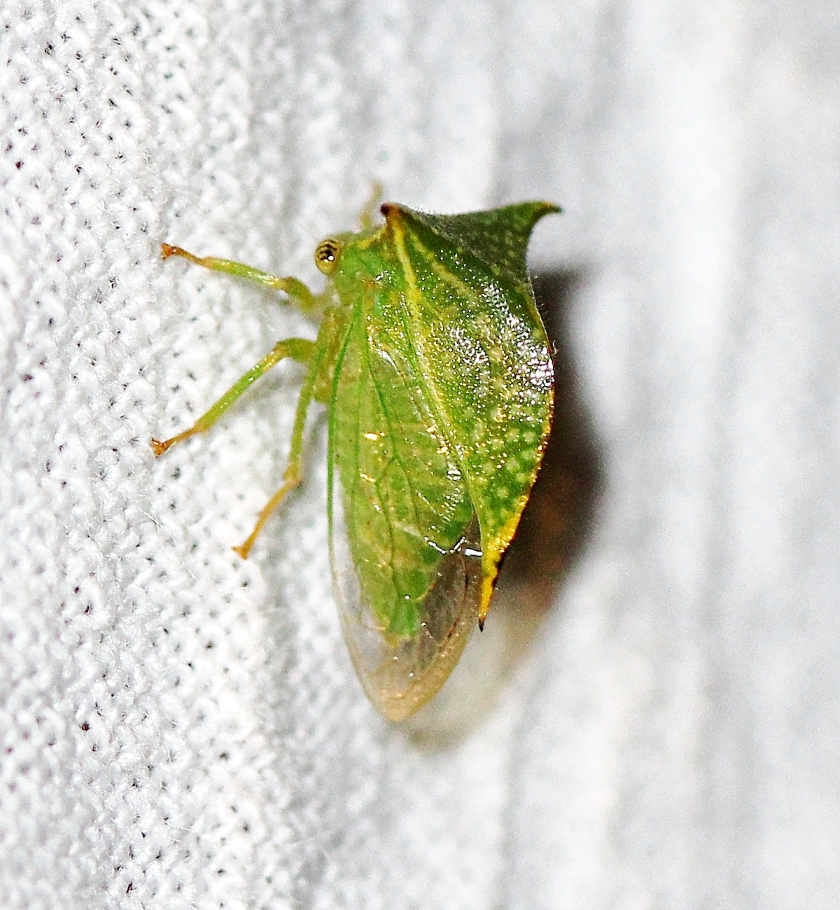
Banasa dimidiata, a stinkbug

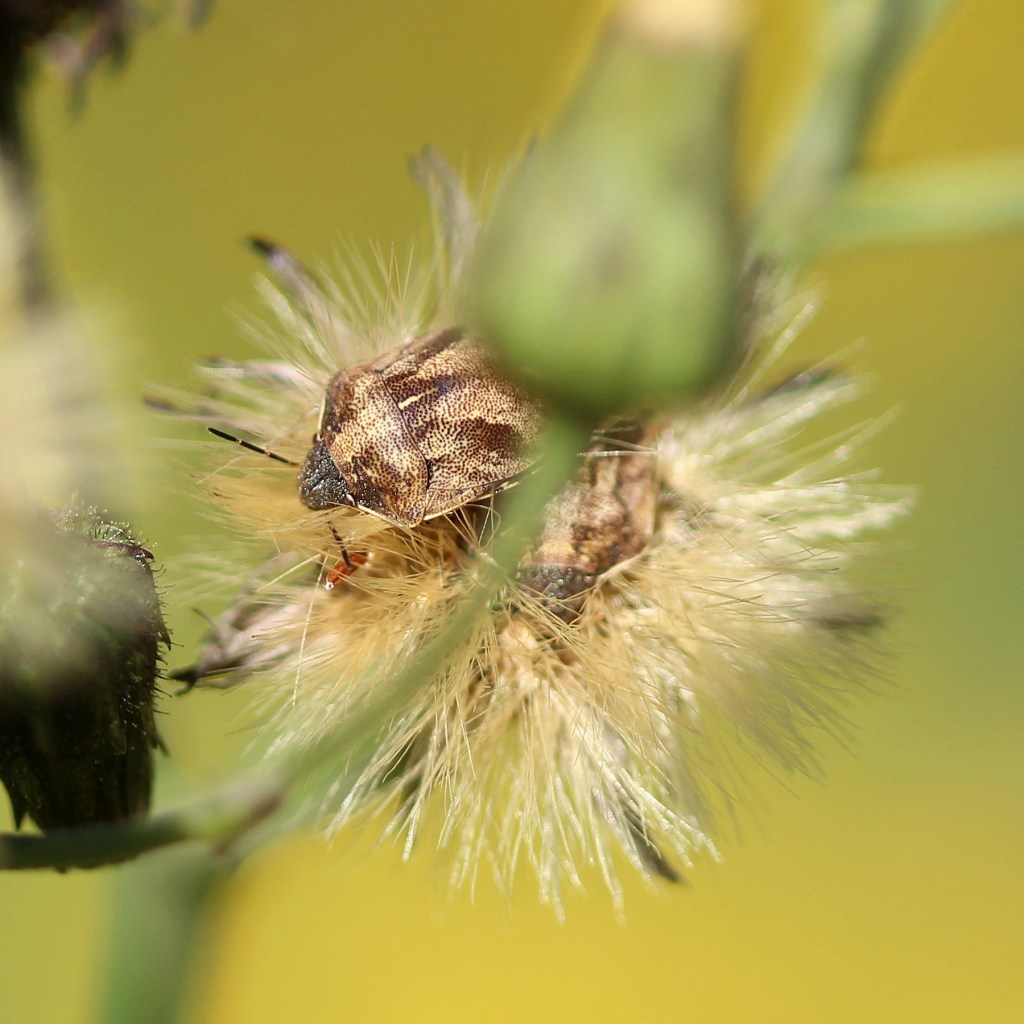
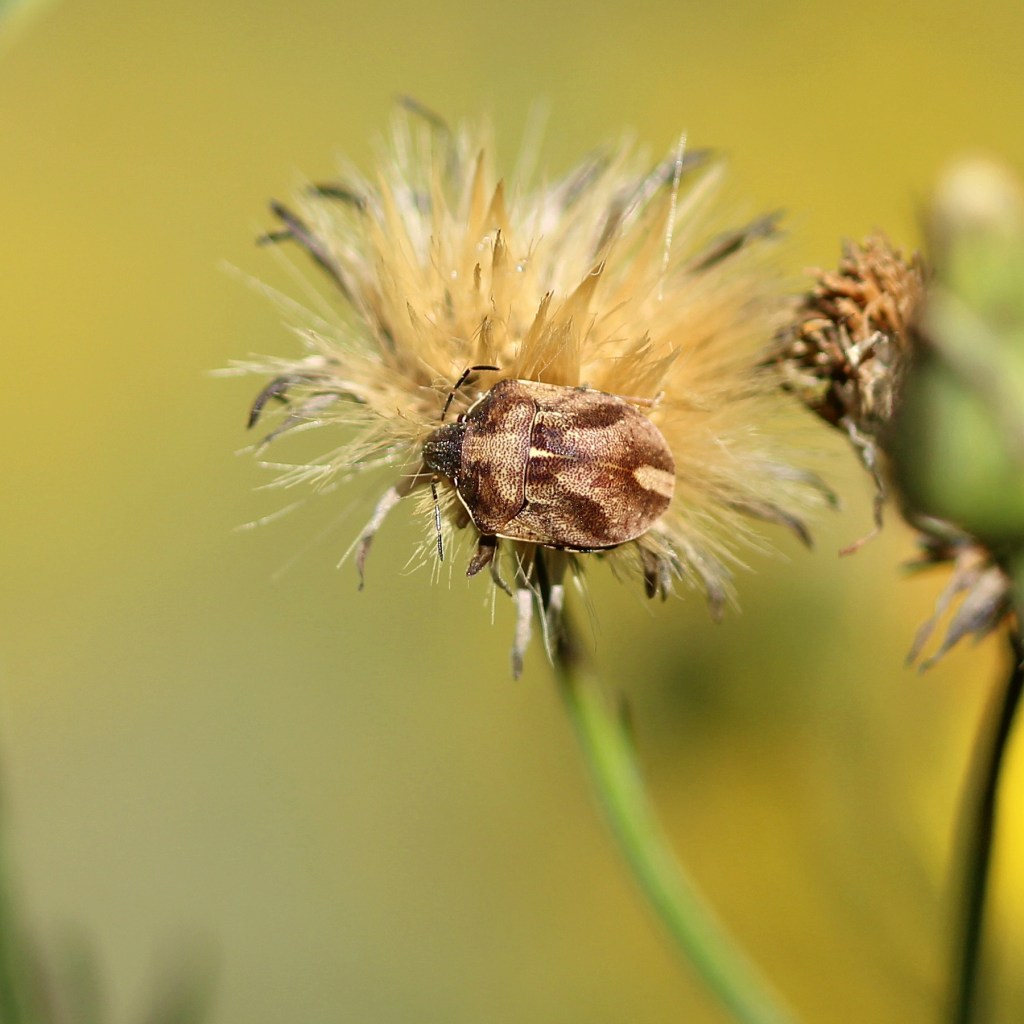
Homaemus aeneifrons – Bronze-Headed Shield Bug

Early Sunday morning I saw a group of bronze-headed shield bugs (Homaemus aeneifrons) sunning themselves on the seed heads of Canadian hawkweed (Hieracium umbellatum). The previous night had been very cool with temperatures dipping to 40 degrees F and this cluster of seed heads facing due east into the sun was a perfect place to warm up. In all, there were six bugs catching the early morning sun.

Homaemus aeneifron is widespread in North America occurring as far south as Kansas and Arizona and as far west as Alaska, British Columbia, and California. It is frequently found in moist meadows and weedy areas. Some reports state that it feeds on grasses and sedges (Carex) and rushes (Juncus) but one has it feeding on Monarda fistulosa (wild bergamot) and Oenothera biennis (evening primrose). These on hawkweed did not appear to be feeding. Beyond catching some rays it was hard to say why they were all there.

CLASSIFICATION
Kingdom: Animalia (Animals)
Phylum: Arthropoda (Arthropods)
Subphylum: Hexapoda (Hexapods)
Class: Insecta (Insects)
Order: Hemiptera (True Bugs, Cicadas, Hoppers, Aphids and Allies)
Suborder: Heteroptera (True Bugs)
Infraorder: Pentatomomorpha
Superfamily: Pentatomoidea
Family: Scutelleridae (Shield-backed Bugs)
Subfamily: Pachycorinae
Genus: Homaemus
Species: aeneifrons (Homaemus aeneifrons)

SOURCES

Bug Guide

Williams, Andrew H. 2004. “Feeding Records of True Bugs (Hemiptera: Heteroptera) From Wisconsin,” The Great Lakes Entomologist, vol 37 (1)

Thomas, Donald B.; Werner, Floyd G. 1981. Grass Feeding Insects of the Western Ranges: An Annotated Checklist. Technical Bulletin (University of Arizona, Agricultural Experiment Station) No. 243