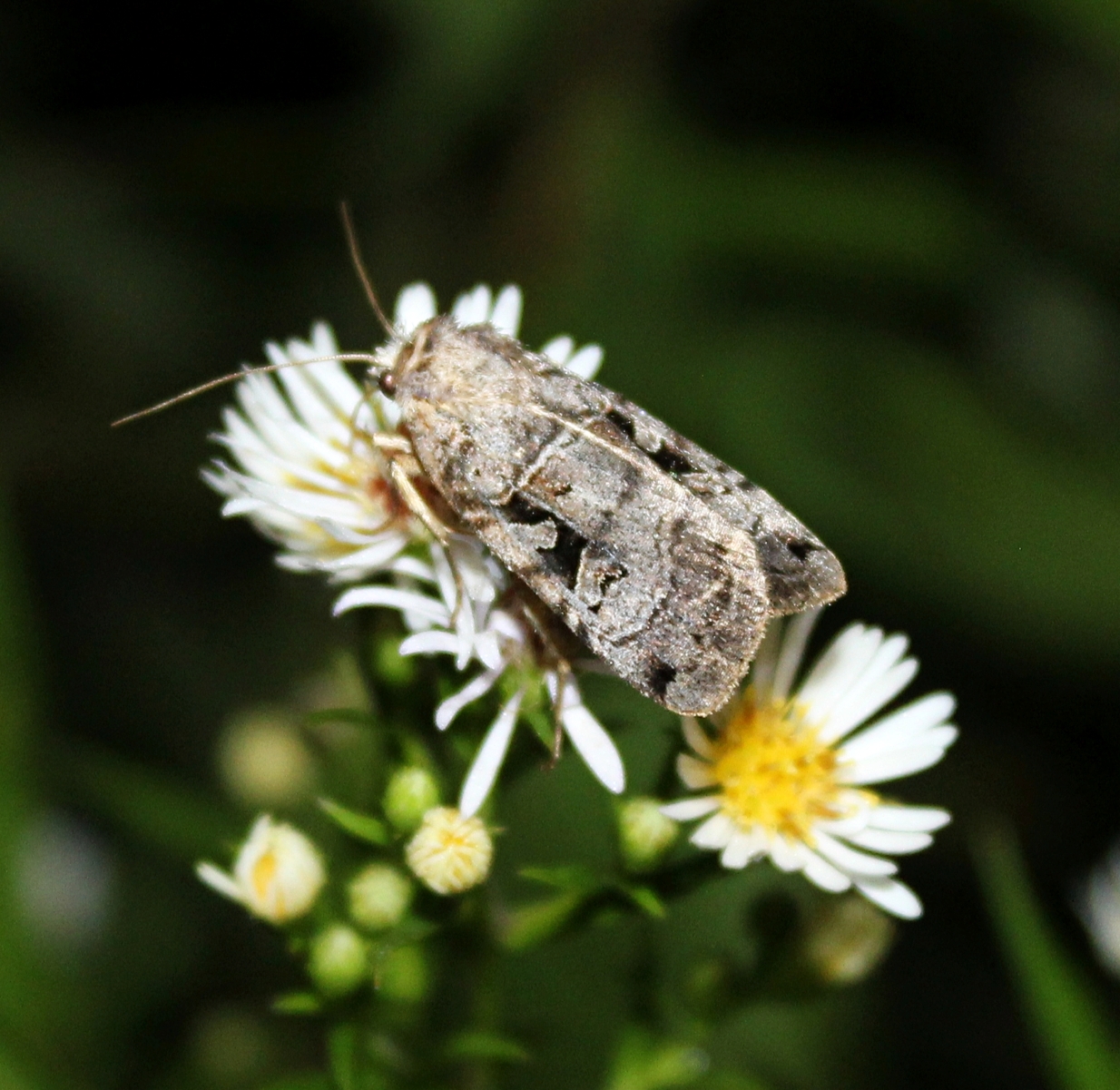
Xestia normanianus, a dart moth, nectaring on lance-leaved aster (Symphyotrichum lanceolatum) at night.
What do moths do at night anyway? Some of them visit flowers for nectar.
Back in August, I was wandering about in the woods at night looking for foxfire fungi. At the head of the trail on my way out, I saw a sunflower plant with something on the flowers. It was a green tree cricket (Oecanthus) eating the stamens in the sunflower florets.
The next night, I went back but this time with my camera, hoping to find more tree crickets. I had my LED headlamp on like the previous night and used it to illuminate the flowers and foliage where I wanted to photograph. I also set the flash of my camera to “on”.
Although I could hear tree crickets in the bushes, I didn’t see any this time. What I did see were lots of moths on sunflowers and asters. Aiming the lamp’s beam at the flowers, I then pointed my camera at the moths and began taking photos. I wasn’t using a tripod, so many were blurry. Some were also overexposed by the bright LED light. But a few turned out.
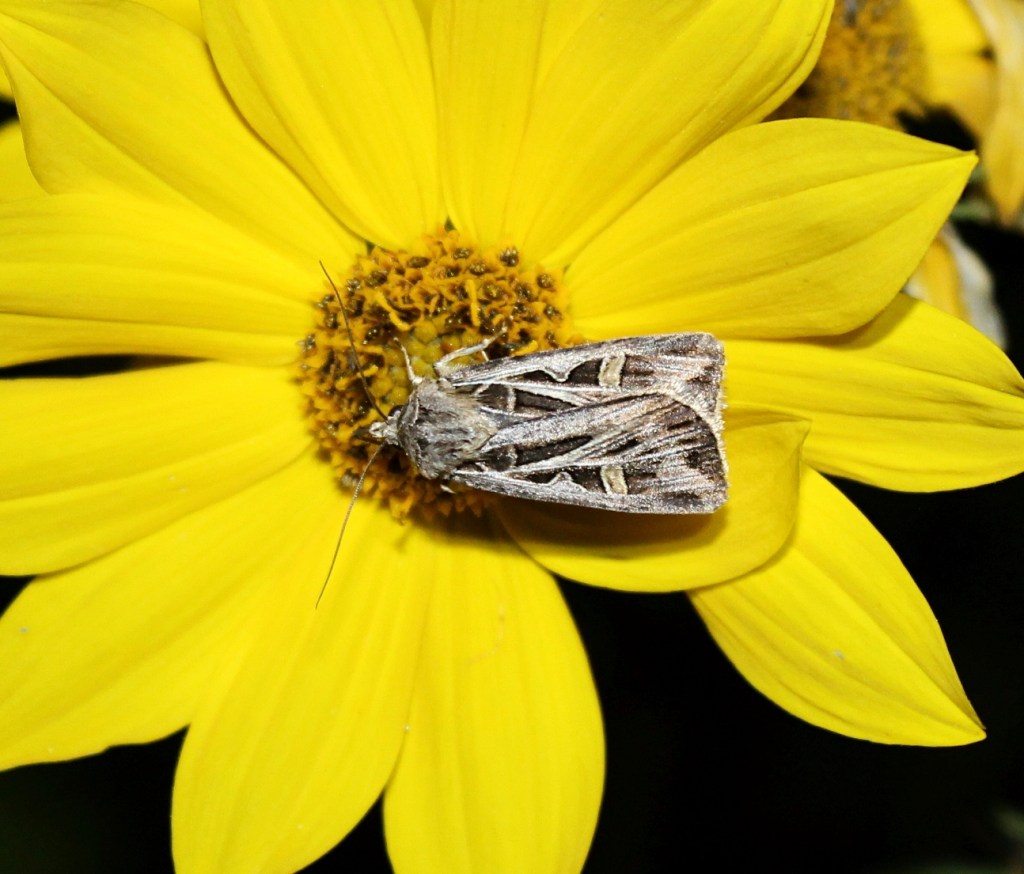
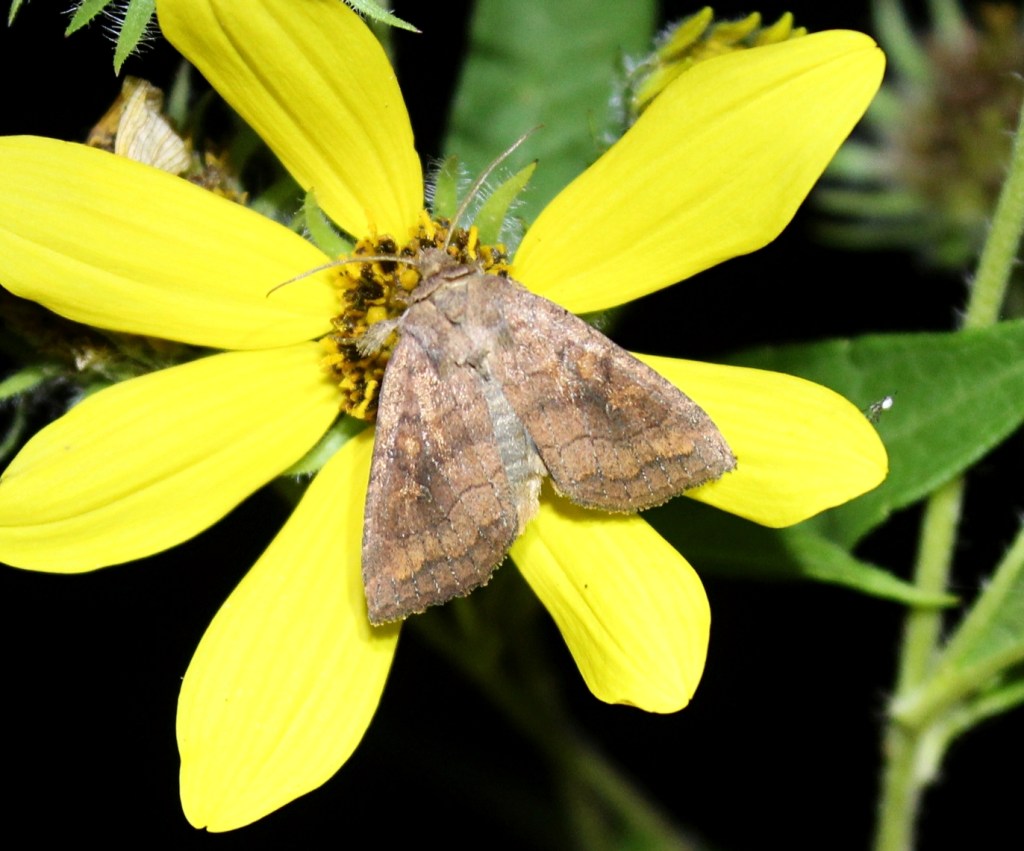
Feltia jaculifera nectaring on a sawtooth sunflower (Helianthus grosseratus)Nephelodes minians nectaring on a sawtooth sunflower (Helianthus grosseratus)
The moth species (Xestia normanianus, Feltia jaculifera, and Nephelodes minians) I found on flowers at night came as no surprise. These and other dart moth species are common visitors to my moth lights. But it was exciting to see them going about their normal activities in a natural setting. I never did find any foxfire this year.
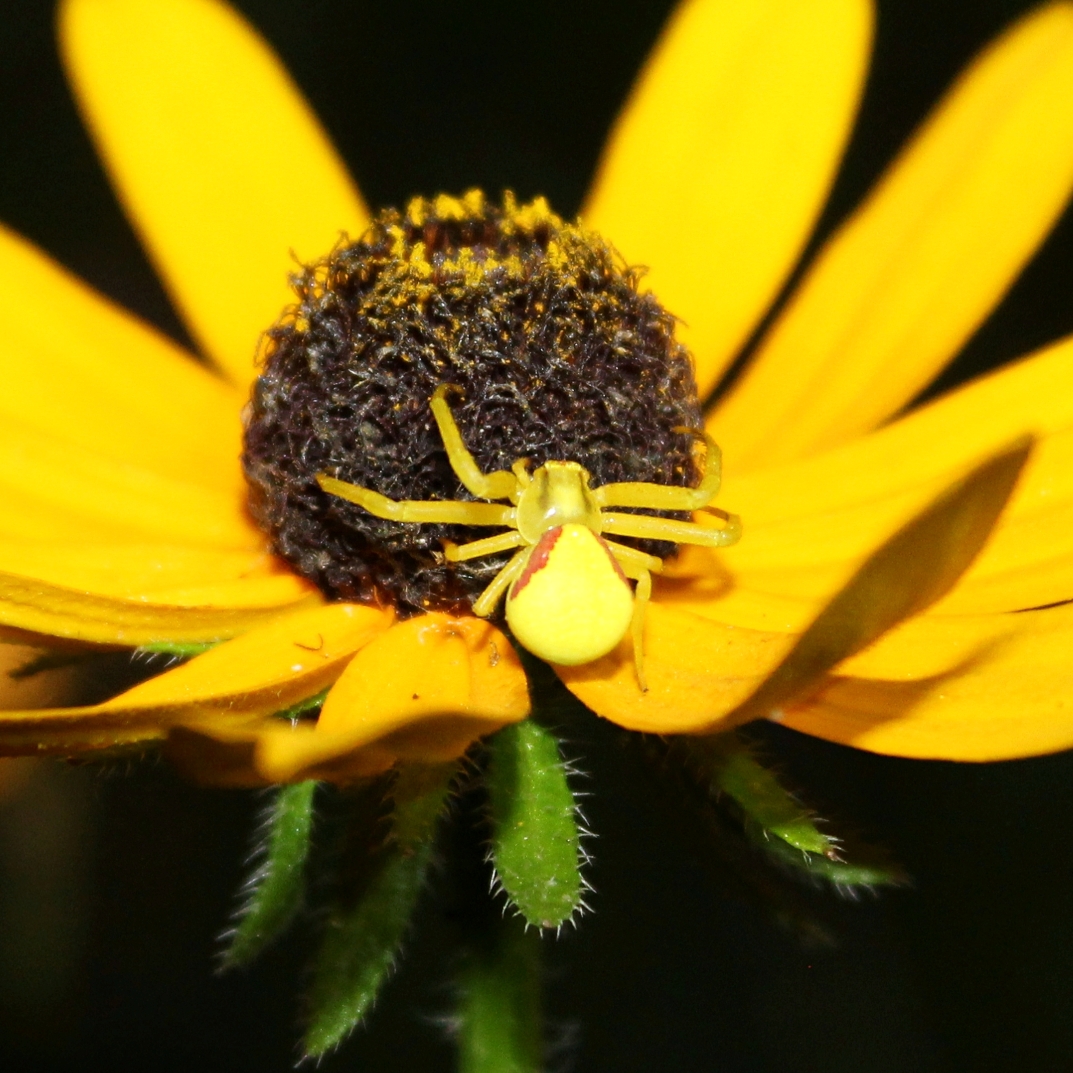
Moths weren’t the only visitors to flowers at night. I wonder if this crab spider was sleeping or waiting for a moth.
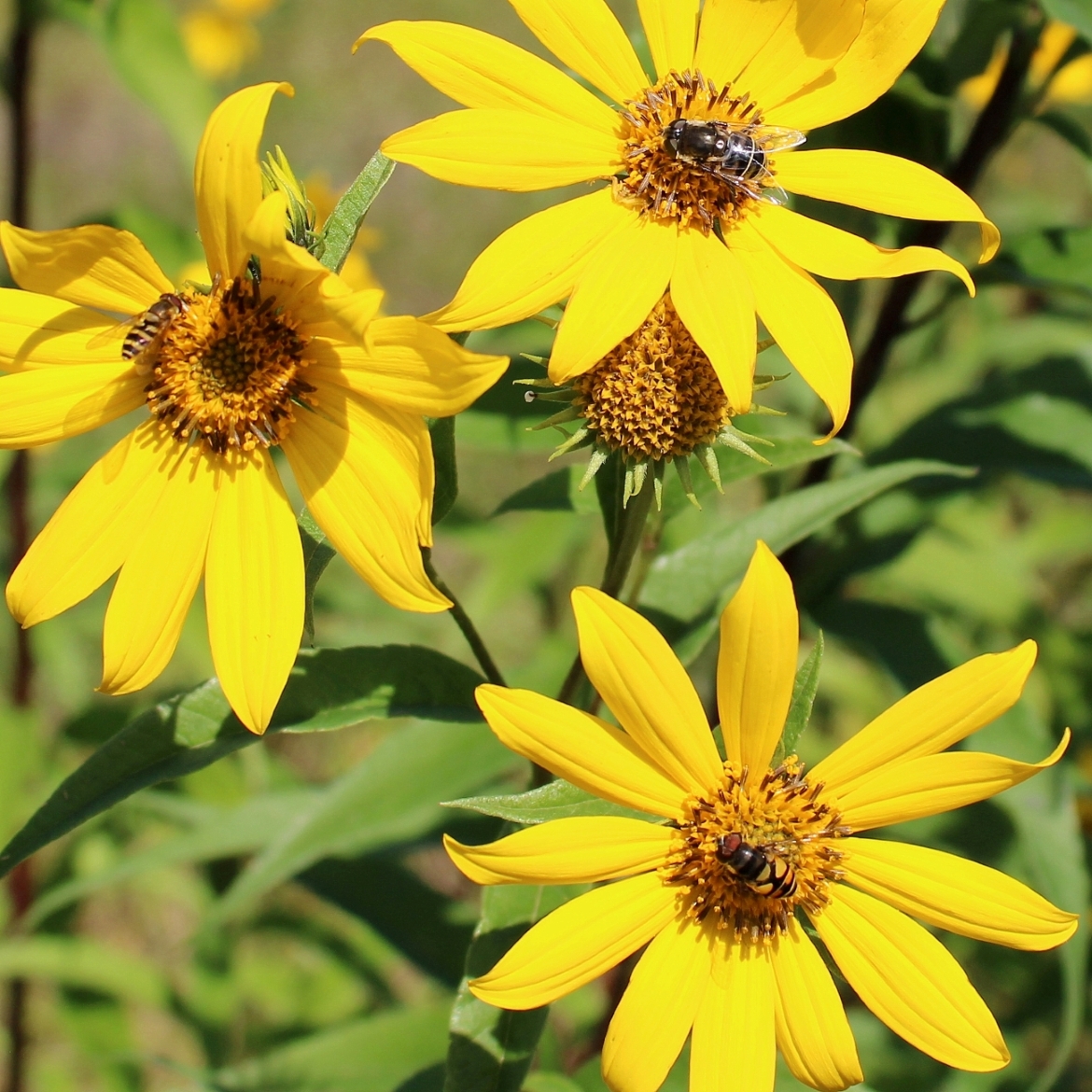
Three species of syrphid flies on sunflowers. Eristalis dimidiata (upper right), Eristalis transversa (lower right), and maybe a Syrphus sp. (upper left).
This was an unusual sight. Three species of syrphids, each on a separate wild sunflower head, are getting a meal of pollen and nectar. Two of the species I could identify are Eristalis dimidiata (upper right) and Eristalis transversa (lower right). The third one in the upper left didn’t show enough details. I could only place it as possibly a Syrphus sp.
A swarm of bees?
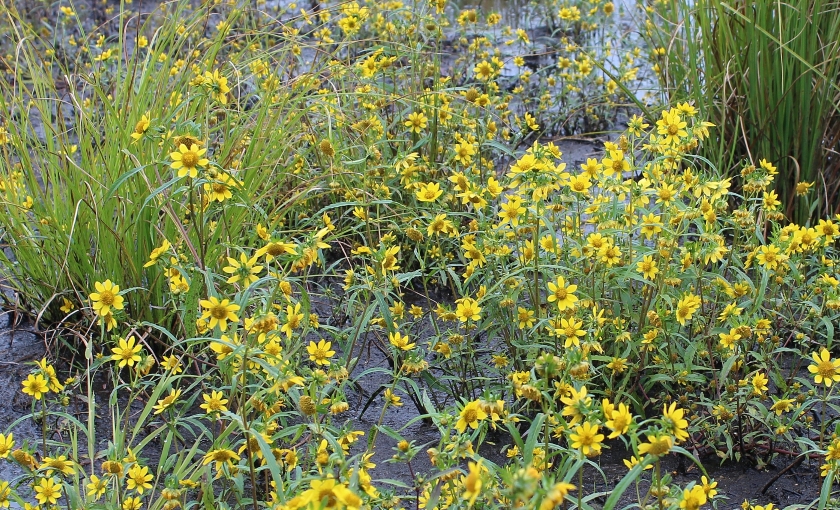
I first got interested in syrphid flies about two decades ago when I was doing an inventory of plant species in a fen. Suddenly, I became aware of what sounded like a swarm of bees in a large patch of nodding bur-marigold and asters. To my relief, they were not bees but hundreds of syrphid flies nectaring at the flowers. Over the years, I’ve gradually learned more about these bee-like insects and their importance.
Bidens cernua (Nodding Bur-Marigold) in early September, flourishing in a restored fen.
When to see them
Late summer is one of the best times to observe syrphid flies. You can see them on sunflowers, coneflowers, goldenrods, joe-pye-weed, bur-marigolds, and asters, all members of the aster family. Buzzing loudly, they go from flower to flower like bees, and with the bees, in search of pollen and nectar.
A wet meadow in late August carpeted with joe-pye-weed (Eupatorium maculatum) and smooth goldenrod (Solidago gigantea). Perfect foraging habitat for syrphids and other pollinators.
Syrphid flies can also be seen in spring and early summer. But to see them, you may need to go into the woods. Some of these forest-dwelling species can be attracted to sugary baits painted on tree trunks or boards attached to posts. They can also be found on woodland wildflowers like Canada mayflower.
Bee and wasp mimics
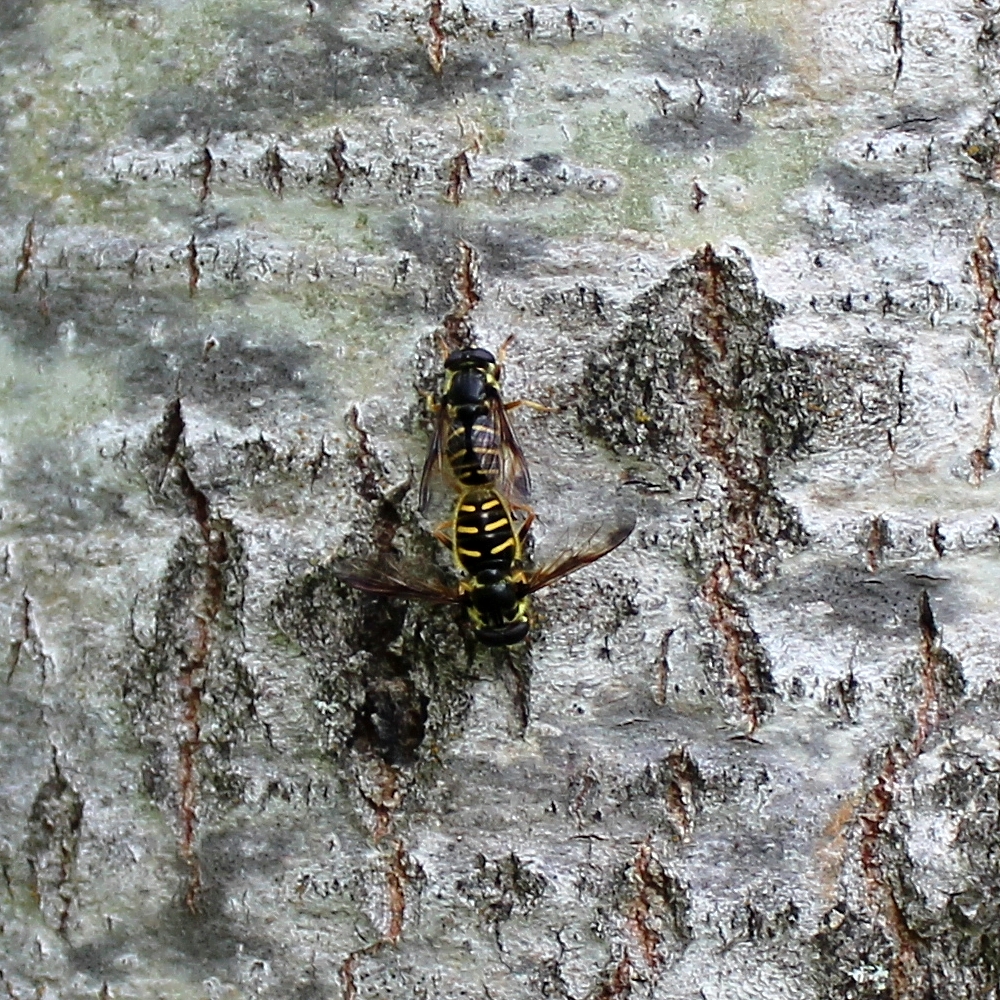
Many syrphids have body patterns and body shapes that resemble those of bees and wasps. This mimicry (Batesian mimicry) is a form of camouflage to deter potential predators. The resemblance to wasps and bees is striking.
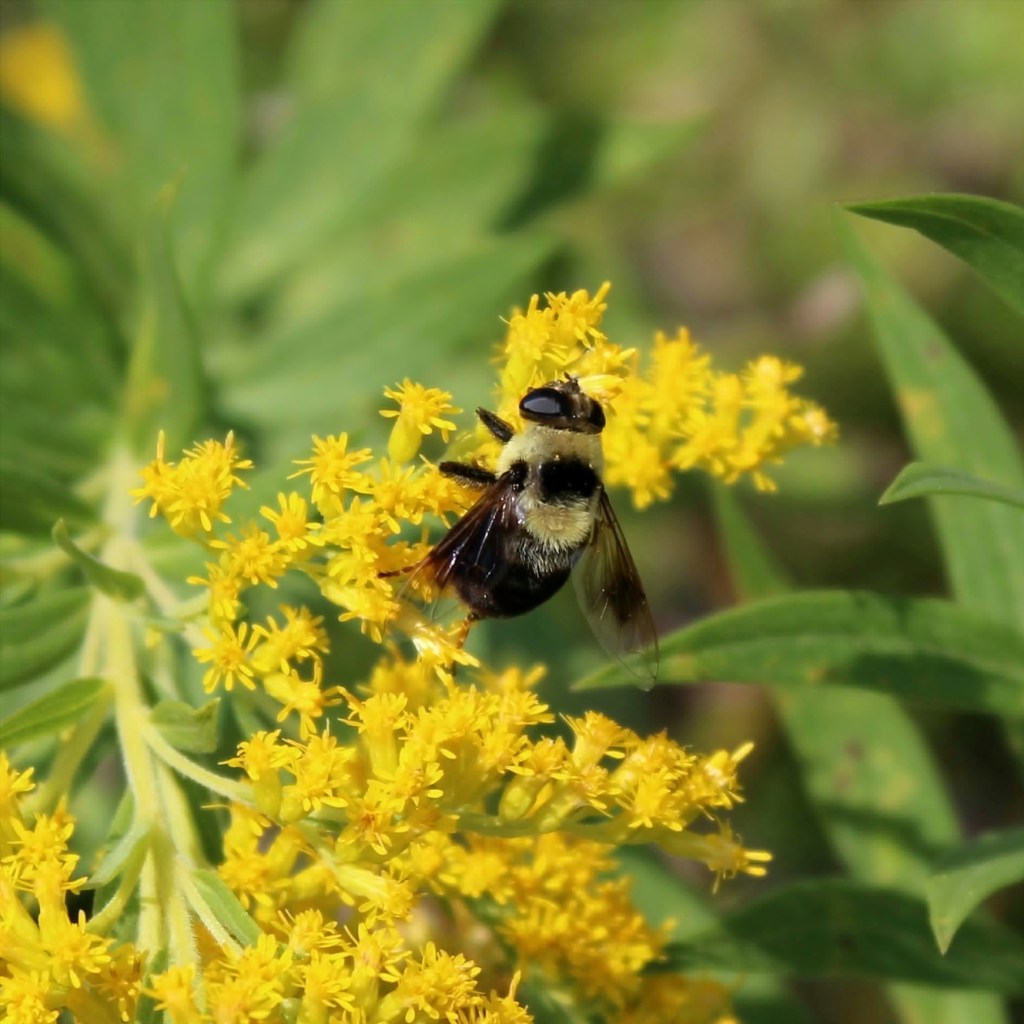
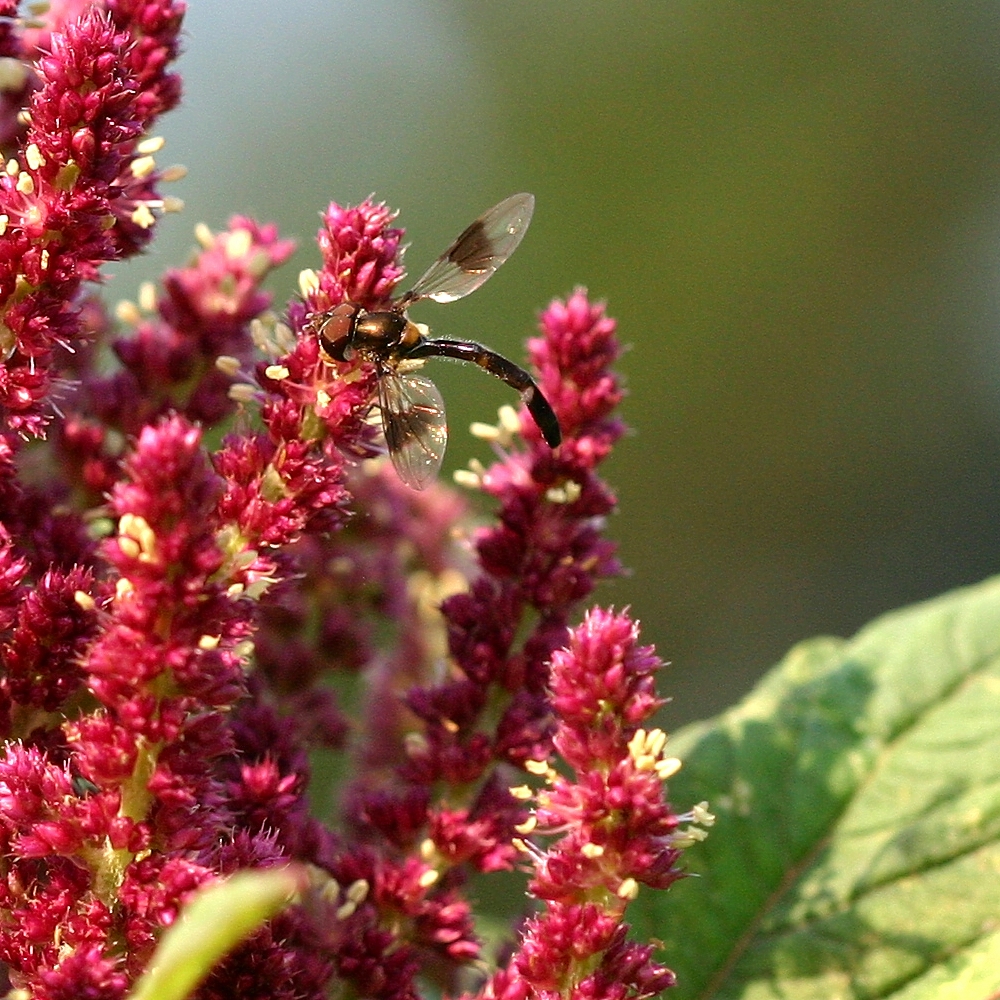
Physocephala furcillata, Eumenes crucifera, and Doros aequalis resemble potter’s wasps, and Ocyptamus fascipennis, an ichneumon. Sericomyia chrysotoxoides looks like a yellow jacket wasp, and Eristalis flavipes could be mistaken for a bumblebee.
Sericomyia chrysotoxoides (Oblique-banded Pond Fly), a yellow jacket wasp mimic. The larvae live in mud rich in organic matter, filtering out microorganisms.Doros aequalis, an Ancistrocerus mimic, lives in forests. It’s a pollinator of spring ephemerals. The larvae live in ant nests and eat aphids.Eristalis flavipes (orange-legged drone fly), a bumblebee mimic. Its larvae feed on small organisms in stagnant water.
Syrphids are pollinators
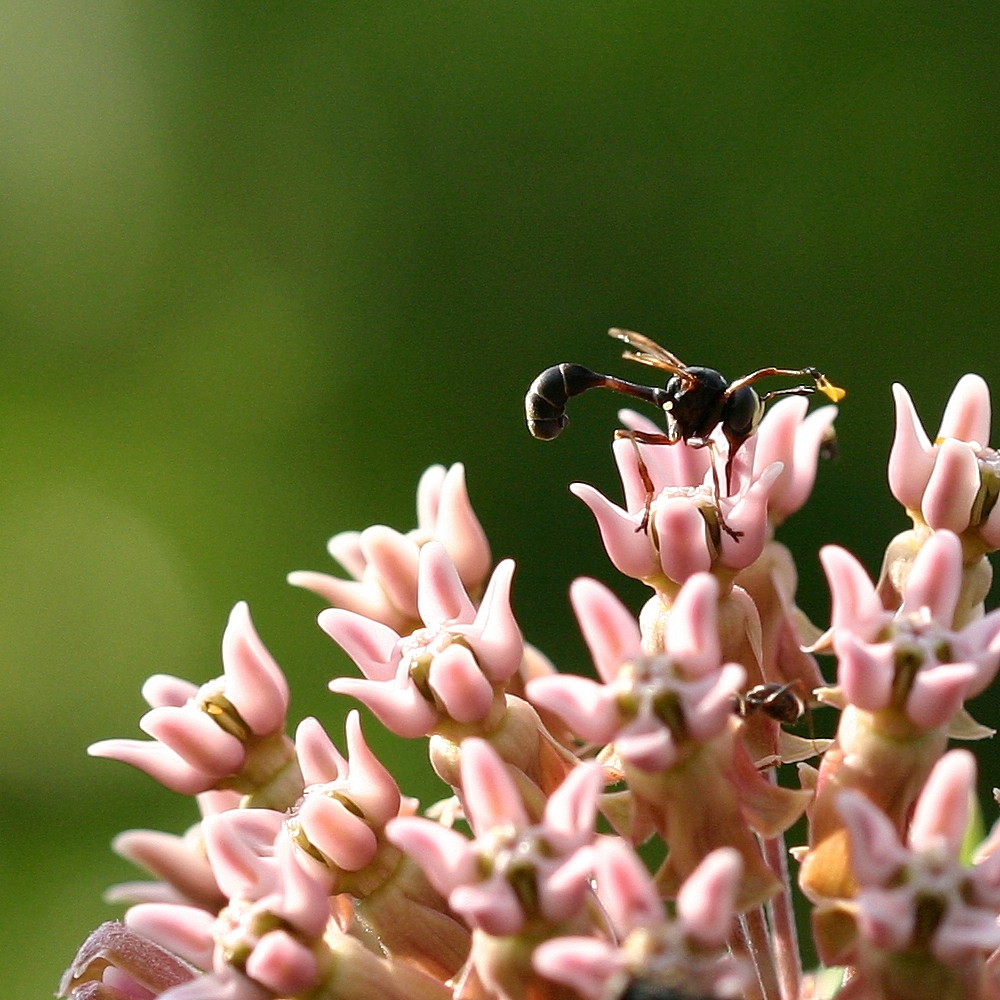
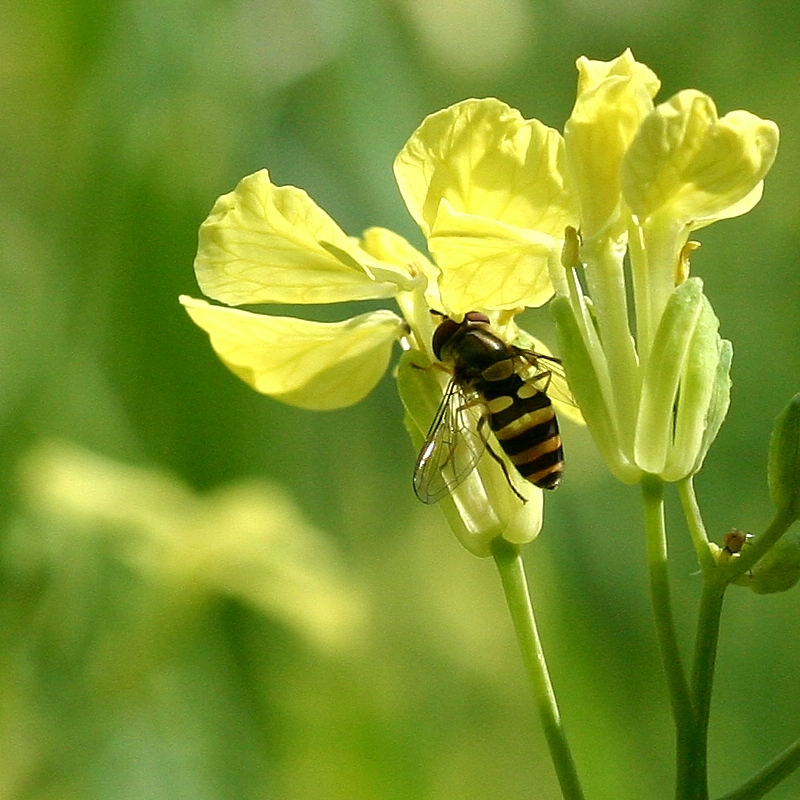
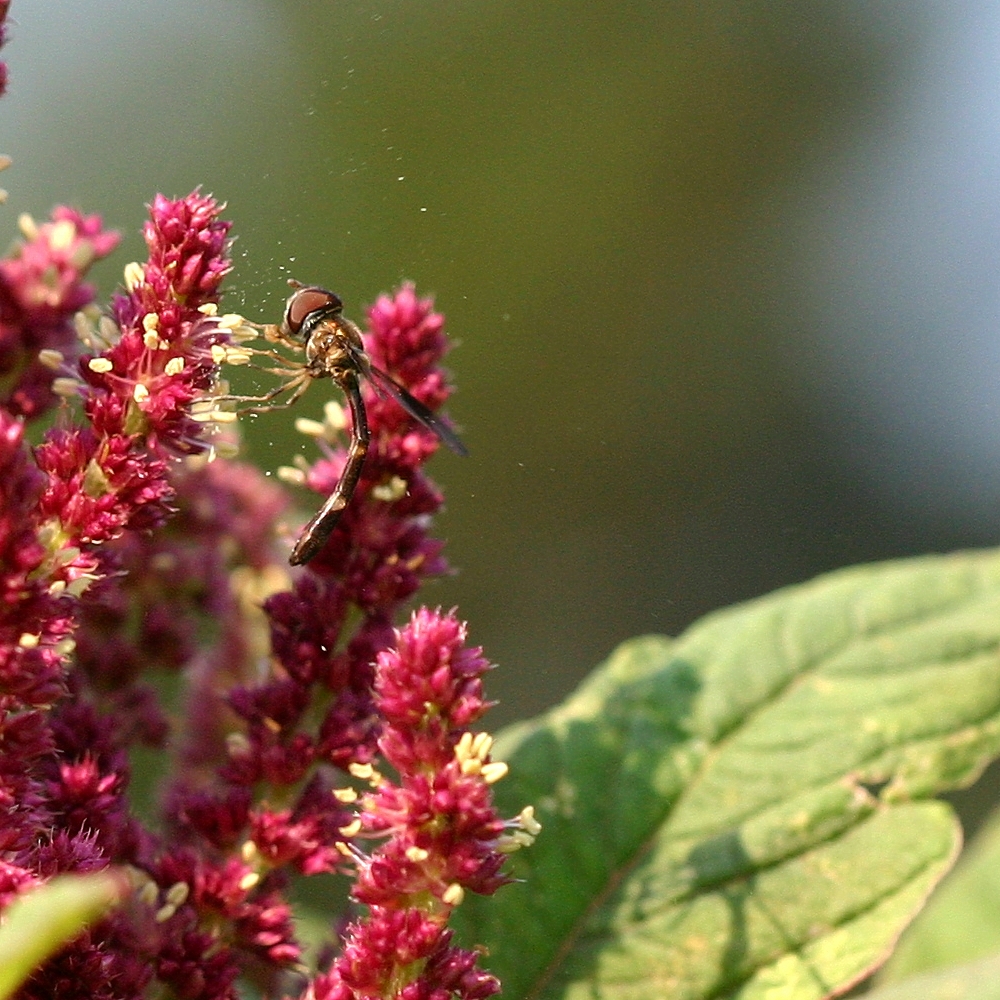
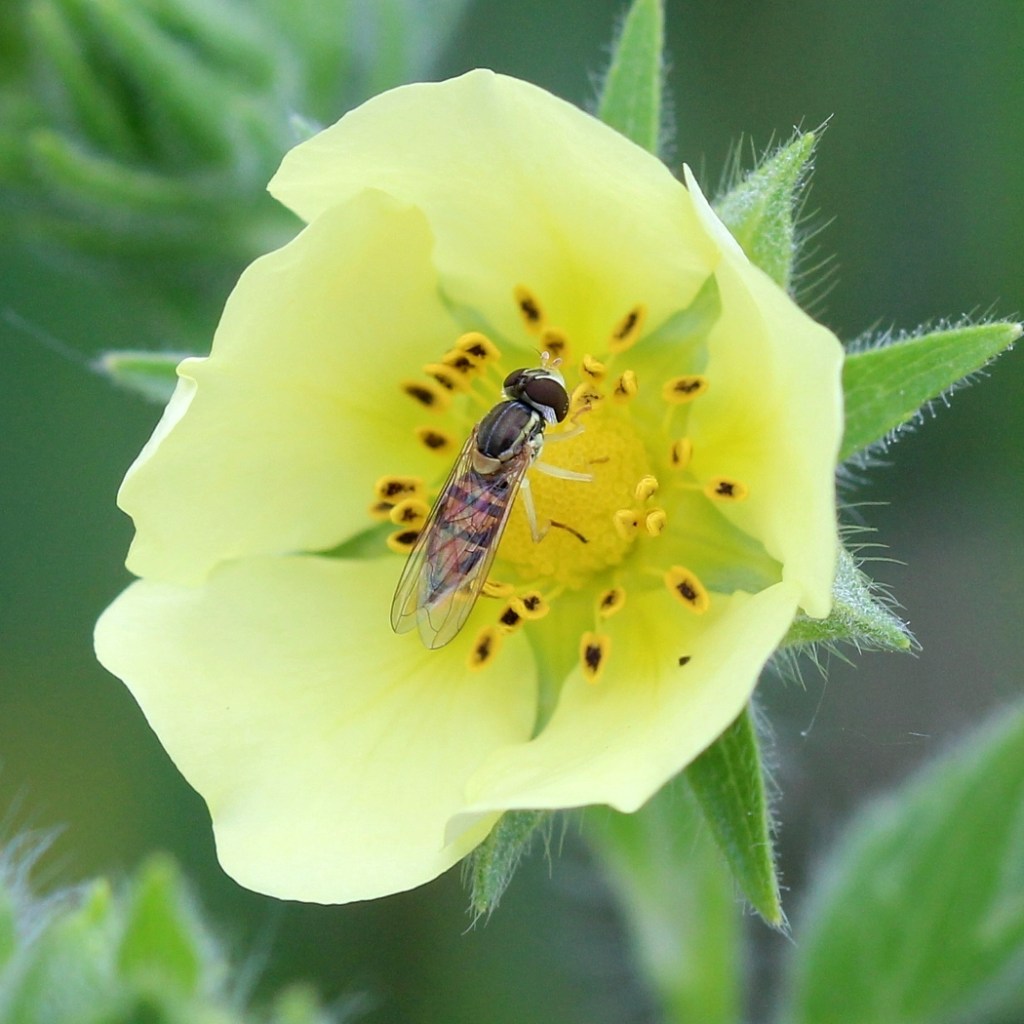
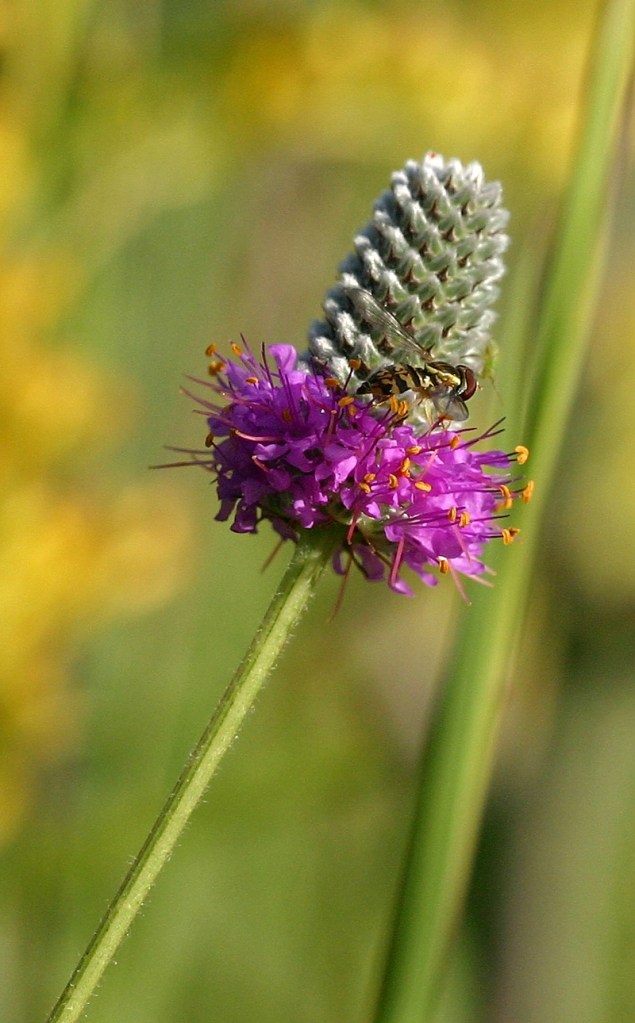
Like bees, syrphids are pollinating insects. But it is not just aster family plants they seek out. I have seen syrphids on mustard (Brassica nigra), amaranth (Amaranthus cruentus), milkweed (Asclepias syriaca), purple prairie clover (Dalea purpurea), grass-of-parnassus (Parnassia sp.), and cinquefoil (Potentilla recta).
Physocephala furcillata on milkweed (Asclepias syriaca) flowers. This species is a wasp mimic incorporating features of Eumenes potter wasps.Probably Eupeodes (Metasyrphus) americanus on the flower of a mustard plant (Brassica nigra). The fly resembles a small yellow jacket wasp.Ocyptamus fascipennis on amaranth (Amaranthus cruentus). This species is an an ichneumon wasp mimic.Toxomerus marginatuson cinquefoil (Potentilla recta) flower.Toxomerus geminatus on purple prairie clover (Dalea purpurea).Toxomerus marginatus on a Parnassia flower.
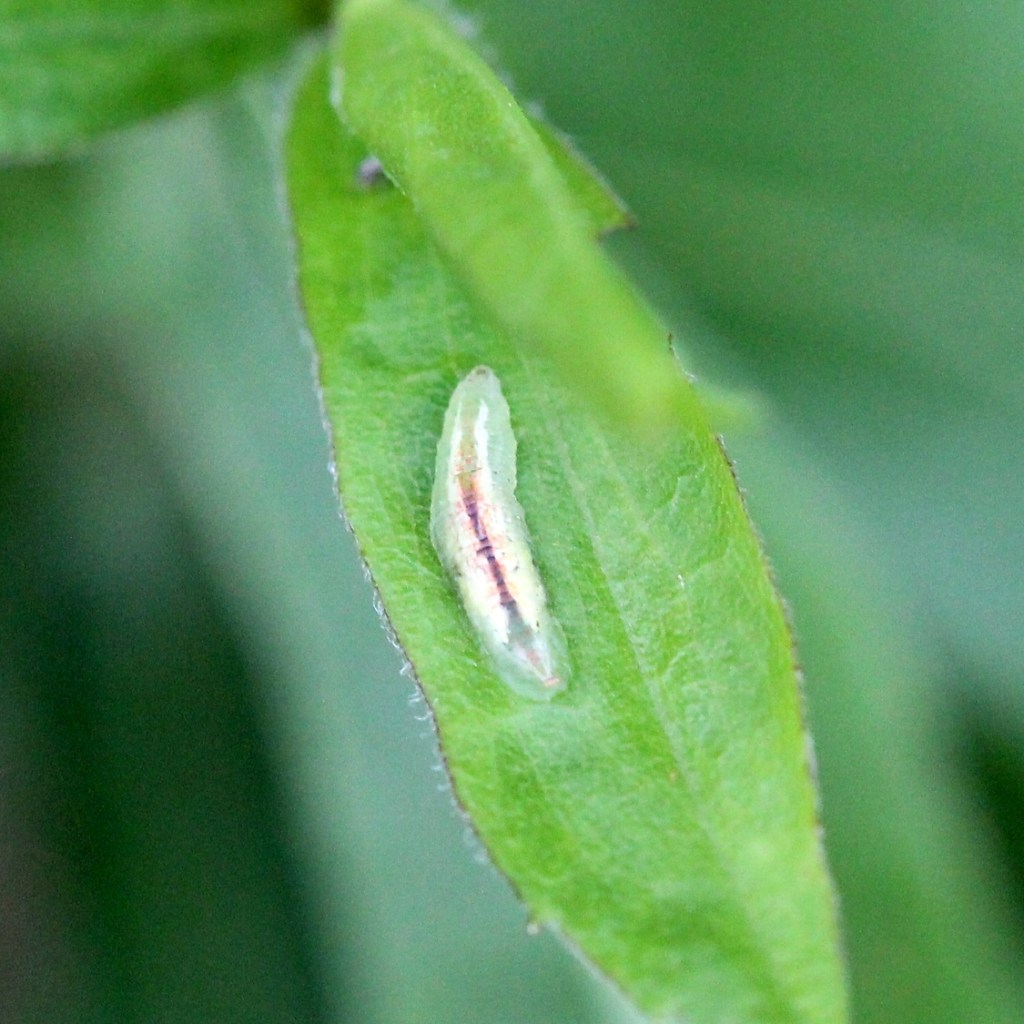
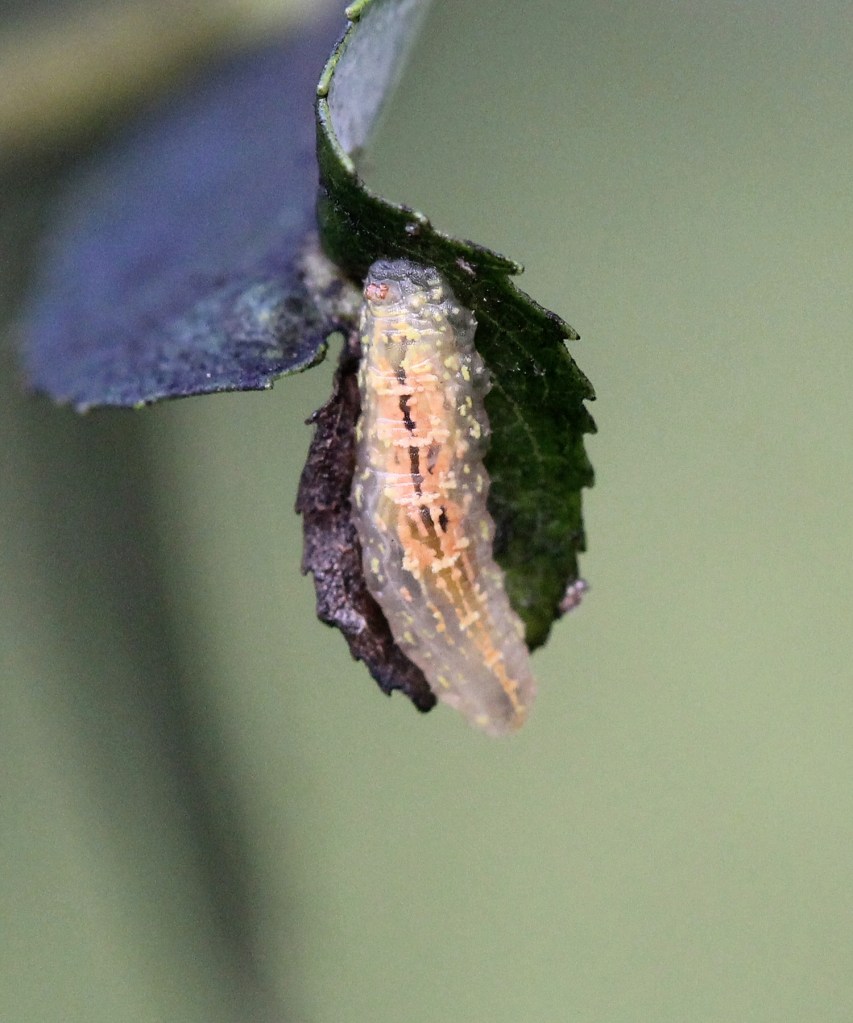
Syrphid fly larva on an aster leafSyrphid fly larva on a willow leaf
Encouraging syrphids
Syrphid flies, like the bees and wasps they often mimic, are important parts of the pollinator fauna. They don’t sting or bite, but their appearances can give you pause.
Planting nectar-rich domesticated plants like buckwheat, sunflowers, coriander, and dill, and wildflowers. Even small patches will help them. From there, they can launch forays into gardens and fields, pollinating crop plants. Predatory species will lay eggs that hatch into maggots that eat pest insects like aphids, scale insects, and spider mites.
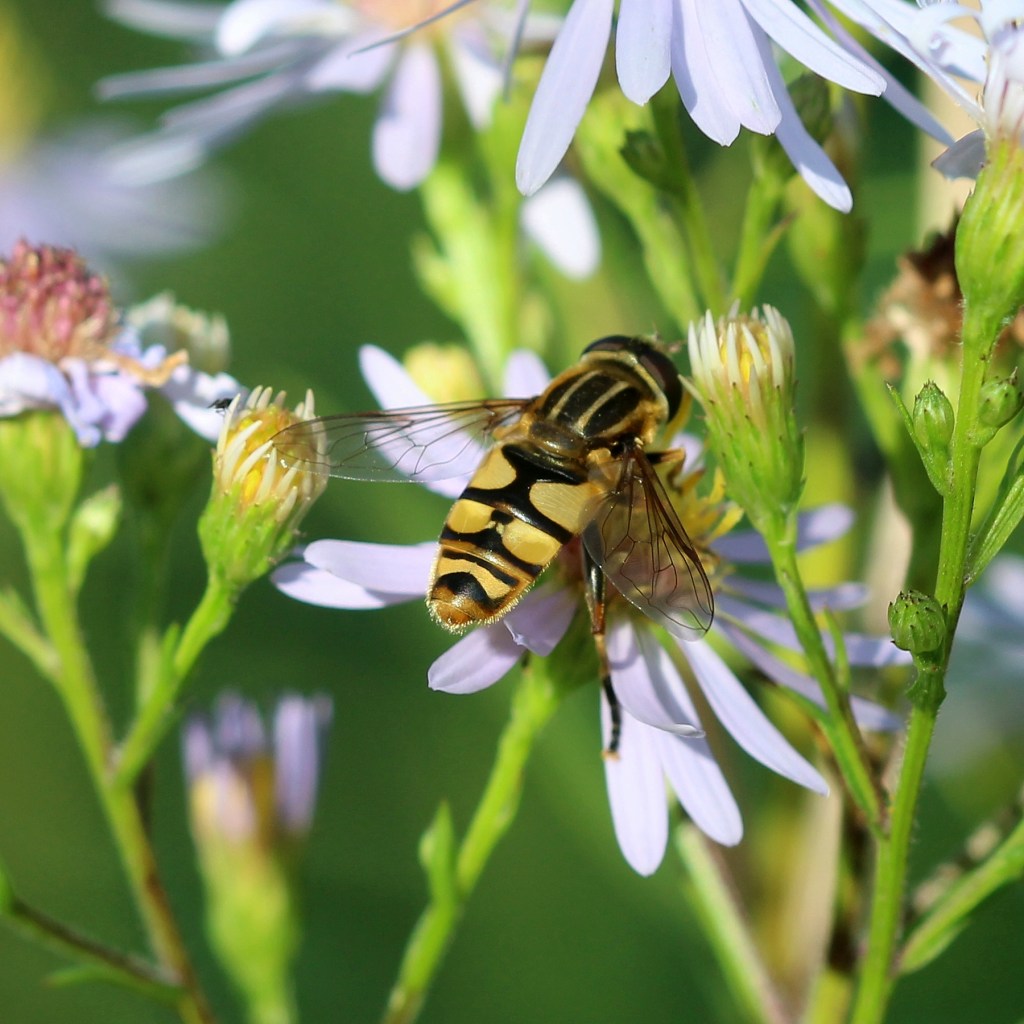
Helophilus fasciatus on Lindley’s aster (Symphyotrichum ciliolatum) looking for pollen and nectar.
On a warm late summer day if you walk into a field of flowers particularly yellow flowers like goldenrods you might think you have stepped into a swarm of bees or wasps. There is intense buzzing and many small yellow and black insects on the flowers and flying all around you. But despite all appearances these are not bees or wasps at all. They are flies. Syrphid flies, also known as flower flies and hover flies, to be more exact, and there are many species that mimic bees and wasps, a good strategy if you are trying to fend off predators.
Syrphid flies are true flies in the Order Diptera (“two wings”) and Family Syrphidae. Adult syrphid flies feed on nectar, pollen, and sugary secretions from aphids. You can use their love of sweets to attract them with mixture of sugar or honey and water sprayed on surfaces like tree trunks in open areas. When moving about on flowers syrphid flies assist in the pollination of many plant species including crops we grow.
Eristalis transversa on sawtooth sunflower (Helianthus grosseratus). Small hairs on the body of the fly are dusted with pollen. It will probably eat most of the pollen but enough will be spread across the flower head to ensure pollination.
The larvae have more varied diets depending on the species. Some syrphid fly larvae feed on decaying plant matter, damp wood (perhaps for the bacteria and fungus which are more nutritious?), and subterranean parts of plants. Others prey upon aphids, scale insects, thrips, and similar sap-sucking insects and can be beneficial in crop fields and gardens. Some species lurk in ant nests where they disguise themselves with chemical secretions and eat ant larvae.
Syrphid larvae in the tribes Eristalini and Sericomyiin live in muddy stagnant water, even cesspools, where they feed on detritus. A long breathing tube from the anal segment pokes above the water to access the air. This long breathing tube has earned them the name “rat-tailed maggots”.
I recently bought “Field Guide to the Flower Flies of Eastern North America” and have found it very helpful in figuring out species of syrphids that live in my area. The book is well illustrated and includes descriptions and range maps. In the descriptions, the authors have included flowers that species typically visit if known. I have been able with this book to identify three syrphids (Eupeodes americanus, Sericomyia chrysotoxooides, Toxomerus marginatus) that had been in my “unknown” files for several years. And I’ve identified three others I photographed last week (Eristalis dimidiata, Eristalis transversa, Sphaerophoria philanthus).
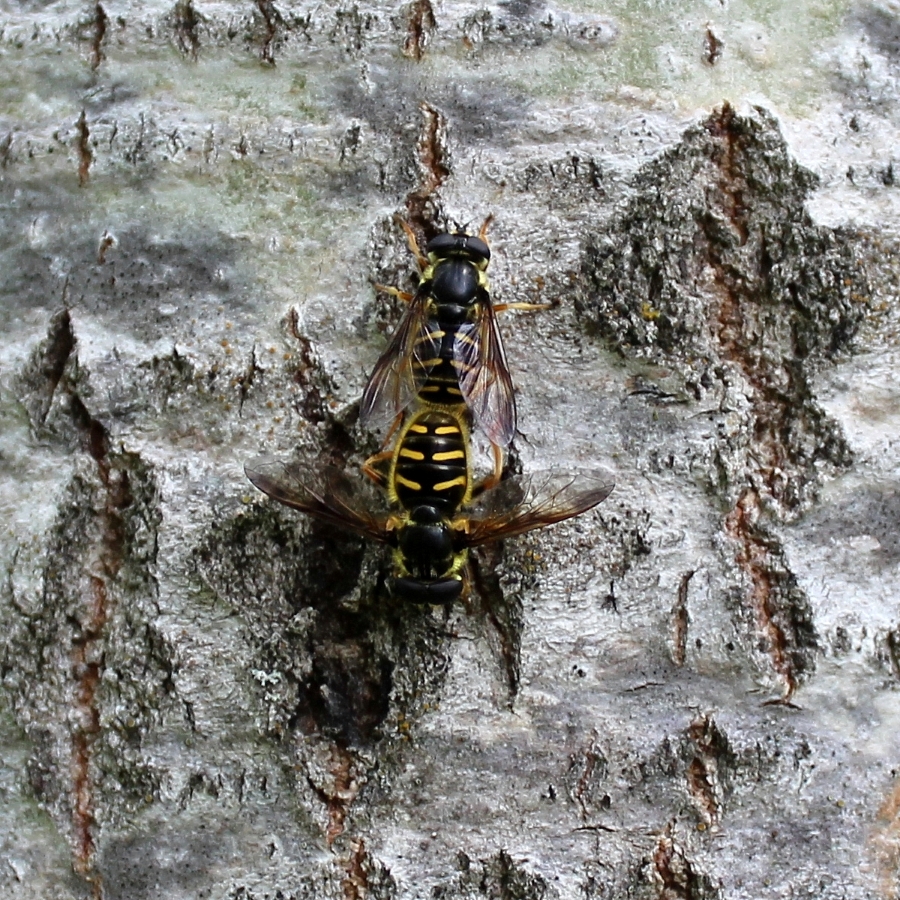
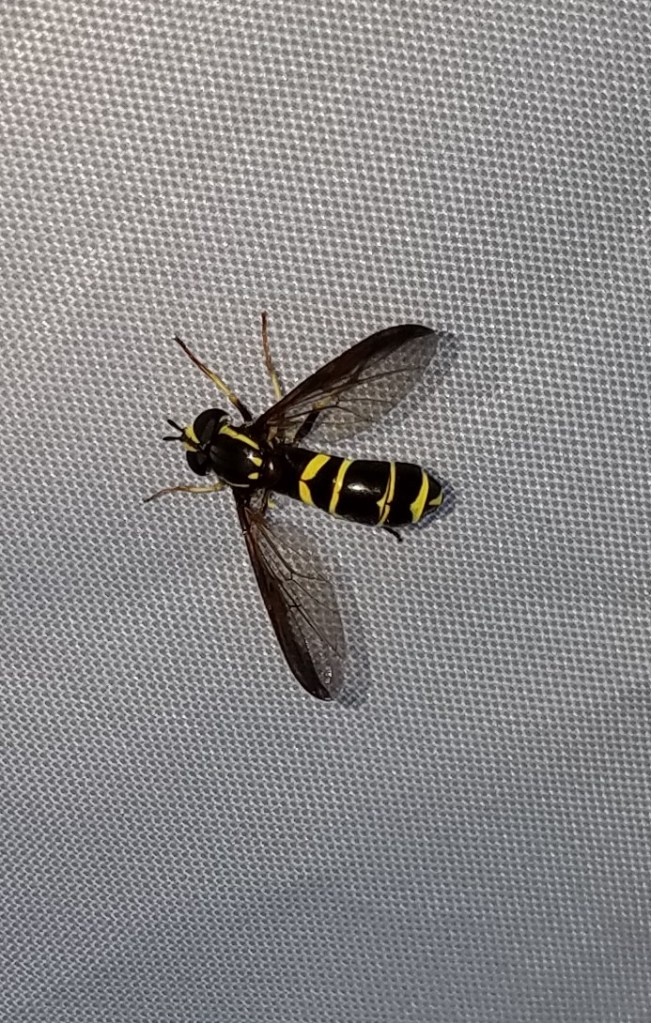
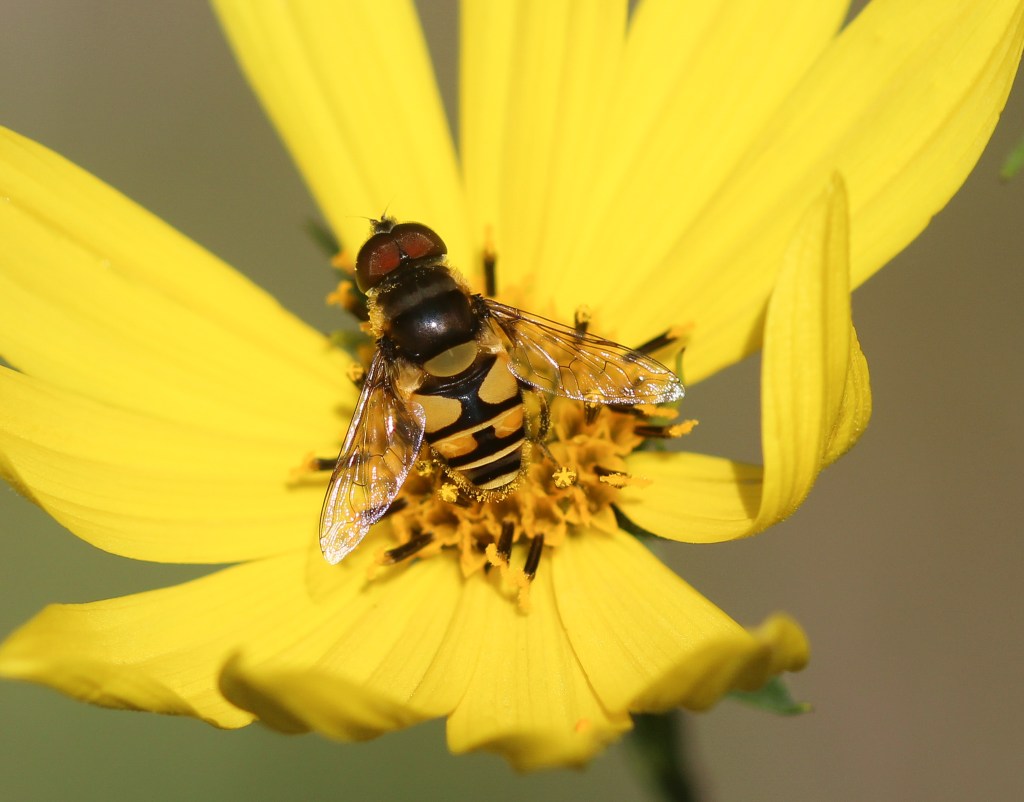
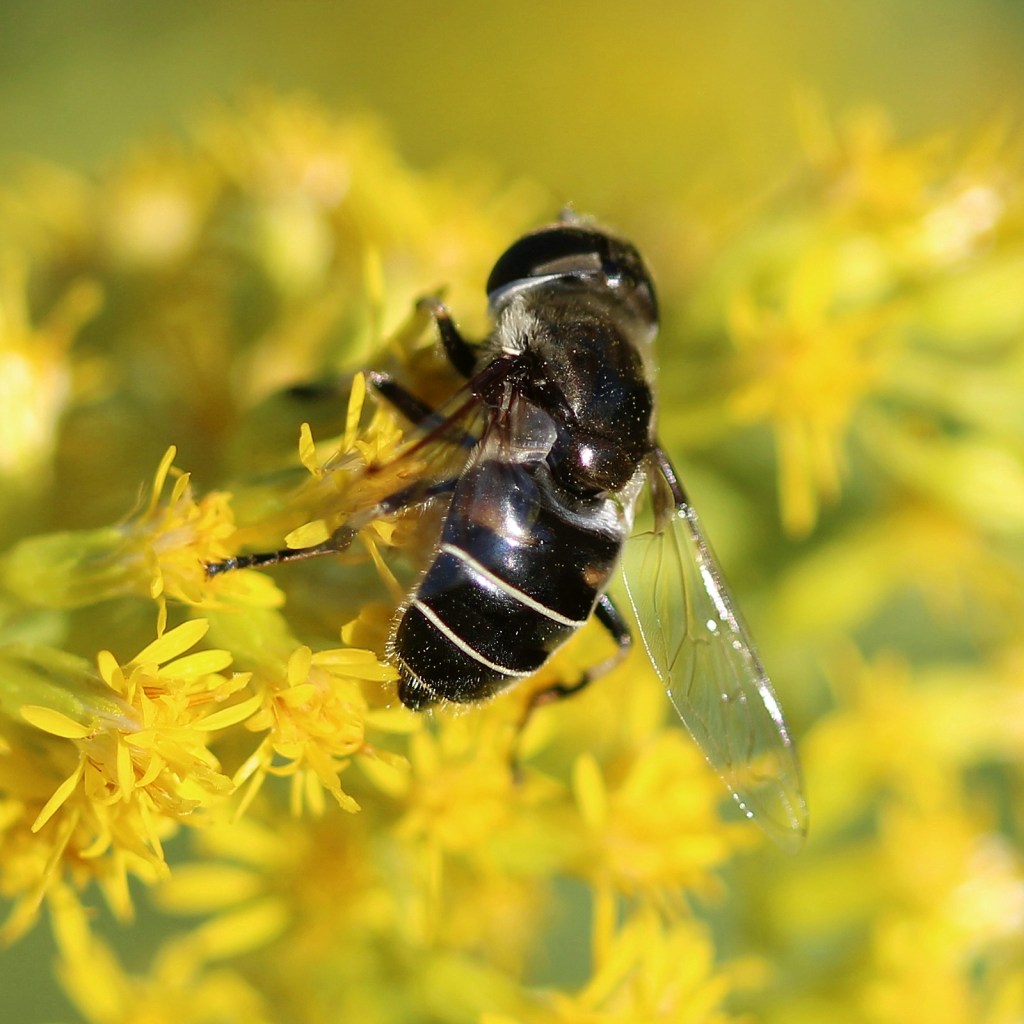
Below is a small gallery of some of the syrphid flies I’ve seen here over the years.
More flowers on shrubs and trees from around here. Trees like red maple (Acer rubrum) and quaking aspen (Populus tremuloides) and shrubs such as tag alder (Alnus incana), hazel (Corylus spp.), and willow (Salix spp.) are the first flowers of spring appearing before the more familiar spring ephemeral wildflowers that grow in forests.
Soon there will be other flowers in bloom. Hepatica (Anemone americana), stalked sedge (Carex pedunculata), and wood rush (Luzula acuminata) will come into flower in the next few days. These low growing plants occupy spaces on the forest floor and today on one of my rambles I noticed that many already have unopened flower buds.








 Not Very Far Away