Mushrooms, moss, and algae

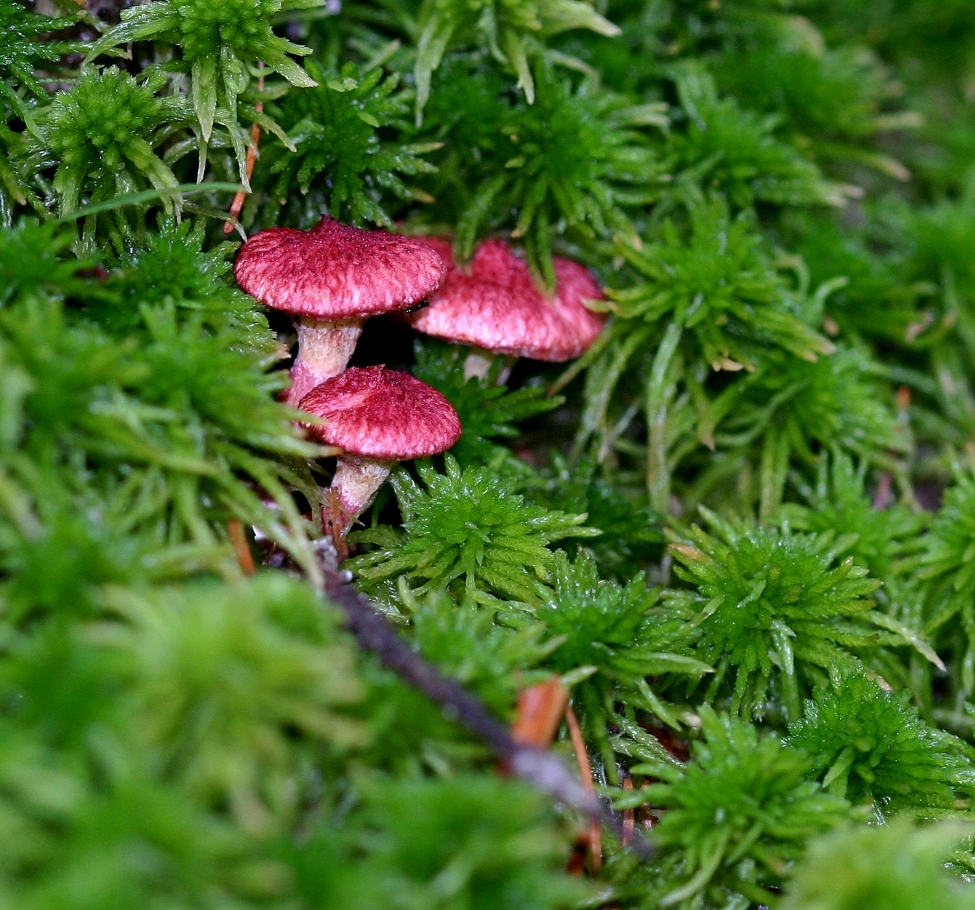
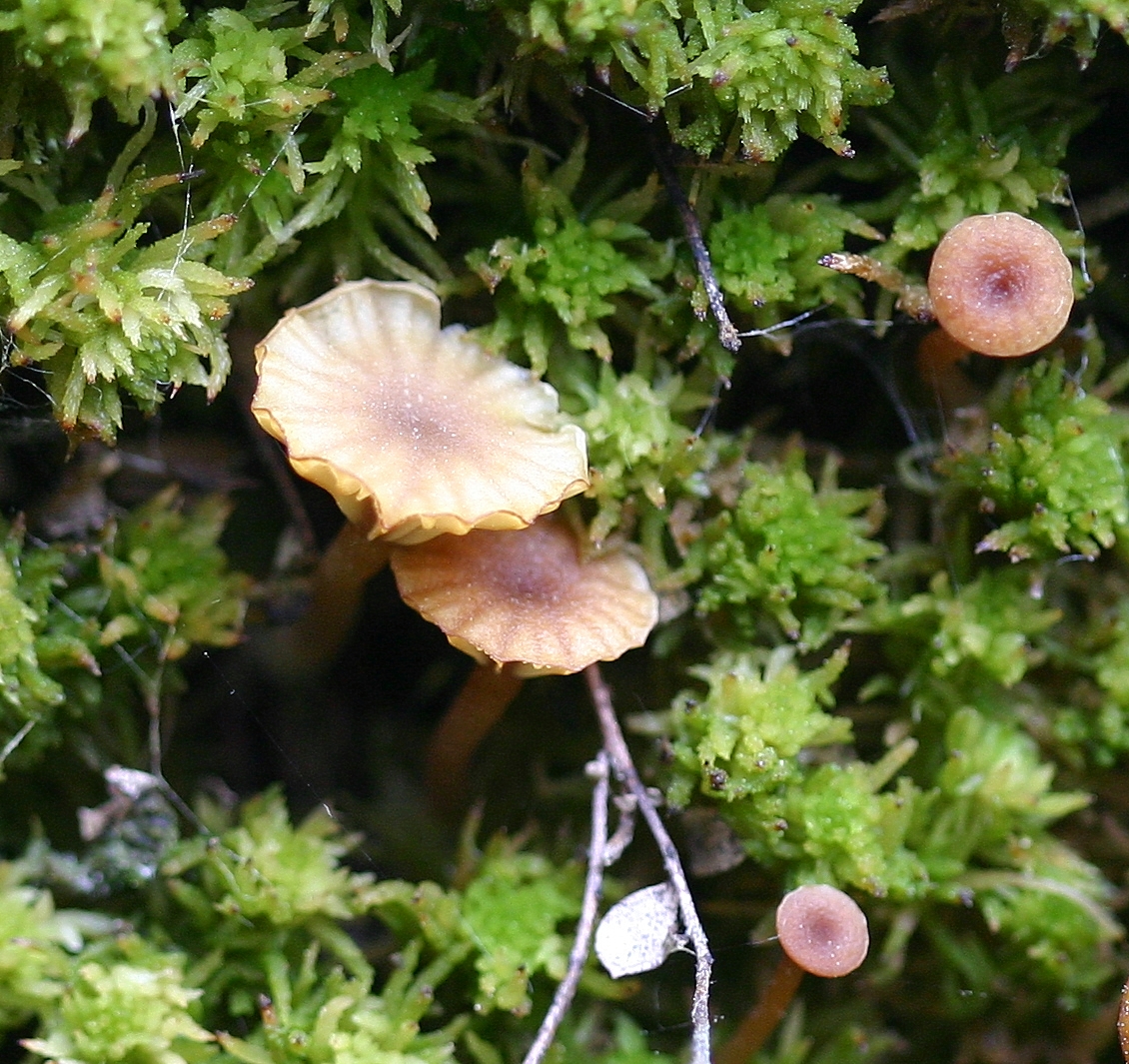
Omphalina mushrooms sprouting from peat moss growing on a wet vertical rock face.

This delicate, tiny mushroom growing from Sphagnum moss is a species of Omphalina, possibly in the Omphalina pyxidata complex. Omphalina is a Basidiomycota, one of five divisions in the Kingdom Fungi. Basidiomycota is the fungus division that includes the white button mushroom, shiitake, boletes, and bracket fungi, among many others.

The Sphagnum moss from which the mushroom is sprouting was growing in an unusual place. It was in a shaded spot in a forest on a north-facing vertical rock face with water seeping from cracks.

On some of the moss plants there is bumpy green growth that may be an algae (Coccomyxa?). Is this Omphalina mushroom part of a basidiolichen and not a mere saprophyte?

Basidiolichens are a lichen symbiosis composed of a green alga (sometimes with a cyanobacterium) and a Basidiomycota fungus. Most lichens are formed by fungi in the division Ascomycota.

Omphalina fruiting bodies sprouting from Sphagnum moss. On the moss just below the largest mushroom are granules of a green alga.

The genus Omphalina has undergone taxonomic revisions lately and has been split into other genera. One of these is Lichenomphalina, a basidiolichen. Maybe the mushrooms in the photos are a Lichenomphalina, but until I go back to the site where I found it, I won’t know for certain.

More reading

Pins and needles

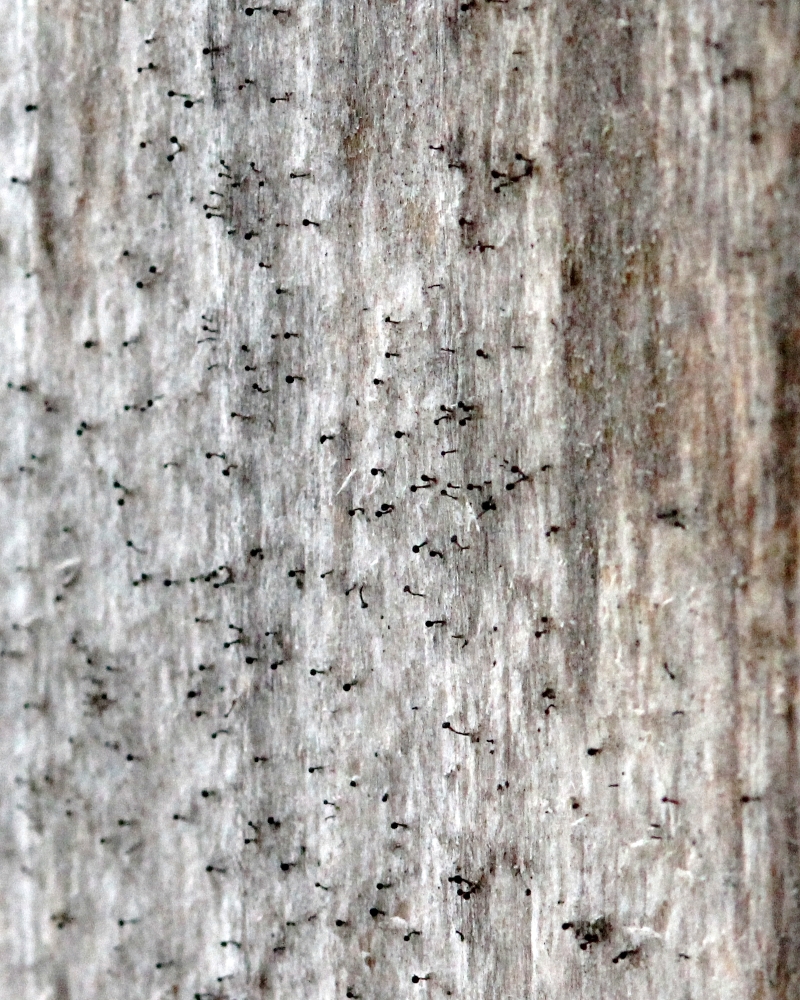
This may be a Calicium species. It has an immersed thallus. It is growing on weathered white cedar wood at the edge of a forest, and shaded most of the day.

The black stubble in the top photo are the fruiting bodies of a lichen. I found them growing on a piece of weathered cedar of an old birdhouse. I had set up that birdhouse about twenty-five years ago at the edge of a field and forest. Over the years, as the forest grew around the birdhouse, these tiny lichens began growing on the wood.

Lichens are a varied lot. Depending on the species, they can look like dust, little shrubs, gossamer, leaves, or overlapping shingles. Some lichens, like the one in the top photo, resemble whisker stubble or tiny straight pins. They are, fittingly, called whisker lichens and pin lichens.

Whisker lichens are minute, measuring just 1 to 2 millimeters in size. Most only grow on old wood or the bark of old trees. Many species are considered indicators of stable forest environments with long-term ecological continuity.

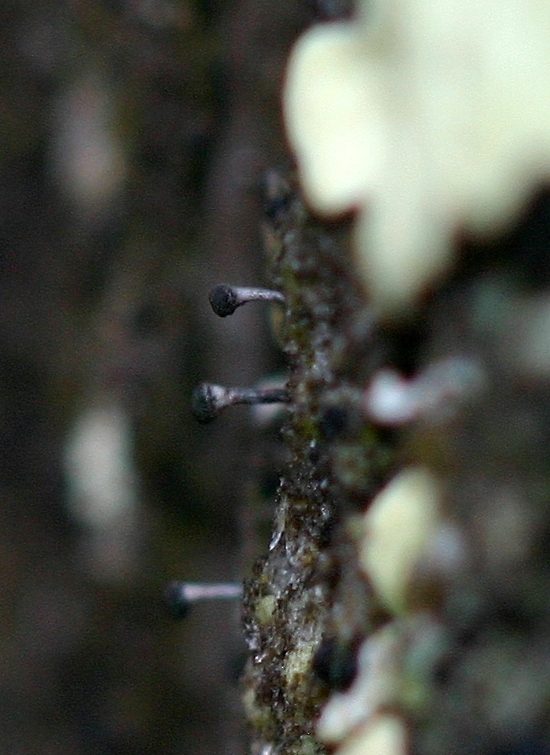
Whisker lichen apothecia. This species has an immersed thallus. Growing on a weathered balsam fir stump near the edge of a small wetland in a forest.

Taxonomy

The fungal partner (mycobiont) in whisker lichens are members of the Ascomycota, a group of fungi known as cup fungi or sac fungi. Familiar Ascomycota include morels, penicillium molds, and yeasts that are used to ferment bread and beer.

The algal partner (photobiont) is a green alga, usually a species of Trebouxia, a genus of unicellular algae that exists in almost all habitats. They can be free-living, but many species form symbiotic relationships with fungi to form lichens.

Description and terminology

The thallus (body) of whisker lichens may be minutely rough-surfaced (verruculose-granular) or immersed. If immersed, the fungal hyphae and the algae photobiont grow just below the surface of the substrate.

Whatever the thallus form, the apothecia (fruiting bodies) are borne on a long or short stalk, or rarely, sessile. They may be gray, blackish-brown, or greenish-black. At the top of the apothecia is a globose to lenticular capitulum (“little head”), a cup-shaped structure that produces spores.

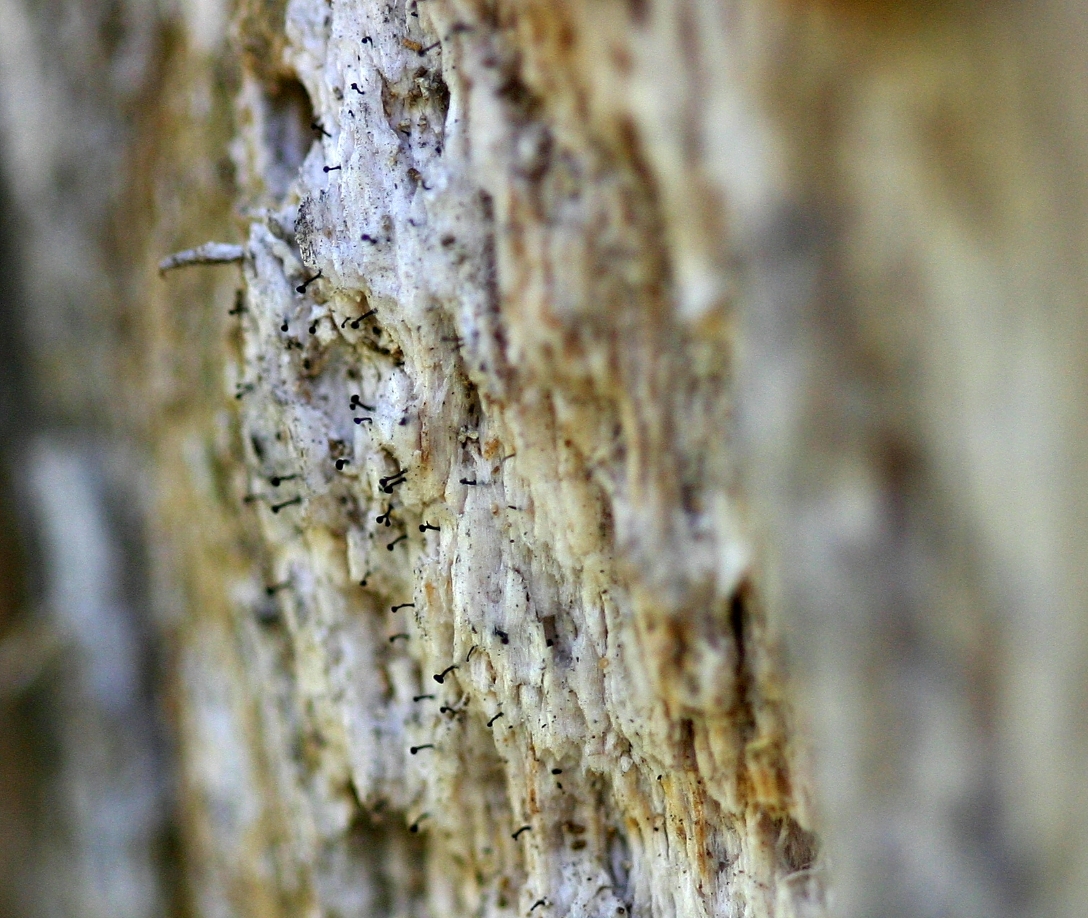
A species of whisker lichen on an old white pine stump. Possibly a Calicium species.

Determining species

Species determination in whisker lichens is complicated. Morphological characters can only go so far. At best, you might get to genus. For positive identification, microscopic examination of the capitulum and spores is necessary.

Finding whisker lichens

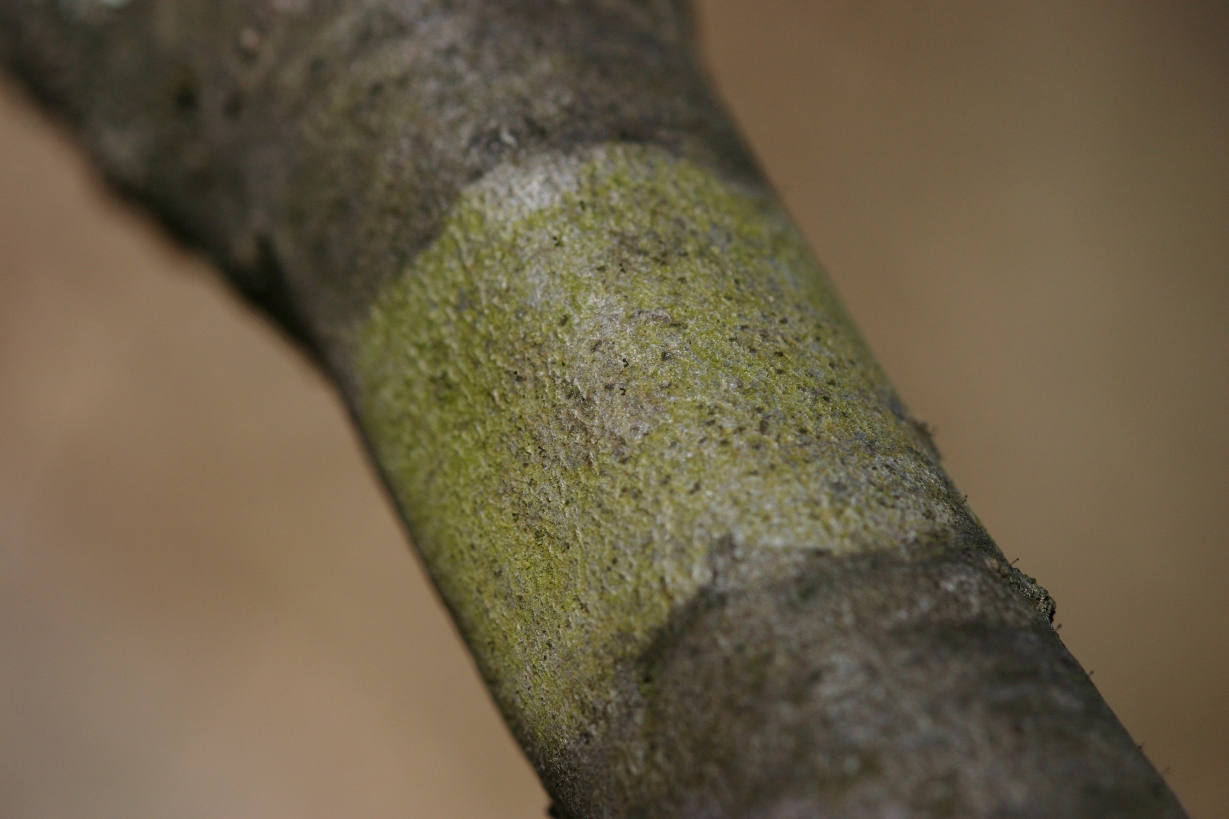
Tiny whisker lichens are growing on or from this green crustose lichen on an alder branch.

I have found whisker lichens growing on weathered jack pine twigs while photographing other lichens. Most of the ones I have seen seem to prefer old, weathered wood, but I did find one on green crustose lichen that was growing on an alder branch. It may have been a lichen parasite. These are interesting fungi that you can find with a hand lens, or in my case, a macro lens, scanning up and down the trunks and branches of trees, weathered wood, and other lichens.

Further reading

Missing the colors of mushrooms in the fall

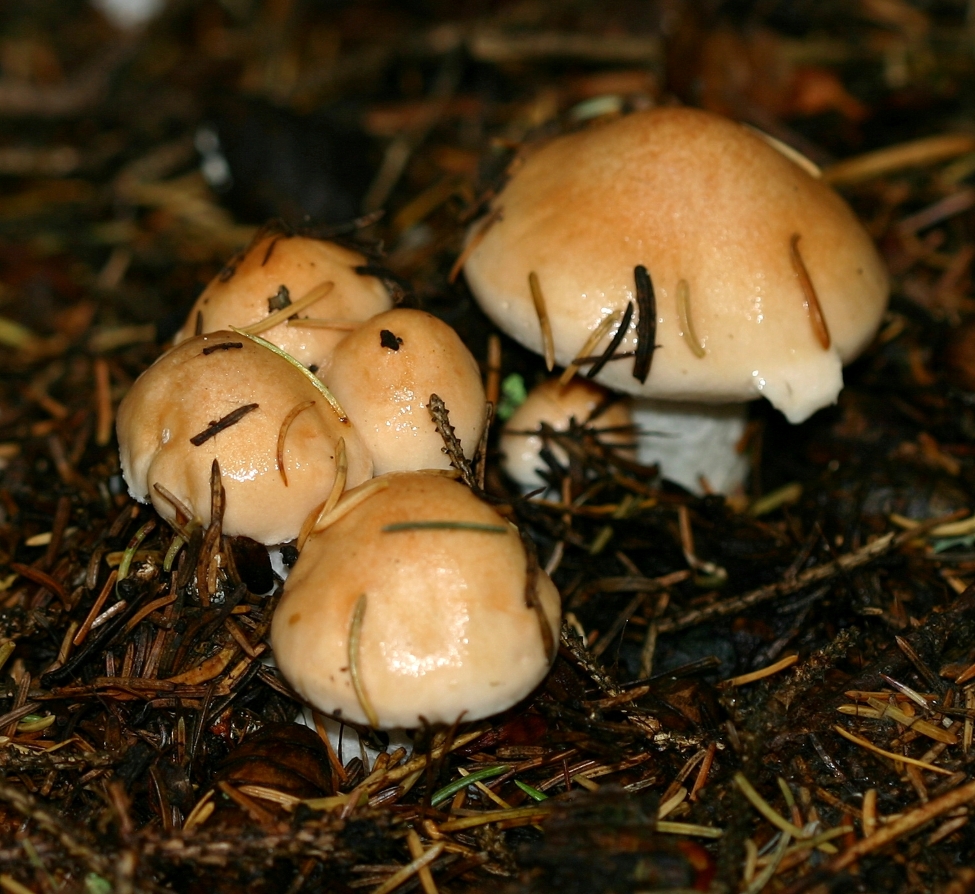
Hygrophorus pudorinus

This has been an exceptionally warm and dry summer and fall, affecting everything in the forests, fields, and wetlands. Fall colors have been rather drab this year. Wetlands are drying up. Many trees began dropping their leaves in August.

September and October are times when the forests are full of colorful fungi. I always look forward to going out and looking for mushrooms. But this year mushrooms of any kind are far and few between. A few puffballs have popped up, and some Amanitas tried to grow before succumbing to the heat.

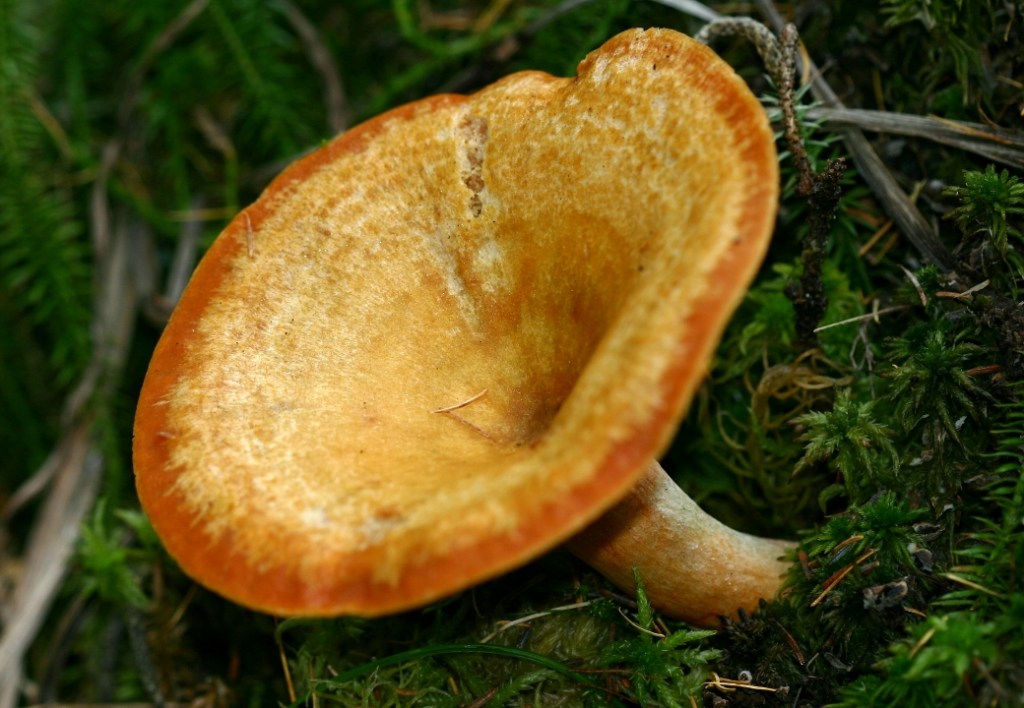
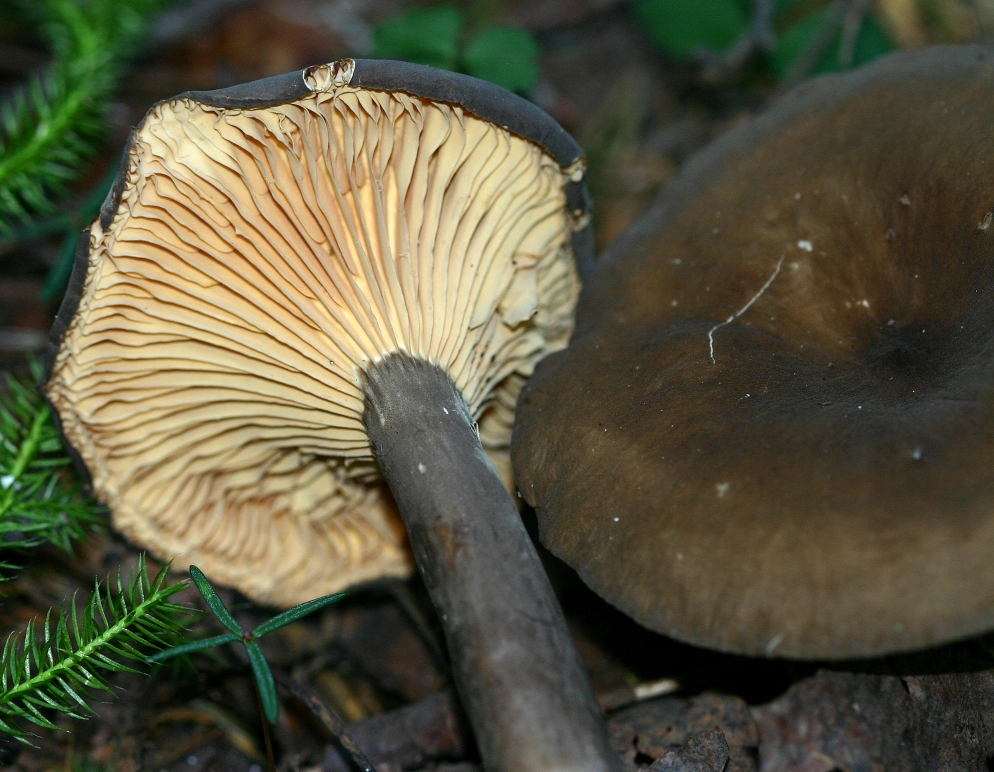
This slideshow showcases some of the colorful fungi that should be here, but for lack of rain, are not.

Larch Bolete and Pine Bolete

It’s fully autumn now and despite frosty nights and sometimes cooler days, this is a good time to hunt for mushrooms. At this time of the year, there are many interesting species popping up from the duff, through the moss, the sides of rotting logs, and even from fallen pine needles.

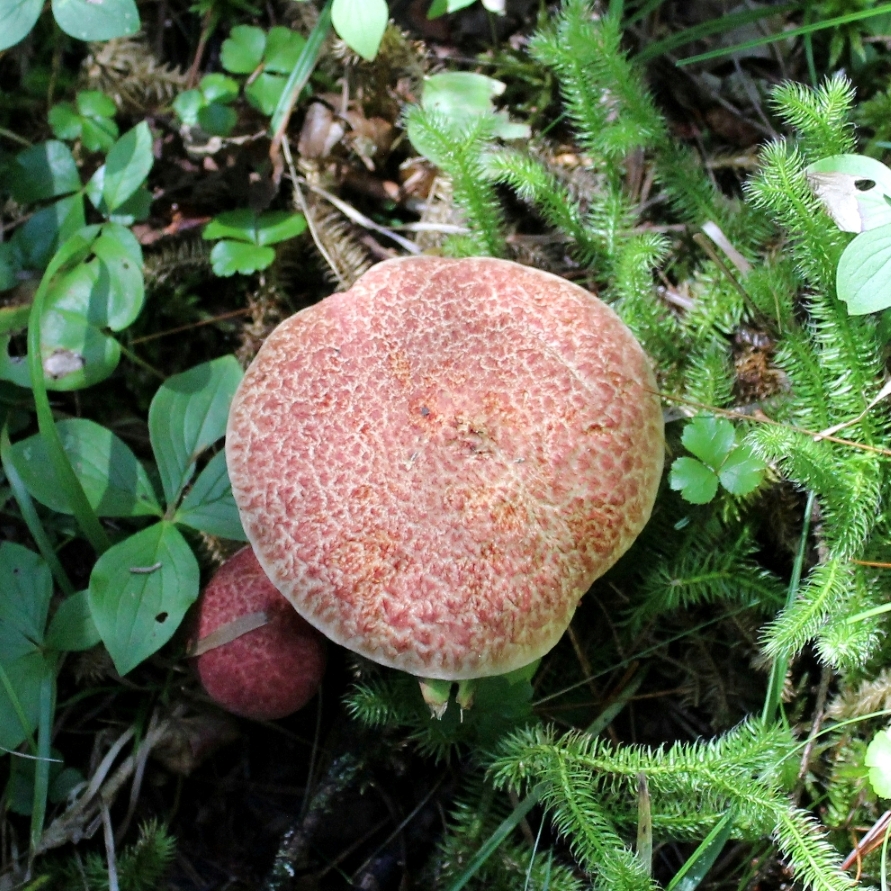
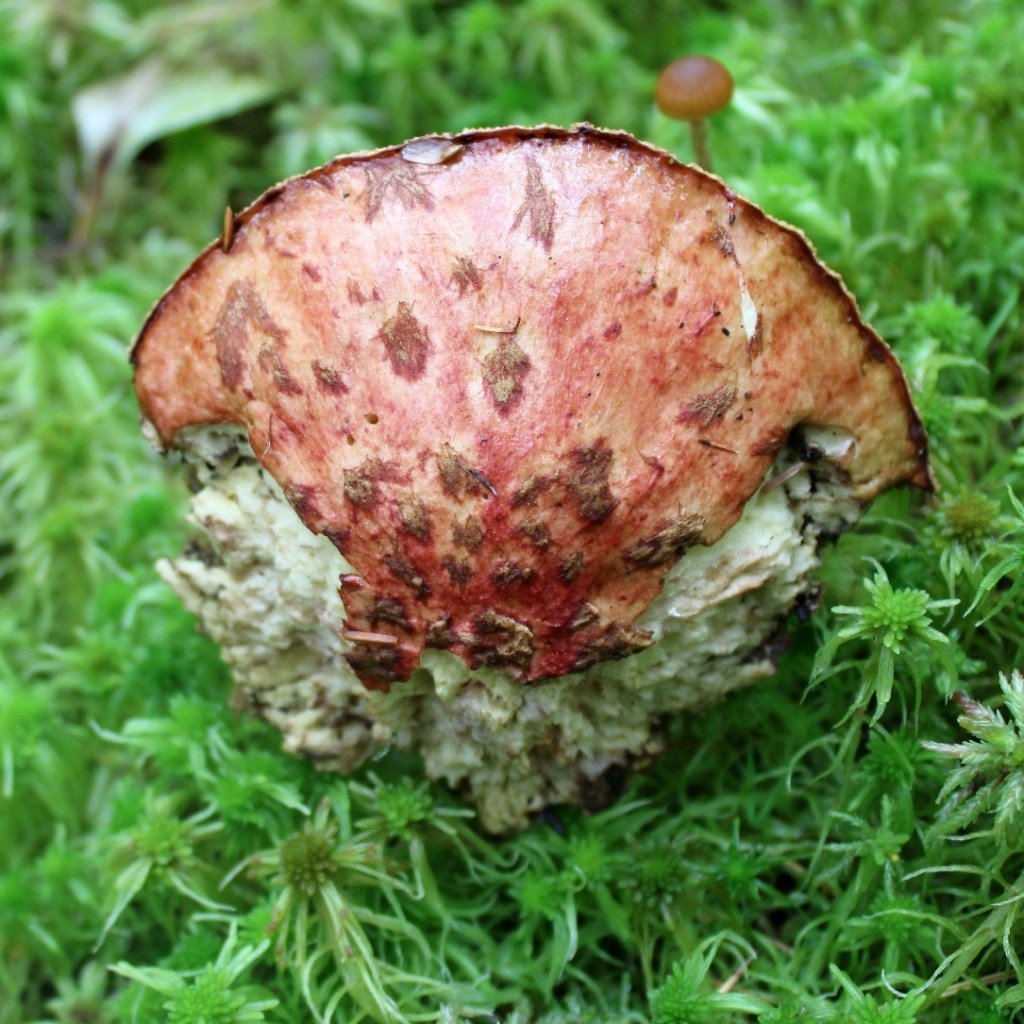
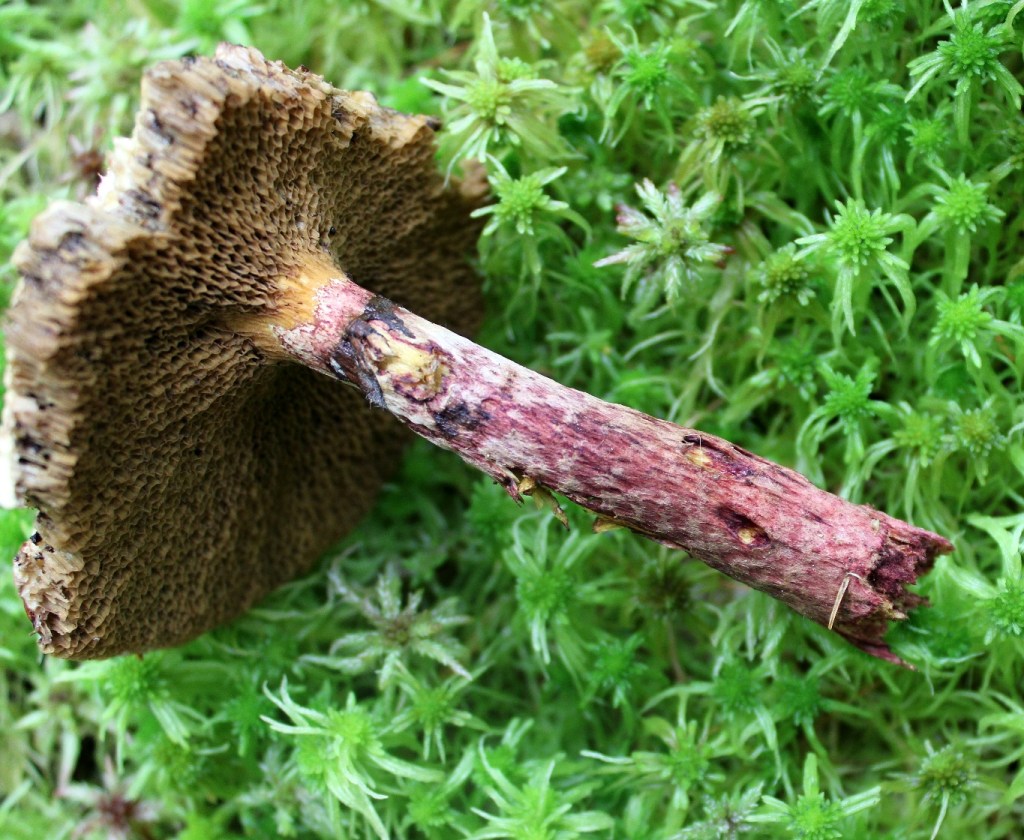
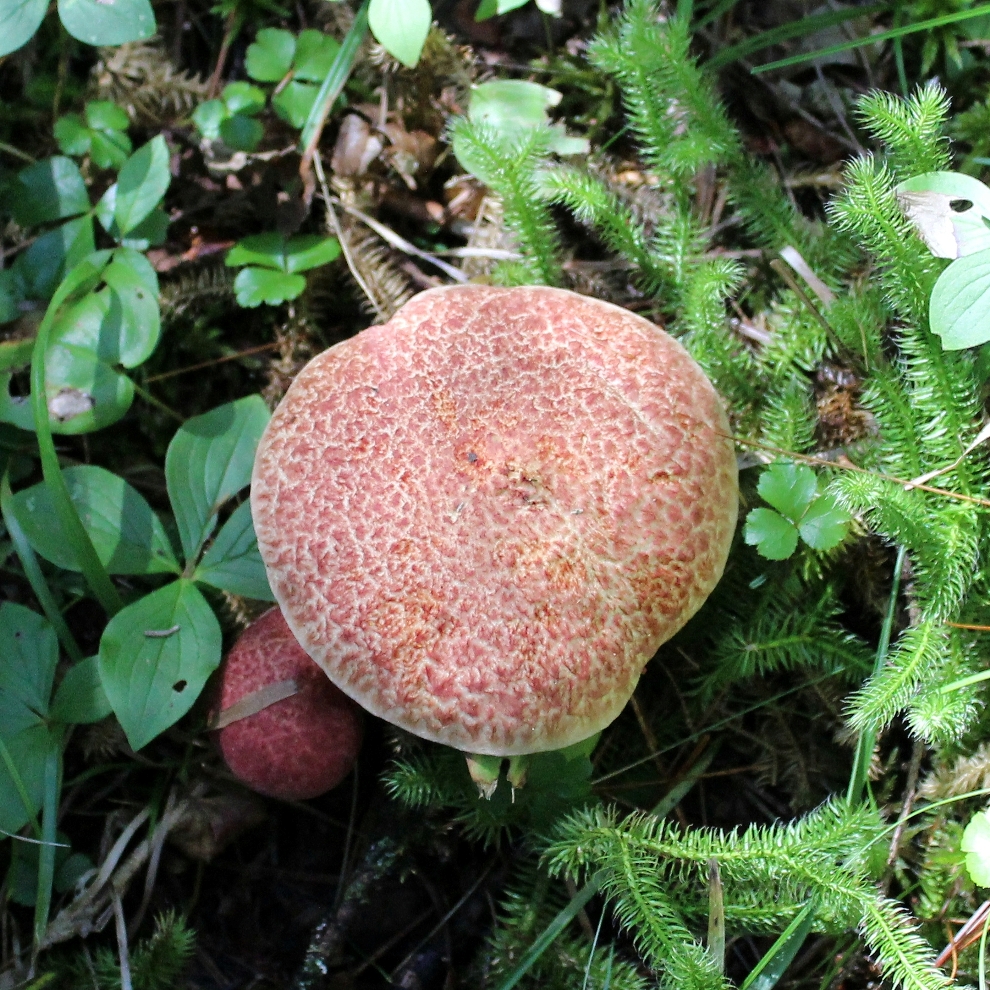
Boletes, a broad term for genera of pore fungi, have been sprouting in the woods these last few weeks. One afternoon in early October I came upon Suillus spectabilis, the larch bolete. It wasn’t a very handsome specimen, as some animal, perhaps a mouse or red squirrel, had taken some big chunks out of the cap. This reddish mushroom grows in conifer swamps where tamarack or larch (coniferous trees in the genus Larix) occur forming an ectomycorrhizal association. Two other Suillus (Suillus cavipes, Suillus grevillei) that also form ectomycorrhizal associations with Larix were noted in the area.

Finding Suillus spectabilis helped to solve another Suillus identification problem. This other Suillus species was growing on some high ground near the edge of the tamarack swamp but also just a few yards away from a white pine the ectomycorrhizal associate another bolete: Suillus spraguei (syn. Suillus pictus). Given the close proximity to two possible symbionts, I wasn’t sure whether this mushroom was growing in association with pine roots or tamarack roots. Now that I had a new red Suillus for comparison, the differences were immediately obvious. I could now add the pine bolete or Suillus spraguei to the fungi checklist.

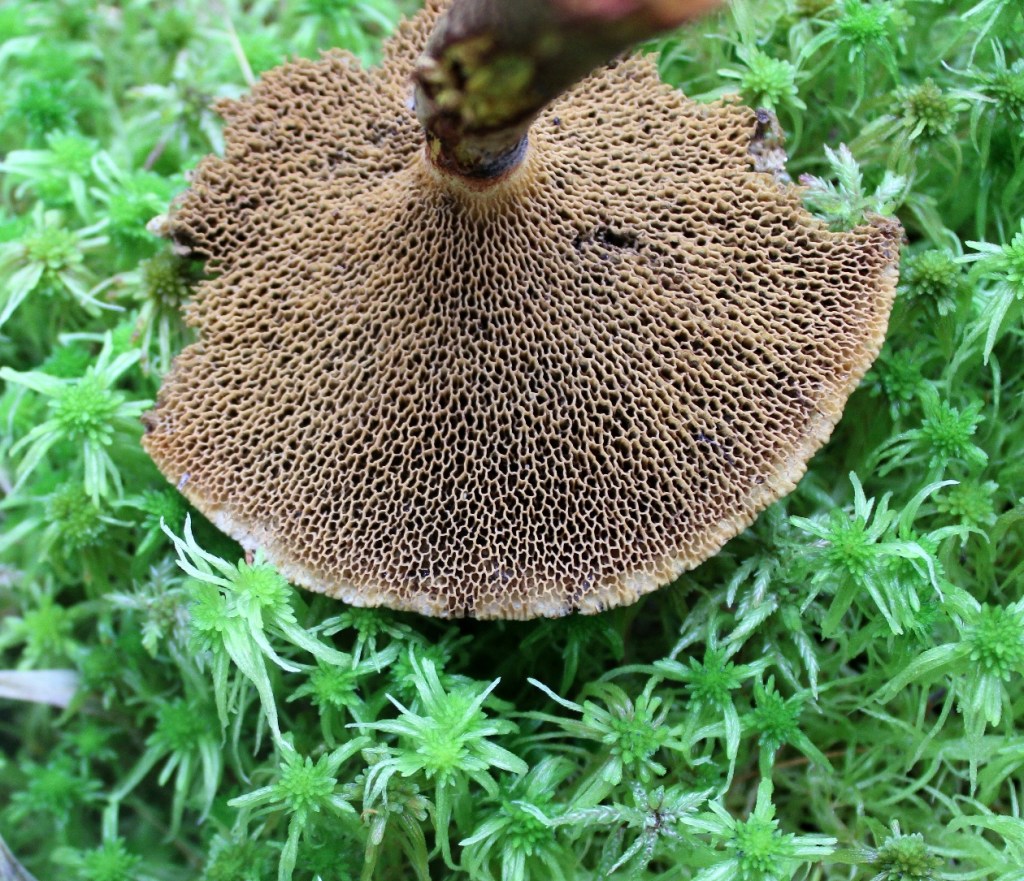
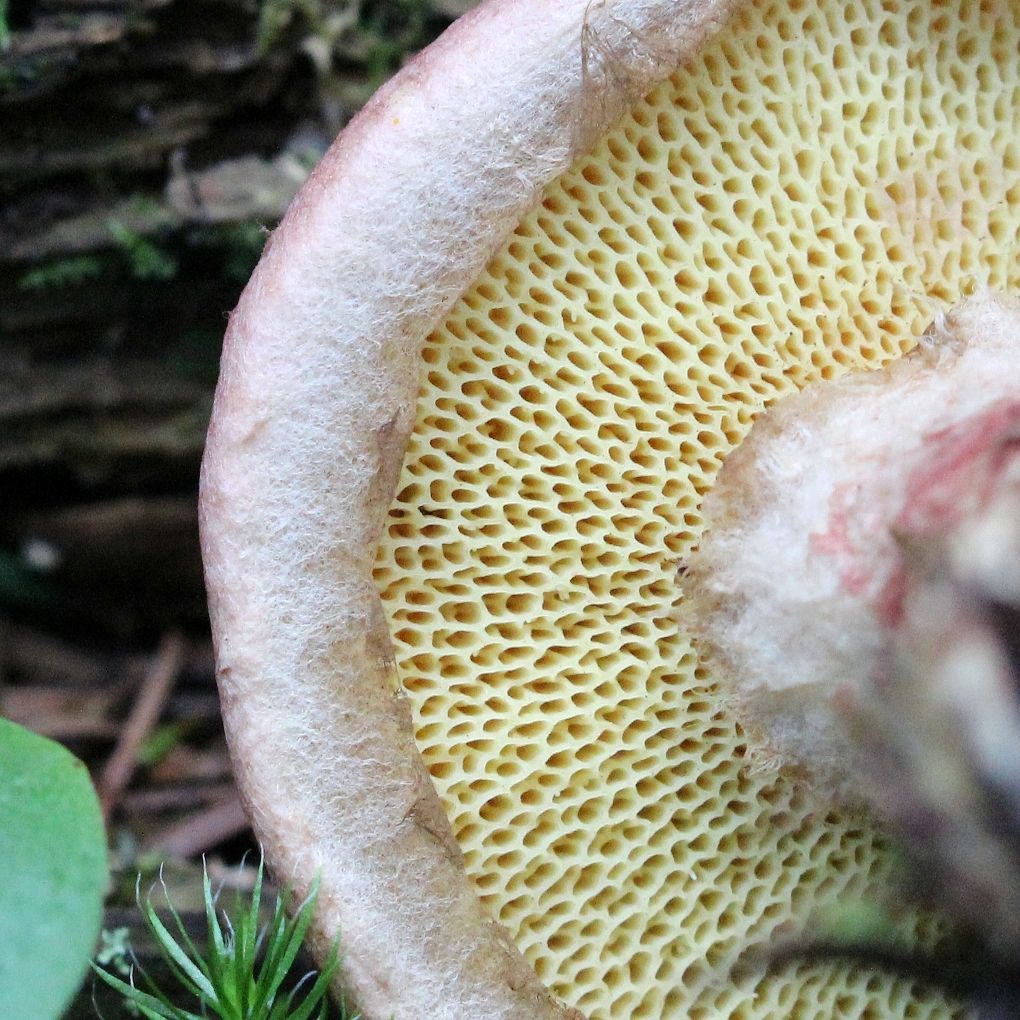
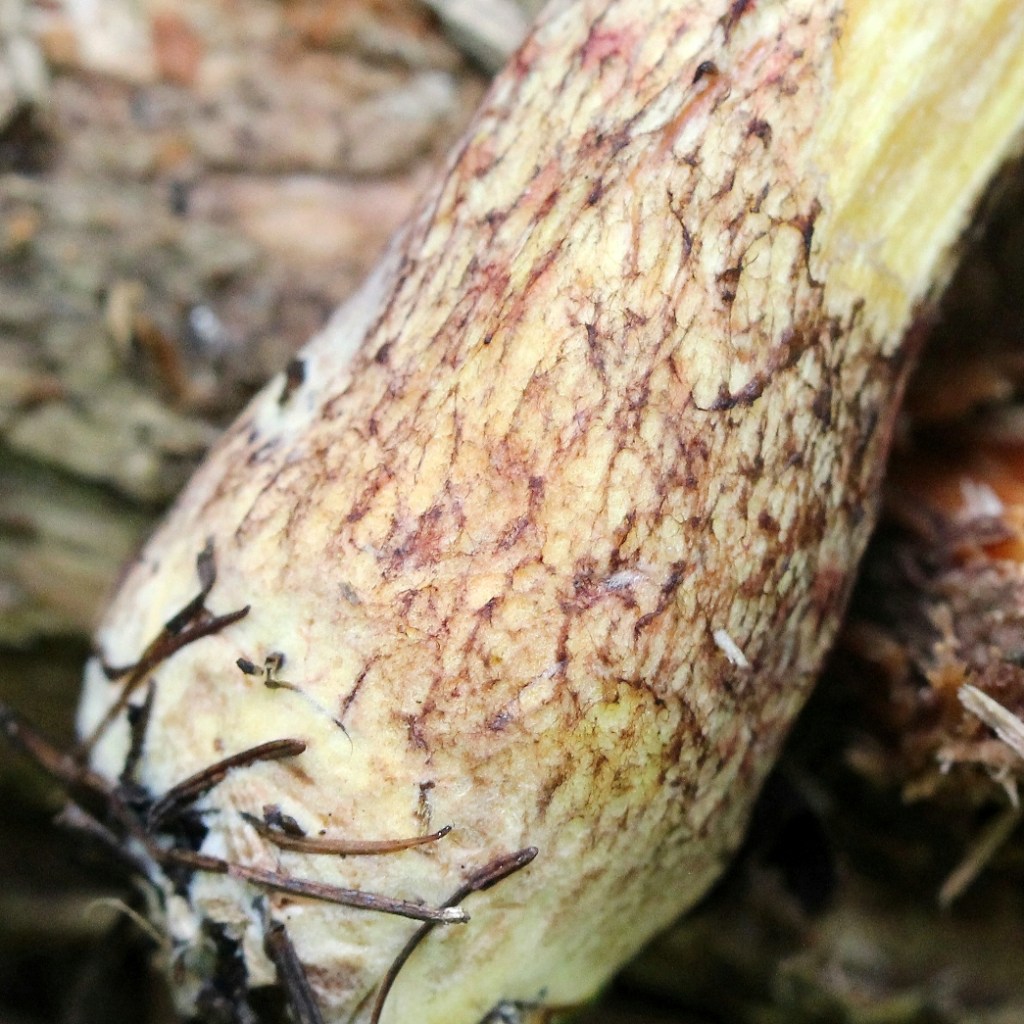
The differences between the two species, aside from the conifers they associate with, are seen in the cap, pores, and stem. For Suillus spectabilis (see here, here, and here), the cap is reddish with large pink scales; the pore surface is at first yellow, later turning brown; the margin of the cap’s underside is thin and the edge is not inrolled, and the stem is more or less equal in width from top to bottom, fibrillous and reddish.

Suillus spraguei (see here, here, and here) has a cap covered in red-brown scales; the underside is yellowish, later fading to brown; the cap margin is inrolled when young, and the stem may be a little wider at the base than at the top.

Boletes such as Suillus have undergone taxonomic revisions in recent decades clarifying genus and species delineations using molecular phylogeny. The genus is divided into three subgroups: Granulatus, Tomentosus, and Spectabilis. Subgroup Spectabilis includes Suillus spectabilis while subgroup Granulatus includes Suillus spraguei. Members of subgroup Spectabilis form ectomycorrhizal associations with Larix (larch, tamarack) and Pseudotusga (Douglas fir). Those in subgroup Granulatus form ectomycorrhizal associations with Pinus (pines) and one species is ectomycorrhizal with pines and Quercus (oaks). Ectomycorrhizal associations with Pinus in the subgroup Granulatus are further partitioned between two-needle and five-needle pines.

SOURCES CONSULTED:

Suillus spraguei

Mushroom Expert

The Bolete Filter

Boletales.com

Suillus spectabilis

Mushroom Expert

The Bolete Filter

Boletales.com

Suillus Taxonomy

Nhu H. Nguyen, Else C. Vellinga, Thomas D. Bruns, Peter G. Kennedy (2016). Phylogenetic assessment of global Suillus ITS sequences supports morphologically defined species and reveals synonymous and undescribed taxa. Mycologia, 108(6), 2016, pp. 1216–1228. DOI: 10.3852/16-106, 2016 by The Mycological Society of America, Lawrence, KS 66044-8897