I’m working on a few posts related to fungi and insects. One should be ready next weekend and will feature an unusual beetle that eats bracket fungi and sprays poison on its enemies. And a beautiful beetle, too, will be discussed. The fungi posts will be about some important species found across the northern boreal forests. There are still literature searches going on that lead me down many wandering paths, as well as coalescing all of this information into writing before these are ready to post.
Eupithecia miserulata (common pug) caterpillar feeding on flowers of sawtooth sunflower (Helianthus grosseratus). This species also feeds on coneflowers in the genus Rudbeckia.
Pug moths (Eupithecia) are a large genus (about 1,400 species) of tiny moths in the Family Geometridae (geometer moths or inchworms). There are hundreds of described species from all continents except Antarctica. Some even live on Pacific islands like the islands of Hawai’i with species whose larvae are carnivorous and catch and eat other insects. North America north of Mexico hosts at least 160 species. There are probably many more species yet to be described.
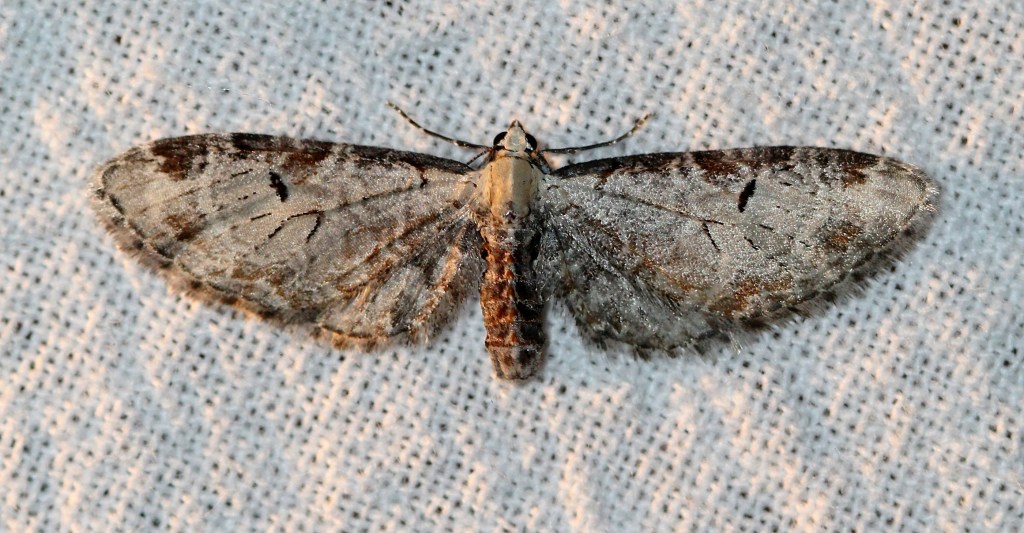
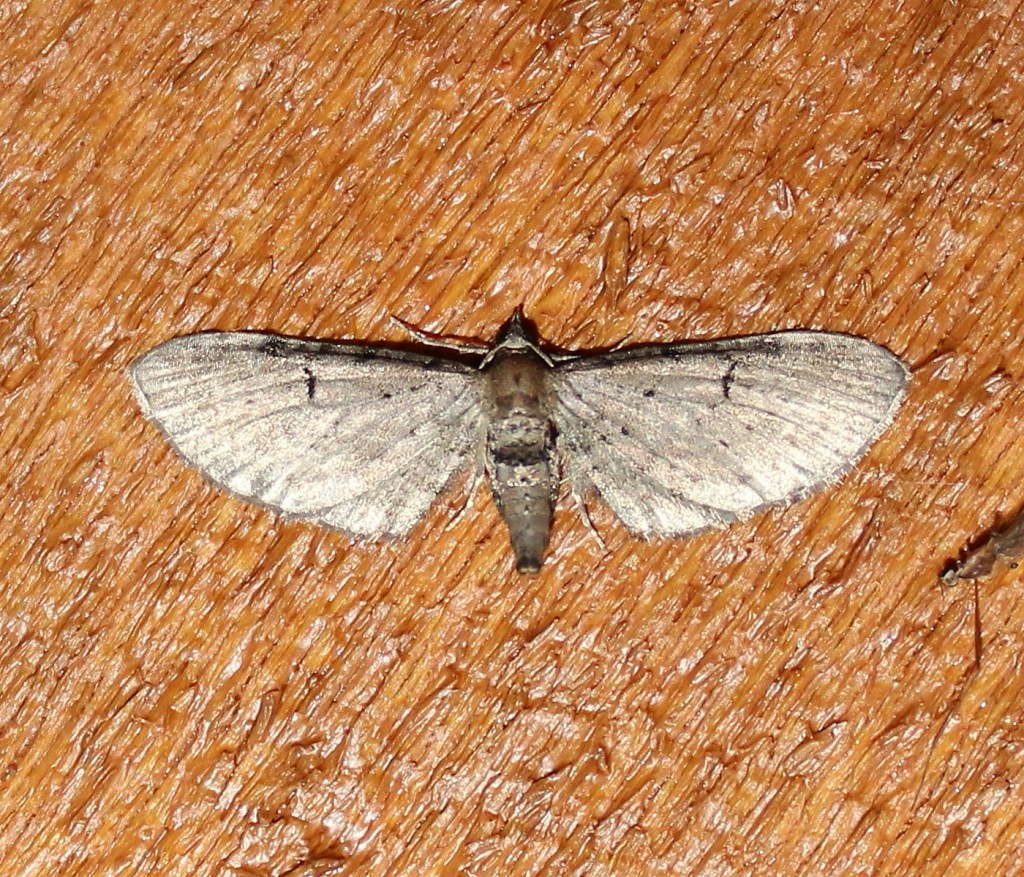
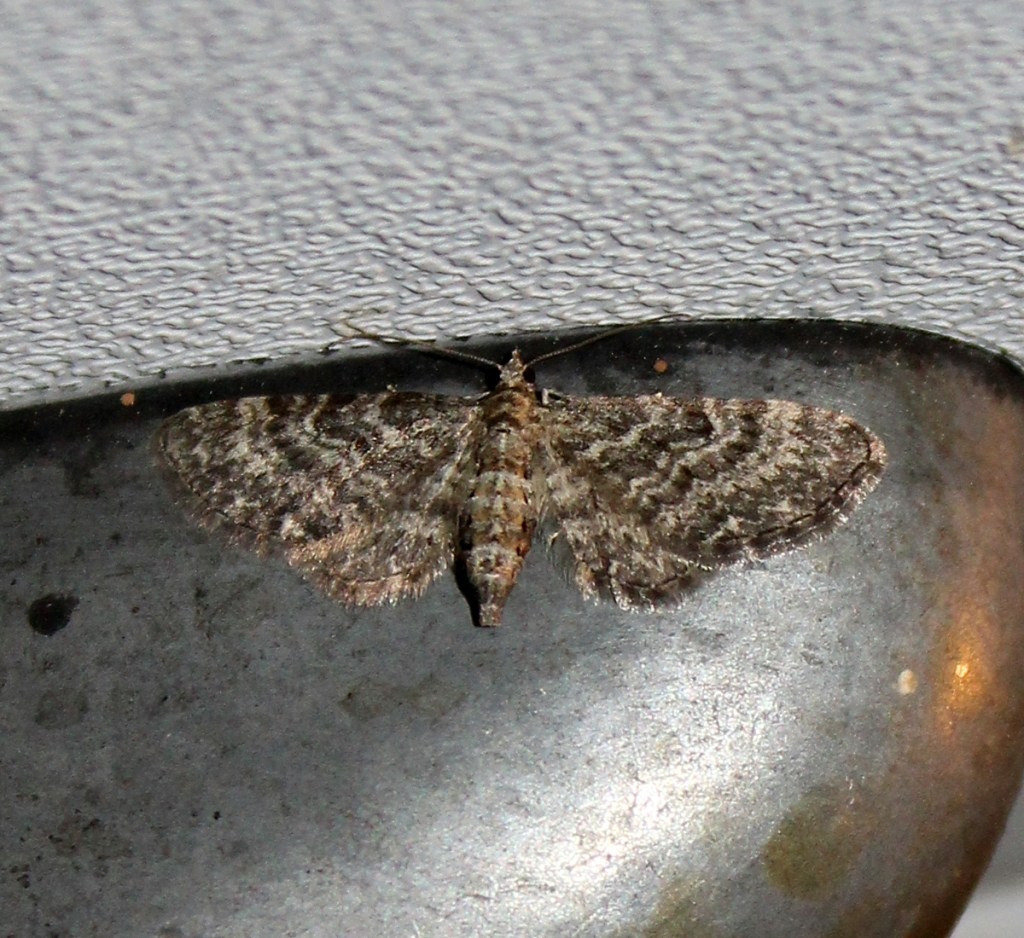
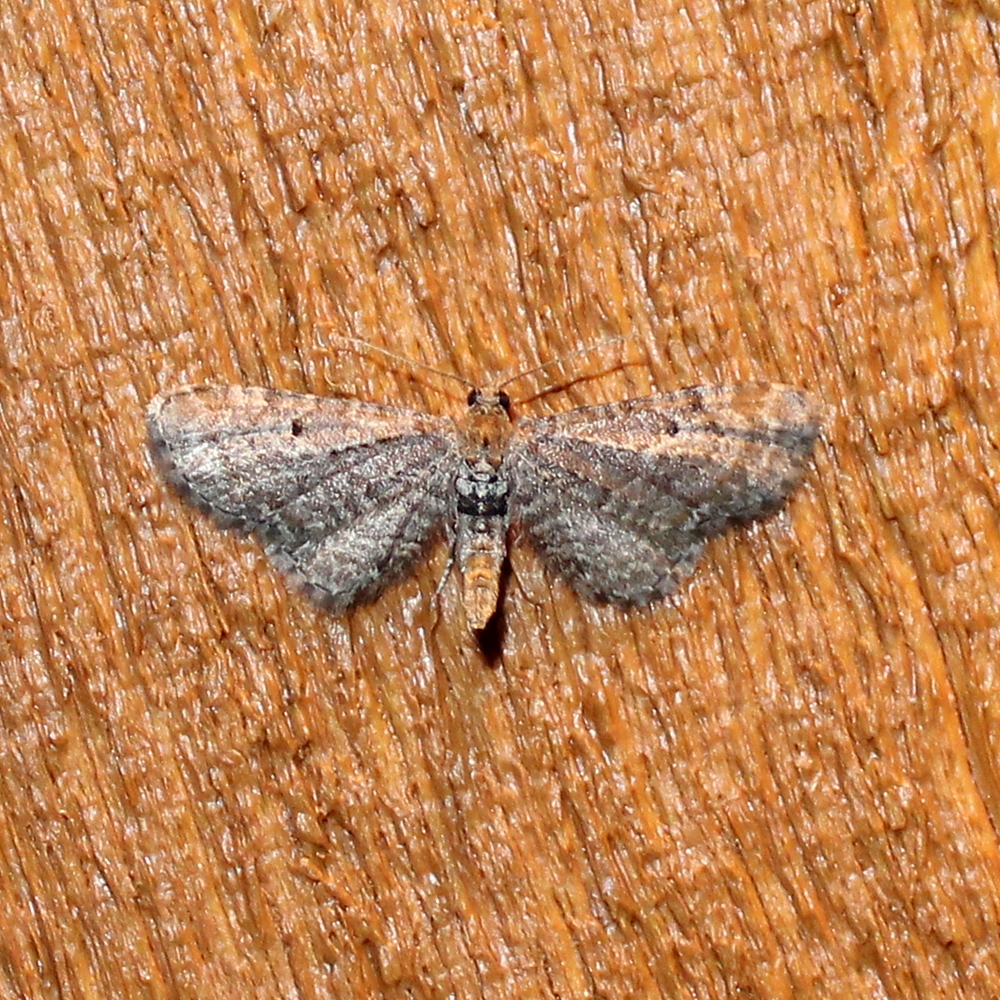
Eighteen Eupithecia species have been recorded from Minnesota. Some are known from five or fewer sightings in the state. I haven’t found all eighteen yet but have gotten to one-third of that number and that includes some of the rarities. The most common one is Eupithecia miserulata, a small grayish species with a dark dot on each of its forewings, faint scalloped lines on the wings, and often two or three dark dots along the costa. This moth can be variable and it is easy to confuse it with other species. I often find the yellowish larvae in July and August feeding on the anthers of black-eyed susan (Rudbeckia hirta) flowers, cut-leaf coneflower (R. laciniata), and sunflower (Helianthus grosseserratus). The larvae of E. miserulata are also reported to feed on oak, willow, and juniper.
Larval host preferences are not known for the other Eupithecia I’ve found except for E. strattonata (alder and spiraea), E. absinthiata (mugwort, wormwood, yarrow), and E. ravocostaliata (willow, cherry, birch and other woody plants).
Below are the six species I’ve found and been able to identify.
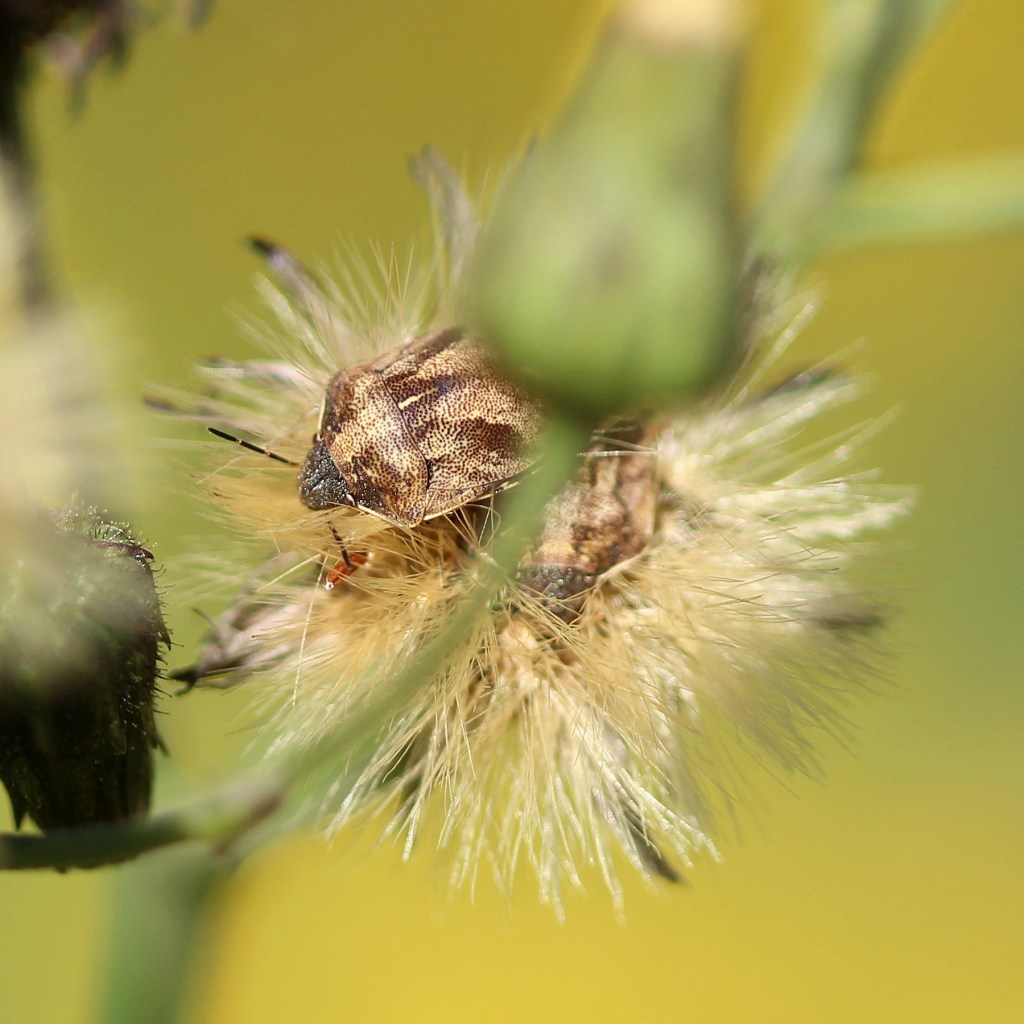
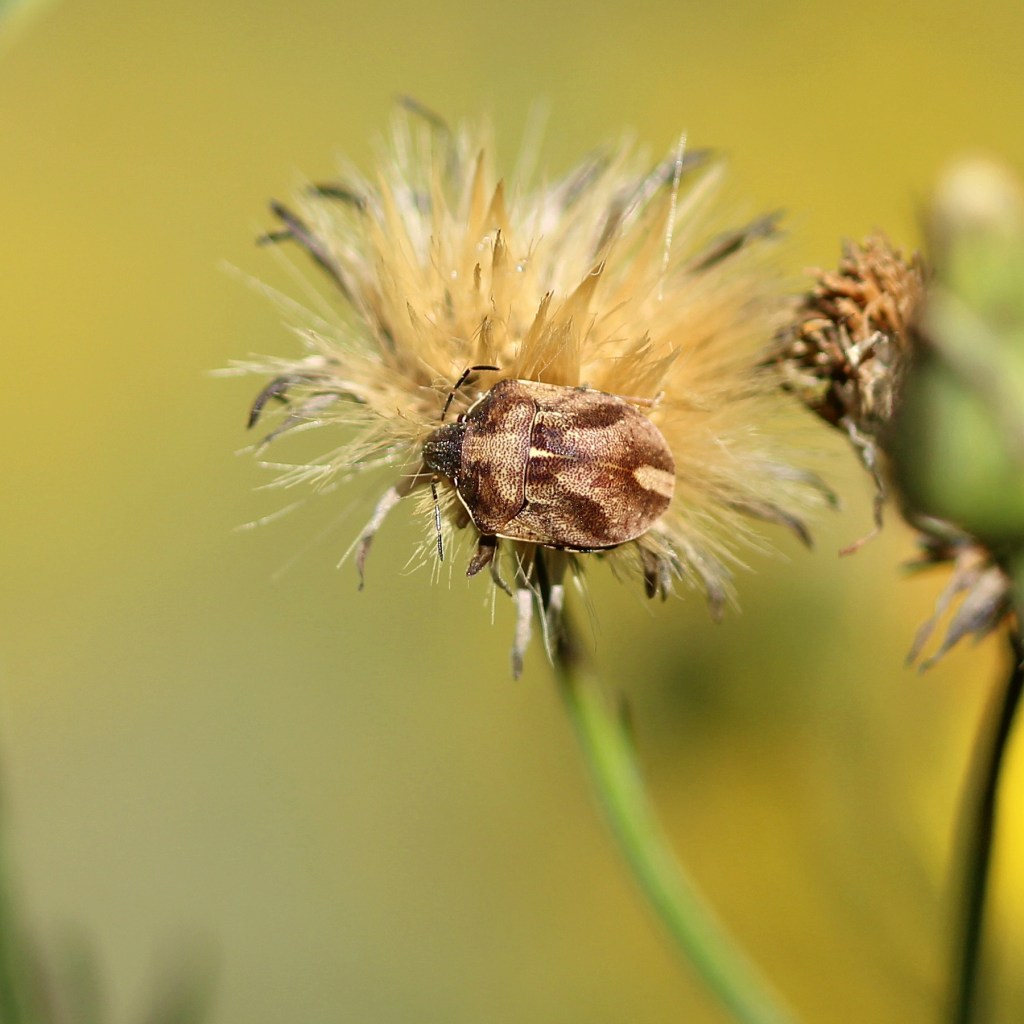
Early Sunday morning I saw a group of bronze-headed shield bugs (Homaemus aeneifrons) sunning themselves on the seed heads of Canadian hawkweed (Hieracium umbellatum). The previous night had been very cool with temperatures dipping to 40 degrees F and this cluster of seed heads facing due east into the sun was a perfect place to warm up. In all, there were six bugs catching the early morning sun.
Homaemus aeneifron is widespread in North America occurring as far south as Kansas and Arizona and as far west as Alaska, British Columbia, and California. It is frequently found in moist meadows and weedy areas. Some reports state that it feeds on grasses and sedges (Carex) and rushes (Juncus) but one has it feeding on Monarda fistulosa (wild bergamot) and Oenothera biennis (evening primrose). These on hawkweed did not appear to be feeding. Beyond catching some rays it was hard to say why they were all there.
My mothing nights find more than moths. Beetles, bugs, flies, wasps, spiders, and crickets, even snakes and frogs, are frequent visitors to the porch light. The latest non-lepidopteran to make an appearance is the sword-bearing conehead (Neoconocephalus ensiger). It is a new addition to my insect checklist and is one of five species of Tettigoniidae (Katydids) that I’ve identified from here.
The sword-bearing conehead is a large insect with males growing 4.5 to 5.5 cm, and females 5.2 to 6.4 cm. The head is conical with the sides pinched-in and black below. The body’s lower surface is edged in black. The stridulatory vein, which is used to make the call song in males, is long and weakly swollen. The ovipositor is blade-like and nearly the length of the body hence the name “sword-bearing”. Two color forms, green and brown, exist.
The call song of the sword-bearing conehead is a series of rapid tsst-tsst-tsst sounds. At higher temperatures the call song is faster. Singing begins at dusk and may continue all night if temperatures are warm. Singing Insects of North America (SINA) and Songs of Insects have recordings of this species and others on their websites.
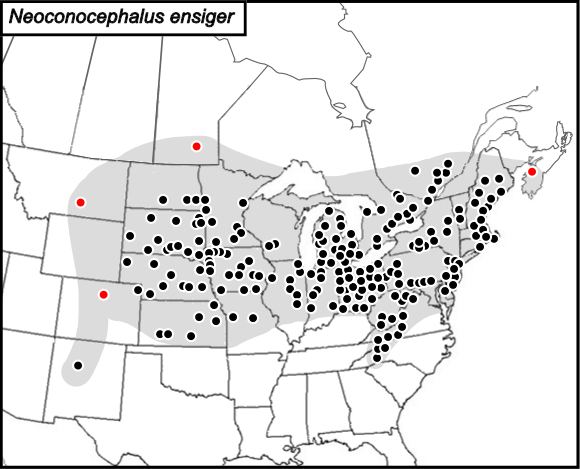
Sword-bearing conehead is common across much of the eastern and north-central US and ranges as far north as Manitoba, Ontario, Quebec, and New Brunswick in Canada. Habitat includes damp grassy areas, roadsides, and weedy areas where they feed on grasses and sedges including the flowers and developing seeds.






 Not Very Far Away