
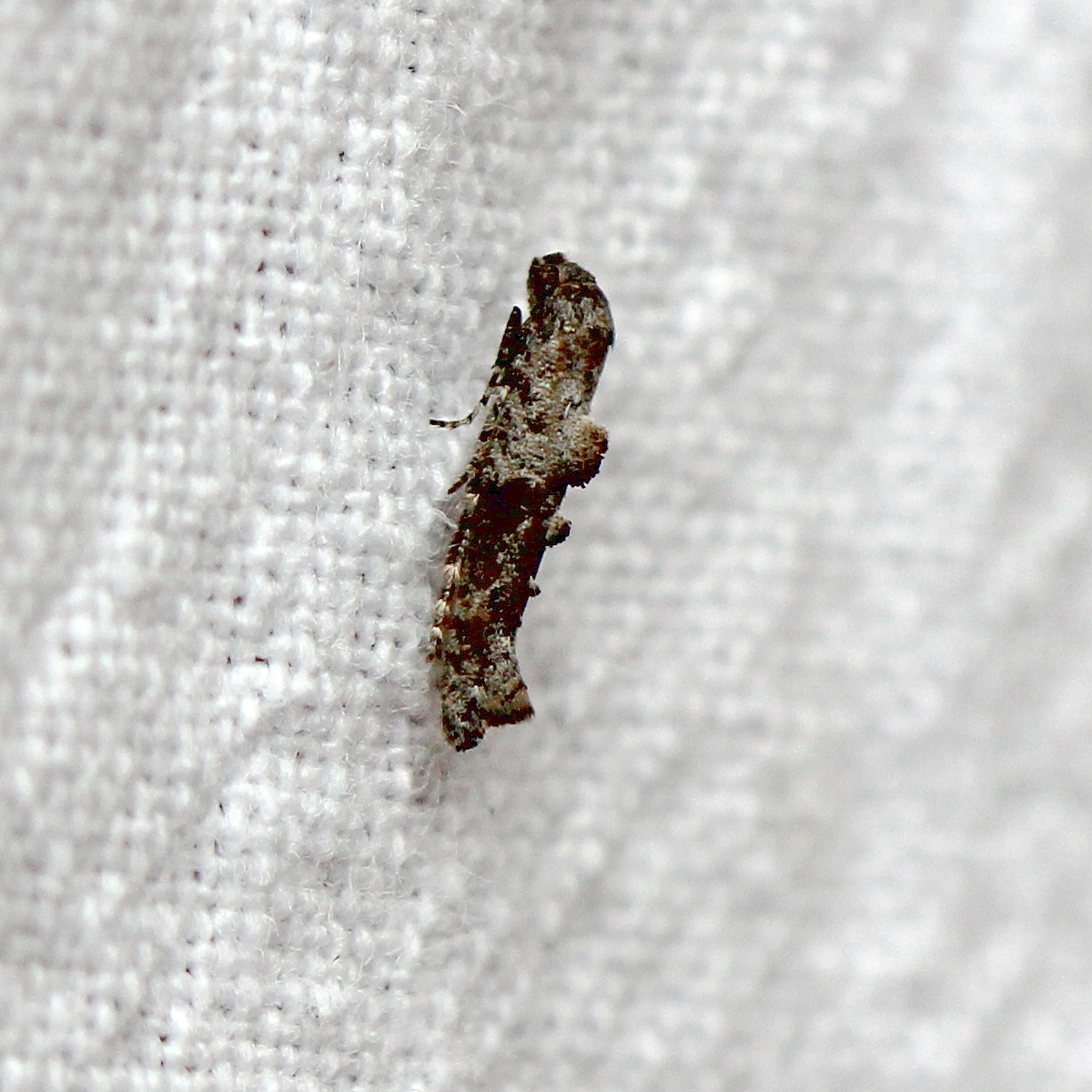
A speck of dust?
This strange looking gray insect is a moth, and it is very tiny, with a wingspan measuring 13 mm and a body length of around 7 mm (~0.27 inches). It belongs to the genus Epermenia. It may be Epermenia albapunctella, a moth in the Superfamily Epermenioidea (Fringe-tufted Moths), family Epermeniidae.
The first time I saw the moth was in July 2020. I almost passed it by, thinking it was a speck of dust. I’m glad I focused my camera on it because it was not dust but a living moth.
I saw this species two more times after that. Once on September 09, 2018, and again on August 01, 2023.
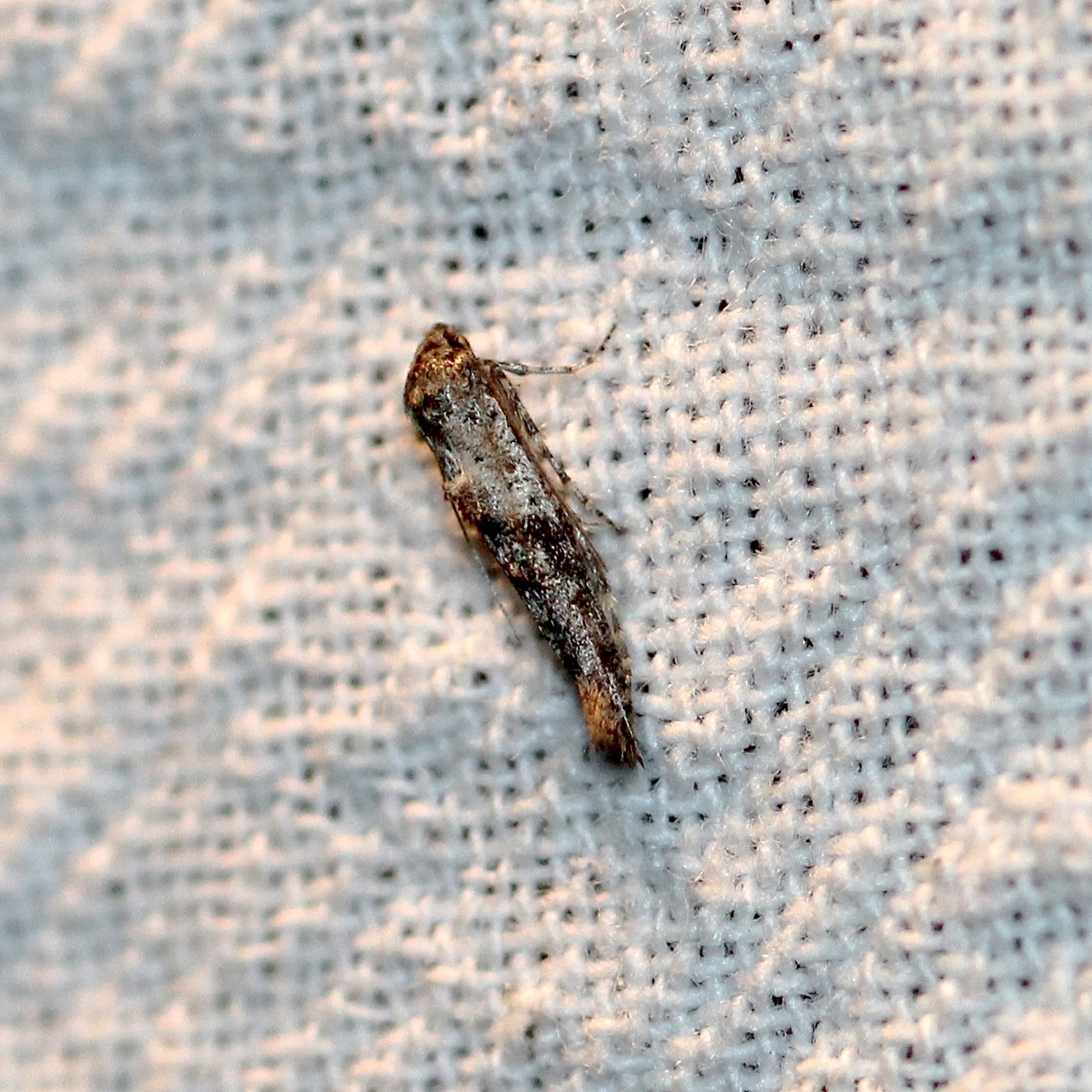
Species determination
While the species identity I have determined is provisional, it is a species of Epermenia. Identifying many tiny moths to species (and even some larger ones) is not always possible from a photo alone or even from visual examination of wing patterns and colors. Very often, genital dissection and DNA sampling are required. These techniques help resolve species identification where one or more related species look very much alike. They can also help to discover cryptic species.
There are numerous sightings of Epermenia albapunctella (MPG and iNaturalist), indicating it is a widespread and somewhat common species.
Epermenia larval host plants
The chief larval host plants of Epermenia are in the Apiaceae (carrot family). They feed by mining the leaves, but later feed outside the leaf in silk webs. However, I could not find information on the feeding habits for all Epermenia species.
Several wild plants in the carrot family grow locally: Cicuta spp. (poison hemlock), Heracleum maximum (cow parsnip), Sanicula spp. (snakeroot), Sium suave (water parsnip), and Osmorhiza spp. (sweet cicely). Feral plants of wild carrot (Daucus carota), parsnip (Pastinaca sativa), and caraway (Carum carvi) are found locally, too. And there are, of course, vegetable gardens with cultivated carrots. They are also Daucus carota, but tastier than the wild form, especially in carrot pie.
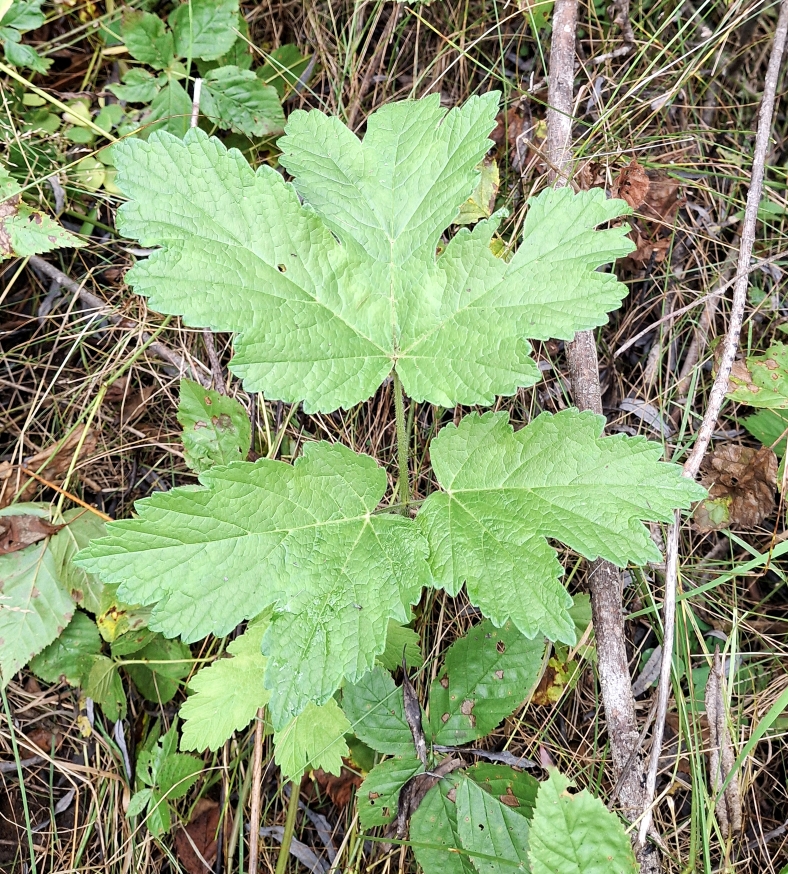
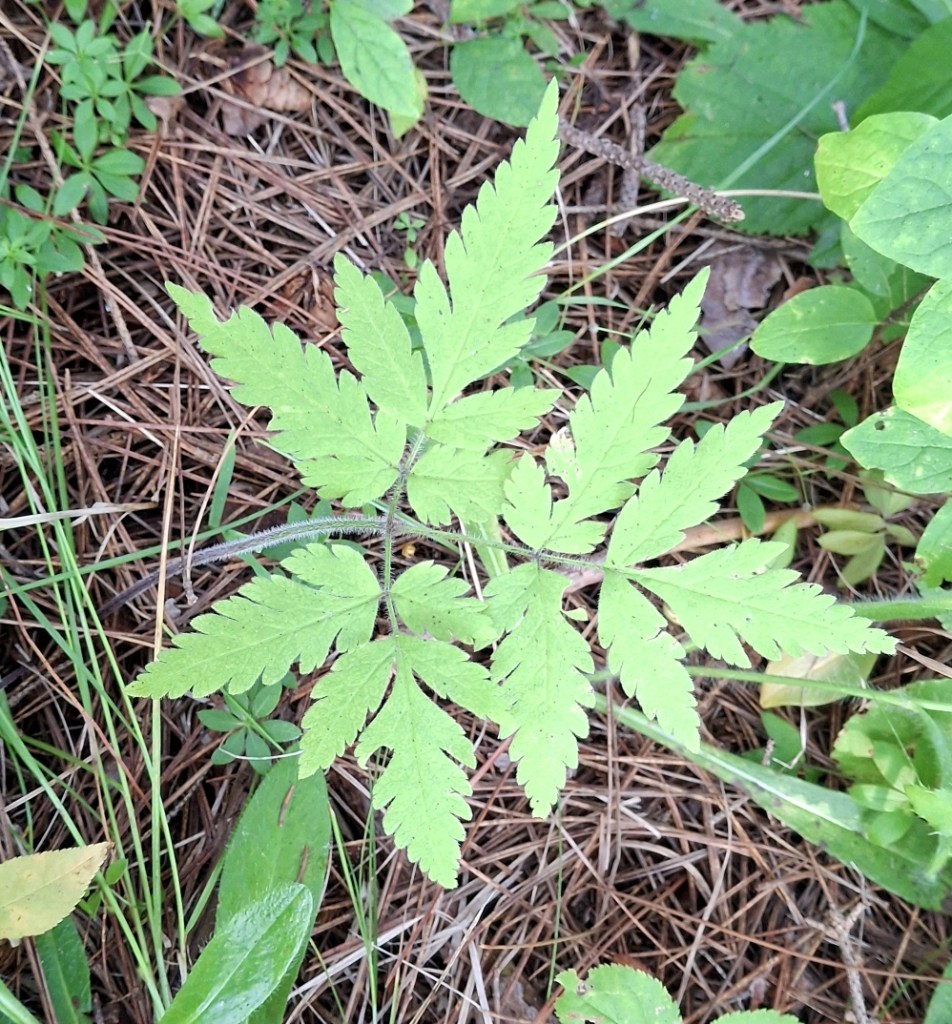
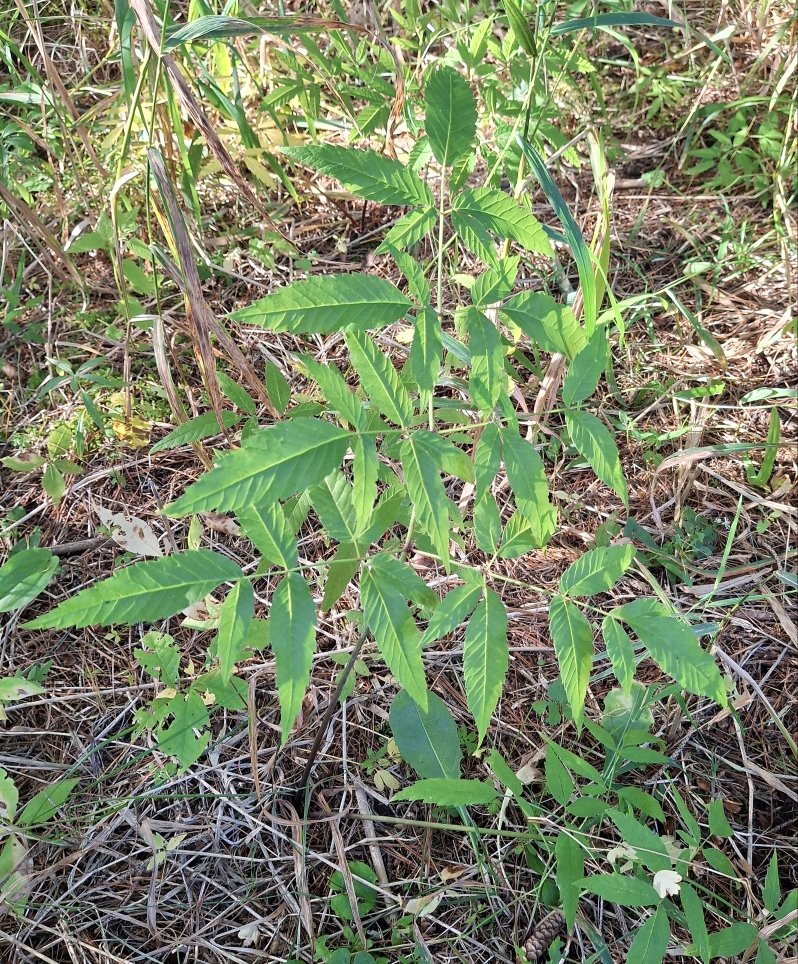
The local abundance of wildflowers in Apiaceae makes locating additional Epermenia moths and larvae more likely. Three species growing here in abundance and with the potential to host Epermenia are sweet cicely, spotted hemlock, and cow parsnip.
Future investigations
Next year, after winter has passed, I’ll be examining any plants in the Apiaceae for Epermenia larvae. I might even plant a carrot patch just for Epermenia. Why else would I plant anything if not for the insects that eat them?

 Not Very Far Away