Ctenucha virginica: a day-flying moth, wasp mimic, and wetland inhabitant

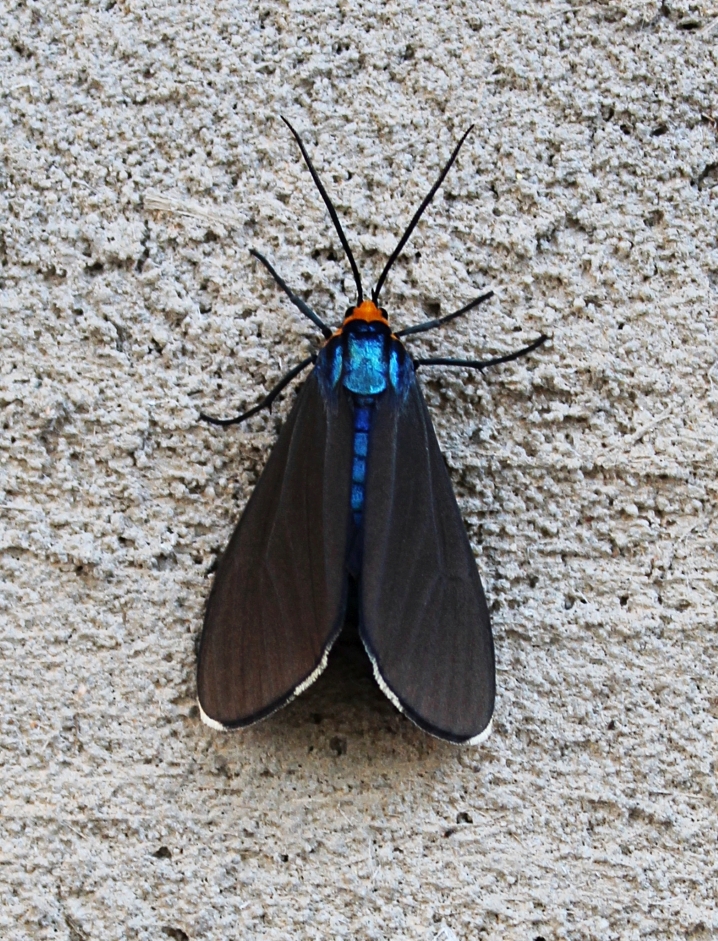
Female Ctenucha virginica resting on a foundation during the day.

The blue wasp moth, Ctenucha virginica, is another moth in the Arctiinae (Tiger and Lichen Moths), like the woolly bear or Isabella moth. And like the woolly bear moth, its fuzzy larvae also overwinter, feeding briefly in the spring before pupating. They just don’t get as much attention as the woolly bears do.

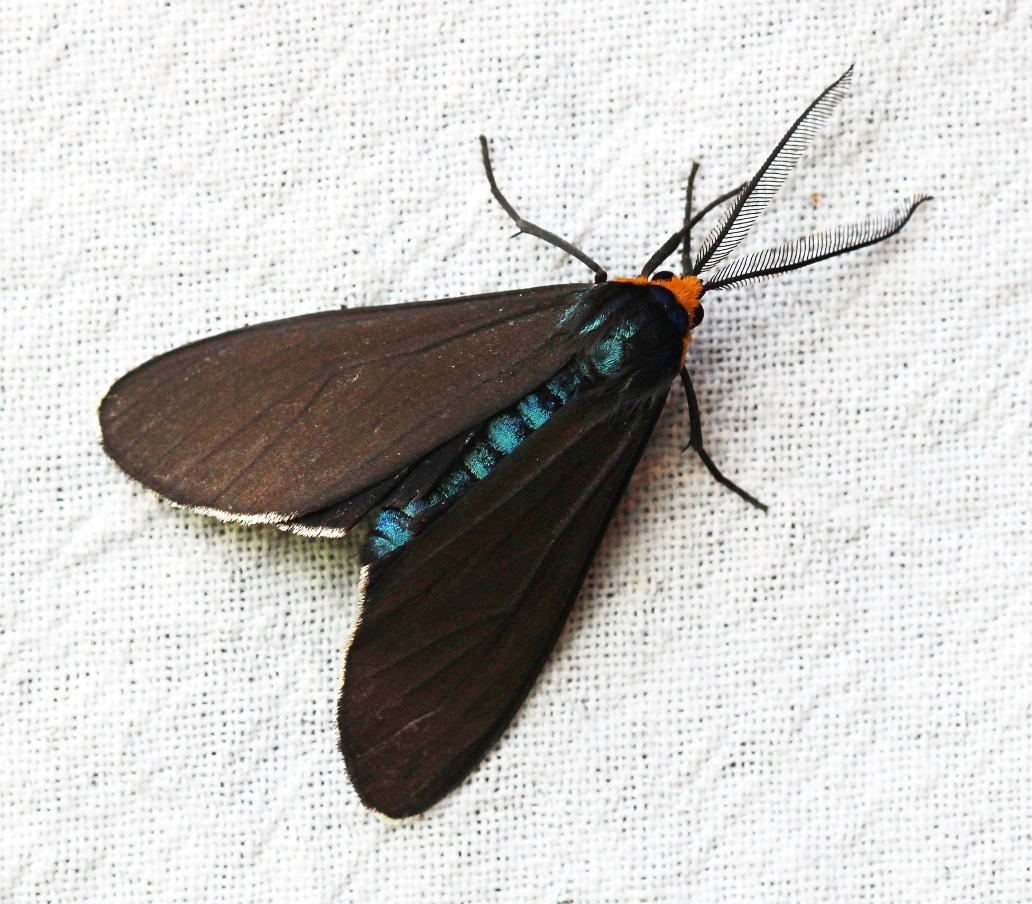
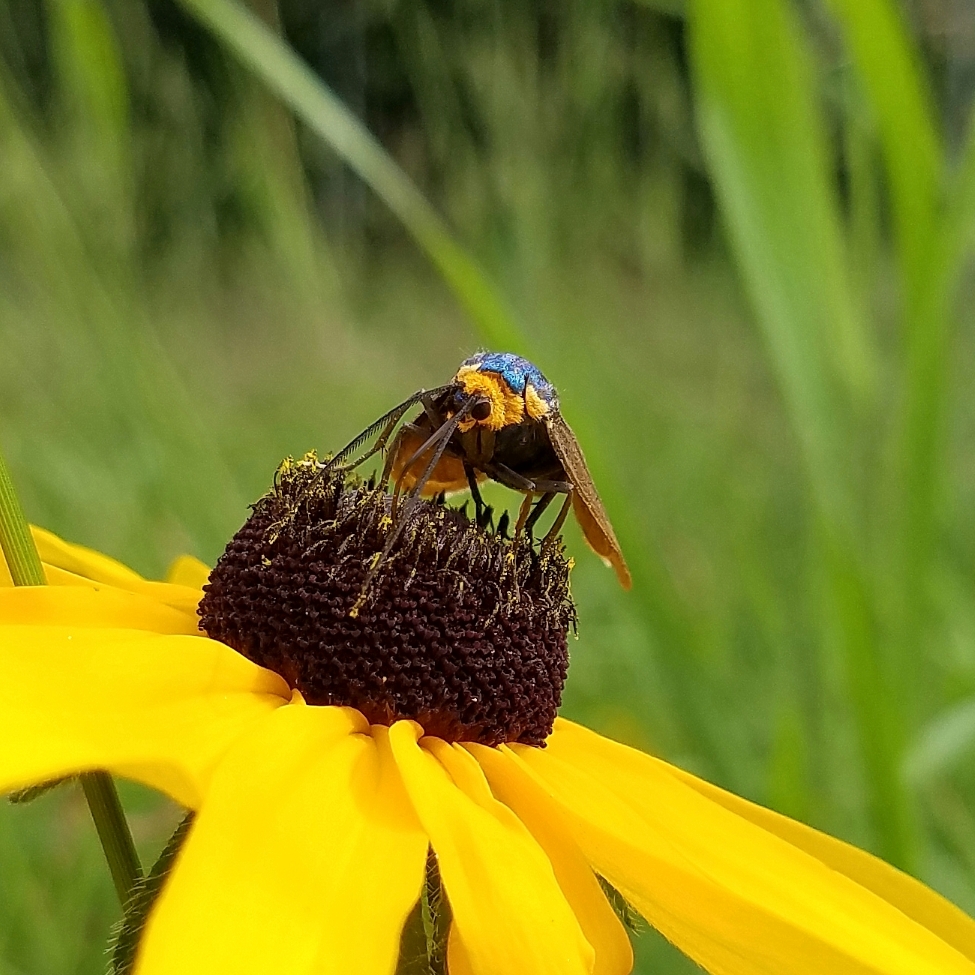
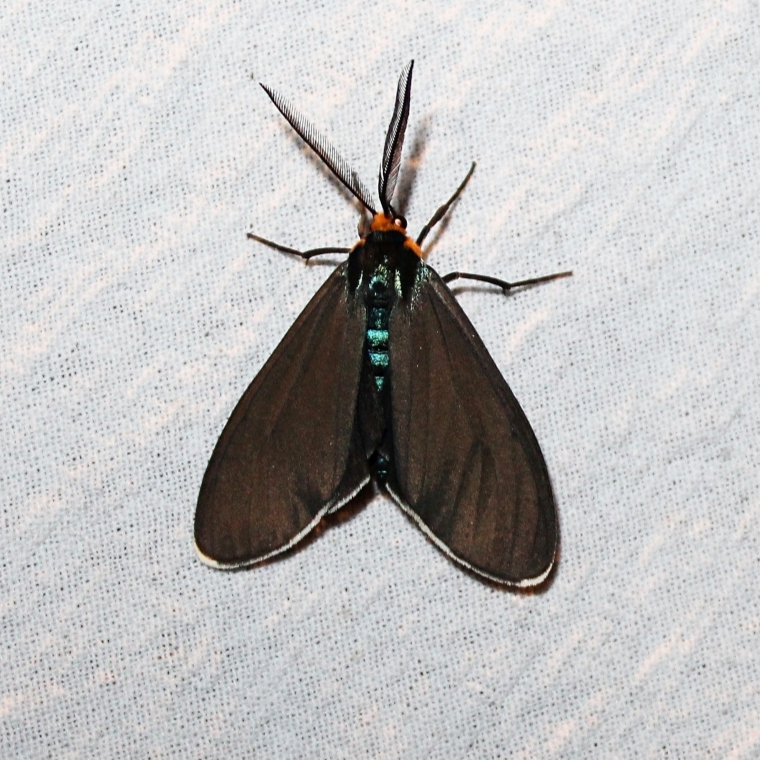
Ctenucha virginica showing the metallic blue abdomen. The feathery antennae indicate this is a male. The long projections on the antennae help it to detect pheromones that the females are giving off.

Description

The descriptions below are based on my observations of this moth.

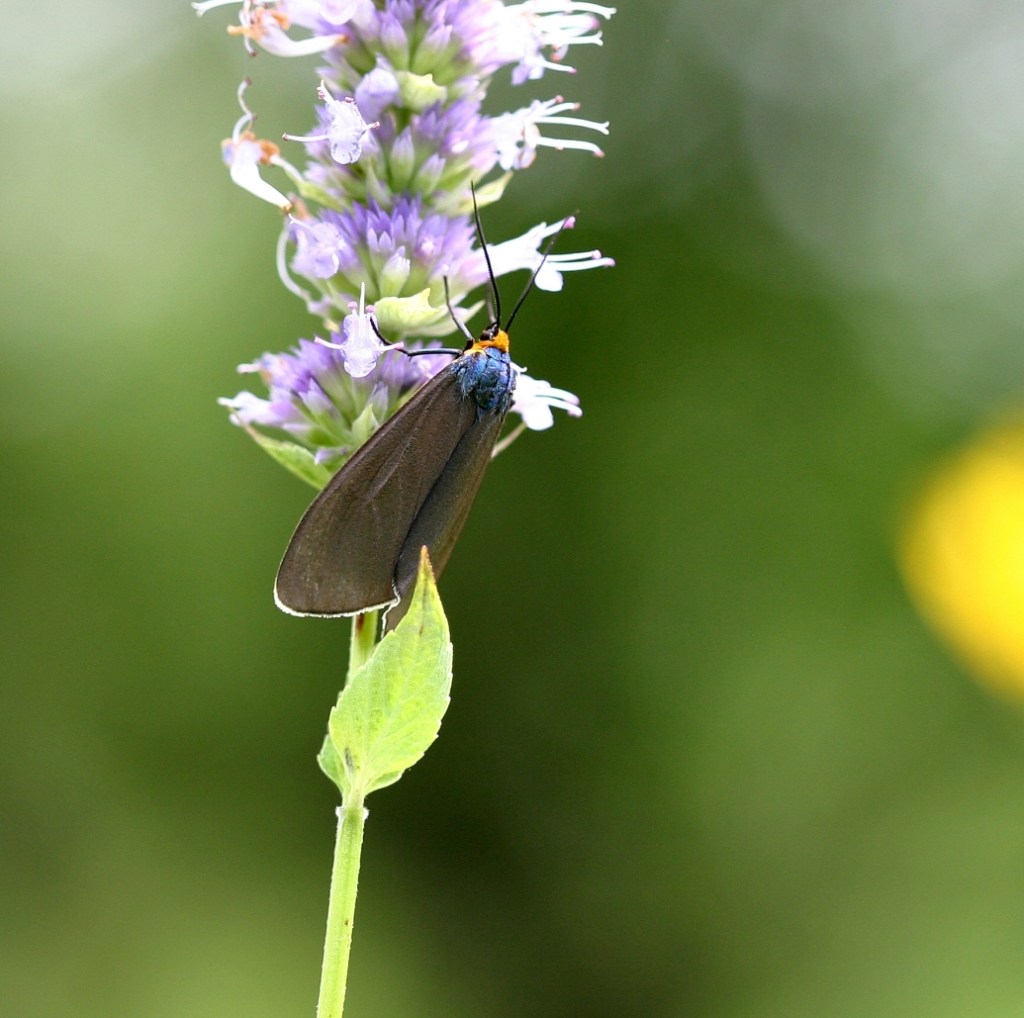
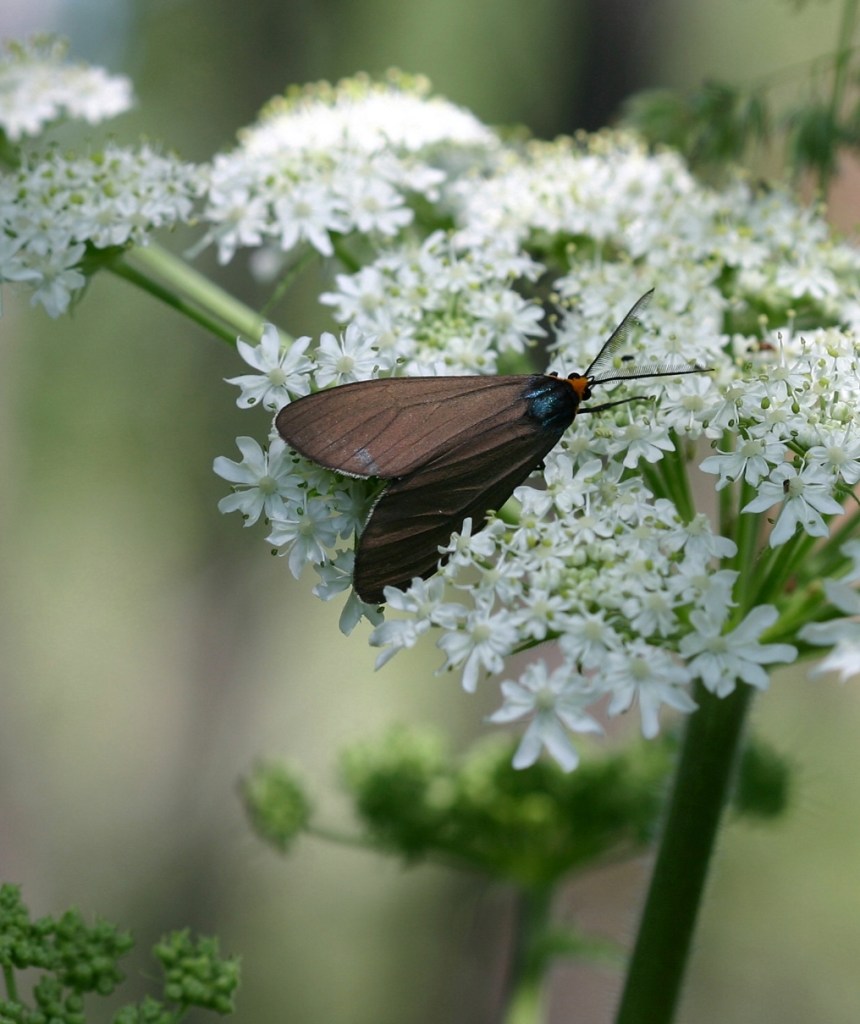
The adult Ctenucha virginica moths are large (wingspan 38 to 52 mm) with dark black (brown in older individuals as scales wear off) forewings fringed with white patches and darker black patches near the base and angle. The underwings are black and fringed in white. The abdomen and thorax are metallic blue, and the head is bright orange with black eyes. The antennae and legs are black. The antennae of males are fringed and comb-like.

The metallic blue color of the thorax and abdomen and the orange head of Ctenucha virginica mimics some species of blue wasps and so may serve to deter predators.

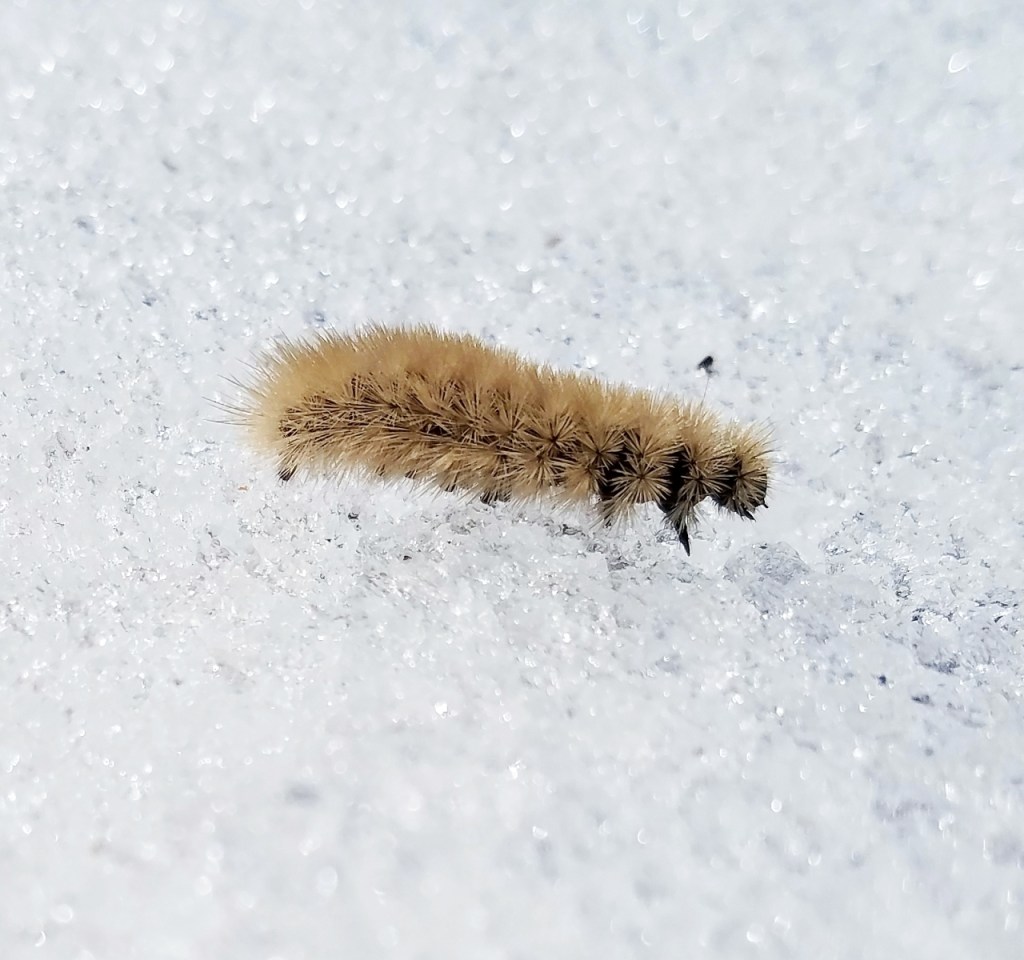
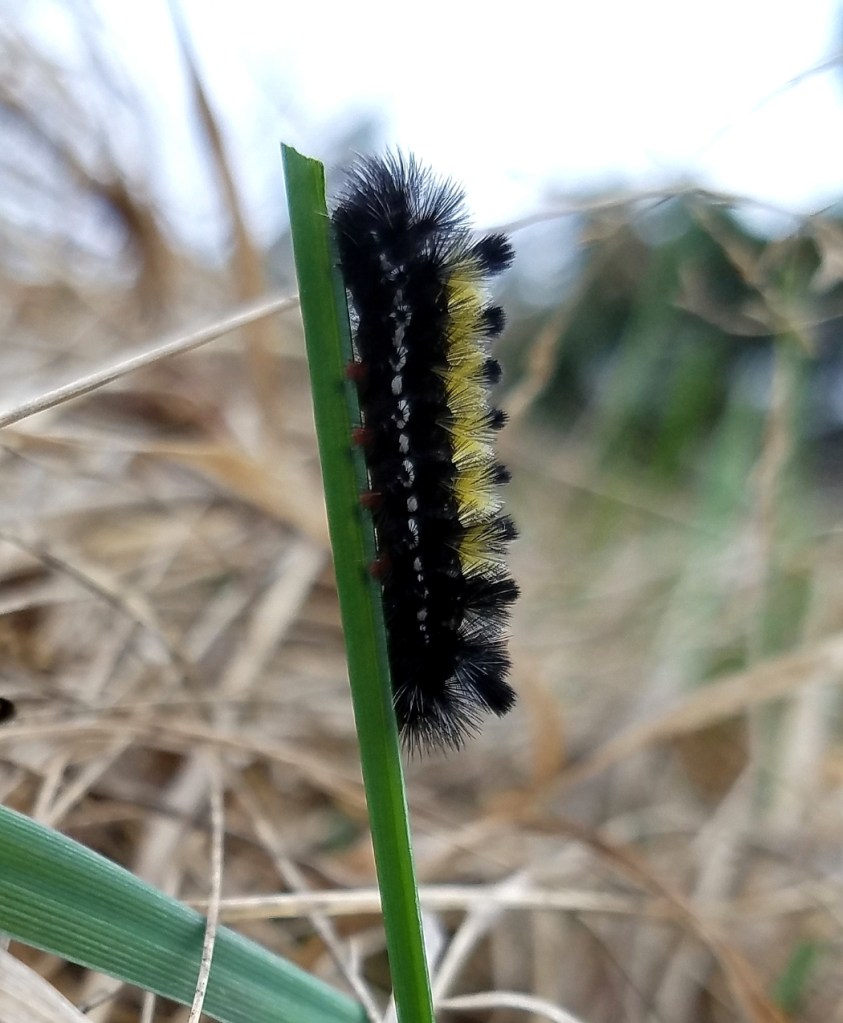
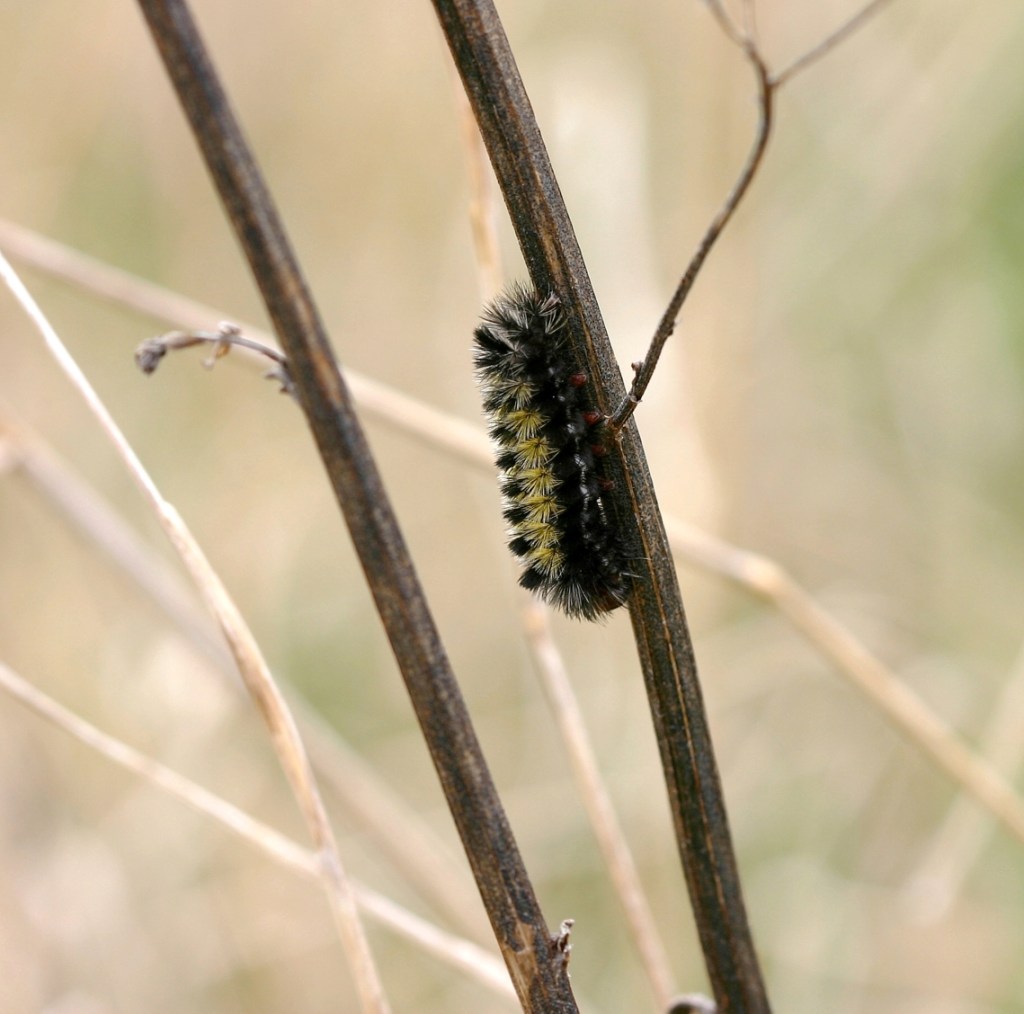
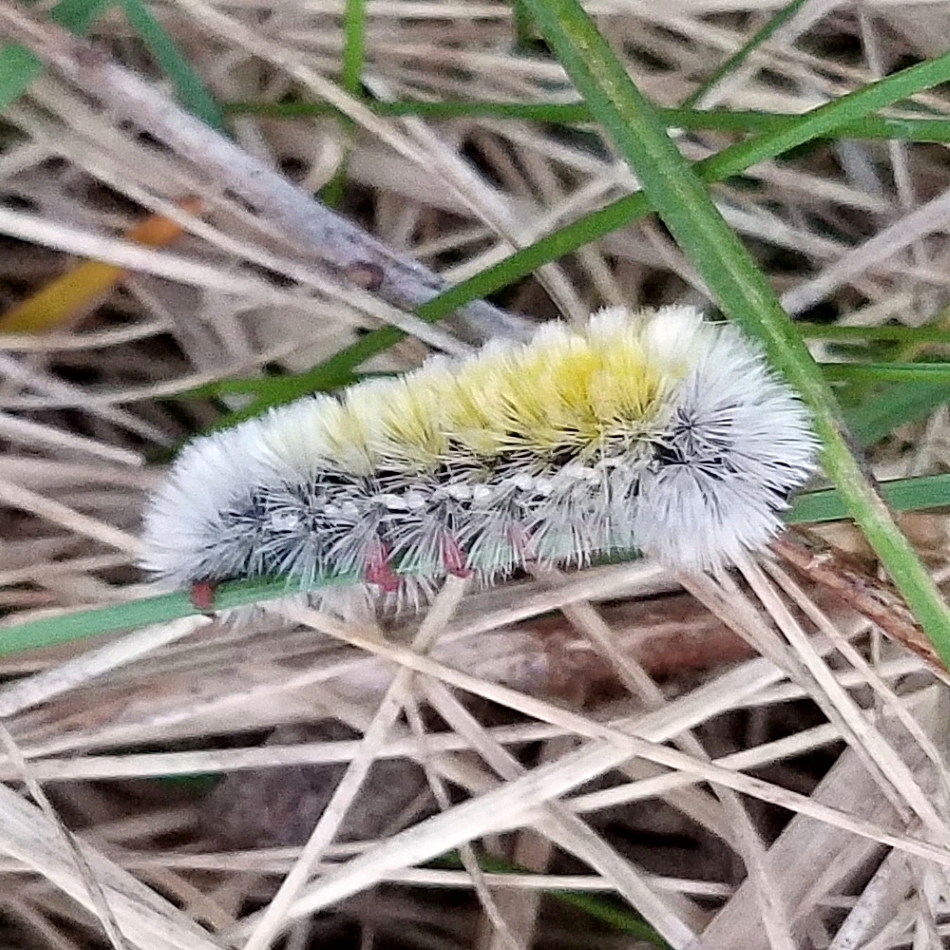
The larvae are are black and covered by tufts of short, yellow and white hairs. There is a white line along the sides under the fuzz. The fuzzy hairs of some individuals may be white. The legs are pink, which helps to distinguish white forms from similar-looking fuzzy white caterpillars.

When and where to see the larvae

Spring is the best time to find blue wasp moth caterpillars when they have emerged from hibernation and are feeding. In some years, they can be quite abundant. I have observed the larvae feeding on grasses, sedges, and iris in the spring. The preferred larval habitat is graminoid-rich wetlands, but I’ve also seen them in old hayfields, especially in damp areas.

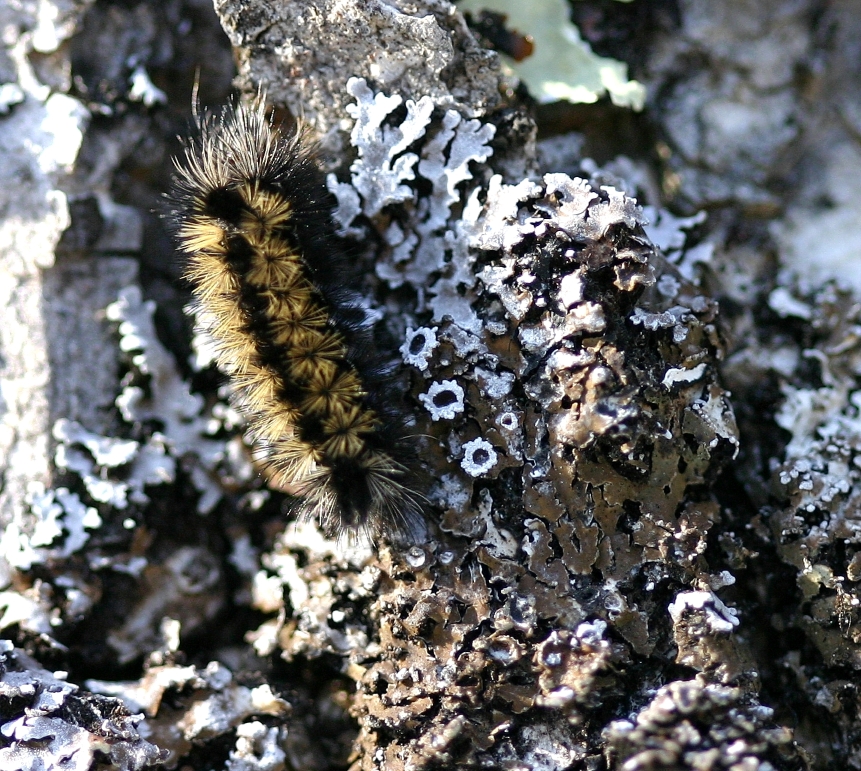
Once, I found a Ctenucha virginica caterpillar feeding on frost lichens (Physconia sp.) growing on a black ash tree. It had climbed about 6 feet up the tree to get to this lichen. Below the tree grew the caterpillar’s usual food plants: iris, manna grass, and Carex species.

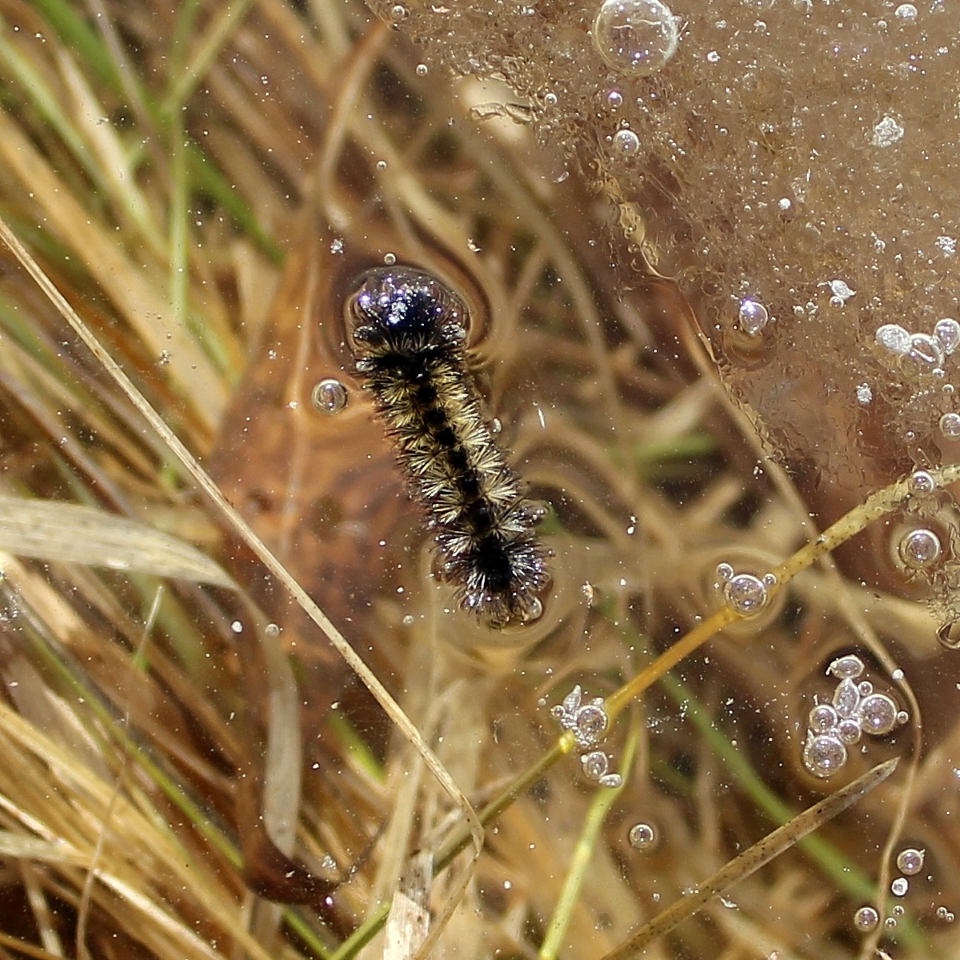
Living in wetlands is not without dangers. In the spring, they may flood, and the caterpillars could drown. Their fuzzy hairs do help them to float, but eventually, these become waterlogged. One spring during flood season, as I was walking through a flooded sedge marsh, I found several dozen Ctenucha virginica caterpillars floating in the water. I collected each one and moved them to some sedge tussocks that stood above the water. I hope that helped them out.

A Ctenucha virginica caterpillar in a vernal pool. It is early spring (March 28, 2019), and some patches of ice are still present. The caterpillar seems unfazed by this. I moved it to drier ground anyway.

Pollinators

Ctenucha virginica moths are pollinators. Disguised in their wasp-like coloration, they fly during the day, nectaring at many kinds of flowers in upland and wetland sites.

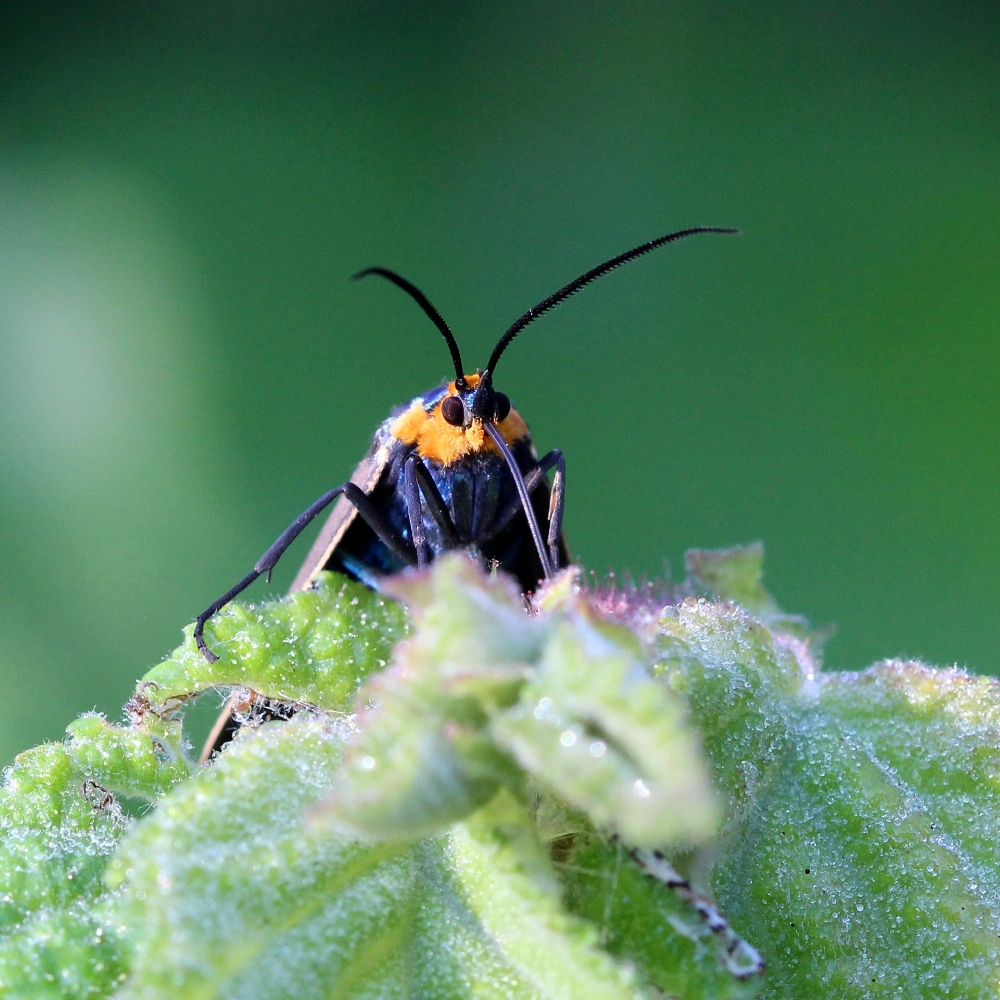
They also drink dew from plant leaves. The one pictured below was drinking dew droplets from the leaves of American hazel (Corylus americana). American hazel is covered in sticky red glandular hairs, and I wonder if this, in addition to water, was what it was seeking. Perhaps there are chemicals in the glandular hairs it needs.

Ctenucha virginica is drinking dew from the glandular hair-covered surface of American hazel leaves. The filiform antennae show that this is a female.

Active at night, too

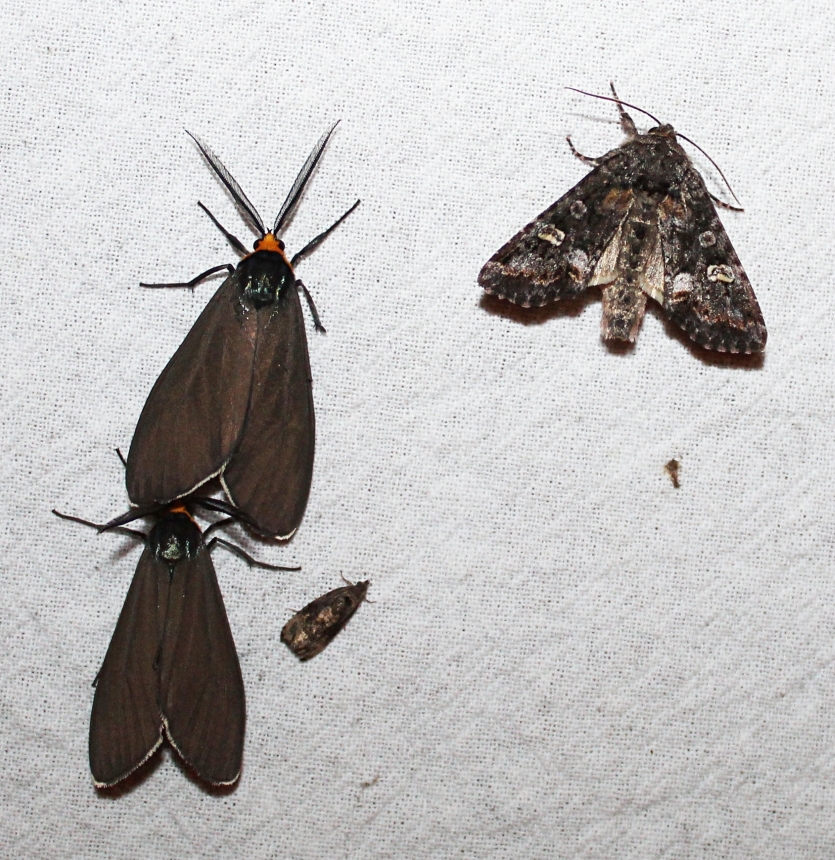
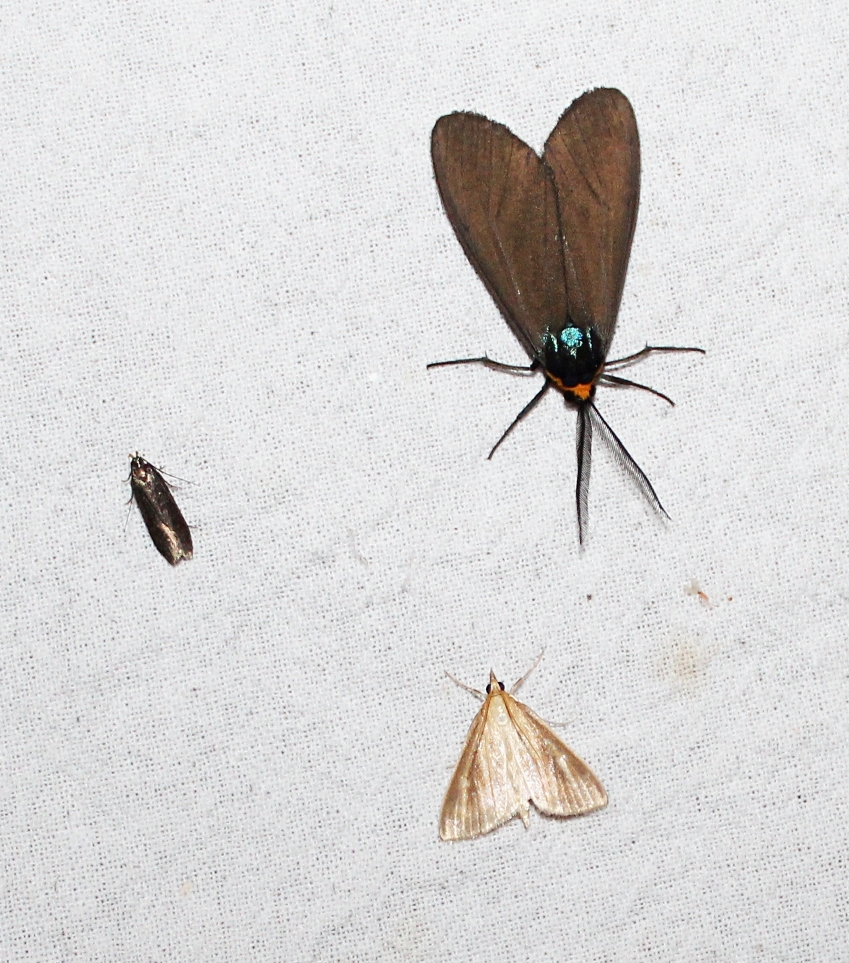
Ctenucha virginica moths are frequent visitors to my moth lights. Last year, in late June and early July, they were in abundance, with ten or more each night. In the photos below are a few of the visitors I saw last summer.

More caterpillars this spring?

With so many Ctenucha virginica moths last summer I expect there will be an abundance of their caterpillars this coming spring. If there are then I will collect some so I can let them pupate in a safe environment and learn a little more about that stage of their life cycle.

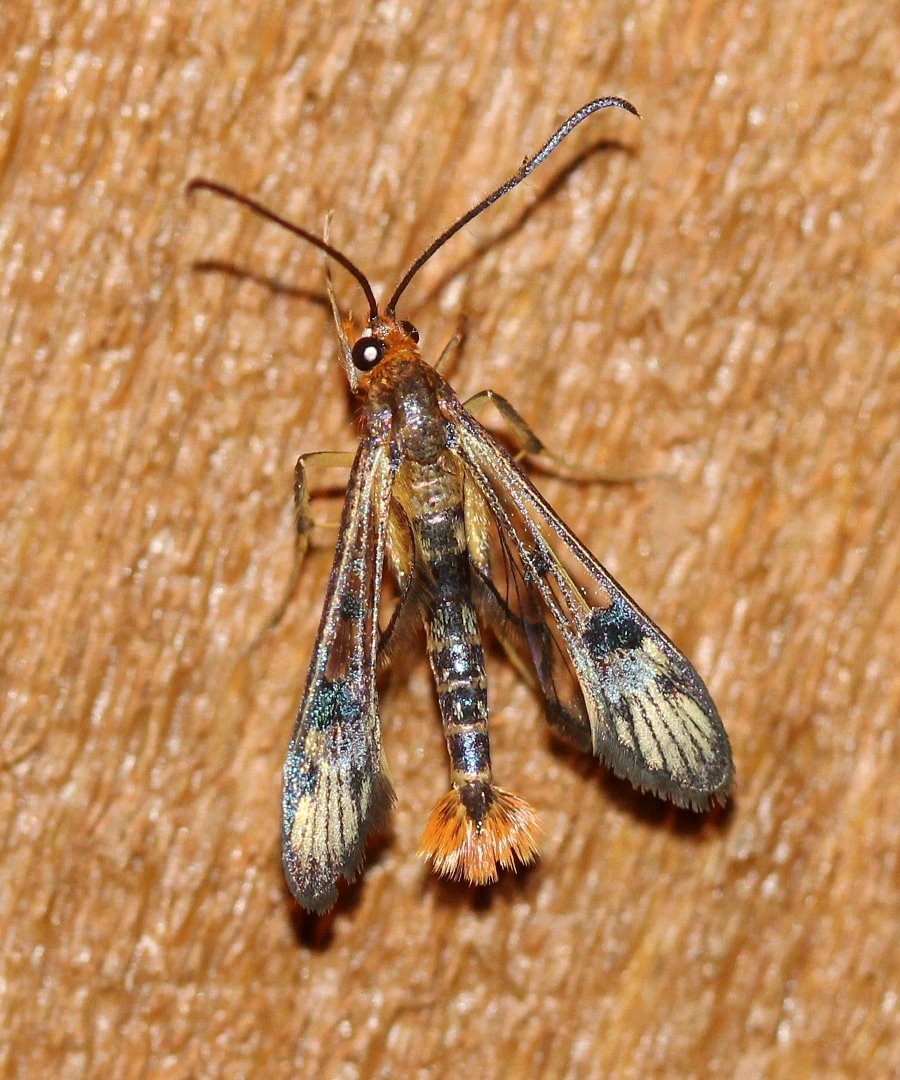
Insects That Mimic Stinging Wasps: A Look at Synanthedon acerni

Synanthedon acerni

In a previous post, I wrote about syrphid flies that mimic bees and wasps. But are there other insects with this mimicry superpower? The answer is yes. Other types of flies, beetles, and moths all have species that mimic stinging insects. The moth Superfamily Cossoidea (Carpenter and Clearwing Moths) is notable for the many species that mimic stinging wasps.

Synanthedon acerni (Family Sesiidae, Subfamily Sesiinae, Tribe Synanthedonini) is one such very wasp-like moth. Its wasp-like appearance allows it to be active during the day while it visits flowers, feeding on nectar.

Life history

The larvae of Synanthedon acerni are not quite as benign. Known as the maple callus borer moth, its larvae bore into the trunks of maple (Acer spp.) trees. Eggs are laid near wounds in the bark. Entry into the tree is through these wounds on the tree’s trunk. The larvae bore into the bark and then into the cambium, where they feed on the inner bark and sapwood. Feeding takes place during the summer within galleries. In the winter, they hibernate in the galleries and resume feeding in the spring.

At maturity, the larva constructs an oblong cocoon of wood fragments, frass, and silk within the gallery, close to the surface, covered by a thin escape window. When ready to emerge, the pupa cuts open the cocoon and the escape window. The fully formed Synanthedon acerni moth then exits the pupa, which is left partially stuck in the gallery.

The same tree may be used year after year, weakening it and eventually leading to its demise. A callus will form on the trunk after repeated infestations.

Two Spectacular Tiger Moths: Arctia caja and Arctia parthenos

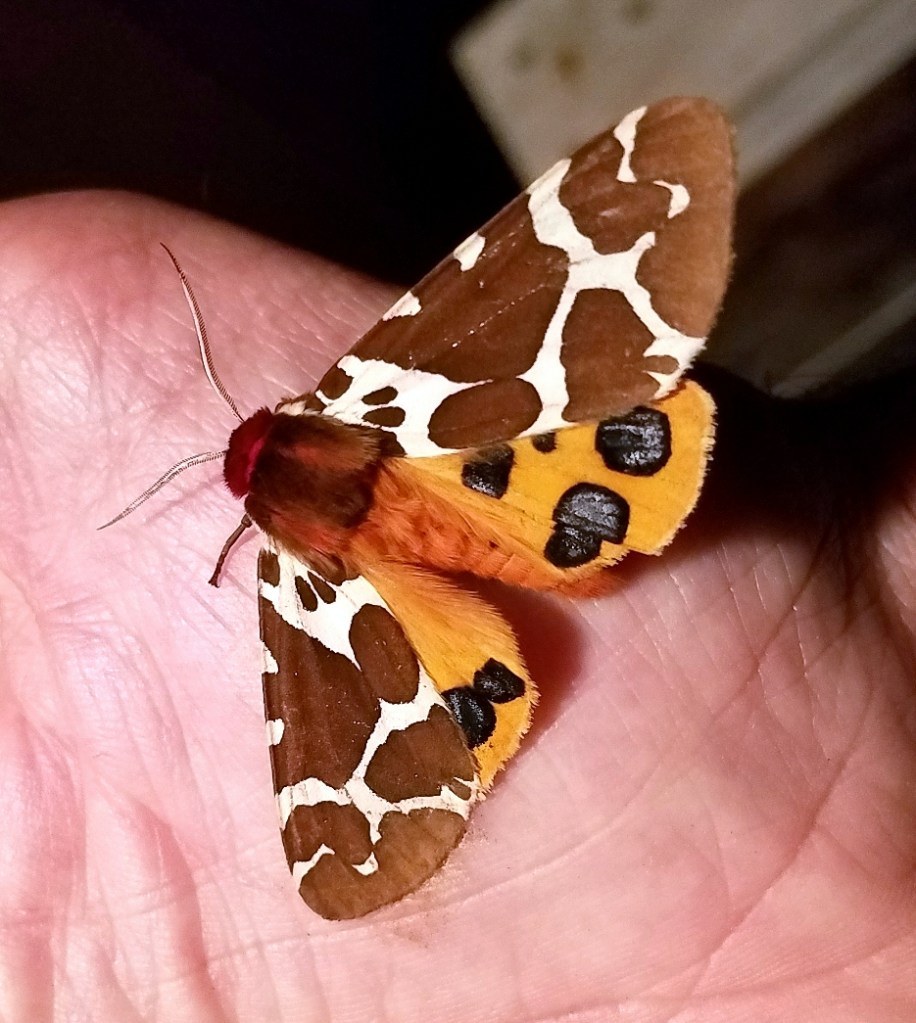
Arctia caja, great tiger moth

Arctia caja, great tiger moth, and Arctia parthenos, St. Lawrence tiger moth, are moths in the Family Erebidae, subfamily Arctiinae, which includes these previously discussed moths: Lophocampa maculata, Halysidota tessellaris, Pyrrharctia isabella, Apantesis williamsii, Apantesis virgo, Apantesis phalerata, and Haploa contigua.

Arctia caja and Arctia parthenos are strikingly beautiful moths, as showy as any butterfly, which are just day-flying moths anyway.

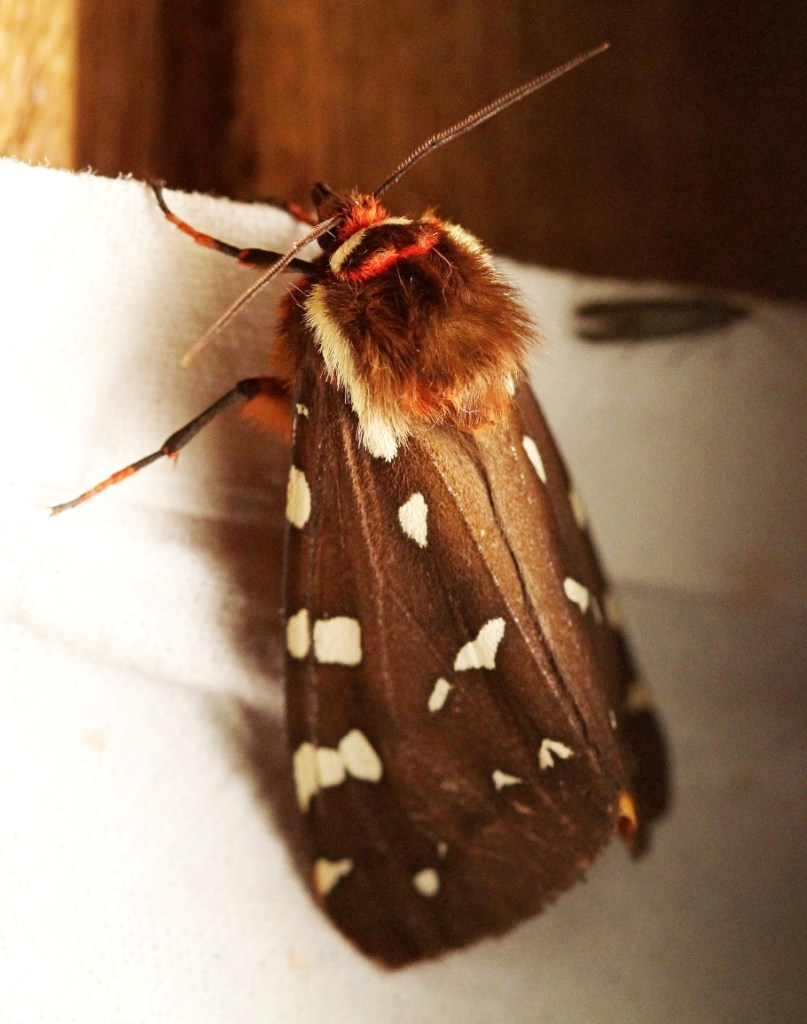
Arctia parthenos, St. Lawrence Tiger Moth

Description

Arctia caja is a large moth with a wingspan of 27-32 mm. The forewings are brightly colored in white and brown, forming a mosaic pattern. The underwings are orange-red and marked with large, round to slightly irregular black discal, basal, and submarginal spots containing metallic blue scales. The abdomen is orange-red but darker than the underwings. (Sources: Moths of North Carolina, Pacific Northwest Moths, BugGuide)

Arctia parthenos is also a large moth with a wingspan of 28-33 mm. Its forewings are chocolate brown, marked with numerous pale yellow or cream-colored spots. The underwing is orange with irregular black markings. The abdomen is dark brown to black with orange sides and tip. (Sources: Moths of North Carolina, Pacific Northwest Moths, BugGuide)

Habitat

 Arctia caja occurs in northern hardwood forests, conifer forests, wet meadows along creeks and rivers, in disturbed agricultural areas, gardens, and in urban areas. (Sources: Moths of North Carolina, Pacific Northwest Moths, BugGuide)

Arctia parthenos also occurs in northern hardwood forests, conifer forests, boreal mixed woods and parklands, moist shrubby arctic tundra, and mountains in the south. (Sources: Moths of North Carolina, Pacific Northwest Moths, BugGuide)

Host Plants

 Arctia caja is polyphagous and feeds on many kinds of herbaceous plants as well as some hardwoods. (Sources: Moths of North Carolina, Pacific Northwest Moths, BugGuide)

Arctia parthenos is also polyphagous but has a preference for hardwoods such as willow, aspen, and alder. (Sources: Moths of North Carolina, Pacific Northwest Moths, BugGuide)

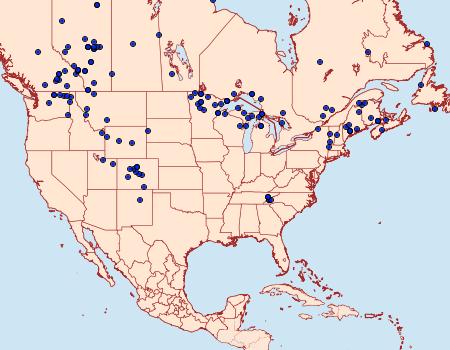
Range

A neighborly moth

Haploa contigua, the neighbor moth.

Genus overview

Haploa is a genus of moths in the superfamily Noctuoidea, family Erebidae, subfamily Arctiinae (Tiger and Lichen Moths). The genus comprises six species in North America north of Mexico and is not known from anywhere else. Four species are known from Minnesota: Haploa contigua, Haploa lecontei, Haploa reversa, and Haploa confusa.

So that’s the easy part. When I look over my photos of Haploa species, I am struck by the way Haploa lecontei, Haploa reversa, and Haploa confusa seem to grade into one another. Why? Maybe because I am misidentifying them. Or maybe because these are just photos of one species and its range of variation. Which species? I’m not sure anymore, but it might be Haploa confusa. The one I am sure of is Haploa contigua.

Haploa contigua

Haploa contigua is one of four species of Haploa with all white hindwings. The base color of the forewings is cream-colored to white. The costa and inner margins are bordered in dark brown. A diagonal dark brown line extends from the costa beyond the midpoint to the inner margin above the anal angle. Joining this is another line running from the outer margin. Haploa contigua lacks any lines or spurs in the antemedial portion of the forewing. All-white individuals are indistinguishable from other Haploa species with all-white forms.

Haploa contigua inhabits mesic woodlands to riparian woodlands. The larvae feed on the leaves of many species of woody and herbaceous plants.

The genus name “Haploa” is from the Greek word for “simplicity, singleness”, and the species epithet “contigua” is from the Latin word for “bordering” and so the neighbor moth.