Haploa is a genus of moths in the superfamily Noctuoidea, family Erebidae, subfamily Arctiinae (Tiger and Lichen Moths). The genus comprises six species in North America north of Mexico and is not known from anywhere else. Four species are known from Minnesota: Haploa contigua,Haploa lecontei, Haploa reversa, and Haploa confusa.
So that’s the easy part. When I look over my photos of Haploa species, I am struck by the way Haploa lecontei, Haploa reversa, and Haploa confusa seem to grade into one another. Why? Maybe because I am misidentifying them. Or maybe because these are just photos of one species and its range of variation. Which species? I’m not sure anymore, but it might be Haploa confusa. The one I am sure of is Haploa contigua.
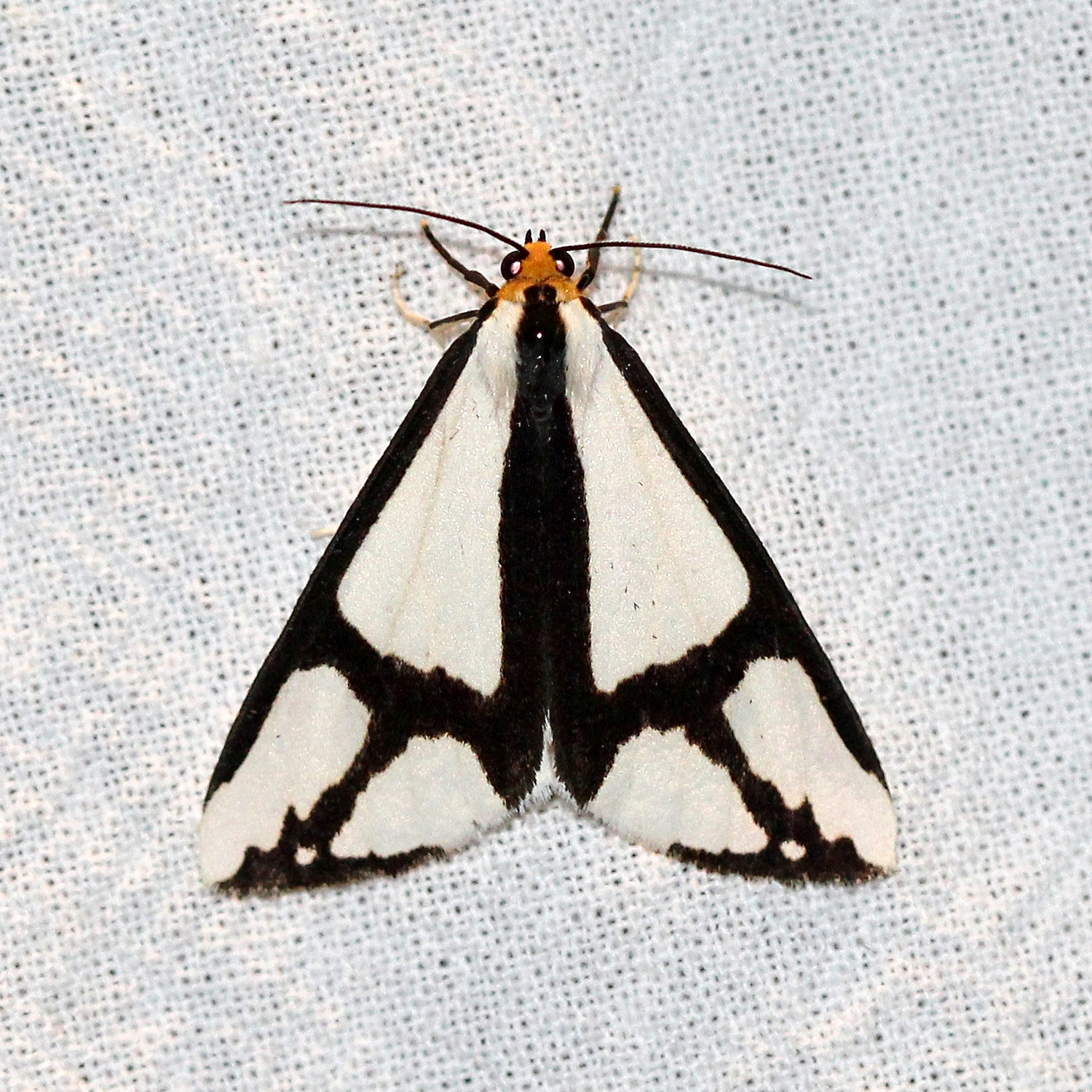
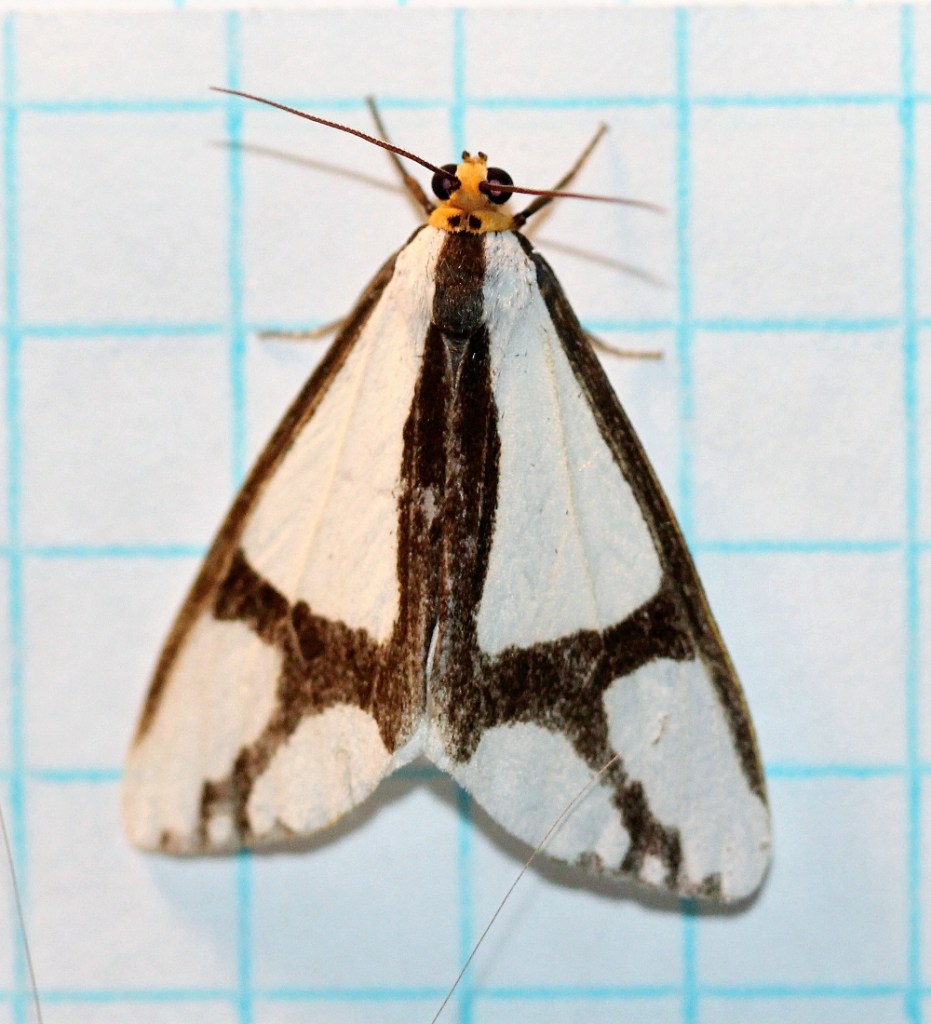
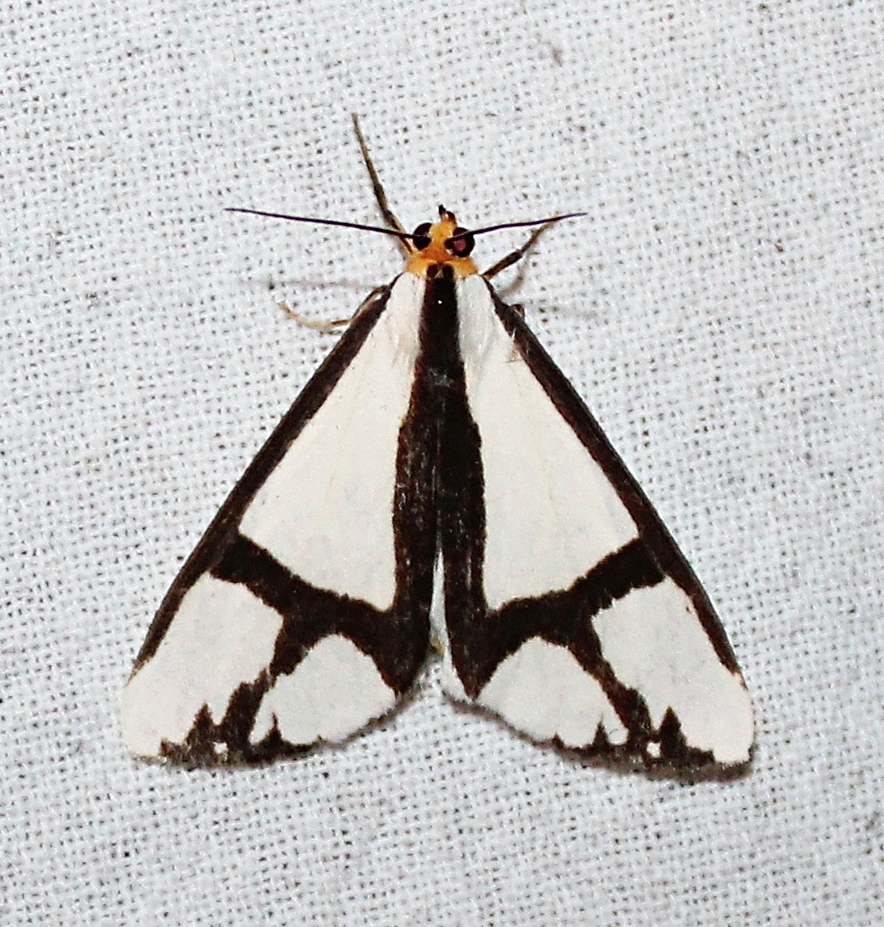
Haploa contiguaHaploa contigua
Haploa contigua
Haploa contigua is one of four species of Haploa with all white hindwings. The base color of the forewings is cream-colored to white. The costa and inner margins are bordered in dark brown. A diagonal dark brown line extends from the costa beyond the midpoint to the inner margin above the anal angle. Joining this is another line running from the outer margin. Haploa contigua lacks any lines or spurs in the antemedial portion of the forewing. All-white individuals are indistinguishable from other Haploa species with all-white forms.
Haploa contigua inhabits mesic woodlands to riparian woodlands. The larvae feed on the leaves of many species of woody and herbaceous plants.
The genus name “Haploa” is from the Greek word for “simplicity, singleness”, and the species epithet “contigua” is from the Latin word for “bordering” and so the neighbor moth.
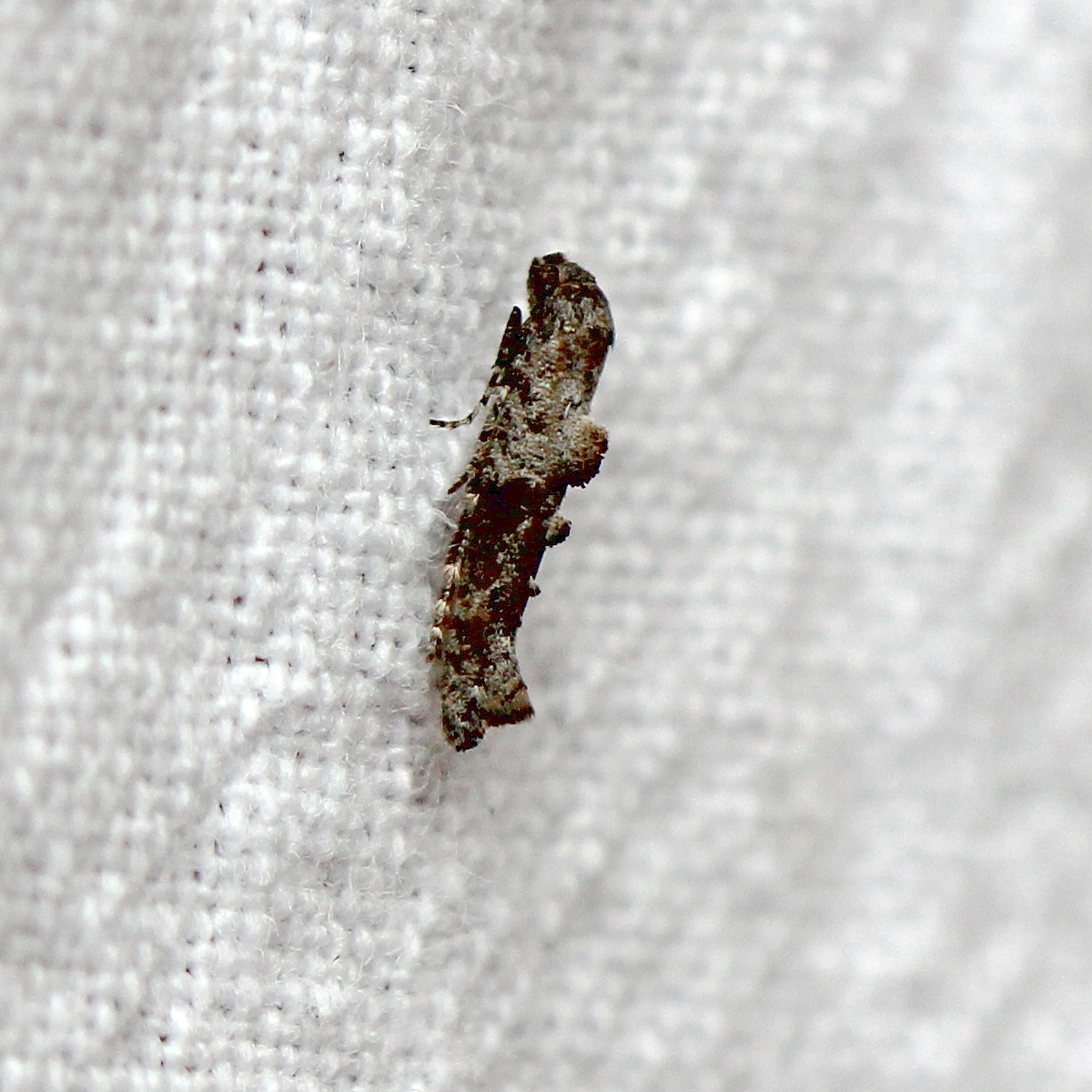
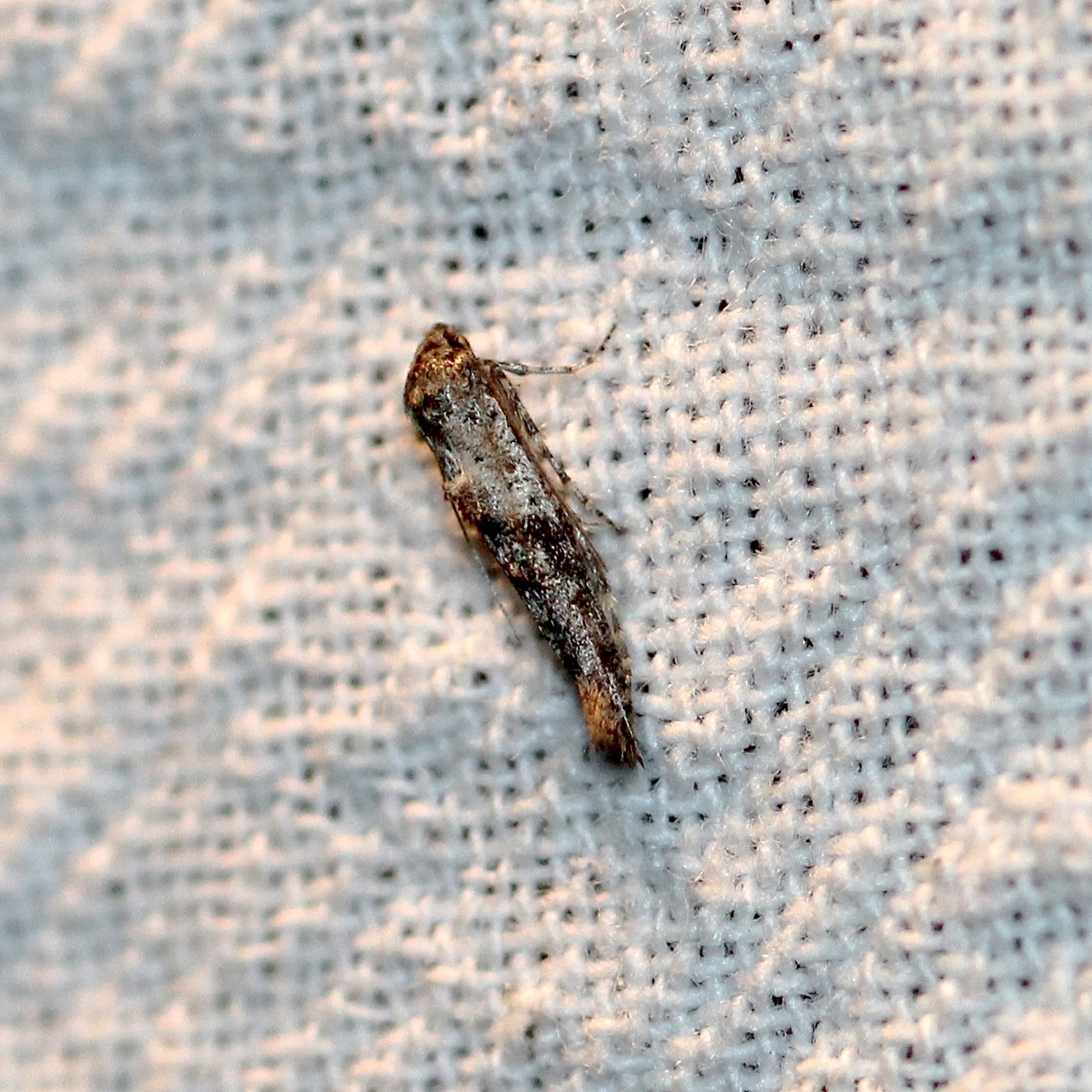
This strange looking gray insect is a moth, and it is very tiny, with a wingspan measuring 13 mm and a body length of around 7 mm (~0.27 inches). It belongs to the genus Epermenia. It may be Epermenia albapunctella, a moth in the Superfamily Epermenioidea (Fringe-tufted Moths), family Epermeniidae.
The first time I saw the moth was in July 2020. I almost passed it by, thinking it was a speck of dust. I’m glad I focused my camera on it because it was not dust but a living moth.
I saw this species two more times after that. Once on September 09, 2018, and again on August 01, 2023.
My third sighting of Epermenia albapunctella on August 01, 2023.
Species determination
While the species identity I have determined is provisional, it is a species of Epermenia.Identifying many tiny moths to species (and even some larger ones) is not always possible from a photo alone or even from visual examination of wing patterns and colors. Very often, genital dissection and DNA sampling are required. These techniques help resolve species identification where one or more related species look very much alike. They can also help to discover cryptic species.
There are numerous sightings of Epermenia albapunctella (MPG and iNaturalist), indicating it is a widespread and somewhat common species.
Epermenia larval host plants
The chief larval host plants of Epermenia are in the Apiaceae (carrot family). They feed by mining the leaves, but later feed outside the leaf in silk webs. However, I could not find information on the feeding habits for all Epermenia species.
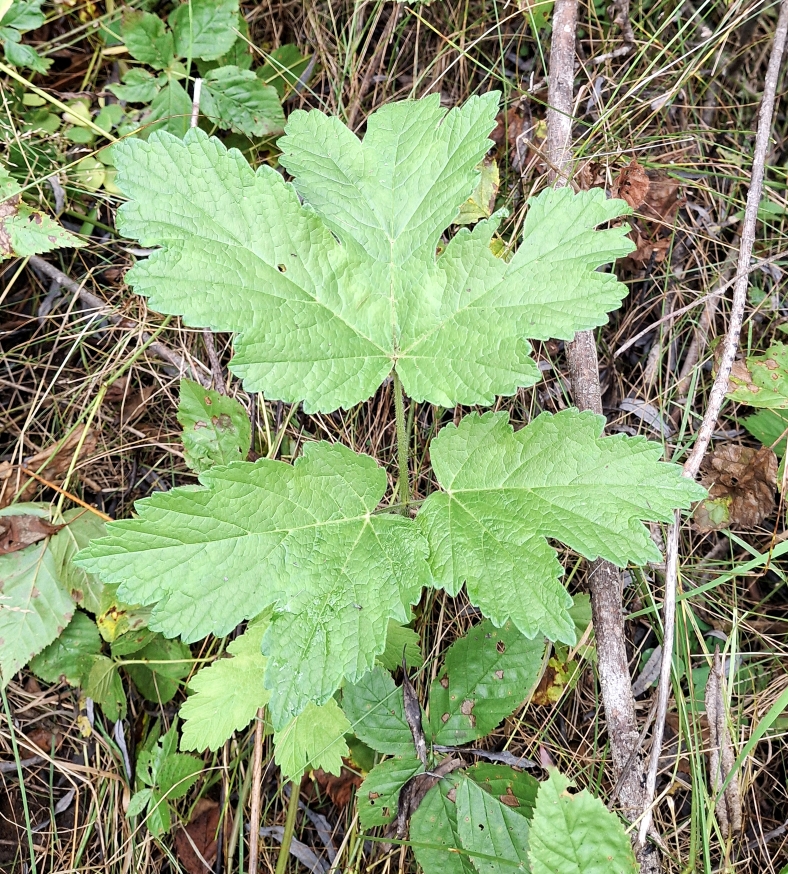
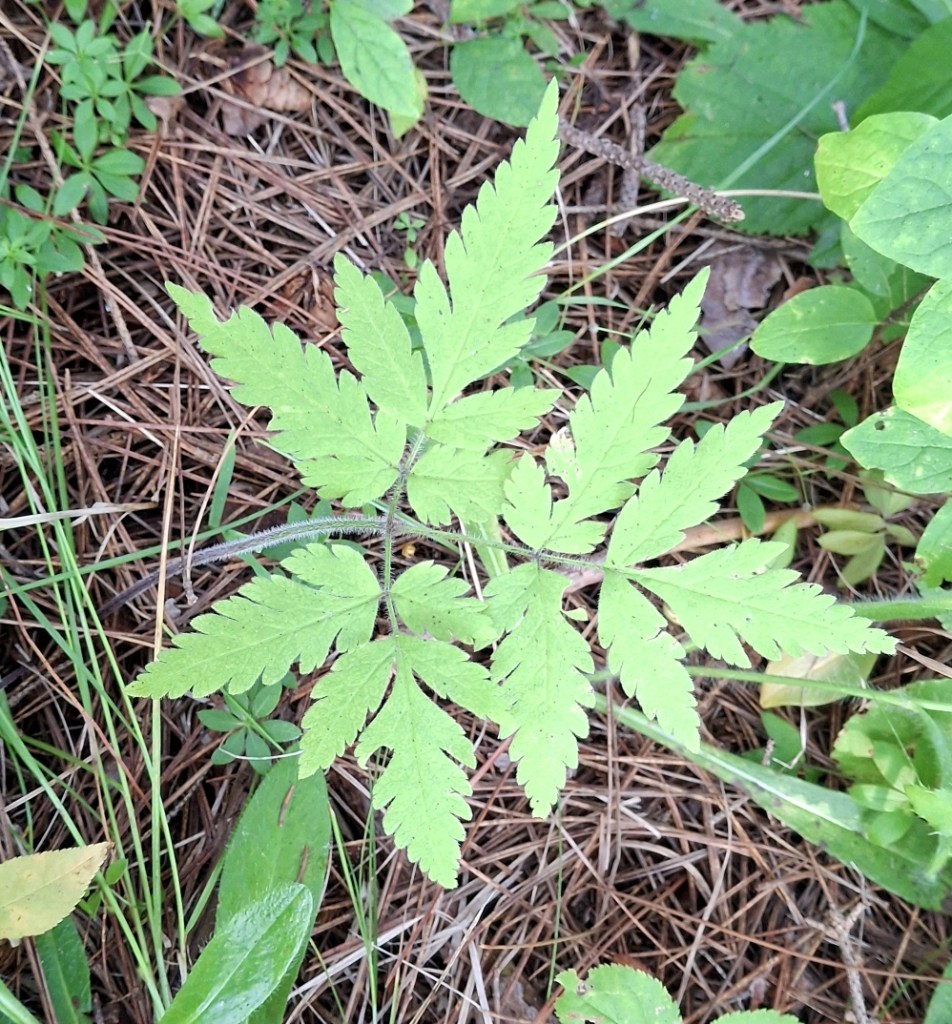
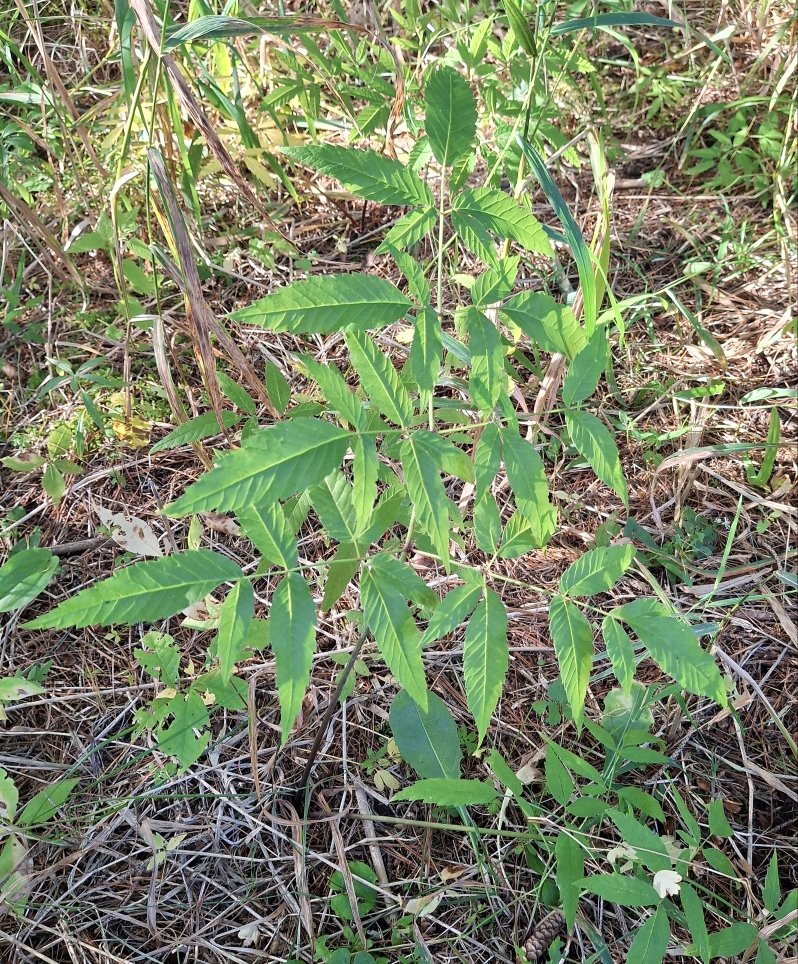
Several wild plants in the carrot family grow locally: Cicuta spp. (poison hemlock), Heracleum maximum (cow parsnip), Sanicula spp. (snakeroot), Sium suave (water parsnip), and Osmorhiza spp. (sweet cicely). Feral plants of wild carrot (Daucus carota), parsnip (Pastinaca sativa), and caraway (Carum carvi) are found locally, too. And there are, of course, vegetable gardens with cultivated carrots. They are also Daucus carota, but tastier than the wild form, especially in carrot pie.
Heracleum maximum (Cow parsnip), a host plant for Epermenia moths. Common along the margins of wet woods and in ditches.Osmorhiza claytonii (Sweet Cicely), a host plant for the larvae of Epermenia moths. This plant occurs mesic woods.Cicuta maculata (Spotted Hemlock) is a host plant for larvae of Epermenia moths. Common in wetlands and also wet ditches.
The local abundance of wildflowers in Apiaceae makes locating additional Epermenia moths and larvae more likely. Three species growing here in abundance and with the potential to host Epermenia are sweet cicely, spotted hemlock, and cow parsnip.
Future investigations
Next year, after winter has passed, I’ll be examining any plants in the Apiaceae for Epermenialarvae. I might even plant a carrot patch just for Epermenia. Why else would I plant anything if not for the insects that eat them?
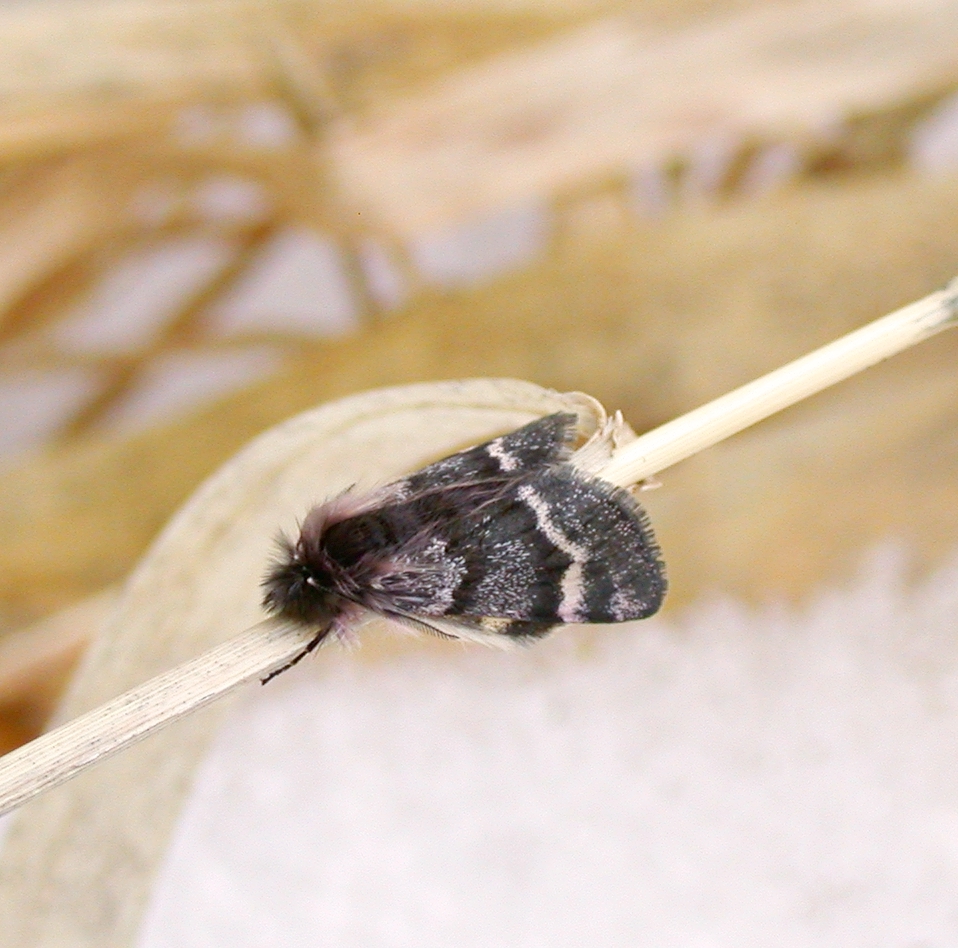
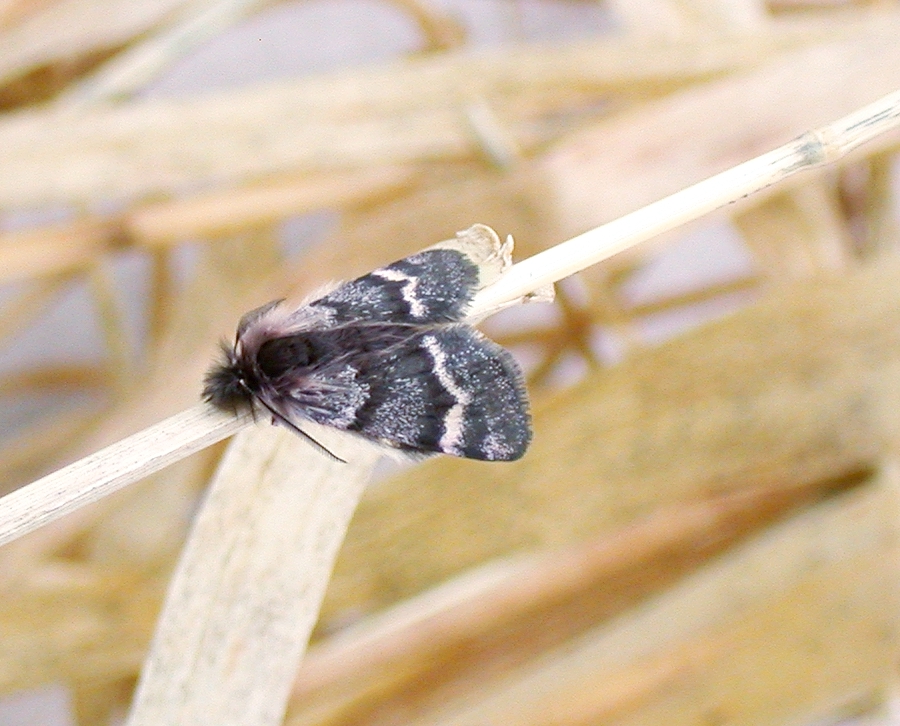
I saw this Leucobrephos brephoides on March 30, 2006. Even though I look for it each spring, I have never seen it again. When I found it, the marsh it was in was beginning to flood, snow and ice were still on the ground, and the air temperature that day was in the mid-30s to low-40s F. This is a hardy moth.
Leucobrephos brephoides is a rare moth species in the family Geometridae, subfamily Archiearinae. I have seen it only once, back in March 2006. Even though I look for it every year in late March and early April, I have not found it again.
The one and only time I have seen it, there was still snow on the ground, although it was melting. In the marsh where it was resting on some grass, a flood was beginning. And it was chilly, in the mid-30s to low-40s F. For Leucobrephos brephoides, this was a normal day.
I was excited to find this little moth. It was cold and there was still snow on the ground. I’d never really thought of insects being active so early. Since then, I have found that many insect species, beetles, moths, wasps, and midges, are active this early. Even spiders are out. Some insects are feeding on nectar and pollen from early-flowering willows. Others are seeking mates. A few, along with the spiders, are hunting other insects.
Description
The forewing of Leucobrephos brephoides is black and dusted with grey. The postmedial line is black with a white border. The antemedial line is also black but lacks a white border. The hindwing is white with an even black margin and basal black scaling.
Males have pectinate (feathery) antennae, the females have filiform (thread-like) antennae.
Leucobrephos brephoides on March 30, 2006
Life history
In the spring, female Leucobrephos brephoides lays 1 to 3 eggs on a leaf scar near the tips of aspen branches. They may lay their eggs thirty or more feet from the ground or just a few feet from the ground. After about 15 days, the eggs hatch. The larvae go through five instars before burrowing into the soil and pupating.
In the spring, the adults emerge from their pupa. Adult Leucobrephos brephoides are day fliers and active even while temperatures are still cold and snow is still on the ground.
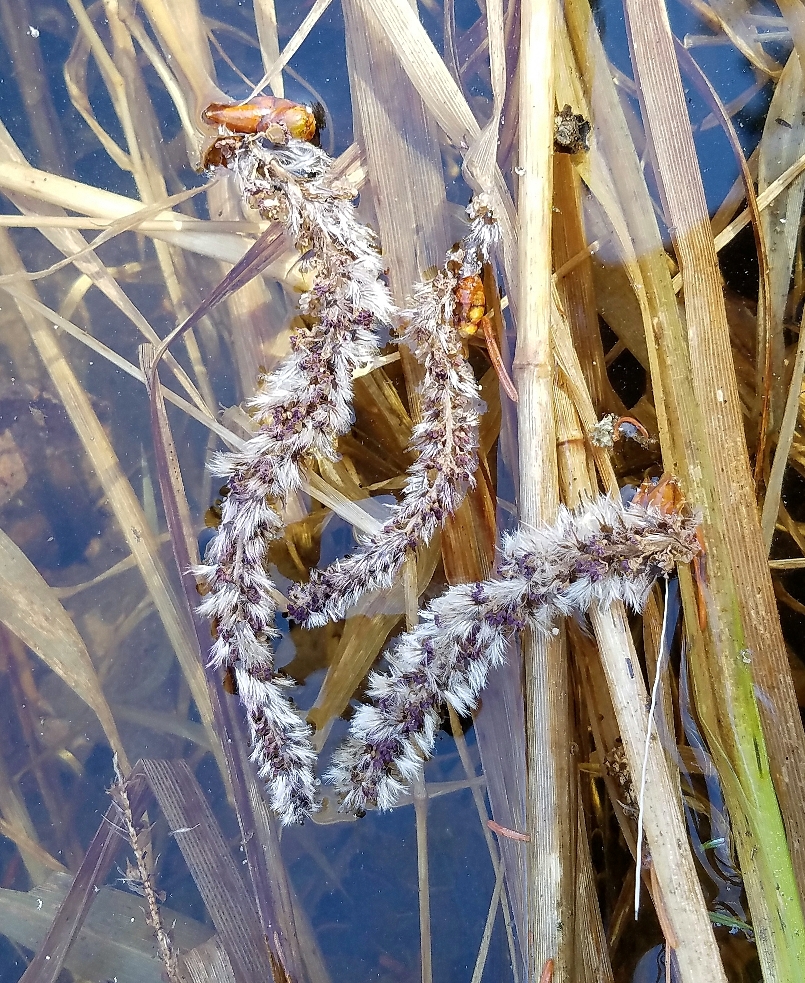
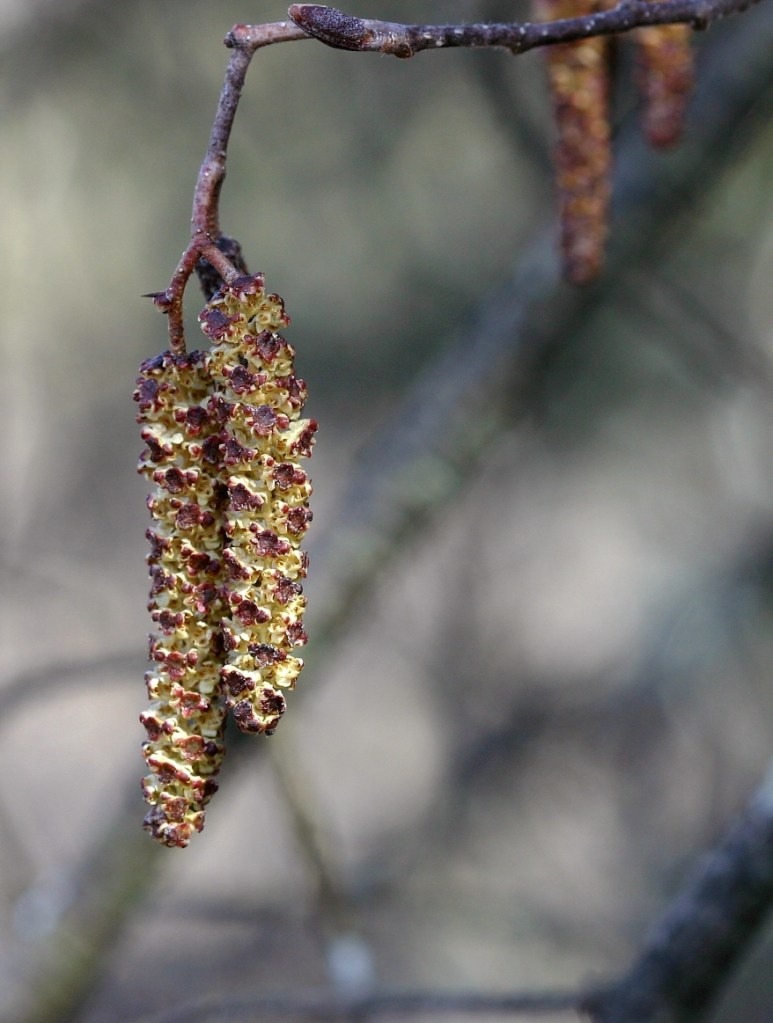
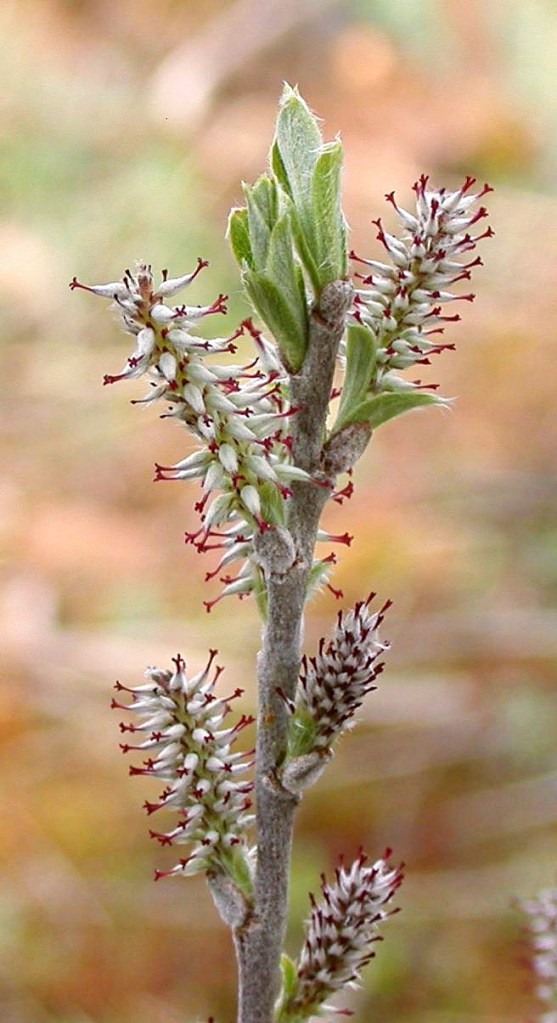
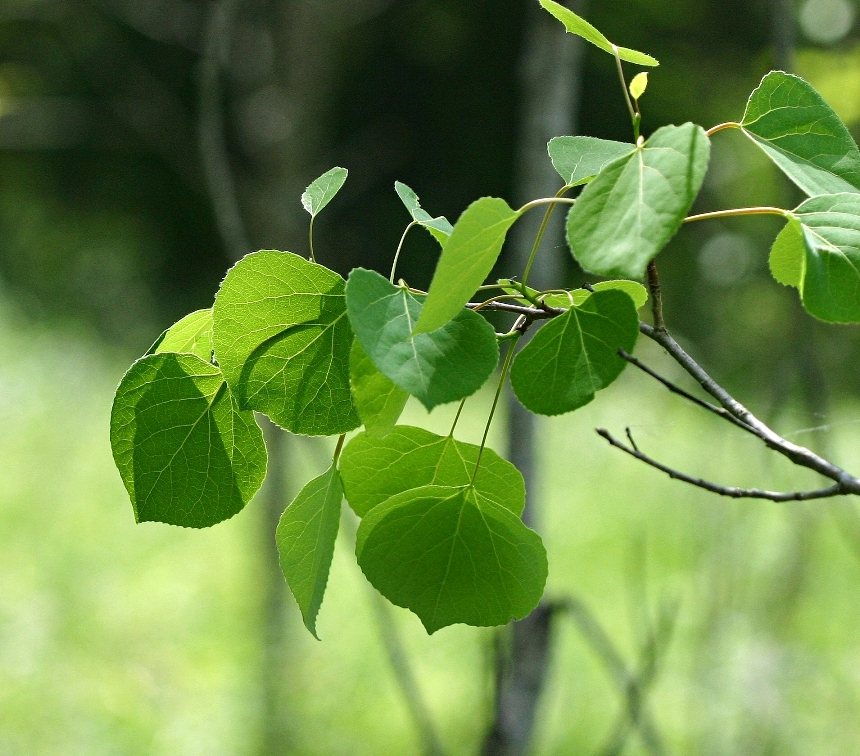
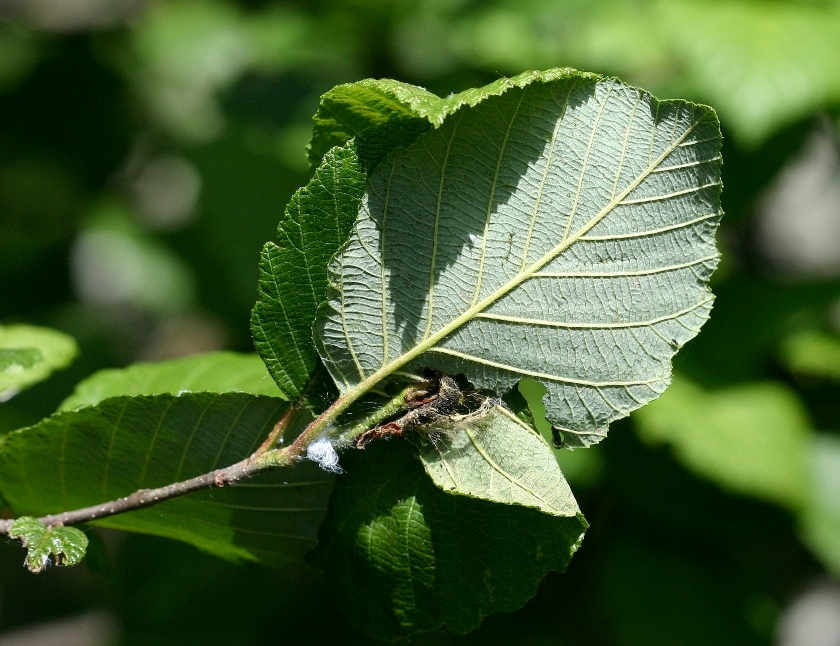
Leucobrephos brephoides inhabits open mixed broadleaf and coniferous forests. Its primary host plant is quaking aspen (Populus tremuloides), but it also feeds on paper birch (Betula papyrifera) and alder (Alnus incana). Larvae have also been found feeding on willow (Salix spp.) and balsam poplar (Populus balsamifera). All of these species produce catkins in the early spring before their leaves emerge. Catkins may be an important food source Leucobrephos brephoides larvae, which hatch from their eggs before leaf emergence.
Leucobrephos brephoides is found in cool northern forests where its primary host plant, quaking aspen, grows.
What do the adult moths eat?
Gibson and Criddle (1916) made some interesting observations about the food preferences of the adult Leucobrephos brephoides. They found that sugar baits did not interest the moths. Instead, they noted that rotten meat was attractive. The moths also sought moisture and could be found on muddy roadways near aspen woods.
Similar species
A similar species, also active when Leucobrephos brephoides is in flight, is Archiearis infans. Archiearis infans is more common and widespread than Leucobrephos brephoides. It has bright orange underwings. I’ve seen this species one time also, and that was in the spring (April 2021) during the day at a mud puddle. It lays its eggs in the spring, and the larvae feed on the same plants as Leucobrephos brephoides.
Other Leucobrephos species
Leucobrephos is a Holarctic genus with two species: Leucobrephos brephoides in the Nearctic and Leucobrephos middendorfii in the Palearctic. Leucobrephos middendorfii occurs in Siberia, Mongolia, and the Ural Mountains. The species Leucobrephos mongolicum is considered a synonym of Leucobrephos middendorfii, as is Leucobrephos middendorfii ussuriensis. The subspecies Leucobrephos middendorfii nivea is considered valid. Host plants of Leucobrephos middendorfii are from the same genera as those of Leucobrephos brephoides.
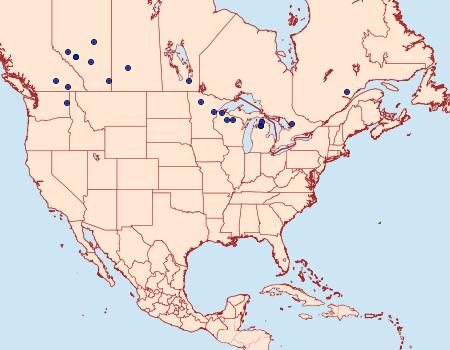
Range of Leucobrephos brephoides
The Leucobrephos brephoides range map shows a wide range but few records.
Next year
Next March and April, I’ll be out looking for Leucobrephos brephoides again. I’ll check the edges of the woods and marsh for moths, as I have in previous years. I’ll also check the aspen and willows for eggs and larvae. I’m also going to set out bait stations, some with sugar to mimic sap and others with spoiled meat. Maybe after twenty years, I will finally see this scarce moth again. Or maybe not. It is possible that since 2006, the climate here has gotten too warm for this cold-loving species.
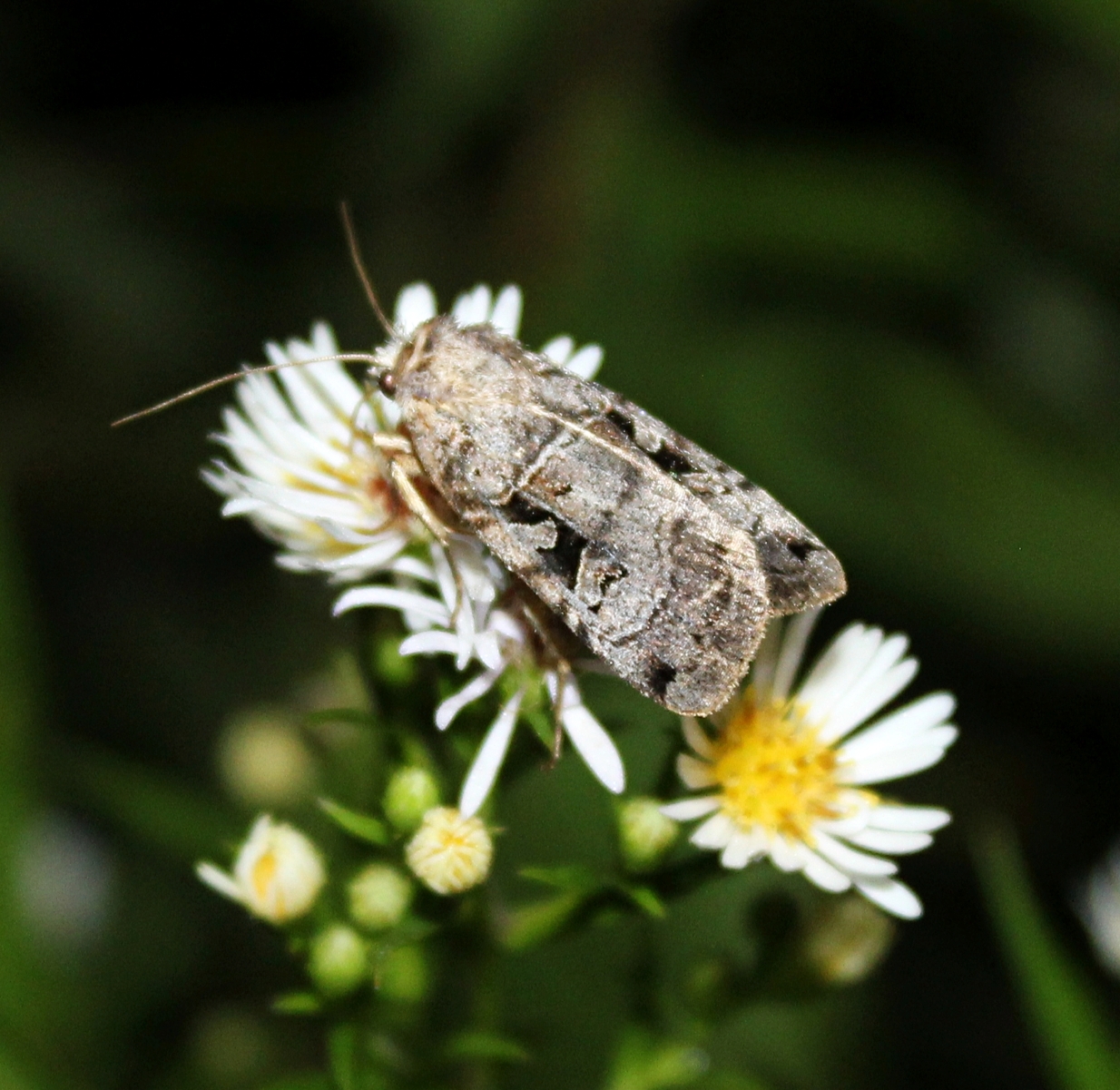
Xestia normanianus, a dart moth, nectaring on lance-leaved aster (Symphyotrichum lanceolatum) at night.
What do moths do at night anyway? Some of them visit flowers for nectar.
Back in August, I was wandering about in the woods at night looking for foxfire fungi. At the head of the trail on my way out, I saw a sunflower plant with something on the flowers. It was a green tree cricket (Oecanthus) eating the stamens in the sunflower florets.
The next night, I went back but this time with my camera, hoping to find more tree crickets. I had my LED headlamp on like the previous night and used it to illuminate the flowers and foliage where I wanted to photograph. I also set the flash of my camera to “on”.
Although I could hear tree crickets in the bushes, I didn’t see any this time. What I did see were lots of moths on sunflowers and asters. Aiming the lamp’s beam at the flowers, I then pointed my camera at the moths and began taking photos. I wasn’t using a tripod, so many were blurry. Some were also overexposed by the bright LED light. But a few turned out.
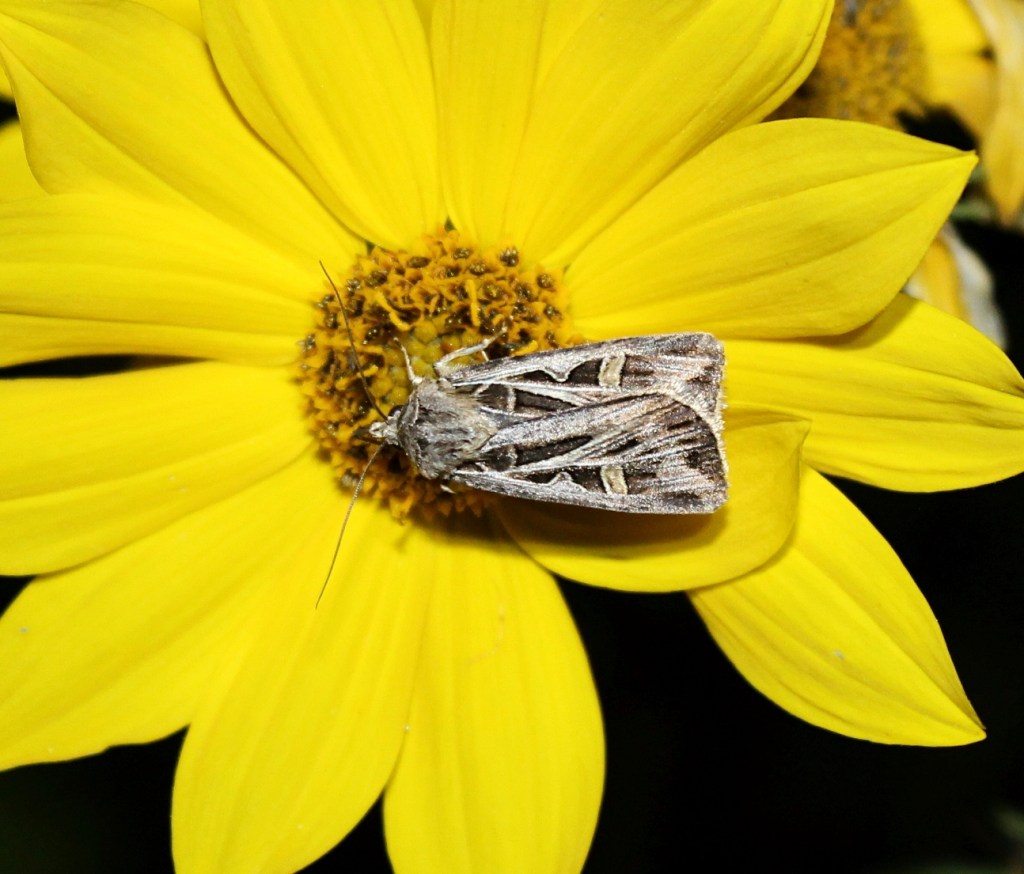
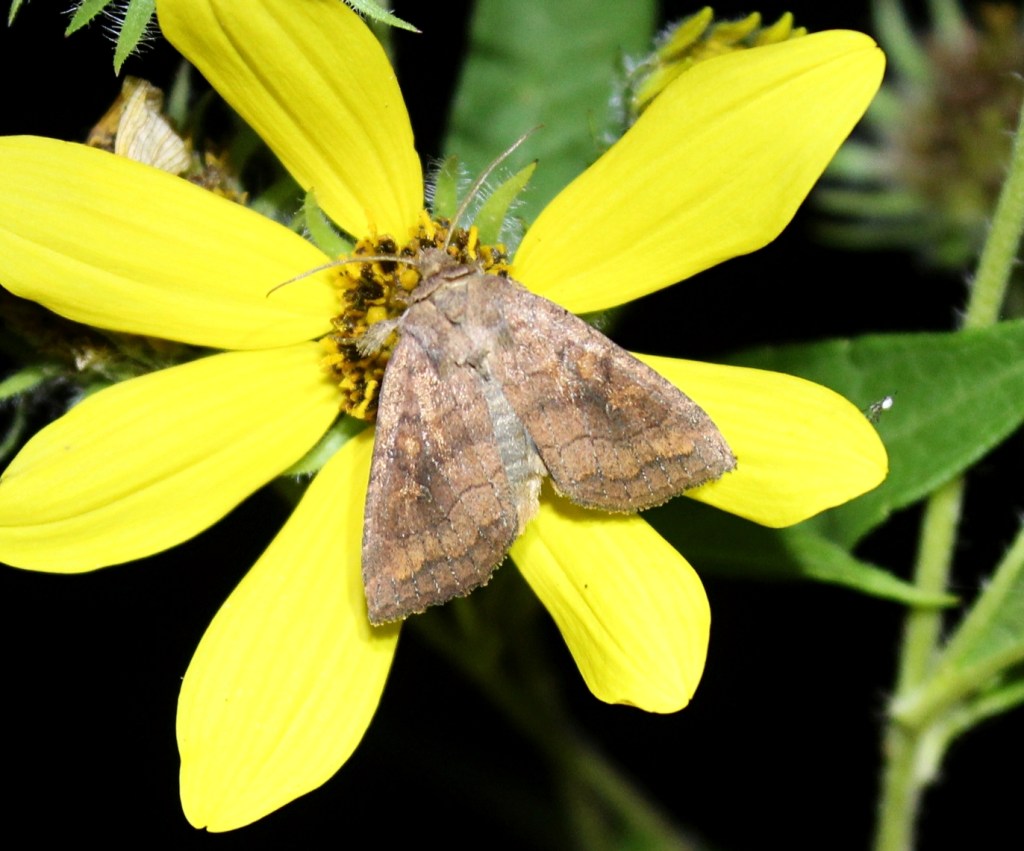
Feltia jaculifera nectaring on a sawtooth sunflower (Helianthus grosseratus)Nephelodes minians nectaring on a sawtooth sunflower (Helianthus grosseratus)
The moth species (Xestia normanianus, Feltia jaculifera, and Nephelodes minians) I found on flowers at night came as no surprise. These and other dart moth species are common visitors to my moth lights. But it was exciting to see them going about their normal activities in a natural setting. I never did find any foxfire this year.
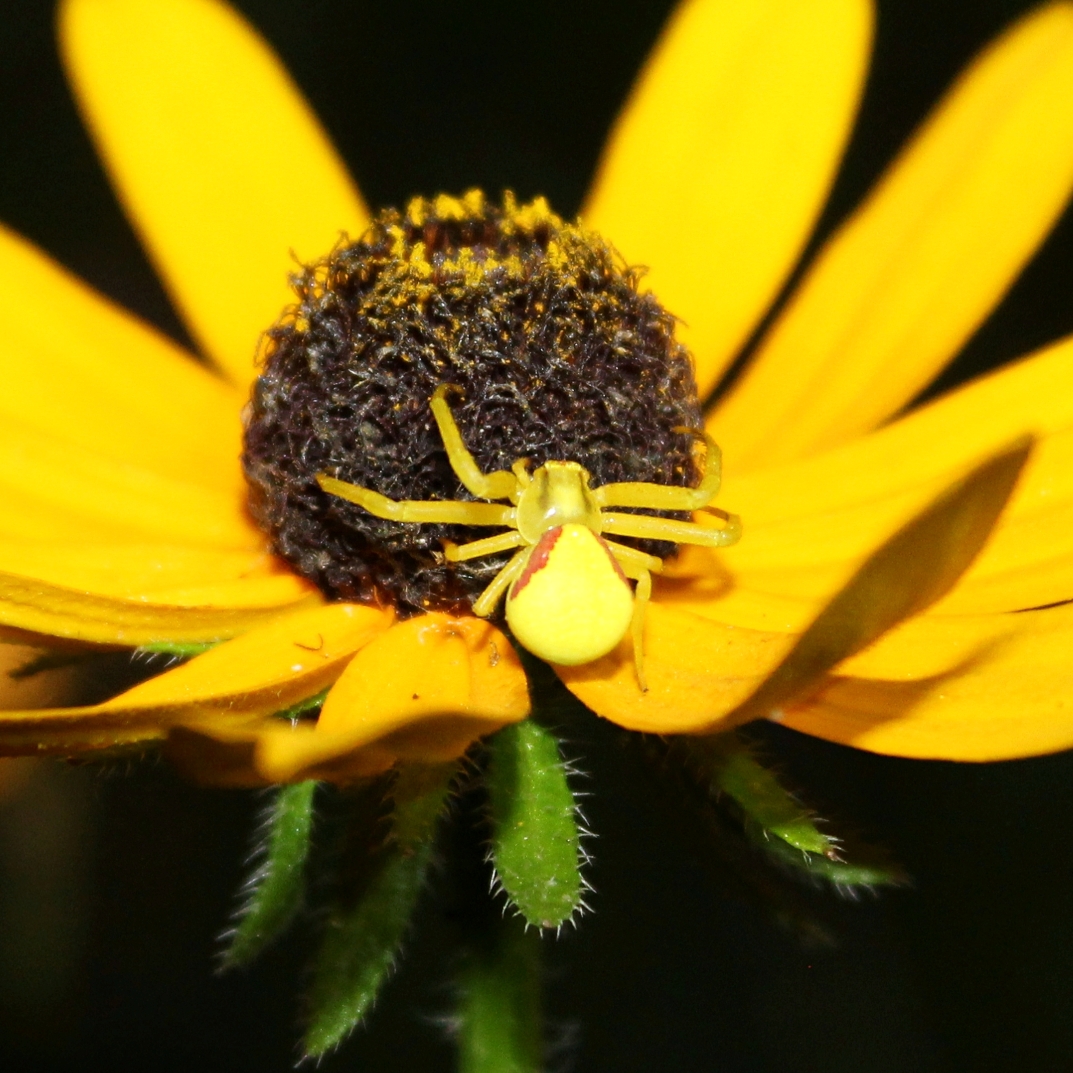
Moths weren’t the only visitors to flowers at night. I wonder if this crab spider was sleeping or waiting for a moth.


 Not Very Far Away