I’m working on a few posts related to fungi and insects. One should be ready next weekend and will feature an unusual beetle that eats bracket fungi and sprays poison on its enemies. And a beautiful beetle, too, will be discussed. The fungi posts will be about some important species found across the northern boreal forests. There are still literature searches going on that lead me down many wandering paths, as well as coalescing all of this information into writing before these are ready to post.
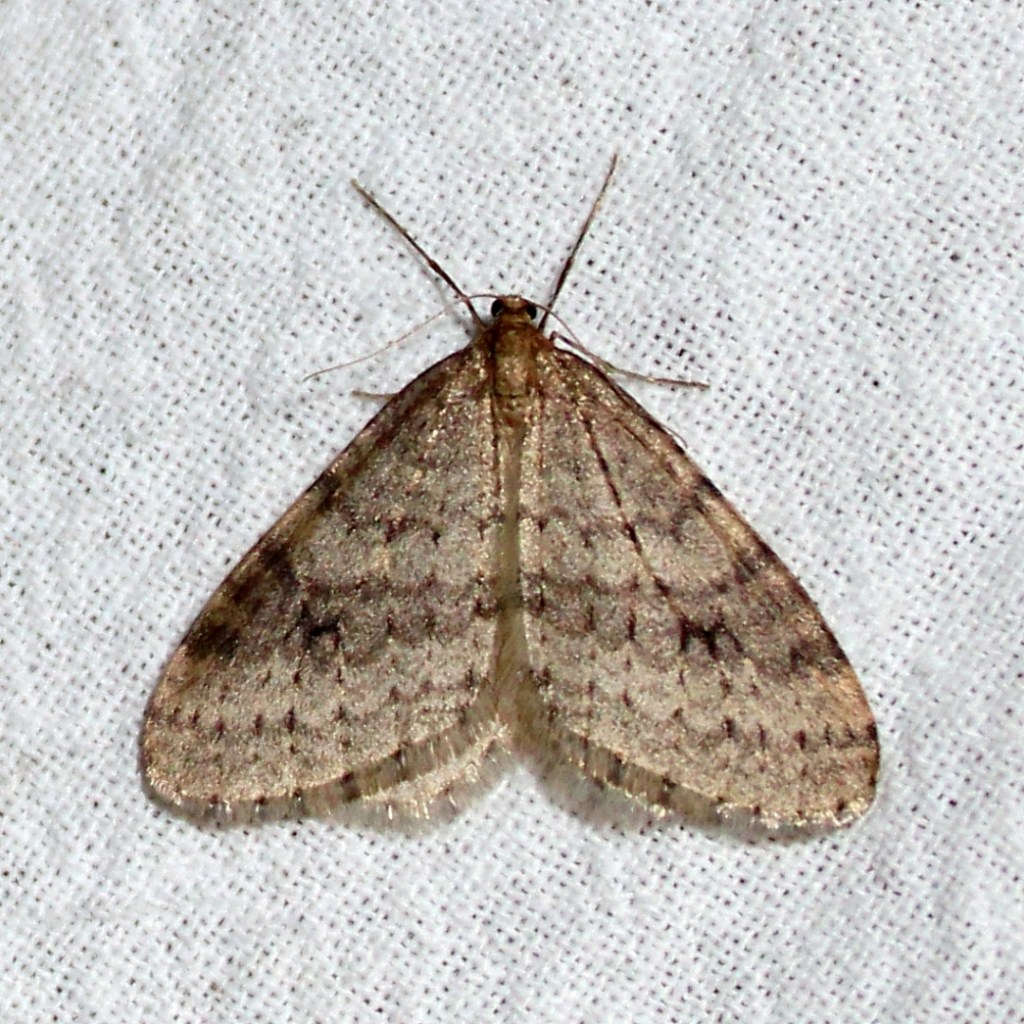
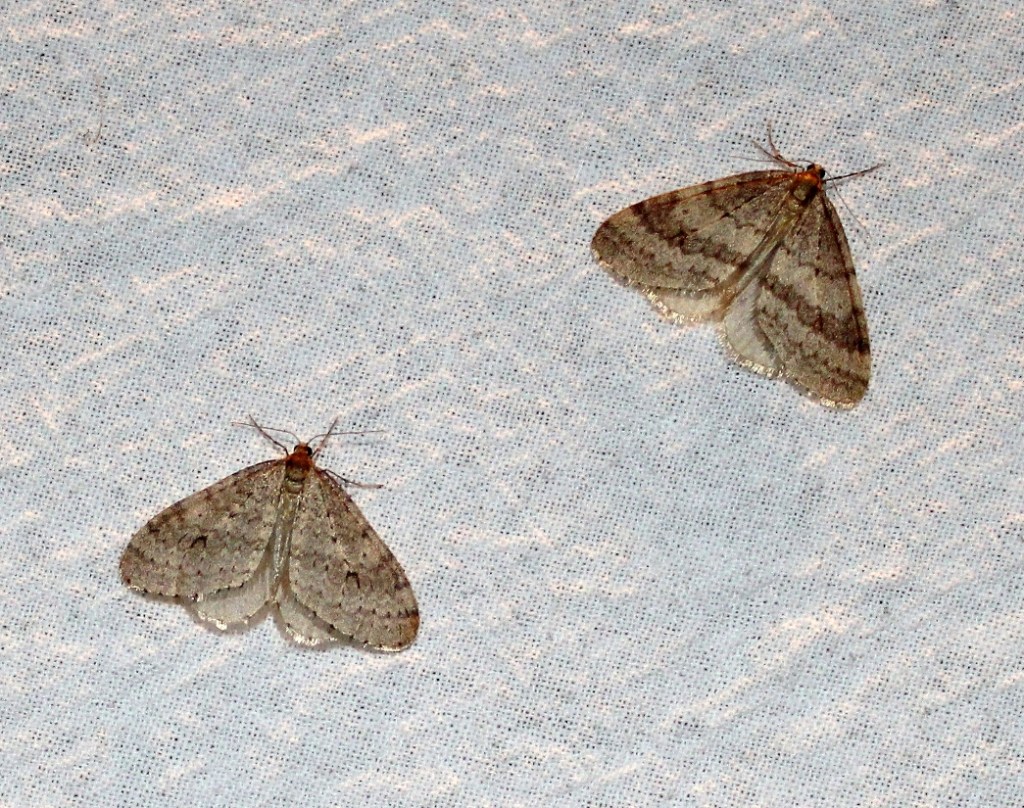
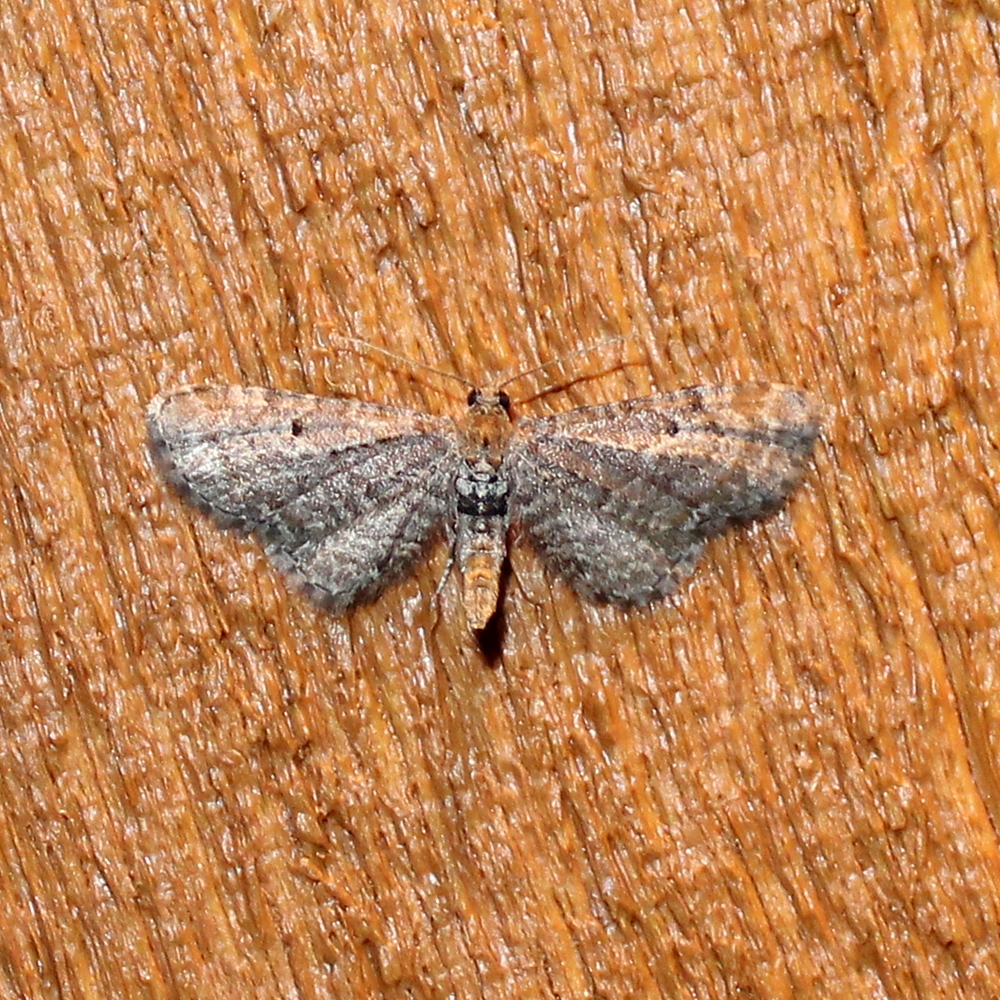
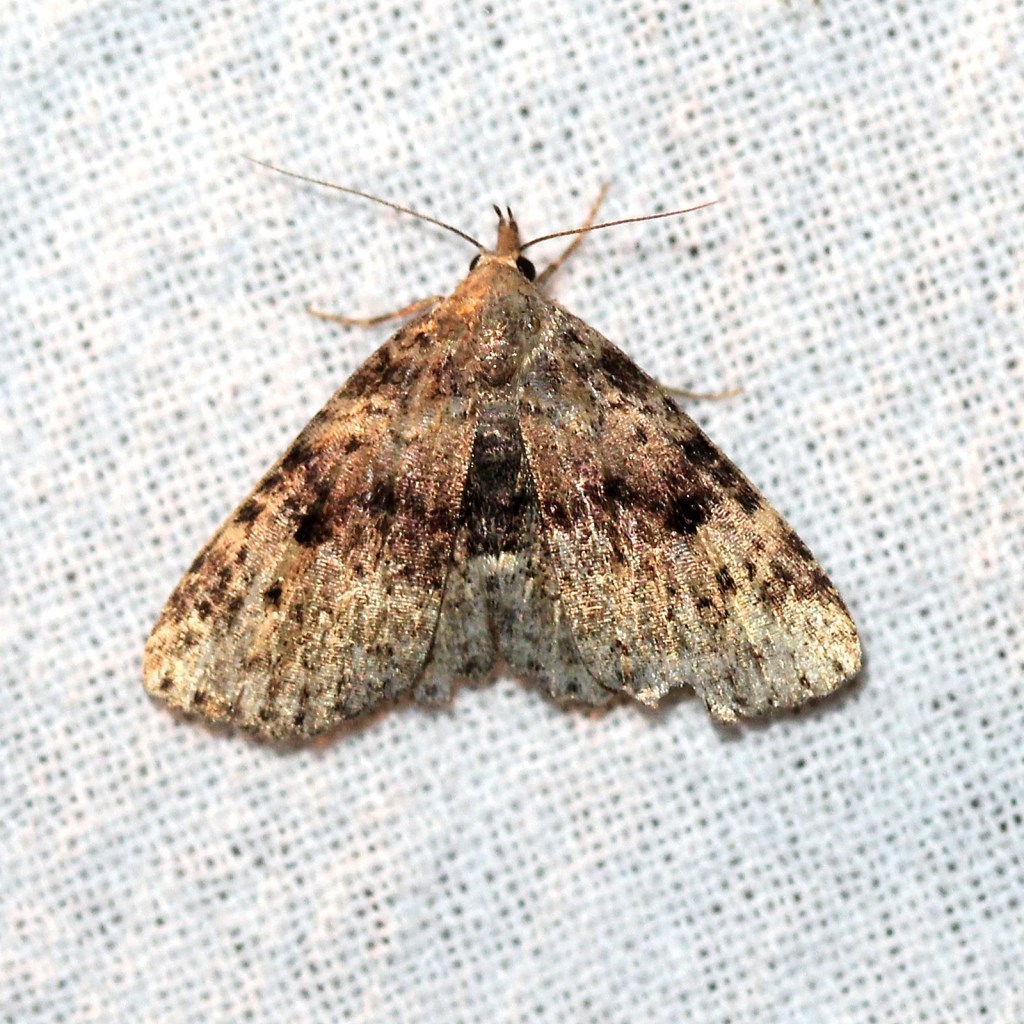
Possibly. Temperatures at night have gone below freezing four times since mid-September which has put an end to the songs of crickets and grasshoppers. Bees and butterflies are gone, either killed by the cold weather or hibernating. But in the last six days, I’ve seen a moth, Operophtera bruceata (Bruce Spanworm), flying in the woods. Operophtera bruceata is a brownish moth with faint markings and is in the Geometridae. On Thursday and Friday, I turned on my porch light and attracted about 25 moths each night. That’s the largest number of Operophtera bruceata I’ve ever seen at one time so this must be a boom year for them. Saturday and Sunday nights saw fewer moths and on Monday there were none.
Operophtera bruceata spends only a few weeks of its life as a moth. From late fall to May it is an egg hidden in cracks and crevices in tree bark waiting out the winter. In May and June, the larvae hatch and begin feeding. The larvae feed on a variety of common tree species but prefer aspen, sugar maple, beech, and willow. Pupation lasts until October.
Operophtera bruceata exhibits sexual dimorphism with winged males and wingless females. Apparently, this strategy works well as the moth is widespread in North America.
Operophtera bruceata showing variation in wing patterns.
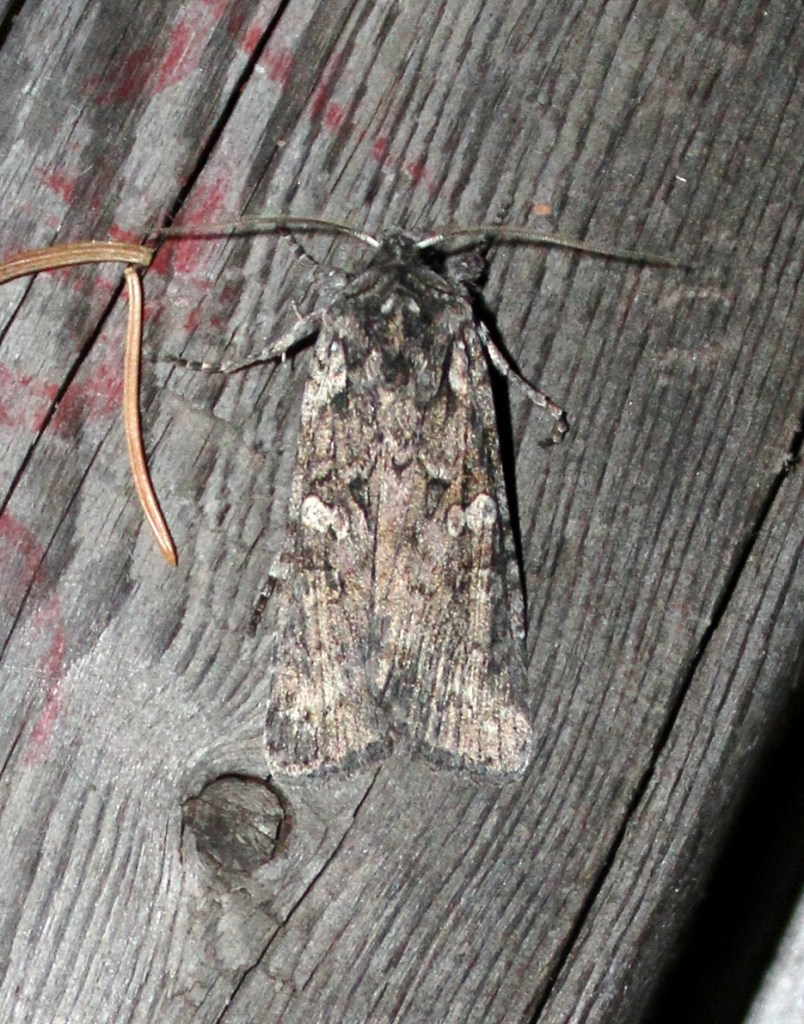
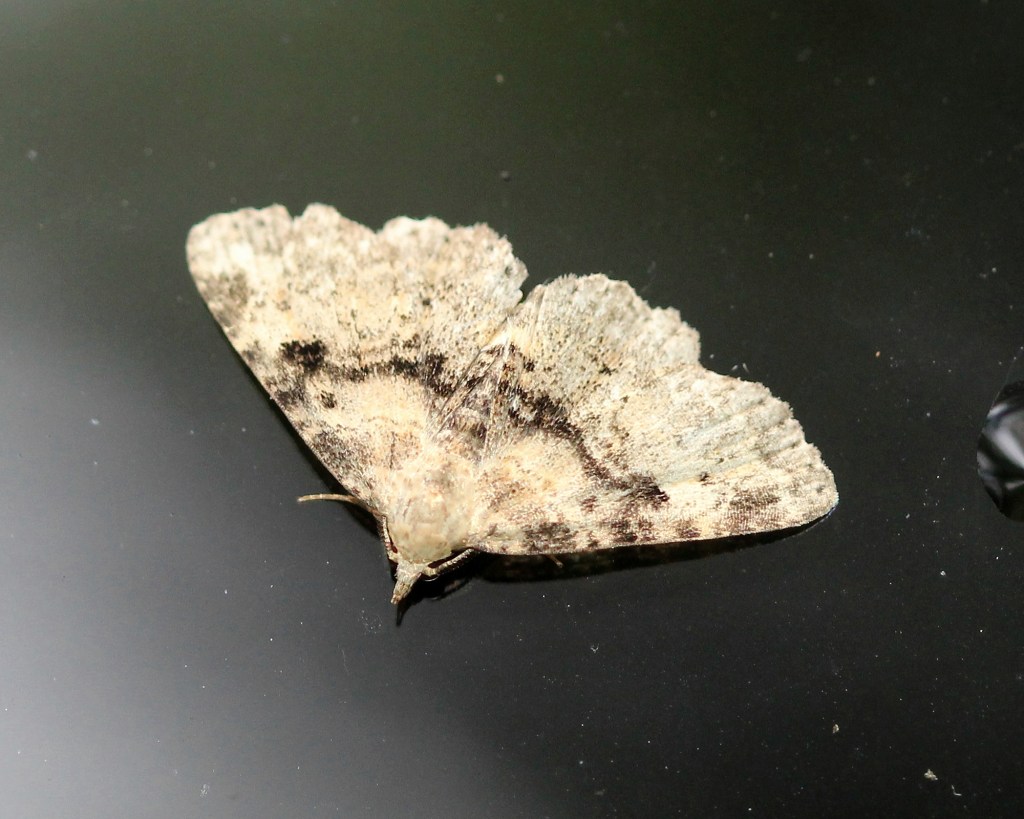
Other moths are also appearing at the lights. One is Lithophane grotei (Grote’s Pinion) which has only recently eclosed. It will not mate until next spring. Instead, Lithophane grotei will find shelter under bark or woody debris to hibernate and wait out the winter. A different life strategy from that of Operophtera bruceata. Its larvae feed on maple, birch, cherry, and apple leaves. Lithophane grotei is widespread in the northeastern US and Ontario and Quebec in Canada.
Lithophane grotei
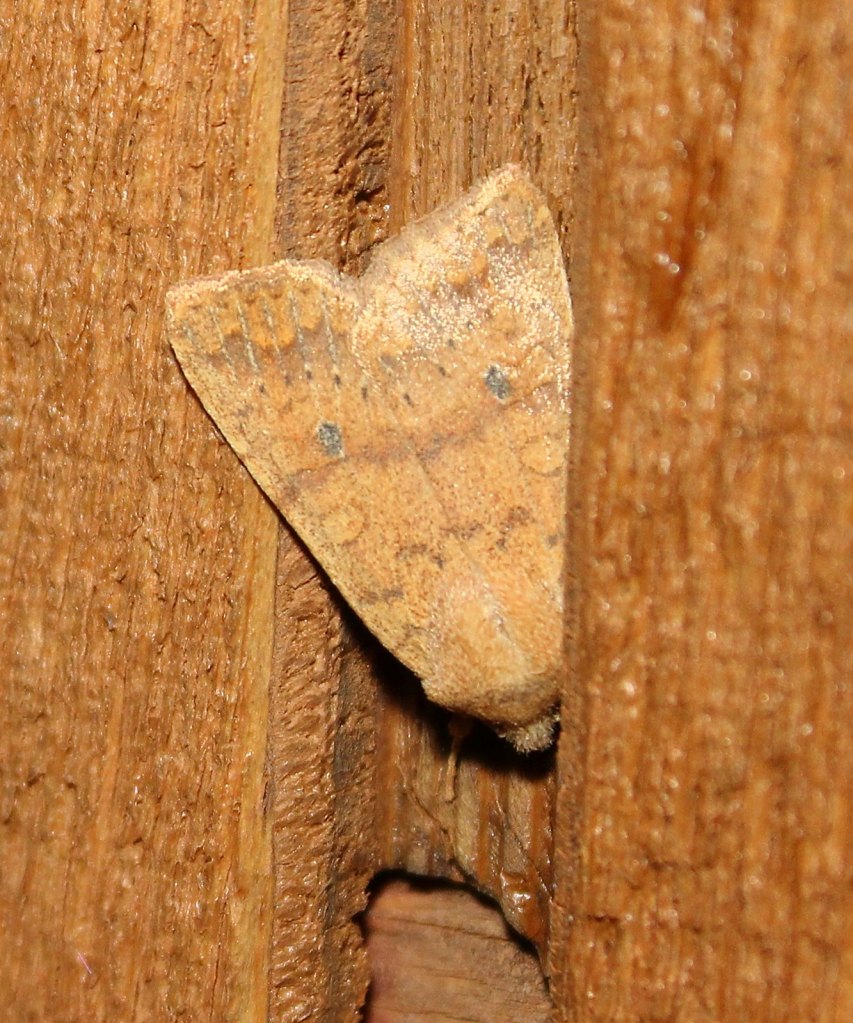
A third species at the lights was Sunira bicolorago (Bicolored Sallow). This species is common over most of the US and southern Canada east of the Mississippi River in moist forests. The larvae of Sunira bicolorago are generalist feeders of many herbaceous and woody plants and not just willows as its common name might suggest.
Sunira bicolorago
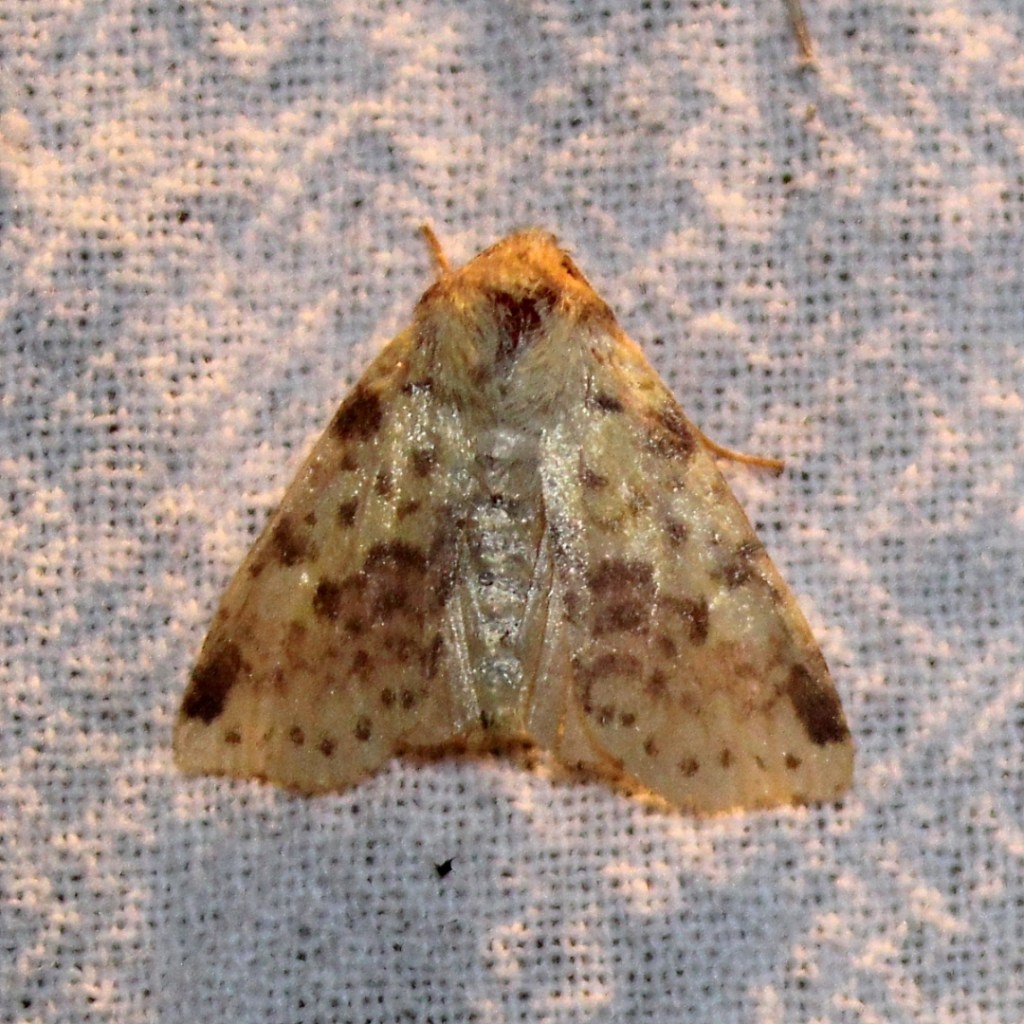
The fourth, and perhaps the final moth of the year, I saw was Xanthia tatago (Pink-barred Sallow). Like Sunira bicolorago, it occurs in moist forests where willows and cottonwoods grow as it is a food specialist and feeds exclusively on plants in the willow family (Salicaceae). Early larval stages feed on the catkins of willow (I can’t find any information about feeding on cottonwood catkins) and later on the leaves.
Xanthia tatago
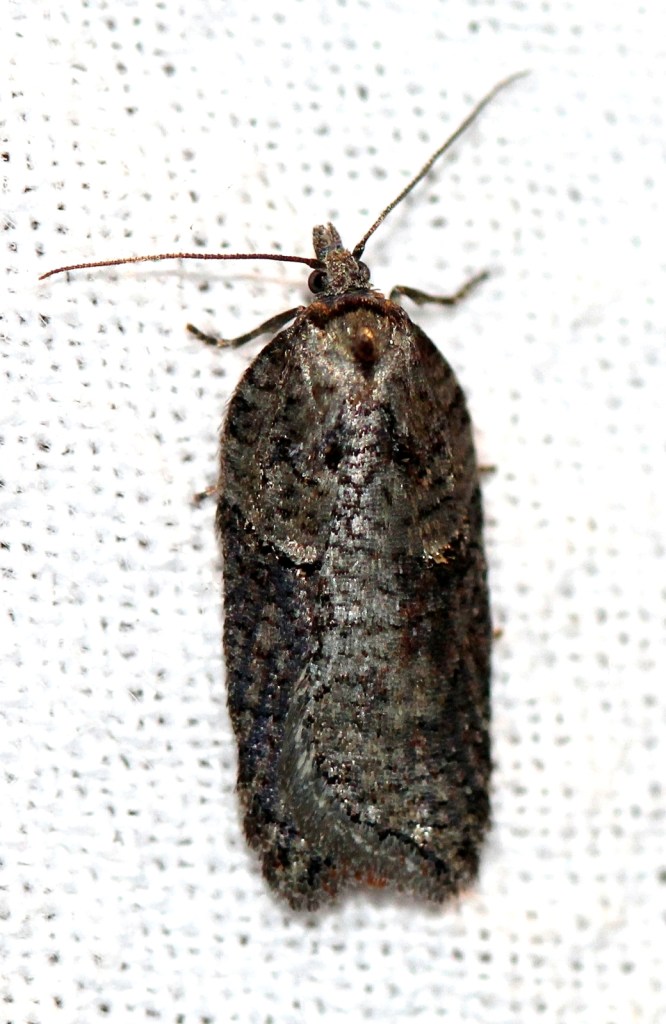
Weather forecasts over the next two weeks show decreasing day and night temperatures with highs rarely reaching the 50s and lows down in the 20s. Not unexpected weather for this time of the year. On sunny days some tiny moths or caterpillars might be out but evening mothing is probably over until March next year at the earliest. But that’s not set in stone as on December 15 last year there was this sighting of an Acleris sp. (possibly Acleris busckana). In the meantime, until temperatures are consistently at or below freezing, there will be other insects, spiders, and other small arthropods out and about waiting, I hope, to be photographed.
Eupithecia miserulata (common pug) caterpillar feeding on flowers of sawtooth sunflower (Helianthus grosseratus). This species also feeds on coneflowers in the genus Rudbeckia.
Pug moths (Eupithecia) are a large genus (about 1,400 species) of tiny moths in the Family Geometridae (geometer moths or inchworms). There are hundreds of described species from all continents except Antarctica. Some even live on Pacific islands like the islands of Hawai’i with species whose larvae are carnivorous and catch and eat other insects. North America north of Mexico hosts at least 160 species. There are probably many more species yet to be described.
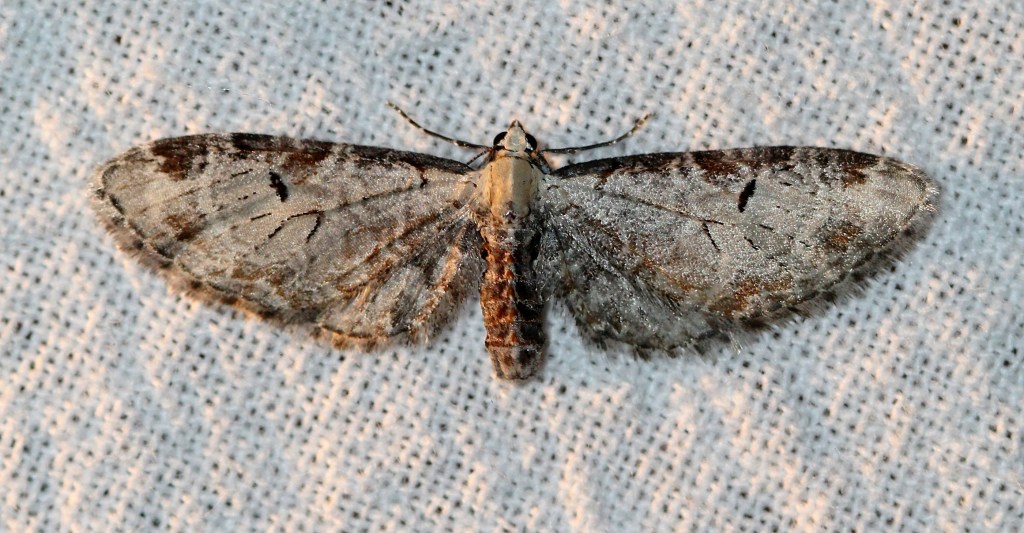
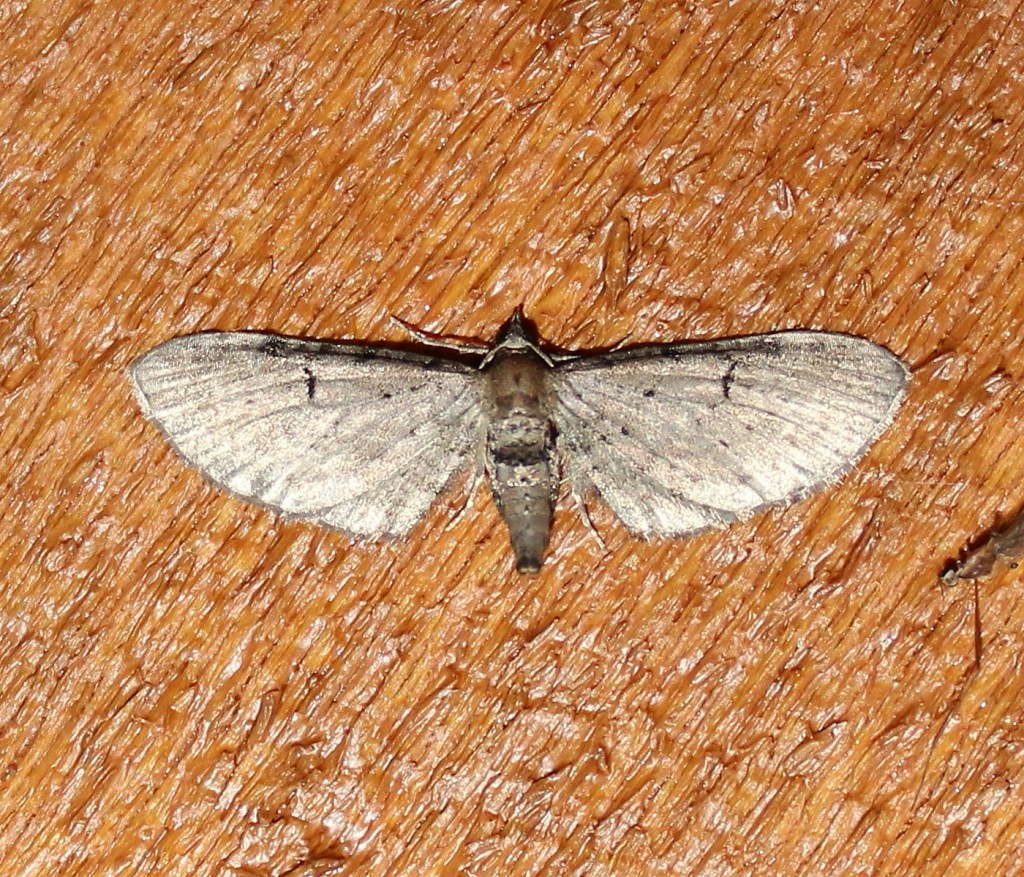
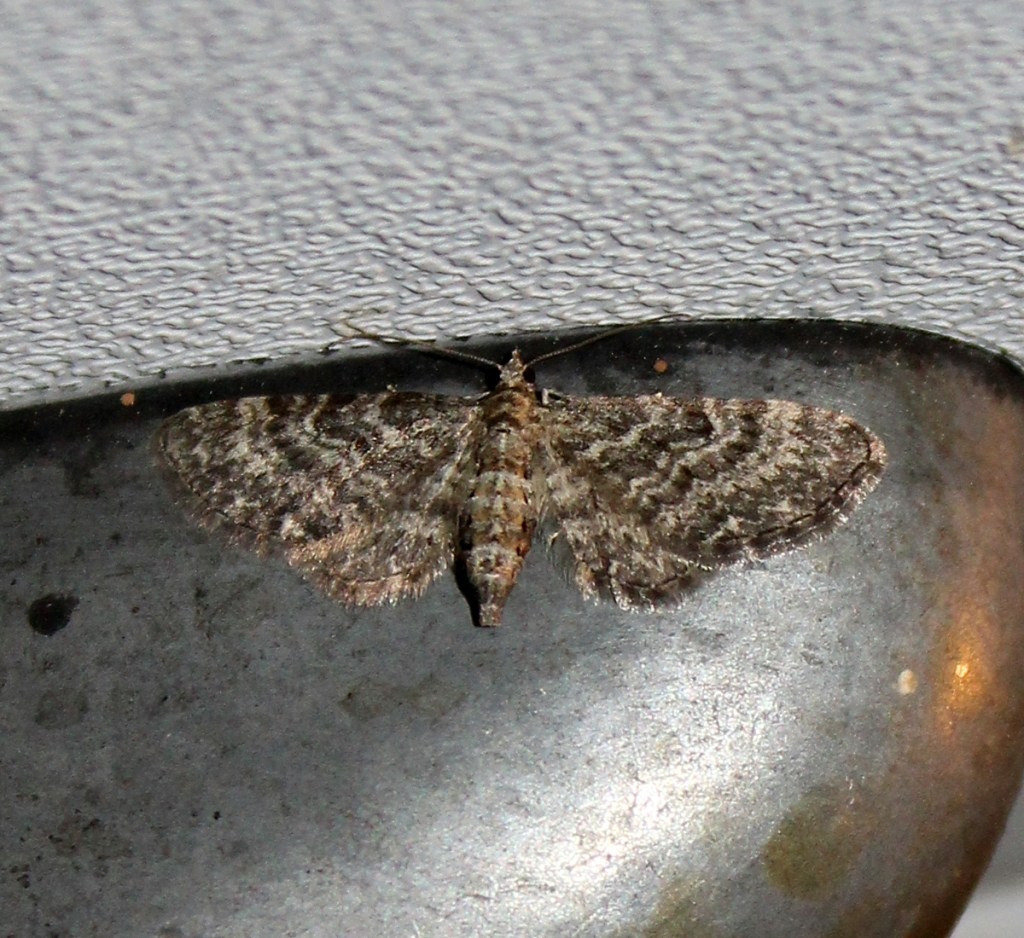
Eighteen Eupithecia species have been recorded from Minnesota. Some are known from five or fewer sightings in the state. I haven’t found all eighteen yet but have gotten to one-third of that number and that includes some of the rarities. The most common one is Eupithecia miserulata, a small grayish species with a dark dot on each of its forewings, faint scalloped lines on the wings, and often two or three dark dots along the costa. This moth can be variable and it is easy to confuse it with other species. I often find the yellowish larvae in July and August feeding on the anthers of black-eyed susan (Rudbeckia hirta) flowers, cut-leaf coneflower (R. laciniata), and sunflower (Helianthus grosseserratus). The larvae of E. miserulata are also reported to feed on oak, willow, and juniper.
Larval host preferences are not known for the other Eupithecia I’ve found except for E. strattonata (alder and spiraea), E. absinthiata (mugwort, wormwood, yarrow), and E. ravocostaliata (willow, cherry, birch and other woody plants).
Below are the six species I’ve found and been able to identify.
Metalectra quadrisignata (four-spotted fungus moth) from Carlton County, Minnesota
But not in Tineidae. This moth, Metalectra quadrisignata (four-spotted fungus moth), in the Family Erebidae, Subfamily Boletobiinae is yet another addition to the species checklist. The first syllables in the name Boletobiinae are “bolet” from “bolete” which is a name given to a vast group of species of mushrooms with large caps free from the stems and producing spores from pores, not gills. So, Metalectra quadrisignata is in the Subfamily Mushroom-iinae. Presumably, the larva of many or most of the members in this subfamily are fungivores but full life histories for species is incomplete. Larvae of Metalectra quadrisignatafeed on bracket fungi preferring living or actively growing fruiting bodies. What species or even order is not specified. Some photos at Bug Guide show larva on a gilled mushroom and a slime mold which is not a fungus. It is unclear if they larvae were consuming these. I’ll need to start looking more carefully at these types of fungus.
Metalectra quadrisignata (four-spotted fungus moth) found near Cadotte Lake in St. Louis County, Minnesota.
Matalectra quadrisignata is widespread in eastern North America from New Brunswick south to Florida and west to Manitoba and Texas.
Classification
Kingdom Animalia (Animals)
Phylum Arthropoda (Arthropods)
Subphylum Hexapoda (Hexapods)
Class Insecta (Insects)
Order Lepidoptera (Butterflies and Moths)
Superfamily Noctuoidea (Owlet Moths and kin)
Family Erebidae
Subfamily Boletobiinae
Tribe Boletobiini
Genus Metalectra
Species quadrisignata (Four-spotted Fungus Moth – Hodges#8500)




 Not Very Far Away