
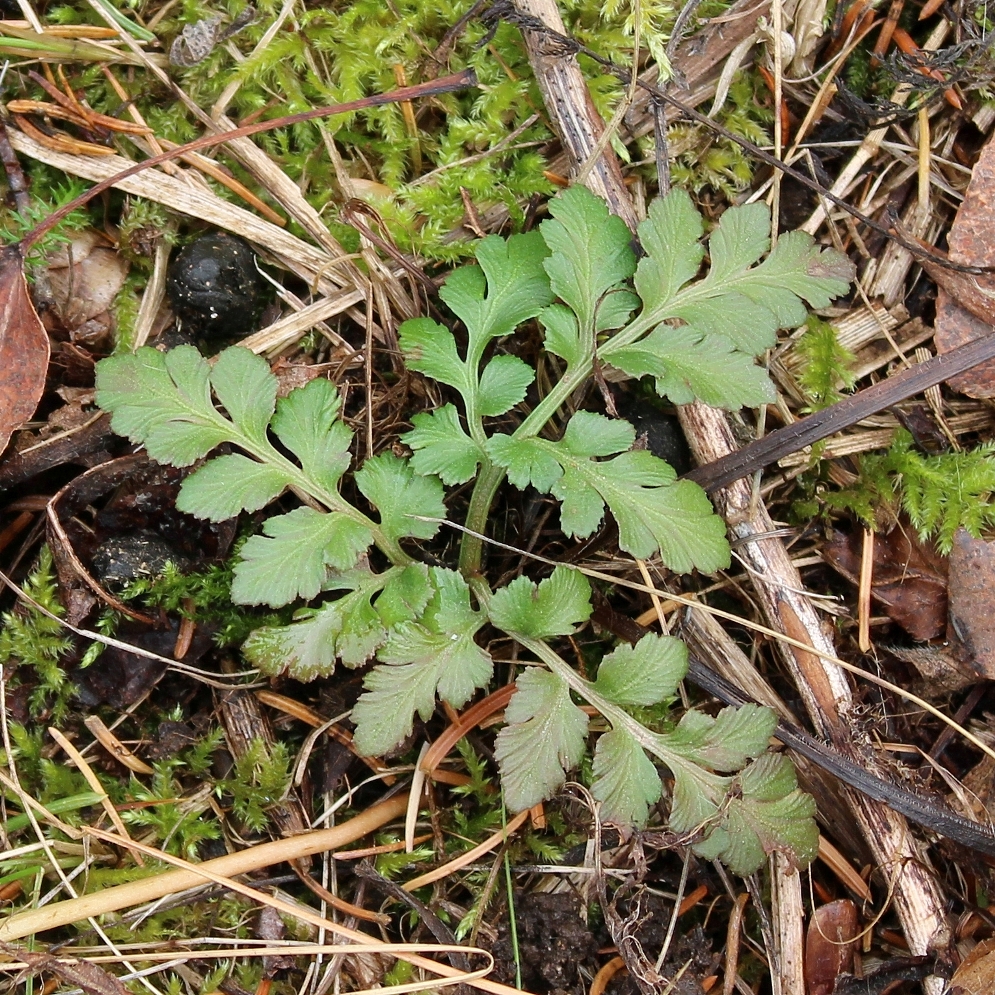
Grape ferns (Sceptridium) and their relatives, the moonworts (Botrychium), are an odd bunch. They grow from stubby subterranean stems with a few thick roots. The stems produce one leaf, rarely two, a year. That leaf is succulent, divided into two parts, one of which is photosynthetic (trophophore), the other reproductive (sporophore). They have a series of buds, one above the other on the subterranean stem, for the next five or so years of leaves.
The photosynthetic part of the Sceptridium leaf is semi-evergreen, meaning it will survive the winter more or less intact. Then, in the spring, it withers away. For a few months, there is no leaf, and then in early summer, a new leaf slowly uncoils, a process that may take more than two weeks.
Grape ferns get their name from the clusters of globular sporangia on the sporophore that look like little bunches of grapes. Grape ferns and their relatives the moonworts were previously placed together in the genus Botrychium. The genus name Botrychium is from the Greek “botrychos” for “bunch of grapes” and Latin “ium” for “small”. The genus name Sceptridium is from the Greek “skēptron,” meaning “scepter” in reference to the upright sporophore.
Sceptridium rugulosum
Sceptridium rugulosum is a grape fern, one of four species known from Minnesota, and it is one of the two rare ones, the other being Sceptridium oneidense.

Description
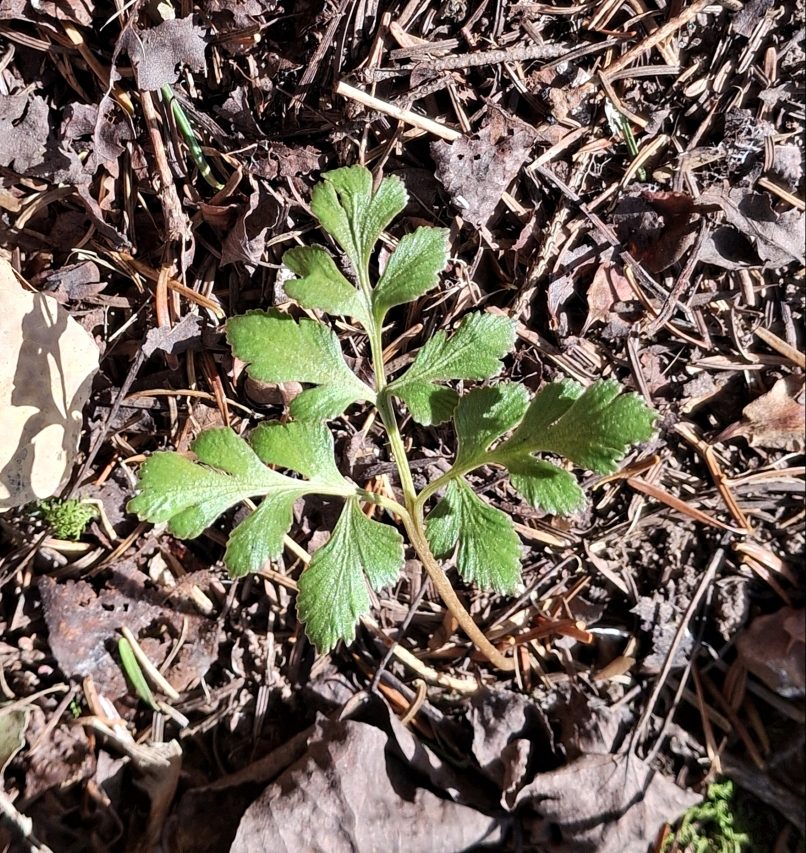
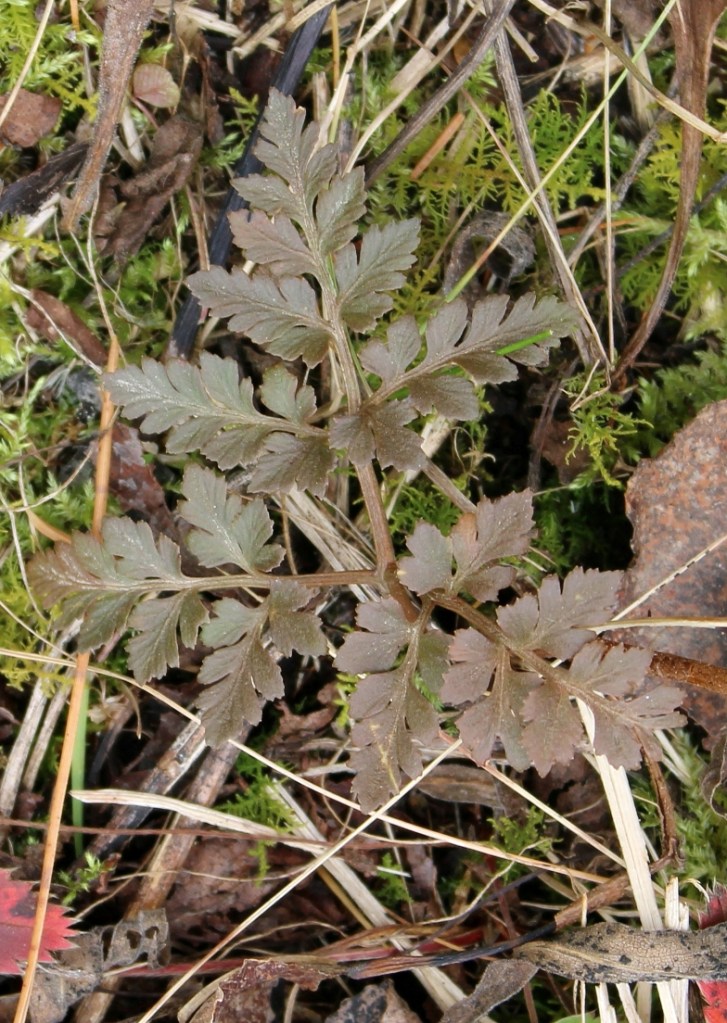
Sceptridium rugulosum has a green, 2 to 4 pinnate, 15 by 26 cm trophophore blade with up to nine pinnae pairs. The surface is rugulose (finely wrinkled) and concave. The angular pinnules (secondary segments) have denticulate margins and pointed tips.
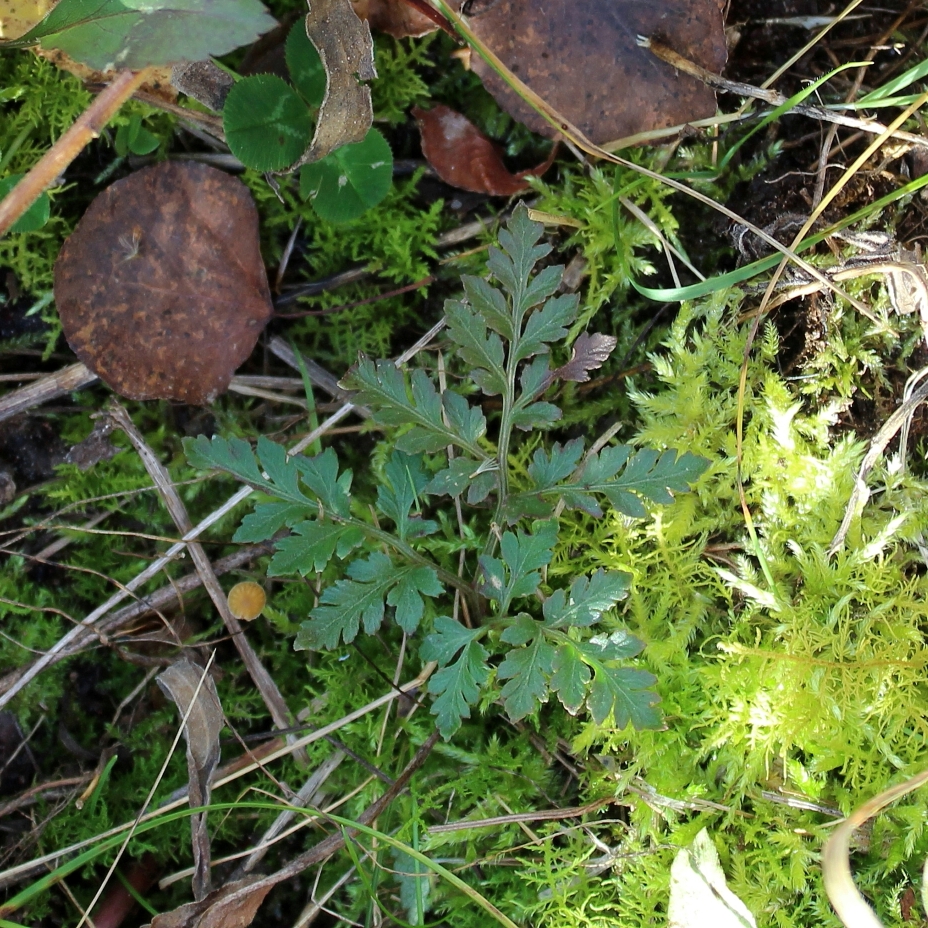
Sceptridium rugulosum can live for many years. The one in the photo below was first seen eighteen years ago.
Habitat
Look for Sceptridium rugulosum in brushy fields, open forests, and meadows.
Range
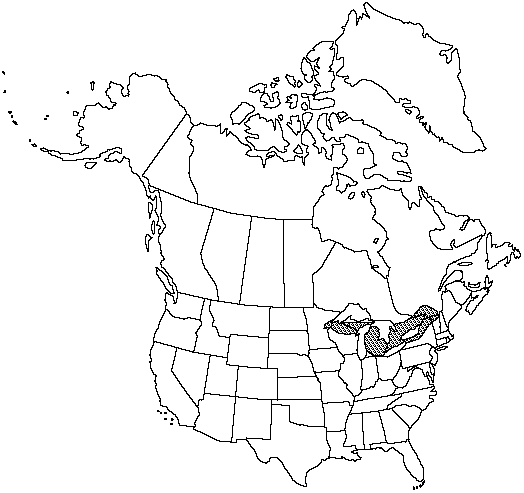
Sceptridium rugulosum is endemic to the Great Lakes and St. Lawrence Seaway regions. The range map above from the FNA is a bit outdated, and Sceptridium rugulosum is now known to occur more widely in Minnesota. There is also a report from Connecticut.
Taxonomy changes
At one time, Sceptridium rugulosum was considered to be a variety or form of Sceptridium (Botrychium) multifidum under the name Botrychium multifidum forma dentatum. It was also included under the name Botyrchium ternatum, which is as an eastern Asian species distinct from Sceptridium rugulosum. Also, the name Botrychium ternatum is listed as auct. non (“of authors, not”), meaning the name was applied by multiple authors to different species.
Sources
- Flora of North America: Botrychium
- Flora of North America: Botrychium rugulosum
- Wagner, W. H., Jr., and F. S. Wagner. 1993. Botrychium. Pages 86-101 in Flora of North America Editorial Committee, editors. Flora of North America north of Mexico. Volume 2. Oxford University Press, New York, New York.
- Minnesota DNR Rare Species Guide: Sceptridium rugulosum
- Go Botany native plant Trust: Botrychium rugulosum – St. Lawrence grapefern
 Not Very Far Away