The Scarce Infant Moth really is scarce

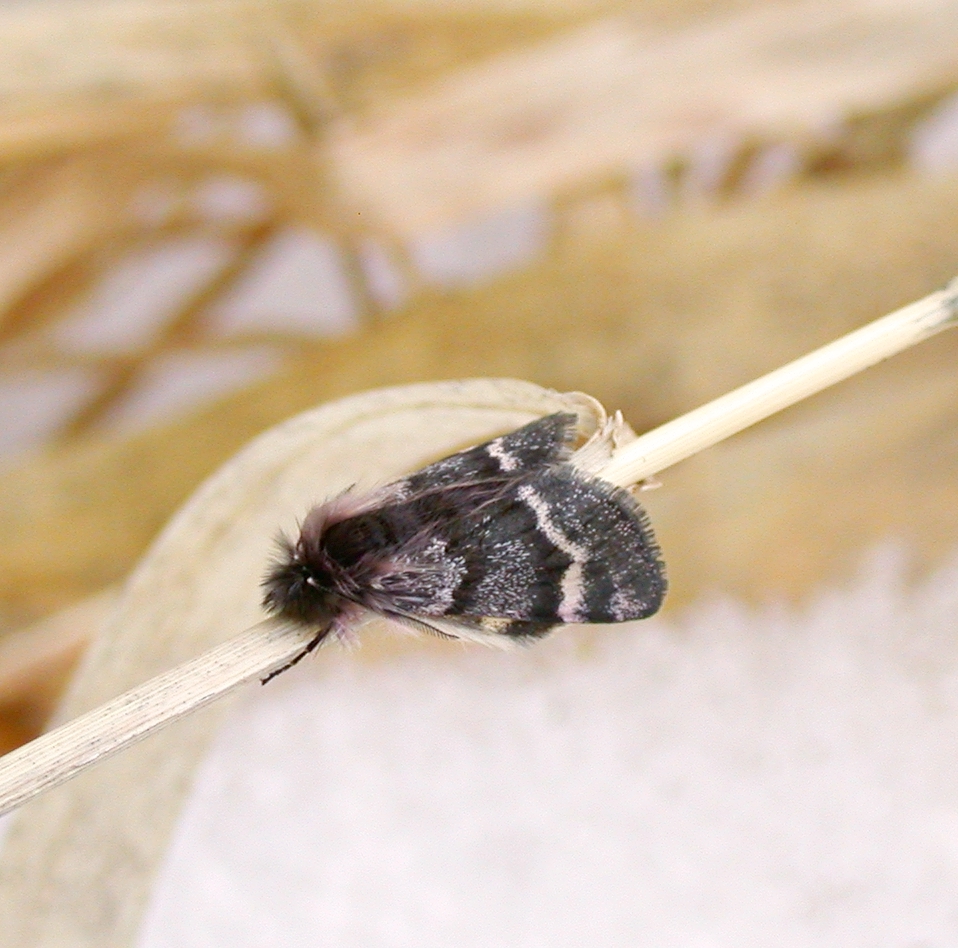
I saw this Leucobrephos brephoides on March 30, 2006. Even though I look for it each spring, I have never seen it again. When I found it, the marsh it was in was beginning to flood, snow and ice were still on the ground, and the air temperature that day was in the mid-30s to low-40s F. This is a hardy moth.

Leucobrephos brephoides is a rare moth species in the family Geometridae, subfamily Archiearinae. I have seen it only once, back in March 2006. Even though I look for it every year in late March and early April, I have not found it again.

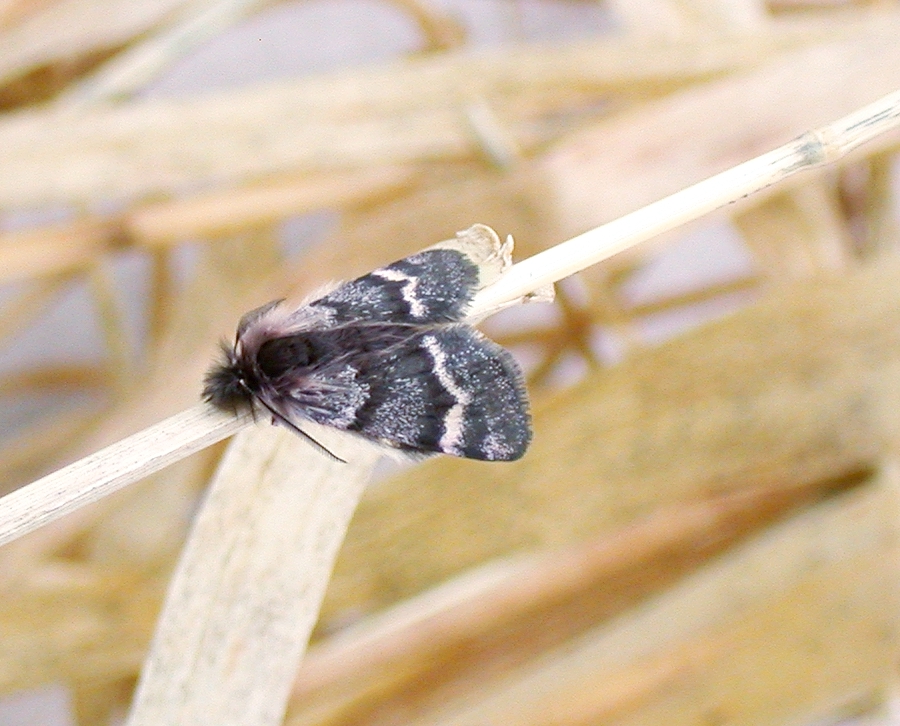
The one and only time I have seen it, there was still snow on the ground, although it was melting. In the marsh where it was resting on some grass, a flood was beginning. And it was chilly, in the mid-30s to low-40s F. For Leucobrephos brephoides, this was a normal day.

I was excited to find this little moth. It was cold and there was still snow on the ground. I’d never really thought of insects being active so early. Since then, I have found that many insect species, beetles, moths, wasps, and midges, are active this early. Even spiders are out. Some insects are feeding on nectar and pollen from early-flowering willows. Others are seeking mates. A few, along with the spiders, are hunting other insects.

Description

The forewing of Leucobrephos brephoides is black and dusted with grey. The postmedial line is black with a white border. The antemedial line is also black but lacks a white border. The hindwing is white with an even black margin and basal black scaling.

Males have pectinate (feathery) antennae, the females have filiform (thread-like) antennae.

Leucobrephos brephoides on March 30, 2006

Life history

In the spring, female Leucobrephos brephoides lays 1 to 3 eggs on a leaf scar near the tips of aspen branches. They may lay their eggs thirty or more feet from the ground or just a few feet from the ground. After about 15 days, the eggs hatch. The larvae go through five instars before burrowing into the soil and pupating.

In the spring, the adults emerge from their pupa. Adult Leucobrephos brephoides are day fliers and active even while temperatures are still cold and snow is still on the ground.

Habitat and host plants

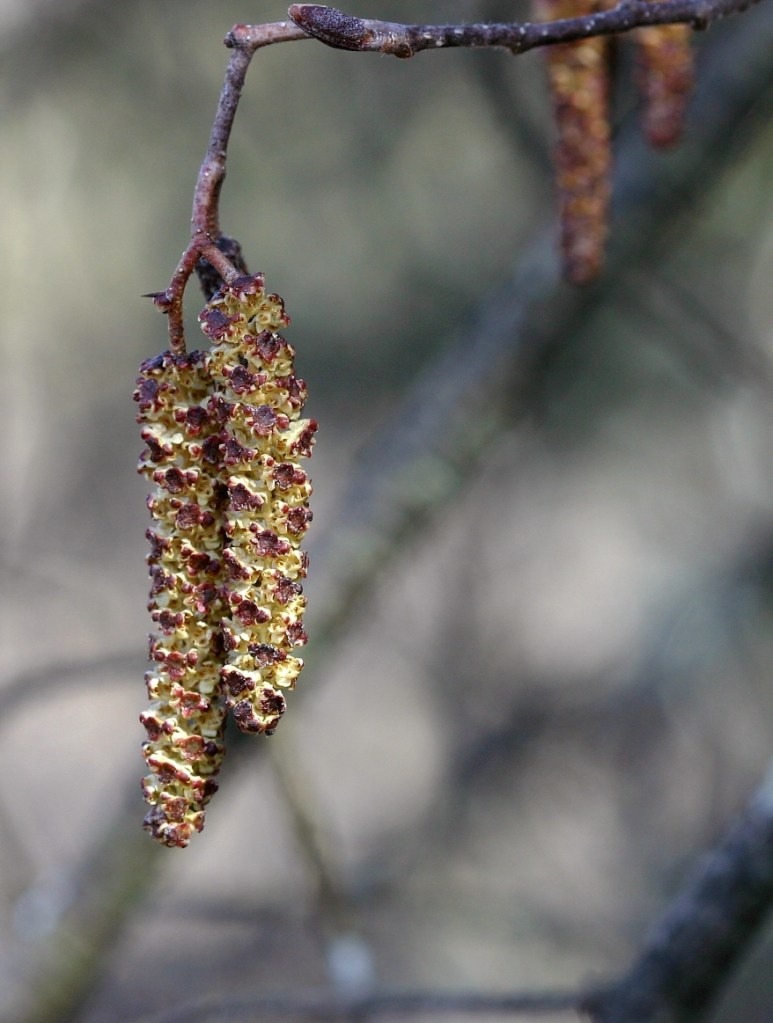
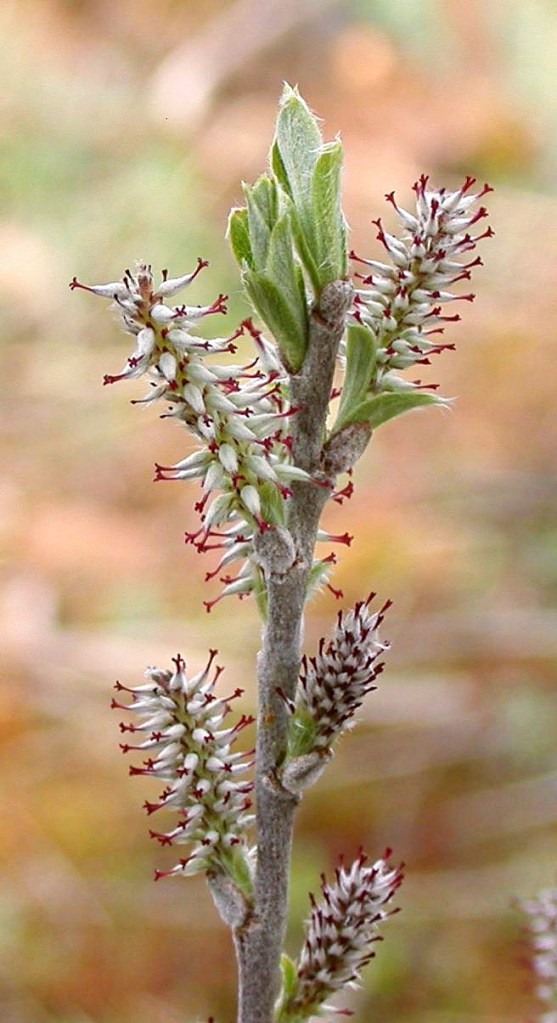
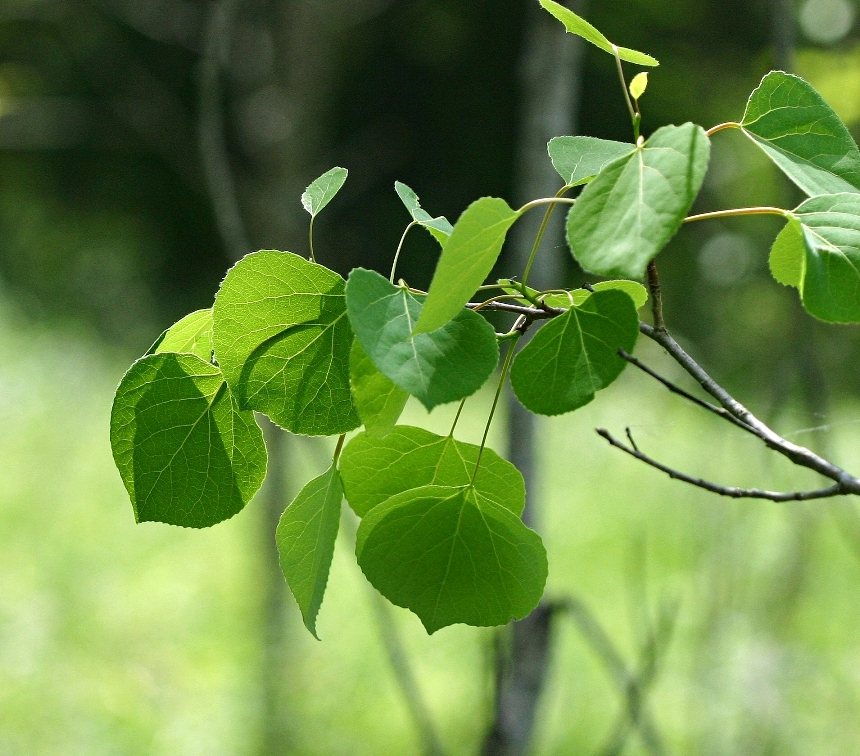
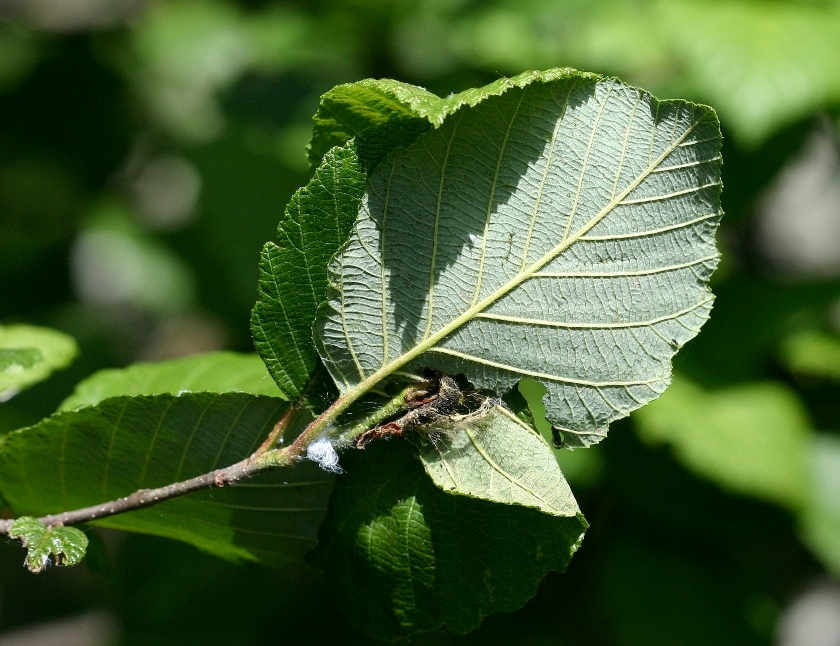
Leucobrephos brephoides inhabits open mixed broadleaf and coniferous forests. Its primary host plant is quaking aspen (Populus tremuloides), but it also feeds on paper birch (Betula papyrifera) and alder (Alnus incana). Larvae have also been found feeding on willow (Salix spp.) and balsam poplar (Populus balsamifera). All of these species produce catkins in the early spring before their leaves emerge. Catkins may be an important food source Leucobrephos brephoides larvae, which hatch from their eggs before leaf emergence.

Leucobrephos brephoides is found in cool northern forests where its primary host plant, quaking aspen, grows.

What do the adult moths eat?

Gibson and Criddle (1916) made some interesting observations about the food preferences of the adult Leucobrephos brephoides. They found that sugar baits did not interest the moths. Instead, they noted that rotten meat was attractive. The moths also sought moisture and could be found on muddy roadways near aspen woods.

Similar species

A similar species, also active when Leucobrephos brephoides is in flight, is Archiearis infans. Archiearis infans is more common and widespread than Leucobrephos brephoides. It has bright orange underwings. I’ve seen this species one time also, and that was in the spring (April 2021) during the day at a mud puddle. It lays its eggs in the spring, and the larvae feed on the same plants as Leucobrephos brephoides.

Other Leucobrephos species

Leucobrephos is a Holarctic genus with two species: Leucobrephos brephoides in the Nearctic and Leucobrephos middendorfii in the Palearctic. Leucobrephos middendorfii occurs in Siberia, Mongolia, and the Ural Mountains. The species Leucobrephos mongolicum is considered a synonym of Leucobrephos middendorfii, as is Leucobrephos middendorfii ussuriensis. The subspecies Leucobrephos middendorfii nivea is considered valid. Host plants of Leucobrephos middendorfii are from the same genera as those of Leucobrephos brephoides.

Range of Leucobrephos brephoides

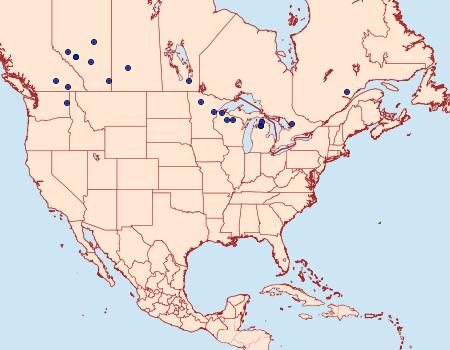
The Leucobrephos brephoides range map shows a wide range but few records.

Next year

Next March and April, I’ll be out looking for Leucobrephos brephoides again. I’ll check the edges of the woods and marsh for moths, as I have in previous years. I’ll also check the aspen and willows for eggs and larvae. I’m also going to set out bait stations, some with sugar to mimic sap and others with spoiled meat. Maybe after twenty years, I will finally see this scarce moth again. Or maybe not. It is possible that since 2006, the climate here has gotten too warm for this cold-loving species.

Sources

A Moth Among the Ferns

Northern Petrophora (Petrophora subaequaria)


I was out taking a walk Sunday afternoon and saw many different small moths flying out from hiding in the grass and blueberry bushes. Most were too small and fast to get a good look at them. The one shown above flew and ducked under some grass blades just long enough for me to get a few snapshots before it took off. Later I went out again and saw dozens of them in a forest clearing full of bracken fern. The species is Northern Petrophora (Petrophora subaequaria, Family Geometridae) and its larvae feed only on ferns with bracken fern (Pteridium aquilinum) apparently the principle host plant. Photos at Bug Guide show the larvae on fronds of Osmunda fern.


Some brief information on Northern Petrophora (Petrophora subaequaria)

Taxonomy
Superfamily Geometroidea (Geometrid and Swallowtail Moths)
Family Geometridae (Geometrid Moths)
Subfamily Ennominae
Tribe Lithinini
Genus/species Petrophora subaequaria

Description
Wing span to 19 mm, speckled tan forewings with yellowish veins, antemedial and postmedial lines white edged and parallel. There is a small black dot in the center of the wings.

Life cycle
As with many moths not directly injurious to crops and forestry there is little information on the life history of Northern Petrophora. With so many adult moths appearing now in my bracken field it seems that mating and egg laying occur in the spring.

Range
Northern Petrophora occurs in North America from New Brunswick to Alberta, along the Great Lakes east to New England, and then south sporadically along the Appalachians to North Carolina.


SOURCES

Beadle, D. and Leckie, S. (2012). Peterson Field Guide to Moths of Northeastern North America. Houghton Mifflin Harcourt Publishing Company, Boston. 640 pages.

Voss, Edward G. (1991) “Moths of the Douglas Lake Region (Emmet and Cheboygan Counties), Michigan: IV. Geometridae (Lepidoptera),” The Great Lakes Entomologist: Vol. 24 : No. 3 , Article 11. Available at: http://scholar.valpo.edu/tgle/vol24/iss3/11

Species accounts at Bug Guide, Moth Photographers Group, HOSTS,


A Mystery Solved

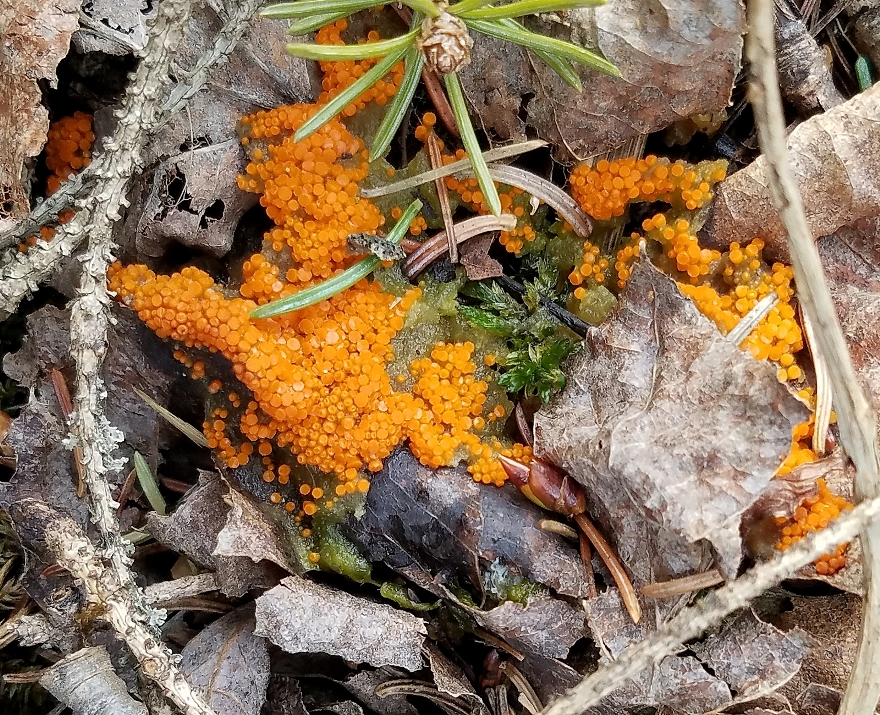
This orange organism growing on the surfaces of fallen leaves in the woods has stumped me for years. I had long thought it was some sort of slime mold (Myxomycota), and every spring when I saw the little orange patches it forms on dead leaves and deer dung in the forest I would go searching websites to find out what this strange slime mold was. I never did figure it out until today when I looked very carefully at the cup-like structures and thought that maybe this is no slime mold but a fungus in Ascomycota (cup fungi). Within a few minutes I came across several photos of an orange fungus that looked very similar to this one. Not only that but I solved another new mystery, which was the white fungus with brown cups growing with the orange one. The answer to both mysteries was found at Sociedad MicológicaI Extremeña.

The orange fungus is Byssonectria, and the white one with dark brown cups rimmed with lighter brown is Pseudombrophila. Both are “vernal” fungi, that is, fungi that fruit in the cooler part of early spring. As for whether one is being eaten by the other, it only looks that way. These species grow in the forest on animal dung and where animals (deer in this case) have urinated. The Byssonectria may be B. terrestris (see key) , but I have not found out what the other one is apart from Pseudombrophila. Both species are classed in:

Kingdom – Fungi
Phylum – Ascomycota
Class – Pezizimycetes
Order – Peziales
Family – Pyronemataceae

SOURCES

Bysonectria terrestris at Sociedad MicológicaI Extremeña.

Harmaja, H. ( 986). Studies on the Pezizales. Karstenia 26: 41

Pfister, D. H. (1993). A Synopsis of the North American Species of Byssonectria (Pezizales) with Comments on the Ontogeny of the Two Species. Mycologia, 85(6): 952-962.

Seaver, F. J. (1951). The North American Cup-fungi (Inoperculates). Published by the author.

A Few More Spring Flowers


More flowers on shrubs and trees from around here. Trees like red maple (Acer rubrum) and quaking aspen (Populus tremuloides) and shrubs such as tag alder (Alnus incana), hazel (Corylus spp.), and willow (Salix spp.) are the first flowers of spring appearing before the more familiar spring ephemeral wildflowers that grow in forests.

Soon there will be other flowers in bloom. Hepatica (Anemone americana), stalked sedge (Carex pedunculata), and wood rush (Luzula acuminata) will come into flower in the next few days. These low growing plants occupy spaces on the forest floor and today on one of my rambles I noticed that many already have unopened flower buds.