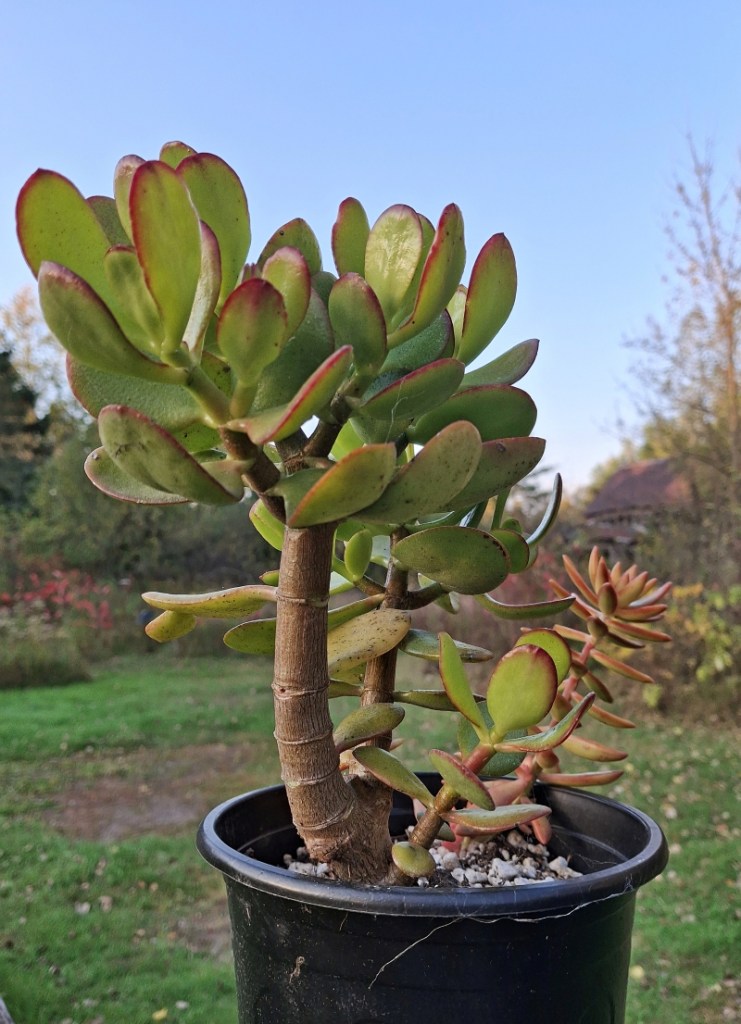
A jade plant I started from a cutting two years ago. In the winter, it lives under grow lights, but in the summer, it enjoys the fresh air and the rays of the sun. Tomorrow, it will have to come back indoors along with the Echevarria, Sansevieria, Tradescantia, and the epiphytic Zygocactus, Hatiora, and Rhipsalidopsis cactus.
We’ve had exceptionally warm weather for the last week, and even before that, the temperatures were just plain nice. But Sunday is the last day of temperatures in the 70s and 80’s. Yesterday it was 90 degrees in the shade. Tomorrow it will cool down to the 60s, and there is a chance of frost for three nights in a row.
After Monday, I will probably have to cut them down and store the tubers for the winter. The same is true for the tuberous begonias and the gladiolus. And all the houseplants I set out for their summer vacation will need to be brought back in.
A stalled high-pressure system is bringing the warm weather. Winds are from the south and gusting to 30 mph.The warm weather, while enjoyable and welcome so late in the year, is bringing problems to the already dry forests and fields. Even the wetlands are dry. Very dry.
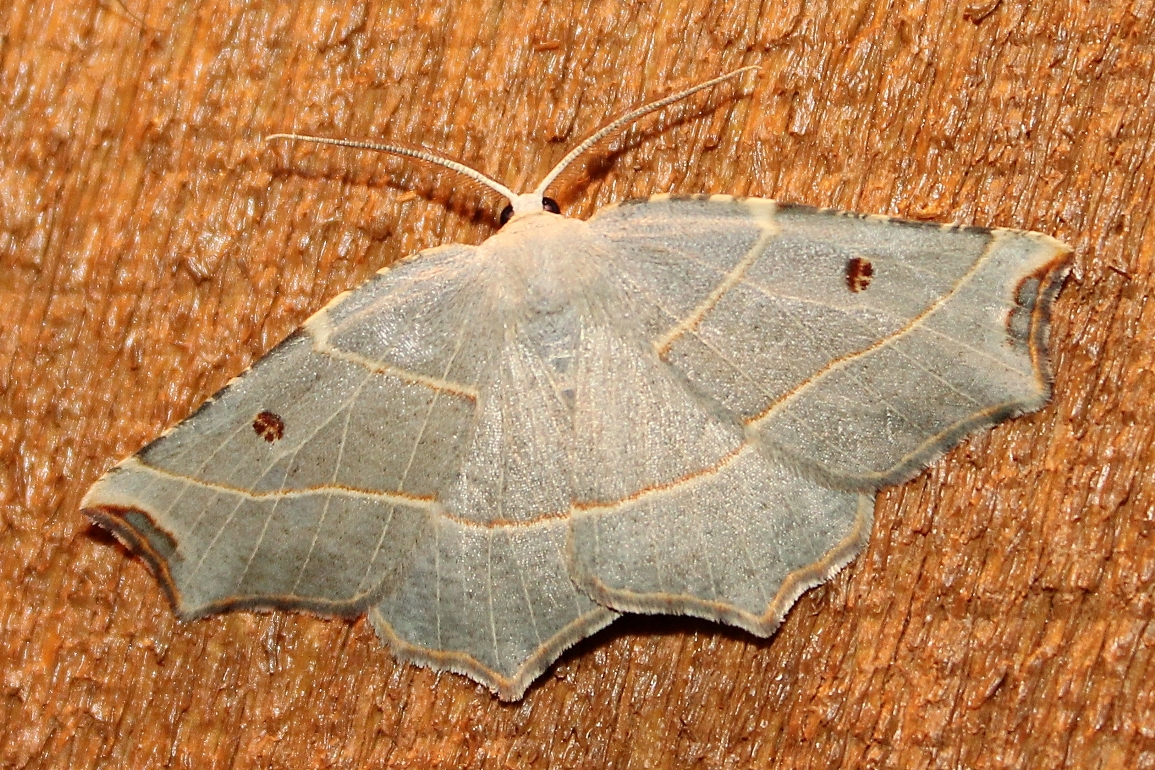
Metanema inatomaria a species seen last summer on warm humid nights.
…during much of July and so will be posting a little less frequently. But summer has arrived and brings with it a new group of moths that love the hot and humid weather. Here are five of the seventeen new moths plus one returning visitor that showed up at my porch light over the weekend. I’ll be writing about these species later in August. There are already a few in the works on the moths Habrosyne scripta (almost done!), Oreta rosea, Phlogophora iris, Campaea perlata, and Monopis spilotella seen this year and last year.
Odontosia elegans
Schizura badia
Drepana arcuata
Autographa ampla
Xanthotype sp, one of three species found here and nearly impossible to tell apart from a photo alone.
So I’m wondering how to begin this new blog and have decided to write a little bit about my mothing adventure last summer. It all began one morning in June when my Canon Rebel camera broke and I was left with just my Samsung cell phone and its camera. Up until that point I had not used the cell phone camera much and what I had taken with it was not that good. Now, with my favorite camera broken and short on funds for repairs or a replacement I had to learn to use the cell phone. I decided to photograph the moths that came to the porch light at night to learn more about the cell phone camera.
A few nights a week as sunset approached I would turn on the porch light. When it got dark I would carefully open the door and look around the light to see what had flown in. I was seldom disappointed. Warm humid nights were the best for moths. As the weeks went on it became apparent that there was a progression of moth species. Different moths have different flight times and very few will be seen all summer. And moths aren’t the only things attracted to the lights. Beetles, harvestmen, thrips, caddisflies, midges, and leaf hoppers all came to the light. I’m sure the harvestmen were hunting for small insects although they seem willing to eat anything. One was tasting a mix of molasses and overripe fruit I put out to attract moths.
Arctia caja, seen one night (August 1) and not again. It is one of the tiger moths.
I keep a list of the various plants and animals on my property adding to it whenever I find a new species. When I began my mothing project I had documented about 30 species or about two species a year. When the summer ended I had added another 102 moth species and many more unidentified but saved as photos. During my moth adventure last summer I found three sources extremely helpful for identifying moths. The first one is the Peterson Field Guide to Moths of Northeastern North America by David Beadle and Seabrooke Leckie. The other two are the BugGuide website and the Moth Photographers Group website. And now I have found another source to consult: Butterflies and Moths of North America (BAMONA).



 Not Very Far Away