Fire Bears: caterpillars that can survive winter’s grip

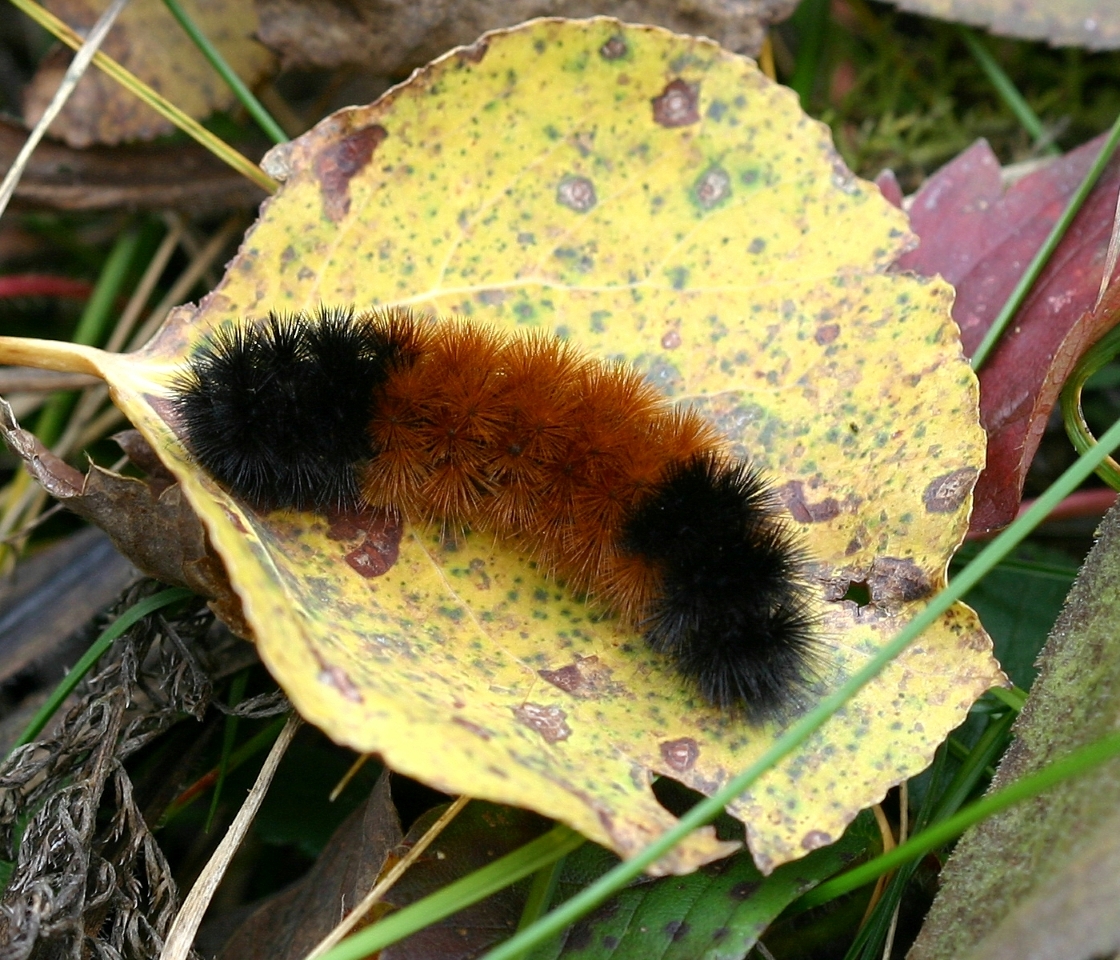
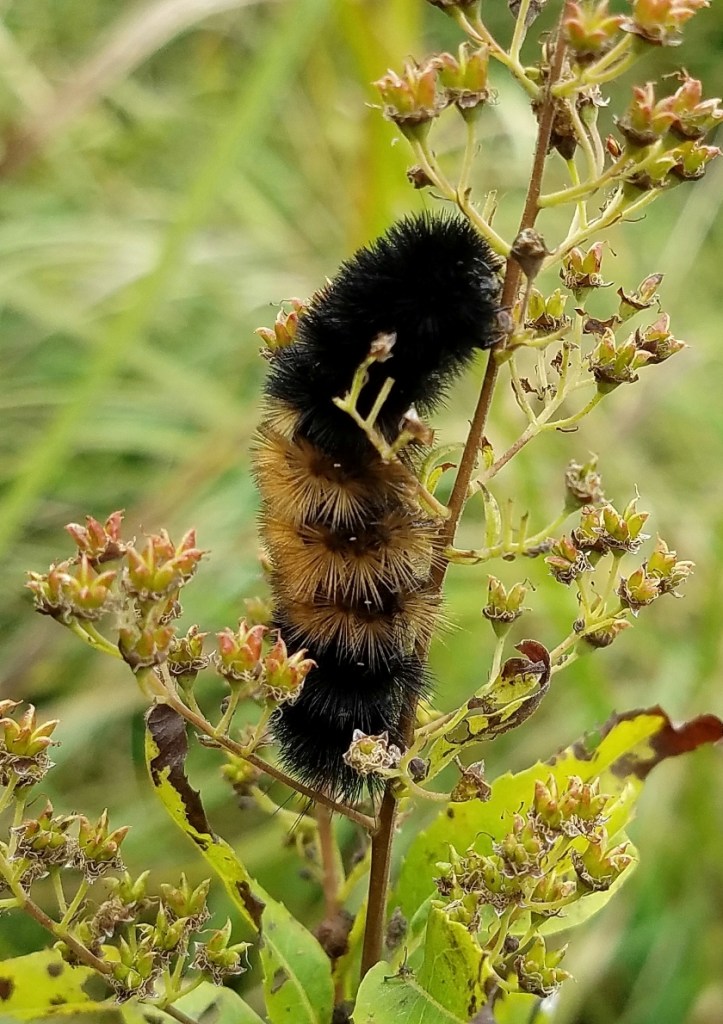
A woolly bear or fire bear on October 5, 2015, in a forest opening with abundant herbaceous vegetation for it to eat.

If you could think of the top 10 most recognized caterpillars in North America, would the woolly bear be on that list? Probably. Many of us have seen the woolly bear , since childhood, watching them scurry across roads and paths on warm autumn days.

How many of us have seen the moth that the woolly bear transforms into? Not many unless you, like me, are a moth nerd. While not as dramatically colored as their caterpillar stage, the moths are nonetheless beautiful.

Fire bears

The genus name Pyrrharctia is from two Greek words: “pyrrh“, meaning “fire, flame colored, red” from the red-orange color, and “arktos“, meaning “bear” after the bear-like appearance of the fuzzy black bands. Fire bears.

Moth description

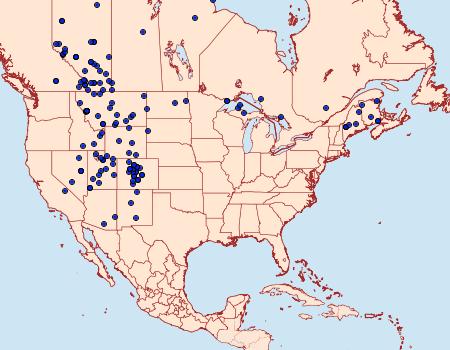
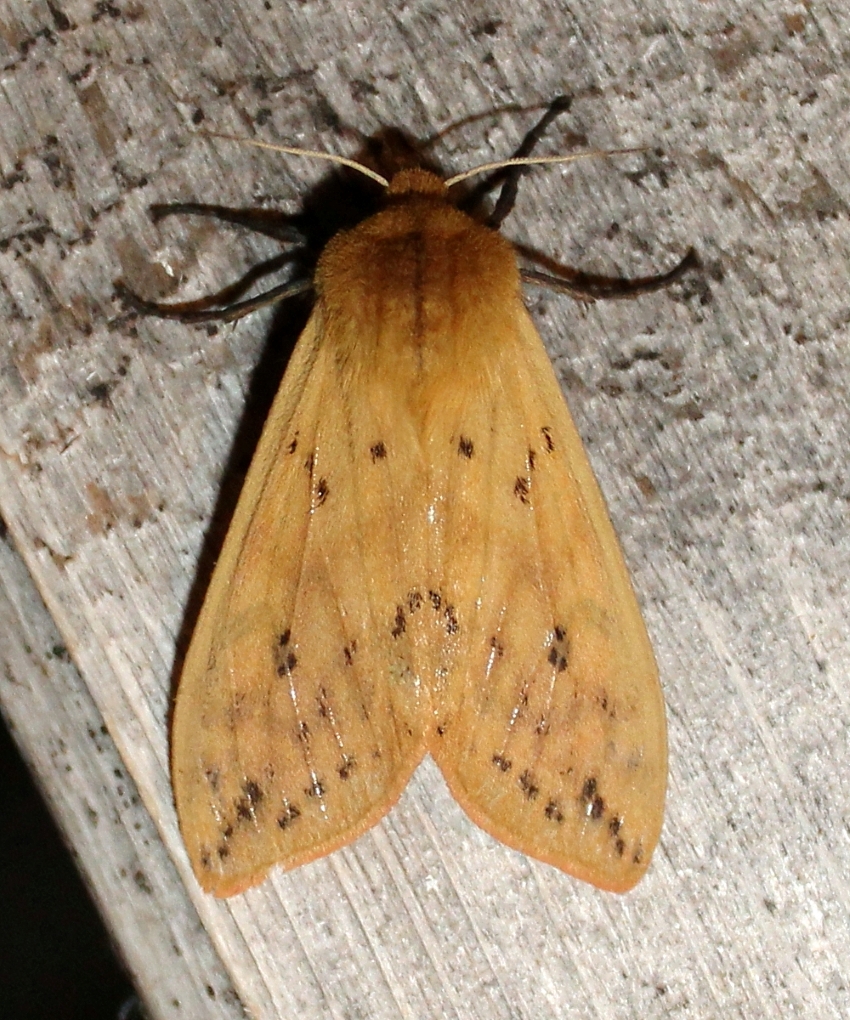
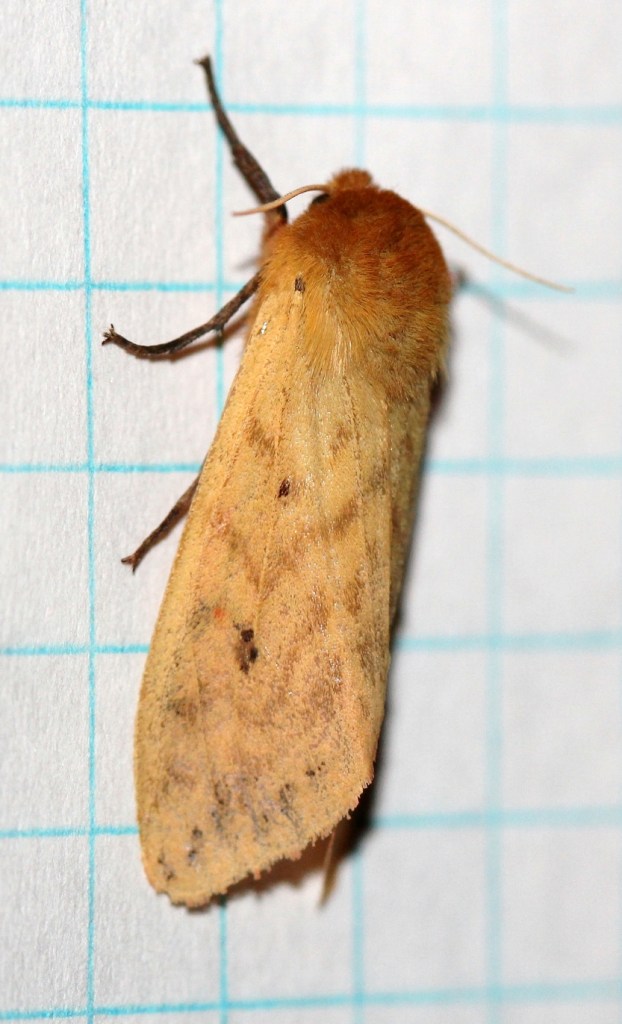
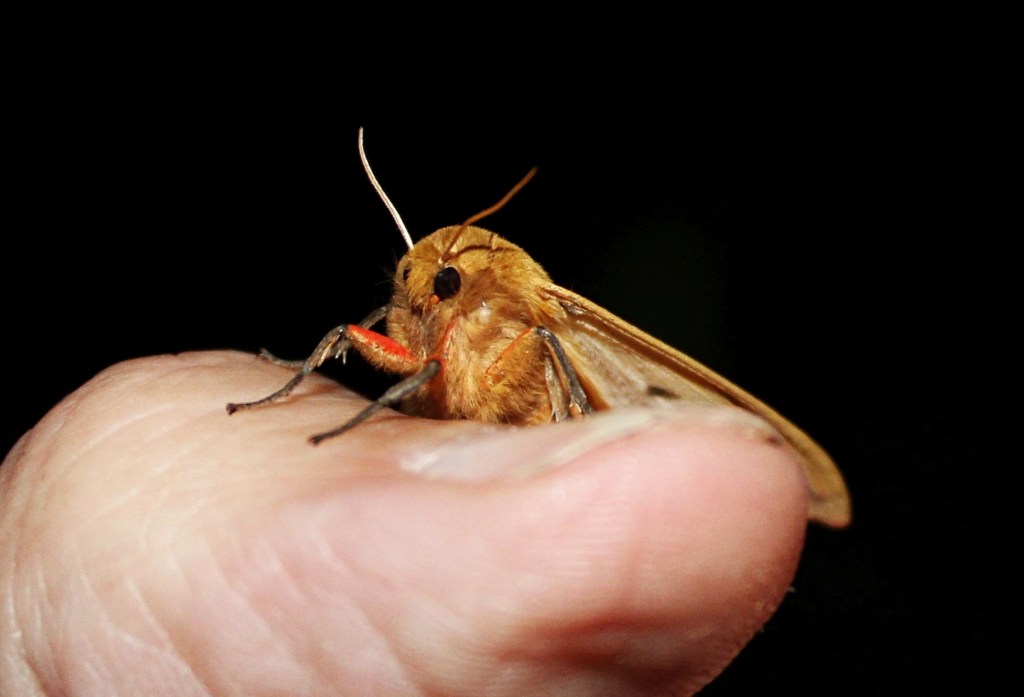
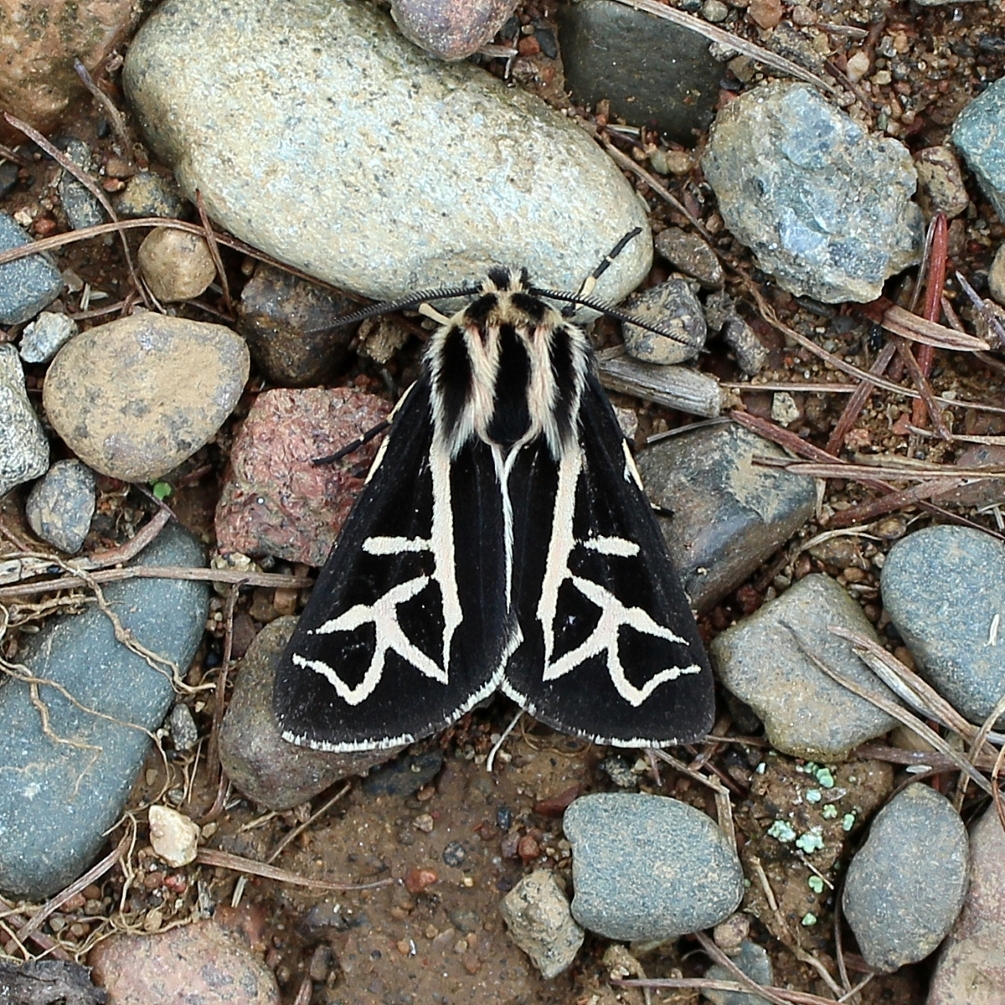
The woolly bear is the larval stage of the Isabella tiger moth (Pyrrharctia isabella), a apricot-yellow to buff-brown moth in the Arctiinae (Tiger and Lichen Moths). The forewings of the Isabella tiger moth are marked by darker veins and dark spots. The first dark spots, in a row about a quarter of the way from the apex, form a “W” shape (“angulate”) when viewed from above. The second set of dark spots is about three-fourths of the way from the apex. These form an irregular circle.

Along the wing tips are two rows of dark spots. The underwings are pale white in males and salmon-tinted in females. These also have black spots.

The top of the yellow to buff-brown abdomen is marked by a row of 5 or 6 roughly diamond-shaped black dots. The legs are black, but the first segment (tibia) of the forelegs is bright orange.

Host plants

Woolly bear caterpillars feed on low-growing herbaceous plants like plantain, dandelion, dock, clover, and grasses and sometimes tree leaves. Weedy, mowed lawns, like mine, are perfect for them and other moth larvae, too. I’ve also seen woolly bear caterpillars eating swamp aster (Symphyotrichum puniceum) flowers and unripe meadowsweet (Spiraea alba) fruit in native wetlands.

Life cycle

The life cycle of woolly bear caterpillars begins when they hatch from eggs laid in early summer. They feed for the rest of the summer and go through four to six molts. In the fall, before cold weather sets in, they prepare to hibernate and wait out the winter under leaf litter. In the spring, they emerge from hibernation to feed a little while longer before going into pupation, after which new adult moths emerge. In my area, this happens during July.

In warmer climates, there may be two generations per summer, with the second generation going into winter hibernation.

Ice

Surviving the winter without freezing

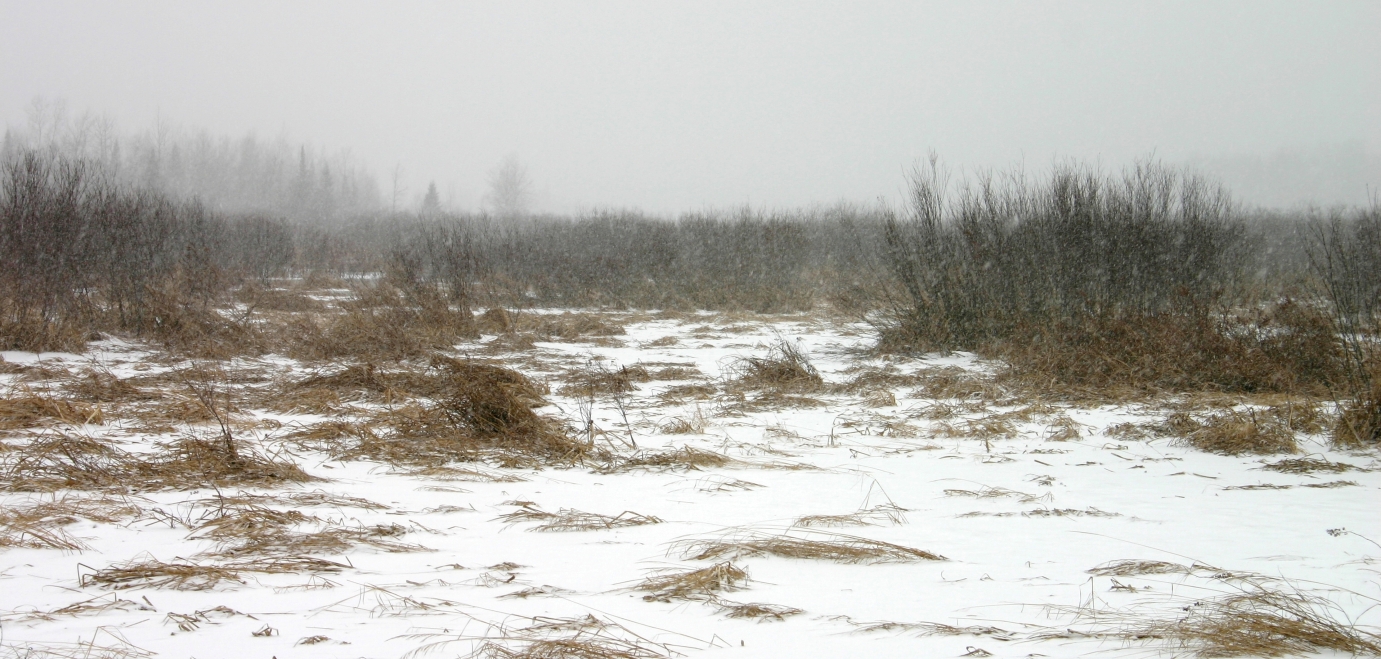
Woolly bears’ bodies contain a lot of water, and if that water freezes, it will produce sharp crystals that can destroy cells. How do they get around that, especially in places where the average winter temperature is 15-20°F (-9 to -6°C) with lows sometimes reaching -60°F (-51.1°C)? That would be where I live.

Antifreeze, of course, which lowers the caterpillar’s freezing point. They also export water out of their cells, so if they do freeze, there will be fewer ice crystals that could burst the cells. They essentially dehydrate themselves and pump their bodies full of glycerol.

Blizzard

Weather forecasters?

There are plenty of stories about the woolly bear caterpillar and how the proportion of dark to orange on the bodies can predict how severe the coming winter will be. Unfortunately, those are just stories. Coloration is affected by age, how well the caterpillars fed during the summer, genetics, and the weather while the caterpillar was growing.

Festivals in honor of woolly bears

Many people love woolly bears and even devote festivals in their honor in places like New York, Ohio, and North Carolina.

Encouraging woolly bears

How can you help woolly bears thrive? Less frequent mowing and allowing some weeds to grow are two ways. Also, leaving leaf litter in places such as hedgerows and near the edges of yards provides a safe haven where they, along with other insects, can hibernate and pupate. In this way, you ensure that woolly bears will continue for years to come.

Halysidota tessellaris (Banded Tussock Moth): Identification and Life Cycle

In an earlier post, I wrote about Lophocampa maculata, a moth in the Arctiinae, distinguished by its fuzzy black and yellow larvae. These larvae later metamorphose into beautiful adult moths with a contrasting pattern of alternating bands of warm, muted golden-orange and darker brown markings with a reddish-orange tinge. In this post, I write about Halysidota tessellaris, the banded tussock moth, another moth in the Arctiinae.

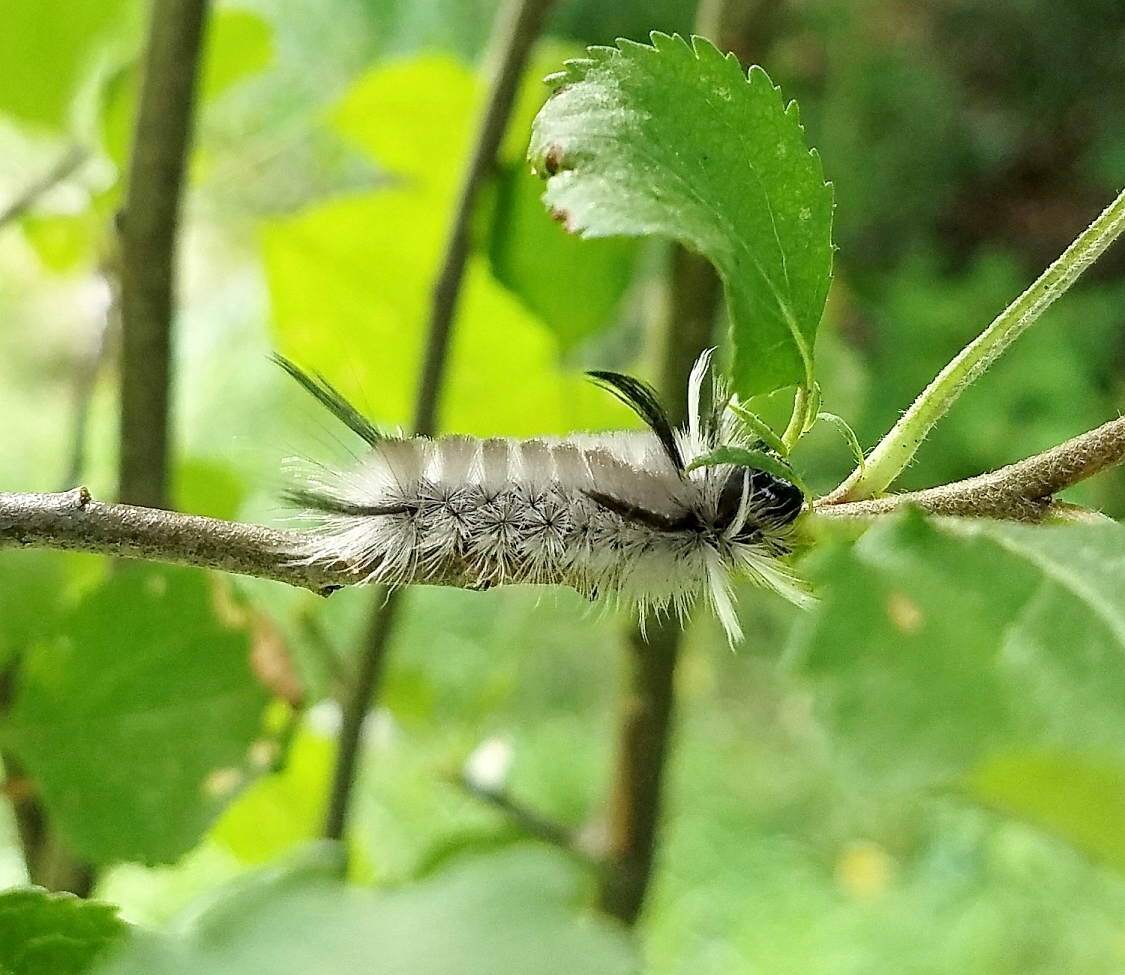
Halysidota tessellaris caterpillar feeding on a crabapple leaf in late summer.

Identification

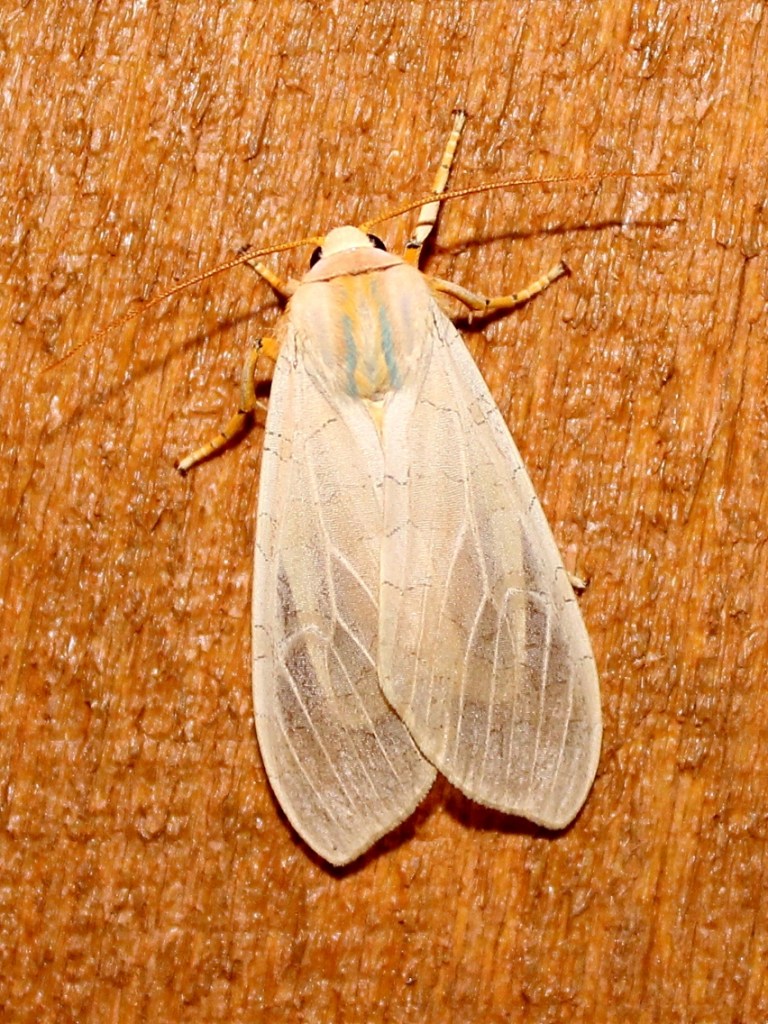
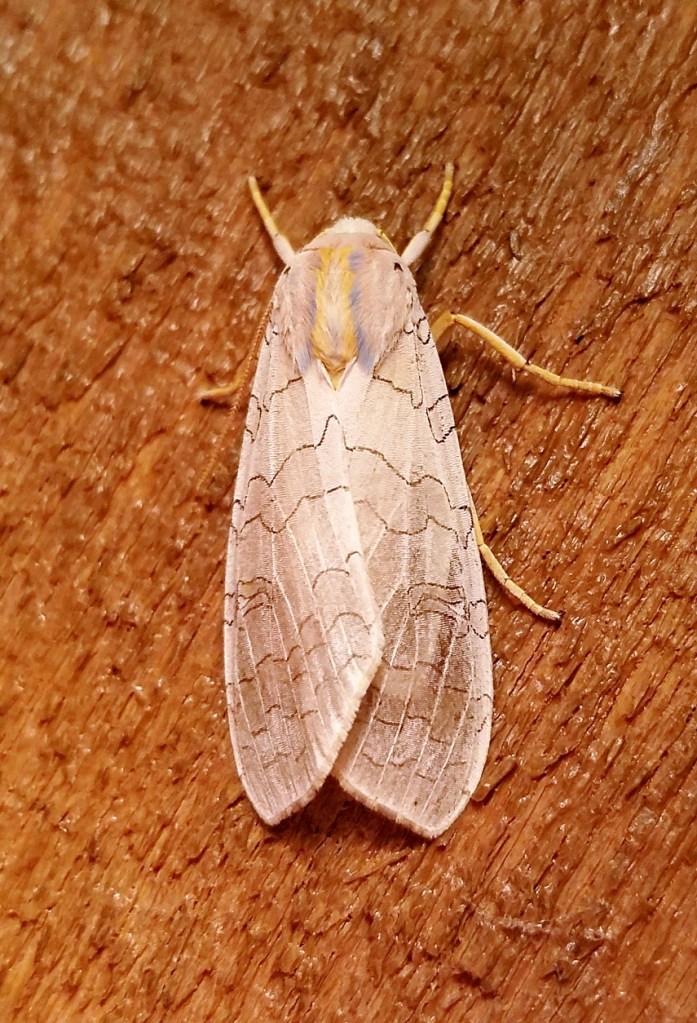
Like Lophocampa maculata, the larvae of Halysidota tessellaris are also fuzzy, but they are usually gray to dingy brown with long white and long black tassels. The adult moth, while similar in size to Lophocampa maculata, has translucent yellow forewings marked with slightly darker bands and irregularly shaped block-like cells that form a tessellated pattern. Also, there are two parallel blue stripes on the fuzzy thorax.

Life cycle

Across its range, larvae of Halysidota tessellaris feed on many species of hardwood tree leaves. Among these are box elder (Acer negundo), sweet birch (Betula lenta), ash (Fraxinus spp.), oaks (Quercus spp.), and many others. Adult moths take nectar and are pollinators of milkweeds (Frost, S. W. (1965) Insects and Pollinia. Ecology, 46. 556-558, paywall).

Similar species

Adults of the related Halysidota harrisii (sycamore tussock moth) are similar in appearance to Halysidota tessellaris. Where the ranges of Halysidota tessellaris and Halysidota harrisii overlap, genital dissection is necessary to determine the species. Halysidota harrisii larvae, which may be solid white, yellow, orange, or gray, feed exclusively on sycamore (Platanus occidentalis) leaves. The ranges of sycamore and the moth coincide closely.

Discovering the Yellow-Spotted Tussock Moth Caterpillar

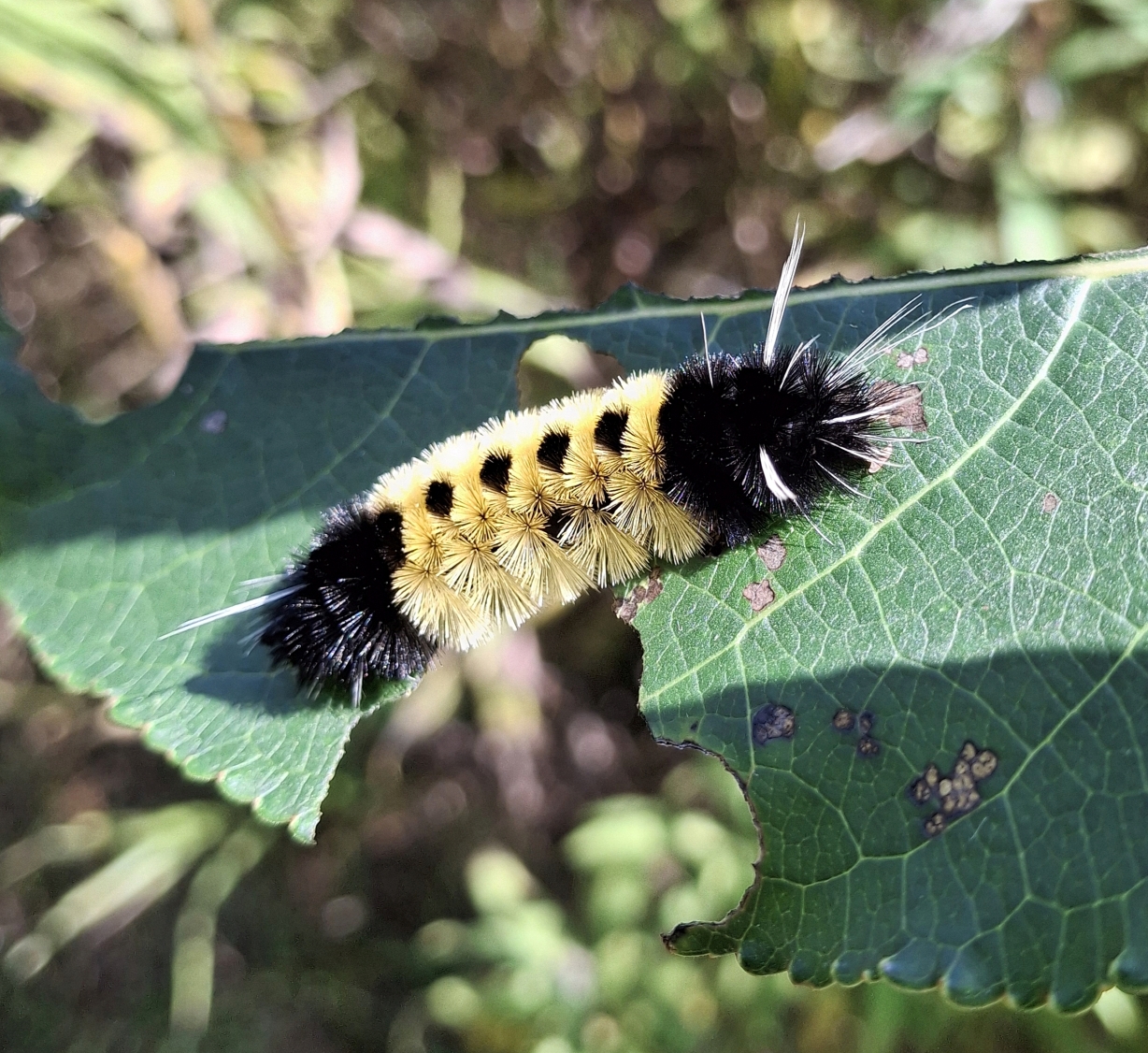
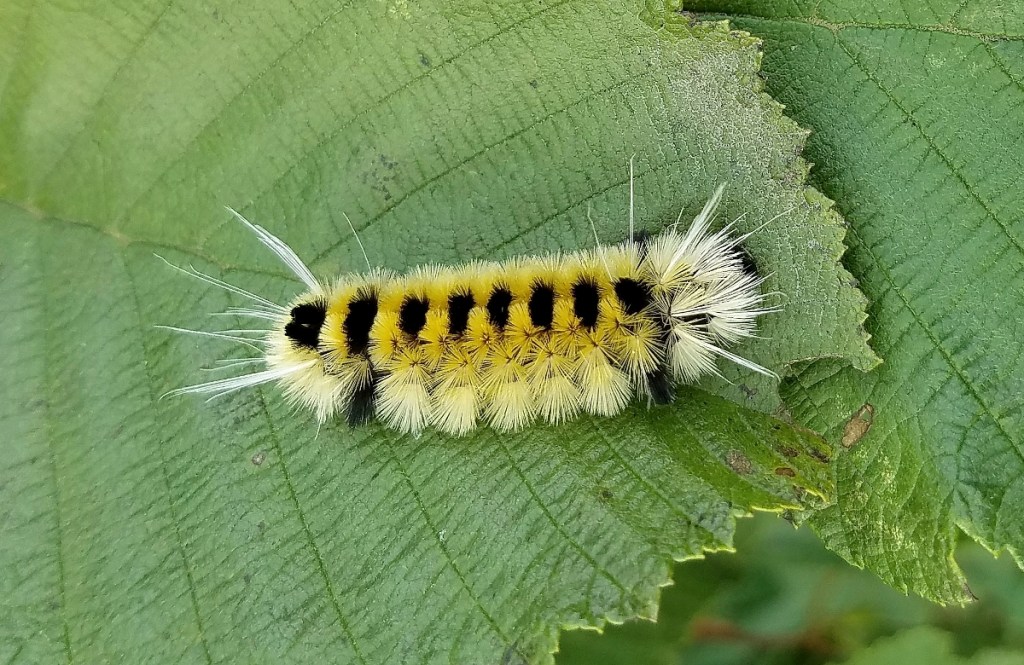
A Lophocampa maculata caterpillar that has been feeding on a balsam poplar leaf on a sunny afternoon in September.

When fall is coming, many fuzzy caterpillars start to show up in the grass and on low trees. A familiar one is the woolly bear caterpillar, which is alleged to foretell the severity of the coming winter. Longer black bands are said to mean a colder winter, while longer orange bands mean a milder winter.

The yellow-spotted tussock moth (Lophocampa maculata) is another fuzzy caterpillar often seen in the fall. It is also a relative of the woolly bear in the Family Erebidae, Subfamily Arctiinae (tiger moths and lichen moths). No word on its meteorological abilities.

Caterpillar decription

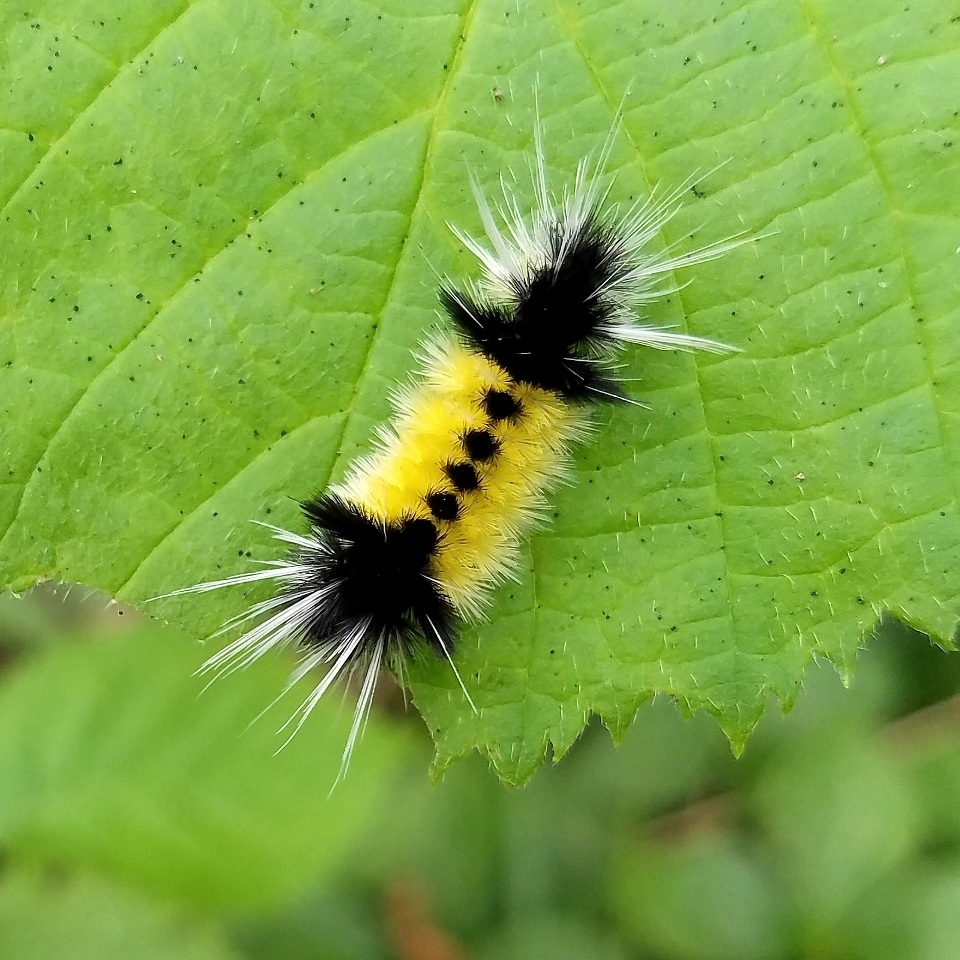
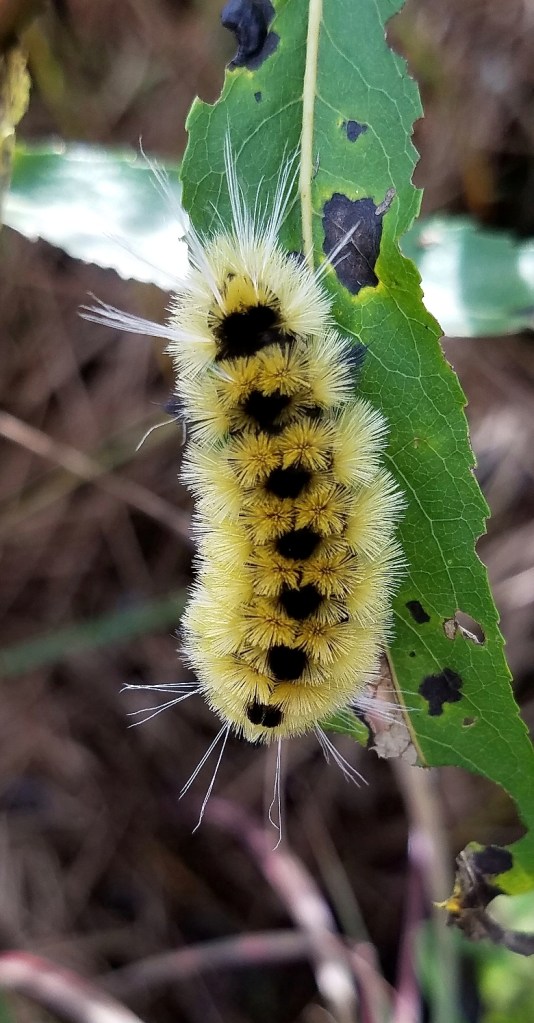
The younger Lophocampa maculata caterpillars are orange and without the black ends. When fully grown, it develops a yellow to orange central band, capped by shorter back bands at each end. Some will also have black dots in the yellow band. All the hairs of this fuzzy caterpillar are in clusters called fascicles. The shorter ones that cover most of the body remind me of splayed paint brushes. Tufts of stiff white hairs (“lashes”) poke out from the shorter, denser body hairs of the head and posterior black bands.

Caterpillar variations

Below are some variations of the caterpillar’s coloring on larvae I found just a few miles away from my home. All have spots down the back, and two do not have black anteriors or posteriors. The one on the left is feeding on beaked hazel, the middle one is on tag alder, and the one on the right is feeding on shining willow.

Adult moth description

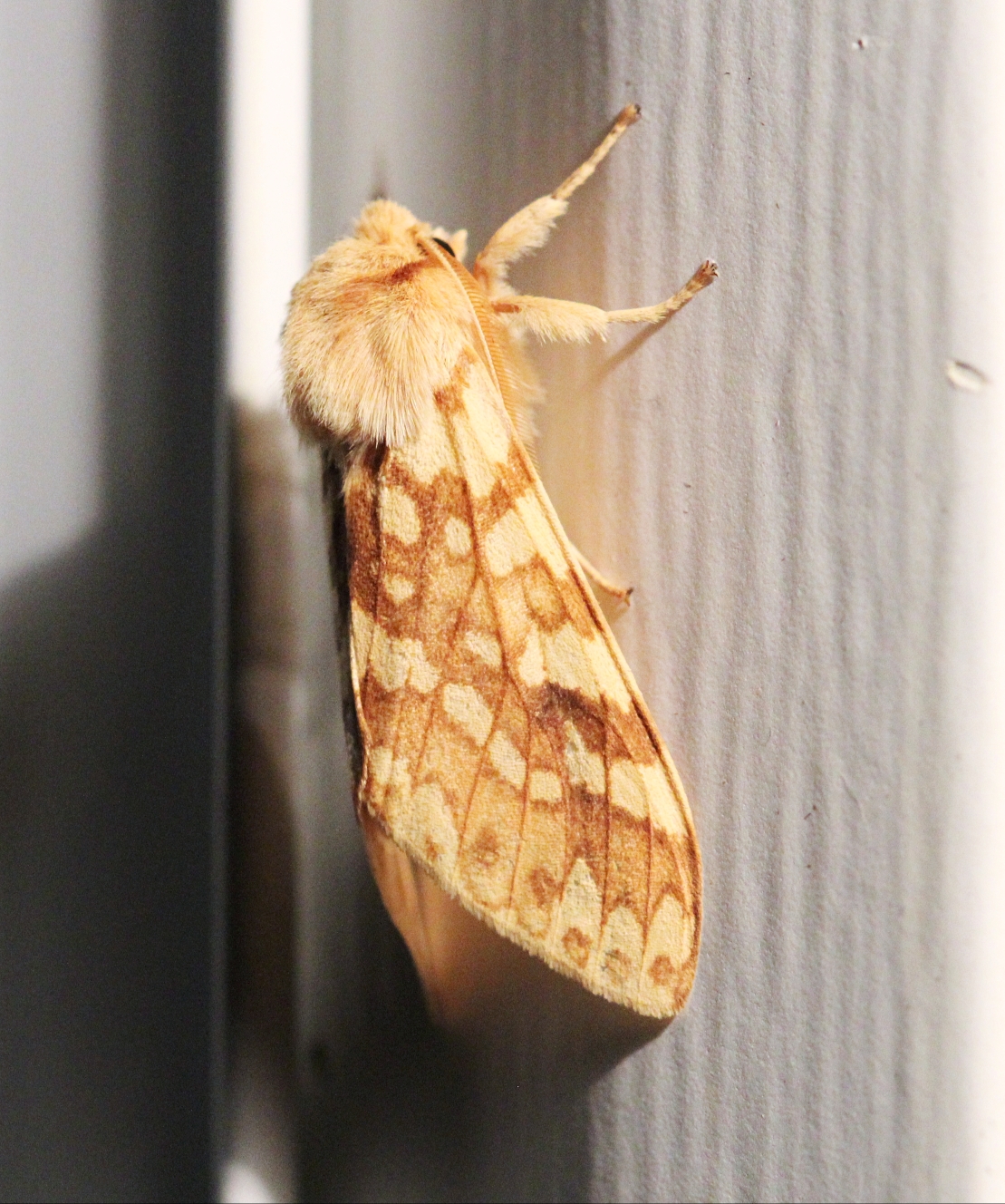
Adult Lophocampa maculata moths are distinguished by a contrasting pattern of alternating bands of warm, muted golden-orange and darker brown markings with a reddish-orange tinge

Life cycle

After hatching from eggs laid in summer, the Lophocampa maculata caterpillar feeds and grows. Preferred food plants are deciduous tree leaves such as aspen, willow, birch, oak, maple, and apple.

When cold weather seems inevitable, the caterpillar goes into pupation to wait out the winter. The pupa is enclosed in a silken cocoon attached to plant leaves. In my area, between late June and early July, the moths will hatch from their cocoons to fly in search of a mate, beginning the process again.

Adult Lophocampa maculata moth
This yellow-spotted tussock moth (Lophocampa maculata) came to my light this summer on June 29th.

Similar species

Lophocampa caryae adults are similar to Lophocampa maculata, but the forewing is yellow with brown shading and lacks the yellow band on the terminal ends of the forewing. Their larvae are white with black markings and long hairs. It is found mainly in the northeast. Like Lophocampa maculata, the larvae are polyphagous and feed on leaves of hickory, ash, oak, maple, elm, and other woody plants and vines.