
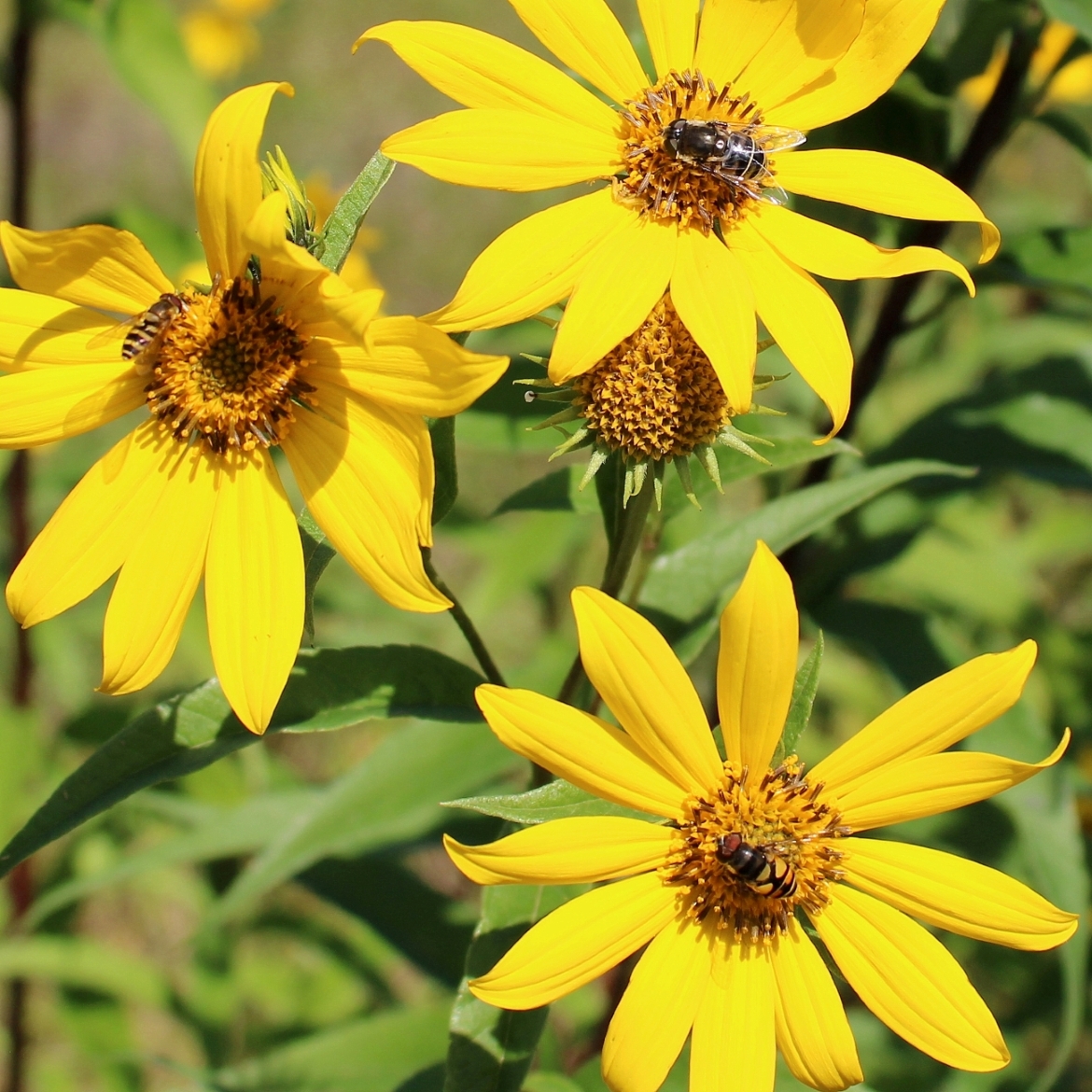
This was an unusual sight. Three species of syrphids, each on a separate wild sunflower head, are getting a meal of pollen and nectar. Two of the species I could identify are Eristalis dimidiata (upper right) and Eristalis transversa (lower right). The third one in the upper left didn’t show enough details. I could only place it as possibly a Syrphus sp.
A swarm of bees?
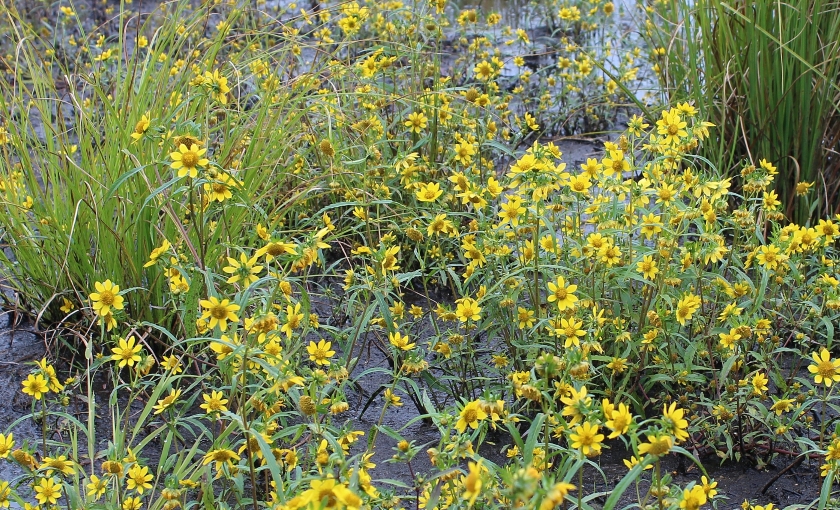
I first got interested in syrphid flies about two decades ago when I was doing an inventory of plant species in a fen. Suddenly, I became aware of what sounded like a swarm of bees in a large patch of nodding bur-marigold and asters. To my relief, they were not bees but hundreds of syrphid flies nectaring at the flowers. Over the years, I’ve gradually learned more about these bee-like insects and their importance.
When to see them
Late summer is one of the best times to observe syrphid flies. You can see them on sunflowers, coneflowers, goldenrods, joe-pye-weed, bur-marigolds, and asters, all members of the aster family. Buzzing loudly, they go from flower to flower like bees, and with the bees, in search of pollen and nectar.

Syrphid flies can also be seen in spring and early summer. But to see them, you may need to go into the woods. Some of these forest-dwelling species can be attracted to sugary baits painted on tree trunks or boards attached to posts. They can also be found on woodland wildflowers like Canada mayflower.
Bee and wasp mimics
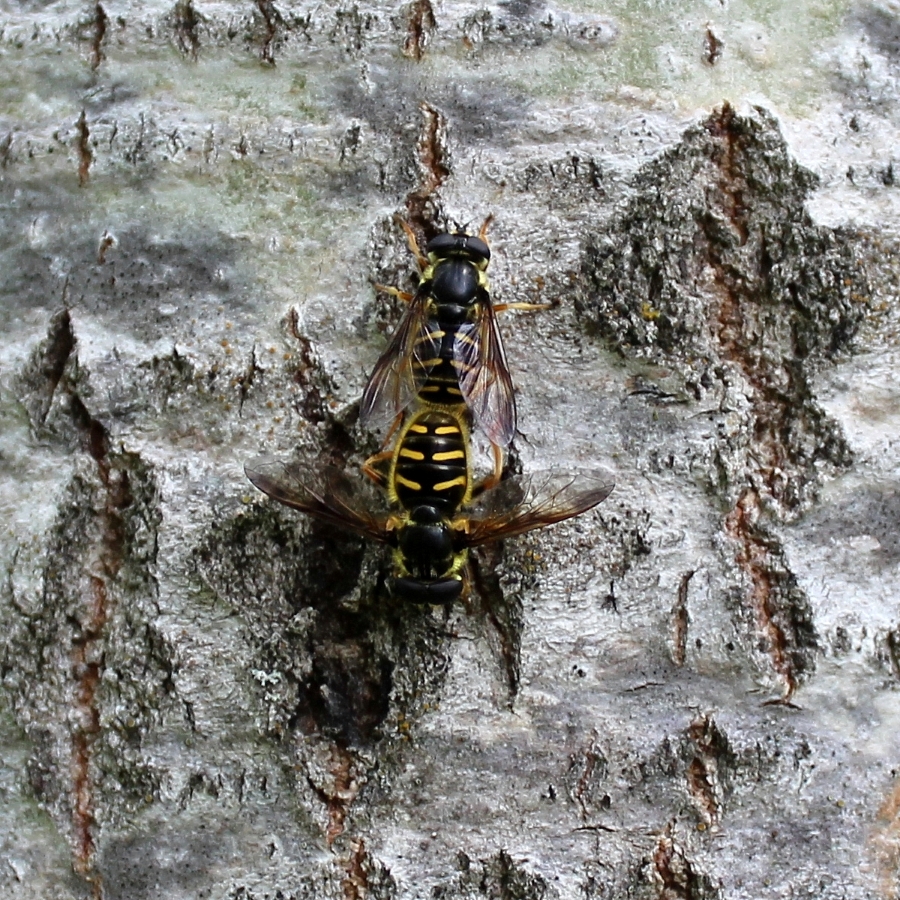
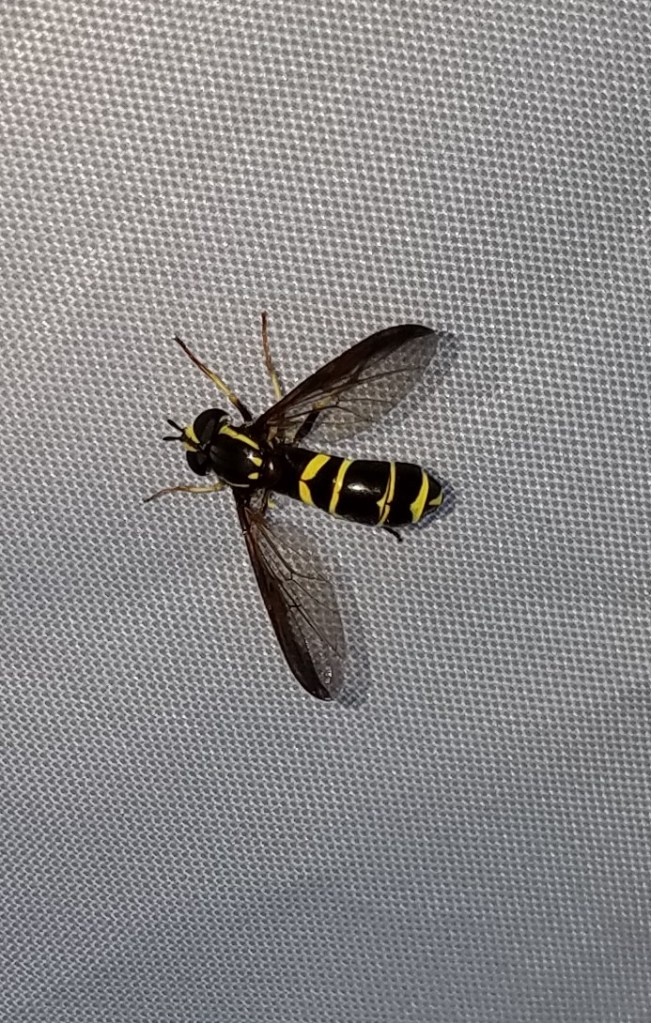
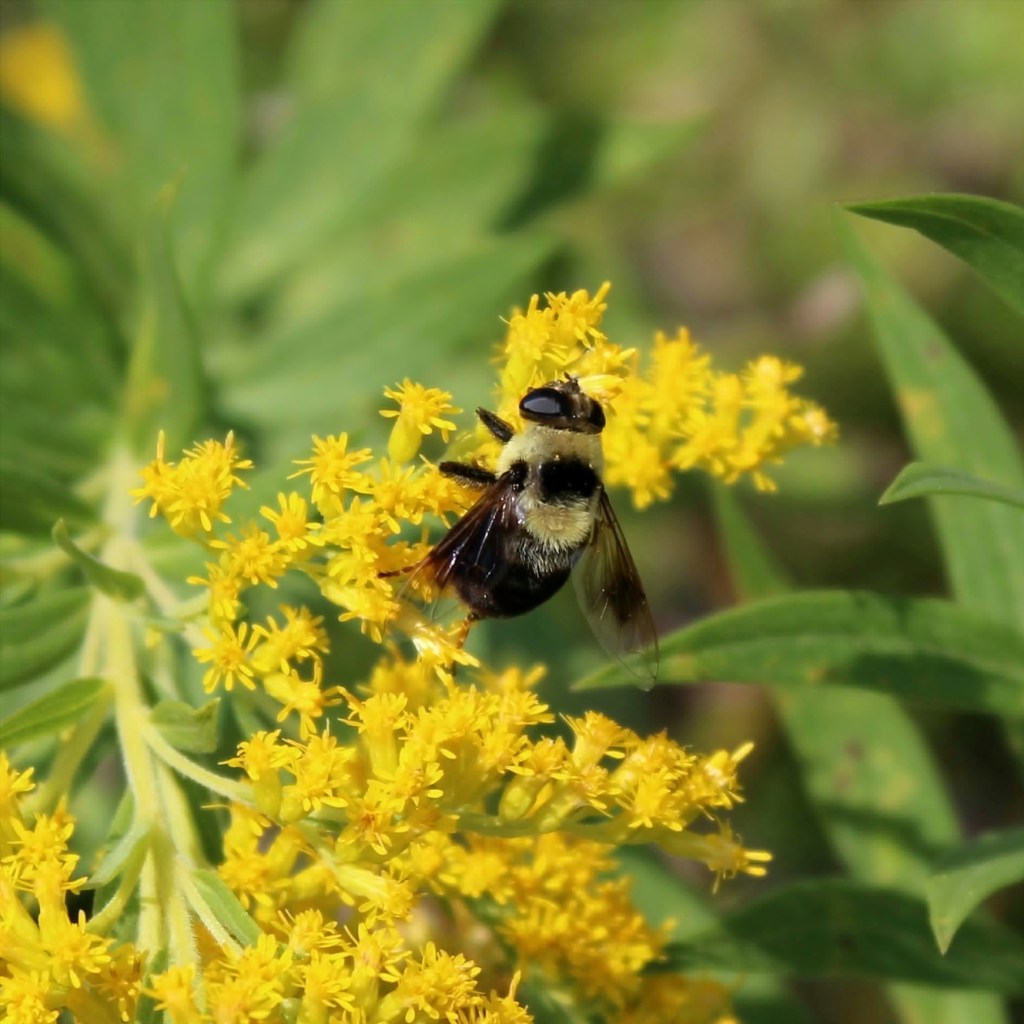
Many syrphids have body patterns and body shapes that resemble those of bees and wasps. This mimicry (Batesian mimicry) is a form of camouflage to deter potential predators. The resemblance to wasps and bees is striking.
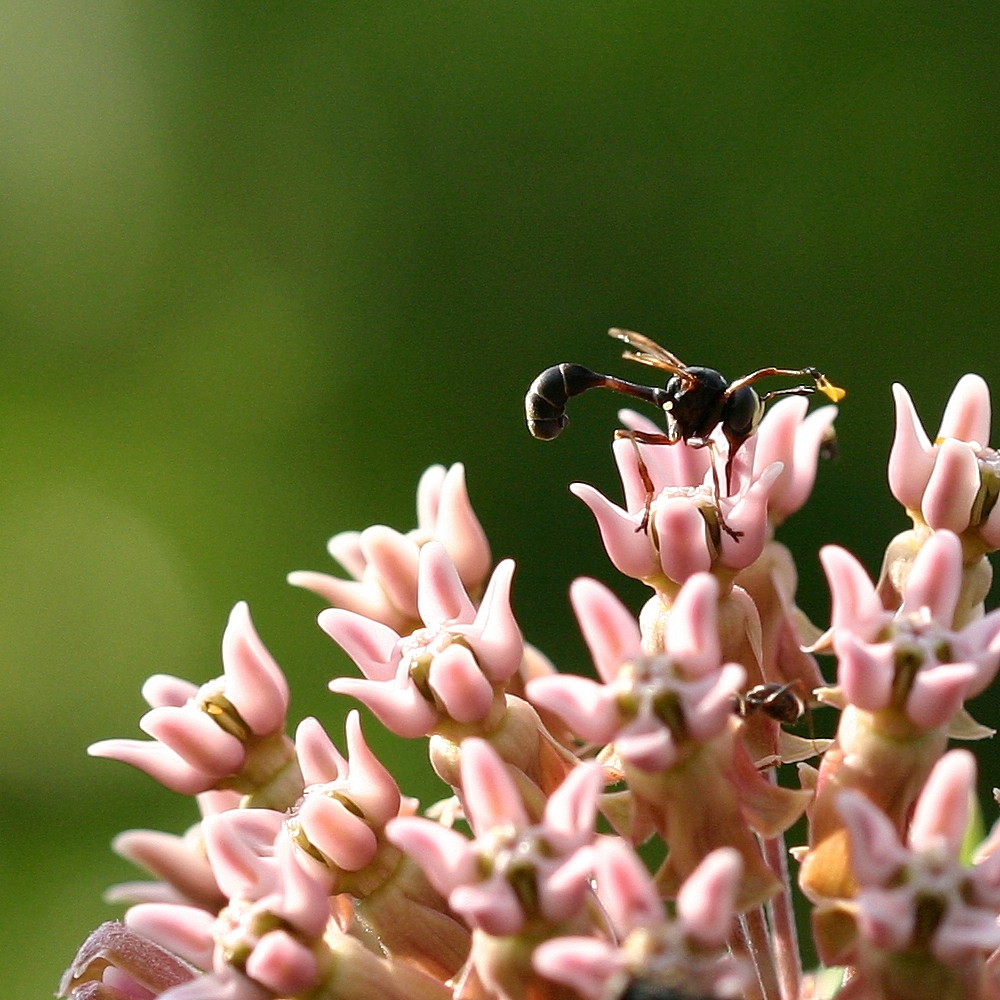
Physocephala furcillata, Eumenes crucifera, and Doros aequalis resemble potter’s wasps, and Ocyptamus fascipennis, an ichneumon. Sericomyia chrysotoxoides looks like a yellow jacket wasp, and Eristalis flavipes could be mistaken for a bumblebee.
Syrphids are pollinators
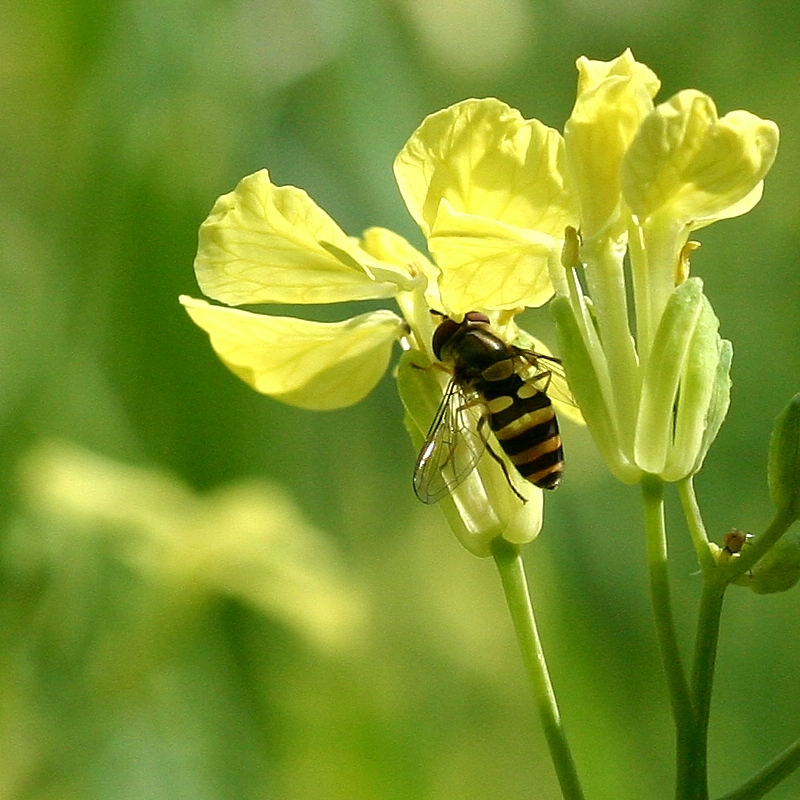
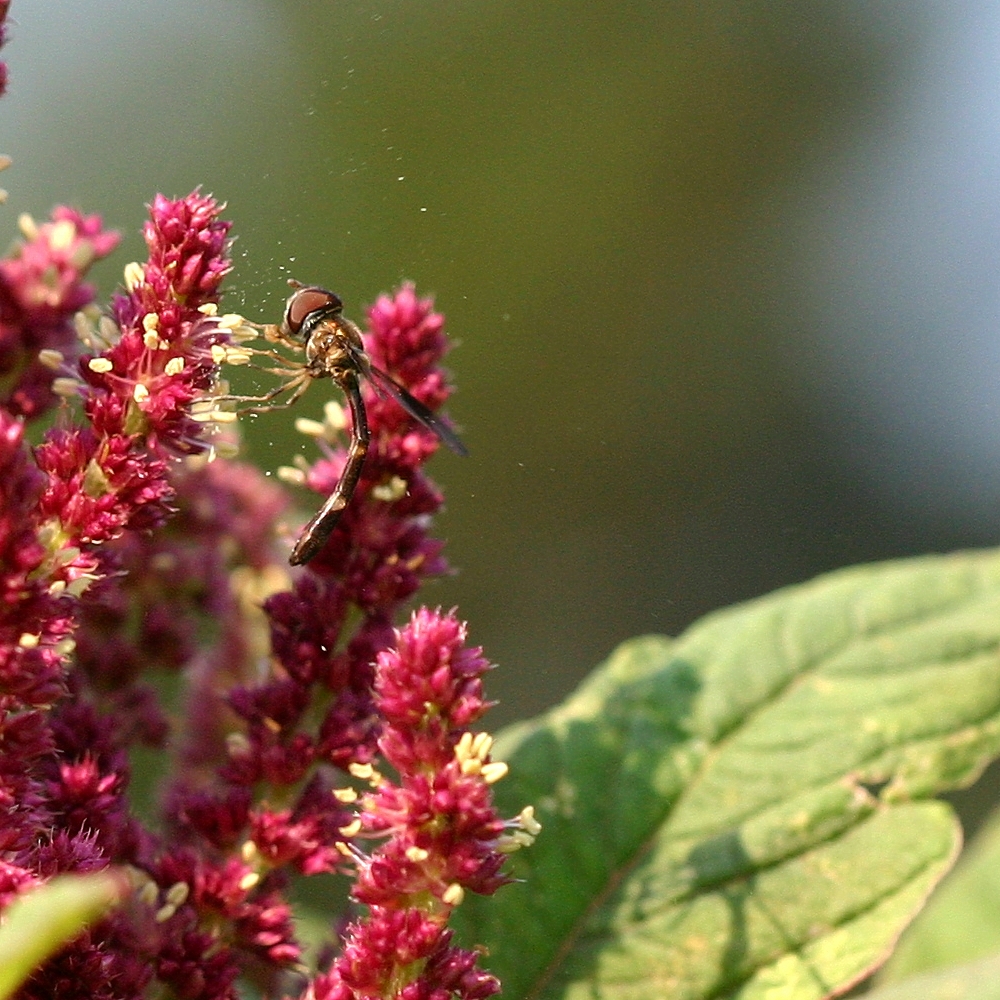
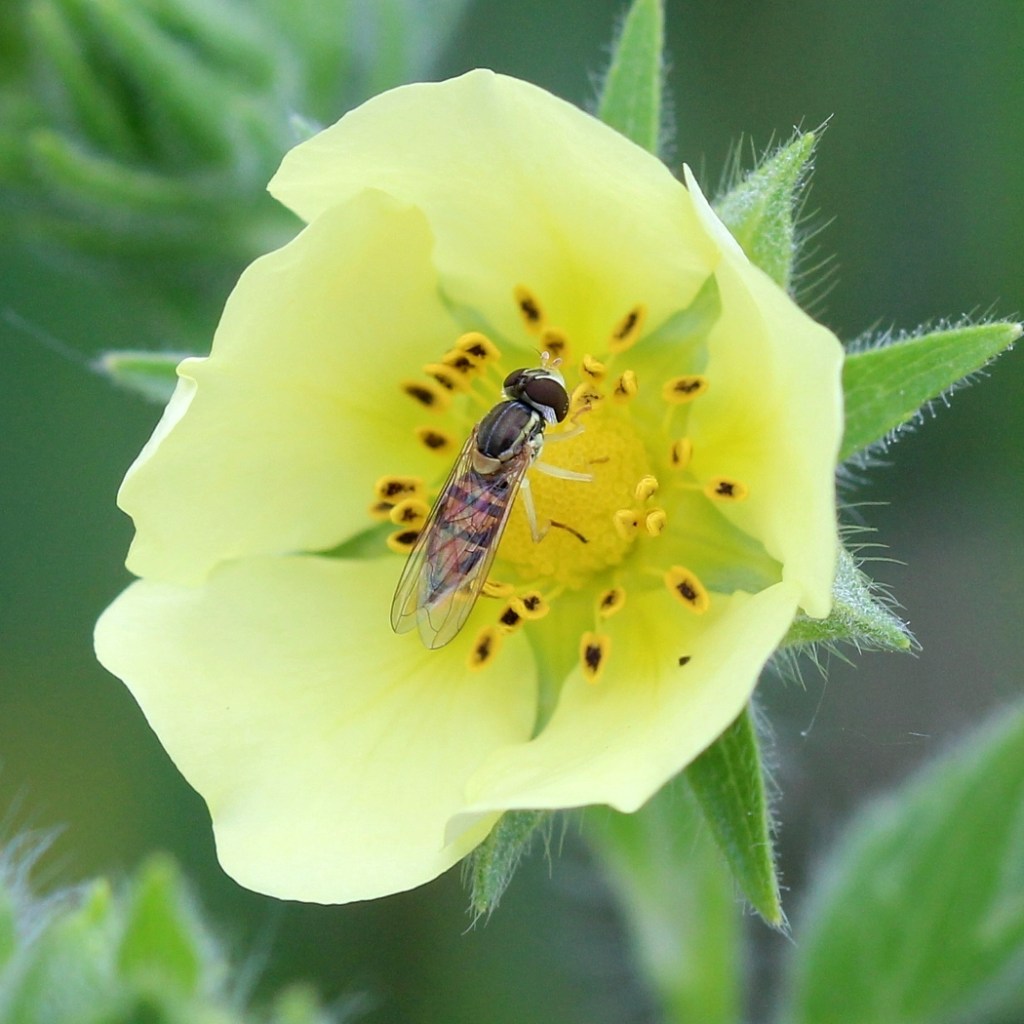
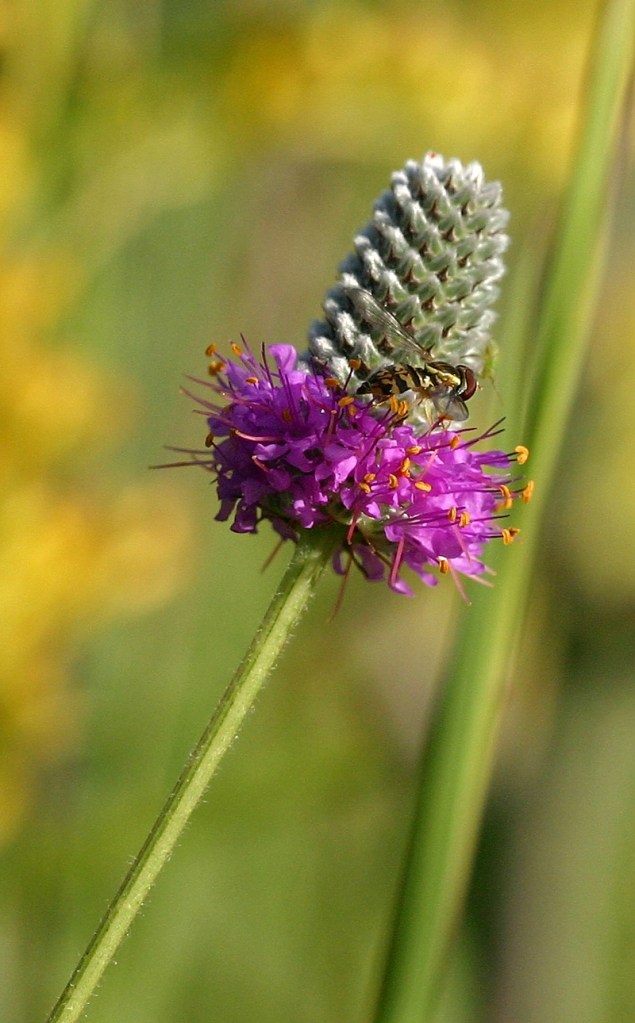
Like bees, syrphids are pollinating insects. But it is not just aster family plants they seek out. I have seen syrphids on mustard (Brassica nigra), amaranth (Amaranthus cruentus), milkweed (Asclepias syriaca), purple prairie clover (Dalea purpurea), grass-of-parnassus (Parnassia sp.), and cinquefoil (Potentilla recta).

Not just pollinators but predators and recyclers
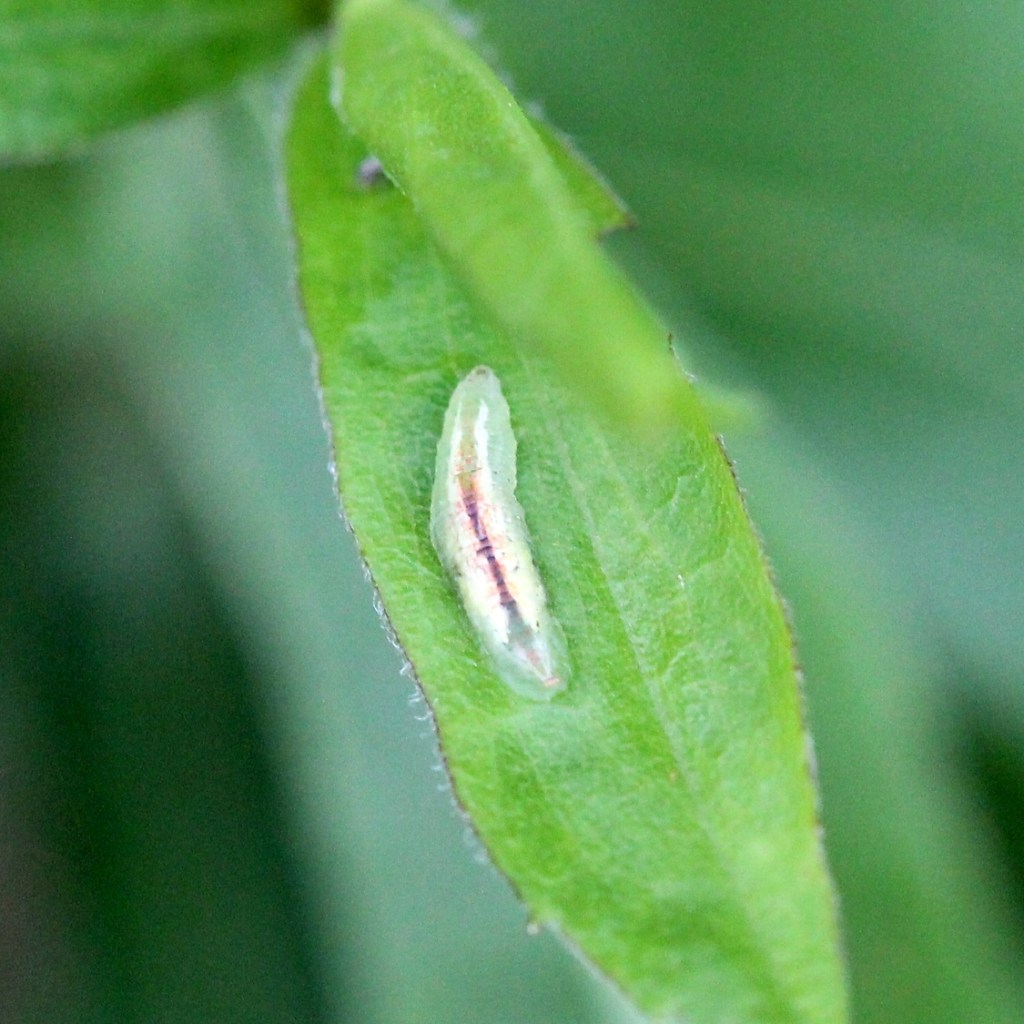
Syrphids do more than visit flowers. The larvae of many species are important predators of aphids and other soft-bodied crop pest insects. Some larvae may eat 400 or more aphids in their lifetime.
Other species larvae (rat-tail maggots) live in mucky habitats, eating microorganisms in the detritus and so contribute to nutrient recycling.

Encouraging syrphids
Syrphid flies, like the bees and wasps they often mimic, are important parts of the pollinator fauna. They don’t sting or bite, but their appearances can give you pause.
Planting nectar-rich domesticated plants like buckwheat, sunflowers, coriander, and dill, and wildflowers. Even small patches will help them. From there, they can launch forays into gardens and fields, pollinating crop plants. Predatory species will lay eggs that hatch into maggots that eat pest insects like aphids, scale insects, and spider mites.
Further reading
Field Guide to the Flower Flies of Northeastern North America. Jeffrey H. Skevington, Michelle M. Locke, Andrew D. Young, Kevin Moran, William J. Crins, and Stephen A. Marshall. (ISBN: 9780691189406. Published: May 14, 2019. Copyright: 2019.)
 Not Very Far Away
I find quite a variety of them on Queen Anne’s lace in late summer.
An interesting post, thank you.
LikeLiked by 1 person
You’ve just made me realize that I didn’t notice any syrphids in my garden this year, but there were lots of honeybees. Some years the carpenter bees and syrphids are most commonly seen drinking at my many pollinator-friendly plants. At times the syrphids would prefer one plant, and the honeybees would be all over a different one four feet away.
LikeLiked by 1 person
I noticed the same thing with butterflies and a few other insects like aphids and leaf hoppers last year and this year. We’ve had a few hot and dry summers in a row here so it might have been that. Yet syrphids were very common here until it got too cold.
Maybe the lack of syrphids is related to weather affecting syrphid prey items where you are? But I’m just guessing.
LikeLiked by 1 person