
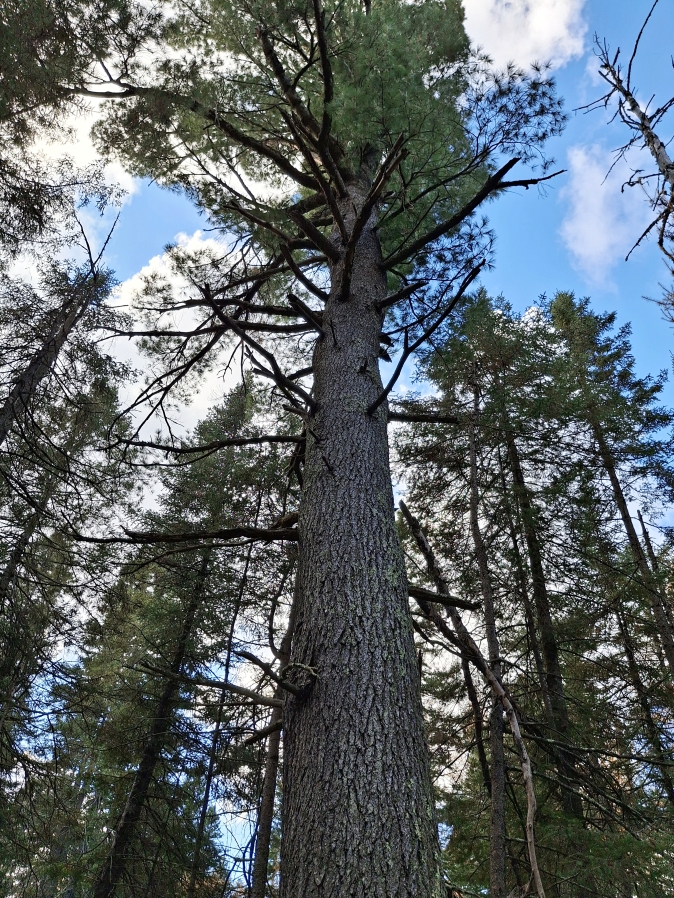
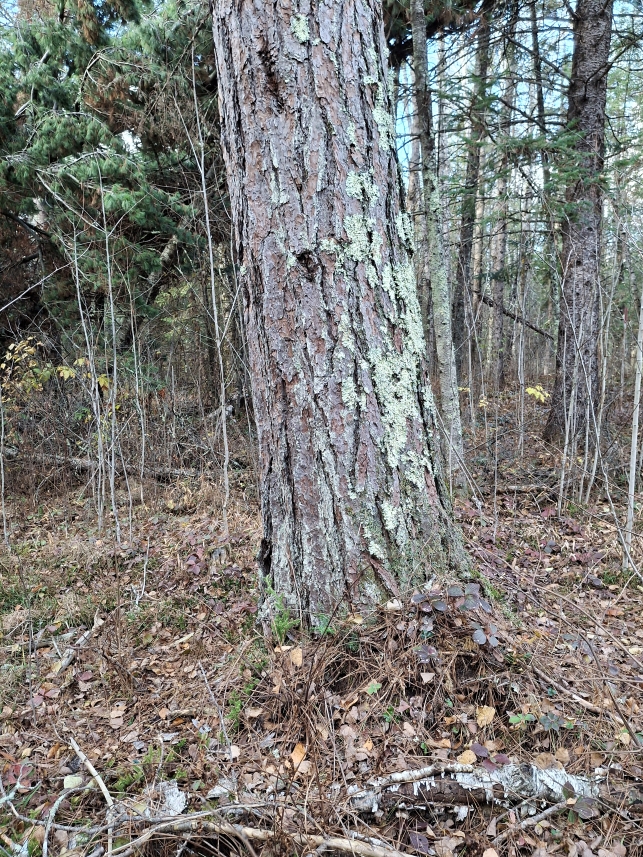
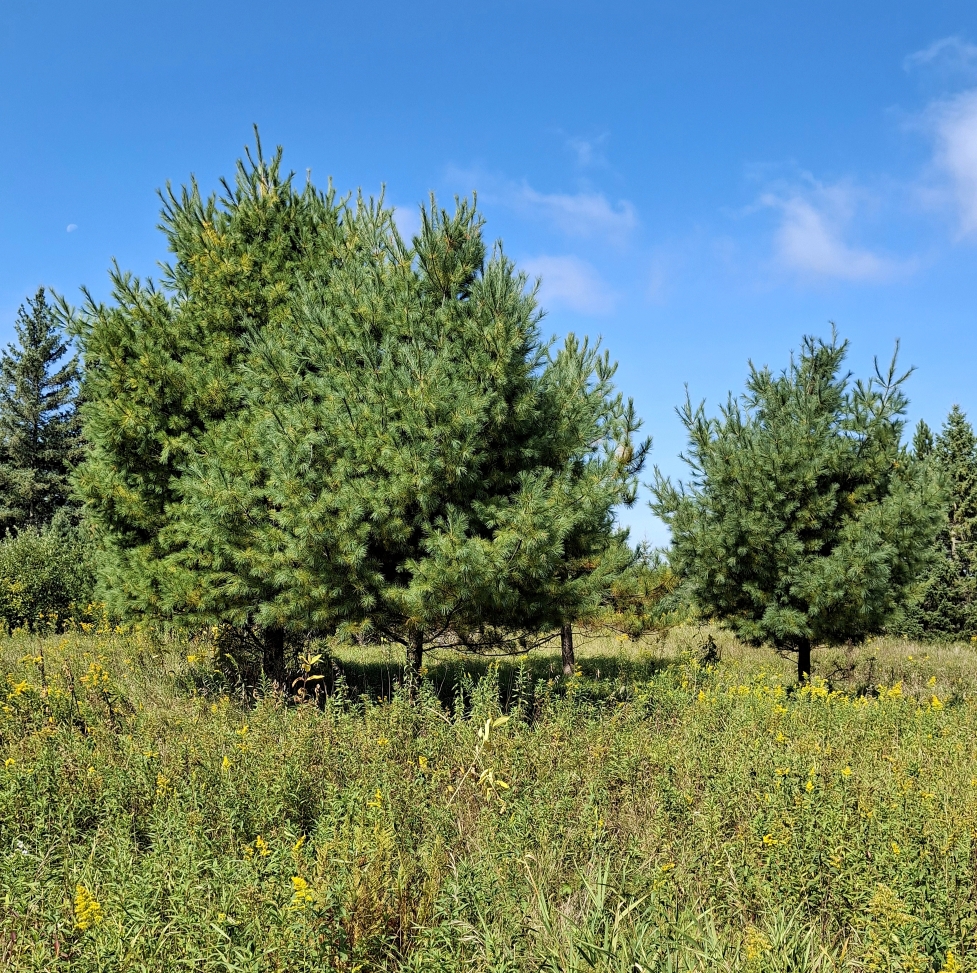
This white pine is the largest and possibly the oldest tree on my property. It has a DBH (diameter at breast height or 1.3 meters) of 92 cm, and I estimate its age at about 180 years old.
The white pine probably began growing sometime around 1845. This was at the beginning of the white pine logging era in Minnesota. By 1900, it would have been large enough to cut for timber, but it was missed. The 1918 fires that swept through the area also missed it by just two short miles.
All through the 20th century, it continued to grow undisturbed. Over time, a forest of paper birch, aspen, balsam fir, and spruce grew under the pine. Beneath the trees, clubmosses, poverty oats, rough rice grass, purple melic grass, twinflower, and hairy goldenrod covered the ground. The forest had come back.
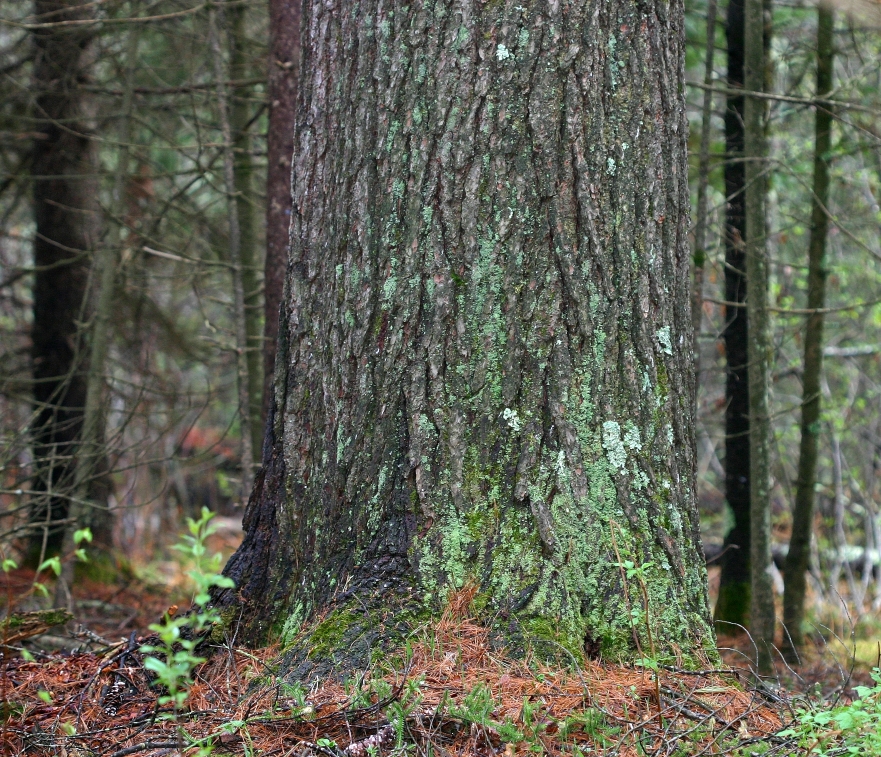
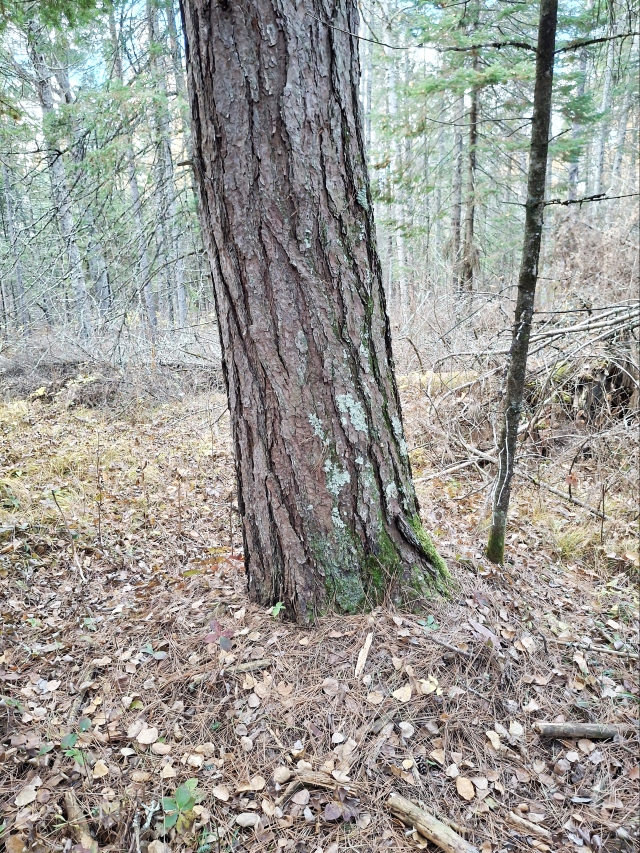
When other white pines on this 40-acre section were cut down for lumber in 1960, this huge white pine was not cut down. So were four other large white pines and five large red pines. I don’t know how or why this happened, but I am glad they were overlooked. What would this forest be without them?
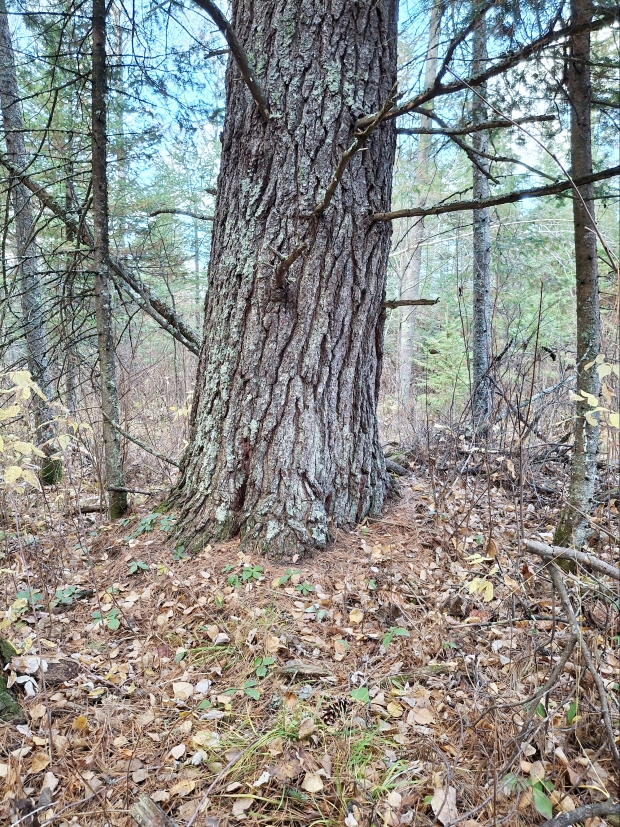
Logging of Minnesota’s white pine forests began in the 1830s, but it wasn’t until the 1870s, with the advent of railroads and new settlements, that it really took off. By 1900, Minnesota had produced almost 1.2 billion board feet of white pine timber. This was not to last, and by 1929, nearly all of Minnesota’s white pine forests were depleted, bringing white pine logging to an end. While not remnant trees from old-growth forests, these white and red pine trees are survivors from that time.
 Not Very Far Away
If only they could speak. What stories they could tell.
LikeLiked by 1 person
I would bet they would have stories to tell. I am amazed and grateful they were not cut down.
LikeLiked by 1 person
I’m glad you have them too. This region was pretty well clear cut in the 1700s for pasture land and sheep farming. Most white pine (and other) trees here have grown since men left the farm to work in factories in the mid 1800s. After that many trees were cut for lumber rather than to clear the land.
There are some trees, I call them weevil trees, that grew with 4 or 5 leaders after insects killed the main leader and, since they weren’t any good for lumber, they were ignored. Today these trees are the monsters of the forest and I doubt 5 men could join hands around their girth. I can’t even imagine how old they are but several hundred years doesn’t seem unrealistic.
I also occasionally see what I call “King’s trees.” Back in colonial times the tallest, straightest white pines were selected for masts on sailing ships. They were marked as “King’s trees” and if anyone cut them they could be put to death. You can’t miss these trees. Arrow straight and nearly branchless, all the way to the crown.
Some rainy day when you have the time click the link I’m adding. It’s a very interesting story about the King’s trees called “The King’s Pines, the Colonies, and the Revolution”
https://www.mainewoodlandowners.org/articles/the-kings-pines-the-colonies-and-the-revolution#:~:text=So%20it%20was%20no%20coincidence,selling%20them%20to%20his%20dockyards.
LikeLiked by 1 person
I do remember the King’s Trees. Back in 8th grade, I wrote a theme paper on Connecticut’s history (it even included dinosaurs!). But that was many years ago.
There’s a large stand of red pines in Minnesota called the Lost 40. It was slated for logging, but was missed. I think it was because of an economic crisis in the US at the time.
Then there are the Lob Pines in the Border Lakes area that had a section of branches cut off. This was done by the Voyageurs to mark portages between lakes. Many of these trees are still here today.
LikeLiked by 1 person
I’m happy that there are a few left that missed the saw, both here and in Minnesota.
LikeLiked by 1 person
I love that you know your trees and appreciate their venerable selves.
LikeLiked by 1 person