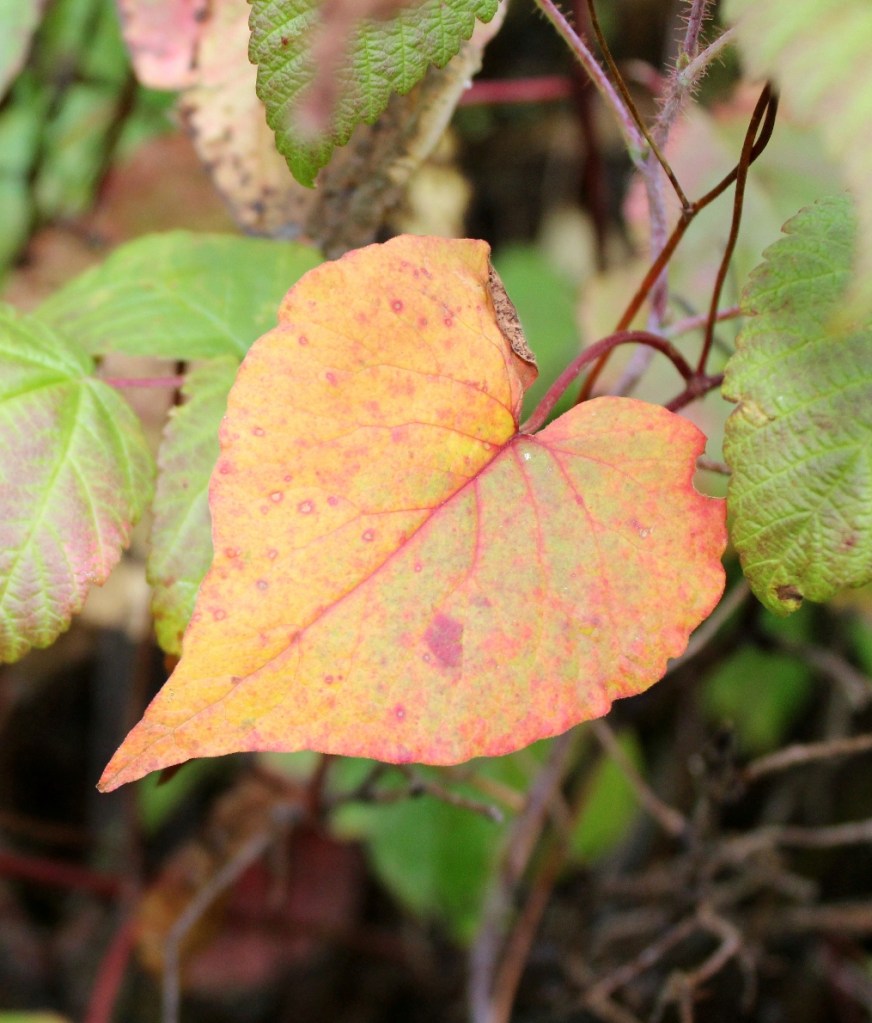
Autumn is coming

September 22, 2022, is officially the first day of autumn in the northern hemisphere but today it doesn’t feel like autumn is anywhere in the future. Right now the temperature is 52 degrees F and the high is predicted to be 78. Flowers are still blooming in the gardens. There hasn’t even been a frost which is very unusual for here.

When I look at the trees only a few are showing color changes. The rest are green or just looking a bit faded. But the woods has that autumn smell to it in the early evening so something is happening. And many plants in the understory are changing color. Autumn starts on the forest floor so at least that much is following schedule.

I did hear geese the other night heading south for the winter which will most certainly arrive. In the meantime, I am going to enjoy these lingering sunny days, do some cleanup around the yard, and check the snowblower to make sure it starts and runs well before the first big storm.

Flower flies

Syrphid fly on flower
Helophilus fasciatus on Lindley’s aster (Symphyotrichum ciliolatum) looking for pollen and nectar.

On a warm late summer day if you walk into a field of flowers particularly yellow flowers like goldenrods you might think you have stepped into a swarm of bees or wasps. There is intense buzzing and many small yellow and black insects on the flowers and flying all around you. But despite all appearances these are not bees or wasps at all. They are flies. Syrphid flies, also known as flower flies and hover flies, to be more exact, and there are many species that mimic bees and wasps, a good strategy if you are trying to fend off predators.

Syrphid flies are true flies in the Order Diptera (“two wings”) and Family Syrphidae. Adult syrphid flies feed on nectar, pollen, and sugary secretions from aphids. You can use their love of sweets to attract them with mixture of sugar or honey and water sprayed on surfaces like tree trunks in open areas. When moving about on flowers syrphid flies assist in the pollination of many plant species including crops we grow.

The larvae have more varied diets depending on the species. Some syrphid fly larvae feed on decaying plant matter, damp wood (perhaps for the bacteria and fungus which are more nutritious?), and subterranean parts of plants. Others prey upon aphids, scale insects, thrips, and similar sap-sucking insects and can be beneficial in crop fields and gardens. Some species lurk in ant nests where they disguise themselves with chemical secretions and eat ant larvae.

Syrphid larvae in the tribes Eristalini and Sericomyiin live in muddy stagnant water, even cesspools, where they feed on detritus. A long breathing tube from the anal segment pokes above the water to access the air. This long breathing tube has earned them the name “rat-tailed maggots”.

I recently bought “Field Guide to the Flower Flies of Eastern North America” and have found it very helpful in figuring out species of syrphids that live in my area. The book is well illustrated and includes descriptions and range maps. In the descriptions, the authors have included flowers that species typically visit if known. I have been able with this book to identify three syrphids (Eupeodes americanus, Sericomyia chrysotoxooides, Toxomerus marginatus) that had been in my “unknown” files for several years. And I’ve identified three others I photographed last week (Eristalis dimidiata, Eristalis transversa, Sphaerophoria philanthus).

Below is a small gallery of some of the syrphid flies I’ve seen here over the years.

SOURCES

Field Guide to the Flower Flies of Eastern North America. Jeffrey H. Skevington and Michelle M. Locke. Copyright 2019 Princeton University Press.

Homaemus aeneifrons – Bronze-Headed Shield Bug

Early Sunday morning I saw a group of bronze-headed shield bugs (Homaemus aeneifrons) sunning themselves on the seed heads of Canadian hawkweed (Hieracium umbellatum). The previous night had been very cool with temperatures dipping to 40 degrees F and this cluster of seed heads facing due east into the sun was a perfect place to warm up. In all, there were six bugs catching the early morning sun.

Homaemus aeneifron is widespread in North America occurring as far south as Kansas and Arizona and as far west as Alaska, British Columbia, and California. It is frequently found in moist meadows and weedy areas. Some reports state that it feeds on grasses and sedges (Carex) and rushes (Juncus) but one has it feeding on Monarda fistulosa (wild bergamot) and Oenothera biennis (evening primrose). These on hawkweed did not appear to be feeding. Beyond catching some rays it was hard to say why they were all there.

CLASSIFICATION
Kingdom: Animalia (Animals)
Phylum: Arthropoda (Arthropods)
Subphylum: Hexapoda (Hexapods)
Class: Insecta (Insects)
Order: Hemiptera (True Bugs, Cicadas, Hoppers, Aphids and Allies)
Suborder: Heteroptera (True Bugs)
Infraorder: Pentatomomorpha
Superfamily: Pentatomoidea
Family: Scutelleridae (Shield-backed Bugs)
Subfamily: Pachycorinae
Genus: Homaemus
Species: aeneifrons (Homaemus aeneifrons)

SOURCES

Bug Guide

Williams, Andrew H. 2004. “Feeding Records of True Bugs (Hemiptera: Heteroptera) From Wisconsin,” The Great Lakes Entomologist, vol 37 (1)

Thomas, Donald B.; Werner, Floyd G. 1981. Grass Feeding Insects of the Western Ranges: An Annotated Checklist. Technical Bulletin (University of Arizona, Agricultural Experiment Station) No. 243

A tremendous increase

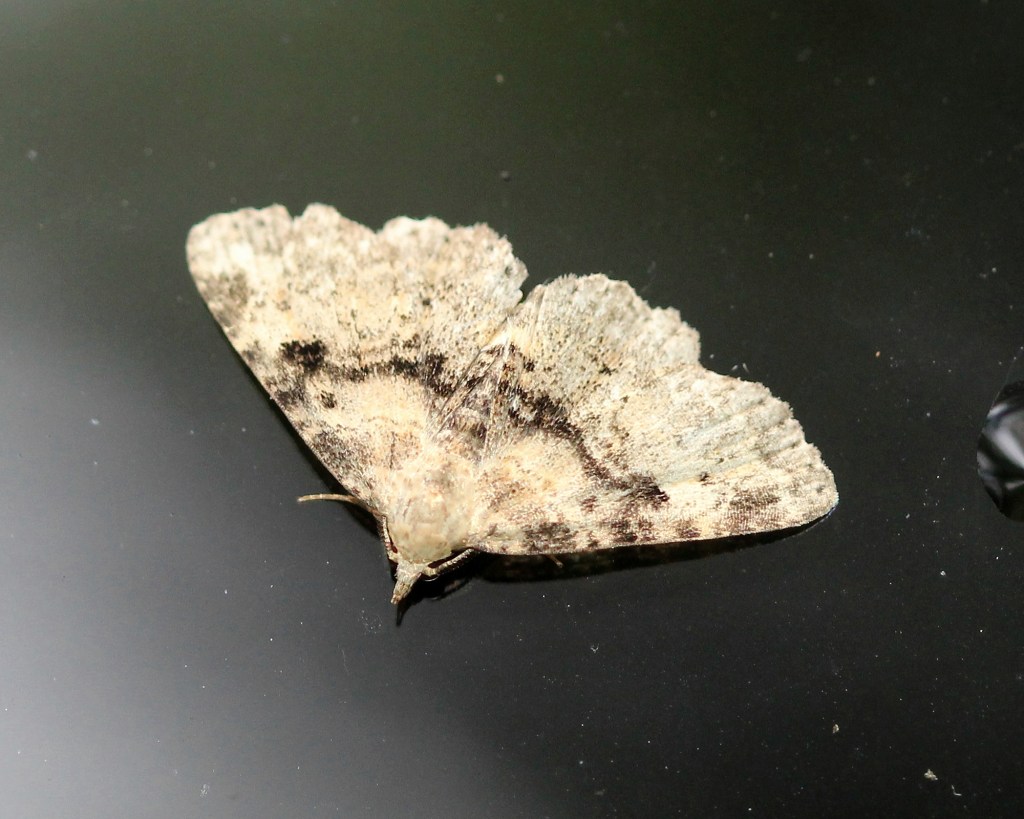
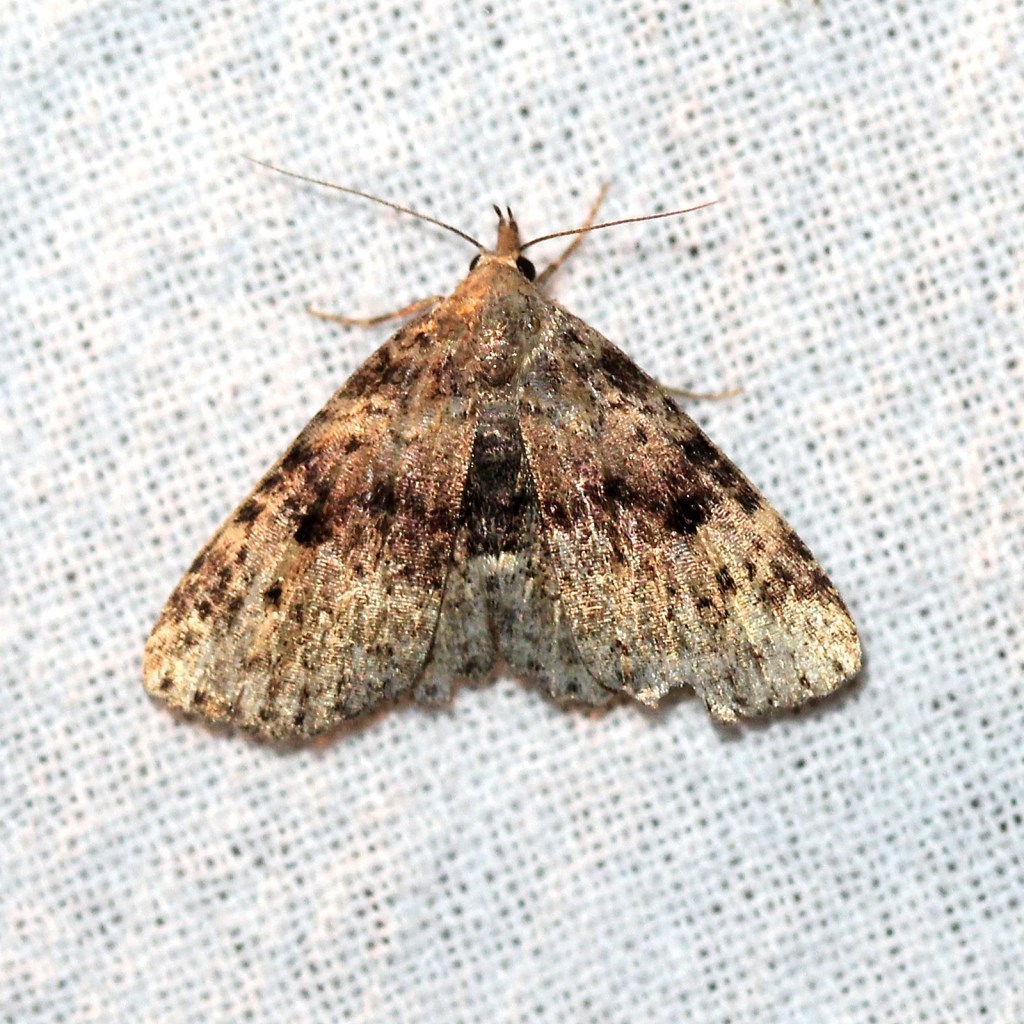
Digrammia mellistrigata
One of the latest additions to the checklist is Digrammia mellistrigata (yellow-lined angle) a moth in the Geometridae (inchworms).

Since I last posted on the moth species diversity (a very long time ago) the list has gone from 270 to 761 species and will very likely continue to grow until winter puts a stop to insect activity outdoors. Some species were to be expected as they are common and widespread but there have been nights and a few days with interesting surprises. Eventually, the number of new additions will level off and then fall as the actual number of species is approached. But for the next year or two, about 50 new species will probably be added each season. Just in 2022 I’ve added 50 more species with July being the best month with 21 species. I’m not going to go through the whole list of new additions but below is a small sample of my favorites from the last few years. In some future posts I’ll be covering some unusual species occurrences while others will cover groups such as new Geometridae or new Crambidae I have found.

2018

Cucullia convexipennis larva
Metanema inatomaria

2019

Dejongia lobidactylus
Datana ministra

2020

Epermenia albapunctella
Acronicta lepusculina larva

2021

Schinia septentrionalis larva
Darapsa choerilus ( Azalea Sphinx Moth)

2022

Elophila ekthlipsis
Plagodis phlogosaria