This slideshow requires JavaScript.
Eight more moths for the checklist: Mint Root Borer (Fumibotys fumalis), Deceptive Snout Moth (Hypena deceptalis), Bronzy Macrochilo (Macrochilo orciferalis), Forage Looper (Caenurgina erechtea), Purple-backed Cabbageworm (Evergestis pallidata), White-banded Toothed Carpet (Epirrhoe alternata), Labrador Carpet (Xanthorhoe labradorensis), and Dark Marbled Carpet (Dysstroma citrata) bringing it to 161 species identified. There were three repeated names, a genus name with no species epithet, and one name from a set of photos misidentified as Xanthorhoe ferrugata but really Euphyia intermediata (already on the list). Those last two are members of the “Carpets” which because of their intricate patterns can be a challenge to differentiate. When the dust settled the actual number of species on April 05 was not 158 but 153. Adding these eight species on April 10 makes the total for the checklist 161 species.
Some Brief Facts
Mint Root Borer (Fumibotys fumalis) – not well liked wherever mint (Mentha spp.) is grown as its larvae feed on mint leaves and then as they get older on the roots and rhizomes.
Deceptive Snout Moth (Hypena deceptalis) – this moth confused me at first and I misidentified it as Gray-edged Hypena (Hypena madefactalis) which was wishful thinking on my part. After going over many photos of each species at Moth Photographers Group and Bug Guide it became clear my initial identification was wrong. The larvae of Deceptive Snout Moth feed on leaves of American basswood (Tilia americana). Members of Hypena are specialized feeders.
Bronzy Macrochilo (Macrochilo orciferalis) – food preferences of this species larvae are grasses but many others in the subfamily (Herminiinae, Litter Moths) eat dead leaves and leaf litter.
Forage Looper (Caenurgina erechtea) – larvae feed on a variety of grasses and legumes grown for forage and hay including alfalfa and the weedy plant giant ragweed (Ambrosia trifida).
Purple-backed Cabbageworm (Evergestis pallidata) – possibly introduced to North America in the early 1800s the larvae of this moth feed on many members of the mustard family including bittercress (Cardamine spp.), cabbage, and horseradish.
White-banded Toothed Carpet (Epirrhoe alternata) – the larvae of this species feed on bedstraw (Galium spp.).
Labrador Carpet (Xanthorhoe labradorensis) – larvae feed on many species of woody and herbaceous plants
Dark Marbled Carpet (Dysstroma citrata) – larvae feed on blackberry, raspberry, and thimbleberry (Rubus spp.), alder (Alnus spp.), willow (Salix spp.) and several other woody and herbaceous plant species.
The list keeps growing
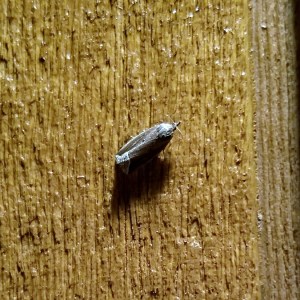
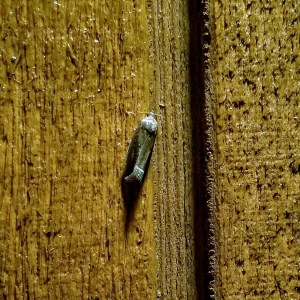
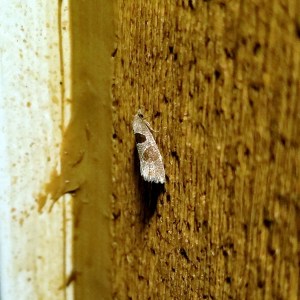
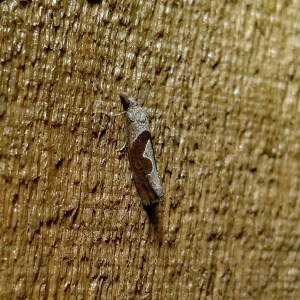
Just before publishing this I added seven more species: Crambus leachellus, Agriphila ruricolellus, Palpita magniferalis, Monopis monachella, Epinotia lindana, and possibly Herpetogramma aeglealis and Dichomerus fistuca (these last two seem at least to be in the right genus) bringing the total to 168 species identified. The list keeps on growing as I sort through photos and to that list can be added 219 photos of yet to be identified species. Given that there are an estimated 1,500 to 2,200 moth species in Minnesota the possibility of 600 to 900 moth species in my county does not seem far-fetched. I hope to add another 100 species this summer as I explore new areas at night on my property (not just the porch) and search for moth larvae by day.
Corrections
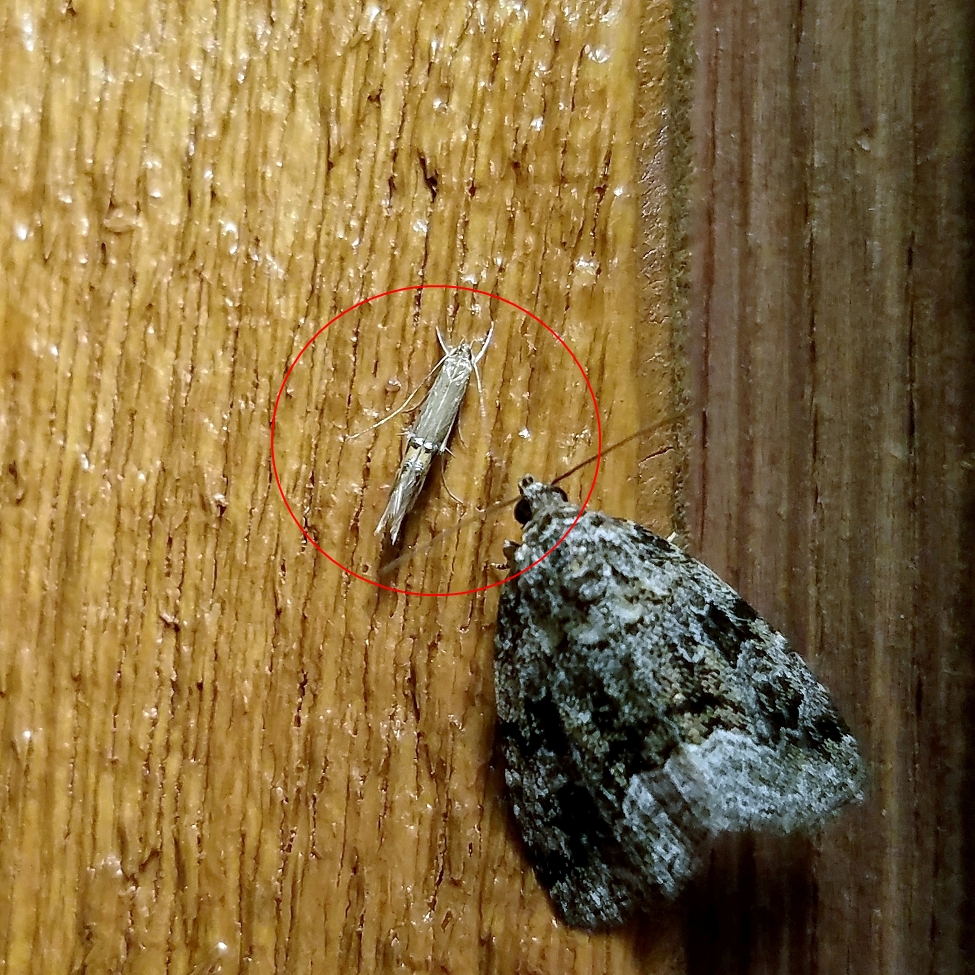
In the April 05 post “Four new finds in the moth photo files and a rediscovery” I mentioned I had found Ancylis albacostana. It turns out I had not but instead had misidentified Capis curvata as that species. They are similar especially if the white band on the ends of the forewing is wide on C. curvata. A. albacostana is somewhat rare in northern Minnesota where I live so chances of finding it are small (but not impossible).
What I had previously thought was Toothed Brown Carpet (Xanthorhoe lacustrata) in an earlier version of this post is White-banded Toothed Carpet (Epirrhoe alternata).
SOURCES AND MORE INFORMATION
D. Beadle and S. Leckie (2012). Peterson Field Guide to Moths of Northeastern North America. Houghton Mifflin Harcourt Publishing Company, Boston. 640 pages.
R. E. Berry and L. B. Coop (2000). Mint Root Borer Lepidoptera: Pyralidae Fumibotys fumalis. Publication No. IPPC E.01-01-1. Oregon State University, Department of Entomology and Integrated Plant Protection Center, Corvallis, Oregon. October 24, 2000.
E. M. Quinn and R. Danielson (2009). A Survey of Lepidoptera in Three Priority Areas of the Minnesota State Parks System Final Report. Minnesota Department of Natural Resources – Division of Parks and Trails. 49 pages.
Robinson, G. S., P. R. Ackery, I. J. Kitching, G. W. Beccaloni and L. M. Hernández (2010). HOSTS – A Database of the World’s Lepidopteran Hostplants. Natural History Museum, London. http://www.nhm.ac.uk/hosts.
J. Sogaard (2009). Moths and Caterpillars of the North Woods. Kollath+Stensaas Publishing. Duluth, MN. 276 pages.
D. Schweitzer, J. R. Garris, A. E. McBride, and J. A. M. (2014). The current status of forest Macrolepidoptera in northern New Jersey: evidence for the decline of understory specialists. Appendix D. Journal of Insect Conservation. Vol. 18, Issue 4, pages 561–571.
Species accounts at the Bug Guide website
Moth Photographers Group website (check out their Plate Series)
University of Alberta E.H. Strickland Entomological Museum website


 Not Very Far Away